From breakfast to dinner, from healthy meals to sweet desserts – Next Yum Recipes brings you quick, simple and tasty ideas for every occasion and every time.


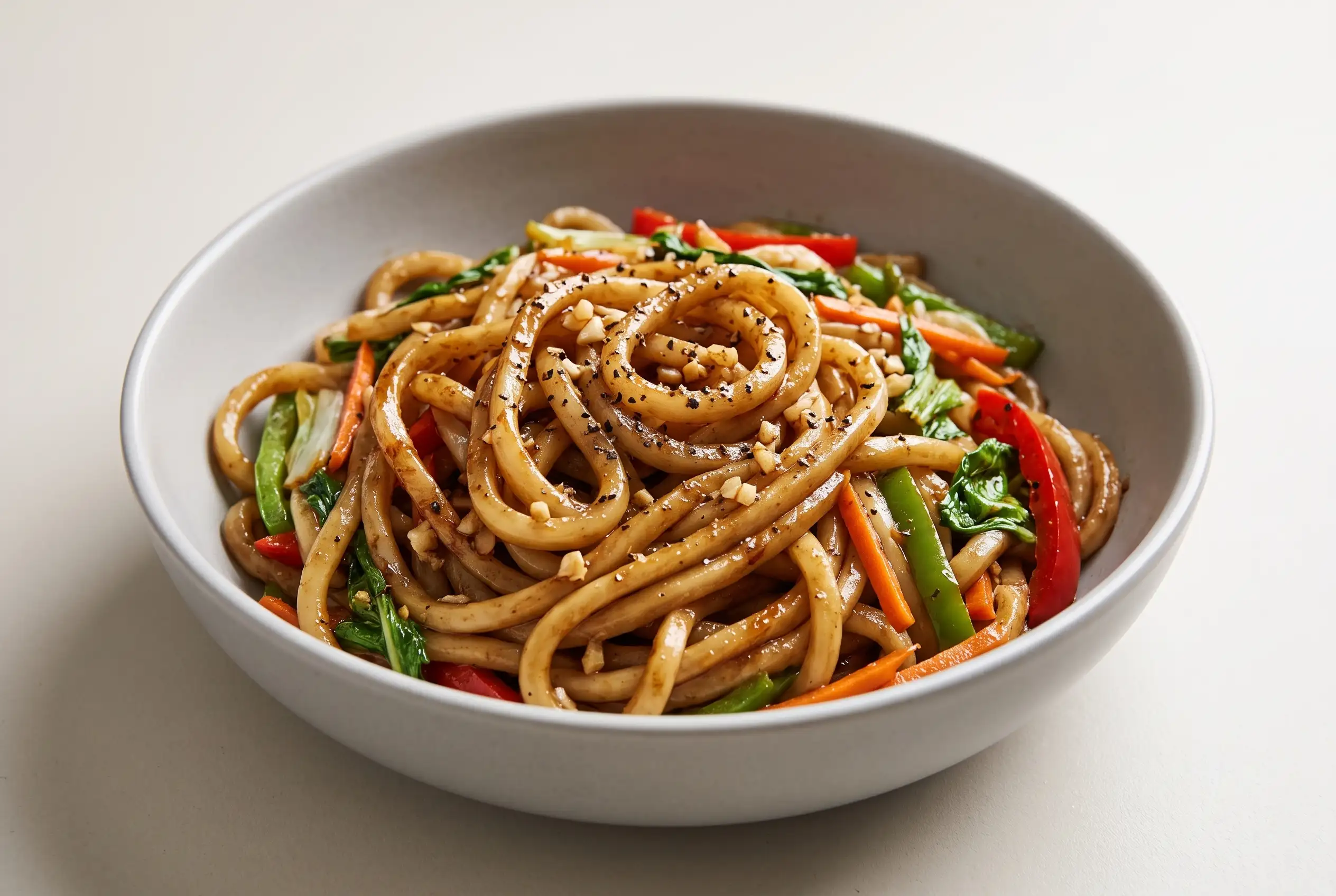 This Recipe
Black Pepper Udon Builds Flavor Through Balance
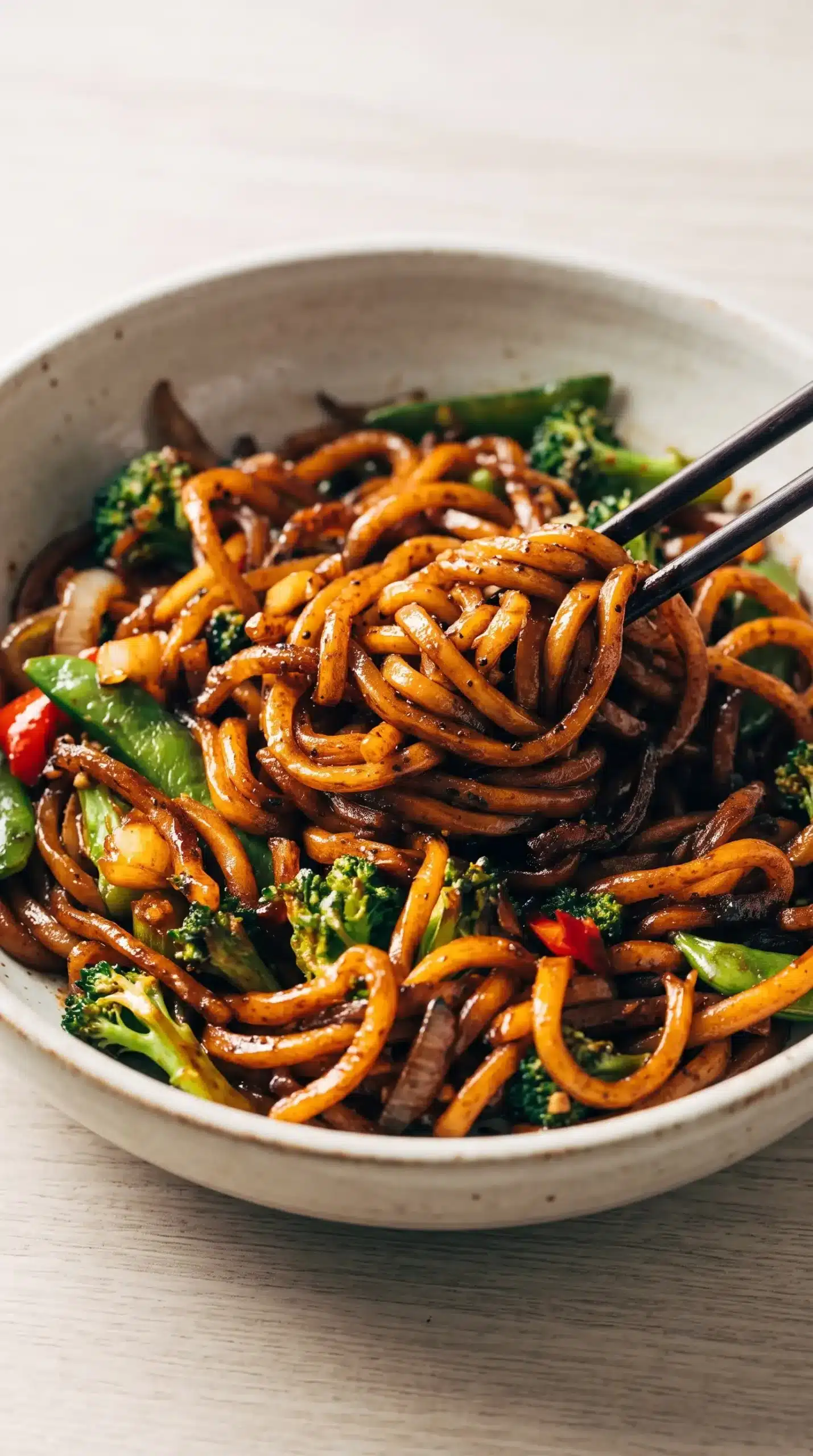
Black pepper udon brings together chewy noodles, a savory sauce, crisp-tender vegetables, garlic, and a generous amount of freshly ground pepper for a fast stir-fry with deep flavor. The appeal comes from the contrast between glossy caramelized noodles and the sharp warmth of pepper that arrives at the end.
Unlike many noodle dishes that depend on long simmering or complicated preparation, black pepper stir fried udon noodles rely on a few carefully handled elements. The thick udon noodles hold onto the sauce while the pan creates browned edges that give the dish a satisfying fried texture.
The sauce combination creates a sweet, salty, and tangy foundation that allows the pepper and garlic to stand out. Each part has a clear role: the noodles provide body, the vegetables add freshness, and the finishing seasonings create the aroma that makes the bowl memorable.
Dark Soy Sauce and Pepper Define the Noodle Character
Dark soy sauce, oyster sauce, brown sugar, and rice vinegar form the core seasoning profile for black pepper udon. Dark soy sauce contributes color and richness, while oyster sauce brings a savory depth that helps the noodles taste rounded instead of one-dimensional. Freshly ground black pepper adds a bold contrast that becomes more noticeable with every bite.
| Seasoning element | Main contribution | Best handling choice |
|---|---|---|
| Dark soy sauce | Deep color and savory flavor | Mix into the sauce before adding to noodles |
| Oyster sauce | Rich umami character | Combine evenly with other sauce ingredients |
| Rice vinegar | Light acidity | Balance the sweetness and saltiness |
| Fresh black pepper | Sharp aromatic heat | Add generously near the end for freshness |
Udon Texture Determines the Stir Fry Finish
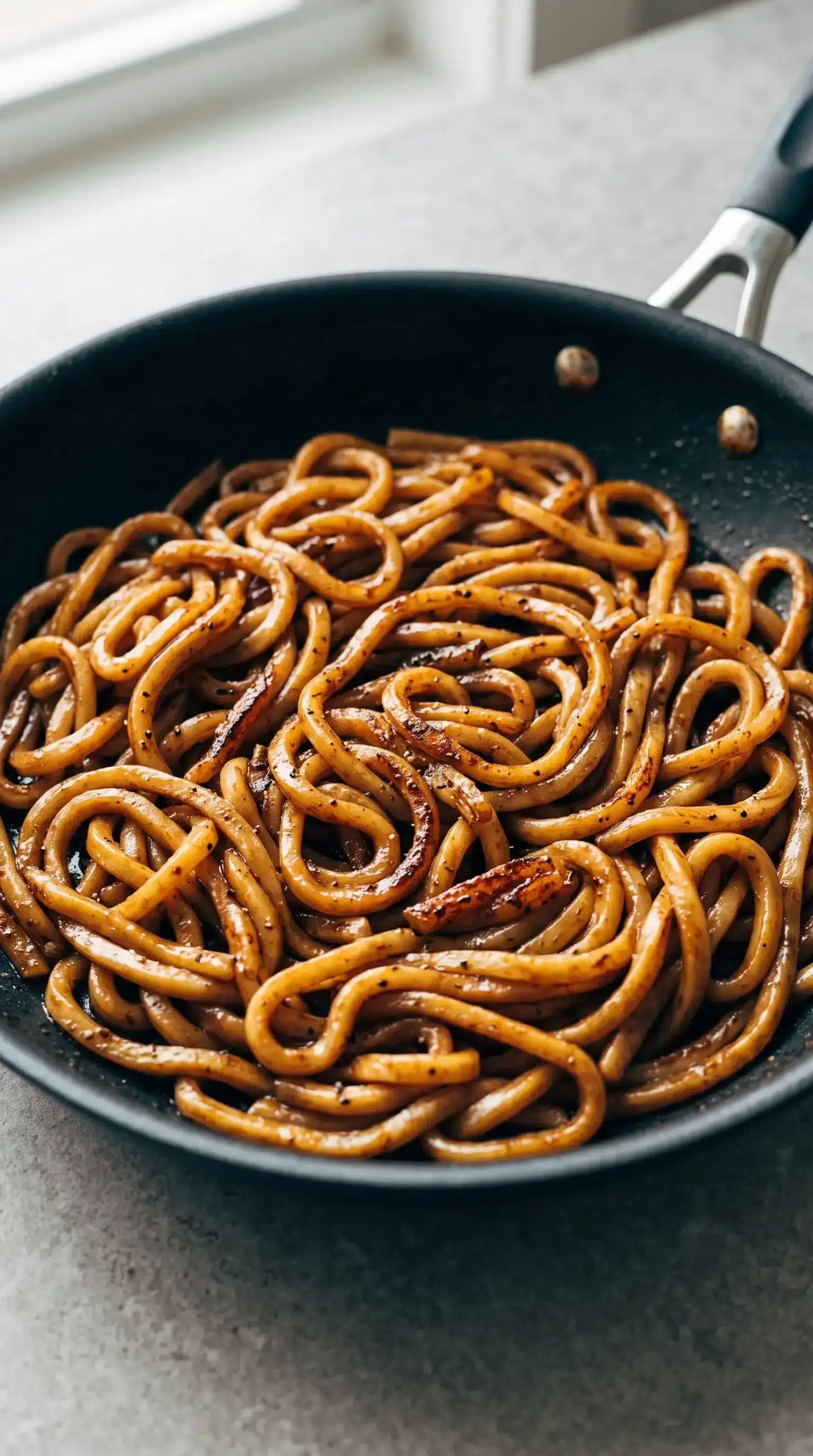
Udon noodles are the defining texture in this dish because their thick, soft structure responds differently from thin noodles. The cooked, fat udon noodles used here can become lightly browned in the skillet while still keeping their signature chew.
Udon noodles can be prepared with a brief pan-frying stage after cooking to build texture while keeping the interior soft and chewy. A dish such as noodle stir fry uses a similar focus on letting noodles meet the pan long enough to develop a satisfying surface.
Pan contact matters because the noodles need time against the hot surface to develop caramelized spots. Moving them constantly can prevent those browned areas from forming, while leaving them untouched too long can cause the sugary sauce to scorch.
For cooks using dry udon noodles, a slightly firm starting texture helps the noodles finish properly in the skillet. They continue absorbing sauce as they stir-fry, which allows the seasoning to coat the surface without leaving the noodles overly soft.
Vegetables Keep Black Pepper Udon Bright and Satisfying
Stir fried udon noodles with vegetables benefit from the contrast created by colorful vegetables alongside the rich sauce. A frozen stir-fry vegetable blend works well because it provides variety while keeping preparation simple. The vegetables should become tender while still offering some texture against the soft noodles.
Sauce Preparation Prevents Uneven Seasoning
Mixing the sauce before it reaches the pan gives every noodle a more consistent coating. Combining the dark soy sauce, oyster sauce, brown sugar, and rice vinegar in advance allows the sweet and savory flavors to blend before they meet the heat.
A prepared sauce also makes it easier to control how much seasoning reaches the noodles. Since the noodles absorb flavor quickly, adding gradually helps prevent an overly salty finish while leaving enough sauce available for the vegetables.
Extra sauce can be useful when making another batch of noodles later. Preparing more sauce ahead creates a shortcut for future easy udon noodle stir fry meals because the flavor base is already balanced and ready to use.
- Coat evenly: Shake or stir the sauce mixture thoroughly before it reaches the noodles.
- Add gradually: Reserve some sauce so the pan does not become overly wet.
- Watch sweetness: Keep the noodles moving after adding sauce because sugar can brown quickly.
Pan Heat Creates the Caramelized Udon Surface
The skillet temperature controls whether the noodles become glossy and browned or simply warmed through. A medium-high heat level gives the udon enough energy to develop color while allowing the sauce to cling to the noodles.
The browned surface on the noodles comes from the Maillard reaction, which occurs as food develops new flavors and color during high-heat cooking. This helps explain why careful pan contact gives black pepper udon a deeper, more satisfying finish.
Cooking control comes from watching the pan instead of following a rigid appearance rule. When the noodles begin to look sticky and lightly browned, the surface has started building the texture that makes black pepper udon distinctive.
Heat management becomes especially important because the sauce contains brown sugar. A short period of undisturbed contact can create delicious caramelization, but excessive time in the same spot can move the flavor from browned to burnt.
Garlic and Pepper Timing Changes the Aroma
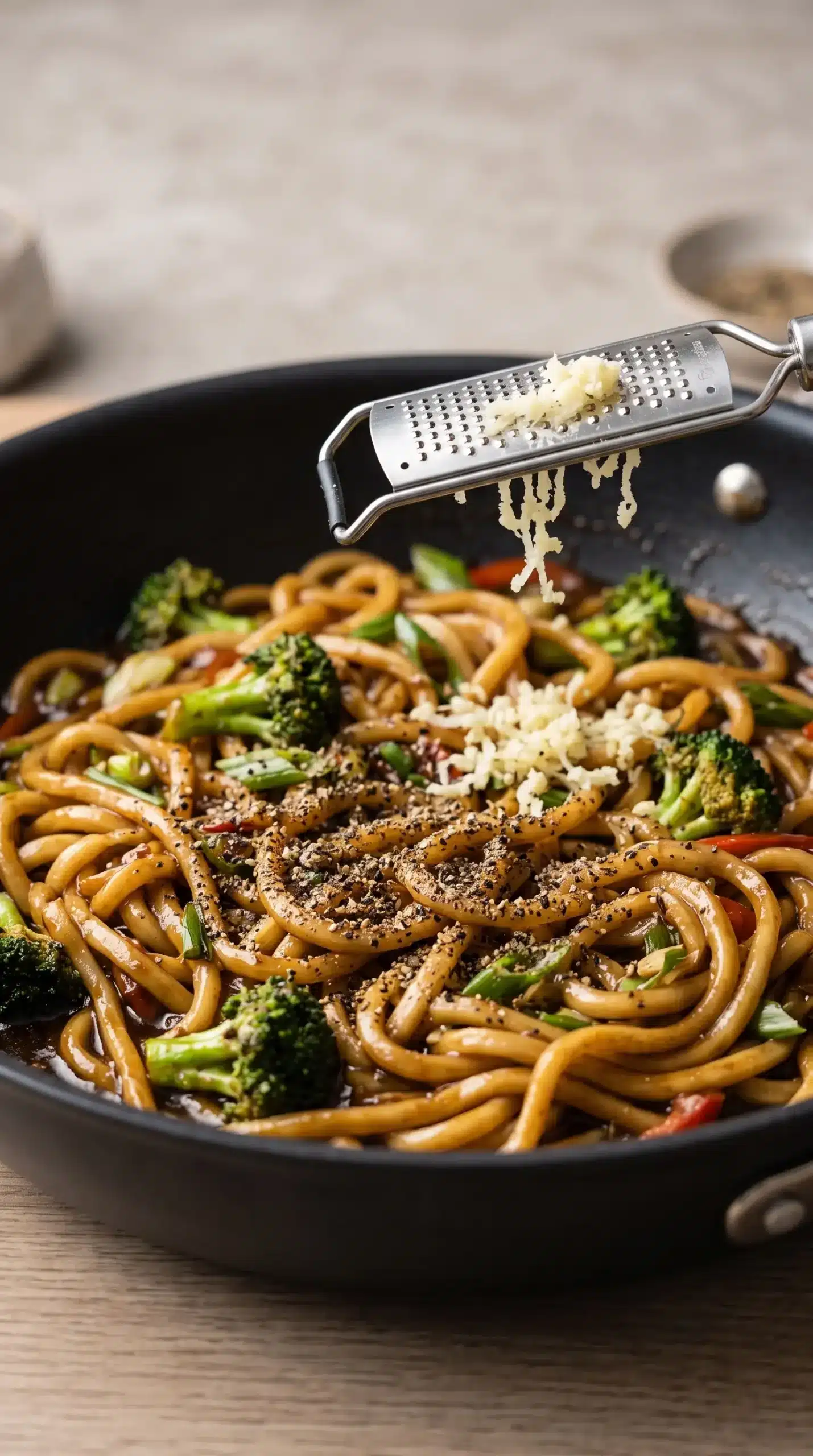
Freshly grated garlic and freshly ground black pepper are added after the main stir-frying stage to protect their strongest aromas. The heat from the finished noodles releases the fragrance immediately, creating the signature peppery finish.
Common Black Pepper Udon Mistakes That Flatten the Stir Fry
Several small choices can change the quality of black pepper udon. One common issue is allowing the noodles to sit too long in a hot pan after the sauce has been added. The sugar in the sauce can burn quickly, leaving bitter flavors instead of a caramelized coating.
Another mistake is adding all the sauce without considering the amount of noodles and vegetables in the skillet. Extra liquid can make the noodles steam instead of develop the browned surface that gives the dish its stir-fried character.
Fresh pepper and garlic can also lose their impact if they are cooked too early. Adding them at the right stage keeps their aroma noticeable and creates the bold finish expected from a pepper-forward noodle dish.
Sauce Adjustments Make Repeat Batches Easier
The sauce can be prepared in a larger amount when extra noodles are available. Keeping a portion ready in the refrigerator makes it possible to create another batch without rebuilding the seasoning balance from the beginning.
Choosing Udon Options for Stir Fried Udon Noodles With Vegetables
Fresh or vacuum-packed cooked udon noodles are especially convenient because they already have the soft, springy texture associated with this style of dish. Their thickness allows them to carry the sauce while staying satisfying after pan-frying.
Different noodle choices can work when udon is unavailable, but the texture will change. Thinner noodles may absorb sauce differently, while firmer noodles may need more careful cooking so they do not become too soft during stir-frying.
The most important consideration is starting texture. Noodles should have enough structure to handle the skillet, sauce, and vegetables together without losing their ability to hold a pleasant bite.
Serving Choices Shape the Meal Experience
Black pepper udon works well as a complete meal because the noodles, vegetables, and savory sauce already provide variety in one pan. A simple serving approach keeps attention on the glossy noodles and aromatic pepper finish.
Storage and Reheating Keep Noodles Enjoyable
Cooked noodles can continue absorbing sauce after they leave the pan, so storing leftovers with care helps maintain their texture. A sealed container reduces moisture loss and keeps the flavors contained.
When reheating, gentle warming helps protect the chewy quality of the udon. Adding a small amount of moisture can help loosen the noodles if the sauce has thickened during storage.
Leftover black pepper udon can also be refreshed with additional freshly ground pepper or a small amount of garlic added after warming. These finishing touches help bring back some of the aroma that fades after cooking.
Caramelized Black Pepper Udon Shows Why Simple Steps Matter
Black pepper udon succeeds because the cooking decisions are focused: allow the noodles to contact the pan, balance the sauce before it cooks, and protect the fresh garlic and pepper until they can make the strongest impression. The browned noodle edges and bold seasoning come from careful timing instead of extra complexity.
The combination of chewy udon, vegetables, savory sauce, and a generous pepper finish creates a stir-fry where every texture has a purpose. When the pan heat and seasoning balance work together, the dish develops the sticky, aromatic character that makes it so satisfying.
Black Pepper Udon Questions About Soy Sauce and Noodle Preparation
Can regular soy sauce replace dark soy sauce in black pepper udon?
Regular soy sauce can be used, but the color and depth will be slightly different. Since dark soy sauce provides a deeper appearance and richer character, cooks using regular soy sauce may notice a lighter finished sauce while keeping the same overall savory direction.
How can black pepper udon stay flavorful without becoming too spicy?
The pepper level can be adjusted by adding less at first and increasing it after tasting. Freshly ground pepper has a stronger aroma than pre-ground varieties, so a smaller amount may still create noticeable warmth and fragrance.
Why do udon noodles sometimes become too soft during stir-frying?
Udon can become overly soft when it starts too tender or spends too much time exposed to heat and sauce. Beginning with noodles that have some structure and allowing them to finish cooking in the skillet helps preserve their chewy texture.
Can frozen vegetables be used for this noodle stir fry?
Frozen stir-fry vegetables are suitable for this dish because they provide variety without requiring extensive preparation. They should be heated until tender and combined with the noodles at a point where they can still contribute texture.
What makes the noodles develop a sticky browned coating?
The browned coating comes from allowing the noodles to sit against the hot skillet while the sauce cooks onto their surface. Careful timing is important because the sugar that helps create caramelization can also burn if the noodles remain in one place too long.
Black Pepper Udon Stir Fry with Garlic and Vegetables
Black pepper udon is a quick stir fry with chewy noodles, tender vegetables, a glossy savory sauce, and a bold peppery finish. It is an easy weeknight meal when you want satisfying texture and deep flavor with minimal effort.
Ingredients
Method
Preparation
- Combine the dark soy sauce, oyster sauce, brown sugar, and rice vinegar in a jar and shake until mixed.
Cooking
- Heat a nonstick skillet over medium-high heat and add a small amount of oil.
- Add the udon noodles and enough sauce to coat them. Stir-fry until the noodles are heated through, lightly browned, and coated with the sauce, allowing brief undisturbed pan contact for caramelization.
- Add the vegetables and more sauce as needed. Toss for 2-3 minutes until the vegetables are fork-tender and the noodles look browned, sticky, and pan-fried.
- Remove the skillet from the heat and mix in the fresh garlic and a generous amount of freshly ground black pepper.
Notes
If you have extra udon noodles or plan to make this more than once, double or triple the sauce so it is ready for another batch. The sugar in the sauce can burn, so avoid leaving the noodles undisturbed in the hot pan for too long. If using dry udon noodles, cook them for less time than the package recommends so they can finish cooking while stir-frying with the sauce.