From breakfast to dinner, from healthy meals to sweet desserts – Next Yum Recipes brings you quick, simple and tasty ideas for every occasion and every time.


 This Recipe
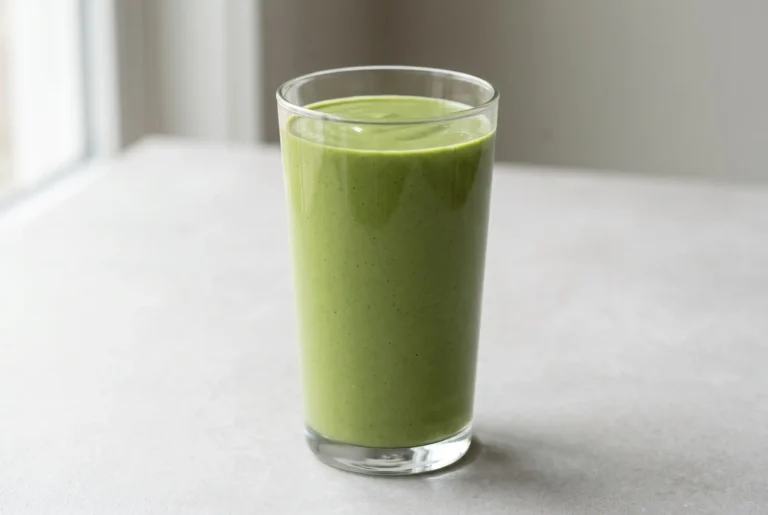
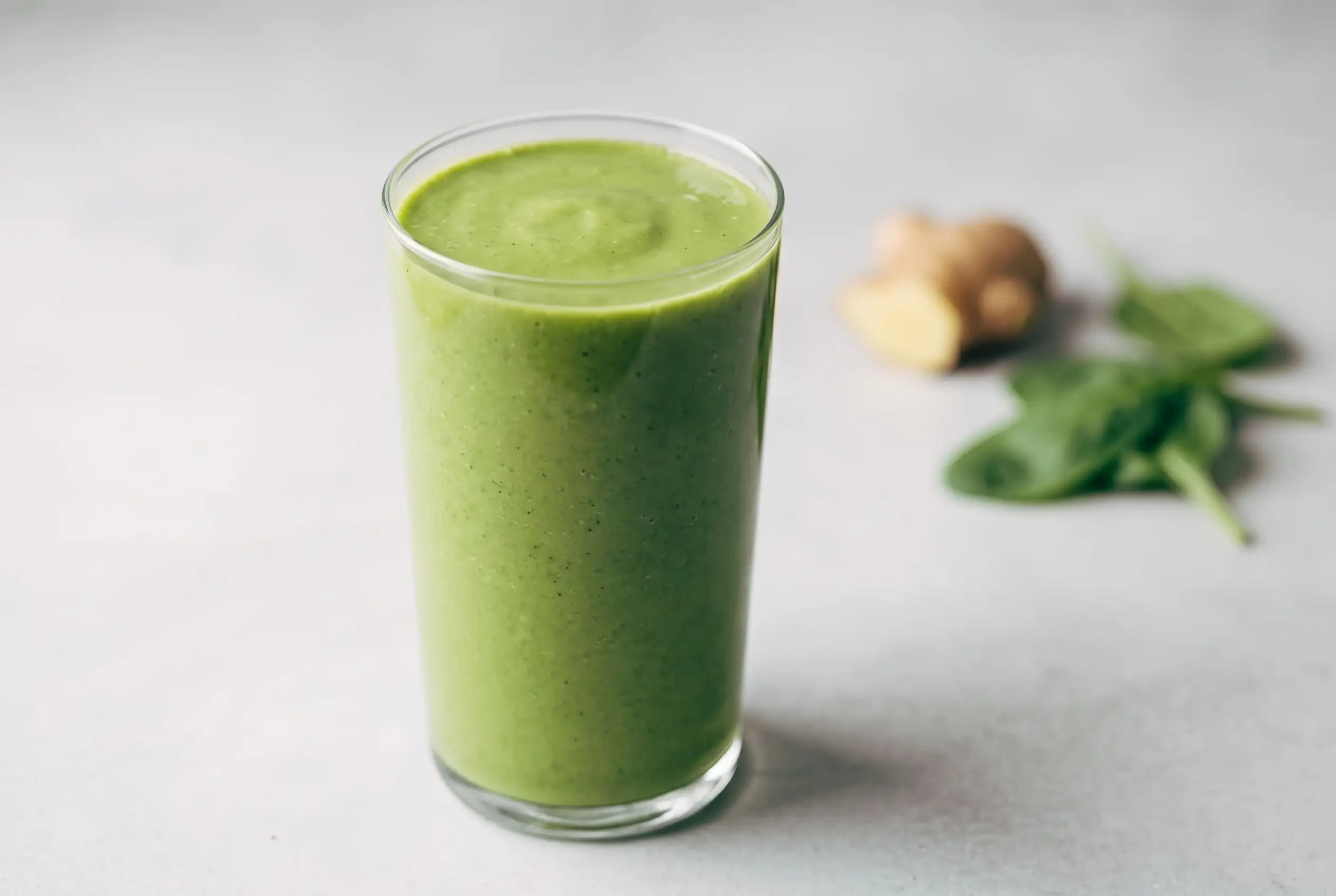
Green smoothie blends frozen mango and peach with leafy greens, almond milk, fresh ginger, cinnamon, and optional honey for a creamy drink with bright fruit flavor and a gently spiced finish. Frozen fruit is especially important here because it provides body without relying on ice, while mango gives the mixture enough richness to soften the flavor of kale or spinach.
A well-balanced mango peach green smoothie should pour smoothly while still feeling substantial. Small choices such as removing tough kale stems, starting with less liquid, and blending long enough for the greens to disappear into the fruit make a noticeable difference. The mixture is flexible, but its texture responds quickly to changes in fruit temperature, liquid quantity, and blender power.
Frozen Mango and Peach Create the Creamy Base
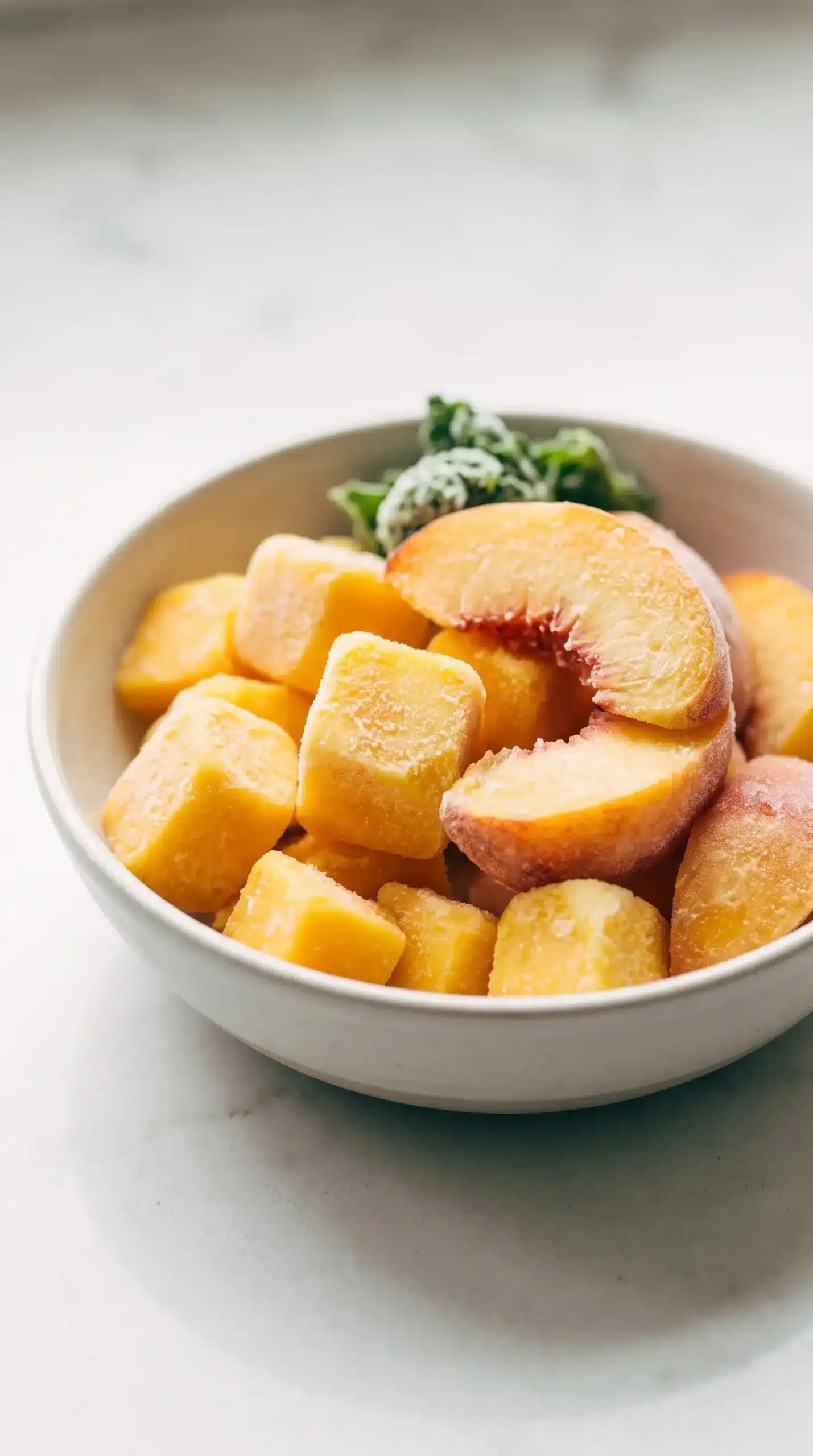
Frozen fruit does more than chill the drink. As the mango and peach break down, their frozen pieces thicken the liquid and create the smooth, cold texture associated with a properly blended green smoothie. Starting with fruit straight from the freezer produces considerably more body than using fully thawed pieces.
Mango contributes especially strong thickening power because its flesh becomes dense and silky when blended. Peach keeps the fruit profile lighter and adds a softer flavor alongside the mango. Together, they provide enough sweetness and body to support the greens without requiring a large amount of added sweetener.
Partially thawed fruit can still be used, but the consistency will be looser. In that situation, beginning with less almond milk gives the blender room to establish a thick base before additional liquid is added.
Leafy Greens Need a Smooth, Stem-Free Blend
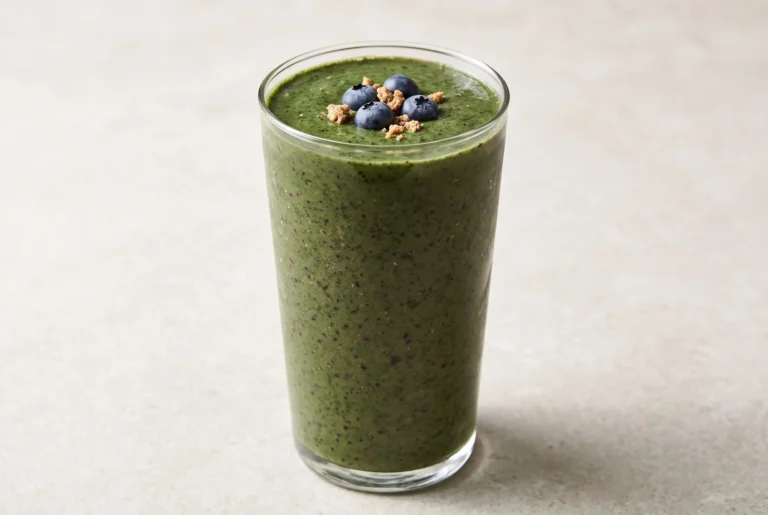
Kale and spinach both work, but they behave differently in the blender. Removing kale stems prevents tough fibers from interfering with the creamy fruit texture, while spinach is naturally more tender and typically disappears into the mixture with less blending. Spinach is especially easy to process in a berry green smoothie with spinach and frozen berries because its soft leaves break down readily alongside firm frozen fruit without adding fibrous stems.
Liquid Amount Determines Thick or Sippable Texture
Almond milk controls much of the finished consistency. A smaller amount creates a thick smoothie that moves slowly in the blender, while additional liquid shifts the drink toward a lighter, juice-like texture. Because frozen mango and peach can vary slightly in size and frostiness, the most useful approach is to treat the liquid quantity as adjustable.
Beginning on the thicker side makes corrections easier. More almond milk can always be poured in once the fruit and greens have broken down, but an overly thin smoothie is harder to restore without introducing more frozen fruit.
| Consistency | What to Look For | Useful Adjustment |
|---|---|---|
| Very thick | Mixture stalls or leaves unmoving pockets | Add a small splash of liquid and blend again |
| Creamy | Smooth vortex forms and the drink pours slowly | Stop once no leafy pieces remain |
| Light and sippable | Mixture flows quickly from the blender | Add more liquid only if that thinner texture is preferred |
Texture also changes after blending as the frozen fruit warms. A green smoothie with almond milk will gradually become more fluid if it sits, so it is useful to stop blending when the drink is slightly thicker than the exact consistency desired at the table.
Blender Technique Keeps the Green Smoothie Silky
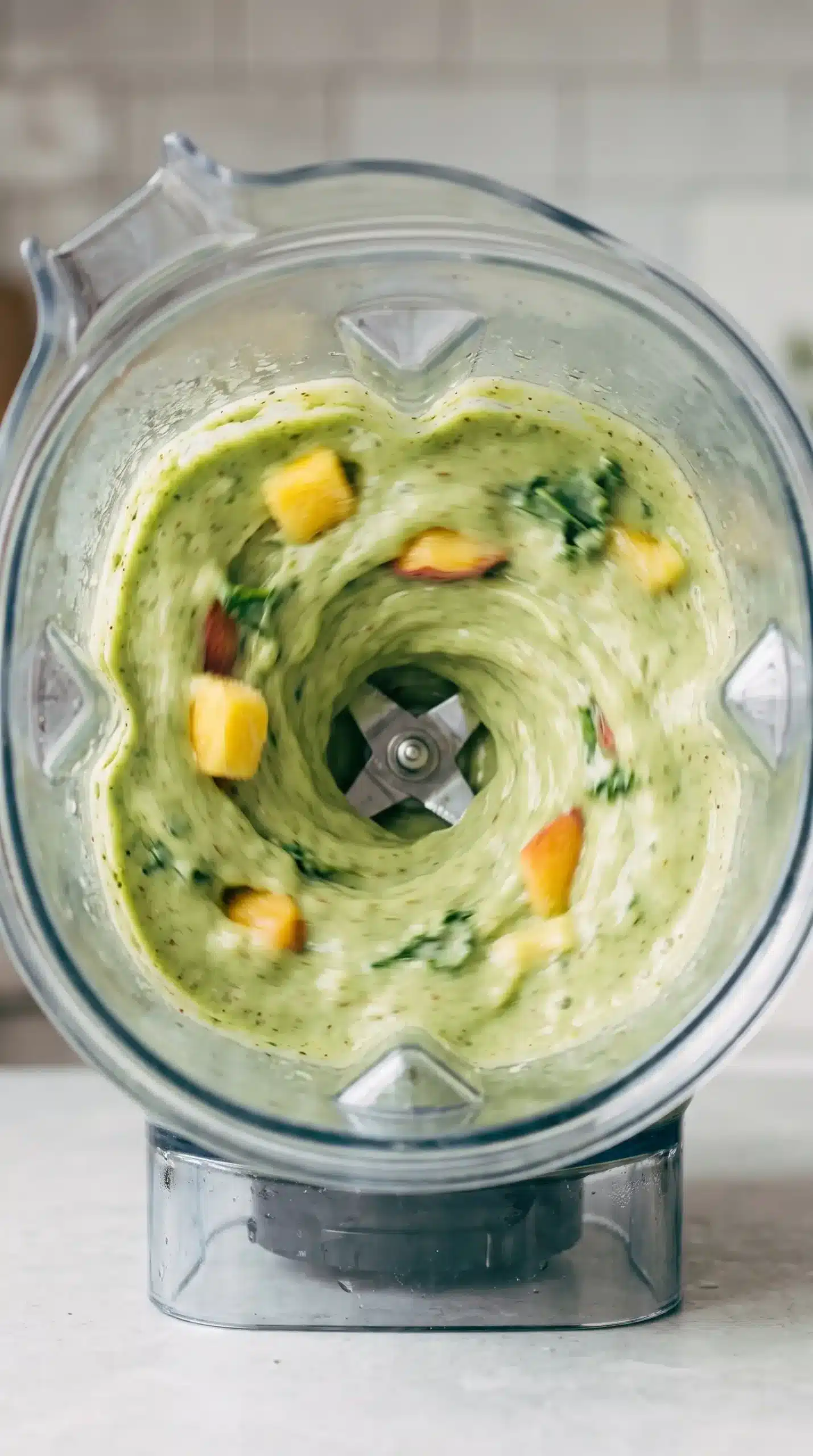
A high-speed blender is particularly helpful with leafy greens because strong circulation pulls small pieces repeatedly through the blades. That movement is what transforms kale or spinach from visible fragments into a smooth part of the drink.
Proper circulation matters more than simply running the machine for an extended period. When a thick mixture stops moving, the blades may spin underneath a stationary layer of fruit and greens without improving the texture. A small addition of liquid can restart the vortex and produce a more even blend.
Ingredient placement can also help a less powerful blender. Liquid near the blades gives them something easy to move first, while frozen fruit and greens can be drawn downward as blending continues. The mixture should ultimately look uniform, without streaks of leaves or large frozen pieces.
- Visible green flecks: continue blending until the leafy pieces become much finer.
- Frozen pockets: stop the blender if needed, redistribute the mixture safely, and add a little liquid when circulation remains poor.
- Thin texture: avoid adding the full possible amount of liquid at the beginning when a thick smoothie is preferred.
Ginger, Cinnamon, and Honey Need a Light Touch
Fresh ginger and cinnamon are powerful compared with the mild fruit and almond milk, so their best role is supportive. Ginger should provide a fresh, warm edge without dominating the mango and peach, while cinnamon works as a background spice. Honey is optional and is most useful after tasting, since naturally sweet frozen fruit may already provide enough sweetness.
Common Green Smoothie Mistakes Are Easy to Correct
Adding too much liquid immediately is one of the easiest ways to lose the creamy texture. Once the fruit has been heavily diluted, the drink may taste pleasant but feel closer to juice. Starting conservatively with almond milk keeps control in the blender.
Leaving thick kale stems attached creates another avoidable problem. Before blending, remove the stems and thick center ribs so the blender has less coarse material to process. The tender leaves break down more readily, which is especially useful in machines with less power.
Excessive sweetener can also hide the fruit instead of improving it. Mango and peach already contribute sweetness, so honey is better treated as an adjustment after the mixture has been blended and tasted.
- Too thick to circulate: add liquid in small amounts until the blender establishes movement.
- Too thin: use less liquid on the next blend and keep the fruit fully frozen.
- Too gingery: increase the fruit-and-liquid base instead of trying to mask the sharpness with extra honey.
- Too leafy: spinach provides a milder alternative when kale tastes stronger than desired.
Almond Milk Is Not the Only Suitable Liquid
Water can replace almond milk when a lighter flavor is preferred, while coconut water offers another workable option with its own mild sweetness. Each liquid changes the background character of the drink, but the same consistency rule applies: add only enough to let the frozen fruit and greens blend smoothly.
Optional Add-Ins Can Change Body and Richness
Protein powder can be blended in when a more substantial drink is wanted, though different powders may thicken the mixture to different degrees. If the blender begins to struggle after an addition, a modest splash of liquid can restore movement.
Cashews bring additional richness and can make the texture feel fuller. A powerful blender handles them most smoothly, while a less powerful machine may leave a slightly more noticeable texture depending on the cashews and blending time.
Coconut oil is another optional addition that changes the richness without altering the basic fruit-and-green combination. Since these additions affect thickness in different ways, they are best treated as individual adjustments instead of automatically combining several at once.
Freshly Blended Smoothie Has the Best Texture
Serving the drink soon after blending preserves the strongest contrast between the cold frozen fruit and the freshly processed greens. The mixture is at its thickest and most uniform at that point, before warming and natural separation begin to change its appearance.
Short Storage Requires Thorough Remixing
Refrigerated leftovers naturally separate because the blended fruit and greens contain suspended solids that settle differently from the liquid. Separation does not mean the drink was blended incorrectly. A vigorous shake or stir can bring the layers back together.
Cold storage also changes the experience compared with drinking it immediately. The smoothie loses some of the thick frozen-fruit character as it warms, even when kept chilled, and the greens may become more noticeable as the mixture sits.
Keeping the storage period short preserves a fresher flavor and more appealing consistency. If preparing ahead is unavoidable, use a tightly covered container, refrigerate promptly, and remix thoroughly before drinking.
Color and Flow Reveal When Blending Is Complete
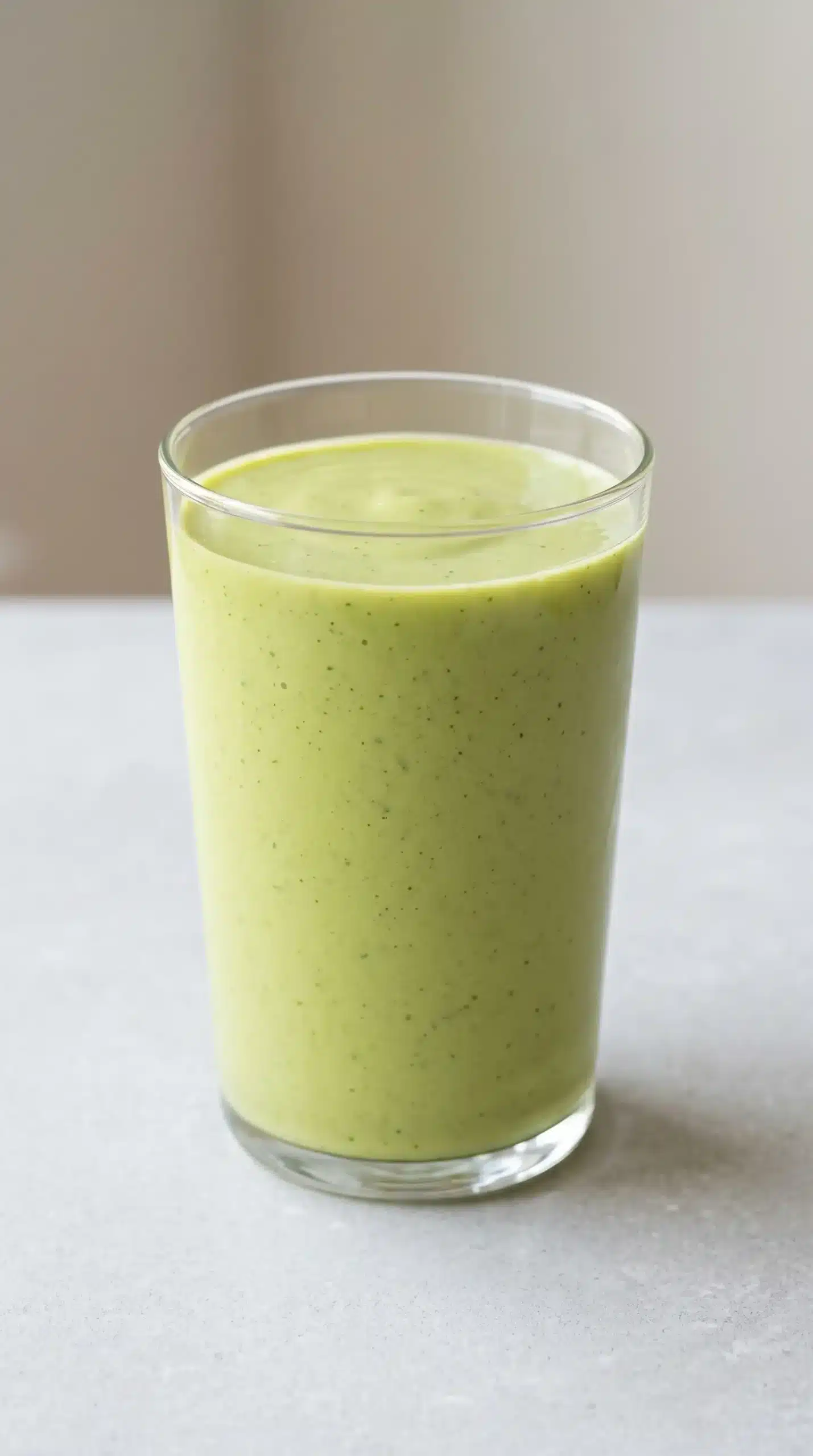
A properly blended kale green smoothie should look consistently colored from top to bottom, without long strands of greens or pale chunks of frozen fruit. Small specks can remain depending on the blender, but coarse pieces indicate that the mixture needs more circulation.
Movement inside the blender is another useful signal. Once a steady vortex forms, the ingredients repeatedly pass through the blades, allowing frozen fruit and leaves to become progressively smoother.
Sound can offer a practical clue as well. Large frozen pieces often create irregular impacts early in blending, while a fully processed mixture generally becomes more even in both movement and appearance. Visual texture remains the more dependable stopping point: the drink should be uniformly blended and easy to pour at the consistency you prefer.
Fruit Sweetness Should Lead the Green Smoothie
Frozen mango and peach provide enough flavor and body to make the greens part of the drink without letting them dominate it. Keeping the fruit frozen, controlling the almond milk gradually, and blending until the leaves are finely processed preserves that balance.
Honey, ginger, and cinnamon work best as small adjustments around that fruit-forward base. When texture is managed first and seasoning is adjusted after blending, the smoothie stays creamy, fresh-tasting, and easy to adapt without losing the character of the mango and peach.
Green Smoothie Questions About Sweetness, Greens, and Texture
Can spinach replace kale completely?
Yes. Spinach can replace kale and produces a milder leafy flavor with a more tender texture. Because spinach has softer leaves and no tough central stems that need the same attention, it is also especially convenient in a lower-powered blender.
Can fresh mango or peach replace the frozen fruit?
Fresh fruit can blend successfully, but the drink will be less cold and substantially thinner because it lacks the thickening effect of frozen pieces. Freezing the fruit beforehand is the better option when the desired result is a dense, creamy smoothie without adding ice.
Why does my smoothie taste less sweet than expected?
Fruit sweetness varies, and leafy greens plus almond milk can soften its impact. Blend first, taste, and then add honey only if needed. That approach keeps sweetness adjustable instead of committing the entire batch before its natural fruit flavor is clear.
Can the smoothie be made without almond milk?
Yes. Water works for a neutral, lighter result, and coconut water can be used when its mild sweetness fits the flavor you want. Whichever liquid is chosen, adding it gradually gives better control over consistency.
Why is my green smoothie foamy on top?
High-speed blending can incorporate air, especially when the mixture contains plenty of liquid. The foam is generally a texture issue, not a sign of failure. Letting the filled glass stand briefly or stirring it gently can reduce the airy top layer while leaving the blended drink underneath intact.
Green Smoothie with Mango, Peach, Ginger and Almond Milk
This green smoothie combines frozen mango and peach with leafy greens, almond milk, fresh ginger, cinnamon, and optional honey for a creamy, fruit-forward drink with a gently spiced finish. It is an easy choice for a quick, refreshing blended drink.
Ingredients
Method
Preparation
- Place all ingredients in a blender and blend until the mixture is completely smooth.
- Pour into a glass and enjoy.
Notes
Adjust the amount of almond milk to make the smoothie thicker or more juice-like. Water can be used instead of almond milk, and coconut water is another option, though it adds more natural sugar. A tiny pinch of salt can sometimes enhance the flavor. Frozen fruit works best for a smooth, creamy texture. Protein powder, coconut oil, or cashews can also be added for extra richness or protein. A high-speed blender gives the best results, including models such as Vitamix or Blendtec, while Ninja blenders are also a good lower-cost option. The smoothie is best consumed immediately after blending. It can be kept for later, but it should be shaken before drinking and is not recommended more than 24 hours after preparation.