From breakfast to dinner, from healthy meals to sweet desserts – Next Yum Recipes brings you quick, simple and tasty ideas for every occasion and every time.


Have you ever noticed how vegetable soup can taste flat one night, then suddenly taste amazing the next day?
Easy Vegetable Soup works because you build flavor in layers, not because you use rare ingredients. You start with a savory base, then add vegetables in a smart order so some turn tender while others keep a soft bite. The tomatoes give gentle acidity that keeps the broth lively.
Why You’ll Love This Easy Vegetable Soup
You get a dependable dinner that fits real weeknights. Most of the work happens early, then the pot simmers while the flavors settle and soften. Your kitchen will smell like sweet onion and herbs long before the soup is finished.
This soup is flexible without feeling random. You can lean lighter with more broth, or make it heartier with a thicker simmer. If you want a more filling, comfort-style comparison, check out this chicken dumpling soup recipe to see how dumplings change the texture and timing.
It also scales well. You can make a small pot for dinner, or a bigger batch for lunches that reheat easily.
How to Make This Easy Vegetable Soup
You begin by softening a classic onion, carrot, and celery base so it turns sweet and aromatic. You’re looking for vegetables that look glossy and slightly translucent, not browned. That gentle start keeps the broth clean and balanced.
Garlic goes in after the base is softened so it turns fragrant without tasting bitter. Then tomatoes and broth create the main body of the soup. A steady simmer helps the flavors blend while keeping the vegetables intact.
Zucchini and bell pepper do best when they’re added later. They cook fast, and you want them tender but still holding shape. When the soup is ready, the broth should taste savory with a light tomato tang, not sharply acidic.
Ingredient Insights for Easy Vegetable Soup
Olive oil: This helps you gently soften the base vegetables and carries flavor through the broth. A moderate heat keeps the oil from tasting harsh.
Onion: Onion builds sweetness as it cooks. When it’s ready, the sharp smell fades and you get a mellow, almost buttery aroma.
Carrots: Carrots add natural sweetness and color. They also hold their shape well, which keeps the soup from feeling mushy.
Celery: Celery adds a savory, slightly herbal note that makes the broth taste more complete. It’s subtle, but you notice it when it’s missing.
Garlic: Garlic brings warmth and depth. If it browns too much, it can taste bitter, so it’s best added once the base is already softened.
Zucchini: Zucchini turns tender quickly and adds a soft bite. Adding it later helps it stay pleasant rather than disappearing into the broth.
Bell pepper: Bell pepper adds sweetness and a gentle crunch when it’s not overcooked. It also makes the bowl look brighter and fresher.
Vegetable broth: Broth is the main flavor carrier. Low-sodium broth gives you better control, especially as the soup reduces slightly during simmering.
Diced tomatoes: Tomatoes add acidity and body. A good-quality can makes a noticeable difference, because the tomato flavor is present in every spoonful.
Dried thyme: Thyme brings a savory, earthy note that works well with tomatoes. It blooms during simmering and makes the broth taste more rounded.
Dried basil: Basil adds a gentle, sweet herb flavor. It supports the tomato without overpowering the vegetables.
Salt and pepper: Seasoning should happen in stages. A light hand early, then a final adjustment at the end, keeps the soup from tasting overly salty after it simmers.
Fresh parsley: Parsley lifts the final flavor and adds a fresh finish. You notice it most in the first bite when the soup is hot.
Texture & Flavor Experience
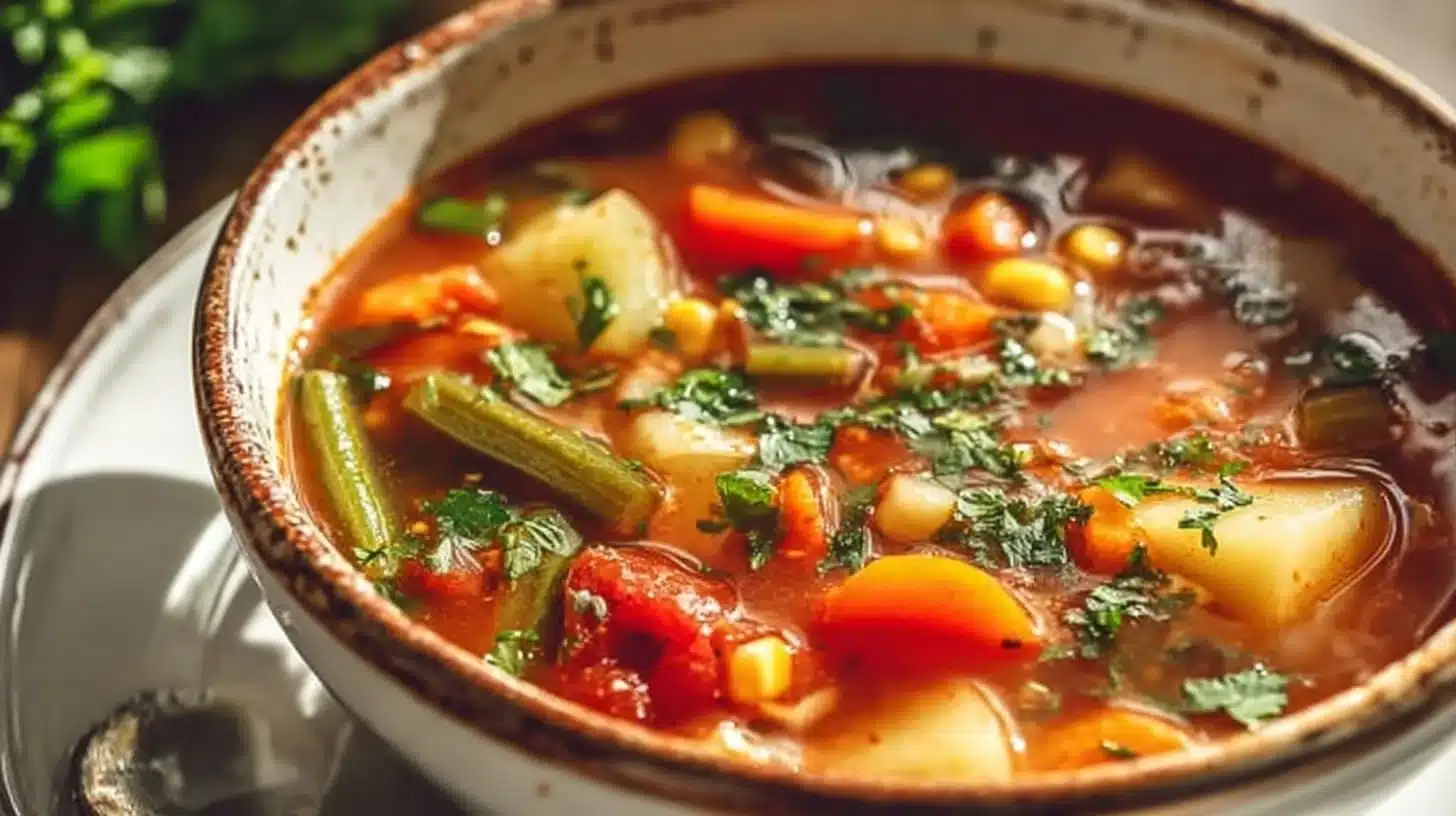
When it’s done right, the broth tastes savory and clean with a light tomato tang. The carrots and celery feel tender, while zucchini and bell pepper still have a soft bite instead of turning mushy.
You’ll see small dots of herbs in the broth, and you’ll smell sweet onion, garlic, and thyme rising with the steam. The spoon should feel full of vegetables, not just broth.

How to Serve Easy Vegetable Soup
Serve it hot in wide bowls so the vegetables don’t sink into a deep mug. Bread is the obvious partner, especially something crusty that can soak up broth without falling apart.
If you want a richer finish, a small drizzle of olive oil or a little grated Parmesan can help. Keep it modest so the soup still tastes bright and vegetable-forward.
Tips to Make Easy Vegetable Soup
- Let the onion, carrots, and celery soften until glossy and fragrant before adding liquid.
- Add garlic after the base vegetables so it turns aromatic without browning.
- Add zucchini and bell pepper later so they stay tender with a bit of bite.
- Use a gentle simmer instead of a hard boil to keep vegetables intact.
- Taste near the end and adjust salt gradually, especially if your broth is already seasoned.
- Finish with parsley right before serving so it stays fresh and green.
Common Mistakes to Avoid
- Boiling too hard, which can break down zucchini and bell pepper. Keep the soup at a steady, gentle simmer.
- Adding zucchini and bell pepper too early, which can make them soft and dull. Add them later for better texture.
- Over-salting early, which can intensify as the soup simmers. Season lightly, then adjust at the end.
- Using low-quality canned tomatoes, which can make the broth taste flat. Choose a better can when tomatoes are a main flavor.
Storing Tips
Cool the soup within two hours, then store it airtight in the fridge. The flavor often improves after a rest, and the broth can taste more blended the next day.
When reheating, use low heat and stir occasionally. If the soup thickens in the fridge, a small splash of broth or water brings it back to your preferred consistency without watering down the flavor.
FAQs
Can you use frozen vegetables?
Yes. Frozen vegetables work well, especially for carrots or mixed blends. Add them with enough simmer time to heat through, and keep zucchini-type vegetables later so they don’t turn too soft.
How do you make the soup more filling?
You can add beans, cooked pasta, or grains near the end. In many cases, adding them late helps you avoid overcooking and keeps the texture more pleasant.
Will the soup taste better the next day?
Often, yes. The herbs and tomatoes mellow and blend overnight, so the broth can taste more rounded when you reheat it gently.
Conclusion
Easy Vegetable Soup gives you a flexible, weeknight-friendly meal that still tastes thoughtful. Once you get the vegetable timing right, you can repeat the method with what you have on hand. For another solid reference and extra tips, see Easy Vegetable Soup Recipe – NatashasKitchen.com.

Vegetable Soup
A simple and satisfying Vegetable Soup made with fresh vegetables and savory broth, perfect for weeknight dinners.
Ingredients
Method
Preparation
- In a large pot, heat olive oil over medium heat.
- Add chopped onion, carrots, and celery, sauté until the vegetables are softened, about 5 minutes.
- Stir in garlic and cook for another minute.
- Add the zucchini and bell pepper, cooking for a few more minutes.
Cooking
- Pour in the vegetable broth and canned tomatoes, along with dried thyme, basil, salt, and pepper.
- Bring to a boil, then reduce heat and simmer for 20-30 minutes.
- Taste and adjust seasoning as needed.
Serving
- Serve hot, garnished with fresh parsley.
Notes
Cool the soup to room temperature within two hours of cooking. Store in an airtight container in the refrigerator for up to 4 days. For longer storage, freeze in portions for up to 3 months.