From breakfast to dinner, from healthy meals to sweet desserts – Next Yum Recipes brings you quick, simple and tasty ideas for every occasion and every time.


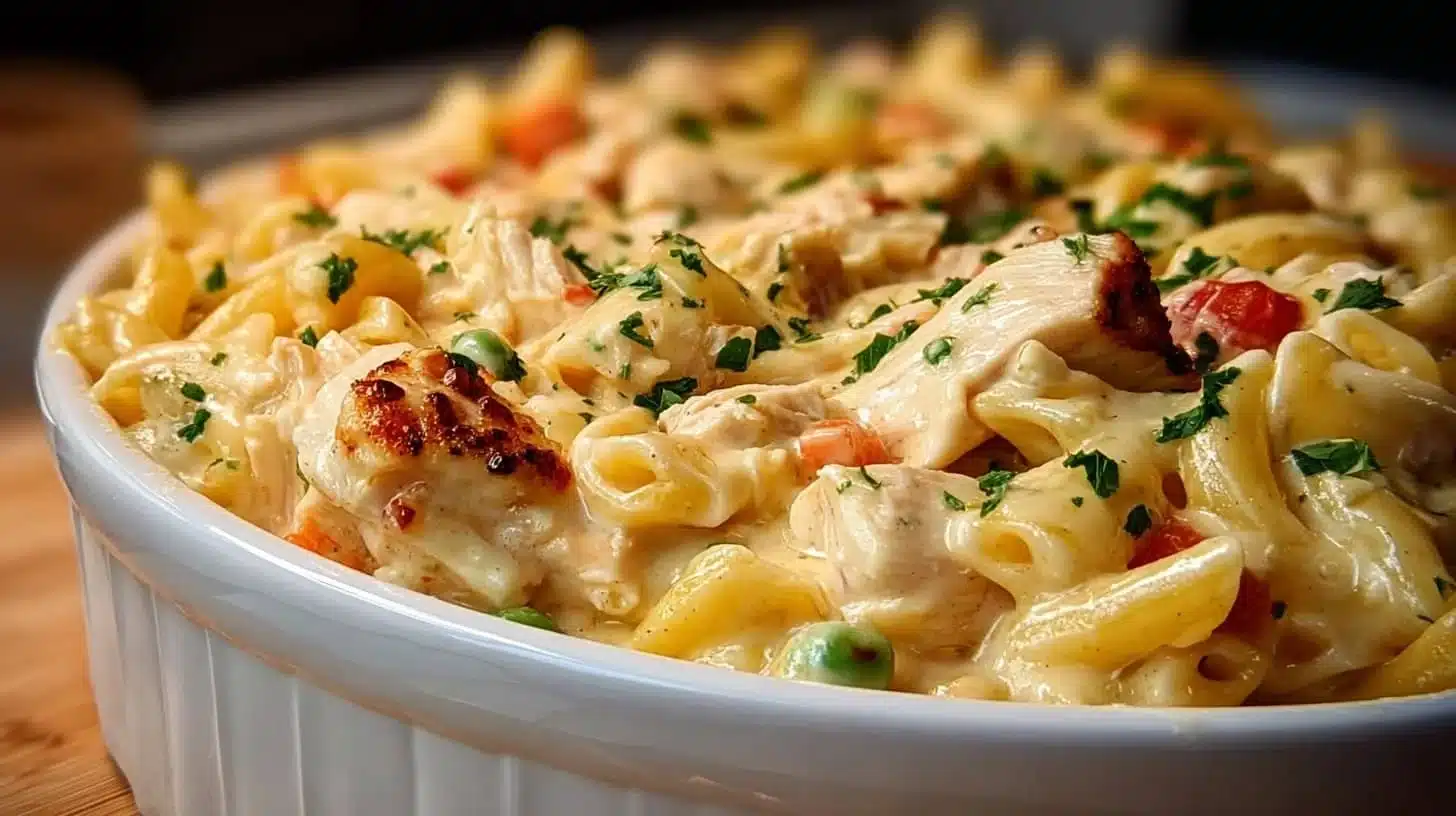
What if the part you love most about pot pie is the creamy filling, not the crust?
Chicken Pot Pie Pasta gives you that familiar comfort in a faster format. You get tender pasta coated in a savory, creamy sauce with chicken and vegetables, but you skip the pastry work. It’s cozy, practical, and weeknight-friendly when you want something filling without a long bake.
Why Make This Recipe
You can make this dish with everyday staples, especially if you already have cooked chicken in the fridge. It’s also forgiving. If your vegetables mix changes or your pasta shape is different, the meal still lands where you want it to.
The biggest win is texture control. Instead of hoping a crust bakes evenly, you focus on a sauce that clings to pasta and warms everything through. If you’re craving a more traditional pot pie on another night, this beef pot pie recipe is a good point of comparison for that classic vibe.
You also get easy leftovers. The flavors settle and deepen after a rest, so the next-day bowl can taste even more “pot pie” than the first.
How to Make This Chicken Pot Pie Pasta
The method is all about sequence. You want the sauce to thicken slightly before the pasta goes in, so it coats instead of pooling. Keep your heat at a gentle simmer. If you see steady bubbles around the edges and smell a warm, savory aroma, you’re on track.
Add cooked chicken and vegetables once the sauce is close to finished. That way you’re warming them through, not cooking them hard. When it’s ready, the sauce looks glossy and leaves a clean trail for a moment when you drag a spoon through the pan.
Ingredient Insights for Chicken Pot Pie Pasta
Pasta: Short shapes hold sauce better than long noodles in this style of dish. If you cook it just to tender, it stays springy after mixing instead of turning soft and heavy.
Cooked chicken: Shredded chicken absorbs sauce quickly, which boosts flavor. If your chicken seems a little dry, give it a minute or two in the warm sauce before judging. It often relaxes and softens once it’s coated.
Chicken broth: Broth builds the savory base that makes this taste like pot pie. Low-sodium broth can help you avoid an overly salty finish, especially if your chicken is already seasoned.
Heavy cream: Cream gives you that pot pie richness and a smooth mouthfeel. Keep it at a gentle heat. A hard boil can tighten the sauce too fast and make it feel thicker than you planned.
Frozen mixed vegetables: Frozen vegetables are convenient, but they release water as they heat. You’ll get a better final texture if your sauce is already slightly thick before they go in.
Dried thyme: Thyme is a small detail that shifts the flavor from “creamy chicken pasta” to “pot pie.” Use it as a background note so it reads warm and familiar, not herbal and sharp.
Texture & Flavor Experience
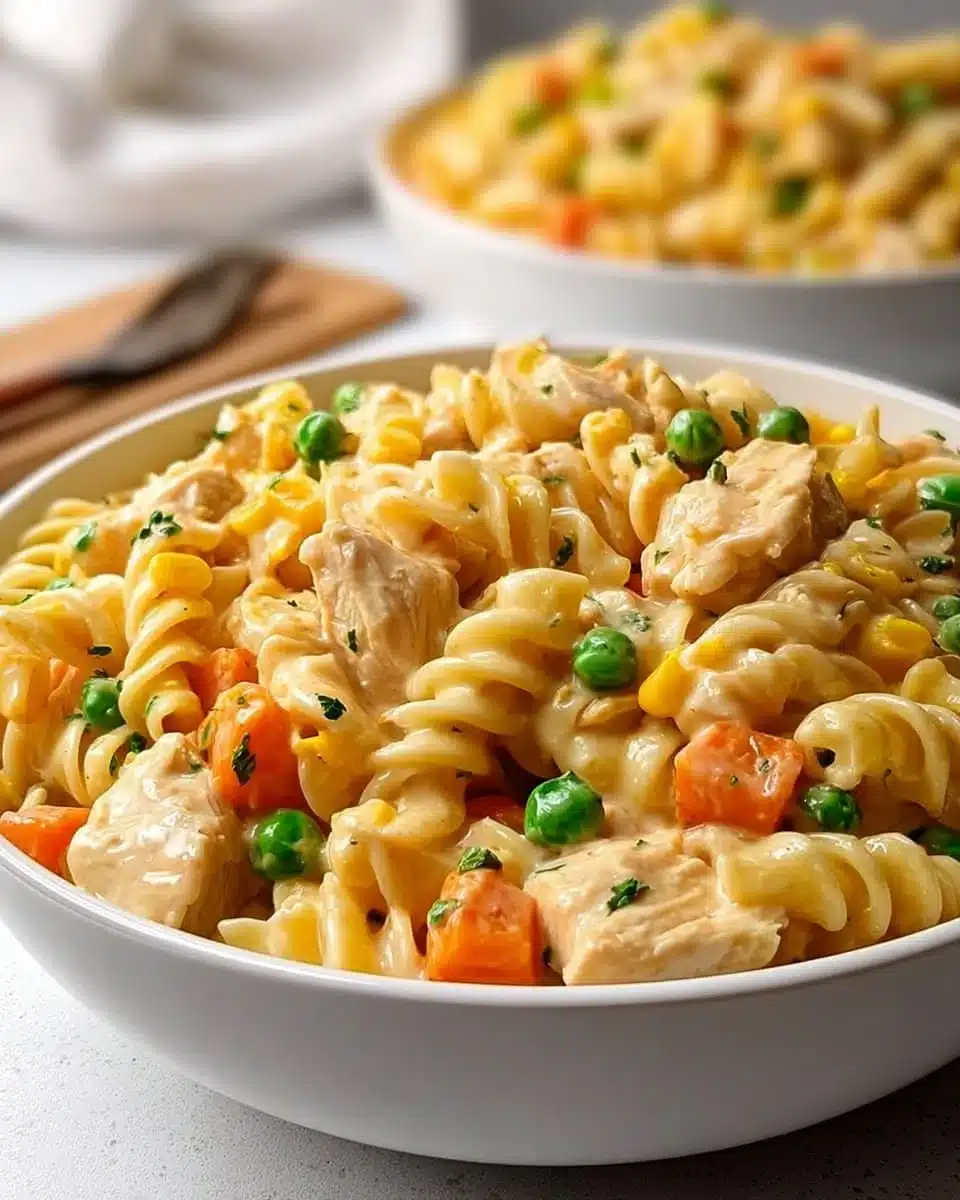
When it’s done right, the sauce clings to the pasta and tastes savory and mellow, with a gentle herb note. The chicken feels tender, not stringy, and the vegetables stay distinct instead of melting into the sauce.
A simple cue is how it sounds when you stir. You’ll hear a soft, thick swish, not a watery slosh. The smell should be creamy and savory, with a light thyme warmth that hits as the pan steams.
How to Serve Chicken Pot Pie Pasta
Serve it hot in shallow bowls so the sauce spreads and cools just enough to taste the seasoning. A crisp green salad is a smart side because it cuts the richness without competing.
If you want a brighter finish, a small squeeze of lemon on top can help, especially if your broth is very savory. Keep it subtle so the dish still tastes like pot pie.
Tips to Make Chicken Pot Pie Pasta
- Cook your pasta until just tender, then drain well so extra water does not thin the sauce.
- Let the sauce simmer gently until it coats the back of a spoon before you add chicken and vegetables.
- Stir around the edges of the pan where cream sauces like to stick first.
- Add frozen vegetables when the sauce is slightly thick so their moisture does not make it watery.
- If the sauce gets too thick after mixing in pasta, loosen it with a small splash of broth, then stir and reassess.
- Warm the chicken in the sauce just until hot so it stays tender.
Common Mistakes to Avoid
- Boiling the sauce hard, which can make the cream tighten too quickly and stick to the pan.
- Adding pasta to a sauce that is still thin, which can leave you with a soupy, uneven coating.
- Overheating cooked chicken until it turns stringy instead of gently warming it through.
- Dumping in frozen vegetables and serving immediately, which can cool the pan and leave vegetables underheated.
Storing Tips
This pasta will thicken as it sits because the starch keeps absorbing sauce. Store leftovers in an airtight container in the fridge. When you reheat, use low heat and add a small splash of broth or cream to bring the sauce back to a smooth, creamy texture.
If you heat it too fast, the sauce can stick and tighten before it loosens. A slower reheat with a few stirs usually fixes that.
FAQs
Can you use rotisserie chicken for Chicken Pot Pie Pasta?
Yes. It’s one of the easiest options, and it tends to stay tender. Add it near the end so it warms through without cooking again.
How do you keep the sauce from turning watery?
Let the sauce thicken slightly before adding vegetables, since frozen mixes release moisture. If it still seems thin, give it another minute or two at a gentle simmer before you add the pasta.
What pasta shape works best here?
Short shapes that hold sauce work well. Ridged or curved pasta usually catches more of the creamy coating than smooth, long noodles.
Can you make it more like classic pot pie flavor?
Keep the herbs warm and simple, and lean on savory broth. If you want another technique reference for pot pie style meals, this Chicken Pot Pie Pasta Recipe is useful for comparing flavor cues and finishing touches.
Conclusion
Chicken Pot Pie Pasta gives you the comfort you want with less effort than a traditional pie. Focus on a gently thickened sauce, warm your chicken instead of cooking it again, and you’ll get that cozy pot pie feel in a quick skillet dinner.

Chicken Pot Pie Pasta
A creamy, comforting one-skillet meal that layers the flavors of chicken pot pie over tender pasta, perfect for quick weeknight dinners.
Ingredients
Method
Cooking Pasta
- Cook the pasta according to package instructions. Drain and set aside.
Preparing the Sauce
- In a large skillet, combine the chicken broth, heavy cream, garlic powder, onion powder, dried thyme, salt, and pepper. Bring to a simmer over medium heat.
- Stir in the shredded chicken and frozen mixed vegetables, cooking until heated through.
- Mix in the cooked pasta, ensuring everything is well combined.
- If desired, add in cheddar cheese and stir until melted.
Serving
- Serve warm, garnished with fresh parsley.
Notes
Cool the pasta to room temperature before storing. Keep leftovers in an airtight container in the refrigerator for up to 3–4 days. Reheat gently on the stovetop over low heat with a splash of chicken broth or cream to restore the sauce.


