From breakfast to dinner, from healthy meals to sweet desserts – Next Yum Recipes brings you quick, simple and tasty ideas for every occasion and every time.


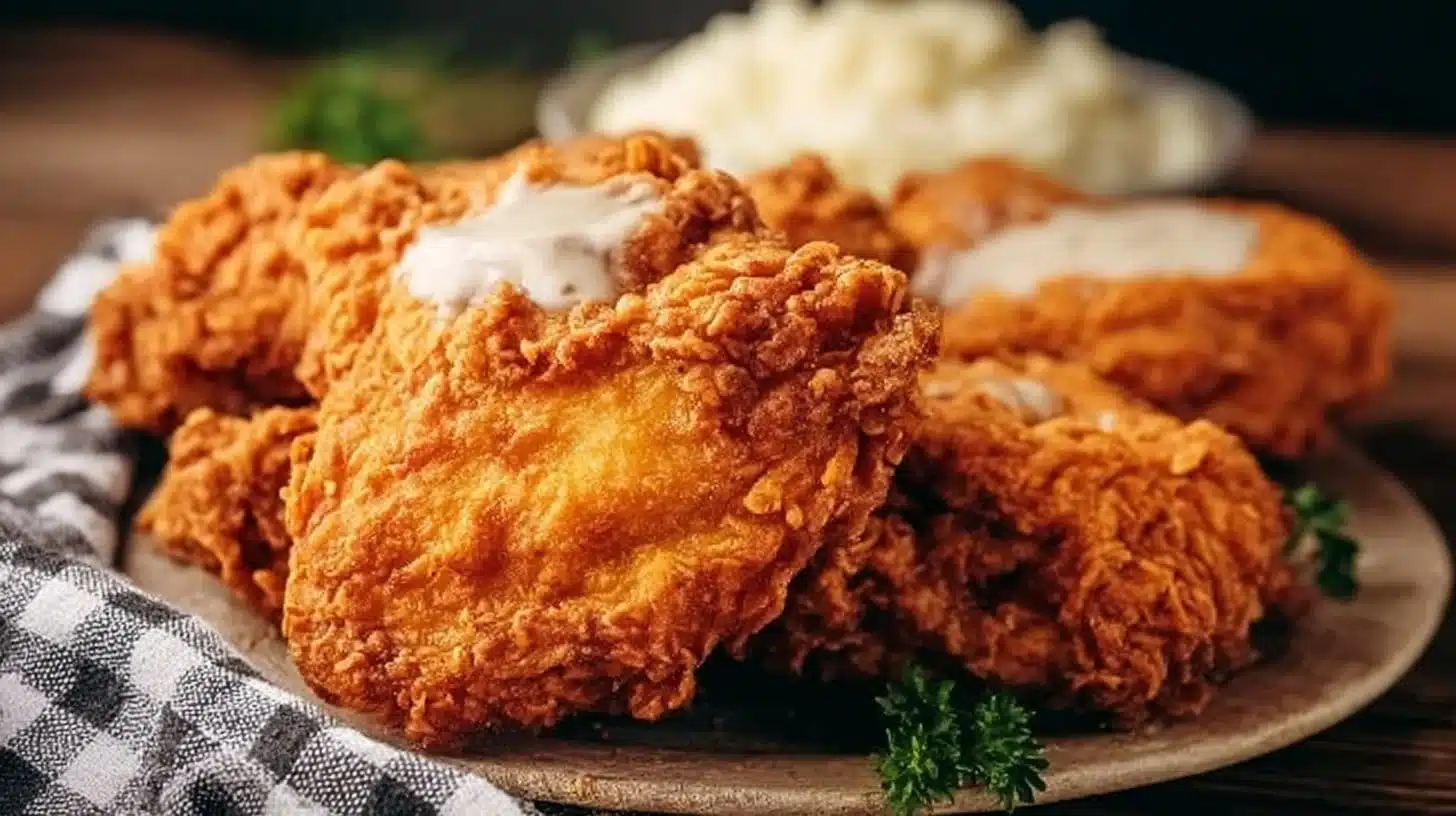
What actually separates truly crispy Chicken Fried Chicken from the versions that lose their coating after the first bite?
When you cook Chicken Fried Chicken, you’re managing texture more than anything else. You want a crust that stays attached, shatters slightly when cut, and holds up under warm country gravy. That balance comes from how you dredge, rest, and fry, not from complicated ingredients.
The method borrows from familiar Southern-style frying techniques. If you’ve ever made Chicken Fried dishes before, the workflow will feel immediately recognizable.
Why Make This Recipe
You work with simple pantry staples and thin-sliced chicken, which keeps preparation realistic for weeknights. The dredge mixture is designed to create lift, helping the coating fry up light instead of dense.
The buttermilk mixture plays a dual role. It adds flavor, and it helps the flour cling more effectively during the second dredge. This small detail often decides whether the crust stays intact or slides off in the pan.
The gravy also benefits from practicality. Using reserved frying oil builds flavor that feels cohesive rather than separate from the chicken.
How to Make This Chicken Fried Chicken
You begin by coating the chicken with seasoned flour, then dipping into the buttermilk mixture, followed by a second pass through flour. The pressing step matters here. When you press flour firmly into the surface, you create small ridges that crisp beautifully during frying.
Resting the dredged chicken briefly allows the coating to hydrate and bind. You may notice the surface look slightly damp or pasty. That’s often a good sign. It means the crust is more likely to hold during frying.
Shallow frying at steady heat sets the crust quickly. When the oil temperature stays stable, the coating turns golden while the interior cooks evenly. Rapid bubbling that looks violent usually signals excessive heat.
The gravy stage transforms leftover oil into a smooth sauce. As flour cooks in the fat, the mixture develops a faint nutty aroma before milk is added.
Ingredient Insights for Chicken Fried Chicken
Thin-sliced chicken breasts: Thinner cuts cook faster and more evenly. They also reduce the risk of a burnt crust with an undercooked center.
Flour: Flour forms the structural base of the crust. Proper seasoning ensures the coating tastes balanced rather than bland.
Buttermilk: Buttermilk introduces mild tang and improves adhesion. Its acidity also helps tenderize the chicken slightly.
Egg: Egg strengthens the coating bond. It creates a sticky bridge between meat and flour layers.
Baking powder and baking soda: These add subtle aeration. The result is a lighter, crispier crust instead of a compact shell.
Reserved frying oil: This deepens gravy flavor. It carries browned notes from the chicken into the sauce.
Milk: Milk builds the gravy’s body. Gradual addition helps maintain a smooth texture.
Texture & Flavor Experience
When everything works together, you get a crust that feels crisp and structured, not greasy or soft. Cutting into the chicken should reveal a juicy interior with coating that stays firmly attached.
The gravy adds richness without overwhelming the crust. Instead of masking texture, it complements it, soaking in lightly while preserving some crunch.
How to Serve Chicken Fried Chicken
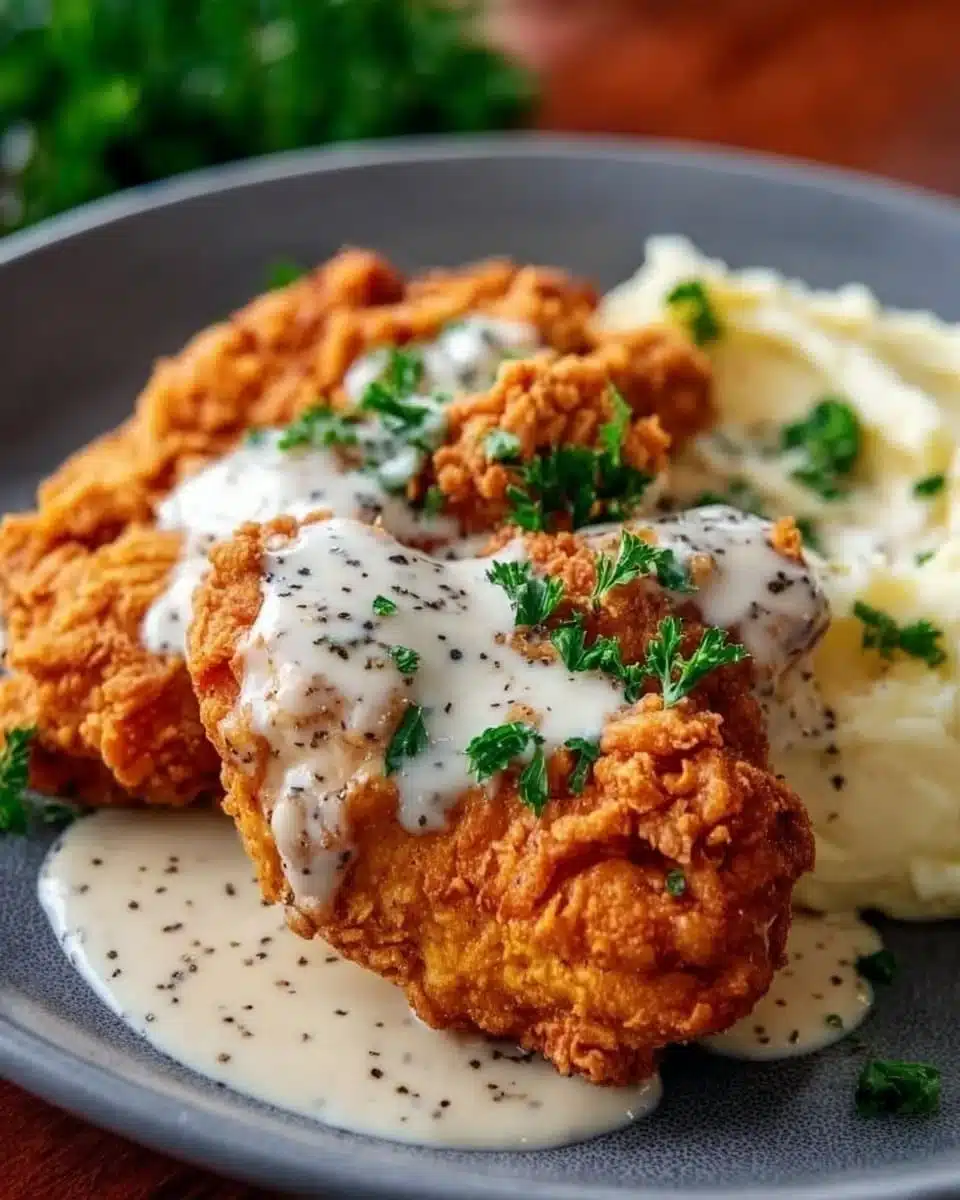
You’ll notice the best texture serving immediately while the crust is hot. Classic sides such as mashed potatoes naturally absorb gravy and balance the crisp coating.
For contrast, something fresh or acidic works well. Pickles or slaw cut through richness and keep the plate from feeling heavy.
When plating, spoon gravy gently over the chicken rather than fully submerging it. This preserves more of the crisp surface.
Tips to Make Chicken Fried Chicken
- Pat the chicken dry before dredging to improve coating adhesion.
- Press the flour firmly during the second dredge to build texture.
- Rest coated chicken briefly before frying.
- Maintain steady oil temperature for even browning.
- Fry in batches to avoid cooling the oil.
- Whisk gravy continuously for the smoothest texture.
- Use a wire rack instead of paper towels for draining.
Common Mistakes to Avoid
Unstable oil temperature is one of the most frequent issues. Excess heat burns the crust, while low heat produces a greasy coating. A thermometer helps remove guesswork.
Skipping the pressing step during dredging often leads to coating separation. Without firm contact, the crust struggles to bind properly.
Storing Tips
You can refrigerate leftovers, though the crust naturally softens over time. Reheating in the oven helps restore some crispness by driving off excess moisture.
For best texture, store gravy separately and warm gently before serving.
FAQs
Why does the coating sometimes fall off?
This usually happens when the dredge doesn’t bind properly or the chicken enters oil before resting.
How do you know the oil is ready?
Steady, moderate bubbling around the chicken signals proper frying temperature.
Can you make the gravy thicker?
Yes. Additional simmering or slight flour adjustments change consistency.
Is resting the dredged chicken necessary?
In many cases, yes. Resting improves crust adhesion and stability.
Conclusion
This Chicken Fried Chicken approach focuses on technique-driven texture and a gravy that feels integrated rather than separate. With careful dredging and steady frying, you get consistent, satisfying results.
For additional perspective on classic preparation, see Tornadough Alli’s Chicken Fried Chicken, which explores a similar style and workflow.
Chicken Fried Chicken
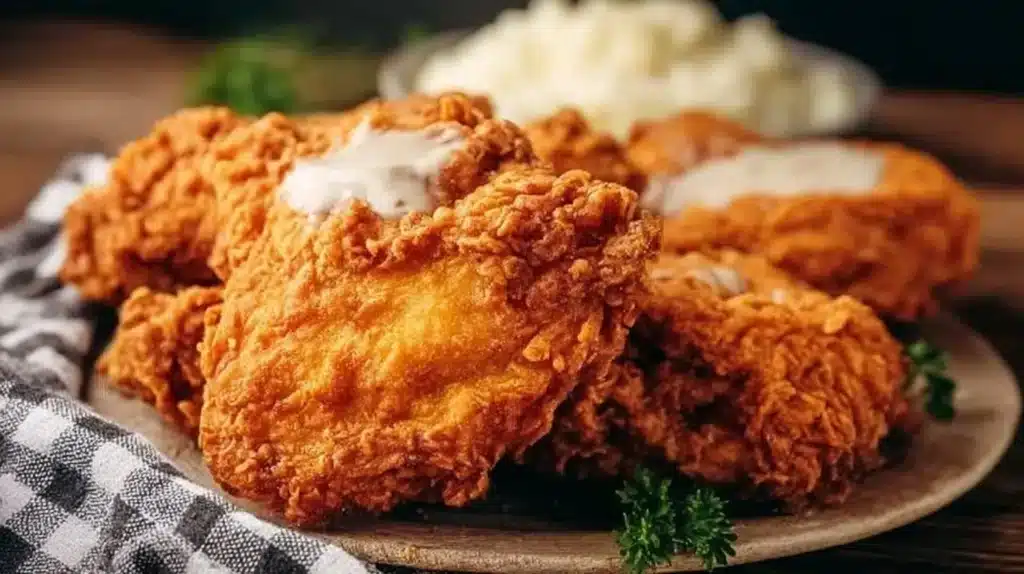
This Chicken Fried Chicken features a crisp, golden crust and creamy country gravy, making it a perfect comfort meal for the whole family.
Ingredients
Method
Preparation
- Heat oil in deep fryer or large pan on stove (a few inches deep) to 325°F.
- In a large bowl, whisk together the flour, baking powder, baking soda, salt, pepper, and garlic powder.
- In another bowl, whisk together the buttermilk, egg, and hot sauce.
- Dredge the chicken in the flour mixture, then dip into the egg mixture, and back into the flour mixture, making sure to press down the flour.
Cooking
- Place chicken in the pan/deep fryer and fry on each side for 3-5 minutes until golden brown.
- Remove and drain on a paper towel lined plate, and repeat with all chicken.
Making the Gravy
- In a large pan, add 1/4 cup of oil from cooking and heat on medium-high.
- Stir in the flour until absorbed and cook for about 1 minute.
- Slowly add in the milk, whisking to blend and heat until thickened, then stir in salt and pepper to taste.
- Pour gravy over individual chicken pieces before serving.
Notes
Serve immediately while the crust is hot. Classic pairings include mashed potatoes and green beans. Refrigerate chicken and gravy separately for best texture when stored.


