From breakfast to dinner, from healthy meals to sweet desserts – Next Yum Recipes brings you quick, simple and tasty ideas for every occasion and every time.


 This Recipe
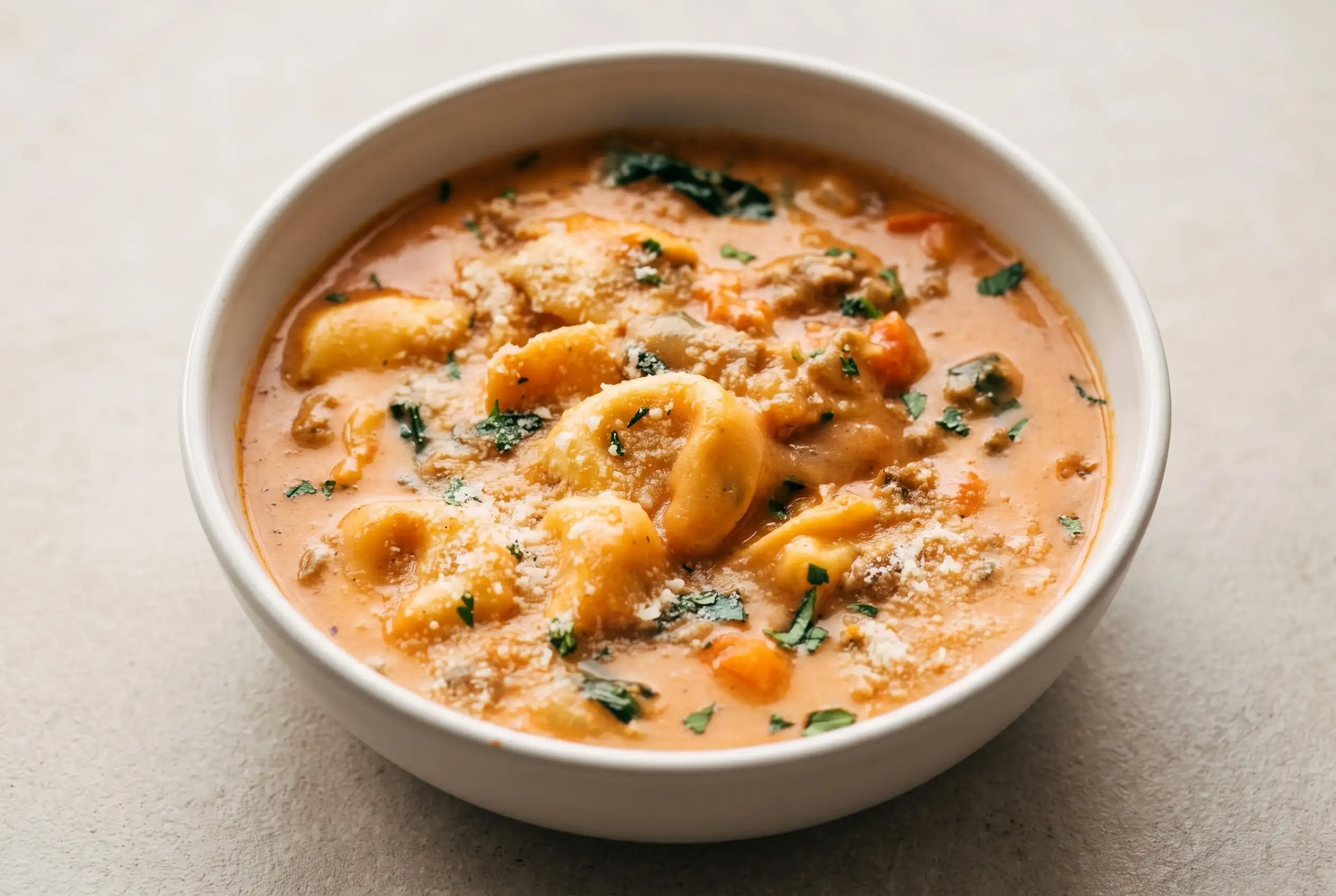
Ang’s Creamy Tortellini Soup is a rich, cozy creamy tortellini soup built around mild Italian sausage, tender vegetables, tomato paste, white wine, cheese tortellini, and a silky cream finish. The sausage and fennel give the broth a savory Italian character, while flour helps create enough body to carry the cream without making the soup feel thin. Fresh spinach, parsley, and Parmesan bring brightness at the end.
What makes the bowl especially satisfying is the contrast between the hearty sausage base and the delicate refrigerated tortellini. The pasta cooks directly in the finished soup, so its cheese filling becomes part of every spoonful. A few small choices during cooking make a noticeable difference, especially when browning the sausage, developing the tomato paste, adding the broth gradually, and keeping the finished soup at a gentle simmer.
Why Ang’s Creamy Tortellini Soup Has Such a Full Flavor
The flavor develops in layers instead of relying on the cream alone. Sausage starts the foundation, followed by onion, celery, and carrots that soften in the rendered cooking fat. Garlic, Italian seasoning, fennel seed, and tomato paste deepen that base before white wine loosens the concentrated flavors from the pot.
Tomato paste is particularly important because it gives the broth a concentrated savory-tomato character without turning the soup into a tomato-heavy dish. The chicken broth then carries those flavors through the simmer, while half and half or heavy cream rounds out the finished soup.
Once the cheese tortellini enters the pot, the character shifts again. The pasta adds substance and its own cheese filling, while spinach contributes a fresh green note that keeps the creamy sausage tortellini soup from feeling one-dimensional.
The Sausage and Fennel Base Sets the Direction
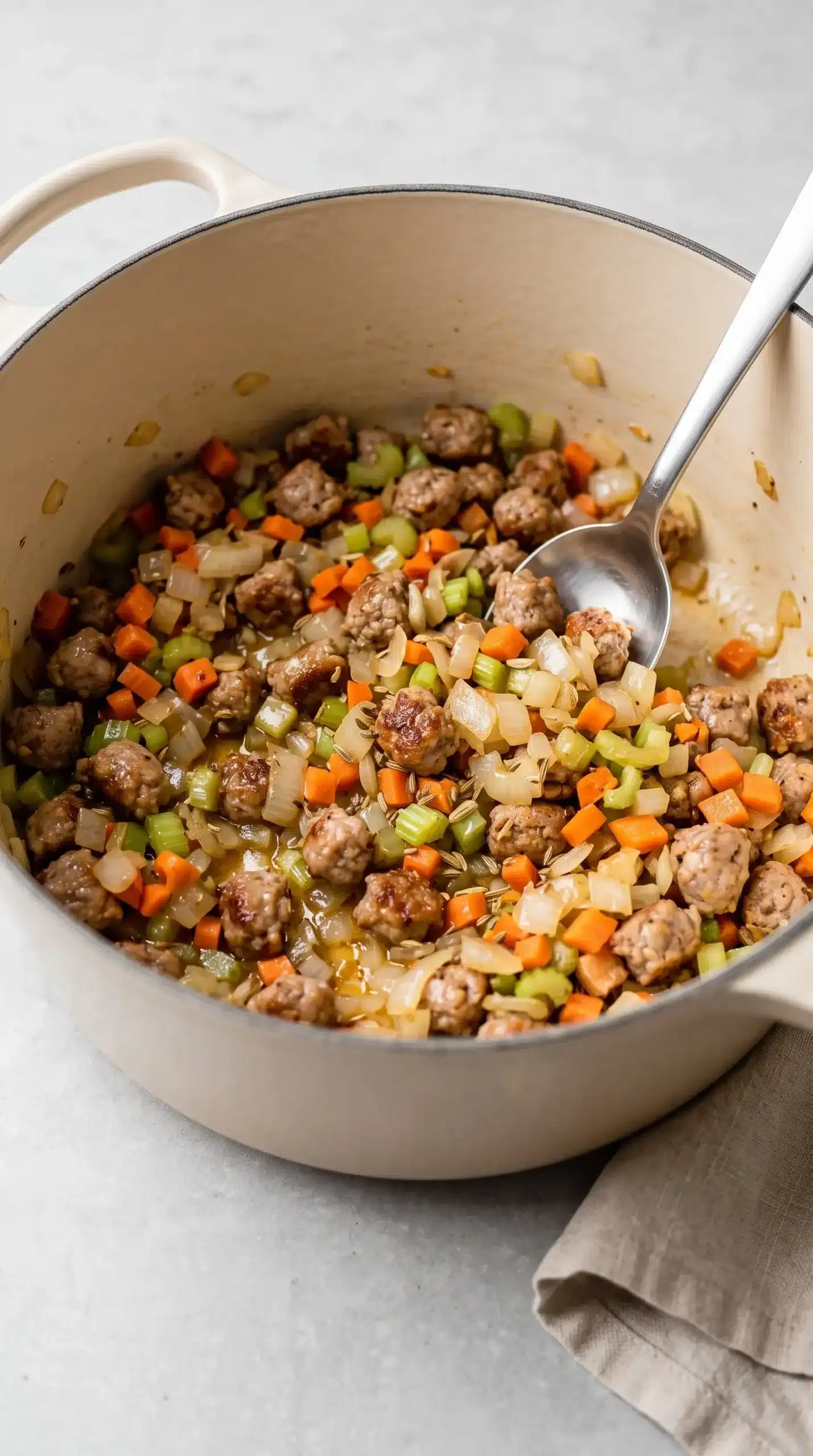
Mild Italian sausage works especially well here because it brings seasoning and richness without overpowering the other ingredients. Break it into small pieces as it cooks so the sausage distributes evenly throughout the soup instead of forming large chunks.
Crushed or chopped fennel seed reinforces the sausage’s Italian profile. Its flavor is noticeable, but it does not need to dominate. Keeping the fennel measured as written allows the tomato, vegetables, broth, and dairy to remain part of the overall balance.
- Small sausage pieces: distribute the meat through more spoonfuls.
- Soft vegetables: create a smoother base before the broth is added.
- Developed tomato paste: gives the broth greater depth.
Tomato Paste, Wine, and Flour Need Separate Attention
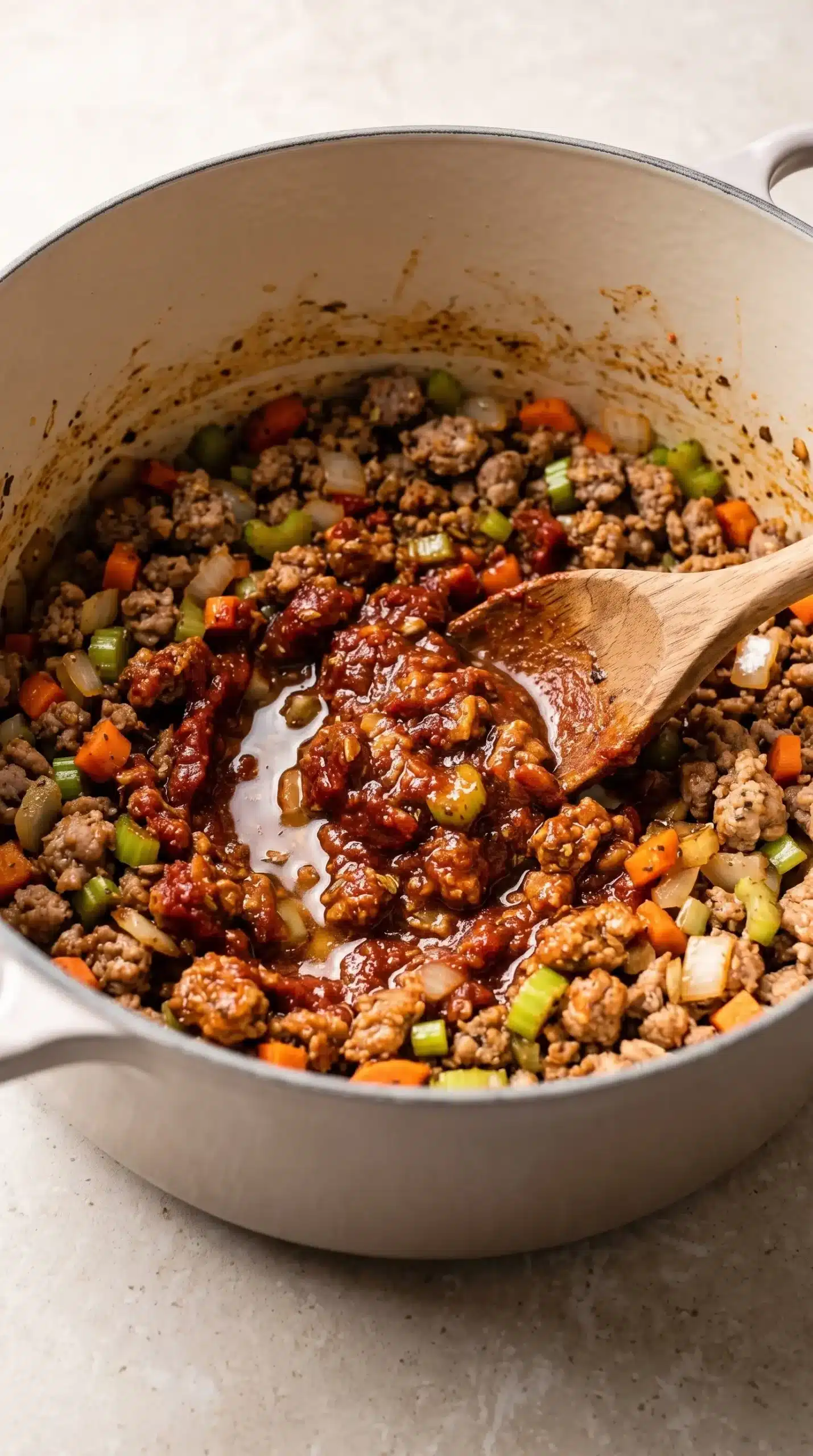
Three additions have very different jobs in the pot. Tomato paste develops concentrated flavor, white wine loosens the browned and seasoned mixture, and flour supplies the structure needed for the creamy broth. Treating them as separate stages makes the texture easier to control.
Let the tomato paste cook with the garlic and seasonings for several minutes, stirring so it does not scorch, and cook until it deepens in color. The mixture should become fragrant before the wine goes in. After the wine has cooked for a few minutes, the flour can be stirred into the sausage mixture.
The flour will make the mixture look sticky and dry at first. That appearance is expected. Gradually adding chicken broth while stirring gives the flour liquid to disperse into, reducing the chance of stubborn flour pockets and helping the soup develop an even consistency.
How the Vegetables Shape the Broth
Onion, celery, and carrot are more than background ingredients in this cheese tortellini soup. Their softened texture becomes part of the broth’s body, while their mild sweetness balances the savory sausage and concentrated tomato paste.
Dice the vegetables into reasonably uniform pieces so they soften at a similar rate. Five minutes of sautéing gives them time to become tender before the garlic and seasonings enter the pot.
Carrots should be tender enough to eat comfortably but should still retain their identity in the soup. Celery provides a contrasting texture, while onion helps tie the savory and aromatic elements together. Keeping the vegetables recognizable makes each spoonful feel substantial without requiring additional ingredients.
Gradual Broth Addition Controls the Soup’s Texture
After the flour has cooked briefly, add the chicken broth gradually and stir continuously enough to combine the liquid with the thickened sausage mixture. This is one of the most useful control points in the entire cooking process because the broth determines how evenly the flour disperses.
Once the liquid reaches a simmer, lower the heat and let the soup cook gently. The 15-minute simmer gives the vegetable mixture and seasoned sausage base time to come together before the dairy and tortellini are introduced.
| Cooking stage | What to watch for | Useful response |
|---|---|---|
| Vegetables | Onion, celery, and carrots are softening | Continue sautéing until the vegetables are tender before moving on |
| Tomato paste | Mixture becomes fragrant and concentrated | Stir regularly so the paste does not burn |
| Flour and broth | Mixture starts sticky, then loosens | Add broth gradually while stirring |
| Finished base | Soup reaches a gentle simmer | Reduce the heat before the cream and tortellini go in |
Adding Cream Without Losing the Soup’s Balance
Half and half or heavy cream can be used for the dairy portion, giving you some flexibility in the finished richness. Whichever option you choose, bring the soup only to a low simmer after the dairy is incorporated.
A hard boil is unnecessary at this stage. Gentle heat keeps the creamy base under control while preparing the pot for the tortellini. The dairy should blend into the broth instead of becoming a dramatic separate feature.
Heavy cream will create a richer mouthfeel, while half and half keeps the soup creamy with a lighter dairy presence. Because the sausage, flour, and tortellini already contribute richness and substance, either choice can work without changing the core character of the dish.
Ang’s Creamy Tortellini Soup Relies on Timing for the Pasta
Refrigerated cheese tortellini needs to be added after the creamy broth has reached a low simmer. Cooking it directly in the soup allows the pasta to absorb some of the seasoned liquid while its cheese filling complements the sausage and cream.
Follow the package timing for the tortellini and check for an al dente texture. The pasta is one of the easiest elements to overcook, so there is little benefit in leaving it simmering after it has reached the desired texture. For a meal where tortellini remains the main pasta component outside the soup, baked tortellini with sausage and cheese keeps the filled pasta paired with a savory sausage base.
Spinach goes in with the tortellini and needs only enough cooking time to wilt. Adding it at this late stage keeps the green component fresh-looking and prevents it from becoming the dominant texture in the bowl.
Three Signs the Pot Is Ready for Serving
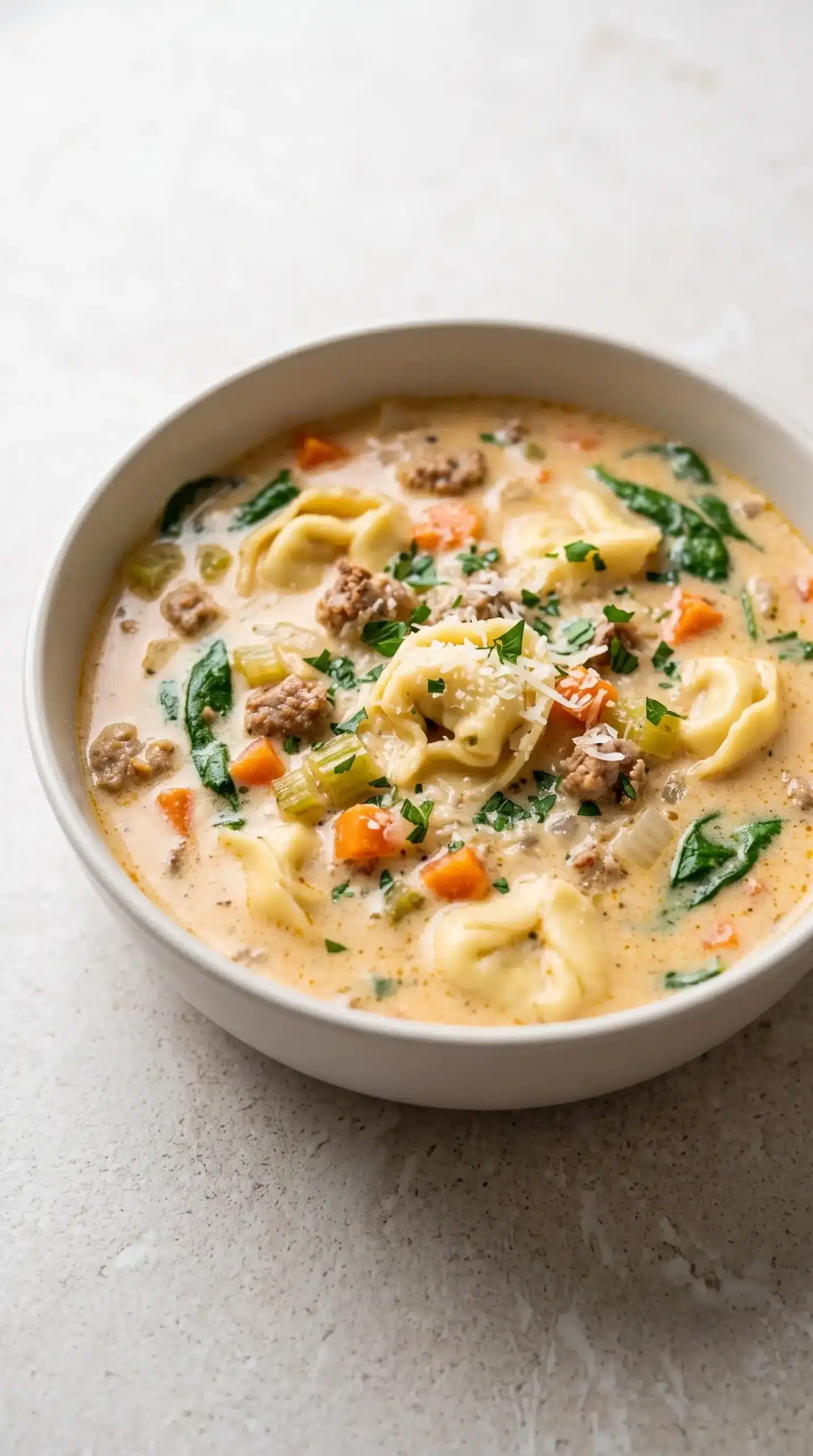
The finished soup should look creamy and cohesive, with sausage and vegetables distributed throughout the broth. The tortellini should be tender with a little firmness, and the spinach should be wilted rather than heavily cooked.
At the serving stage, fresh parsley and Parmesan provide the finishing contrast. Parmesan adds another savory layer, while parsley gives the rich broth a fresh herbal note.
Common Ang’s Creamy Tortellini Soup Mistakes to Avoid
Several problems can be traced directly to the order and heat level used in the supplied method. Most are easy to prevent because the pot gives visible clues as you cook.
- Burning the tomato paste: Stir the garlic, seasonings, and tomato paste regularly during their sautéing stage. Scorching can introduce a harsh flavor that is difficult to correct later.
- Adding broth too quickly: Pour it in gradually after the flour has cooked. The dry, sticky sausage mixture needs enough liquid and stirring to become an even broth.
- Boiling the creamy base: Keep the soup at a low simmer once the dairy is added. Aggressive boiling is unnecessary for finishing the soup.
- Overcooking tortellini: Use the package directions as your timing guide and stop when the pasta reaches al dente.
One other easy mistake is treating the spinach as an early vegetable. It enters near the end because it cooks quickly. Putting it in with the tortellini gives it enough time to wilt without turning it into the main texture of the soup.
Parmesan and Parsley Complete the Richness
Fresh Parmesan works especially well as a finishing ingredient because the soup already contains sausage, tomato, cream, and cheese-filled pasta. A modest amount adds salty, savory depth without requiring additional seasoning.
Fresh parsley serves a different purpose. Its herbal freshness cuts through the richness of the creamy tortellini soup and gives the finished bowl a brighter appearance. Add both at serving so their flavors remain distinct.
Cheese Bread Makes the Bowl More Complete
Cheese bread is a natural partner for the soup because it gives the creamy broth another texture to work with. The bread can be used for dipping, letting the thickened broth cling to the surface while the sausage, vegetables, and tortellini remain in the bowl.
The combination also gives the meal a useful contrast: tender filled pasta and vegetables in the soup, followed by crisp or chewy bread outside it. A simple cheese bread keeps the focus on the soup instead of introducing another strongly seasoned flavor.
Small Adjustments That Preserve the Original Character
The most useful flexibility comes from choosing between half and half and heavy cream. Use half and half when you want the dairy presence to remain creamy but less heavy, or choose heavy cream when a richer texture suits the meal.
The pasta choice is less flexible because refrigerated cheese tortellini is central to the dish’s identity. Changing it would turn the soup into a different preparation. Similarly, the sausage supplies much of the savory foundation, so substitutions should be made with awareness that the seasoning profile will shift.
What Makes the Broth Feel Hearty Without Becoming Heavy
Flour, dairy, sausage, and tortellini each contribute a different kind of substance. The flour gives the broth structure, the dairy adds creaminess, sausage provides savory richness, and the filled pasta supplies the most noticeable starch and cheese component.
That balance is why the soup does not need a long list of additional ingredients. The broth has enough structure to carry the tortellini, while the vegetables keep the spoonfuls varied. Keeping the cooking gentle once the cream and pasta arrive helps preserve that balance through serving.
Ang’s Creamy Tortellini Soup Comes Together Through Controlled Heat
The sausage base establishes the savory foundation, while the tomato paste, wine, flour, and broth build the structure that supports the cream. Once tortellini and spinach enter near the end, the cooking shifts from developing flavor to protecting texture.
The most consequential judgment is knowing when to stop. A low simmer protects the creamy broth, package timing protects the tortellini, and late-added spinach retains its fresh character. Parmesan and parsley then finish the bowl without changing the balance established in the pot.
Questions About Creaminess, Tortellini, and Storage
Can half and half be used instead of heavy cream?
Yes. The supplied ingredients specifically allow either half and half or heavy cream. Half and half gives the soup a creamy texture with a less rich dairy presence, while heavy cream makes the finished broth more substantial.
Why does the flour mixture look dry after it is added?
The flour is stirred directly into the sausage mixture and cooked briefly, so it can look sticky and dry before the broth is introduced. Gradually adding chicken broth while stirring is what transforms that mixture into the thickened soup base.
When should the spinach go into creamy tortellini soup?
Spinach should be added with the tortellini near the end of cooking. It wilts quickly, so there is no need to give it the longer simmer used for the broth and vegetables.
Can the tortellini be cooked separately?
It can be, but the supplied preparation cooks the refrigerated cheese tortellini directly in the creamy broth. Keeping it in the soup allows the filled pasta to become part of the finished dish and avoids creating a separate cooking step.
How can I keep the soup from becoming too thick?
Pay close attention when adding the chicken broth after the flour stage, and keep the soup at a gentle simmer instead of reducing it aggressively. The tortellini also contributes starch as it cooks, so serving soon after the pasta reaches al dente helps preserve the intended consistency.
Creamy Tortellini Soup with Italian Sausage and Parmesan
Creamy tortellini soup with mild Italian sausage, tender vegetables, cheese tortellini, and a silky cream-based broth makes a hearty, comforting meal. It is especially appealing when a rich and satisfying soup is wanted.
Ingredients
Method
Cooking
- Place a large stockpot over medium-high heat. Add the sausage and cook while breaking it into small pieces. Once the sausage is mostly browned, add the onion, celery, and carrot. Cook for 5 minutes, or until the vegetables are soft.
- Add the garlic, salt, black pepper, Italian seasoning, fennel seed, and tomato paste. Continue cooking for 3-5 minutes, stirring occasionally so the mixture does not burn and the garlic and seasonings become fragrant.
- Pour in the white wine and allow it to cook out for a few minutes. Stir the flour into the sausage mixture and cook for 1 minute. The mixture will be thick and sticky at this stage.
- Slowly pour in the chicken broth while stirring to incorporate it with the sausage mixture. Continue cooking until the soup reaches a simmer, then lower the heat and simmer for 15 minutes.
- Stir in the half and half or heavy cream and bring the soup back to a low simmer. Add the refrigerated cheese tortellini and chopped spinach. Cook according to the package directions, stopping when the tortellini is al dente.
Serving
- Serve the soup with fresh parsley and Parmesan.
Notes
Cook the tortellini only until al dente according to the package directions, since it is added directly to the creamy soup with the spinach.