From breakfast to dinner, from healthy meals to sweet desserts – Next Yum Recipes brings you quick, simple and tasty ideas for every occasion and every time.


 This Recipe
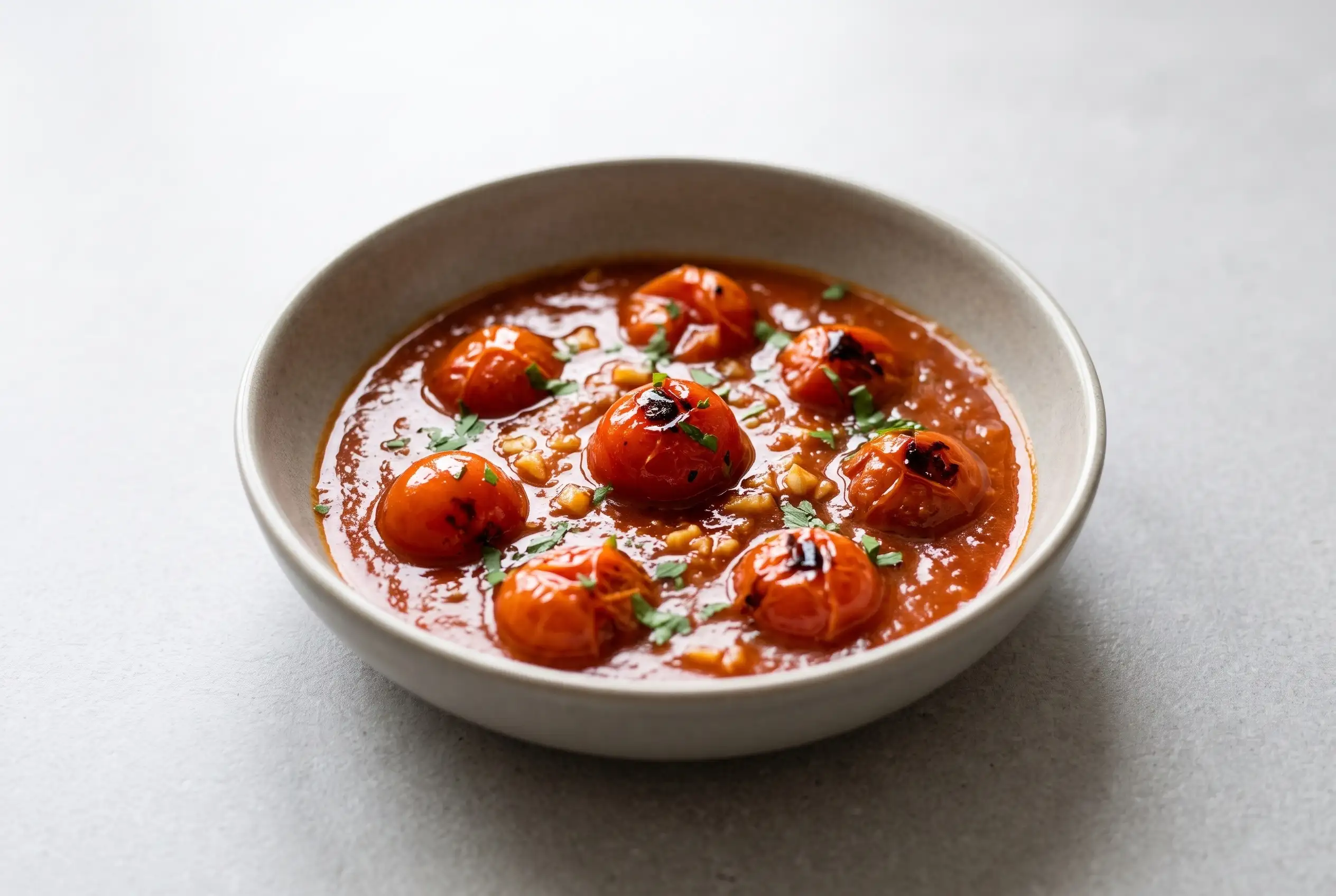
Garlic butter tomato sauce turns a small skillet of cherry tomatoes into a glossy, savory sauce with blistered tomato skins, mellow garlic, balsamic brightness, and a buttery finish. The technique is simple, but the order of the cooking matters: the tomatoes begin in a dry pan so their skins can blister, while the olive oil and garlic join later when the heat has been lowered. A gentle press releases enough tomato juice to create the base, and a short reduction concentrates everything into a sauce that works beautifully with pasta, toast, grains, or other simple meals.
Blistered Cherry Tomatoes Build the Sauce’s Character
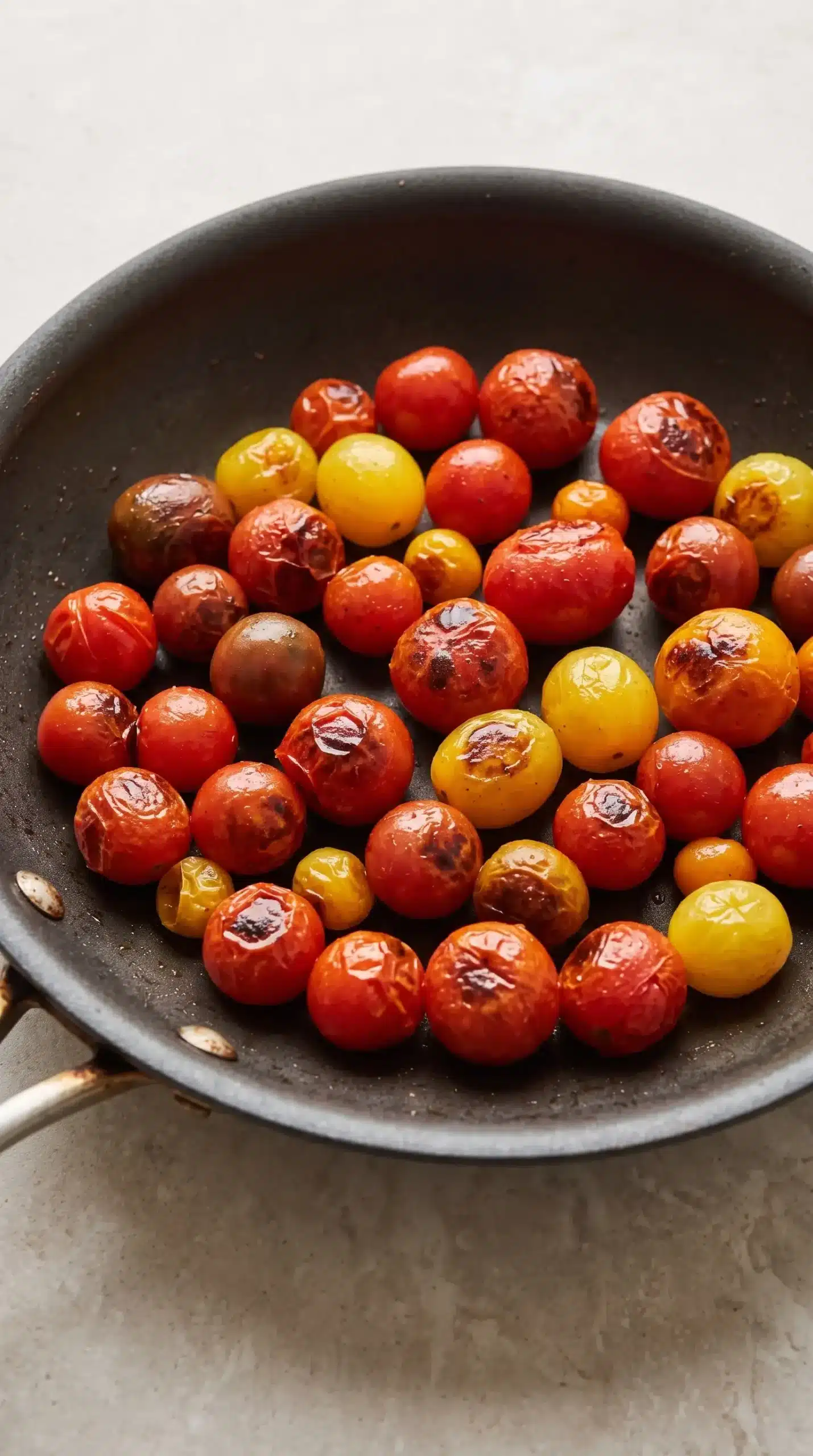
Starting with dry tomatoes is the defining move for this skillet sauce. A nonstick pan over medium-high heat gives the cherry tomatoes direct contact with the hot surface, allowing portions of their skins to blister while the tomatoes gradually soften. Without oil coating the pan, the skins have a chance to develop those small browned and blistered patches before the other ingredients enter.
Once the tomatoes look softened and lightly blistered, lowering the heat becomes important. At that point, the tomatoes contain hot juices, and adding olive oil over high heat can create more splattering than necessary. A calmer skillet makes it easier to add the minced garlic without rushing the next steps.
Gentle pressure from the back of a wooden spoon opens the softened tomatoes and releases their juices. Those juices become part of the sauce as the balsamic vinegar reduces, giving the finished garlic butter tomato sauce a loose, naturally tomato-rich foundation before the butter brings everything together.
Olive Oil, Garlic, and Butter Have Different Jobs Here
Olive oil enters after the tomatoes have begun softening, giving the garlic a gentle cooking medium while helping the tomato juices and balsamic vinegar come together. Because minced garlic can brown quickly, keeping the heat lowered at this stage is more useful than trying to rush the process.
Butter belongs at the end because its role is finishing, not frying. Adding it after the reduction gives the sauce a rounder texture and a richer mouthfeel without exposing the butter to the higher heat used to blister the tomatoes.
Balsamic Vinegar Sharpens the Sweet Tomato Base
Balsamic vinegar brings acidity and depth to the softened cherry tomatoes. As the mixture cooks down, its sharper edge becomes integrated with the tomato juices, creating a balsamic tomato sauce that tastes more balanced than a mixture that simply combines vinegar and tomatoes at the end.
| Stage | What to watch for | Why it matters |
|---|---|---|
| Dry tomato cooking | Small blistered patches and softened tomatoes | Builds roasted-looking flavor without starting with oil |
| Garlic and olive oil | Garlic stays pale and fragrant | Prevents bitter, over-browned garlic |
| Balsamic reduction | Liquid becomes noticeably thicker | Concentrates the tomato and vinegar flavors |
| Butter finish | Butter melts into the reduced sauce | Creates a smoother, richer finish |
Texture Depends on How You Break the Tomatoes
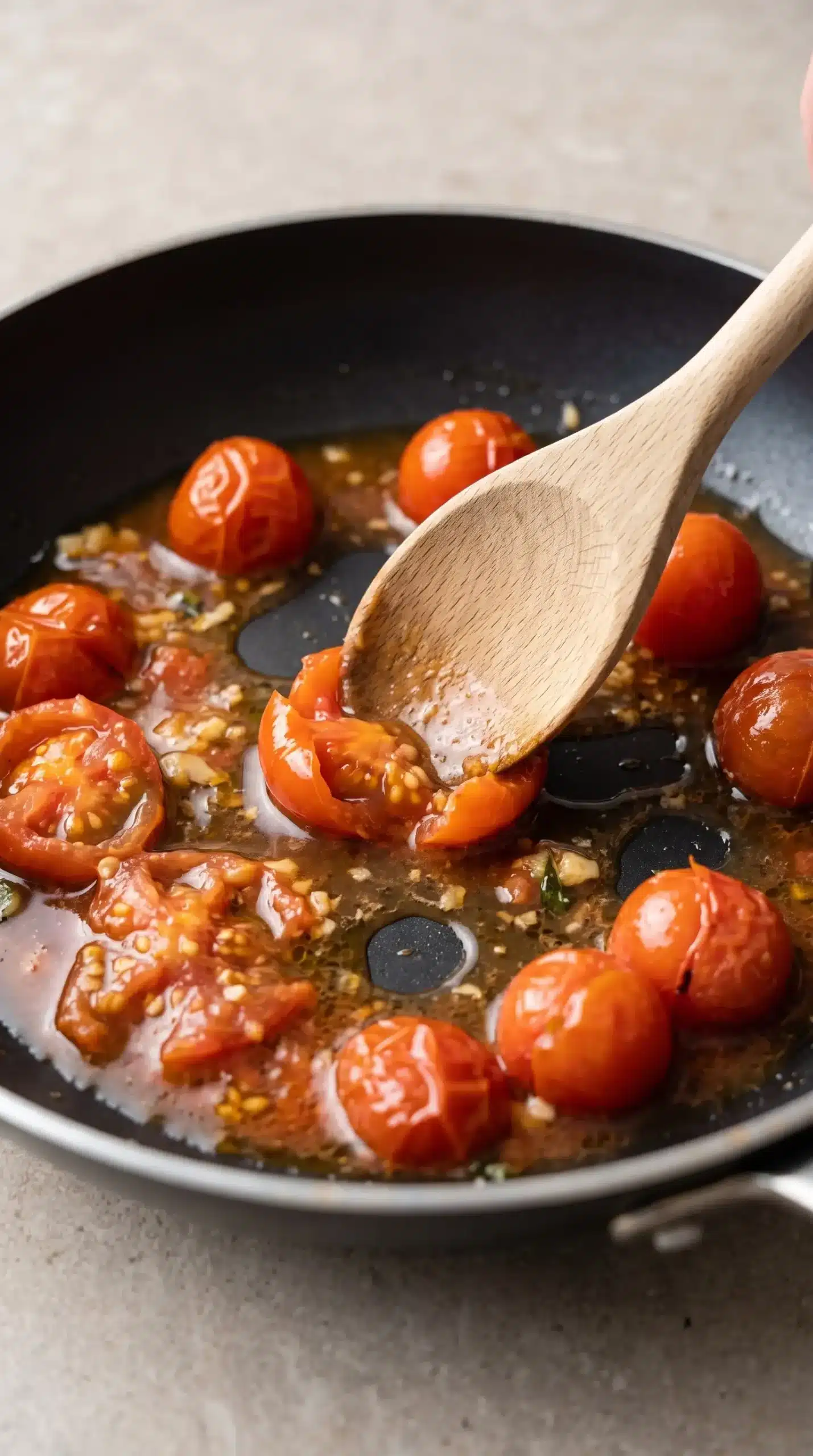
Softened cherry tomatoes do not need to be crushed completely. Pressing them gently with the back of a wooden spoon opens the skins and lets their juices escape while leaving some recognizable pieces in the sauce.
More pressure produces a looser, more integrated tomato mixture, while lighter pressure leaves larger tomato pieces scattered through the sauce. Either approach can work, but the texture is easiest to control while the tomatoes are still in the skillet.
Garlic Needs Gentle Heat After the Tomatoes Soften
Minced garlic cooks quickly once it meets warm oil, so this is one point where visual attention matters more than a rigid cooking clock. After the heat is reduced, stir the garlic through the olive oil and softened tomatoes and watch for a pale, fragrant appearance.
Browned garlic can introduce a bitter note that competes with the balsamic and delicate tomato sweetness. Keeping the garlic from browning also preserves the clean garlic flavor needed for a tomato sauce with garlic and butter.
Stirring briefly helps distribute the garlic through the tomato juices without turning the mixture into a paste. Once the balsamic is added, the liquid environment changes quickly, making it easier to continue the reduction without lingering over the garlic itself.
A Short Reduction Gives the Sauce Its Proper Body
Five to ten minutes of reduction is enough to noticeably change the consistency, but the skillet should remain under observation. The mixture needs to become thicker while retaining enough moisture to coat food comfortably.
Thin liquid pooling around the tomatoes signals that more reduction is needed. As the sauce cooks, the released tomato juices and balsamic vinegar concentrate, and the mixture should gradually look more cohesive instead of watery.
For pasta, extra water can be useful after the balsamic goes in. Adding about 1/2 cup of water creates additional liquid for the sauce to cook down, giving it a more fluid consistency that can coat pasta instead of sitting in concentrated spoonfuls.
Common Garlic Butter Tomato Sauce Mistakes to Avoid
- Oiling the pan first: Starting with oil changes the blistering stage and prevents the tomatoes from having the intended dry contact with the skillet.
- Keeping the heat high after softening: Hot tomato juices can splatter when oil is added, so lowering the heat makes the next stage easier to control.
- Letting the garlic brown: Minced garlic can move from fragrant to bitter quickly, especially in a hot skillet.
- Skipping the tomato press: Leaving every tomato intact prevents its juices from becoming part of the reducing sauce.
- Stopping the reduction too early: A watery mixture has not concentrated enough to give the sauce a cohesive texture.
Salt Should Be Adjusted After the Reduction
Salt is easiest to judge once the balsamic has reduced and the tomatoes have released their juices. Concentration changes the balance of the mixture, so seasoning before that point can make the finished sauce harder to assess.
Butter Changes the Finish More Than the Cooking Base
Once the sauce has thickened, the knob of butter needs only enough heat to melt and blend into the tomato mixture. This butter-finishing technique helps incorporate the remaining liquid and fat into a smoother, more cohesive sauce while keeping the finish from feeling sharply acidic.
Fresh basil can be added when serving if you want a fresh herbal note alongside the buttery tomatoes. Its flavor is particularly compatible with the simple tomato-and-garlic foundation without requiring any change to the cooking process.
Pasta Needs a Looser Version of the Skillet Sauce
A concentrated garlic butter tomato sauce can be spooned directly over foods that benefit from a thicker topping. Pasta is different because a little additional liquid helps the sauce spread across the noodles and prevents the reduced mixture from feeling too dense.
Adding water after the balsamic gives you room to control that consistency. The liquid should still be allowed to cook down, so the result remains flavorful instead of becoming diluted. This approach also makes it easier to adjust the sauce according to the type and amount of pasta being served.
Serving Choices Keep the Tomato Flavor in Focus
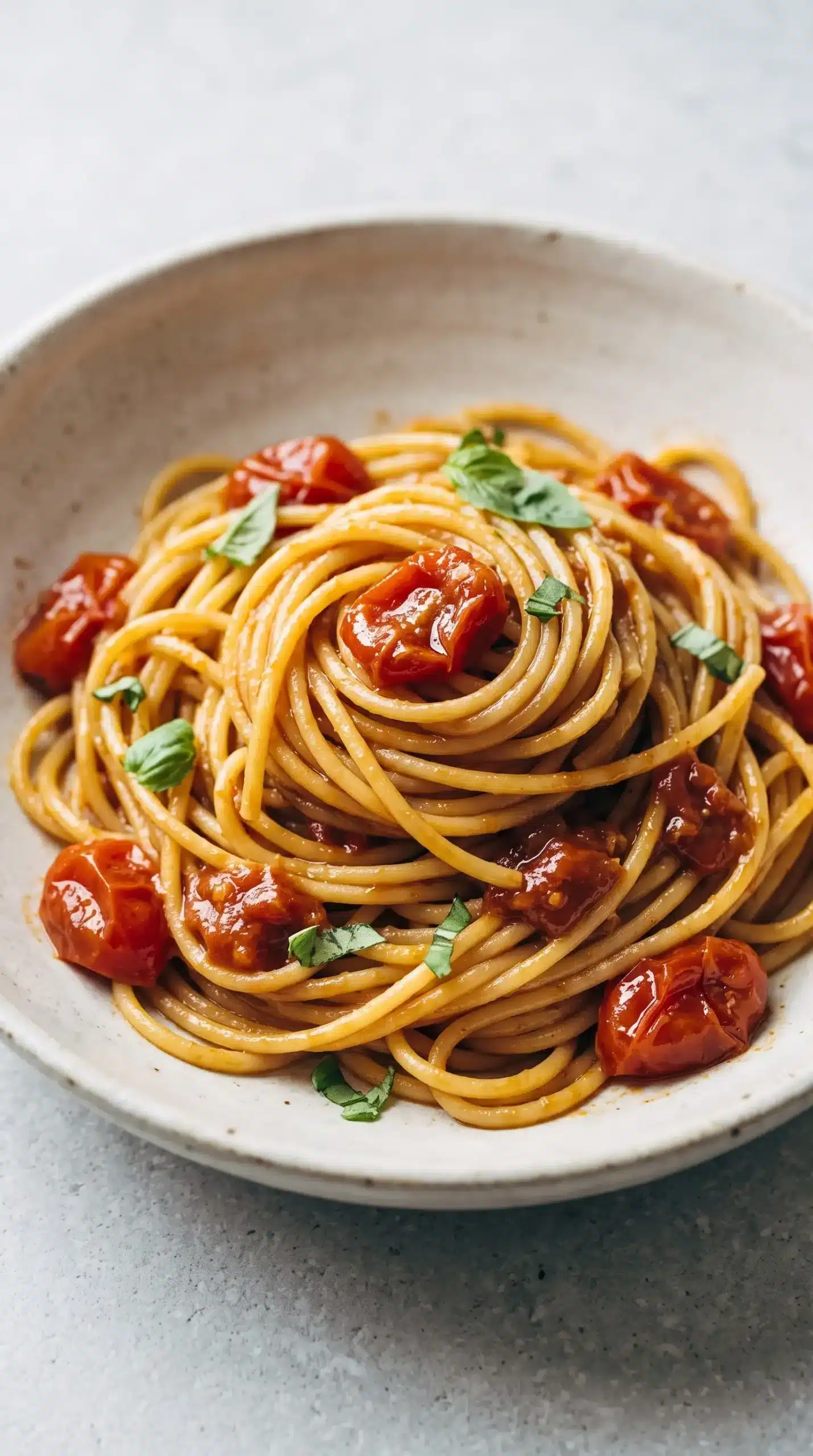
Simple pasta is the most natural pairing when the sauce is loosened slightly, but the concentrated version can also work as a topping for toasted bread. For a richer toasted-bread serving, spoon the sauce over a caprese grilled cheese with melted mozzarella and fresh basil, letting the buttery tomato mixture complement the crisp bread and creamy cheese.
Warm grains or other plainly seasoned foods can also carry the sauce well because they give the balsamic, garlic, and butter room to remain noticeable. A small amount of fresh basil at serving adds color and a fresh contrast without changing the character of the sauce.
Leftovers Are Easiest to Use When Kept Flexible
Any extra sauce is most useful when its consistency is treated as adjustable. A thicker portion can be loosened with a little water when reheated for pasta, while a concentrated portion can remain thicker for spooning over toast or another simple base.
One Skillet Lets You Control Flavor at Every Stage
Dry blistering gives the cherry tomatoes their first layer of character, while lowered heat protects the garlic once the olive oil is introduced. Pressing the softened tomatoes releases the juices needed for the balsamic reduction, and finishing with butter rounds out the concentrated mixture.
That sequence is what makes the garlic butter tomato sauce work despite its short ingredient list. Each addition arrives when it can contribute most effectively, leaving you with a sauce that tastes deeper and more composed than its quick preparation suggests.
Blistered Tomatoes and Gentle Reduction Make the Difference
Blistered tomato skins provide the character, released tomato juices supply the body, and a controlled balsamic reduction concentrates the flavor before butter finishes the sauce. Keeping the garlic pale protects the balance, while a little added water can shift the same mixture toward a pasta-friendly consistency.
Careful heat control matters more here than complicated technique. Once the tomatoes are softened and the sauce has reduced to the texture you want, the butter can bring the components together without overwhelming the bright, savory tomato base.
Garlic Butter Tomato Sauce Questions About Texture and Storage
Can the cherry tomatoes be cooked with oil from the beginning?
For the intended blistered texture, keep the pan dry while the tomatoes begin cooking. The olive oil is added after the skins have blistered and the tomatoes have softened, which also creates a better setting for gently cooking the minced garlic.
How can I make the sauce thinner for pasta?
Add about 1/2 cup of water after the balsamic vinegar goes into the skillet, then allow the mixture to cook down until it reaches a fluid consistency that can coat pasta. Add less or more water according to how loose you want the finished sauce.
Why did my garlic turn bitter?
Garlic becomes bitter when it is allowed to brown heavily, so reduce the heat before adding the olive oil and minced garlic. Keep the garlic moving through the warm mixture and continue once it is fragrant without developing a dark color.
Can I leave the tomatoes mostly whole?
Yes. Pressing them gently is enough to release their juices, so you can leave larger tomato pieces intact for a chunkier texture. More force will create a smoother, more integrated sauce.
What can I add for a fresh finish?
Fresh basil is a natural finishing choice for the sauce. Add it when serving so its fresh character remains distinct from the cooked garlic, balsamic, and butter.
Garlic Butter Tomato Sauce with Blistered Cherry Tomatoes
Garlic butter tomato sauce is a quick, glossy skillet sauce with tender blistered cherry tomatoes, mellow garlic, balsamic brightness, and a buttery finish. Its rich yet fresh flavor makes it an easy choice when a simple tomato sauce is needed.
Ingredients
Method
Cooking
- Place the cherry tomatoes in a nonstick skillet over medium-high heat without adding oil. Cook until the skins develop some blisters and the tomatoes soften.
- Lower the heat, then add the olive oil and minced garlic. Cook gently, taking care not to brown the garlic.
- Use the back of a wooden spoon to lightly press the softened tomatoes so they split and release their juices. Stir in the balsamic vinegar and cook for 5-10 minutes, allowing the mixture to reduce and thicken.
- Stir in the butter and season with salt to taste.
Notes
For a thinner sauce to use with pasta, add 1/2 cup or so of water just after adding the balsamic and allow it to cook down slightly. Fresh basil would also be a good addition.