From breakfast to dinner, from healthy meals to sweet desserts – Next Yum Recipes brings you quick, simple and tasty ideas for every occasion and every time.


 This Recipe
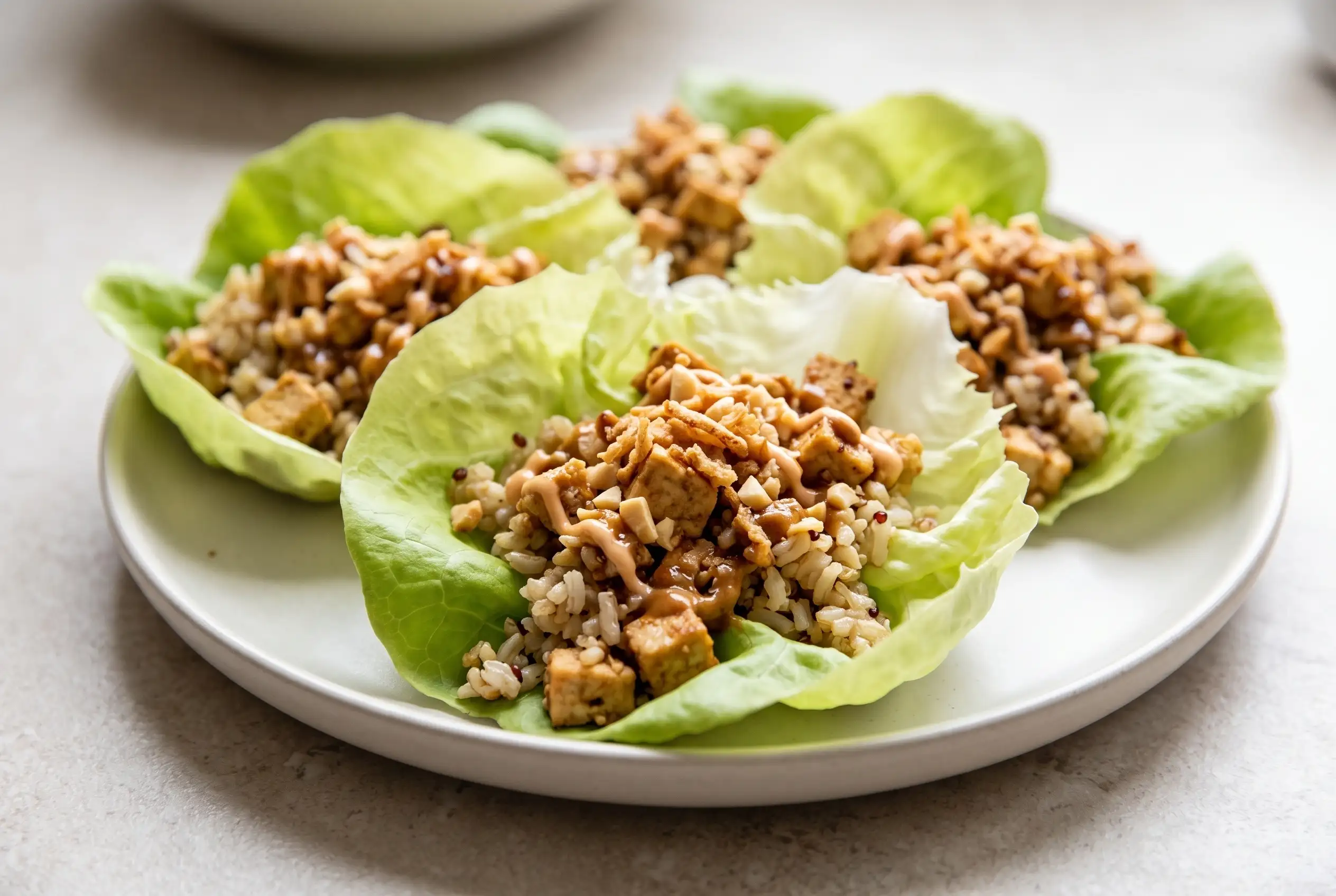
Tofu lettuce wraps turn a few practical ingredients into a savory, crunchy meal with browned tofu, chewy brown rice, crisp lettuce, a bright peanut sauce, and creamy spicy mayo. The filling cooks in one skillet, and the combination of teriyaki, orange juice, peanut butter, and chile sauce gives the tofu and rice enough flavor to stand up to the fresh lettuce and crunchy toppings.
Why these tofu lettuce wraps work so well
Tofu lettuce wraps are especially satisfying because the filling is not simply tofu tucked into lettuce. Crumbled extra-firm tofu gets lightly browned first, then cooks again with rice and sauce so the grains pick up the savory-sweet coating. That second stage creates small browned edges throughout the mixture, giving each bite more texture.
Brown rice also makes the filling feel substantial without turning it into a heavy skillet meal. Cooked quinoa or another cooked grain can work in the same role when needed, while the lettuce provides the crisp contrast that the warm filling lacks.
Meanwhile, the toppings create another layer of contrast. Spicy mayo brings richness, chopped peanuts or crispy onions contribute crunch, and a little reserved sauce ties the flavors together without requiring another cooked component.
Choosing tofu and grains for the filling
Extra-firm tofu for pan-frying is the most useful choice here because it can be crumbled directly into a hot skillet while retaining enough structure to brown. A minimal press removes excess surface moisture without making the tofu dry, which helps it develop color once it meets the oil and heat.
For the grain, cooked brown rice gives the filling a pleasantly hearty texture. Precooked rice or grain packages are convenient because the cooking process only needs to warm and lightly brown the grain instead of starting with uncooked rice. Quinoa or another already-cooked grain can also be folded into the skillet.
| Filling choice | What to look for | Best use in the wraps |
|---|---|---|
| Extra-firm tofu | Minimally pressed, easy to crumble | Provides the browned, savory base |
| Cooked brown rice | Separate grains with some chew | Creates the heartiest filling |
| Cooked quinoa | Fully cooked and not waterlogged | Offers a lighter grain texture |
| Other cooked grains | Already cooked and reasonably dry | Works when brown rice is unavailable |
Peanut sauce gets its balance from four ingredients
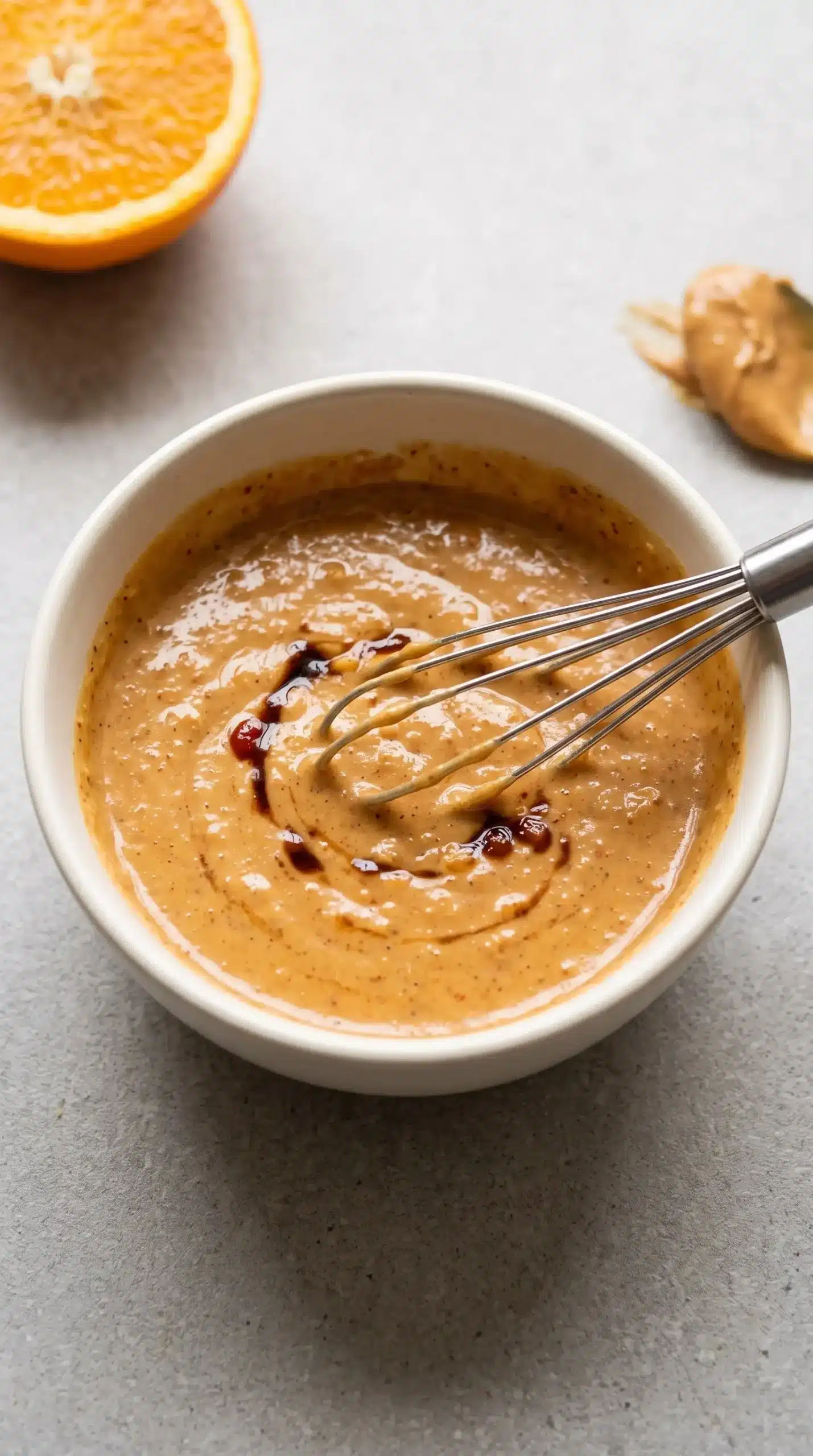
The sauce is built around peanut butter, teriyaki sauce, orange juice, and optional chile sauce. Peanut butter supplies body and a nutty richness, while teriyaki provides the salty-sweet backbone. Orange juice cuts through that richness with acidity and fruitiness, keeping the finished filling from tasting flat.
Sriracha or another chile sauce is adjustable, so the sauce can stay mild or develop a more noticeable kick. Whisking everything together before it reaches the skillet also prevents the peanut butter from sitting in concentrated pockets throughout the rice.
- Peanut butter: gives the sauce creamy body and nutty depth.
- Teriyaki sauce: provides the primary savory-sweet seasoning.
- Orange juice: brightens the mixture and balances its richness.
- Chile sauce: adds heat according to personal preference.
Lettuce leaves need enough structure to carry the filling
Butter lettuce and sturdy leaf lettuce both work because they can cradle a spoonful of warm filling without overwhelming its texture. Look for leaves that are broad, fresh, and firm enough to fold around the filling. Very small inner leaves are better saved for another use if they cannot hold a comfortable portion.
The skillet needs room for browning
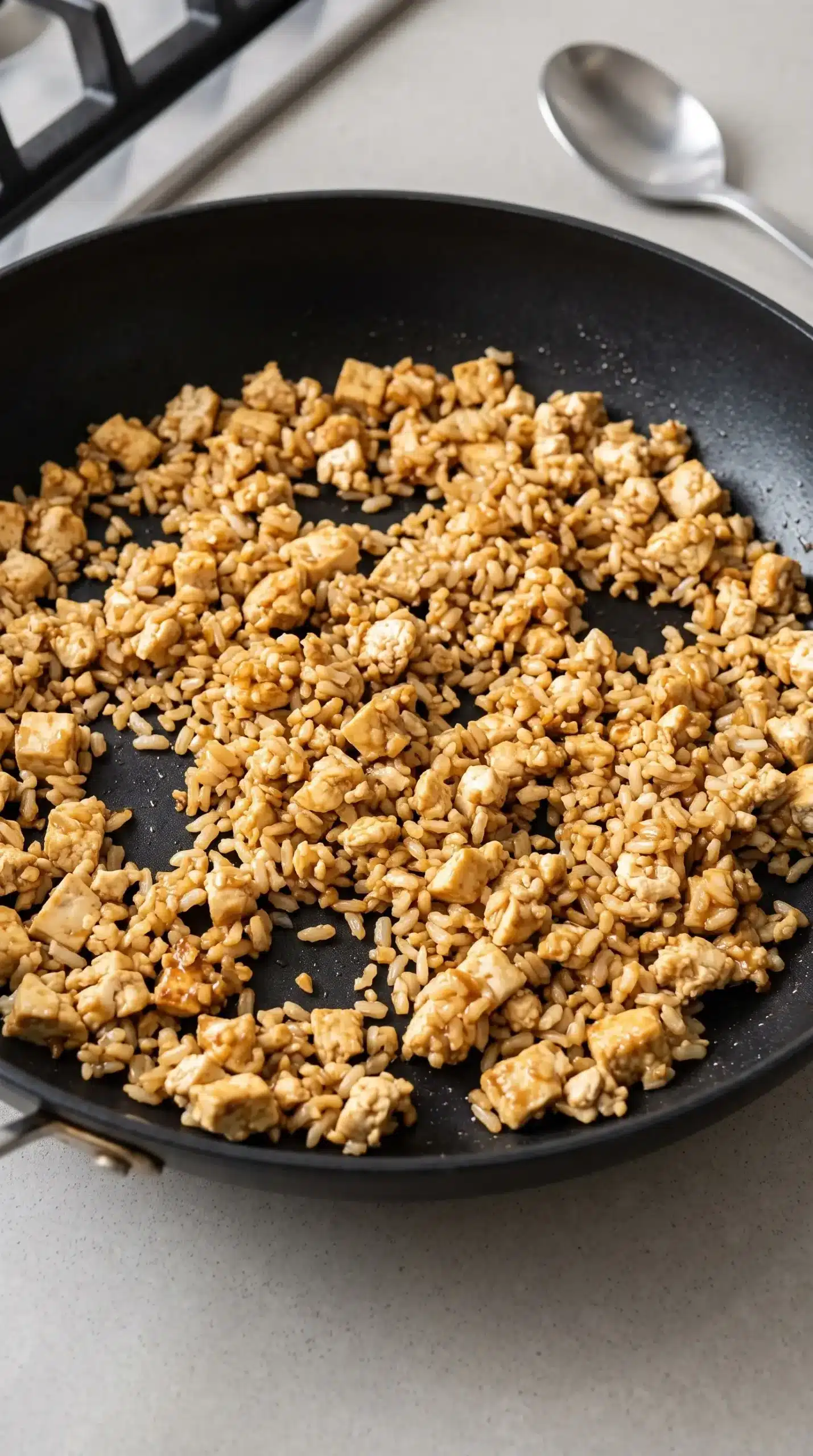
A nonstick skillet makes the tofu easier to brown and helps the finished mixture release cleanly when it is time to fill the lettuce. Medium-high heat gives the crumbled tofu a chance to take on color before the sauce and grain are added.
Once the rice and most of the sauce enter the pan, the mixture needs enough surface contact to develop light caramelization. Crowding can make the filling warm and soft without giving it those browned spots that make the wraps more interesting.
Keep the mixture moving enough to prevent scorching, but avoid constant stirring. Brief contact with the hot skillet gives the tofu and rice opportunities to brown, while occasional turning distributes the sauce.
How to keep the filling flavorful without making it wet
The sauce should coat the tofu and rice instead of pooling underneath them. Adding most of the prepared sauce to the skillet gives the grain time to absorb its savory, nutty flavor as the mixture cooks. Holding back a little sauce creates a useful finishing element for the assembled wraps.
Moisture control matters because lettuce is crisp and delicate. A heavily saturated filling can soften the leaves quickly and make them difficult to fold. If the skillet mixture looks loose, give it additional time over the heat so excess moisture can cook away before serving.
Building contrast with spicy mayo and crunchy toppings
Spicy mayo works particularly well here because the warm tofu-and-rice mixture has savory and lightly sweet notes that benefit from a cool, creamy counterpoint. A simple mixture of mayonnaise and Sriracha can be adjusted to suit the desired level of heat.
Chopped peanuts emphasize the peanut butter already present in the sauce, while crispy onions provide a different kind of crunch. Either topping can be used according to what is available, and both should be added after the filling reaches the lettuce so they retain their texture.
| Finishing choice | Texture | Flavor effect |
|---|---|---|
| Spicy mayo | Creamy and smooth | Softens the savory filling with richness and heat |
| Chopped peanuts | Firm and crunchy | Reinforces the peanut flavor |
| Crispy onions | Light and crisp | Adds a toasted, savory contrast |
| Extra peanut sauce | Glossy and soft | Intensifies the main sauce flavor |
Small serving choices make the wraps easier to eat
Fill each lettuce leaf with enough tofu and rice to create a generous bite while leaving room around the edges for folding. Overfilling makes the leaves split or spill, especially when the filling is still warm, so keeping portions modest is useful when assembling lettuce wraps with brown rice filling.
For a cleaner presentation, arrange the lettuce leaves first and keep the toppings nearby. Spoon in the warm mixture, add spicy mayo and crunch, then finish with a small drizzle of reserved sauce. Serving immediately preserves the contrast between crisp lettuce and warm filling.
Three signs the tofu and rice are ready
The finished skillet mixture should look cohesive but not soupy. Several visual and textural cues can help you judge it without relying on an exact minute-by-minute sequence.
- Browned tofu: the crumbled pieces should show light golden-brown areas instead of remaining uniformly pale.
- Coated grains: the rice should appear lightly glossy and seasoned, with sauce clinging to the grains rather than collecting in the bottom of the skillet.
- Light caramelization: some portions of the mixture should have deeper browned spots after sautéing.
Common tofu lettuce wrap mistakes to avoid
Overloading the skillet with liquid can leave the filling loose and make the lettuce difficult to handle. Adding most of the sauce is useful, but the mixture still needs time over the heat so the rice and tofu can absorb and cook off excess moisture.
Constant stirring creates another problem: the tofu and rice have fewer chances to sit against the hot pan. Let portions of the mixture contact the skillet between turns so light browning can develop.
Finally, adding crunchy toppings too early can rob them of their best texture. Keep peanuts or crispy onions out of the hot skillet and scatter them over the assembled wraps immediately before eating.
Easy adjustments for heat and texture
Heat is the simplest element to customize. Keep the chile sauce modest in the peanut mixture and use a lighter hand with Sriracha in the mayo for a gentler wrap. More Sriracha can be incorporated into either element when a sharper chile flavor is wanted.
Texture can be adjusted through the choice of topping. Chopped peanuts give a pronounced nutty crunch, while crispy onions make the finished wraps feel lighter and more delicate. Using both creates the most varied bite.
What makes tofu and brown rice lettuce wraps satisfying
Tofu and brown rice lettuce wraps have a useful balance between warm and cool elements. The skillet filling is savory, lightly sweet, nutty, and substantial, while fresh lettuce keeps each bite crisp. The creamy mayo and crunchy topping then fill in the two textures the main mixture does not provide on its own.
Serving the wraps while their textures are at their best
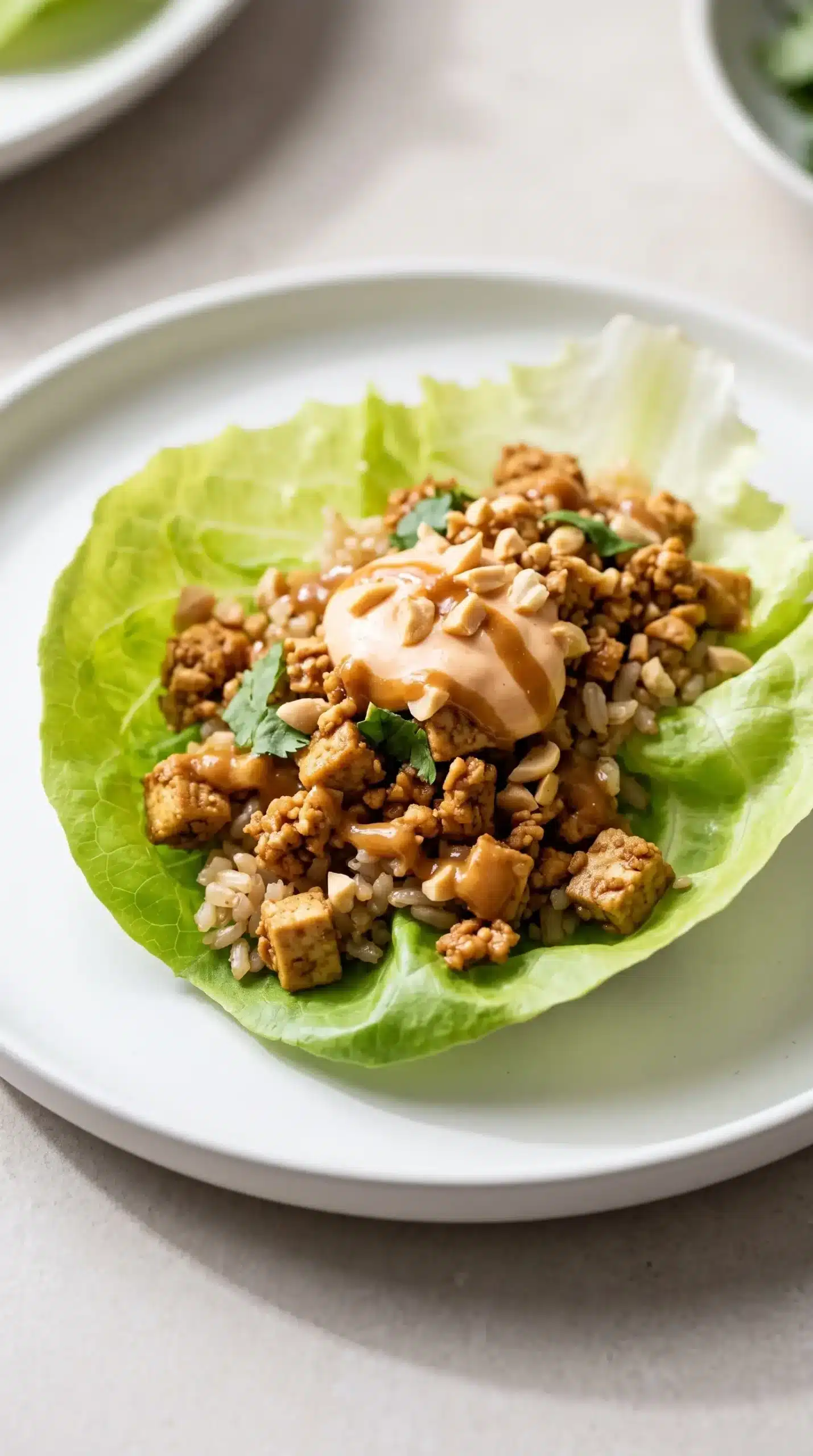
Freshly assembled tofu lettuce wraps offer the clearest contrast between crisp lettuce and the warm filling. Set the leaves out shortly before serving, then add the filling and toppings close to mealtime so the lettuce does not sit under moisture for long.
For a casual meal, the filling and lettuce can be placed separately with the toppings alongside. That arrangement lets each person build wraps with the amount of filling, spicy mayo, crunch, and extra sauce they prefer.
Tofu lettuce wraps come together through texture control
Warm browned tofu and rice create the foundation, but the most important judgment is knowing when the skillet mixture has reached the right texture. Light caramelization gives the filling depth, while restrained sauce keeps it cohesive enough for crisp lettuce to hold.
Once that balance is reached, the toppings become more than decoration: creamy spicy mayo, crunchy peanuts or onions, and a little reserved peanut sauce complete the contrast that makes these tofu lettuce wraps work as a satisfying meal.
Tofu lettuce wrap questions about sauce and texture
Can the peanut sauce be made less spicy?
Yes. Leave out the Sriracha or other chile sauce from the peanut mixture and keep the spicy mayo mild as well. Because the heat comes from adjustable chile ingredients rather than the core sauce structure, reducing it does not require changing the peanut butter, teriyaki, or orange juice.
What can replace brown rice in these wraps?
Cooked quinoa or another cooked grain can take the place of brown rice. Choose a grain that is already cooked and reasonably dry so it can absorb the sauce and brown lightly in the skillet without making the filling watery.
Why does my tofu filling seem too wet?
Extra moisture can come from the tofu, the cooked grain, or simply from adding more sauce than the mixture can absorb. Continue cooking the skillet mixture until it looks coated instead of loose, giving the tofu and rice enough direct contact with the pan to develop light browning.
Can I use a different type of lettuce?
Yes. Butter lettuce and sturdy leaf lettuce are particularly convenient because their broad leaves can hold the filling. Whichever variety you use, choose leaves that are fresh and flexible enough to fold without tearing under the weight of the tofu and rice.
What topping works best with tofu and brown rice lettuce wraps?
Chopped peanuts are a natural match because they echo the peanut butter in the sauce, while crispy onions provide a contrasting savory crunch. Spicy mayo adds the creamy element, so using a crunchy topping alongside it gives the finished wrap a more varied texture.
Tofu Lettuce Wraps with Brown Rice and Peanut Sauce
Tofu lettuce wraps combine browned tofu and hearty brown rice with a savory-sweet peanut sauce, crisp lettuce, creamy spicy mayo, and crunchy toppings. They make an easy, satisfying meal with plenty of texture and flavor.
Ingredients
Method
Cooking
- Heat a few swishes of olive oil in a nonstick skillet over medium-high heat. Crumble the tofu into the skillet and cook until lightly browned.
- While the tofu cooks, whisk the teriyaki sauce, orange juice, peanut butter, and Sriracha or other chile sauce together in a bowl.
- Add the cooked rice and most of the sauce to the skillet. Sauté for about 5 minutes, allowing the mixture to develop light browning and caramelization. Season with salt to taste.
Assembly
- Spoon the tofu and rice mixture into crisp lettuce leaves. Add chopped peanuts or crispy onions and spicy mayo, then drizzle with a little of the reserved sauce.
Notes
Spicy Mayo: Mix about 1/4 cup mayonnaise with about 1 tablespoon Sriracha. Adjust the amount of Sriracha to make the mayo more or less spicy according to preference.