From breakfast to dinner, from healthy meals to sweet desserts – Next Yum Recipes brings you quick, simple and tasty ideas for every occasion and every time.


 This Recipe
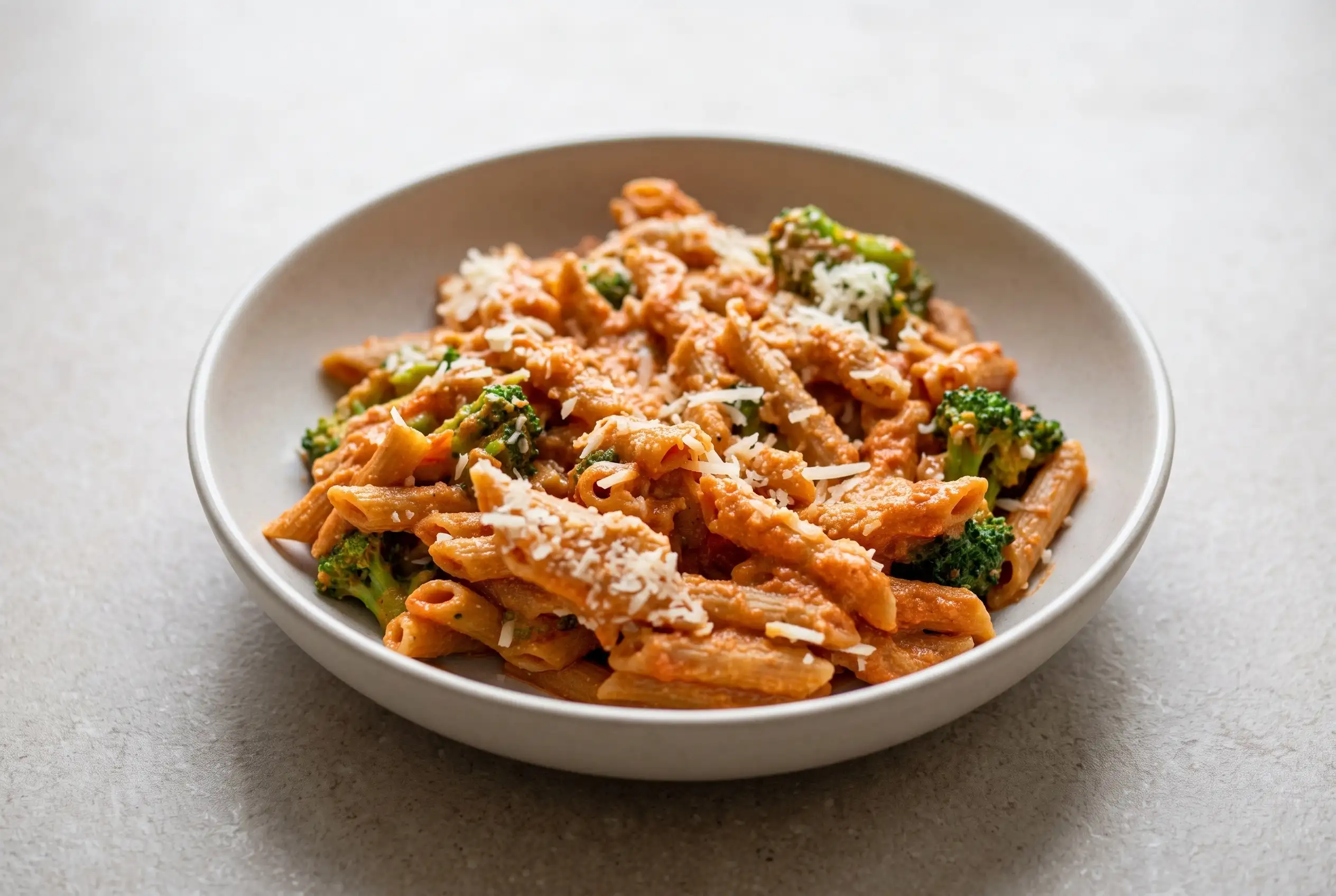
Tomato ricotta pasta brings together a bright tomato sauce, creamy part-skim ricotta, whole wheat pasta, tender broccoli, and Parmesan in a straightforward meal with plenty of texture. The ricotta softens the tomato sauce into a creamy coating without turning the dish into a heavy cream-based pasta, while broccoli gives each serving a fresh vegetable component.
Because the ingredients are uncomplicated, small cooking decisions have a noticeable effect on the finished bowl. Pasta texture, broccoli tenderness, sauce temperature, and the way ricotta is incorporated all matter. A few careful choices can keep the tomato ricotta pasta creamy and cohesive instead of watery, dry, or overly soft.
Why the Tomato and Ricotta Combination Works
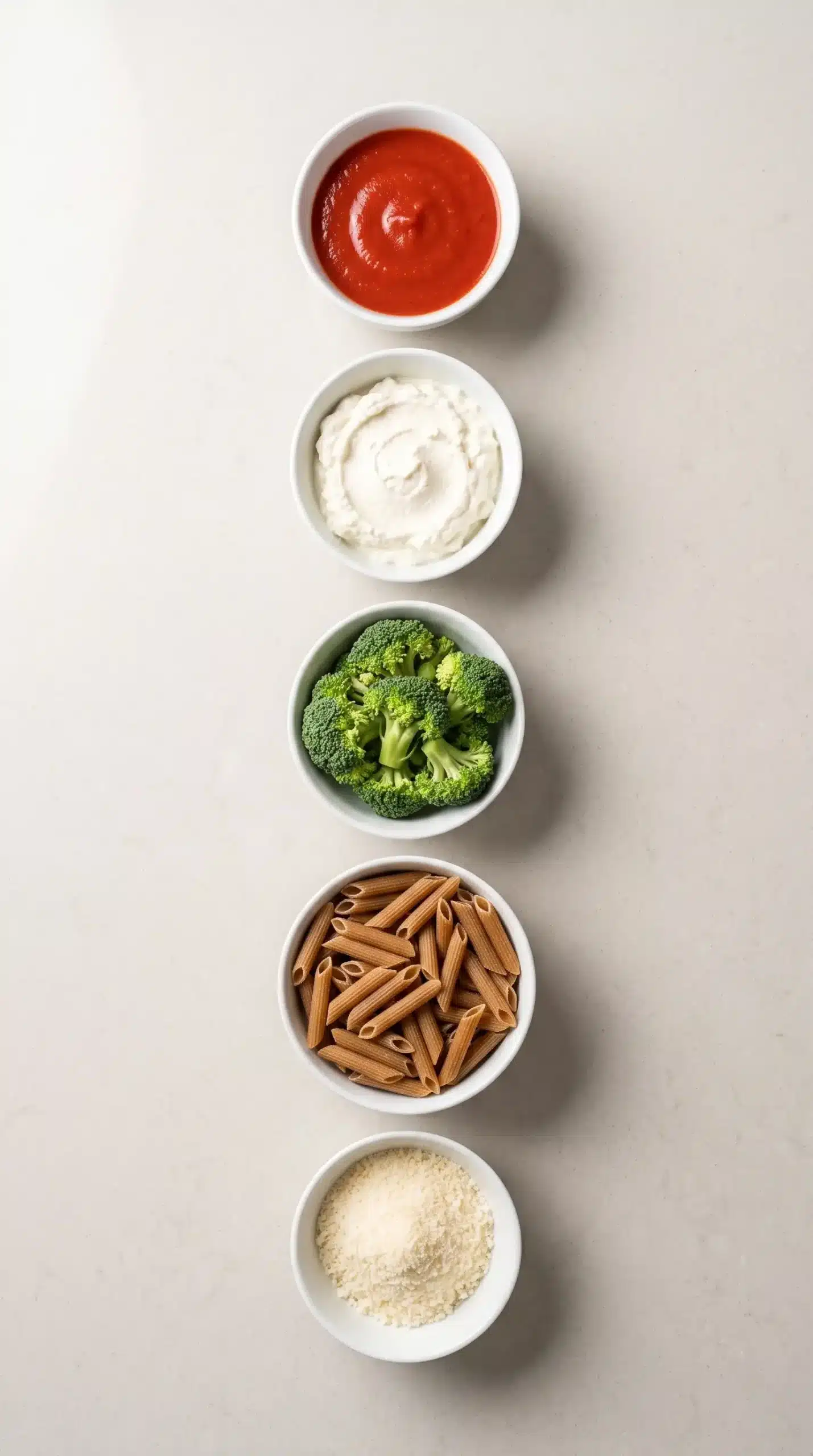
Tomato sauce supplies acidity and savory depth, while ricotta brings a mild, creamy quality that rounds out those sharper tomato notes. Part-skim ricotta is especially useful here because it blends into the sauce while retaining enough structure to keep the finished pasta from feeling overly rich.
Whole wheat pasta adds a firmer, more substantial bite than a very soft pasta would provide. That texture pairs well with creamy ricotta because the noodles remain noticeable beneath the sauce. Broccoli contributes another layer of texture, giving the finished dish something crisp-tender to contrast with the softer cheese mixture.
Parmesan has a different job from ricotta. Its stronger savory character provides a concentrated finishing note, so a modest amount can make the tomato sauce ricotta pasta taste more complete without requiring additional complicated seasonings.
Choosing Pasta That Can Hold the Sauce
Whole wheat pasta is the natural foundation for tomato ricotta pasta with broccoli because its hearty texture stands up to the creamy tomato coating. Shapes with curves, ridges, or other surfaces that can catch sauce are especially useful when choosing an alternative.
Cook the pasta until it is tender but still has some resistance when bitten. Overly soft noodles can become difficult to distinguish from the ricotta mixture once everything is combined. The finished pasta should feel substantial enough to support the broccoli and creamy sauce in the same bite.
| Pasta choice | Texture in the finished dish | Sauce-handling consideration |
|---|---|---|
| Whole wheat pasta | Firm and hearty | Pairs naturally with the creamy tomato coating |
| Short ridged pasta | Compact and substantial | Ridges help hold sauce and ricotta |
| Long smooth pasta | Silky and continuous | Needs thorough tossing to distribute the sauce |
| Small pasta shapes | Soft and spoonable | Can make broccoli pieces more prominent in each bite |
Ricotta Makes the Tomato Sauce Creamy
Ricotta should blend into the tomato sauce enough to create a creamy appearance while still leaving subtle variation throughout the pasta. Part-skim ricotta works well because its texture is naturally soft and easy to incorporate once it meets the warm sauce, much like the creamy coating used in creamy tomato pasta.
Temperature matters during this stage. Adding ricotta to a pan that is aggressively hot can encourage uneven heating and make the mixture harder to control. Gentle heat gives the cheese time to combine with the tomato sauce without requiring prolonged cooking.
For the smoothest result, loosen any especially thick ricotta with a little of the warm tomato sauce before combining it with the pasta. That small step helps distribute the cheese more evenly and reduces the chance of isolated pockets of ricotta throughout the bowl.
Broccoli Needs a Tender but Firm Bite
Steamed broccoli works particularly well in tomato ricotta pasta because it stays distinct from the creamy sauce while absorbing some of its flavor. Aim for florets that are tender enough to eat comfortably but firm enough to hold their shape when folded through the noodles.
Cutting broccoli into reasonably similar florets helps the pieces cook at a similar rate. Very large pieces can remain firm in the center while small fragments become soft, making the texture inconsistent across the finished dish.
Once steamed, drain the broccoli well before adding it to the pan. Excess surface water can thin the tomato-ricotta mixture and make it more difficult for the sauce to cling to the pasta.
Tomato Ricotta Pasta Comes Together Through Gentle Heat
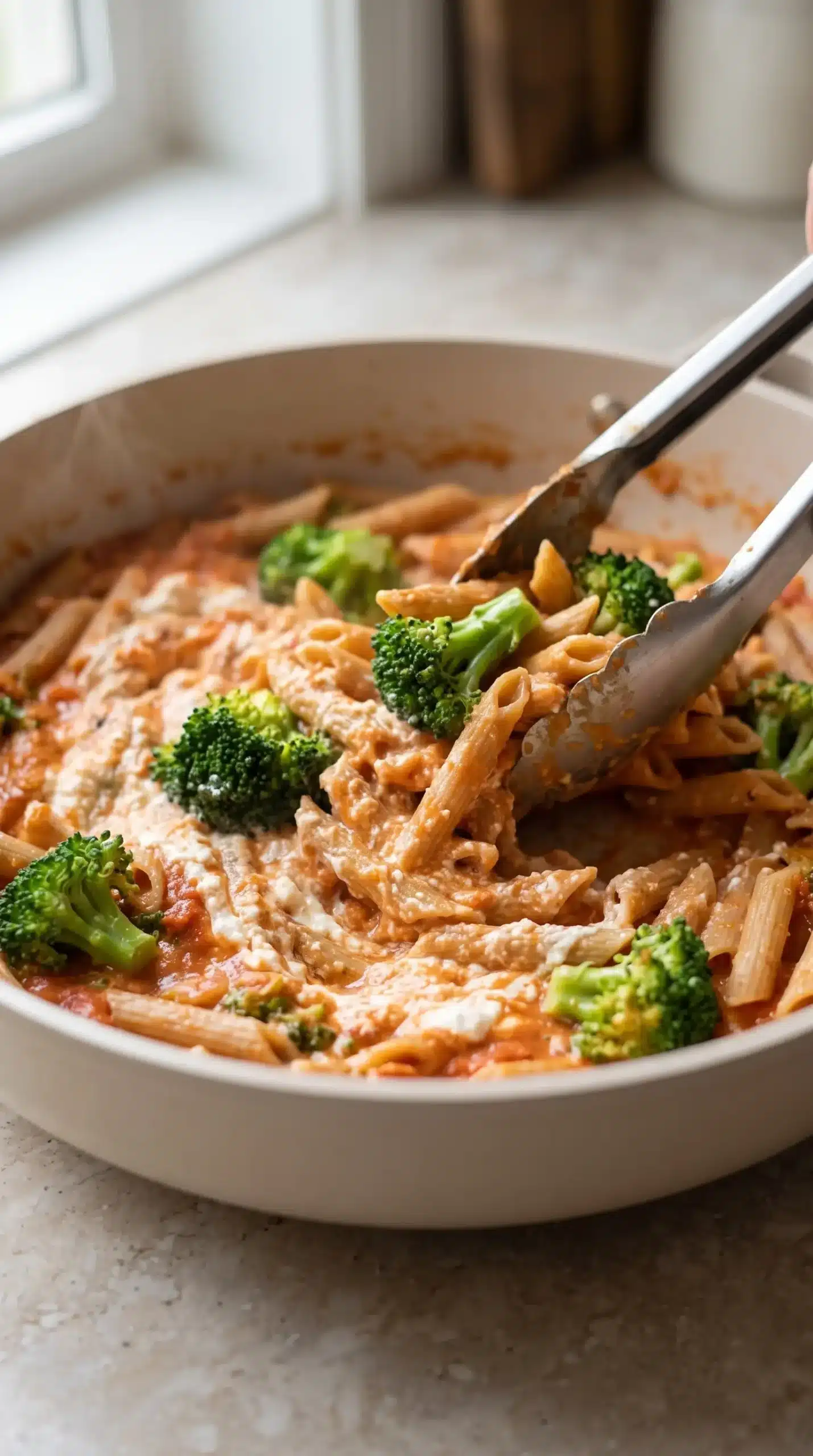
The most important control point is the pan temperature after the pasta and broccoli meet the sauce. The mixture needs enough warmth for the ricotta to blend smoothly, but there is little benefit in subjecting the cheese to harsh, prolonged heat.
Fold the cooked pasta through the tomato sauce and ricotta with steady movements so the coating reaches the noodles without breaking the broccoli apart. A large spoon, spatula, or pair of tongs can work depending on the pasta shape.
Watch the consistency as you combine everything. If the sauce looks thick and evenly distributed, continue gently until the pasta is coated. If it looks loose, give the mixture a little more time to come together before serving. The finished coating should cling to the pasta instead of pooling heavily underneath it.
When Tomato Sauce and Ricotta Need Extra Attention
Different tomato sauces vary in thickness and acidity, so the starting consistency can influence how the finished dish feels. A very thick sauce may produce a dense coating after ricotta is added, while a thinner sauce can create a looser finish.
Let the existing sauce guide the amount of mixing and heating. There is no need to force the mixture into a perfectly uniform color; small variations from the ricotta can give the sauce a naturally creamy appearance while preserving the tomato character.
- Thick sauce: Mix gently and give the ricotta time to soften into the tomato base.
- Loose sauce: Keep the mixture gently warm long enough for the coating to settle onto the pasta.
- Uneven ricotta: Stir the cheese into a little warm sauce before combining it with the larger mixture.
Parmesan Finishes the Dish Without Taking Over
Parmesan is most useful as a finishing element because its salty, savory flavor can sharpen the otherwise mild ricotta mixture. Sprinkle it over the combined pasta and broccoli so its flavor remains noticeable without overwhelming the tomato sauce.
Freshly grated Parmesan can distribute more readily across warm pasta than large, dry pieces. Add it gradually and let the warmth of the dish soften it into the surface before deciding whether more is needed.
Common Tomato Ricotta Pasta Mistakes to Avoid
Several problems can be traced directly to the few components used here. None requires a complicated fix, but each is easier to prevent when you know what to watch for during cooking.
- Overcooked pasta: Very soft noodles can lose their structure once coated with ricotta and tomato sauce. Cook until tender with some bite remaining.
- Wet broccoli: Water clinging to steamed florets can loosen the sauce. Drain the broccoli thoroughly before combining it with the pasta.
- Overheated ricotta: Excessive heat can make the creamy mixture harder to control. Combine the cheese with warm sauce over gentle heat.
- Uneven coating: Adding everything without enough folding can leave some noodles bare and others heavily coated. Toss steadily until the sauce is distributed.
- Too much Parmesan: A heavy layer can dominate the milder ricotta. Add it progressively so the tomato and cheese flavors remain balanced.
Simple Swaps That Keep the Pasta Recognizable
Small substitutions can work when they preserve the basic balance of tomato sauce, creamy cheese, pasta, and broccoli. A different pasta shape is the easiest adjustment, particularly when you already have a short or ridged variety available.
| Change | What stays consistent | What changes at the table |
|---|---|---|
| Different whole grain pasta shape | Hearty pasta texture | How the sauce collects on each bite |
| Another mild tomato sauce | Tomato-based flavor | Thickness and acidity may vary |
| Broccoli florets cut smaller | Broccoli remains part of the dish | Vegetable pieces distribute more evenly |
| More or less Parmesan | Ricotta remains the creamy cheese | Saltiness and savory intensity change |
Serving Tomato Ricotta Pasta at Its Best
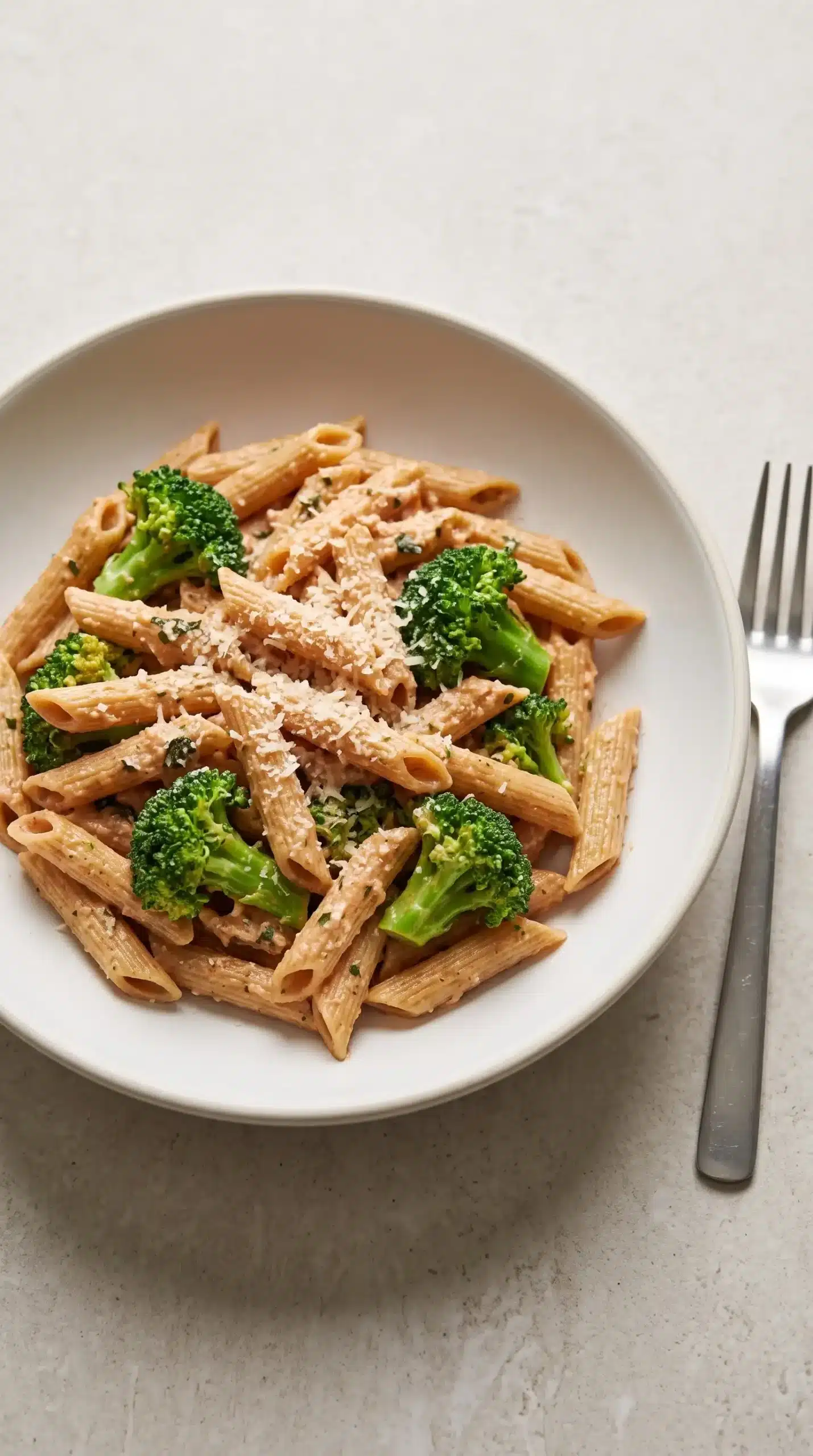
Serve the pasta while the sauce is warm and cohesive. Warmth keeps the ricotta mixture soft enough to coat the noodles, while the broccoli remains distinct instead of disappearing into the sauce.
Use a broad serving bowl or shallow plate so the pasta, broccoli, tomato sauce, and Parmesan remain visually and texturally connected. A final light scattering of Parmesan adds a savory finish without changing the character of the dish.
Keeping Leftovers Pleasant
Cool leftover tomato ricotta pasta promptly and store it in a covered container in the refrigerator. When reheating, use gentle heat and stir periodically so the ricotta-based sauce warms evenly instead of becoming excessively hot in isolated spots.
The sauce may appear thicker after chilling because the pasta continues to absorb moisture. A small splash of water can help loosen the coating during reheating if needed. Warm the pasta only until heated through, since prolonged high heat can make the cheese mixture less creamy.
Why Tomato Ricotta Pasta Benefits From Restraint
The combination of tomato sauce and ricotta already supplies the central flavor contrast, so the dish does not need a long list of additions. Keeping the components distinct lets the creamy sauce, whole wheat pasta, broccoli, and Parmesan each remain recognizable.
Tomato Ricotta Pasta Works Best When Texture Leads the Cooking
Firm pasta, well-drained broccoli, gently warmed ricotta, and a tomato sauce that clings to the noodles create the balance that matters most in tomato ricotta pasta. Each component should retain enough structure to be recognizable after mixing, while the ricotta brings the separate elements together.
Once the pasta reaches the right tenderness and the broccoli is properly drained, the remaining decisions become much easier. Gentle heat protects the creamy tomato mixture, and Parmesan can then provide the concentrated savory finish without covering the flavors underneath.
Tomato Ricotta Pasta Questions About Texture and Storage
Can tomato ricotta pasta be made with regular pasta?
Yes. Regular pasta can replace whole wheat pasta while keeping the tomato, ricotta, broccoli, and Parmesan combination intact. The main difference will be the pasta’s texture and flavor, so cook the substitute carefully enough that it retains some firmness after being coated with the sauce.
How can I keep the ricotta sauce from becoming too thick?
Keep the pan over gentle heat and mix the ricotta into the warm tomato sauce gradually. If the coating becomes unusually dense, a small amount of warm water can loosen it while you continue folding the pasta through the sauce.
Why does my broccoli make the sauce watery?
Steamed broccoli can retain water on its surface, especially in the spaces between florets. Letting the broccoli drain thoroughly before it enters the sauce limits that extra moisture and helps the tomato-ricotta mixture maintain a coating consistency.
Can I use frozen broccoli for tomato ricotta pasta?
Frozen broccoli can work if it is cooked until tender and drained thoroughly before being combined with the pasta. Removing excess water is particularly important with frozen vegetables because they can release more moisture as they heat.
How should I reheat ricotta pasta with broccoli?
Reheat it gently in a pan or microwave, stirring as it warms, and make sure leftovers reach 165°F (74°C) as measured with a food thermometer. If the chilled pasta has absorbed much of the sauce, add a small splash of water to restore a smoother coating and stop heating once the pasta is heated through.
Tomato Ricotta Pasta with Broccoli and Whole Wheat Pasta
Tomato ricotta pasta combines whole wheat pasta and broccoli with a creamy tomato sauce and Parmesan for a hearty, comforting meal. It is an easy choice when a simple pasta dish with contrasting textures is wanted.
Ingredients
Method
Preparation
- Boil the whole wheat pasta.
- Steam the broccoli.
- Drain the cooked pasta and broccoli.
- Add the tomato sauce, ricotta cheese, and broccoli to the pan with the pasta.
- Finish by topping the pasta with Parmesan cheese.
Notes
Drain the steamed broccoli well before combining it with the tomato sauce and ricotta to help maintain a cohesive sauce.