From breakfast to dinner, from healthy meals to sweet desserts – Next Yum Recipes brings you quick, simple and tasty ideas for every occasion and every time.


 This Recipe
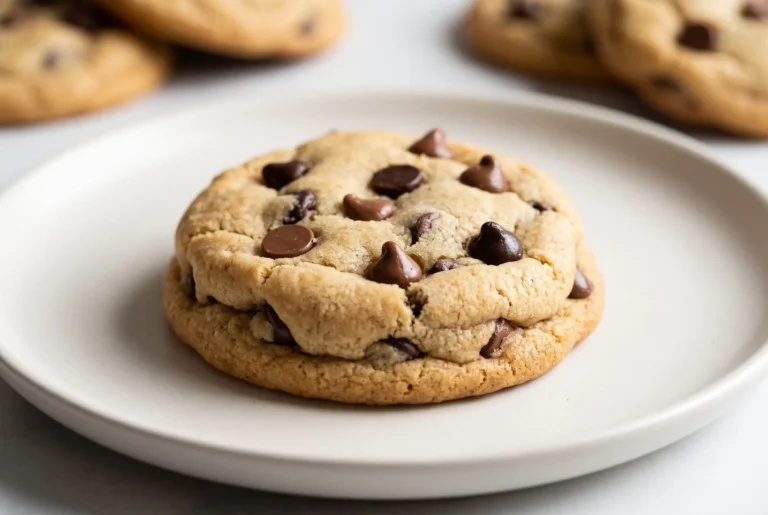
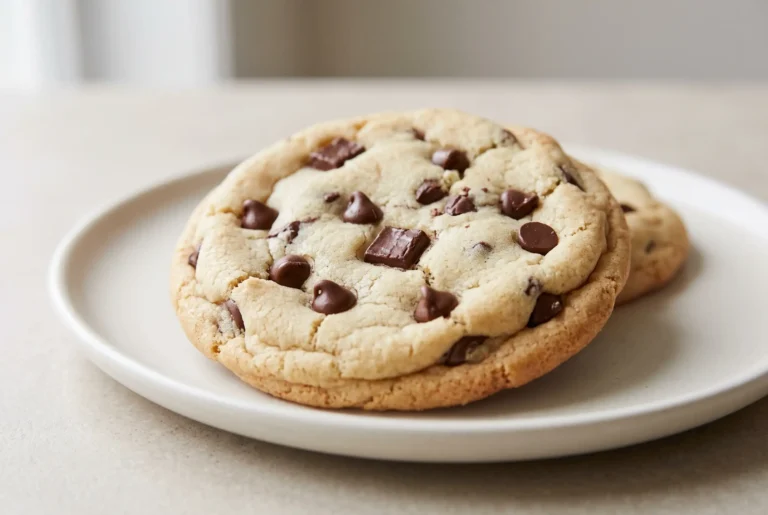
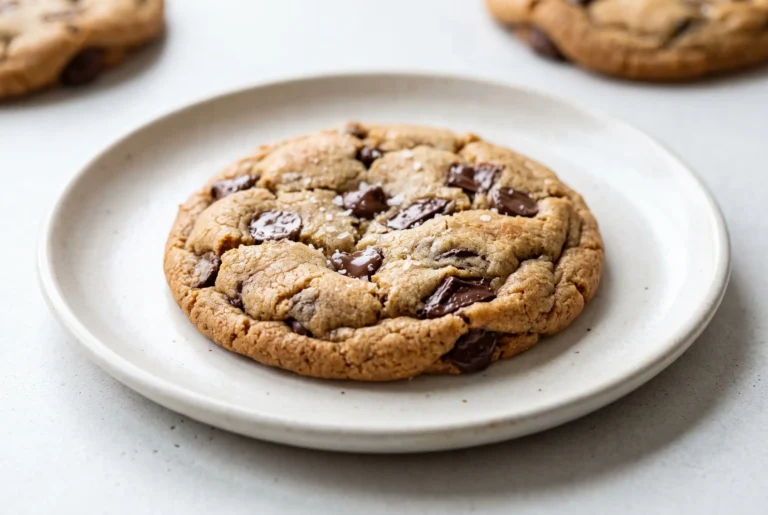
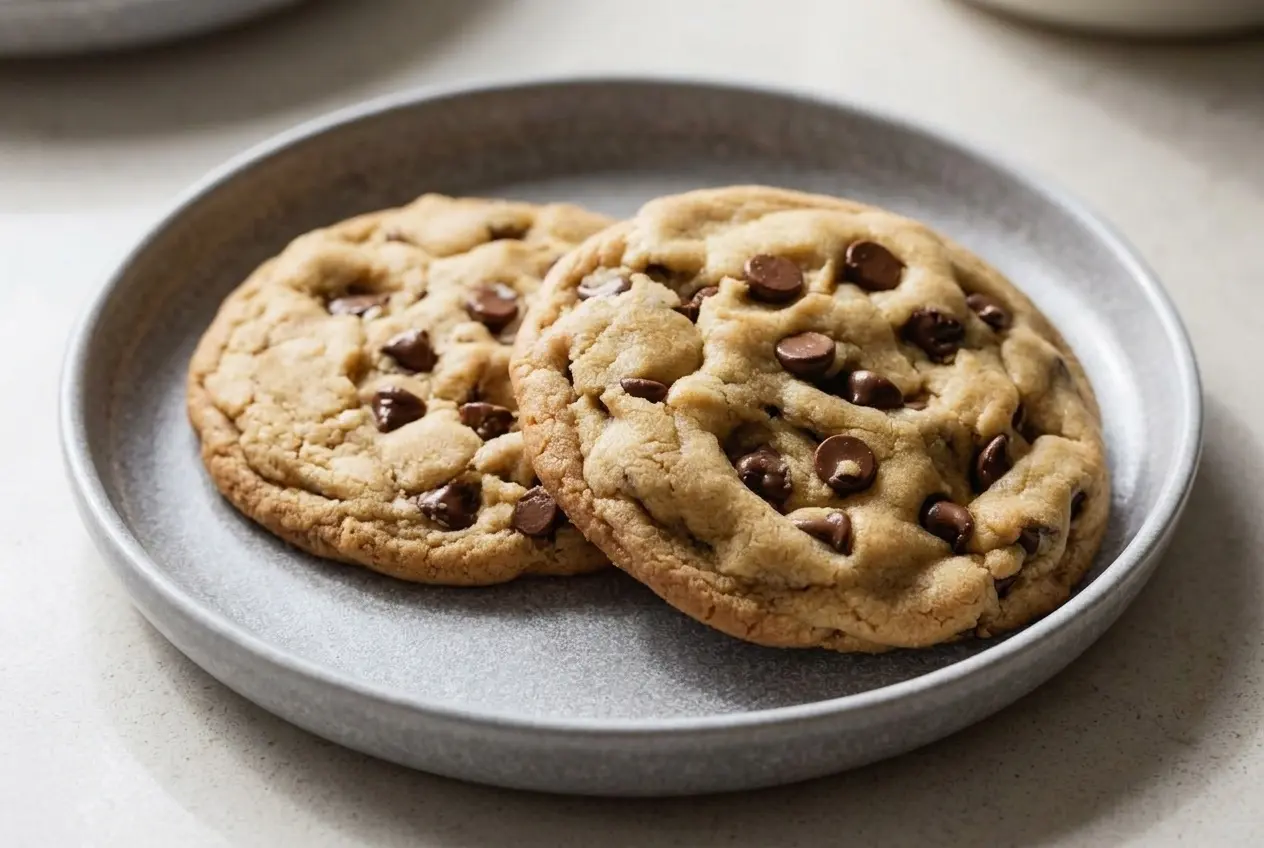
Two huge chocolate chip cookies turn a small batch into a genuinely satisfying dessert for two, with thick centers, crisped edges, and plenty of chocolate in every bite. The dough comes together quickly, and the small quantity makes it easy to adjust the bake for a softer or more golden finish.
What Makes Two Huge Chocolate Chip Cookies Different
Large cookies behave differently from a tray of smaller ones because the center stays protected by a thicker layer of dough while the edges spend more time exposed to the oven’s heat. That contrast is exactly what makes these cookies appealing: the outside can set and lightly brown while the middle remains soft.
Small-batch chocolate chip cookies also offer more control over texture. With only two portions to shape, you can deliberately make them thick and substantial instead of dividing a larger dough into many uniform pieces.
For chocolate chip cookies for two, that generous size also means the chocolate chips are spread through fewer portions. Each cookie feels like a complete dessert instead of a miniature sample.
Flour Gives the Dough Its Sweet Spot
The flour quantity sits in a useful range for a cookie that needs enough structure to hold its size without becoming dry or cakey. Scooping directly into the measuring cup and leveling the top gives a practical way to measure it when a kitchen scale is not being used.
Adding cornstarch alongside the flour changes the character of the dough without requiring a large amount of extra flour. It helps support a tender texture while the baking soda provides the lift needed for the cookies to spread and puff.
Soft Butter Keeps the Dough Easy to Combine
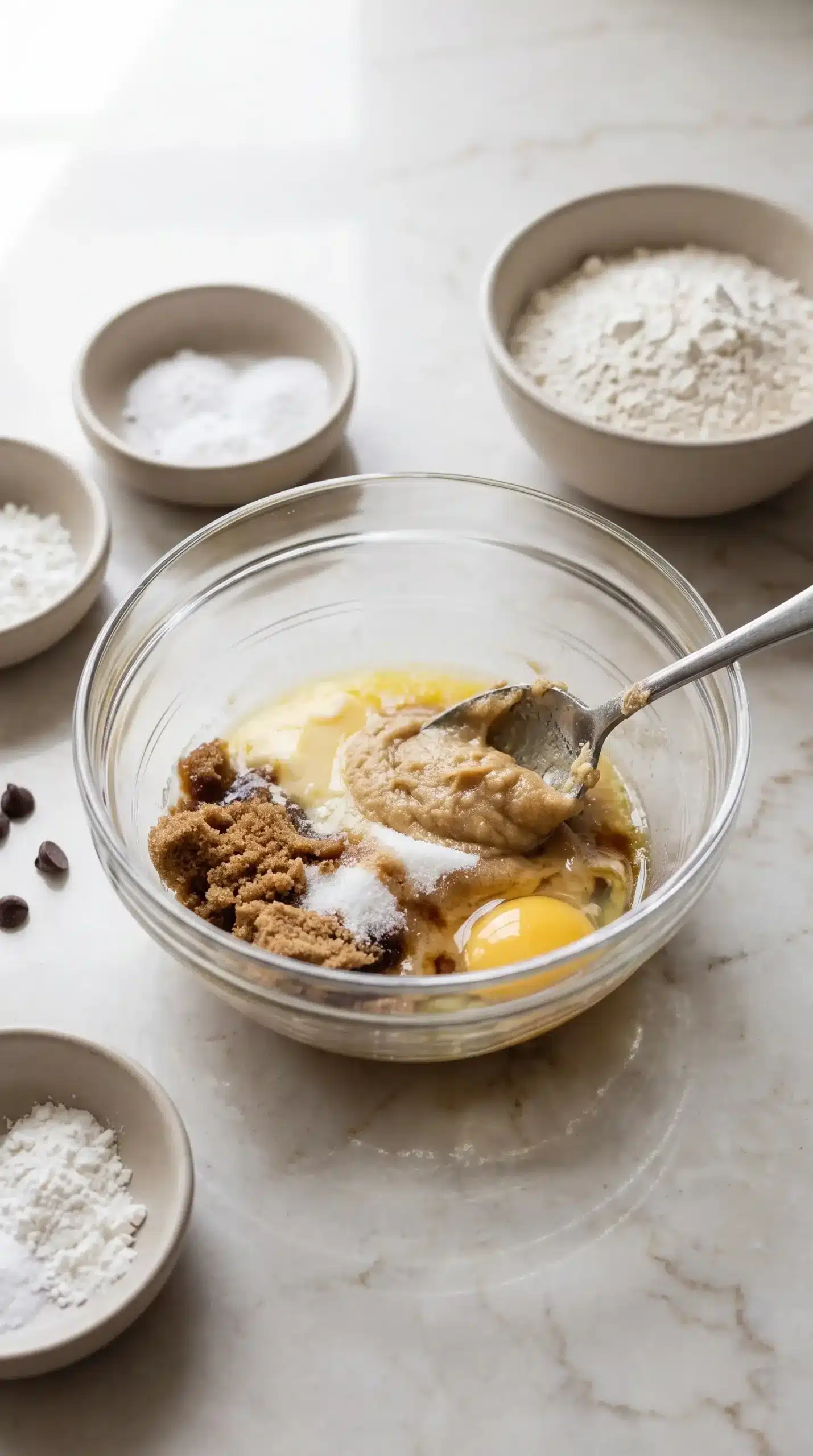
Very soft butter blends readily with the brown sugar and white sugar, and room-temperature butter is easier to cream with sugar, helping the mixture become cohesive before the dry ingredients enter. The butter should be measured carefully because a small batch has little room for large changes in ingredient proportions.
Brown sugar contributes moisture and a deeper sweetness, while the white sugar helps keep the finished cookies from becoming too dense. For a closer look at how brown sugar shapes a tender cookie texture, brown sugar’s role in tender cookies provides a useful point of comparison while vanilla and the egg yolk round out this base, giving the dough enough richness to stand up to the chocolate.
Once the flour mixture is added, stirring should stop as soon as a soft dough forms. Overworking a small amount of dough can make it harder to handle and can encourage a firmer finished texture.
Chocolate Chips Need Room to Stand Out
A modest amount of chocolate chips is enough for the two cookies because each portion is large. Stir them through the finished dough so the chocolate remains distributed instead of collecting mostly in one area.
Extra chips can also be pressed onto the tops before baking. That simple adjustment puts more visible chocolate on the surface and gives the baked cookies a more generous appearance without changing the underlying dough.
A Soft Dough Should Still Hold Its Shape
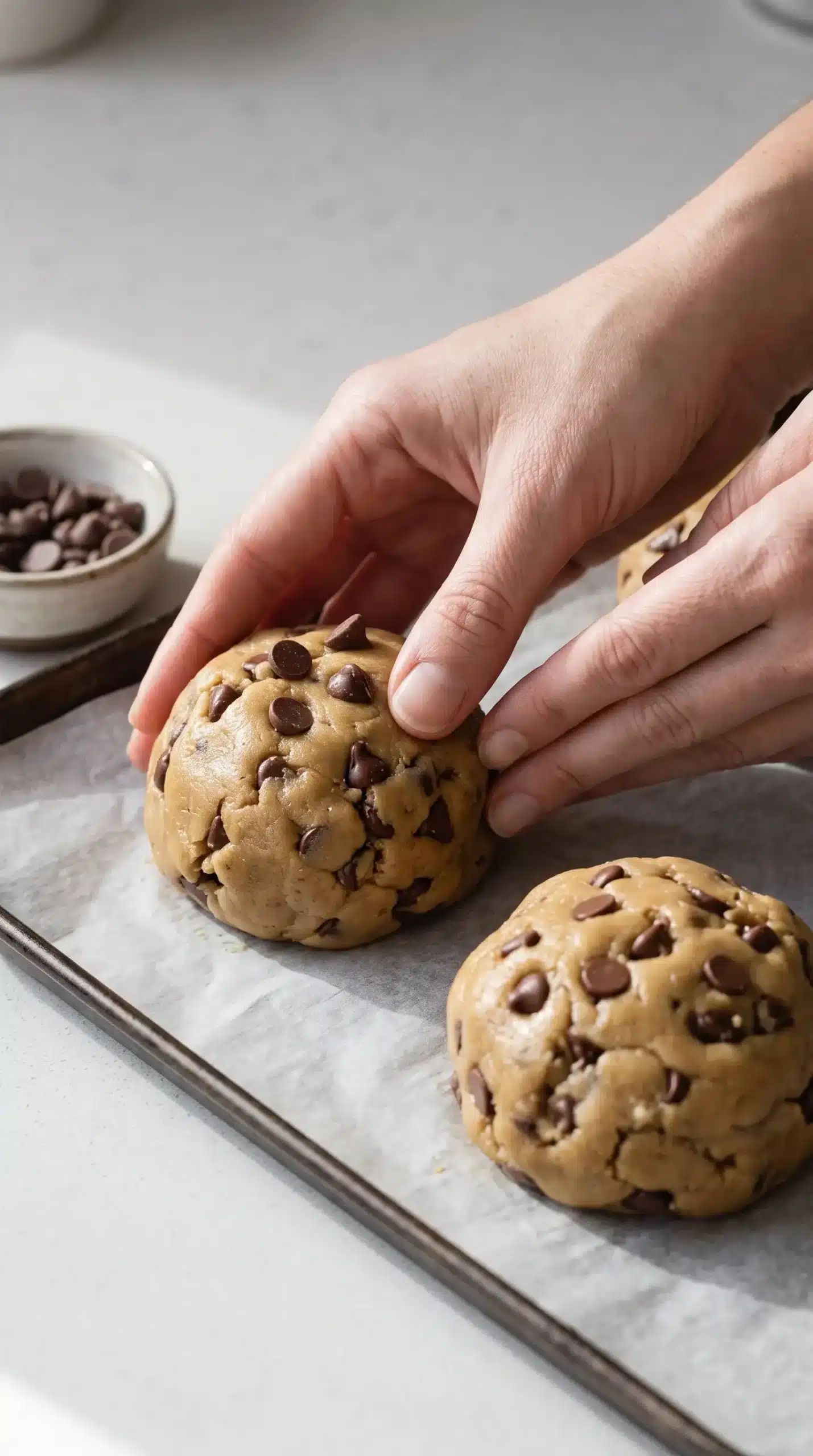
The finished dough should be soft enough to roll into portions but cohesive enough to stay together when handled. Divide it into two large balls, keeping the portions reasonably similar so they bake at roughly the same rate.
- Loose dough: Handle it gently and avoid adding extra flour simply because it feels soft.
- Uneven portions: Rebalance the dough before baking so one cookie does not finish much earlier than the other.
- Visible chocolate: Press a few additional chips onto the tops if a more chocolate-forward surface is desired.
There may be a little dough left after the two large portions are formed. That small extra bit is useful as an immediate taste of the dough without changing the intended two-cookie serving.
Oven Heat Controls the Center
A 350-degree oven gives these large cookies enough heat to set the exterior while leaving room for the centers to remain soft. Because ovens differ, the visual signs of doneness matter as much as the clock.
| Bake approach | Center texture | Surface appearance |
|---|---|---|
| About 10 minutes | More underbaked and gooey | Less browned |
| Middle of the range | Soft with more structure | Lightly set around the edges |
| About 12 minutes | More fully set | More golden browned |
Pulling the cookies when the centers still look softer than the edges is intentional. They continue settling on the hot pan after leaving the oven, so judging them only by how firm they appear at that moment can lead to a more baked result than intended.
Gentle Pan Taps Can Fix Excess Puffiness
Occasionally, the cookies can emerge puffier than expected and appear unlikely to settle on their own. If that happens, gently tap the baking sheet against the counter a few times to encourage the centers to deflate.
The movement should be controlled rather than forceful. The purpose is simply to help the warm dough settle while it is still flexible, not to flatten the cookies into thin rounds.
Common Mistakes With Two Huge Chocolate Chip Cookies
One easy mistake is treating the dough’s softness as a reason to keep adding flour. The supplied flour amount is designed to produce a soft dough, so adding extra flour can push the cookies toward a heavier texture.
Another problem comes from judging doneness only by color. Large cookies can look set around the outside while the middle remains soft, which is useful here. Waiting until the entire surface looks firmly baked can reduce the gooey center that makes these two large chocolate chip cookies distinctive.
Overmixing after the flour goes in is another avoidable issue. Stir only until the dry ingredients disappear and the dough comes together, then fold in the chocolate chips. That keeps the handling focused and prevents unnecessary work.
Finally, moving the cookies immediately after baking can cause them to lose their shape. Let them settle on the pan before transferring them, especially when the centers are intentionally soft.
Texture Comes From a Small Bake-Time Decision
These cookies offer a useful choice without changing the ingredients. A shorter bake leaves the centers more underbaked, while a longer bake produces more golden browning and a more established interior.
| Desired result | What to watch for | Best adjustment |
|---|---|---|
| Gooey center | Edges set while centers remain very soft | Favor the shorter end of the bake window |
| Soft middle | Center has begun to settle but remains tender | Use the middle portion of the bake window |
| More browned cookie | Surface is noticeably more golden | Favor the longer end of the bake window |
Resting is part of that texture decision. Warm cookies become easier to move and hold their shape better after sitting on the pan for several minutes, while the residual heat helps the centers solidify enough for serving.
Warm Serving Keeps the Cookies at Their Best
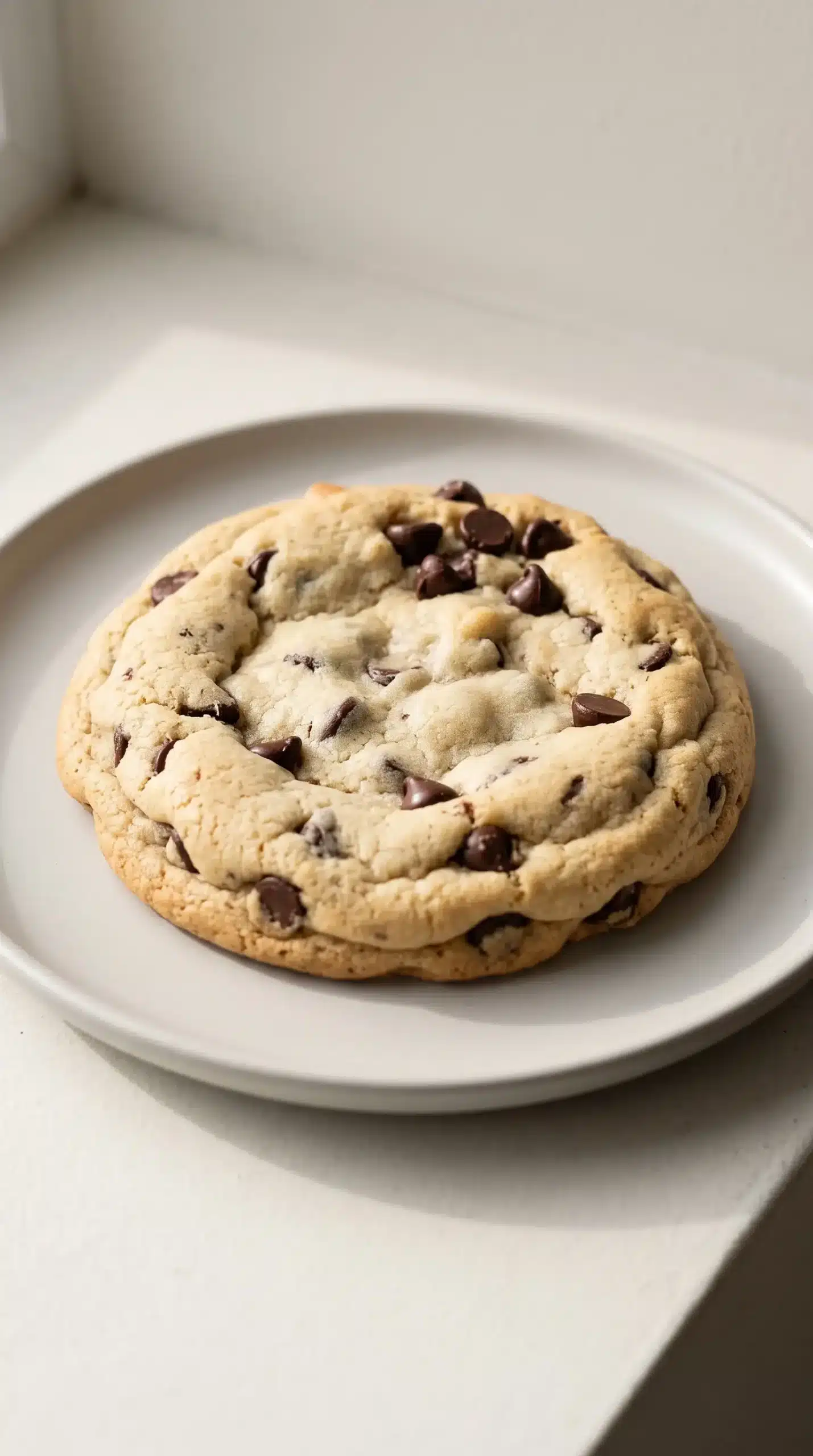
Once the cookies have settled, they can be transferred to a plate and eaten while still warm. Their large size makes one cookie substantial enough to serve on its own, while two portions keep the batch focused on immediate enjoyment.
For a simple presentation, leave the cookies whole so their contrast between browned edges and softer centers remains visible. Extra chocolate chips on top can also make the surface look especially inviting.
Two Large Cookies Can Be Divided With Care
Dividing the dough into two portions works because the intended cookies are large enough to support a substantial center. Keeping the portions close in size helps them reach a similar level of doneness at the same time.
If one portion is noticeably larger, that cookie will naturally take longer to bake through. A quick adjustment before the pan goes into the oven is easier than trying to correct different textures afterward.
Small-Batch Cookies Are Easy to Adjust
The compact quantity makes these cookies especially useful when you want a dessert without a large leftover batch. You can also make a texture decision at the oven stage instead of changing the basic dough.
Chocolate preference is another simple adjustment. Additional chips can be added to the tops before baking for a more pronounced chocolate appearance while leaving the interior mixture unchanged.
The Pan Should Do Some of the Finishing Work
Removing the cookies immediately after baking is not necessary. The hot baking sheet gives the soft centers time to settle and firm slightly, which makes the finished cookies easier to transfer without requiring a longer oven bake.
A short rest also helps distinguish an intentionally soft cookie from one that is simply too fragile to handle. Once the cookies can be lifted without losing their shape, they are ready for warm serving.
Two Huge Chocolate Chip Cookies Need Restraint at the Oven
Two huge chocolate chip cookies are at their best when the oven sets the outside without taking the center too far. The most useful judgment comes from watching the relationship between the edges and middle, then allowing the cookies to settle on the pan before moving them.
That combination of controlled flour, soft butter, restrained mixing, and flexible baking time gives these cookies their defining contrast: substantial edges surrounding a warm, tender chocolate-filled center.
Two Huge Chocolate Chip Cookies Questions and Answers
Can I make the cookies thinner?
Yes. The dough can be shaped into flatter portions before baking, but thinner cookies will expose more surface area to the oven and can reach a browned, set texture sooner. Watch the edges closely and adjust the bake based on their appearance.
Why are my cookies still puffy after baking?
If the cookies look unusually domed and do not seem likely to settle, gently tap the baking sheet against the counter a few times while they are still hot. This encourages the warm dough to deflate without requiring additional baking.
How do I keep the centers gooey?
Favor the shorter end of the baking range and remove the cookies when the edges have set but the centers still look noticeably soft. Letting them rest on the pan afterward allows the middle to firm gradually without relying on extra oven time.
Can I use extra chocolate chips?
Absolutely. Pressing additional chocolate chips onto the tops before baking is an easy way to make the cookies look more chocolate-forward. The existing chips can remain mixed through the dough as directed.
Why should the cookies rest on the baking sheet?
The warm cookies are delicate immediately after baking, especially when the centers are intentionally soft. A short rest lets them settle and gain enough structure to transfer to a plate without needing to bake them until the centers are firm.
Two Huge Chocolate Chip Cookies with Chocolate Chips
These two huge chocolate chip cookies are a quick, small-batch dessert with crisped edges, thick soft centers, and plenty of chocolate in every bite. They are perfect when you want a warm, satisfying treat without making a large batch.
Ingredients
Method
Preparation
- Preheat the oven to 350°F (175°C).
- Combine the very soft or partially melted butter with the brown sugar, white sugar, vanilla, and egg yolk, mixing until evenly combined.
- Add the flour, cornstarch, baking soda, and kosher salt. Stir just until a soft dough forms, then mix in the chocolate chips.
- Divide the dough into two large balls and arrange them on a baking sheet. If desired, press additional chocolate chips onto the tops.
Baking
- Bake for 10-12 minutes. Use the shorter end for a more underbaked, gooey center or the longer end for a more golden-browned cookie.
- If the cookies come out unusually puffy and do not appear likely to settle, gently tap the baking sheet against the counter a few times to help them deflate.
Resting
- Leave the cookies on the baking sheet for 10-15 minutes so they can settle and firm slightly before transferring them to a plate.
Notes
Flour: The flour can be measured by scooping directly into the measuring cup, leveling it with a knife, and adding it to the bowl. When weighing the flour, 50-60 grams can be used: 50 grams gives a chewier, thinner cookie, while 60 grams provides more body through the center. Puffiness: If the cookies remain puffier than desired after baking, gently tap the pan on the counter a few times to help them deflate. Bake Time: 10 minutes gives a more underbaked result, while 12 minutes produces more golden browning. Butter: Butter-wrapper markings can be slightly crooked, so measure the 3 tablespoons carefully; if needed, use the stick’s markings as a guide while cutting.