From breakfast to dinner, from healthy meals to sweet desserts – Next Yum Recipes brings you quick, simple and tasty ideas for every occasion and every time.


 This Recipe
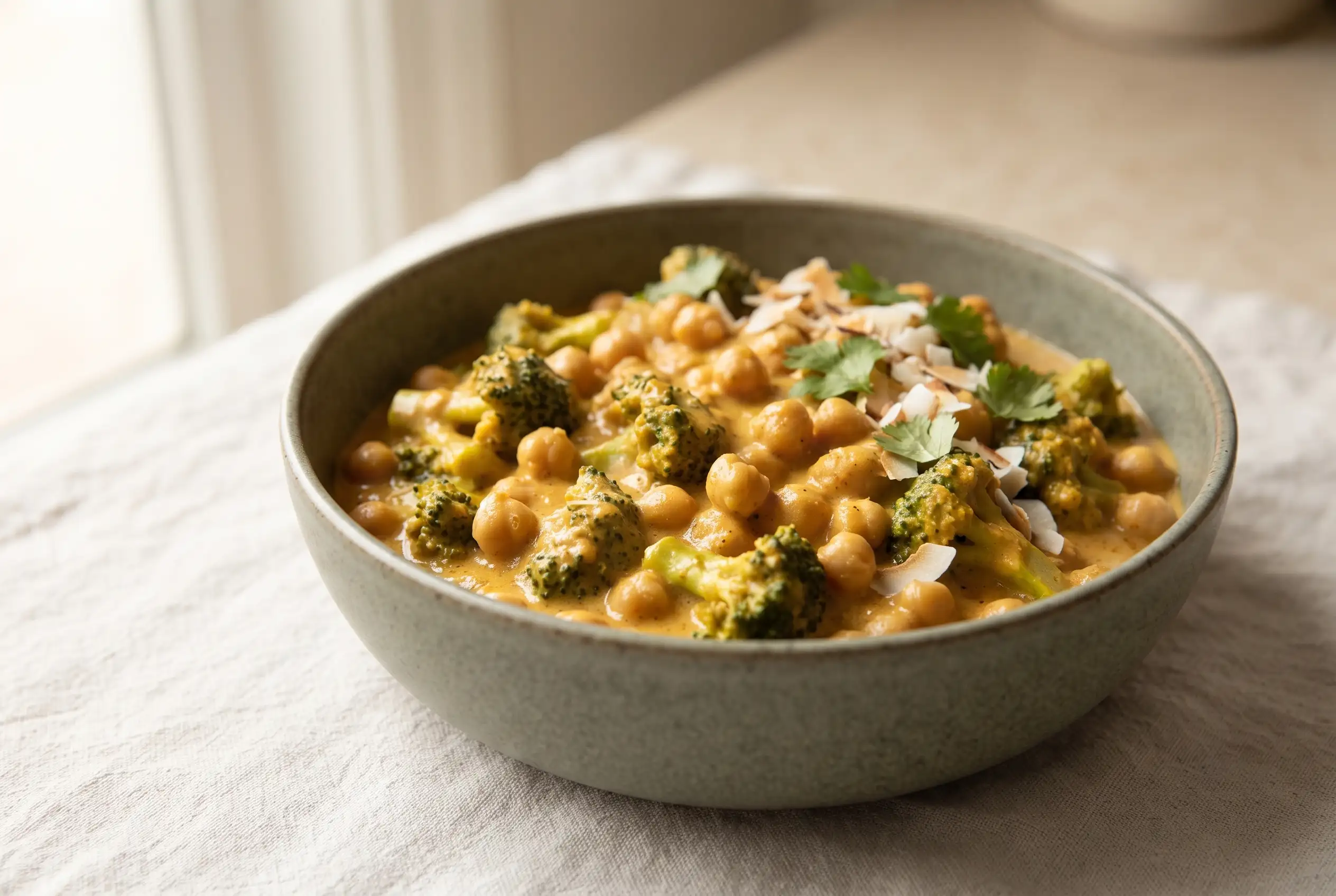
Coconut curry brings together creamy coconut milk, bold red curry paste, tender vegetables, and hearty chickpeas in a simple dish built around contrast. The combination creates a comforting meal where a smooth sauce surrounds crisp-tender broccoli and satisfying legumes without requiring a long list of ingredients. A 5 ingredient coconut curry works because each element has a clear purpose, allowing the cooking process to focus on balance, texture, and timing.
Coconut Milk and Curry Paste Shape Coconut Curry Flavor
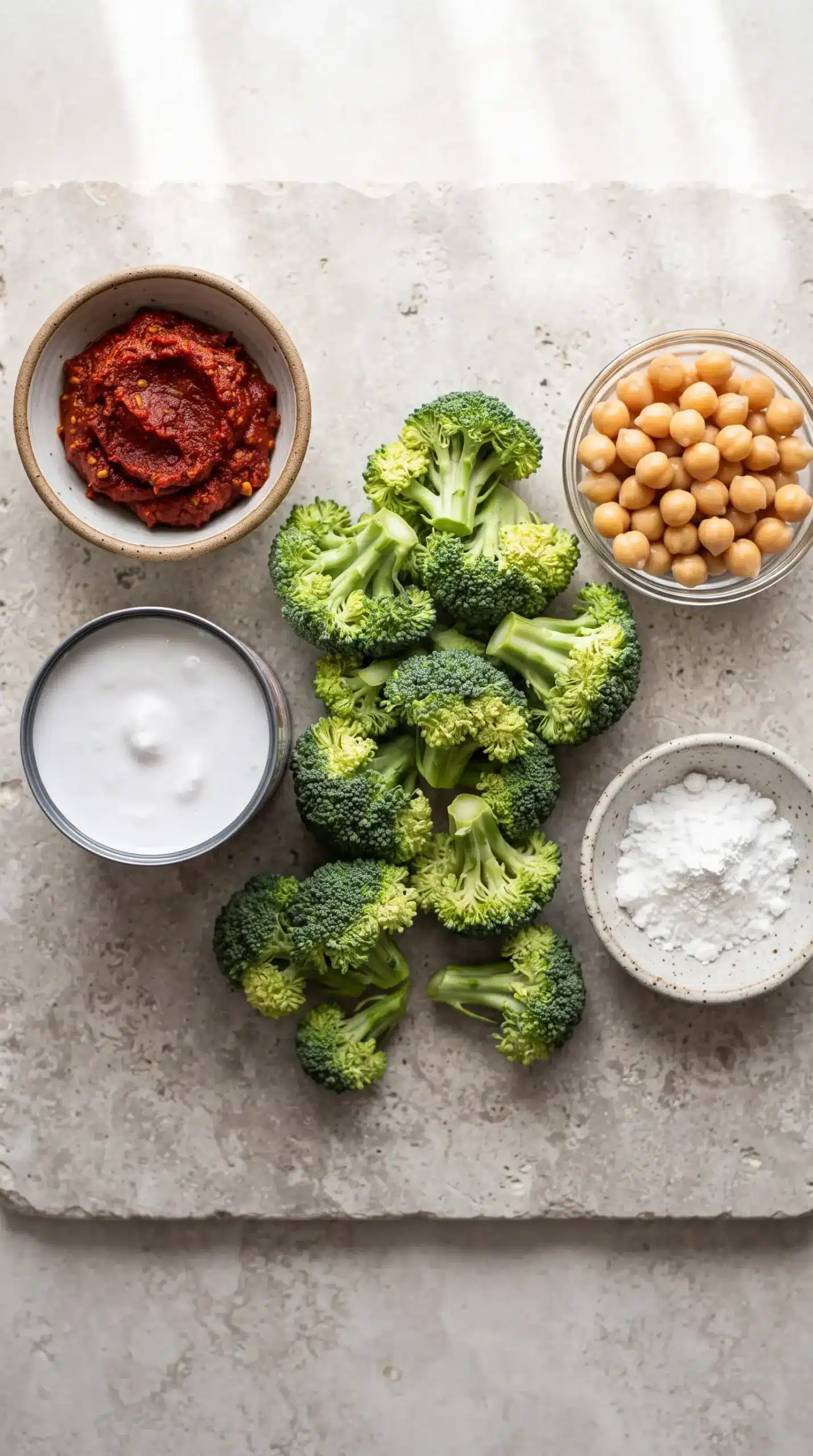
Rich coconut milk provides the foundation for the sauce, creating a creamy texture that carries the flavor of the curry paste throughout the pan. Full-bodied coconut milk works especially well because it can coat the vegetables and chickpeas while maintaining enough richness to support the spices in the curry paste.
Red curry paste determines much of the character of the dish. Its concentrated seasoning blends into the coconut milk after it is stirred through the sauce, creating a unified flavor instead of separate pockets of spice. Adding it after the coconut milk has started warming allows the paste to disperse evenly.
Careful cooks can use the balance between these two ingredients to adjust the finished result. More curry paste can create a stronger flavor presence, while the coconut milk helps soften the intensity and keeps the sauce approachable. The relationship between these ingredients is what gives coconut curry its recognizable creamy, savory profile.
Broccoli and Chickpeas Create a Satisfying Coconut Curry Base
Broccoli and chickpeas give the dish its main texture contrast. The broccoli should remain tender-crisp after simmering, while the chickpeas add a firmer bite that helps the creamy sauce feel substantial. This combination also makes vegetable coconut curry a practical option when a meal needs both freshness and staying power.
Coconut Curry Texture Depends on Heat Control
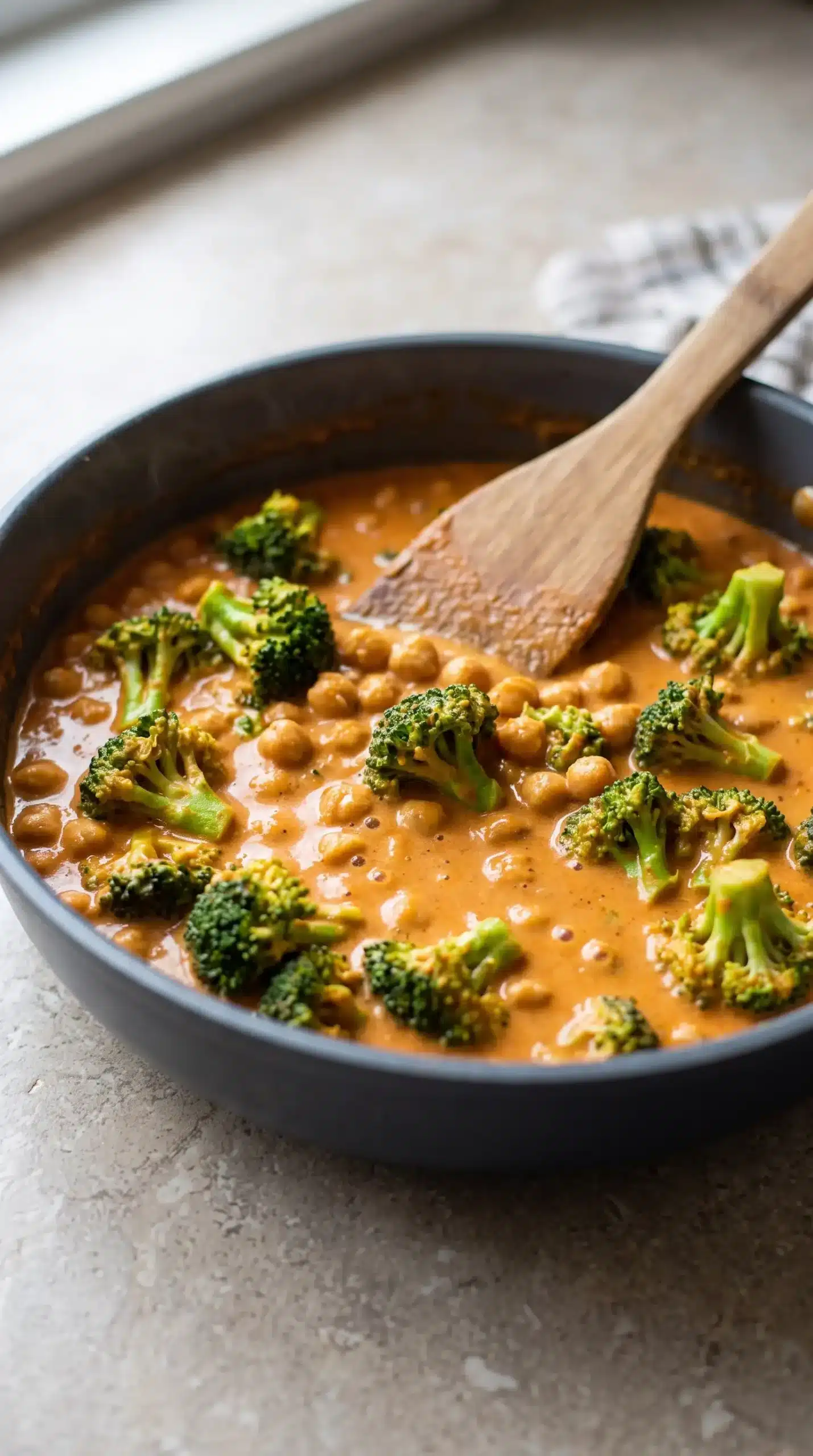
Gentle heat plays an important role once the coconut milk enters the pan. A controlled simmer allows the broccoli to soften gradually while keeping its structure, preventing the vegetables from becoming overly soft before the sauce reaches the desired consistency.
During simmering, attention to texture matters more than rushing the process. The coconut milk needs enough time to combine with the other flavors, but excessive heat can change the way the vegetables feel in the finished dish. Watching the broccoli closely helps preserve the contrast that makes the curry enjoyable.
Sauce thickness changes during the last stage of cooking because the cornstarch mixture needs heat to activate and later continues settling as the curry cools slightly. Adding the thickener correctly helps create a coating sauce that clings to the vegetables and chickpeas.
The thickening happens through starch gelatinization, a process where starch granules absorb liquid and swell with heat to change the sauce’s consistency.
Smart Adjustments Keep Vegetable Coconut Curry Flexible
Flexible choices allow the same coconut curry base to work with different vegetables while keeping the original balance intact. Broccoli can be replaced or combined with vegetables that hold their texture during a short simmer, including squash coconut curry preparations that pair coconut milk and red curry paste with seasonal produce.
| Adjustment | What changes | What to consider |
|---|---|---|
| Different vegetables | Texture and color | Choose vegetables that stay pleasant after simmering |
| Extra aromatics | Deeper savory notes | Minced garlic or onion should be cooked with the vegetables |
| Curry paste amount | Spice intensity | Adjust according to preferred flavor strength |
Common Coconut Curry Mistakes That Affect Sauce and Texture
Many cooks run into problems with coconut curry when the timing of each component is overlooked. Since the ingredient list is short, small changes in handling can noticeably affect the texture and balance of the finished meal.
Overcooking broccoli is one possible issue. When the vegetables stay on heat too long, they can lose the tender-crisp texture that gives the curry contrast. Keeping an eye on their firmness during simmering helps maintain a better bite.
Adding cornstarch incorrectly can also change the sauce. A properly dissolved mixture helps prevent uneven thickening, while adding dry cornstarch directly can create unwanted lumps. Stirring the sauce as it thickens supports a smoother finish.
- Broccoli texture: Check firmness before reducing heat so the vegetables do not become too soft.
- Sauce balance: Combine curry paste thoroughly with coconut milk for an even flavor throughout the dish.
- Chickpea preparation: Rinse and drain chickpeas before adding them so the sauce keeps its intended consistency.
Serving Bowls Highlight the Creamy Chickpea Coconut Curry
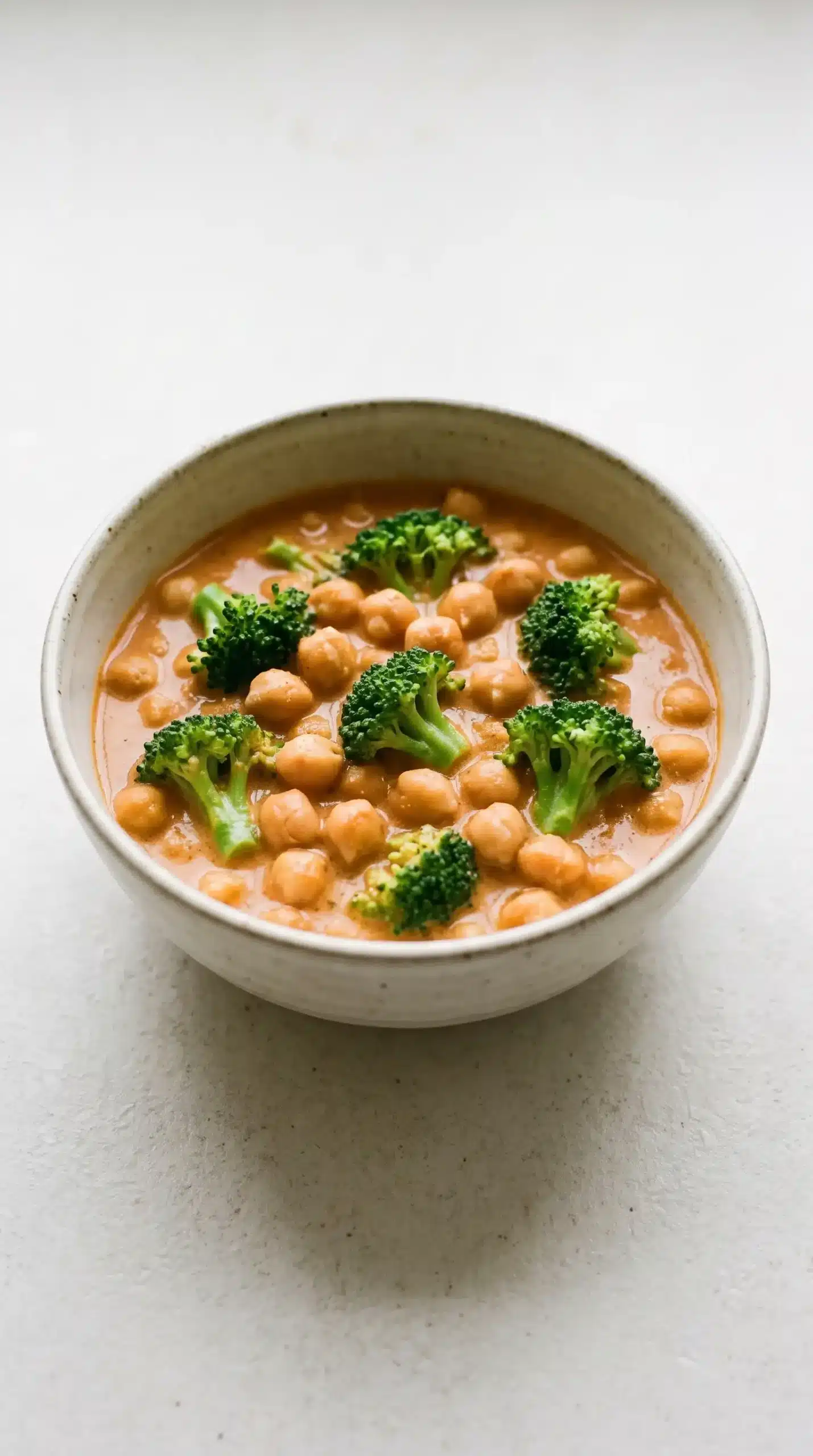
Serving bowls make the creamy sauce and vegetable pieces easy to enjoy together. Chickpeas provide a hearty element that pairs naturally with the coconut-based sauce, making the dish suitable for a simple meal format without needing complicated accompaniments.
Storing Coconut Curry Components Preserves Quality
Proper storage keeps the textures of coconut curry more consistent when portions remain after the meal. The creamy sauce, vegetables, and chickpeas continue to interact over time, so protecting the texture starts with cooling and storing the dish carefully.
Separate portions can be useful when preparing meals ahead because individual servings are easier to reheat while maintaining the balance of sauce and vegetables. Keeping the curry covered helps protect its flavor and prevents unnecessary drying.
Reheating leftovers works best with gentle warming so the sauce returns to a smooth texture without overheating the broccoli. A slow approach allows the coconut milk mixture to warm evenly while preserving the qualities developed during cooking.
Simple Additions Change the Character of Coconut Curry
Optional additions such as minced garlic or onion can shift the flavor direction of coconut curry while keeping the core structure unchanged. Cooking these aromatics with the vegetables allows their flavors to blend into the sauce instead of standing apart from the finished dish.
Coconut Curry Fits Different Weeknight Meal Styles
Meal planning becomes easier when a dish can serve different purposes. Coconut curry can be prepared as a vegetable-focused dinner, paired with a grain, or adapted around available vegetables without changing the basic cooking approach.
Prepared components can simplify future meals because the sauce, chickpeas, and vegetables each have recognizable roles. Having a clear understanding of those roles helps cooks make adjustments without losing the creamy texture and balanced flavor that define the dish.
Different serving styles can highlight different parts of the curry. A bowl that emphasizes the sauce feels comforting, while a serving that highlights vegetables brings more attention to the broccoli and other additions used in the pan.
Coconut Curry Remains Adaptable Across Vegetables
Vegetable coconut curry stays useful because its core method supports seasonal changes and personal preferences. The combination of coconut milk, curry paste, vegetables, and chickpeas provides enough structure for substitutions while preserving the dish’s creamy, savory identity.
Coconut Curry Gains Its Best Texture Through Timing
Coconut milk develops its best texture when the heat is managed carefully and the sauce has time to combine with the curry paste. Broccoli and chickpeas then provide the contrast needed to make the creamy mixture feel complete.
Balanced coconut curry depends on decisions made during cooking, especially preserving vegetable texture and allowing the thickened sauce to settle. Those small details create a dish where simple ingredients work together with a satisfying result.
Coconut Curry Questions About Storage and Adjustments
Can coconut curry be made with other vegetables?
Yes, other vegetables can work well when they are suitable for a short simmer and can maintain a pleasant texture. Choosing replacements with similar cooking behavior helps preserve the balance between the creamy sauce and vegetable pieces.
How can coconut curry sauce become thicker?
The sauce thickens through the dissolved cornstarch mixture added during cooking and continues to settle as it cools slightly. Allowing that process to happen gives the sauce time to reach a smoother coating consistency.
Can coconut curry be stored for later meals?
Coconut curry can be stored after cooking by keeping portions covered and handling leftovers carefully. Gentle reheating helps maintain the creamy texture of the coconut milk sauce and protects the quality of the vegetables.
How can the flavor of coconut curry be adjusted?
The flavor can be adjusted by changing the amount of red curry paste or including optional garlic or onion with the vegetables. These changes influence the overall character while keeping the main structure of the dish intact.
Coconut Curry with Chickpeas and Simple Vegetables
Coconut curry is a creamy chickpea and vegetable dish with a rich coconut milk sauce and bold curry flavor. It is an easy, comforting meal built around simple ingredients and balanced textures.
Ingredients
Method
Cooking
- Sauté broccoli and optional onion or garlic in a tablespoon of oil.
- After a few minutes, add the coconut milk and simmer for 5-8 minutes until the broccoli is softened but still tender-crisp.
- Stir the curry paste into the coconut milk sauce until evenly combined, then add the chickpeas.
- Bring the mixture to a slight boil and add the dissolved cornstarch. Continue boiling for about 1 minute, then reduce the heat and allow the curry to cool slightly as the sauce thickens.
Notes
Keep the broccoli tender-crisp during simmering for the best texture in the finished curry.