From breakfast to dinner, from healthy meals to sweet desserts – Next Yum Recipes brings you quick, simple and tasty ideas for every occasion and every time.


 This Recipe
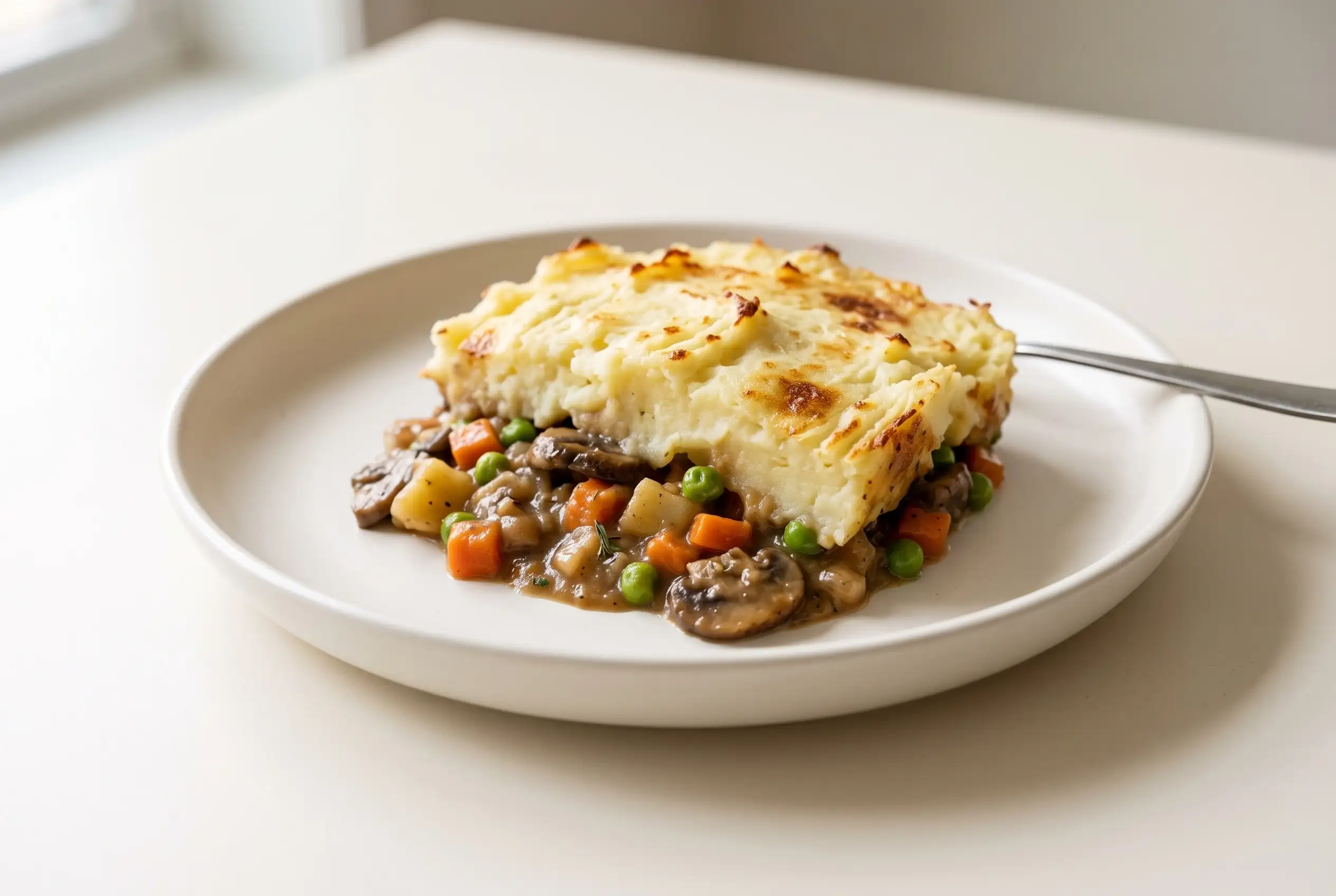
Vegetarian shepherd s pie turns a deeply savory mushroom and vegetable filling into a cozy baked dinner beneath a layer of creamy Yukon Gold mashed potatoes. The filling develops its character from mushrooms, carrots, shallots, tomato paste, herbs, and a splash of red wine, while frozen peas bring a fresh contrast near the end. The result is hearty enough to stand on its own, with a soft vegetable gravy underneath a lightly browned potato topping.
What makes a good vegetarian shepherd s pie recipe work is the relationship between the filling and the potatoes. The vegetables need enough time to soften and concentrate, while the gravy should become thick enough to support the topping without becoming pasty. A few small choices, especially how the mushrooms are cut and when the peas are added, have a noticeable effect on the finished dish.
Why the mushroom filling carries the shepherd’s pie
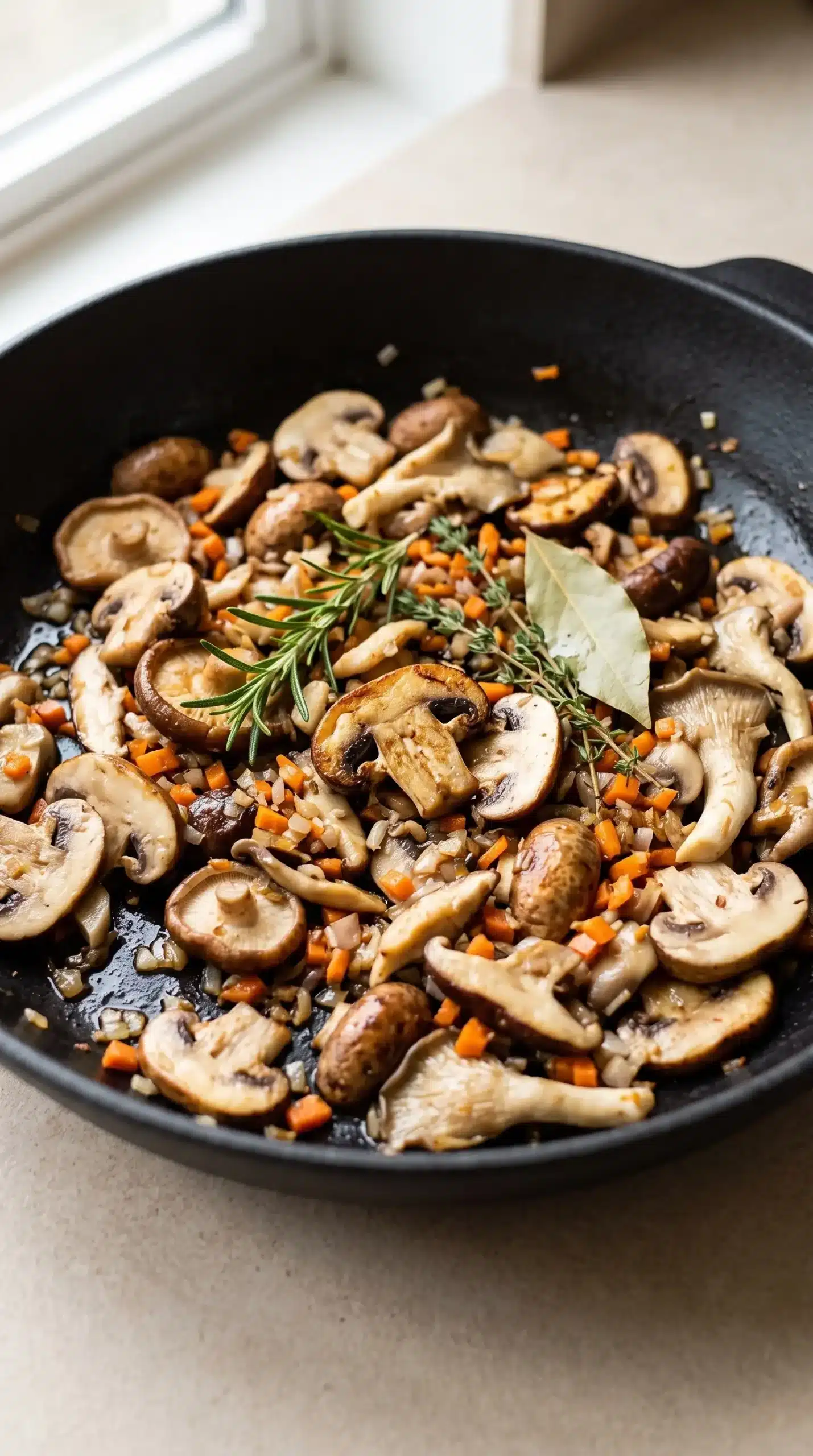
Mushrooms provide the substantial texture that helps the filling feel satisfying without meat. Keeping some pieces larger gives the fork something distinct to find beneath the mashed potatoes, while chopping part of the mushrooms more finely distributes their savory character throughout the gravy.
For deeper flavor in the filling, give the mushrooms enough room to make direct contact with the hot pan; browning mushrooms without overcrowding helps them develop color instead of steaming in their own moisture.
Carrots bring sweetness and body as they soften with the mushrooms and shallots. The tomato paste helps deepen the vegetable mixture, and the flour gives the cooking liquid enough structure to become a gravy. Together, those elements create a filling that feels cohesive instead of like loose vegetables sitting under mashed potatoes.
Herbs also matter because rosemary, thyme, and bay leaf are cooked directly with the vegetables and then removed before the peas go in. That method lets their flavor infuse the filling without leaving tough herb pieces throughout each serving. The red wine adds another layer of depth while also helping loosen the browned bits from the bottom of the pot.
Yukon Gold potatoes make the topping especially creamy
Yukon Gold potatoes are well suited to the topping because they mash into a naturally smooth texture. Boiling them until completely fork tender matters more here than achieving perfectly intact potato pieces; firm centers can leave the mash lumpy and make it harder to spread evenly over the filling.
Full-fat Greek yogurt gives the potatoes a creamy, slightly tangy character, while butter or olive oil adds richness. Seasoning should happen while the potatoes are being mashed so the topping itself is flavorful instead of relying on the gravy to season every bite.
The creamy potato topping makes the finished pie quite substantial, so a lighter vegetable accompaniment can keep the plate balanced. Crisp or simply roasted vegetable side dishes work especially well when you want contrast without adding another rich component.
- Soft centers: Cook the potatoes until a fork passes through easily before draining.
- Gentle mashing: Mash while they are hot so the yogurt and butter incorporate smoothly.
- Even coverage: Spread the potatoes across the filling without leaving large exposed pockets.
Small ingredient choices that improve the filling
Half-chopped mushrooms are particularly useful when making a mushroom shepherd’s pie because they create a more varied texture. Finely chopped pieces blend into the gravy, while larger slices remain recognizable after baking.
Shallots work naturally with the mushrooms and carrots, although the supplied method also allows onions and garlic to stand in for them. Red wine is optional; if it is omitted, additional vegetable broth or another suitable cooking liquid can take its place without changing the basic structure of the filling.
Frozen peas belong near the end of the filling process. They do not need prolonged cooking before the pie goes into the oven, so stirring them in after the herbs are removed helps preserve their shape and keeps them from becoming unnecessarily soft.
The gravy needs enough structure before the potatoes go on
Flour and tomato paste are stirred into the softened vegetables before the red wine and broth are introduced. This gives the flour a chance to coat the vegetables and combine with the flavorful mixture already in the pot.
Slow additions of broth make it easier to judge the consistency as the gravy develops. Depending on how much liquid the vegetables release and how thick the mixture becomes, the amount of broth can vary within the supplied range. The useful visual cue is a thick, spoonable filling that does not look watery around the vegetables.
A low simmer after the liquid is incorporated gives the gravy time to tighten before the potatoes are added. If the filling still looks loose at that stage, more simmering is useful; putting a wet filling under mashed potatoes can leave the topping sitting unevenly and make serving less tidy.
Red wine adds depth without dominating the vegetables
Red wine works especially well with the browned mushrooms, tomato paste, rosemary, and thyme. Pouring it into the hot pot and scraping the bottom releases the browned material left from sautéing, which becomes part of the gravy rather than remaining stuck to the cooking surface.
Only a short cooking period is needed after the wine is added before the broth goes in. The intention is to let the wine cook into the vegetable mixture while preserving the balance of the other flavors. If wine is not wanted, extra liquid can be substituted without requiring a different topping or baking approach.
Vegetarian Shepherd’s Pie Mistakes That Weaken the Filling
Several problems can be traced directly to the handling of the vegetables and gravy. Mushrooms that are all cut identically can produce a monotonous texture, while carrots that remain too firm can make the filling feel undercooked beneath the soft potatoes.
Adding the peas too early is another avoidable issue. They are already frozen and only need to become part of the hot filling, so prolonged simmering can make them softer than necessary. Removing the rosemary, thyme, and bay leaf before the potatoes are added also keeps the serving texture clean.
Finally, a thin gravy can undermine the whole structure of the pie. The filling should visibly thicken during the low simmer. If it resembles a loose soup before the topping goes on, allow it to reduce further so the mashed potatoes have a stable base.
Spreading the potato layer without disturbing the gravy
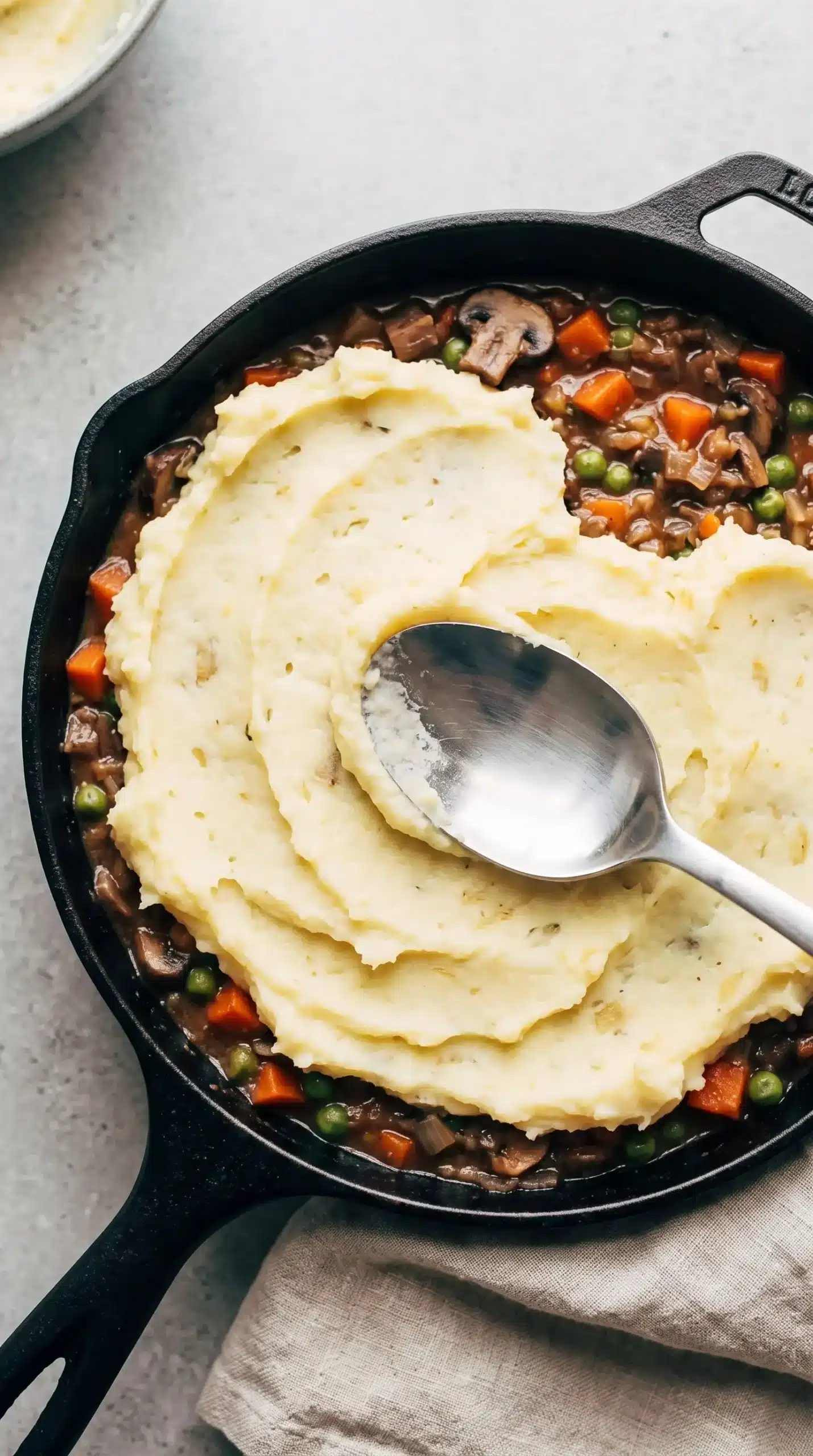
The mashed potatoes should be spread once the vegetable filling has reached the desired thickness. Working gently keeps the potatoes on the surface instead of dragging large amounts of gravy upward through the topping.
A broad spoon or spatula can help distribute the mash from the center toward the edges. An even layer encourages consistent browning during the short bake, and small ridges or peaks on the surface can catch additional color when the pie is finished under the broiler.
A butter-brushed top creates a better browned finish
Brushing the potato surface with butter before baking is optional, but it gives the topping an additional source of richness and encourages more noticeable browning. The potatoes already contain butter or olive oil, so the extra brushing is a finishing choice rather than a structural requirement.
| Potato topping choice | What it changes | When it helps |
|---|---|---|
| Butter in the mash | Richer, smoother potato flavor | When a classic creamy topping is preferred |
| Olive oil in the mash | Lightens the richness while keeping the mash moist | When avoiding butter in the potato mixture |
| Butter brushed over the top | Encourages a richer browned surface | When a more golden finish is desired |
The bake is mainly about marrying the layers
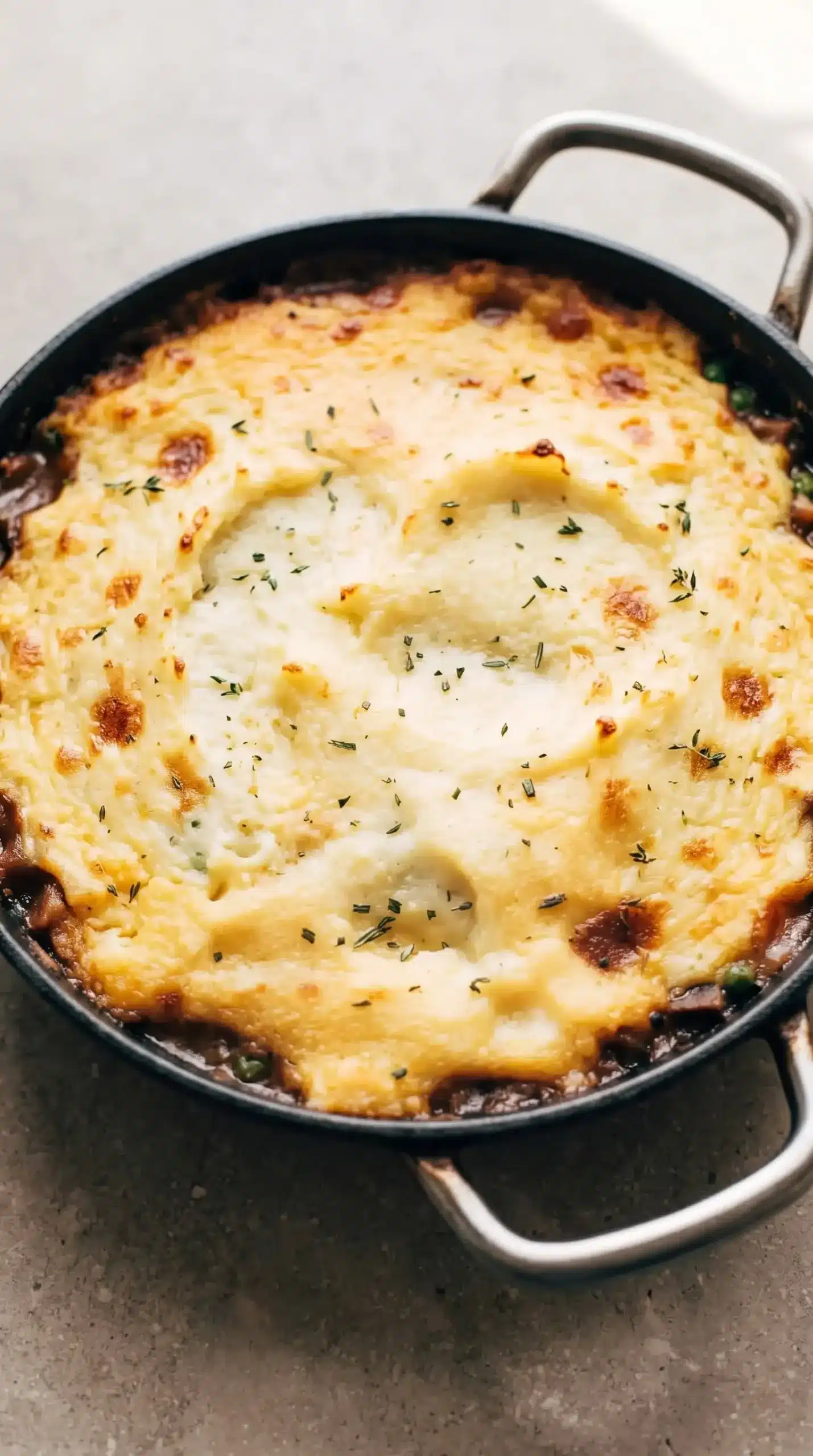
The filling is already cooked before the assembled pie enters the oven, so the bake does not need to function like a long cooking stage. At 350°F, the short oven time brings the hot filling and mashed potatoes together and gives the surface an opportunity to brown.
Broiling at the end is optional and should be watched closely. The potatoes can move from lightly browned to overly dark quickly under direct top heat, so the surface itself is the useful indicator rather than relying on an exact extra duration.
Serving becomes easier when the pie has had a moment to settle after baking. A thick filling holds its shape more effectively beneath the potatoes, while a loose filling tends to spread when scooped. The difference is established mainly before the dish reaches the oven.
One-pot handling keeps the mushroom gravy concentrated
Using an oven-safe pot for the filling reduces the need to transfer the vegetables and gravy into another baking vessel. That keeps the browned material from the sautéing stage in the same cooking environment and makes the transition to baking straightforward.
Scraping the bottom after the wine is added is especially worthwhile because the browned bits are concentrated flavor already created during cooking. Once the broth is incorporated, those pieces become part of the sauce instead of remaining attached to the pot.
Vegetarian Shepherd’s Pie Works Best When Texture Leads the Seasoning
Mushrooms that vary in size, carrots softened enough to yield easily, and peas added late give the filling a more interesting texture than a uniform vegetable mixture. The thickened gravy then ties those pieces together without turning them into a single soft mass.
Above the filling, creamy Yukon Gold potatoes provide a contrasting layer that should remain distinct. Keeping the gravy properly reduced before spreading the potatoes is the key decision that connects all of these textures: it protects the topping from sinking, keeps the filling scoopable, and lets the browned potato surface remain the defining finish.
Vegetarian Shepherd’s Pie Questions About Texture and Substitutions
Can I make the filling without red wine?
Yes. The supplied recipe specifically allows the wine to be replaced with a little more liquid. Add the vegetable broth gradually and continue simmering until the filling reaches a thick gravy consistency.
Why chop some mushrooms more finely?
Using two mushroom sizes gives the filling more textural variety. Smaller pieces become integrated into the gravy, while larger pieces retain a recognizable mushroom texture when the pie is served.
Can olive oil replace butter in the mashed potatoes?
Yes. The ingredient list allows either butter or olive oil in the potato mixture. Olive oil keeps the mash moist while giving the topping a different richness from butter.
How do I keep the filling from becoming watery?
Control the broth gradually and let the mixture simmer until the gravy visibly thickens before adding the peas and potatoes. Starting with less broth gives you more control because additional liquid can be added if the vegetables need it.
Can I use onions and garlic instead of shallots?
Yes. The supplied ingredient note allows some onions and garlic in place of the minced shallots. Sauté the substitute aromatics until fragrant before adding the mushrooms and carrots, following the same general filling structure.
Vegetarian Shepherd’S Pie with Creamy Mashed Potatoes
This vegetarian shepherd’s pie combines a hearty mushroom and vegetable filling with a creamy Yukon Gold mashed potato topping. It is a comforting, satisfying choice for a cozy dinner or gathering.
Ingredients
Method
Mashed Potatoes
- Peel the potatoes and boil them until a fork passes through easily and they are soft enough to mash.
- Drain the potatoes, mash while hot, then mix in the yogurt and butter. Season with salt to taste.
Filling
- Heat the oil over medium heat in a large oven-safe pot. Add the shallots and cook until fragrant.
- Add the mushrooms, carrots, rosemary, thyme, and bay leaf. Cook until the carrots have softened.
- Stir the tomato paste and flour into the vegetables.
- Pour in the red wine and scrape the browned bits from the bottom of the pot. Cook for 1-2 minutes.
- Gradually add 1-2 cups of vegetable broth, stirring as you pour, until a gravy forms. Season with salt.
- Simmer over low heat until the filling has thickened.
- Remove the rosemary, thyme, and bay leaf, then stir in the frozen peas.
Assembly and Baking
- Spread the mashed potatoes evenly over the vegetable filling.
- If desired, brush the potato surface with butter.
- Bake for 15 minutes at 350°F (177°C).
- For additional browning, finish under the broiler for a few minutes, watching the top closely.
Serving
- Scoop the baked shepherd’s pie into hearty portions and serve.
Notes
For more varied texture, finely chop half of the mushrooms while leaving the rest sliced. If you prefer not to use red wine, replace it with a little more liquid.