From breakfast to dinner, from healthy meals to sweet desserts – Next Yum Recipes brings you quick, simple and tasty ideas for every occasion and every time.


 This Recipe
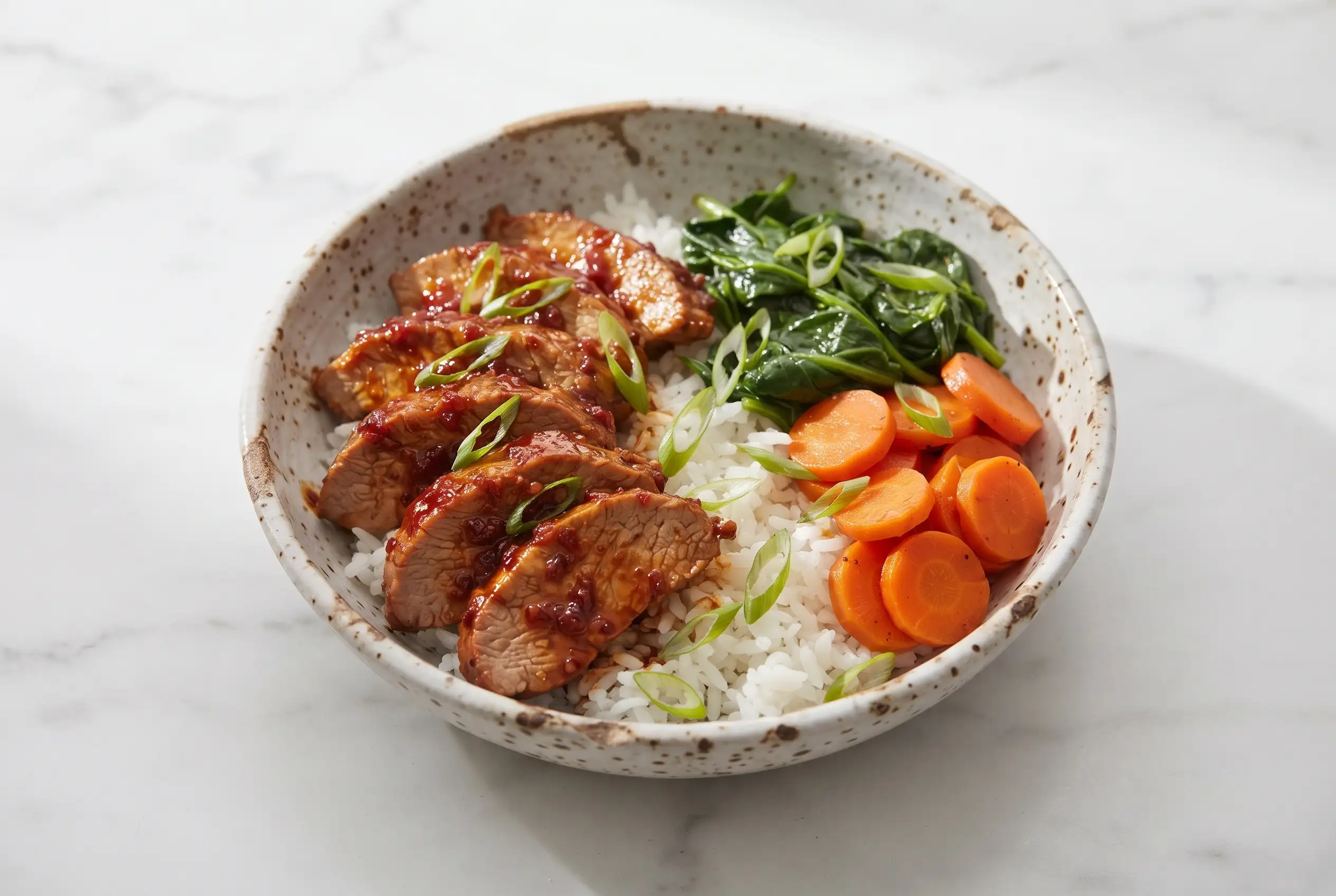
Spicy pork brings together thin slices of tender pork, a bold chili sauce, and a fast sear that creates a deeply savory dinner without a complicated cooking process. This spicy pork recipe uses a simple blend of hot chili paste, soy sauce, brown sugar, ginger, and garlic to build flavor before the meat reaches the pan.
The dish depends on contrast: a quick caramelized exterior, a spicy-sweet coating, and fresh vegetables served alongside rice. A spicy pork tenderloin recipe like this works best when preparation choices support speed, because thin pork slices need intense heat and careful timing to stay tender.
The browned exterior in this spicy pork comes from the Maillard reaction, a heat-driven process that creates new flavor compounds and the deeper color associated with seared meat.
Sambal oelek pork starts with a balanced flavor base
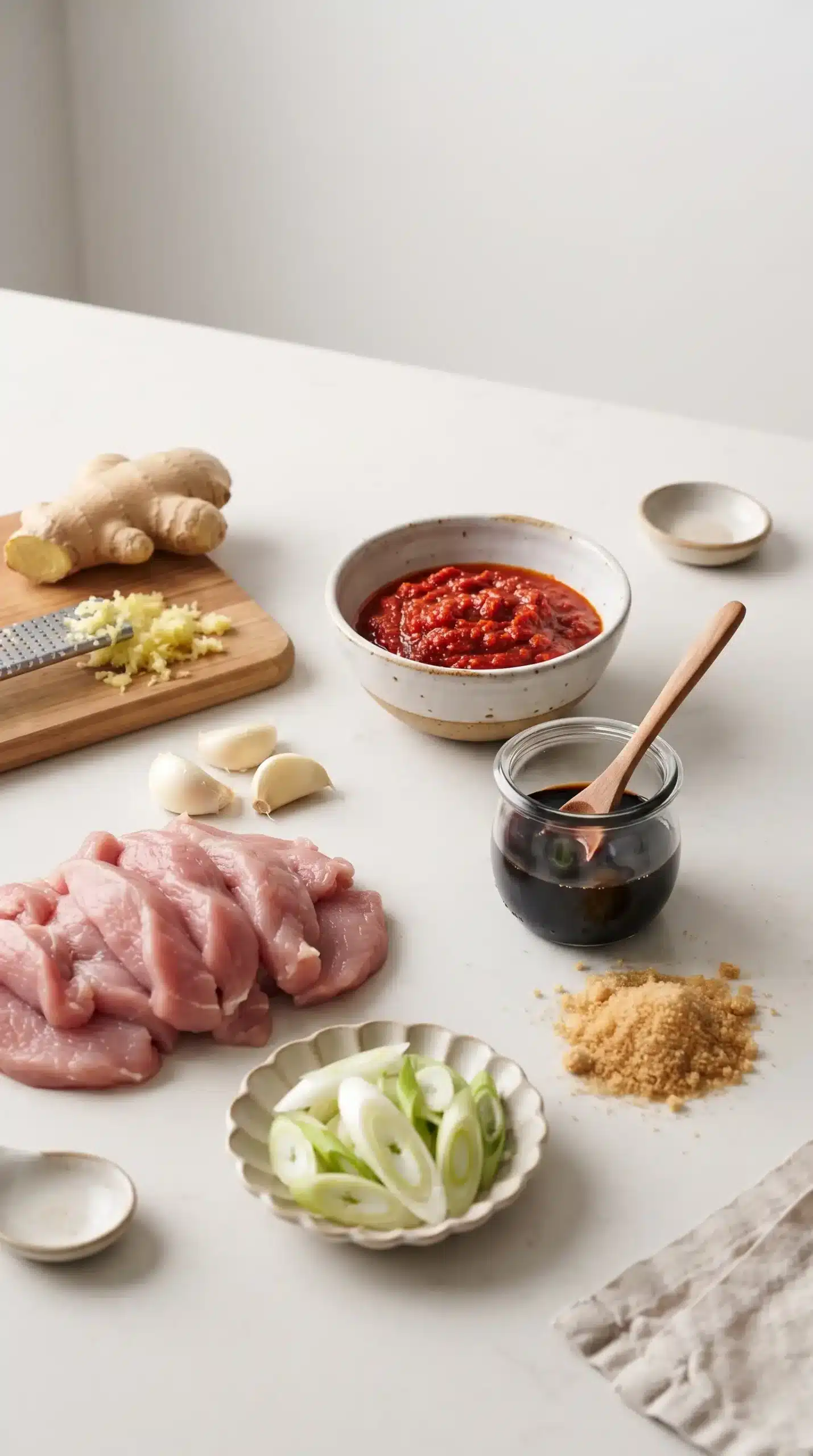
The sauce mixture determines the character of the finished pork, so the balance between heat, salt, sweetness, and aromatics matters. Sambal oelek gives the dish its chili-forward personality, while soy sauce brings savory depth and brown sugar helps create the browned surface that makes the pork especially appealing.
Fresh ginger and garlic are finely grated into the sauce so their flavors spread evenly over the sliced meat. This approach avoids large pieces of aromatics competing with each bite and allows the pork to absorb the seasoning during its resting period before cooking.
Sriracha can stand in for sambal oelek when needed, creating a slightly different chili profile while keeping the same overall direction. The important choice is using a chili paste with enough flavor to complement the pork without overwhelming the other elements in the bowl.
Thin pork slices create the texture this dish needs
Pork tenderloin is especially useful here because it can be sliced into very thin pieces that cook rapidly. The thinner the slices, the easier it becomes to develop a browned exterior before the meat spends too much time over heat.
- Partially firm meat: Chilling the tenderloin briefly before slicing can make it easier to cut thin, even pieces.
- Sharp knife: A clean edge helps create consistent slices that cook at a similar pace.
- Even portions: Similar thickness prevents some pieces from finishing before others.
Uniform slices are especially valuable in a high-heat skillet because every piece has a similar opportunity to develop color. Large or uneven cuts can change the timing and make the quick cooking style harder to manage.
High heat controls the spicy pork sear
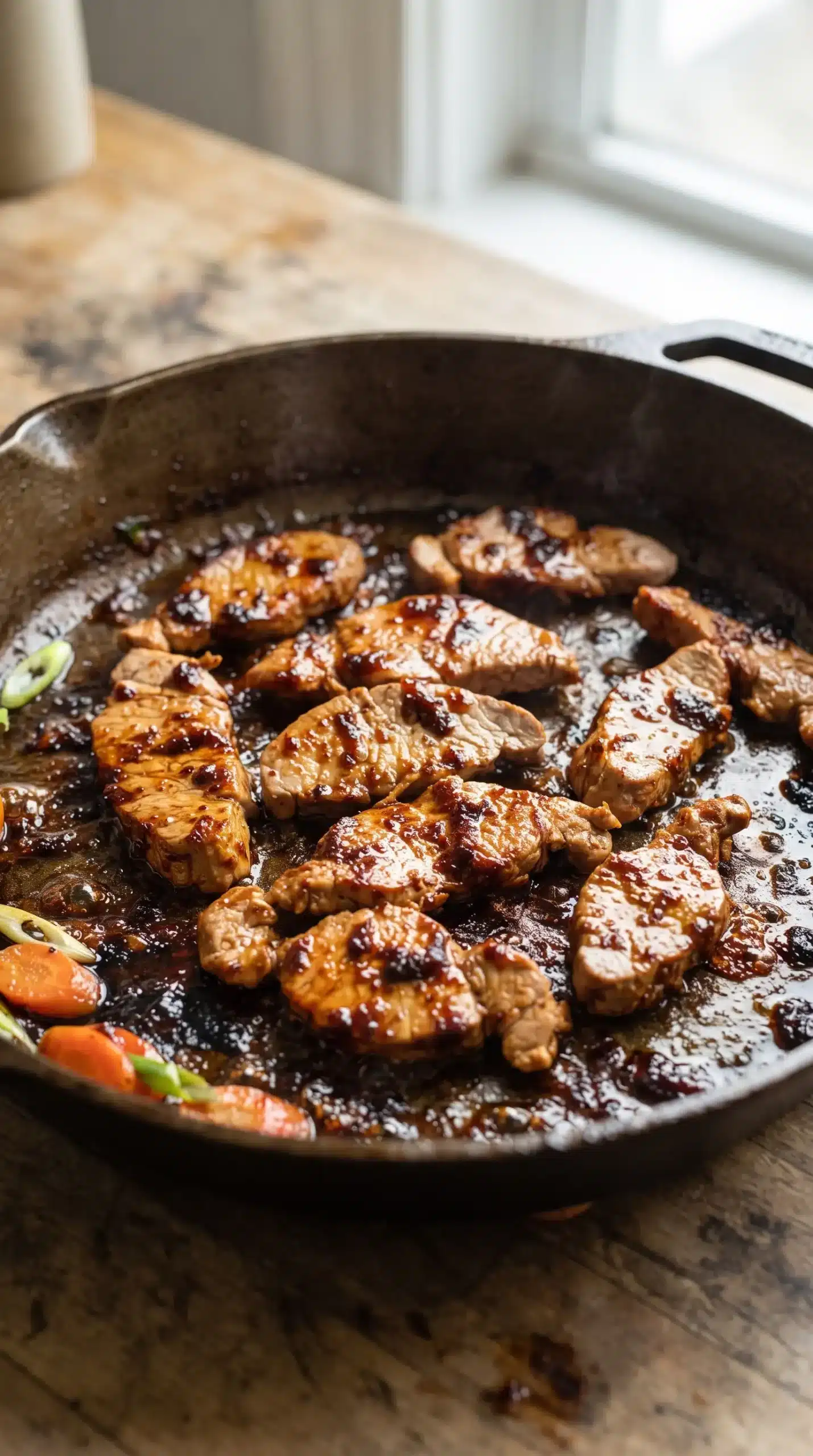
The skillet temperature is the main factor that separates a deeply browned result from pale, steamed pork. A properly heated pan allows the meat to make strong contact with the surface and develop the caramelized appearance associated with this dish.
Adding the pork in a single layer helps the hot surface work efficiently. When too much meat covers the pan at once, moisture can collect and reduce the direct contact needed for browning.
Cast iron is a useful choice because it holds heat well during searing, but any suitable skillet that can handle high heat can support the same cooking approach. The important visual cue is a hot, shiny cooking surface ready for quick contact.
Rice and vegetables complete the spicy pork bowl
Rice provides a mild base that balances the chili-forward pork, while cooked carrots and spinach add color and a softer texture alongside the seared meat.
| Serving component | Role in the bowl | Preparation focus |
|---|---|---|
| Rice | Provides a neutral foundation | Cook according to package directions |
| Carrots | Add sweetness and texture | Slice into coins and cook until tender |
| Spinach | Adds a cooked green element | Cook down before serving |
The vegetables can pick up flavorful bits left in the pan after the pork cooks. This keeps the serving components connected and makes the bowl feel like one complete meal instead of separate pieces placed together.
Common spicy pork mistakes come from timing and heat
Spicy pork depends on quick cooking decisions, and several small mistakes can reduce the quality of the finished dish. Most problems come from changing the relationship between heat, moisture, and slice thickness.
- Cool skillet: A pan that is not hot enough can leave the pork without the desired browned surface.
- Crowded pan: Adding too many slices at once can prevent proper searing.
- Long cooking: Keeping thin pork pieces over heat too long can lead to a tougher texture.
- Uneven slicing: Mixed slice sizes can create inconsistent doneness.
Another common issue is handling the hot oil carelessly. The cooking surface needs high heat, so adding ingredients slowly and keeping hands protected helps reduce splatter concerns during cooking.
Flavor adjustments shape each spicy pork variation
The basic sauce offers room for small changes while maintaining the dish’s core identity. The chili element, sweetness, and savory ingredients can be adjusted according to personal preference without changing the cooking technique.
For a milder version, reducing the amount of hot chili paste lowers the heat while keeping the soy sauce, ginger, garlic, and brown sugar structure intact. Those flavors continue to support the pork even when the spice level changes.
A stronger chili profile can come from using more of the preferred chili paste, but the balance should remain intentional. The best variation keeps the pork recognizable and allows the sauce to complement the rice and vegetables served with it.
Spicy pork preparation choices improve weeknight cooking
Planning the slicing and seasoning steps before heating the skillet makes the cooking process smoother. Thin pork pieces cook quickly, so having the sauce ready and the serving components prepared helps prevent delays once the pan is hot.
| Preparation choice | Benefit | When it matters most |
|---|---|---|
| Slicing ahead | Speeds up skillet cooking | When dinner timing is tight |
| Mixing sauce first | Keeps seasoning consistent | Before adding pork |
| Preparing vegetables nearby | Makes assembly easier | When serving bowls |
Good organization matters because the pork should move quickly from the hot pan to the plate. The cooking style rewards preparation more than complicated techniques.
Serving ideas highlight the pork’s bold profile
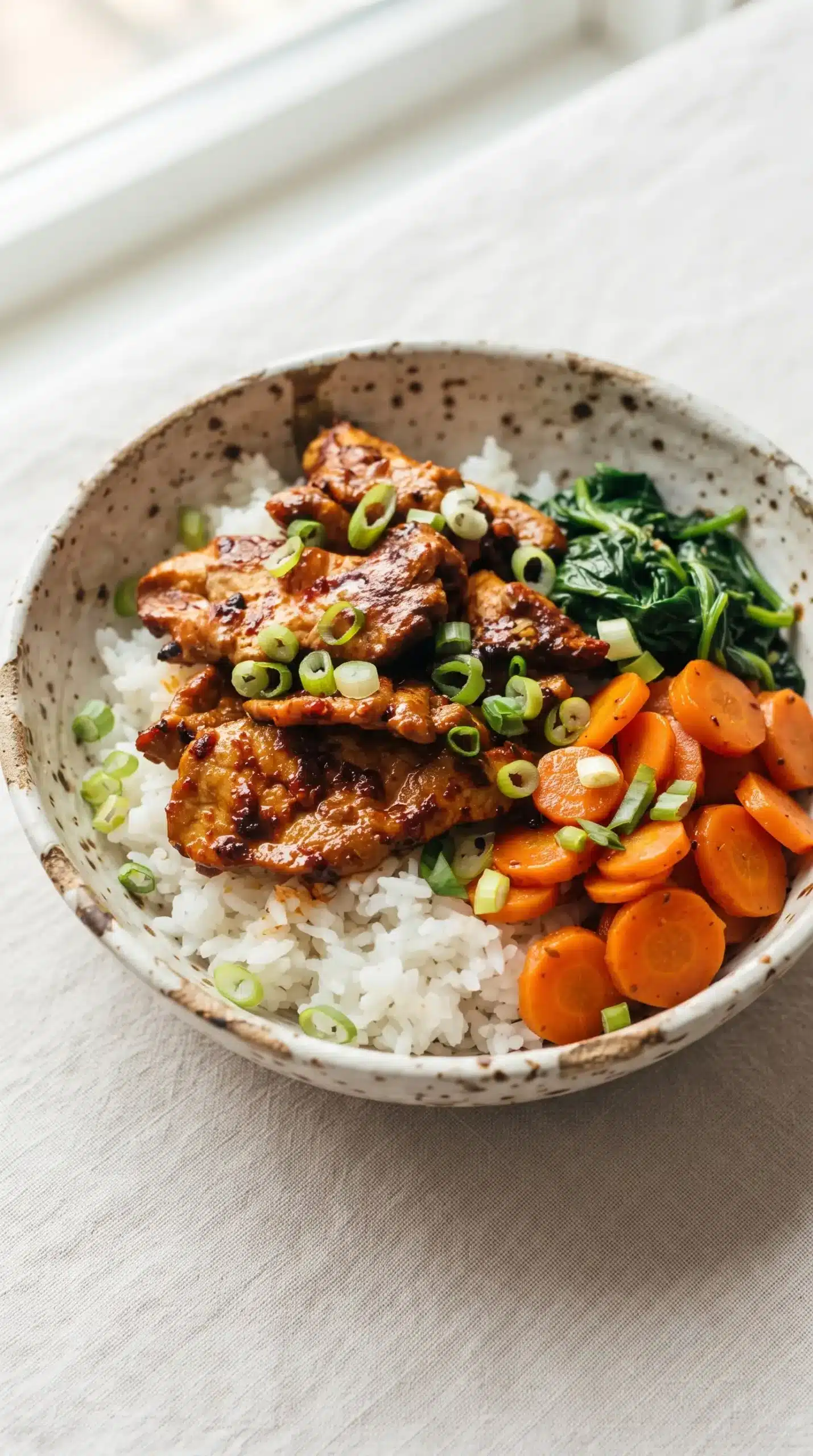
Green onions provide a fresh finishing touch that contrasts with the rich, spicy sauce. Sprinkling them over the bowl keeps their flavor bright and gives the finished serving a clean visual finish.
The pork pairs naturally with rice and cooked vegetables because each part contributes something different. The rice absorbs flavorful juices, and a Green Rice Recipe with Cilantro and Spinach can bring extra herb flavor and color to the serving base while keeping the seasoned pork as the centerpiece.
These serving choices also make the dish adaptable for different portions. A larger amount of rice or vegetables can create a balanced bowl, while the seasoned pork remains the centerpiece.
Storage and reheating keep spicy pork enjoyable
Cooked pork is best handled with attention to texture because reheating can change the tenderness of thin slices. Gentle reheating helps warm the meat without extending its cooking time unnecessarily.
Keeping the pork separate from rice and vegetables can make reheating more flexible. Each part can be warmed according to its own texture needs, helping preserve the contrast that makes the bowl appealing.
Kitchen tools make the spicy pork process smoother
A few basic tools support the decisions that matter most for this dish. A sharp knife helps with thin slicing, while a reliable skillet supports the quick searing approach needed for good texture.
- Prepare the knife: Use a sharp blade to create consistent pork slices.
- Heat the skillet: Allow the cooking surface to become ready before adding meat.
- Arrange ingredients: Keep sauce and serving components accessible during the fast cooking stage.
These tools do not add complexity; they simply make the short cooking window easier to manage. The technique works because the cook can move confidently from preparation to searing.
Fast searing defines the best spicy pork result
Spicy pork succeeds when thin slices meet a hot skillet for a brief, controlled sear. The combination of bold seasoning, quick browning, and balanced serving components depends on respecting that short cooking window.
The pork’s texture comes from preparation choices made before the pan is involved. Thin slices, strong heat, and careful timing create the browned edges and flavorful coating that make this dish work so well.
Spicy Pork Slicing and Heat Questions Answered
Can I use another cut instead of pork tenderloin?
Pork tenderloin is a strong choice because it can be sliced very thin and cooked quickly. Another cut may work if it can be prepared into similarly thin pieces, but the cooking behavior may change depending on the texture of the meat.
How thin should the pork slices be?
The slices should be thin enough to cook rapidly while still holding together in the skillet. Partially firming the tenderloin before cutting can make it easier to create consistent slices.
Can I make the spicy pork less hot?
Yes. Reducing the hot chili paste lowers the heat level while allowing the soy sauce, brown sugar, ginger, and garlic flavors to remain part of the dish.
Why did my pork lose its browned surface?
A missing sear often comes from a skillet that is not hot enough or from placing too much pork in the pan at one time. Giving the slices enough direct contact with the hot surface helps develop better color.
Can I replace sambal oelek with sriracha?
Sriracha can be used when sambal oelek is unavailable. The flavor will shift slightly, but it still provides the chili component needed for the sauce.
Spicy Pork with Sambal Oelek Sauce and Rice Recipe
Spicy pork with sambal oelek sauce and rice is a quick, flavorful bowl featuring tender thin-sliced pork, a bold spicy-sweet coating, and fresh vegetable sides. It is a great weeknight meal when you want a satisfying dinner with fast skillet cooking.
Ingredients
Method
Preparation
- Combine the hot chili paste, soy sauce, brown sugar, ginger, and garlic in a jar and shake until blended.
- Pour the sauce over the sliced pork and allow it to rest for 20 minutes – 1 hour.
Cooking
- Heat a searing skillet over high heat and add a small amount of vegetable oil.
- When the oil is hot, arrange the pork in a single layer, working in batches if needed.
- Cook the pork without moving it for 1-2 minutes until browned, then turn the slices and cook the other side until finished.
Serving
- Serve the cooked spicy pork with rice, carrots, spinach, and sliced green onions.
Notes
For the bowl extras, serve the pork with rice and sautéed carrots and greens. Cook the rice according to package directions. Add the carrots and greens to the pan after the pork cooks to use the flavorful bits left behind. A very hot pan helps create a browned sear quickly, while avoiding extended cooking keeps the pork tender. To make thin slices easier, briefly firm the pork tenderloin in the freezer before cutting and use a sharp knife. The hot oil can splatter during cooking, so protect your hands and clothing. A cast iron pan may need some care afterward.