From breakfast to dinner, from healthy meals to sweet desserts – Next Yum Recipes brings you quick, simple and tasty ideas for every occasion and every time.


 This Recipe
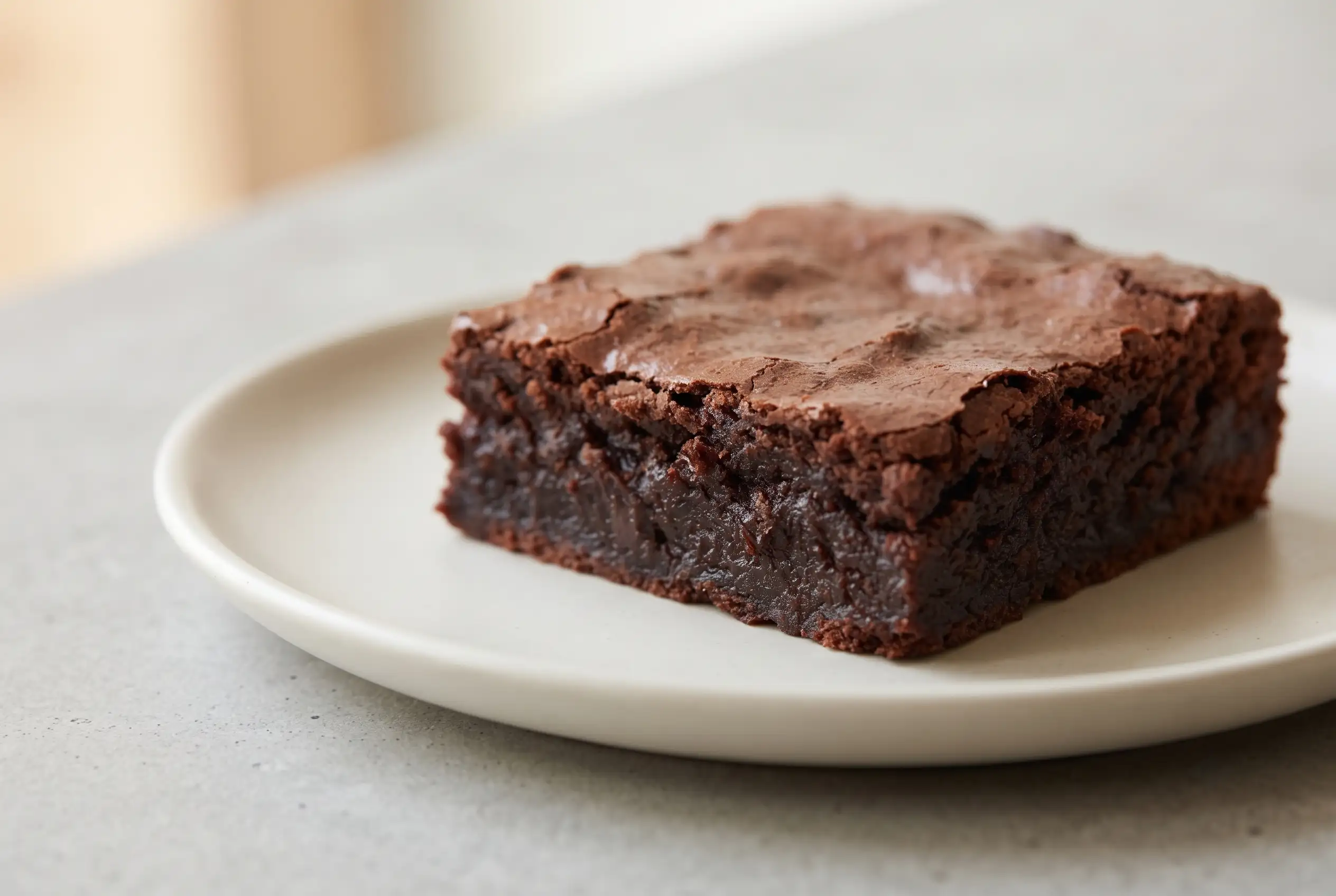
Espresso brownies bring together concentrated coffee flavor and rich cocoa depth in a simple baked dessert built around a short ingredient list. These 6 ingredient espresso brownies use espresso powder, melted butter, sugar, eggs, flour, and cocoa powder to create a pan of brownies with a bold chocolate character and a noticeable coffee finish.
The appeal of espresso brownies comes from how each part of the mixture affects the finished texture. A careful blend of fat, sugar, eggs, and dry ingredients creates a center that can stay soft while the edges develop a more structured bite. The coffee flavor gives the cocoa a deeper profile without turning the dessert into a complicated project.
Espresso Brownies Create Deep Coffee Chocolate Balance
The combination of espresso powder and unsweetened cocoa powder gives these brownies their defining flavor. The coffee notes support the chocolate, creating a dessert that tastes fuller and more layered than a standard cocoa-only brownie.
Cocoa and Espresso Powder Shape the Brownie Flavor
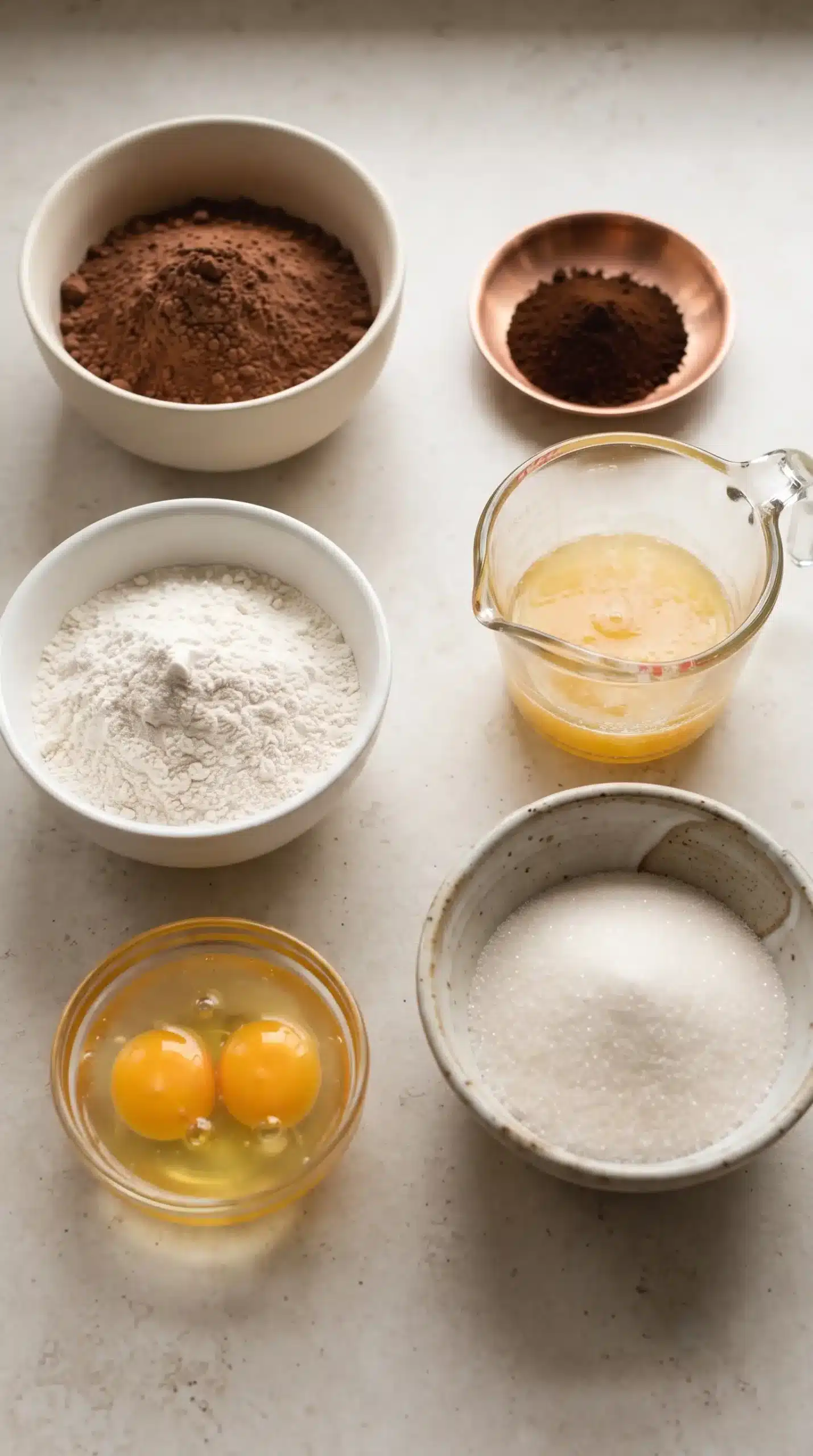
The ingredient choices matter most when the recipe has only a few components. Espresso powder needs to blend evenly into the butter and sugar mixture so the coffee flavor reaches every portion of the batter. Unsweetened cocoa powder provides the chocolate foundation while keeping the sweetness controlled.
Using salted butter also affects the overall balance by bringing a small amount of seasoning directly into the batter. A pinch of sea salt can still be added if desired, especially for bakers who prefer a stronger contrast between sweet chocolate and savory notes.
The espresso powder brownies style depends on concentration. Because the coffee ingredient is added in powdered form, it distributes throughout the mixture without adding extra liquid that could change the brownie structure. That detail helps maintain the dense texture expected from a baked espresso brownies recipe.
The concentrated nature of espresso powder is part of why it works so well in chocolate desserts. Small amounts can add depth without shifting the recipe toward a strong coffee taste, and espresso powder enhances chocolate flavor in brownies and other baked goods.
Butter Sugar Mixing Builds the Dense Brownie Texture
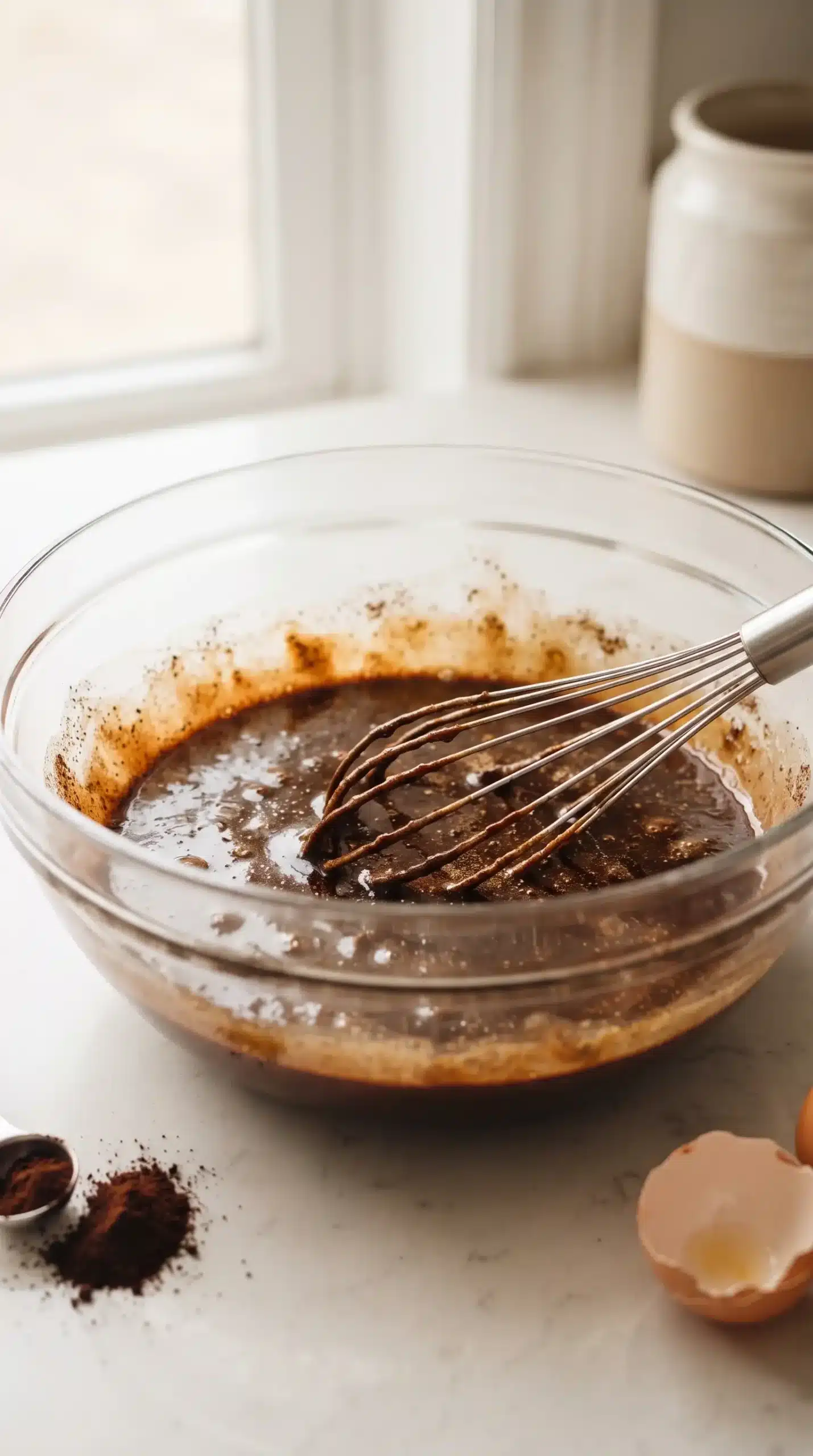
Melted butter gives the batter a smooth base that combines quickly with granulated sugar. The short whisking step helps bring the ingredients together while preserving the rich texture associated with fudgy brownies.
Eggs provide structure after they are incorporated, helping the brownies hold their shape once baked. Mixing until the eggs are fully combined creates an even batter, while stopping once the flour disappears helps avoid developing unnecessary toughness.
Pan Choice Controls the Espresso Brownies Finish
A parchment-lined 9×13 baking pan supports even spreading and makes the finished brownies easier to remove. The shape of the pan also influences how the batter sets, allowing the center and edges to develop distinct textures.
Small Adjustments Change the Brownie Experience
Espresso brownies are naturally adaptable because the base has room for small additions without changing the main character of the dessert. A baker can add texture or extra chocolate flavor while keeping the coffee and cocoa combination at the center.
- Chocolate chips: Add pockets of melted chocolate throughout the brownies for a richer bite.
- Sea salt: Sprinkle a small amount into the batter or over the top to sharpen the cocoa flavor.
- Baking style: Choose a shorter bake for a softer center or a longer bake for a chewier texture.
These changes work because they build on the existing structure instead of replacing the main flavors. The core espresso brownies profile remains focused on coffee, chocolate, and a balanced sweetness.
Baking Control Keeps the Center Properly Set
Temperature and timing have the largest effect on the finished texture. A moderate oven temperature allows the batter to bake through gradually, helping the middle set while keeping the chocolate flavor concentrated.
The center should be monitored near the end of baking because brownies continue to settle as they cool. Bakers who prefer a softer texture can remove them when the middle is just set, while those looking for more chew can allow additional baking time.
Several visual cues help with this decision:
- Surface appearance: Look for a set top that no longer appears wet.
- Center texture: Check that the middle has structure while still feeling moist.
- Cooling stage: Allow the brownies to firm before cutting for cleaner pieces.
Espresso Brownies Mistakes That Affect the Texture
Small handling choices can change how espresso brownies turn out. Avoiding a few common problems helps preserve the intended dense and chocolate-forward texture.
| Common issue | Possible cause | Better approach |
|---|---|---|
| Dry brownie texture | Baking longer than needed for the preferred finish | Watch the center closely and adjust baking time for the desired chewiness |
| Uneven coffee flavor | Espresso powder not fully mixed into the batter | Blend the powder into the wet mixture before adding dry ingredients |
| Tough brownie texture | Overmixing after flour is added | Stir only until no flour streaks remain |
Another common mistake happens when the dry ingredients are worked too aggressively. Flour and cocoa powder need enough mixing to disappear into the batter, but extra stirring can change the finished bite.
Chocolate Additions Fit the Six Ingredient Structure
The basic six ingredient espresso brownies formula already delivers a strong chocolate profile, but optional additions can create a different experience. Chocolate chips are a natural choice because they complement both cocoa powder and espresso, while Oreo brownies show how a cookie addition can bring extra texture to a chocolate dessert.
Additions should remain secondary to the main flavor balance. Too many extras can hide the coffee notes that make these brownies distinct, so small changes usually create the best results.
Cooling and Cutting Preserve Clean Brownie Pieces
Freshly baked brownies need time to stabilize before slicing. Cooling allows the structure created by the eggs and flour to become more consistent, which helps each piece hold together.
A sharp knife can create cleaner edges when cutting through a cooled pan. Wiping the blade between cuts also helps maintain the neat appearance of each serving.
Storage Choices Keep Espresso Brownies Ready to Enjoy
Proper storage helps maintain the soft texture and coffee chocolate flavor after baking. Keeping brownies protected from air prevents the surface from drying while preserving the rich center.
| Storage method | Best use | Texture result |
|---|---|---|
| Room temperature container | Short-term enjoyment | Keeps the brownie texture soft and convenient |
| Refrigerated container | Longer freshness | Creates a firmer, denser bite |
| Frozen portions | Saving individual pieces | Preserves the chocolate flavor for later serving |
When serving refrigerated brownies, letting pieces sit briefly before eating can bring back some of the softer texture associated with freshly baked espresso brownies.
Serving Ideas Highlight Coffee and Cocoa Notes
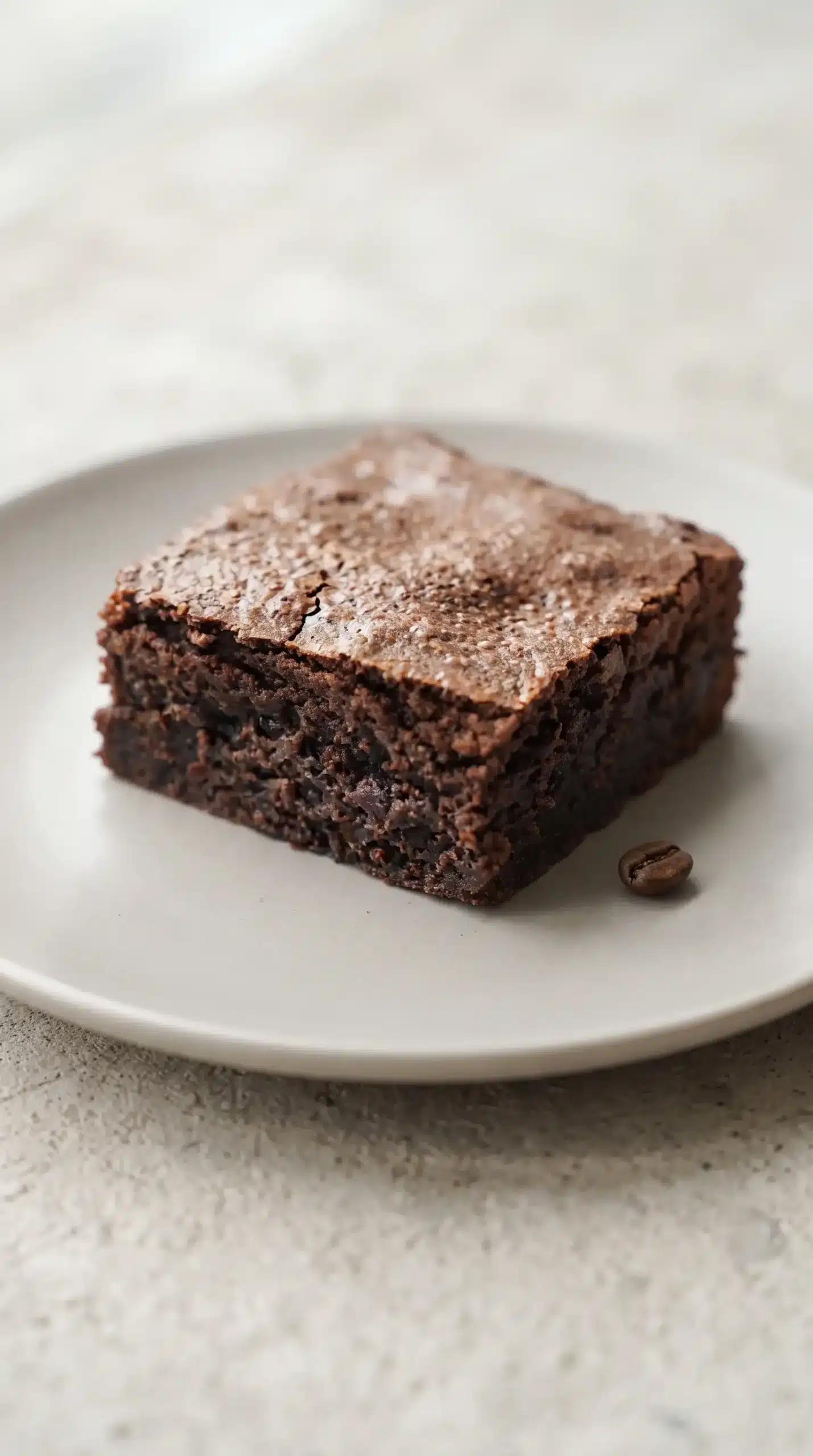
The strong flavor of espresso brownies makes them suitable for simple pairings. A plain square highlights the coffee and cocoa combination, while a small topping can add contrast without overwhelming the dessert.
- Warm presentation: Serve slightly heated for a softer center and stronger aroma.
- Cold contrast: Pair with a chilled topping for a temperature difference.
- Simple finish: Use a light garnish when you want the espresso flavor to remain prominent.
The dessert works especially well when the coffee character remains noticeable. A restrained serving style keeps the balance between sweetness, chocolate, and espresso clear.
Why 6 Ingredient Espresso Brownies Work for Simple Baking
The appeal of 6 ingredient espresso brownies comes from the way a limited ingredient list can still create a complex dessert. Each component has a clear purpose, and the short preparation process allows the coffee and chocolate flavors to stand out.
A recipe with fewer ingredients also makes it easier to understand how mixing choices and baking decisions affect the result. The baker has more control over texture because there are fewer variables competing in the batter.
Espresso Brownies Hold Their Best Texture Through Careful Baking
Espresso brownies reach their strongest result when the batter stays balanced from mixing through baking. The espresso powder needs even distribution, the cocoa needs gentle incorporation, and the center needs careful attention during the final stage of baking.
The combination of rich butter, concentrated coffee, and cocoa creates a brownie where texture decisions matter as much as flavor choices. A properly handled pan delivers the soft, chocolate-heavy bite that makes this simple dessert memorable.
Espresso Brownies Questions About Storage and Texture
Can espresso brownies be made with instant coffee instead of espresso powder?
Espresso powder is designed to provide concentrated flavor in a small amount, so it gives the most direct coffee taste. Instant coffee may work in some cases, but the flavor strength and texture impact can differ because it is not always as concentrated.
How can espresso brownies stay chewy instead of cakey?
Chewier brownies come from protecting the moisture in the batter. Avoiding excess flour mixing and choosing a bake time that matches the preferred texture helps maintain a denser bite.
Why does espresso powder improve chocolate flavor?
Espresso powder can make chocolate flavors seem deeper by adding coffee notes that complement cocoa. It does not need to create a strong coffee taste to influence the overall dessert.
Can chocolate chips be added to espresso brownies?
Chocolate chips can be folded into the batter as an optional addition. They add extra melted chocolate pockets while keeping the espresso and cocoa flavors as the main focus.
Espresso Brownies 6 Ingredient Recipe with Cocoa Powder
Espresso brownies are rich, fudgy chocolate brownies with a deep coffee flavor and dense texture. This easy 6 ingredient espresso brownies recipe is perfect when you want a simple homemade dessert with bold cocoa and espresso notes.
Ingredients
Method
Preparation
- Preheat the oven to 350°F (175°C).
- Whisk the melted butter and sugar together for 30 seconds. Mix in the espresso powder until evenly combined, then add the eggs and blend until fully incorporated.
- Add the flour and cocoa powder, stirring just until the dry ingredients disappear and no flour streaks remain.
- Spread the batter into a 9×13 baking pan lined with parchment paper.
Baking
- Bake for 30 minutes or until the center is set. For a chewier texture, bake for 35-40 minutes.
Notes
For the fudgiest texture, avoid overmixing the batter after adding the flour and cocoa powder.