From breakfast to dinner, from healthy meals to sweet desserts – Next Yum Recipes brings you quick, simple and tasty ideas for every occasion and every time.


 This Recipe
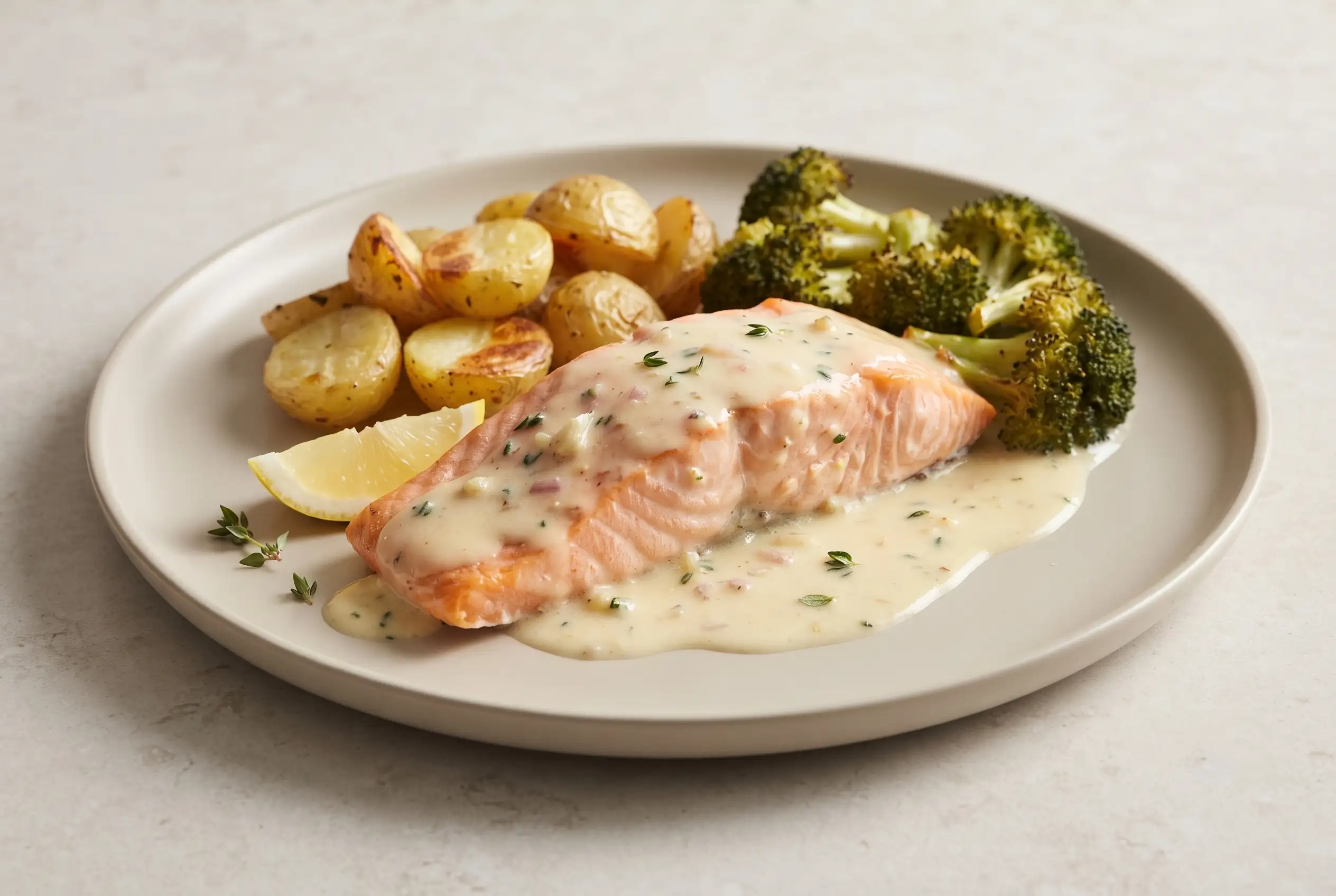
Baked salmon with Amazing Lemon Sauce brings together tender fish, roasted potatoes, broccoli, and a silky lemon cream finish in one comforting meal. The combination works because each part reaches the table with a clear purpose: the salmon stays delicate, the vegetables provide texture, and the sauce ties everything together with bright citrus and rich cream.
Why Baked Salmon with Amazing Lemon Sauce Works for Dinner
Few meals balance simplicity and restaurant-style flavor as naturally as baked salmon with lemon sauce. The fish cooks alongside hearty vegetables while a separate pan sauce creates a finish that feels special without requiring complicated techniques or unusual ingredients. Choosing a fish-centered dinner makes it easy to build a balanced meal around fresh ingredients, and seafood recipes include techniques for preparing different fish-based meals.
Roasted gold potatoes create a sturdy base for the meal because their browned edges pair well with the creamy sauce. Broccoli adds freshness and a slight bite, helping balance the richness of the butter, cream, and salmon.
Another advantage comes from the way the components share the same baking pan. The vegetables and fish develop connected flavors while the lemon cream sauce provides a smooth contrast. An easy baked salmon recipe becomes much more satisfying when the cooking process creates different textures in every serving.
The Lemon Cream Sauce Defines Baked Salmon Flavor
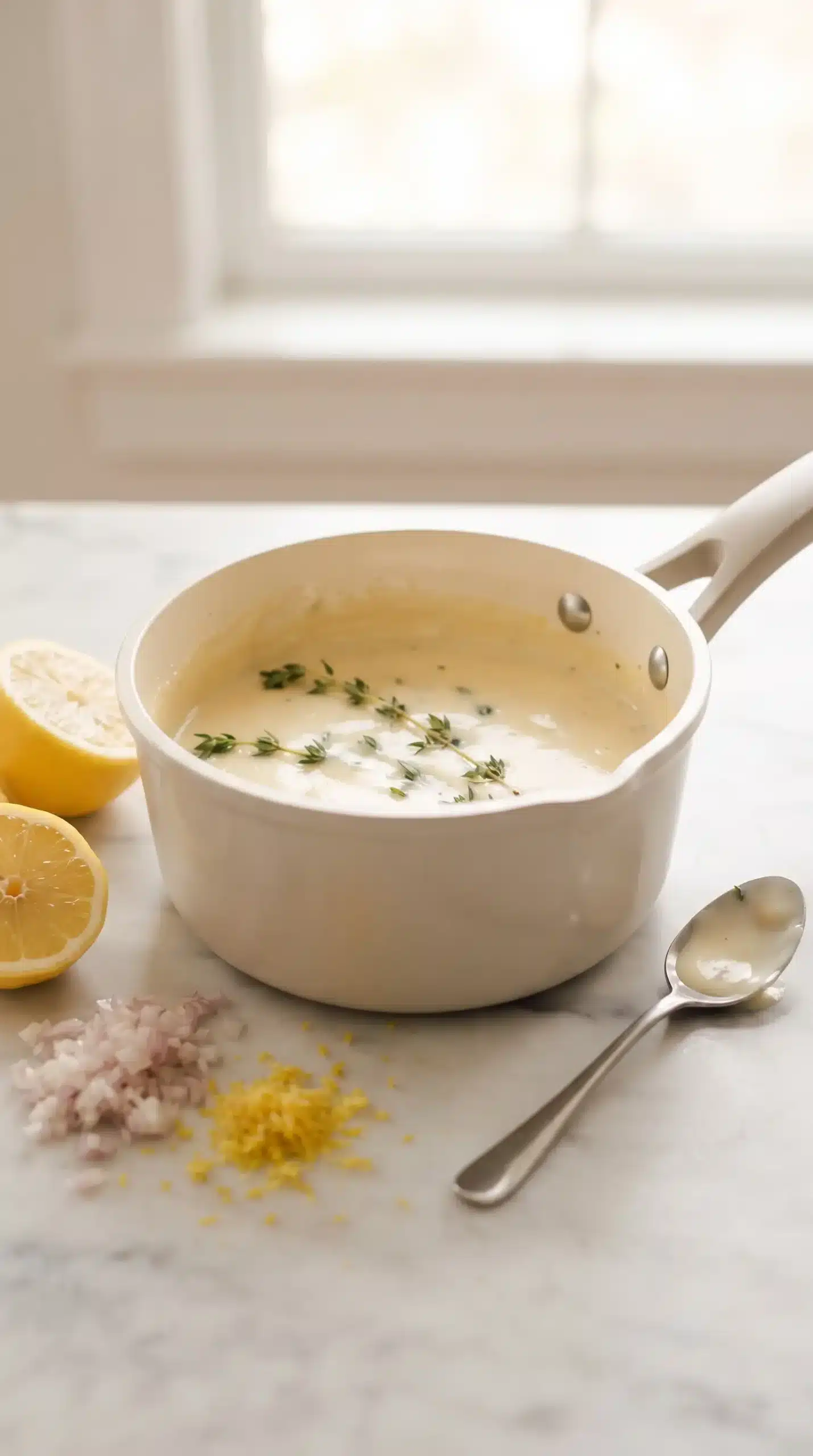
The most memorable part of salmon with lemon cream sauce is the balance between richness and brightness. Butter, garlic, shallot, chicken broth, heavy cream, thyme, lemon zest, and lemon juice create layers of flavor that complement the natural taste of salmon.
Fresh thyme gently perfumes the sauce while it reduces, and removing the sprigs before adding the lemon keeps the texture smooth. Lemon zest brings aromatic citrus notes, while lemon juice adds the sharper acidity needed to keep the cream sauce from feeling heavy.
The reason lemon zest adds such a concentrated fragrance is that the outer peel contains citrus zest aromatic oils, which bring floral and bright notes to the finished sauce.
The sauce also benefits from patience during reduction. Allowing the cream mixture to thicken concentrates the flavors and creates a consistency that coats the salmon, potatoes, and broccoli instead of running thin across the plate.
| Sauce Element | Cooking Role | Result in the Finished Dish |
|---|---|---|
| Butter and cream | Create richness and body | Smooth coating texture |
| Garlic and shallot | Build savory aroma | Deeper flavor foundation |
| Lemon zest and juice | Add citrus brightness | Balanced creamy finish |
| Fresh thyme | Infuse herbal notes | Warm savory character |
Gold Potatoes and Broccoli Improve the Salmon Plate
Roasting the potatoes before adding the remaining ingredients gives them time to develop color and tenderness. The smaller pieces cook efficiently and provide a satisfying contrast to the soft salmon.
Smart Ingredient Choices Shape This Salmon with Lemon Sauce
Selecting quality ingredients helps the finished dish feel balanced. Salmon portions with even thickness cook more consistently, while fresh garlic, shallot, thyme, and lemon create the strongest flavor in the sauce.
- Salmon thickness: Choose pieces with a similar size so they finish cooking at a similar rate.
- Citrus freshness: Use fresh lemon zest and juice to bring a cleaner flavor than bottled alternatives.
- Vegetable texture: Cut potatoes into similar bite-sized pieces so they brown evenly.
- Herb quality: Fresh thyme provides a gentle herbal note that works especially well with cream-based sauces.
Cooking Control Makes Baked Salmon Stay Tender
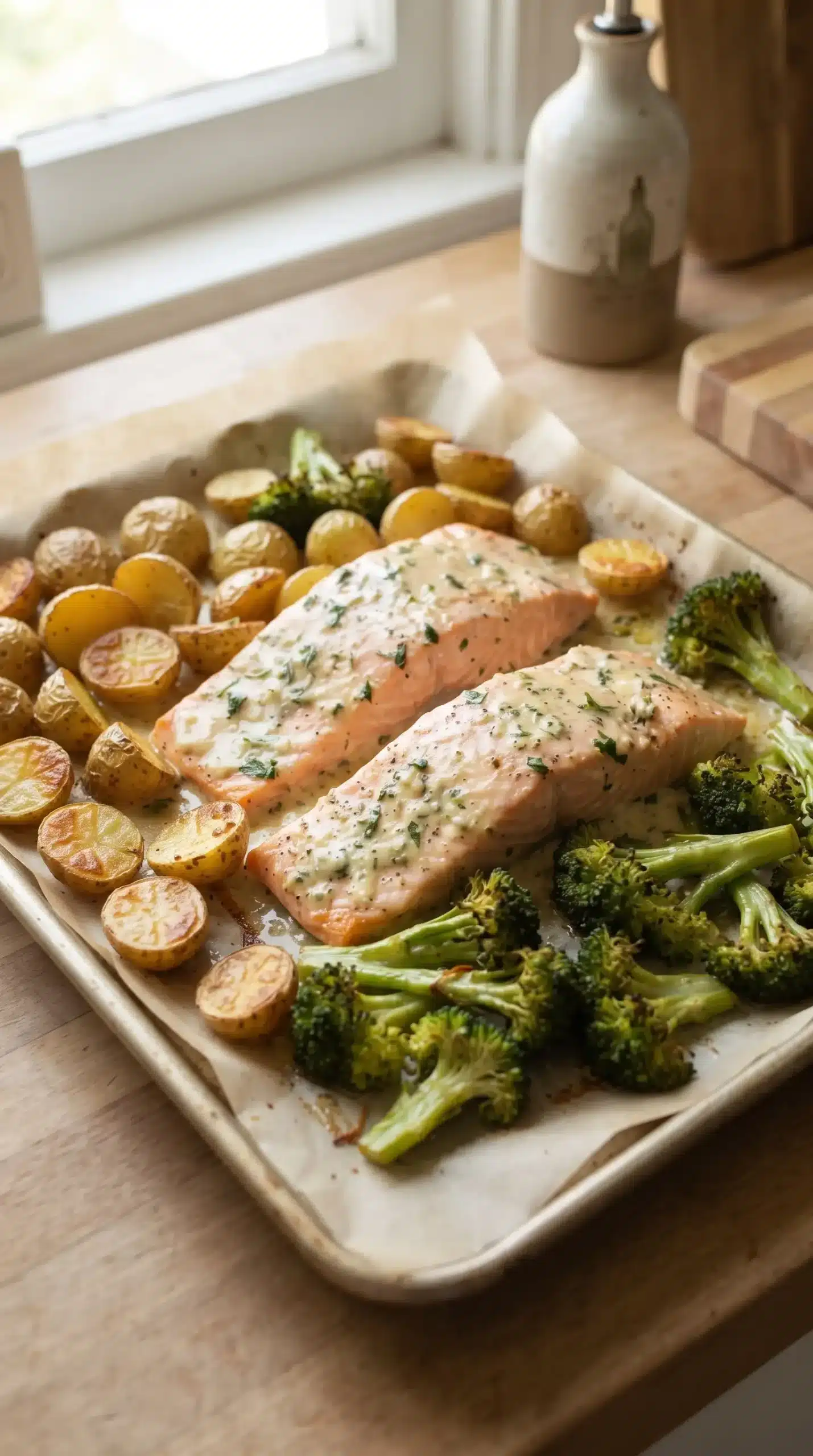
Successful baked salmon depends on watching texture changes closely. The fish should move from translucent to flaky while still holding moisture, which means visual cues matter as much as the clock.
Adding the broccoli and salmon after the potatoes have started roasting helps prevent overcooked vegetables and allows all components to finish together. The fish only needs enough oven time to reach the desired doneness.
Pan arrangement also affects results. Keeping the potatoes spread out encourages browning, while leaving enough room for the salmon and broccoli helps heat circulate around each piece.
Timing Decisions Protect the Texture of Baked Salmon
Several small choices influence whether the meal feels delicate or dry. The salmon should be checked as it approaches doneness, and the sauce should remain gently warmed instead of aggressively boiled.
| Cooking Stage | Important Observation | Possible Adjustment |
|---|---|---|
| Potato roasting | Edges begin to brown | Continue until lightly colored |
| Salmon baking | Center changes from translucent to flaky | Remove when texture is tender |
| Sauce reduction | Cream mixture thickens | Lower heat if needed |
Common Baked Salmon Mistakes That Ruin the Lemon Sauce Finish
Overlooking a few details can change the result of baked salmon. The most common problems come from cooking the fish too far, rushing the sauce, or preparing the vegetables unevenly.
- Dry salmon: Leaving the fish in the oven too long removes moisture. Watch for easy flaking and avoid waiting until the center looks completely firm.
- Thin sauce: Serving before the cream mixture reduces enough can leave the lemon sauce less concentrated. Keep it at a gentle simmer until it thickens.
- Uneven potatoes: Cutting pieces at different sizes can cause some pieces to stay firm while others brown too quickly.
- Overpowering citrus: Adding too much lemon at once can cover the other flavors. Taste after combining the zest and juice.
Serving Ideas Bring the Lemon Sauce Together
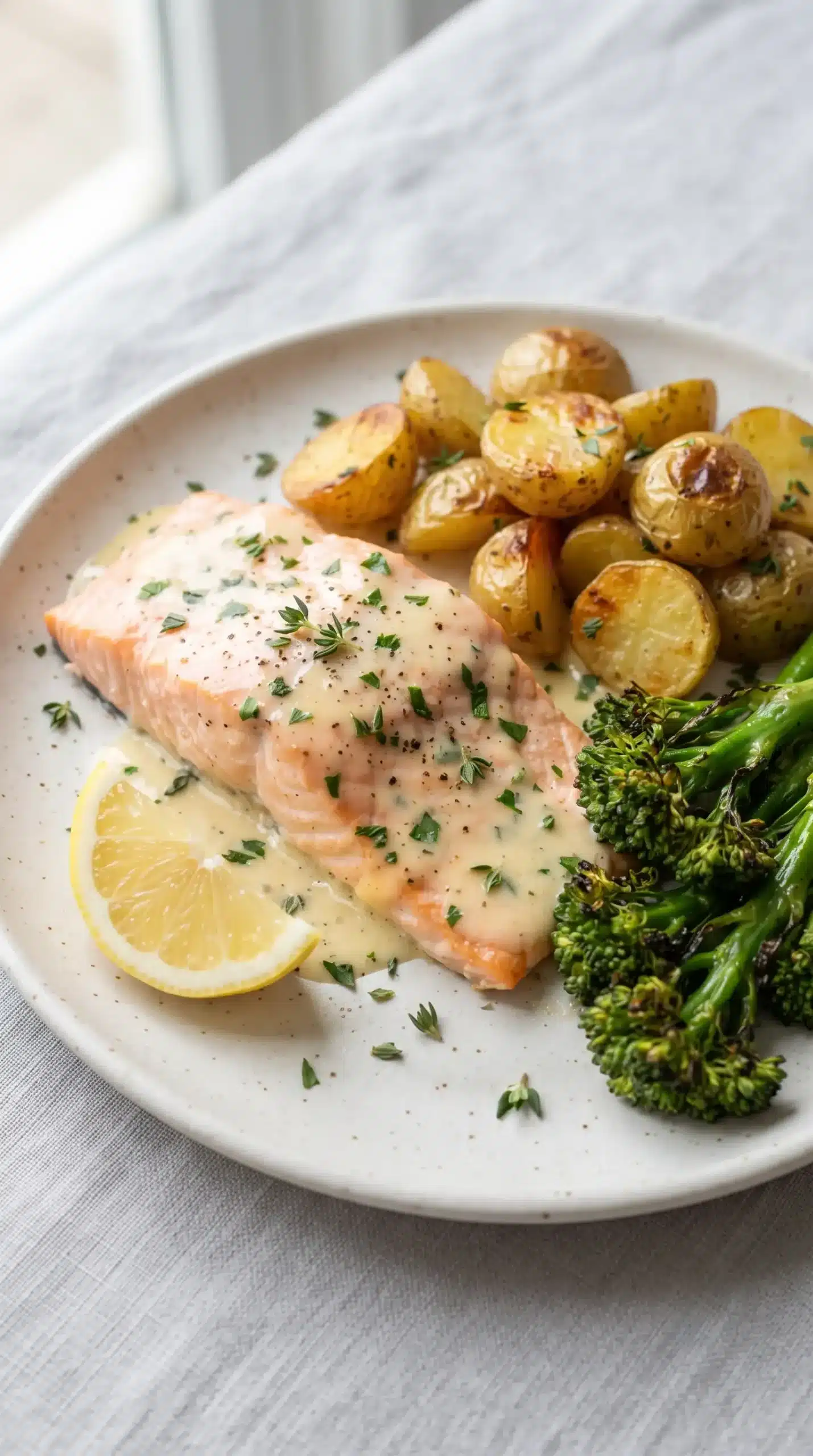
Serving the salmon, vegetables, and sauce together creates the best experience because the creamy lemon flavor can mingle with every component. Spoon the sauce over the fish and add lemon wedges for extra brightness at the table.
Storage and Reheating Keep Salmon Components Enjoyable
Leftovers are best handled by separating the salmon, vegetables, and sauce when possible. Keeping components apart helps preserve the textures and makes reheating more controlled.
Reheat gently so the fish does not lose its tenderness. A low oven temperature or careful warming on the stovetop for the sauce can help maintain the original qualities of the meal.
Cold leftover salmon can also be used in salads, grain bowls, or sandwiches where the creamy lemon flavors can add richness without requiring another full preparation.
Simple Variations Expand This Baked Salmon Meal
The core flavors can adapt to different preferences while keeping the same balance. Swapping vegetables, adjusting herbs, or changing the sauce texture can create a slightly different dinner without losing the identity of the dish.
- Vegetable swaps: Replace broccoli with another quick-cooking vegetable that pairs well with roasted potatoes.
- Herb changes: Try another fresh herb if thyme is unavailable, keeping the amount suited to the sauce.
- Sauce adjustments: Add more lemon brightness or keep the cream flavor more prominent depending on preference.
Conclusion: Baked Salmon With Lemon Sauce Depends on Gentle Cooking
Baked salmon reaches its best texture when the fish remains tender, the vegetables develop roasted flavor, and the lemon cream sauce is reduced carefully enough to cling to each bite. The key judgment comes from recognizing when the salmon has become flaky without allowing it to lose moisture.
A well-timed bake and a balanced sauce turn simple ingredients into a complete meal where every element supports the others. The contrast between creamy citrus sauce, roasted vegetables, and delicate fish is what makes this combination work.
Baked Salmon Storage and Preparation Questions and Answers
Can baked salmon with lemon sauce be stored for later?
Yes, leftover salmon can be refrigerated in a sealed container. Keeping the sauce separate when possible helps maintain the best texture when the meal is warmed again.
How can I tell when baked salmon is done?
The salmon is ready when it has changed from translucent to flaky and separates easily with gentle pressure. The fish should still appear moist instead of dry or firm throughout.
Can I make the lemon cream sauce ahead of time?
The sauce can be prepared ahead and gently reheated before serving. Warm it slowly and stir as needed so the creamy texture remains smooth.
What salmon cut works best for this dish?
Salmon filets with similar thickness work well because they are easier to cook evenly. Portions that match in size help prevent one piece from finishing much earlier than another.
Can the potatoes and broccoli be changed?
Yes, vegetables with compatible roasting times can be used. The important factor is choosing pieces that can become tender and flavorful during the same cooking window as the salmon.
Baked Salmon with Amazing Lemon Cream Sauce Recipe
Baked salmon with lemon cream sauce is a comforting dinner featuring tender, flaky salmon, roasted vegetables, and a rich creamy citrus finish. It is an easy choice for a satisfying weeknight meal with balanced textures and bright flavor.
Ingredients
Method
Preparation
- Preheat the oven to 400°F / 200°C. Line a baking sheet with parchment paper.
- Place the potatoes on the prepared baking sheet and coat them with olive oil, garlic powder, and salt.
Roasting
- Roast the potatoes for 25 minutes until they are lightly browned.
- Add the broccoli and salmon to the baking sheet with the potatoes. Coat or brush them with a little more olive oil, garlic powder, and salt.
- Continue baking for 10-15 minutes, until the salmon is cooked to your preferred doneness and flakes easily.
Lemon Cream Sauce
- While the potatoes roast, melt the butter over medium-low heat.
- Add the garlic and shallot and sauté for 3-5 minutes until softened and fragrant.
- Stir in the chicken broth, heavy cream, and thyme sprigs. Bring the mixture to a low simmer and cook gently until the sauce thickens and reduces by about half.
- Remove the thyme sprigs, then whisk in the lemon zest and lemon juice.
Serving
- Serve the salmon with the roasted potatoes and broccoli, topped with a spoonful of lemon cream sauce and extra thyme leaves for garnish.
Notes
For the best texture, cook the salmon until it changes from translucent to flaky while still remaining moist.