From breakfast to dinner, from healthy meals to sweet desserts – Next Yum Recipes brings you quick, simple and tasty ideas for every occasion and every time.


 This Recipe
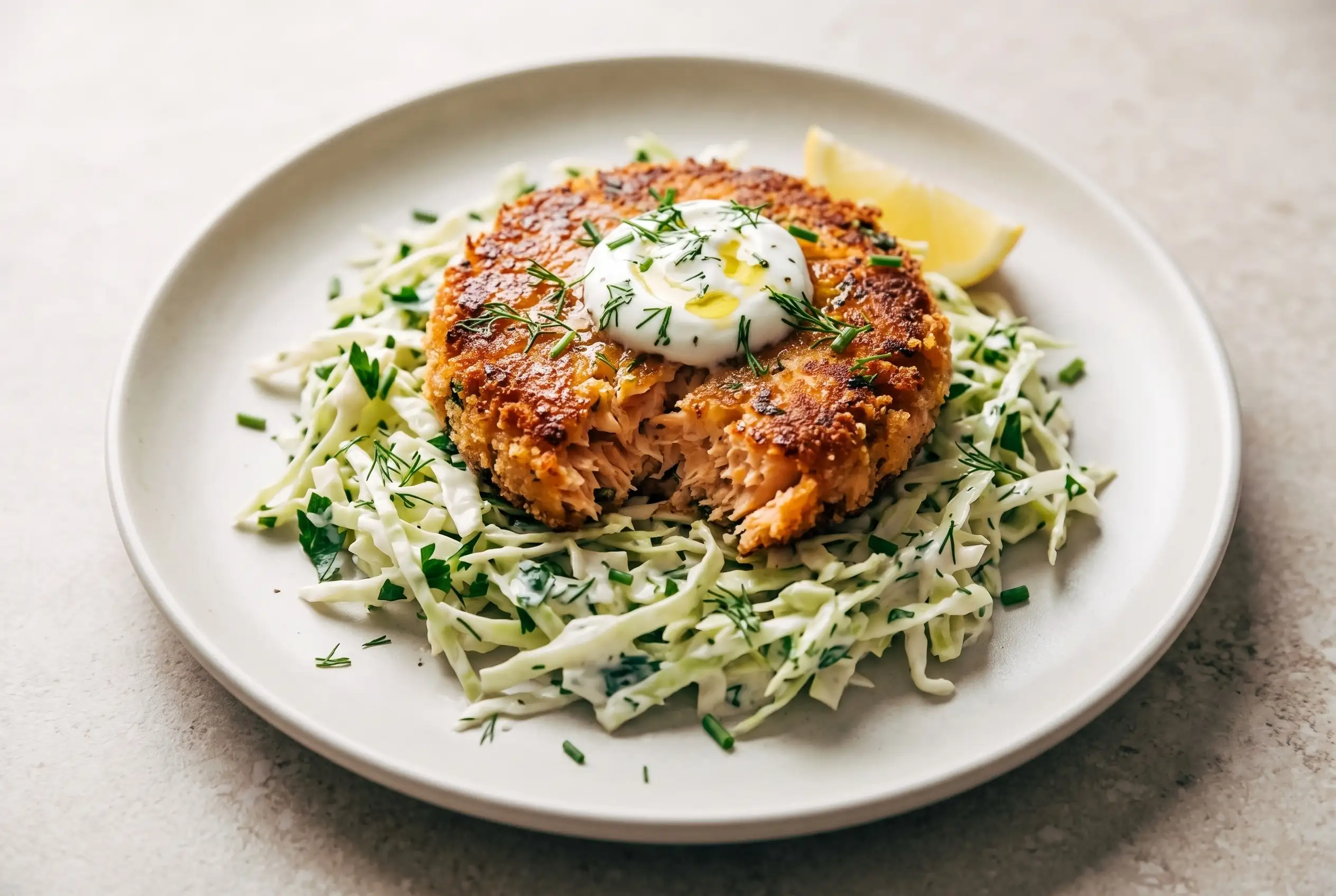
Salmon burgers are one of the easiest ways to turn cooked salmon into a crisp, satisfying meal, and the creamy cabbage slaw makes the combination especially fresh. The patties are tender inside with a golden crust outside, while the tangy yogurt dressing gives the cabbage enough brightness to balance the richness of the salmon. A squeeze of lemon and plenty of fresh herbs keep the flavors clean without making the preparation complicated.
Why Salmon Burgers Work So Well with Creamy Slaw
The contrast between the two parts is what makes salmon burgers with slaw feel complete. The patties bring a warm, savory center with crisp edges, while finely shredded cabbage stays cool and crunchy beneath them. Greek yogurt and vinegar give the slaw a sharp, creamy character that cuts through the olive oil used for frying.
Texture matters just as much as flavor here. A good patty should hold together when turned in the skillet but still have enough tenderness to avoid becoming dense. The breadcrumbs help create that balance, especially when panko is used. They give the mixture structure while leaving the interior lighter than a tightly packed fish cake.
Fresh herbs also connect the two components. Chives, parsley, and dill can be used individually or together, so the flavor can lean toward oniony, grassy, or distinctly herbal. Keeping some herbs for the slaw and serving garnish makes the finished plate taste fresher than relying on dried seasoning alone.
The Salmon Choice Sets the Patty Texture
Cooked salmon from an earlier meal works beautifully because the fish is already tender and easy to flake. Steamed, poached, grilled, or baked salmon can all be used as long as it is cooked and can be broken into small pieces. Canned boneless skinless salmon is equally practical when there is no leftover fish available.
Moisture is the main consideration when choosing the salmon. Very wet fish can make the mixture softer and more difficult to shape, while drier cooked salmon benefits from the egg and yogurt-based slaw served alongside it. Flake the fish into pieces that are small enough to distribute through the mixture without turning it into a paste.
| Salmon option | Best use | What to watch for |
|---|---|---|
| Leftover baked salmon | Easy reuse of cooked fish | Flake gently and remove any obvious bones |
| Leftover poached or steamed salmon | Soft, delicate patties | Handle gently because the fish may be quite tender |
| Canned boneless skinless salmon | Quick pantry-friendly preparation | Drain well and flake before mixing |
Breadcrumbs Decide How the Patties Hold Together
Breadcrumbs have an important structural role in the salmon mixture. They absorb some of the moisture around the salmon and eggs, allowing the patties to be shaped without requiring heavy mixing or excessive compression. Panko gives the burgers a particularly pleasant texture, with enough structure for a crisp exterior while keeping the middle tender.
Whole wheat breadcrumbs are another option when you want to avoid refined breadcrumbs. Seasoned crumbs can also work, but they already contribute salt, so the amount of additional seasoning needs to be reduced accordingly. The important point is consistency: the mixture should be cohesive enough to form patties without feeling wet or loose.
For a gluten-free version, almond flour or almond meal can replace conventional breadcrumbs. Crushed gluten-free cereal and gluten-free oats can also provide structure, but almond flour gives a particularly smooth texture. Whichever option you use, avoid adding more binder simply because the mixture feels soft before shaping; excessive dry ingredients can make the cooked patties firm and heavy.
Fresh Herbs and Lemon Keep the Salmon Flavor Bright
Chives, parsley, and dill all suit salmon, and using a combination gives the patties and slaw a more layered herbal character. A small squeeze of lemon in the burger mixture brings acidity directly into the fish instead of relying entirely on the slaw to provide it.
Shaping Salmon Burgers Without Making Them Dense
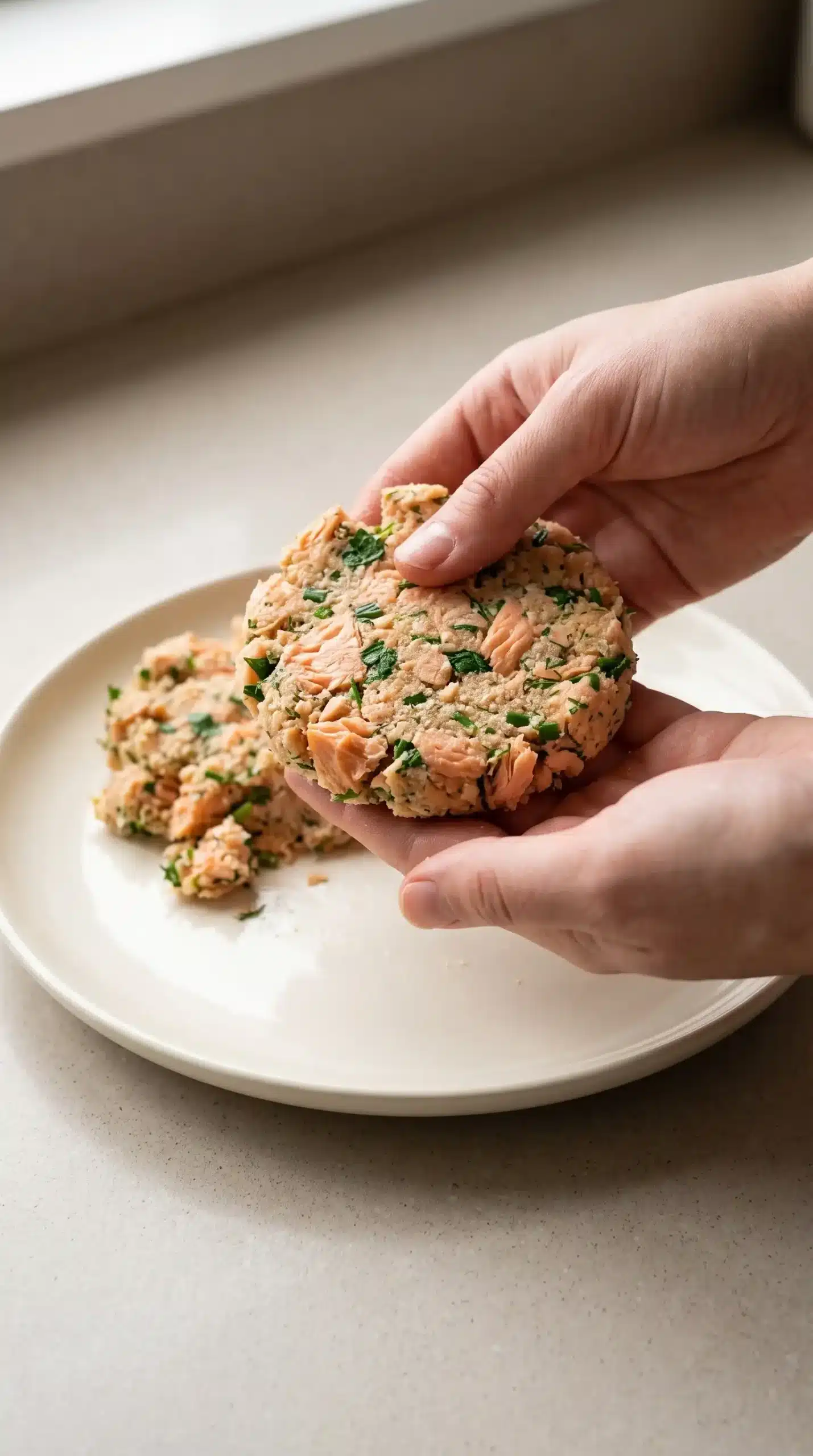
Once the ingredients are combined, mix only until everything is evenly distributed. Pressing and kneading the salmon repeatedly can compact the flakes and produce a heavier texture. The mixture should remain visibly textured rather than becoming a smooth fish paste.
Divide the mixture into three large or four medium patties, then shape them with enough pressure to make the edges hold together. A firm but gentle hand is useful here: the surface should be cohesive, but the interior should not be compressed into a solid mass.
If a patty feels fragile during shaping, check whether the salmon was especially moist or whether the crumbs were distributed evenly. A short rest while the skillet heats can also make handling easier as the dry ingredients continue to absorb moisture.
The Skillet Temperature Controls the Crisp Crust
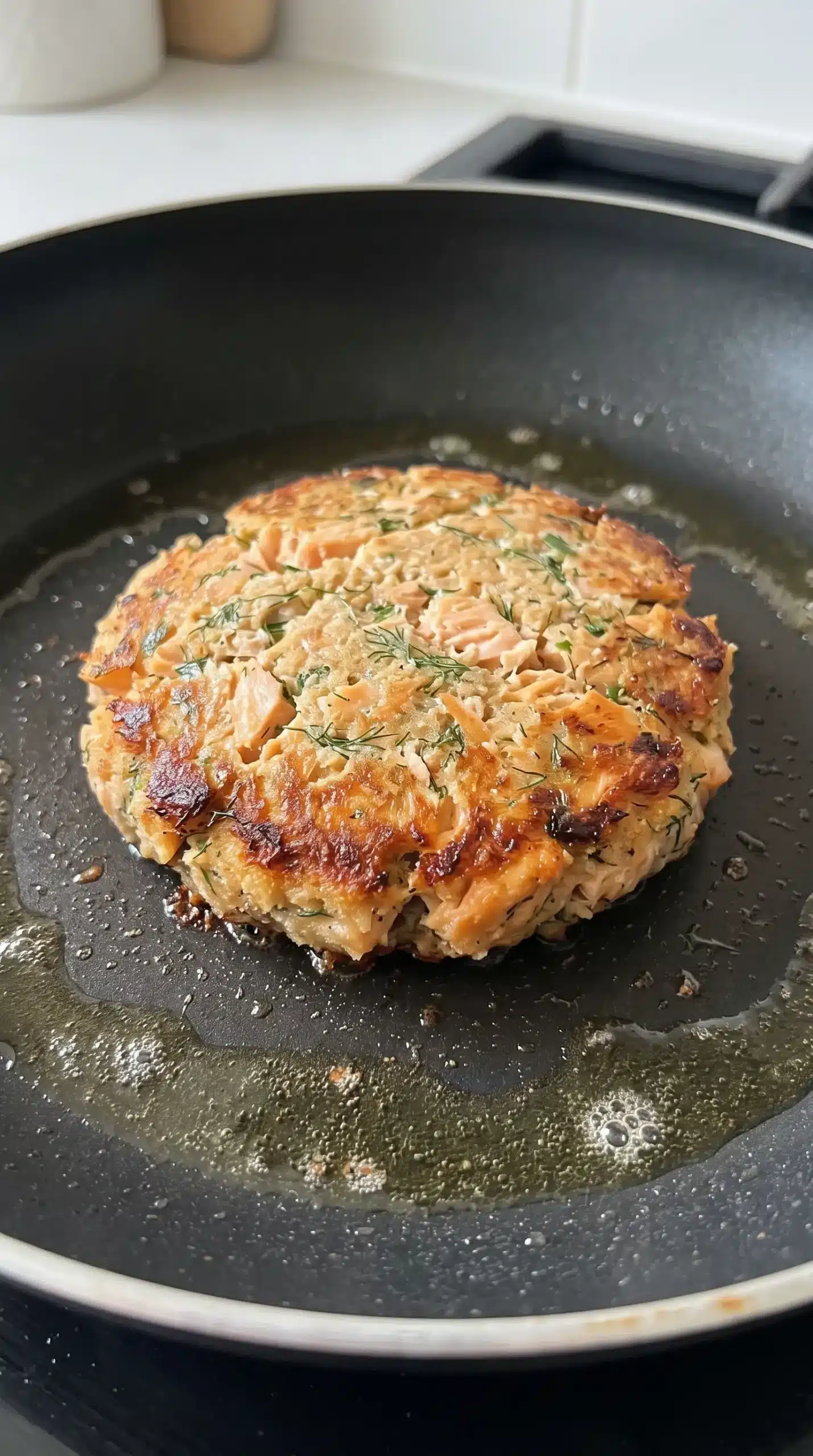
Medium heat gives the burgers enough time to develop a golden exterior while the center warms through. Olive oil should coat the skillet lightly, and a nonstick pan makes turning the patties considerably easier because the developing crust is less likely to cling to the cooking surface.
If you make these burgers with raw salmon instead of already-cooked fish, cook the patties until the salmon reaches 145°F (63°C) internally. A food thermometer gives a more reliable check than judging the center by appearance alone.
Place the patties into the heated skillet without crowding them. Once they are in position, let the first side cook undisturbed for several minutes so the surface can brown and firm up. Turning too early can pull away the crust before it has properly set.
The second side needs the same attention. A golden, crisp surface is the useful visual cue that the patty has developed enough structure to move safely. After frying, a paper towel-lined plate can absorb excess oil from the surface while the burgers remain hot and crisp.
Build the Slaw So It Stays Creamy and Tangy
Finely shredded green cabbage is the foundation because its narrow pieces can carry the yogurt dressing without becoming difficult to eat with the burgers. Plain Greek yogurt supplies the creamy base, while white distilled vinegar brings the sharper acidity needed to keep the slaw lively.
Start with the smaller amount of vinegar and taste before adding more. Cabbage can handle a noticeable level of acidity, but the exact balance depends on the yogurt and personal preference. Garlic powder gives the dressing savory depth without introducing another preparation step.
Fresh herbs finish the slaw with a green, aromatic note. A drizzle of olive oil rounds out the dressing and helps the cabbage feel less austere. Mix thoroughly so the yogurt and vinegar coat the shredded cabbage instead of collecting at the bottom of the bowl.
Small Serving Choices Change the Finished Bite
- Extra yogurt: Add a small dollop over the hot burgers for a cooler, creamier contrast.
- More herbs: Scatter fresh dill, parsley, or chives over the top for a brighter finish.
- Olive oil: A light drizzle ties the crisp patties and creamy cabbage together without requiring another sauce.
Common Salmon Burger Mistakes to Avoid
Overmixing is one of the easiest ways to lose the texture that makes these patties appealing. Once the salmon, eggs, crumbs, herbs, seasoning, and lemon are combined, stop mixing as soon as the ingredients are evenly distributed. Keeping some visible salmon flakes gives the interior a more natural texture.
Another problem comes from turning the patties before the crust has developed. A burger that sticks when you try to lift it may simply need more time on its first side. Let the surface brown before attempting the turn, and use a broad spatula to support the patty as it moves.
Too much vinegar can overwhelm the cabbage and make the slaw taste sharply acidic. Add it gradually, taste, and adjust. The same principle applies to salt when seasoned breadcrumbs are used, since those crumbs can already contain seasoning.
A Few Substitutions Keep the Salmon Burgers Flexible
Leftover cooked salmon is the simplest substitution for canned fish because the recipe is designed around already-cooked salmon. Different cooking methods change the fish’s moisture slightly, so very moist leftovers may need careful draining or gentle handling during shaping.
Breadcrumb choices can also change according to what is available. Panko is useful when you want a lighter, crisp-textured patty, while whole wheat breadcrumbs provide another straightforward option. Almond flour or almond meal works for a gluten-free approach and produces a smooth interior.
The slaw has some flexibility as well. If you want a richer herb-forward dressing, combine cabbage and yogurt with Sunshine Sauce with olive oil, garlic, and herbs, then finish with dill. Start with a small amount of sauce and adjust gradually so the cabbage remains crisp and the salmon stays the main flavor.
Serving Salmon Burgers While They Are Crisp
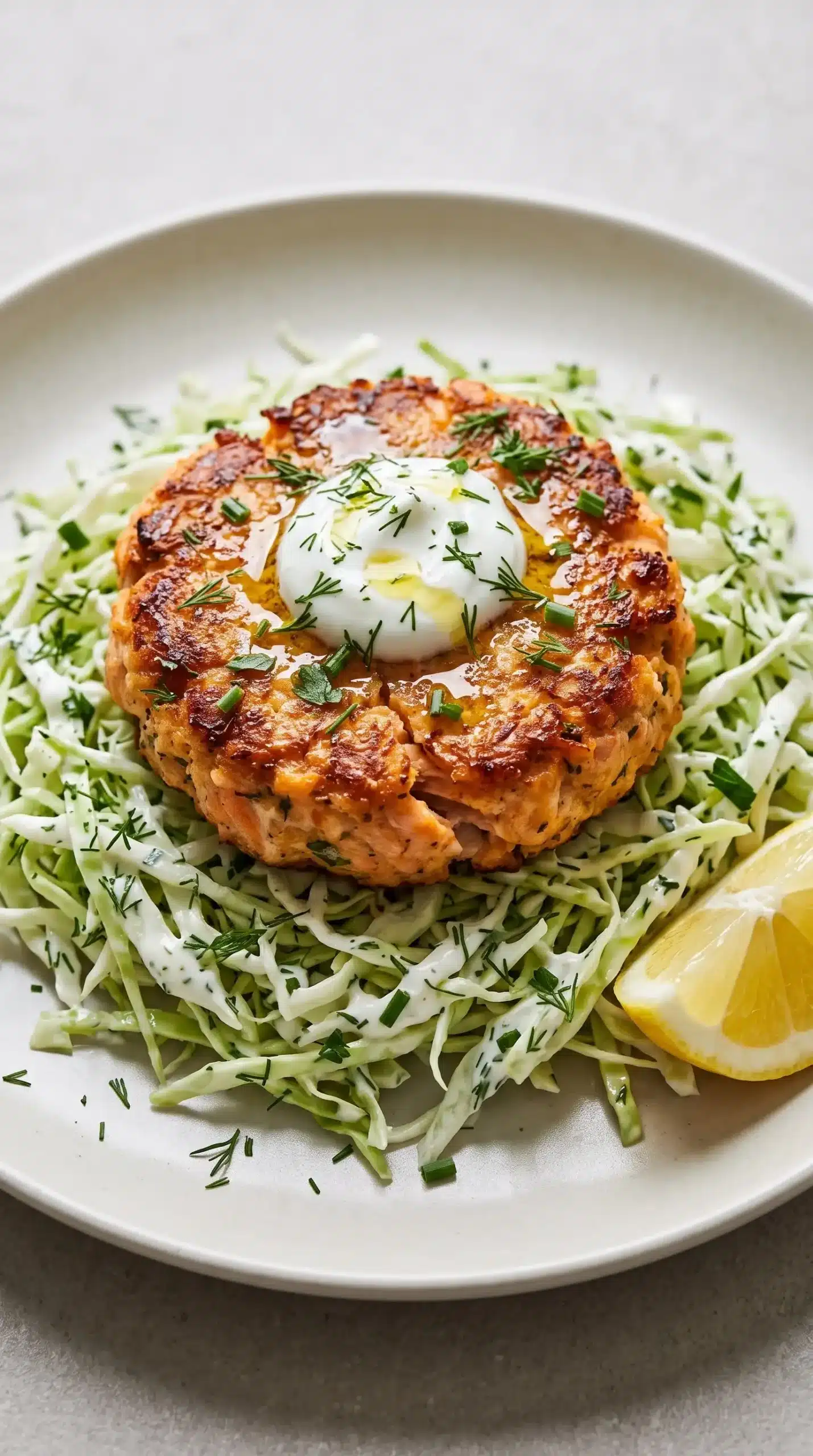
These burgers are best paired with the slaw when the patties are still hot from the skillet. Spoon the creamy cabbage onto the plate and place the crisp salmon patty alongside or over it, depending on how much contact you want between the crunchy crust and the dressing.
A little extra yogurt on top makes the plate creamier, while a thin swirl of olive oil and a scattering of herbs provide a simple finish. Lemon can also be brought to the table for anyone who wants more acidity.
Storage Works Better for the Burgers Than the Slaw
Cooked salmon burgers can be refrigerated or frozen for later meals. When reheating, a nonstick skillet helps restore some of the exterior crispness that can be lost during chilling. Gentle reheating is preferable to treating the patties like something that needs aggressive browning all over again.
The mixed cabbage slaw is less forgiving. Its dressing begins changing the texture of the shredded cabbage as it sits, so the freshest crunch comes when it is served soon after mixing. If there are leftovers, keep them chilled and use them promptly.
How to Turn the Salmon Burger Recipe Into a Faster Meal
- Start with ready-to-use salmon: Leftover cooked fish or canned boneless skinless salmon removes the need for a separate salmon-cooking step.
- Shred the cabbage first: Having the slaw base prepared means it can be dressed while the patties cook.
- Heat the skillet early: A properly heated nonstick pan lets the shaped patties move directly into cooking without an idle wait.
- Finish at the table: Keep extra yogurt, herbs, olive oil, and lemon available so each serving can be adjusted without another sauce.
What Makes These Salmon Burgers Worth Repeating
The most useful feature of salmon burgers is their ability to turn cooked salmon into a meal with a completely different texture. Crisping the outside in olive oil gives the patties a browned surface, while the cabbage slaw supplies the cool, creamy contrast that the fish needs.
The combination also leaves room for practical choices. Canned salmon makes the patties accessible when there are no leftovers, different breadcrumbs can change the texture or accommodate dietary needs, and the herbs can shift according to what is fresh.
Questions About Salmon Burgers and Slaw
Can canned salmon be used for salmon burgers?
Yes. Canned boneless skinless salmon is a convenient choice for salmon burgers. Drain it well, flake it apart, and combine it with the other patty ingredients. Because canned salmon is already cooked, it fits the same preparation approach as leftover baked, grilled, steamed, or poached salmon.
Why are my salmon burgers falling apart?
The mixture may contain too much moisture or the ingredients may not be evenly bound by the breadcrumbs and eggs. Make sure canned salmon is drained well, distribute the crumbs thoroughly, and shape the patties gently but firmly. Turning them before the crust has browned can also cause a properly formed patty to break.
Can salmon burgers be made gluten-free?
Yes. Almond flour or almond meal can replace conventional breadcrumbs, and gluten-free oats or crushed gluten-free cereal are other possible options. Almond flour gives the patties a smooth texture while still providing the structure needed for shaping and pan-frying.
How can I keep salmon burgers crispy after cooking?
Use a nonstick skillet and allow each side to develop a golden crust before turning. After frying, transfer the patties to a paper towel-lined plate to remove excess surface oil. For reheating chilled burgers, returning them to a nonstick skillet helps bring back some of their crisp exterior.
Can the cabbage slaw be made ahead?
The slaw is best prepared close to serving because the yogurt and vinegar dressing gradually softens the shredded cabbage. If you need to prepare components in advance, keep the shredded cabbage and dressing separate until you are ready to serve.
What can I use instead of breadcrumbs in salmon burgers?
For a gluten-free option, almond flour, almond meal, gluten-free oats, or crushed gluten-free cereal can provide the needed structure. Choose the amount carefully and mix only until the salmon mixture becomes cohesive enough to shape, since too much dry binder can make the cooked patties dense.
Salmon Burgers with Creamy Cabbage Slaw and Fresh Herbs
These salmon burgers are crispy on the outside, tender inside, and paired with a creamy, tangy cabbage slaw and fresh herbs. They make an easy, satisfying meal when you want a quick way to turn cooked salmon into something fresh and flavorful.
Ingredients
Method
Preparation
- Flake the cooked salmon into small pieces. Combine it with the eggs, breadcrumbs, salt, garlic powder, fresh herbs, and lemon juice, mixing only until evenly combined.
- Shape the mixture into 3 large or 4 medium patties.
Cooking
- Warm olive oil in a nonstick skillet over medium heat.
- Place the salmon patties in the skillet and cook for a few minutes on each side, turning once the surfaces are golden brown and crisp.
- Transfer the cooked burgers to a paper towel-lined plate and sprinkle with salt.
Slaw
- Combine the shredded cabbage, Greek yogurt, vinegar, salt, garlic powder, fresh herbs, and olive oil.
- Taste the slaw and adjust the seasoning as needed.
Serving
- Serve the hot salmon burgers over a bed of creamy cabbage slaw.
Notes
Breadcrumbs are important for the burgers. Panko provides a particularly good texture, while whole wheat breadcrumbs work well if you want to avoid refined grains. If using seasoned breadcrumbs, reduce the burger salt by about 1/2. Leftover steamed, poached, grilled, or baked salmon can be used, or canned boneless skinless salmon can be used instead. If using canned salmon, choose a boneless skinless variety; the source recommends looking for salmon caught in the US and specifically mentions Wild Planet for quality and provides a sourcing reference. For the slaw, Sunshine Sauce can be mixed with cabbage and yogurt and finished with dill. The burgers keep well in the refrigerator for about 3 days or in the freezer for about 3 months; reheat them in a nonstick skillet to help retain crispness. The mixed slaw is best eaten right away and has about one day maximum in the refrigerator. For a gluten-free version, almond flour, crushed gluten-free cereal, or gluten-free oats can replace the breadcrumbs; the source found almond flour gave the smoothest texture and flavor, and almond meal works similarly.