From breakfast to dinner, from healthy meals to sweet desserts – Next Yum Recipes brings you quick, simple and tasty ideas for every occasion and every time.


 This Recipe
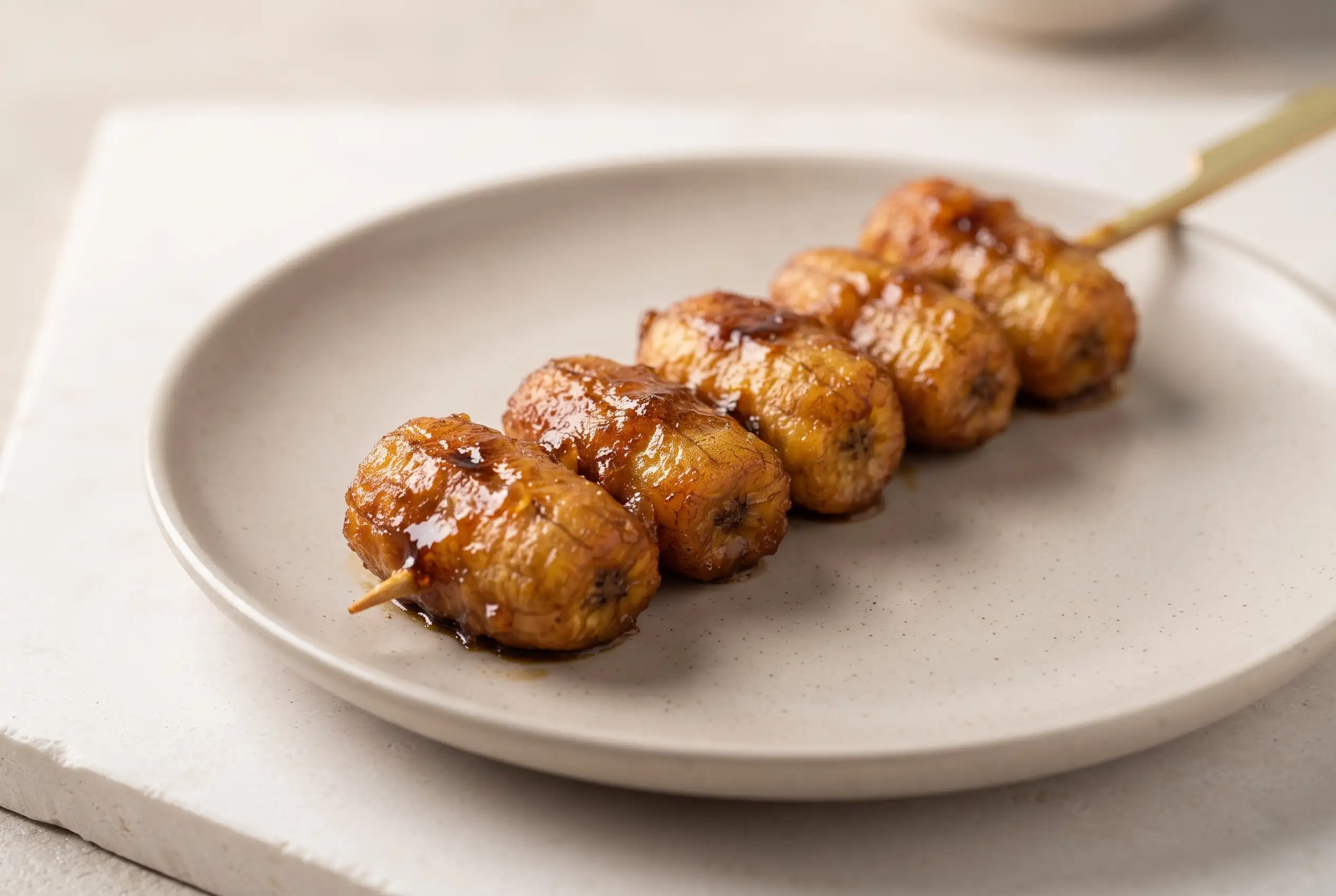
Banana cue brings ripe saba bananas, caramelized sugar, and a crisp fried coating together in one of the Philippines’ most recognizable street snacks. The simple combination creates a dessert with a chewy fruit center and a glossy layer of brown sugar that clings to each piece. A well-made banana cue depends on choosing bananas that can handle frying while allowing the sugar to develop its deep caramel character.
Across Filipino markets and homes, banana cue is valued for transforming everyday fruit into a warm, portable treat. The skewered presentation makes it easy to serve, while the contrast between soft banana and sticky caramel creates the experience people expect from this classic snack.
Saba Bananas Provide the Structure for Caramelized Banana Cue
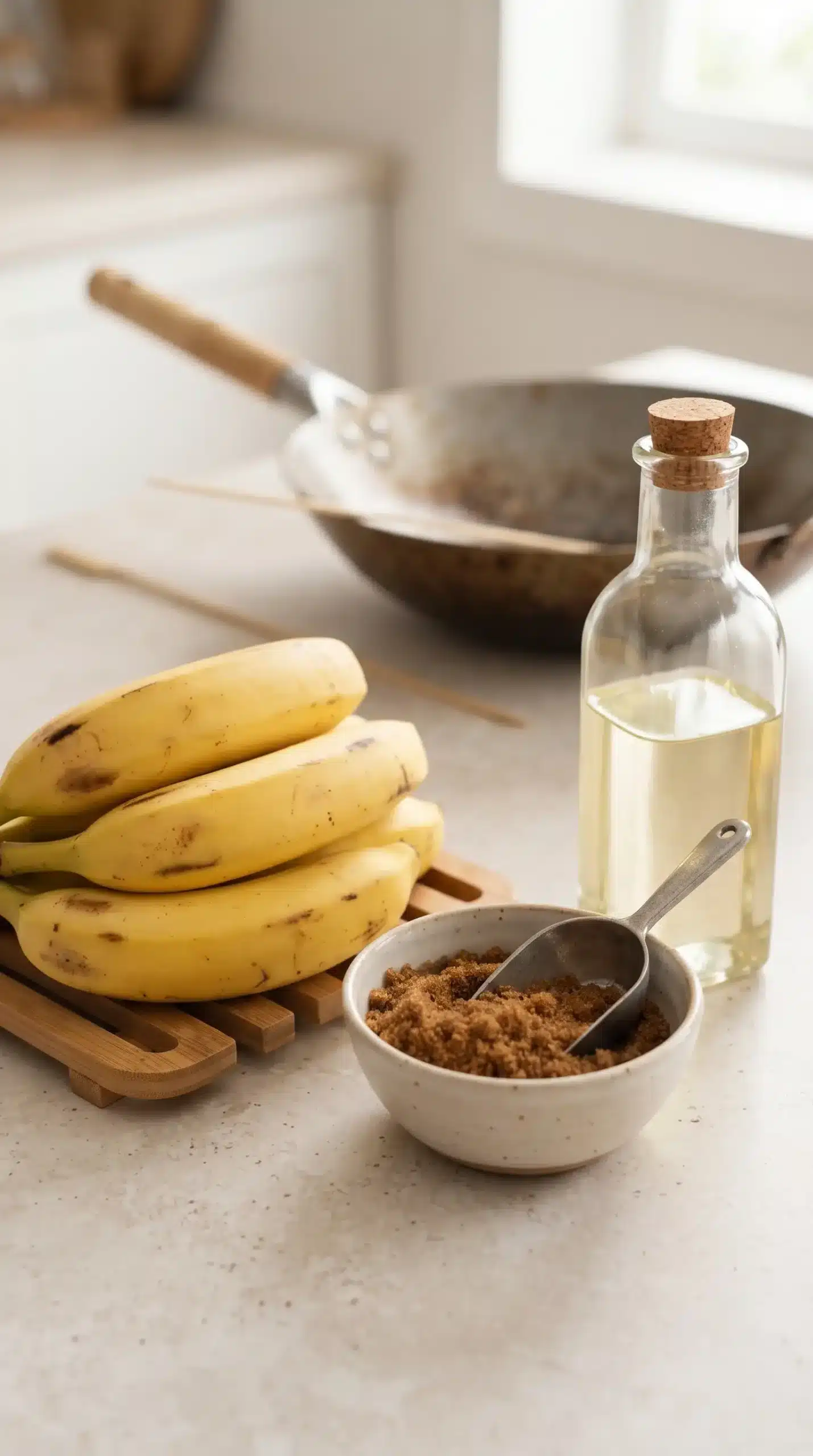
Saba bananas are the traditional choice because their firmer texture helps them stay intact during frying. Their sturdy flesh can withstand contact with hot oil and caramelized sugar, creating pieces that hold their shape after cooking.
Unlike softer dessert bananas, saba varieties are naturally suited for cooking applications. The fruit becomes tender as heat reaches the center, but it maintains enough structure to support the thick sugar coating that defines a Filipino banana cue recipe.
Choosing mature but firm bananas gives the snack its characteristic balance. The fruit should become sweet and tender without collapsing before the caramel layer forms around the outside.
Brown Sugar Creates the Signature Coating on Banana Cue
Brown sugar changes the character of banana cue by creating the sticky, golden coating that separates it from plain fried fruit. As the sugar melts in the oil, it surrounds the bananas and develops a caramelized exterior.
Careful attention to the sugar stage matters because the coating needs enough heat to transform while still remaining attached to the fruit. The caramel should appear glossy and deep golden, showing that the sugar has developed flavor and texture.
The color and flavor changes in the coating happen because sugar caramelizes when heated, creating the deeper notes that make the finished banana cue distinct.
| Coating stage | Appearance | Cooking decision |
|---|---|---|
| Beginning | Brown sugar is starting to melt | Allow the sugar to soften before moving the bananas |
| Developing | Sugar becomes sticky around the fruit | Watch closely so the coating covers the bananas evenly |
| Finished | Deep golden caramel layer forms | Remove once the bananas are coated and tender |
Frying Control Shapes the Texture of Banana Cue
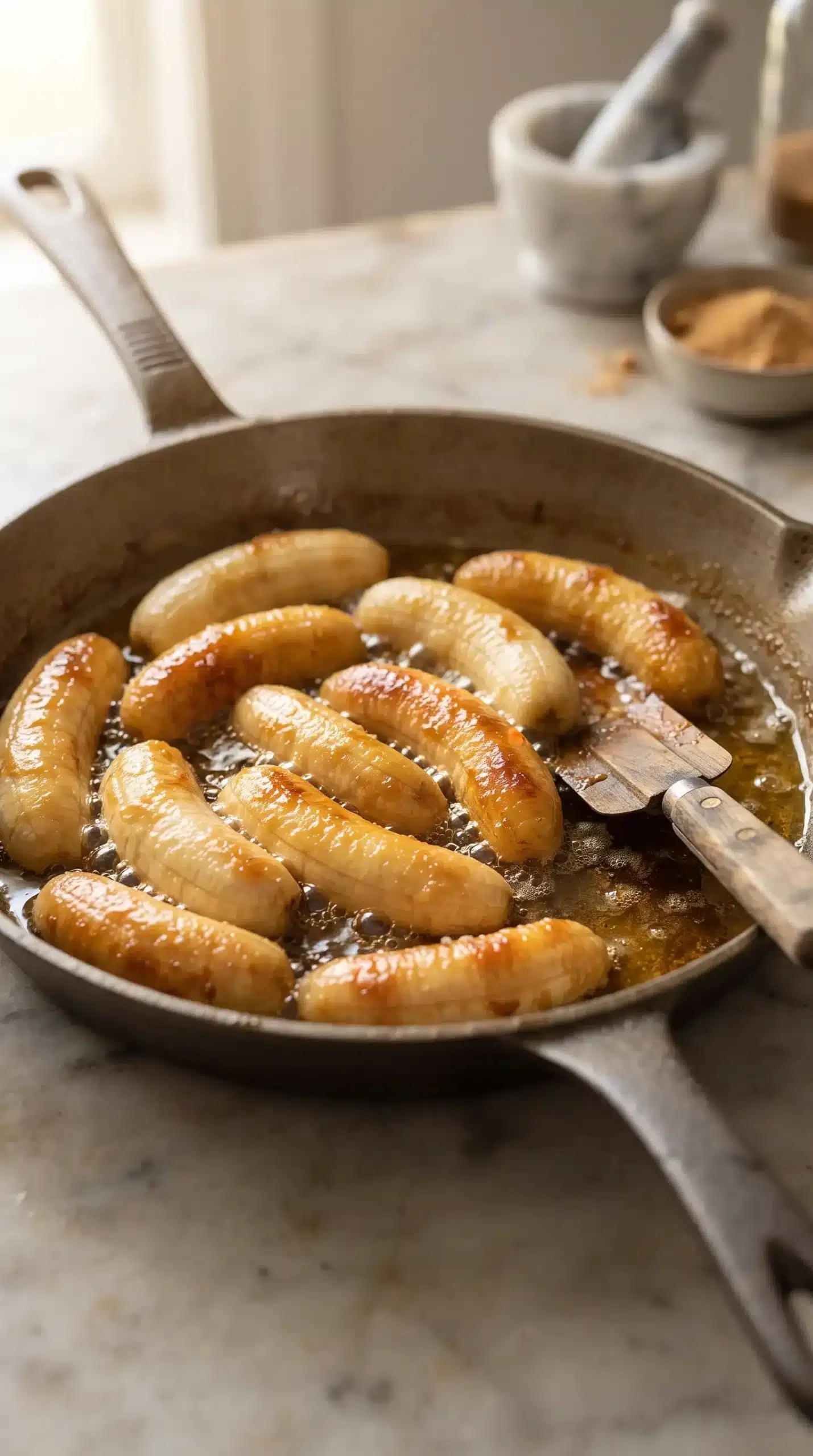
Temperature control determines whether banana cue develops a balanced finish. Medium low heat gives the sugar time to caramelize while allowing the bananas to warm through without excessive browning.
Experienced cooks watch the appearance of the sugar and fruit instead of relying only on timing. The coating should cling to the bananas, and the outside should show a rich golden color that signals proper caramelization.
- Steady heat: Helps the sugar melt gradually and coat the fruit.
- Gentle movement: Encourages the caramel to cover the bananas without breaking them apart.
- Visual checks: Reveal when the coating has reached the desired golden finish.
Choosing Bananas for a Sturdy Fried Caramelized Finish
Banana selection has a direct effect on the finished texture. Saba bananas remain the preferred option because they provide the firmness needed for frying and carrying a heavy caramel coating.
Regular American grocery store bananas can work when saba bananas are unavailable, but their softer texture may create a more delicate result. The pieces may become mushier as they cook, especially when exposed to the heat needed for caramelizing sugar.
Plantains are another possible substitute because they share a firmer texture with cooking bananas. Their flavor and texture can differ, so the finished snack may not match the traditional version exactly.
Banana Cue Mistakes That Ruin the Caramelized Coating
Common banana cue problems usually come from changes in texture, coating, or heat management. Understanding the signs helps prevent a batch from losing the qualities that make this snack special.
- Soft bananas breaking apart: Using very delicate fruit can make the pieces difficult to handle during frying.
- Uneven sugar coverage: Moving too quickly can prevent the caramel from surrounding the bananas.
- Pale coating: Stopping before the sugar develops its golden color can leave the snack without its signature appearance.
- Overworked fruit: Excess handling can damage bananas after they have softened.
Proper ingredient choice and patient cooking provide the best correction for these issues. A firmer banana and controlled heat allow the caramel to form while preserving the fruit inside.
Serving Skewered Banana Cue Beyond the Frying Pan
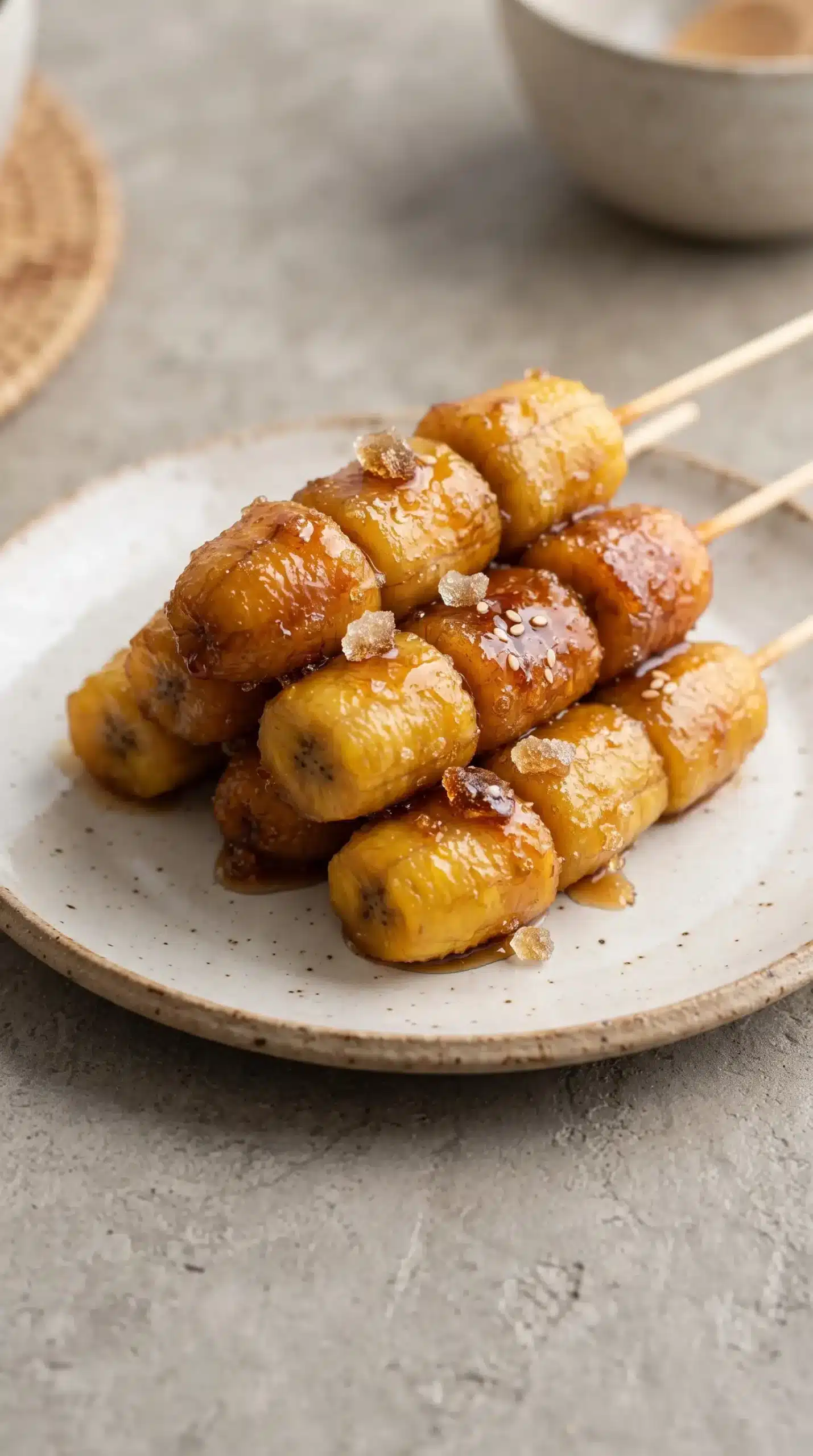
Individual skewers are part of the appeal of banana cue. The serving style makes the snack easy to pick up and reflects the way it is commonly enjoyed as a street food favorite.
Freshly cooked fried caramelized bananas have their strongest texture when the coating is still glossy and the fruit remains warm. Serving them soon after frying highlights the contrast between the sticky exterior and tender center.
Simple presentation keeps attention on the caramel. The skewers provide a practical way to enjoy the snack without requiring extra serving dishes or complicated additions.
Understanding the Role of Oil and Heat in Banana Cue
Oil provides the environment where the sugar and bananas transform together. The cooking fat carries heat to the fruit while allowing the brown sugar to melt into a coating that surrounds each piece.
Maintaining moderate heat helps create a controlled caramelization process. Excessive heat can change the sugar too quickly, while insufficient heat may slow the development of the golden exterior.
Comparing Banana Options for a Filipino Banana Cue Recipe
| Banana choice | Texture during frying | Expected result |
|---|---|---|
| Saba bananas | Firm and sturdy | Traditional texture with a strong caramel coating |
| Regular grocery bananas | Softer and more delicate | A sweeter, softer version with more tender fruit |
| Plantains | Firm cooking texture | A suitable alternative with a different flavor profile |
The best choice depends on availability and the texture a cook wants to achieve. Saba bananas remain the closest match because they are naturally suited to the frying process.
Keeping Banana Cue Connected to Its Traditional Form
Traditional banana cue focuses on a few recognizable elements: cooking bananas, brown sugar, frying, and skewers. The simplicity allows each part of the snack to remain noticeable instead of being hidden by extra flavors.
Modern variations can introduce different serving ideas, but the essential identity comes from the caramelized fruit and the sticky sugar coating. Preserving those characteristics keeps the snack connected to its Filipino roots.
Adjusting Banana Cue Ideas With Practical Substitutions
Availability can influence how cooks approach banana cue at home. When saba bananas cannot be found, alternatives can make the recipe possible while still preserving the idea of caramelized fruit on skewers.
Substitutions should account for texture differences. Softer bananas may need gentler handling, while firmer options such as plantains may provide more stability during cooking.
Preparing Banana Cue for Different Banana Preferences
Different banana choices create small changes in the finished snack. A firm cooking banana produces a more structured bite, while softer fruit creates a tender texture that may absorb more of the caramel.
Personal preference also affects when the snack feels most enjoyable. Some cooks may prefer a firmer center, while others appreciate the softer texture created as the fruit cooks beneath the sugar coating.
Caramelized Saba Bananas Reach Their Best Texture Through Balance
Caramelized saba bananas succeed when the fruit and sugar develop together. The sturdy banana provides support, while the brown sugar creates the sticky layer that defines banana cue.
Balanced heat, careful banana selection, and attention to the caramel stage bring the dish together. These choices allow a simple combination of fruit, sugar, and oil to create a snack with a memorable contrast of textures.
Banana Cue Troubleshooting Questions and Answers
Why do banana cue bananas fall apart during frying?
Bananas can break apart when the fruit is too soft for the frying process. Using firm saba bananas helps maintain structure as the sugar coating develops around the outside.
Can regular bananas be used for banana cue?
Regular bananas can be used if saba bananas are unavailable, but they may produce a softer and more delicate result because they do not have the same sturdy texture.
What causes the sugar coating to stay thin?
A thin coating can happen when the sugar has not fully developed around the fruit. Allowing the brown sugar to caramelize gradually helps create the thicker sticky layer associated with the snack.
Are plantains a good substitute for saba bananas?
Plantains can work as an alternative because they are firm cooking bananas. Their flavor differs from saba bananas, so the finished snack may have a slightly different character.
How should banana cue be served?
Banana cue is traditionally served on individual skewers, making it convenient to eat while keeping the caramelized fruit easy to handle.
Banana Cue with Caramelized Saba Bananas Street Snack
Banana cue is a caramelized saba banana street snack with a sticky golden sugar coating and tender fruit center. It is a simple treat perfect for enjoying when you want a sweet fried dessert with classic flavors.
Ingredients
Method
Preparation
- Heat the frying oil over medium low heat. Add the brown sugar and allow it to begin caramelizing.
- Add the saba bananas to the oil and cook them with the caramelized sugar, turning as needed until they are coated with the sticky sugar mixture and develop a deep golden color.
- Remove the bananas from the oil, drain them on paper towels, and place them on individual skewers for serving.
Notes
This recipe may also work with regular American grocery store bananas, although they can become softer during cooking. Saba bananas are sturdy and hold their shape well while frying, and readers have also suggested plantains as another alternative.