From breakfast to dinner, from healthy meals to sweet desserts – Next Yum Recipes brings you quick, simple and tasty ideas for every occasion and every time.


 This Recipe
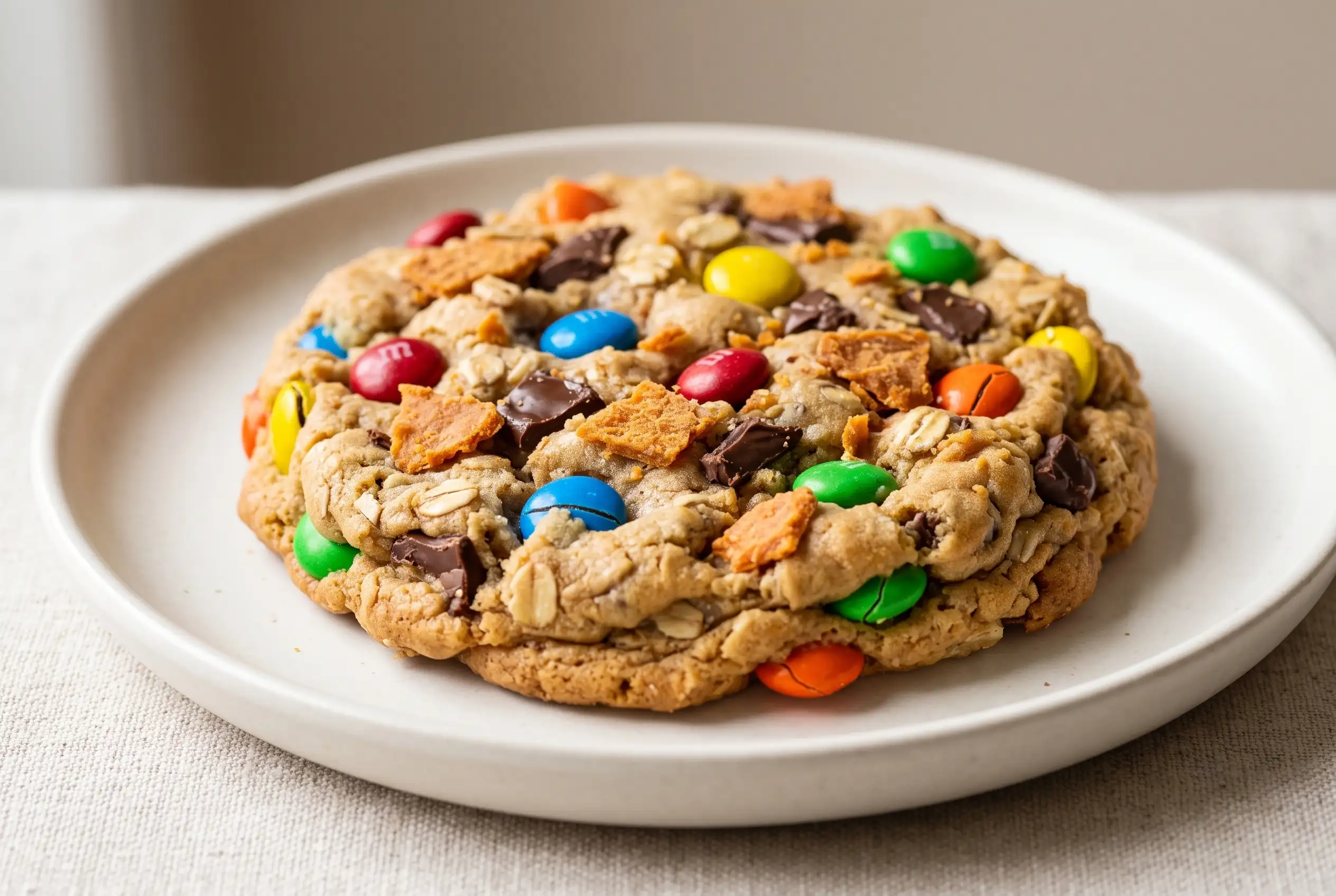
Butterfinger Monster Cookies bring together a chewy peanut butter cookie base with oats, chocolate, colorful candies, and crisp candy bar pieces. The combination creates a dessert where each bite shifts between soft dough, crunchy additions, and familiar peanut butter flavor. Careful mixing and cooling decisions matter because the Butterfinger pieces change texture during baking before returning to their signature crunch.
Classic cookie techniques become more important when several mix-ins compete for space. A balanced dough keeps the candies distributed while allowing the peanut butter, oats, and chocolate to remain noticeable. The result is a butterfinger monster cookie recipe that feels loaded without becoming difficult to shape or bake.
Butterfinger Pieces Create a Distinct Cookie Texture
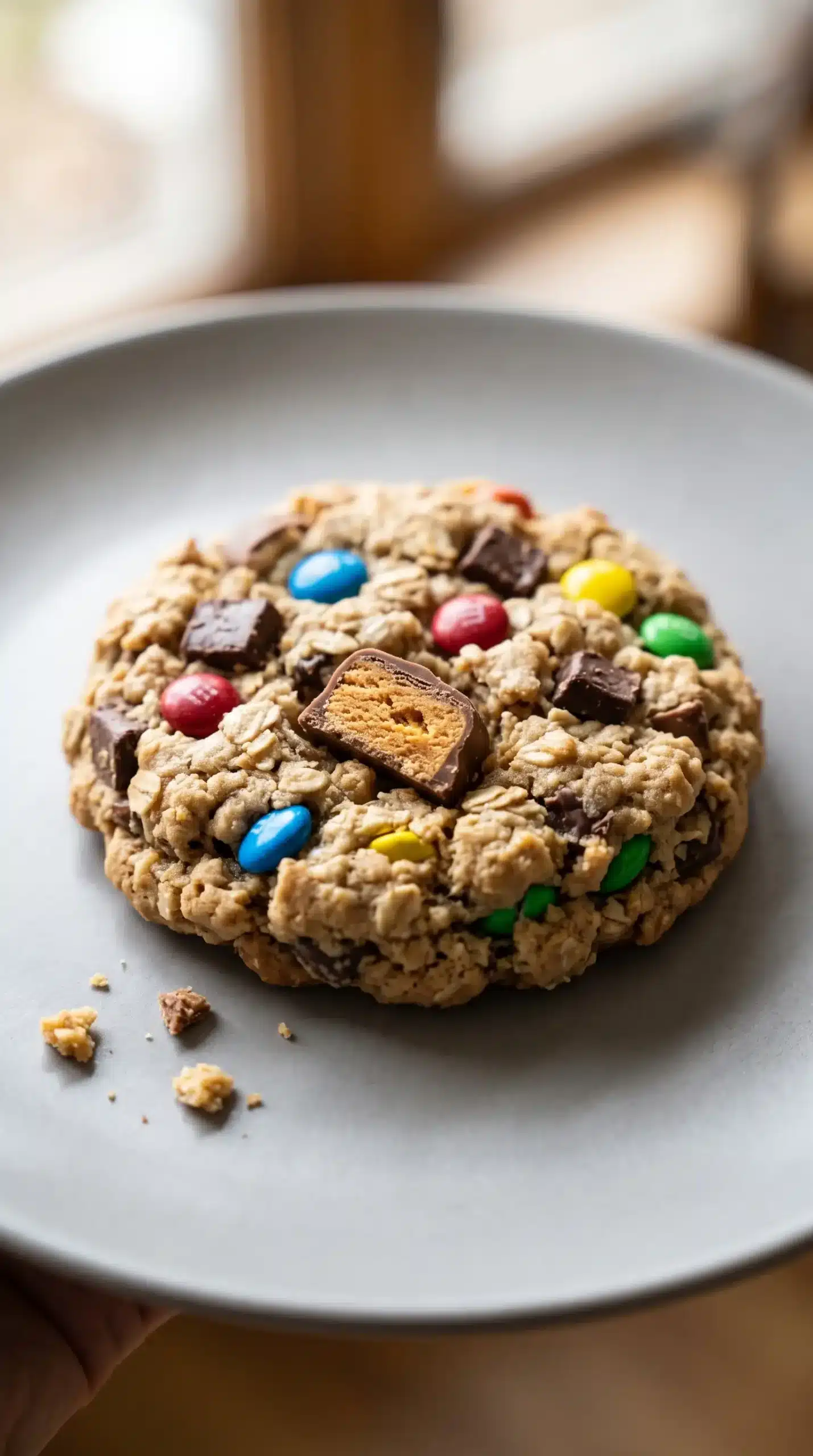
Chopped Butterfinger pieces are the ingredient that makes these cookies behave differently from a standard candy cookie. The pieces soften during the hot baking stage, which can make them seem chewy and slightly unusual when the cookies first leave the oven.
Cooling changes the character of the candy pieces. As the cookies lose heat, the Butterfinger centers firm back up and regain a crisp texture that contrasts with the softer cookie dough. Waiting before judging the finished texture is an important part of enjoying the intended result.
Chocolate candies and chopped dark chocolate provide additional texture points, but they do not replace the role of the Butterfinger. The combination creates layers of sweetness and crunch, making the cookie feel more complex than a simple peanut butter cookie.
Peanut Butter and Oats Shape the Cookie Balance
Peanut butter and rolled oats give the cookie dough its foundation by adding richness and a hearty texture. Smooth peanut butter creates an even dough, while chunky peanut butter can introduce small peanut pieces for extra variation without changing the overall structure. Bakers who enjoy building around this classic flavor combination can explore peanut butter cookies with chocolate chips for a different balance of creamy peanut flavor and chocolate texture.
Mixing Choices Keep Butterfinger Monster Cookies Structured
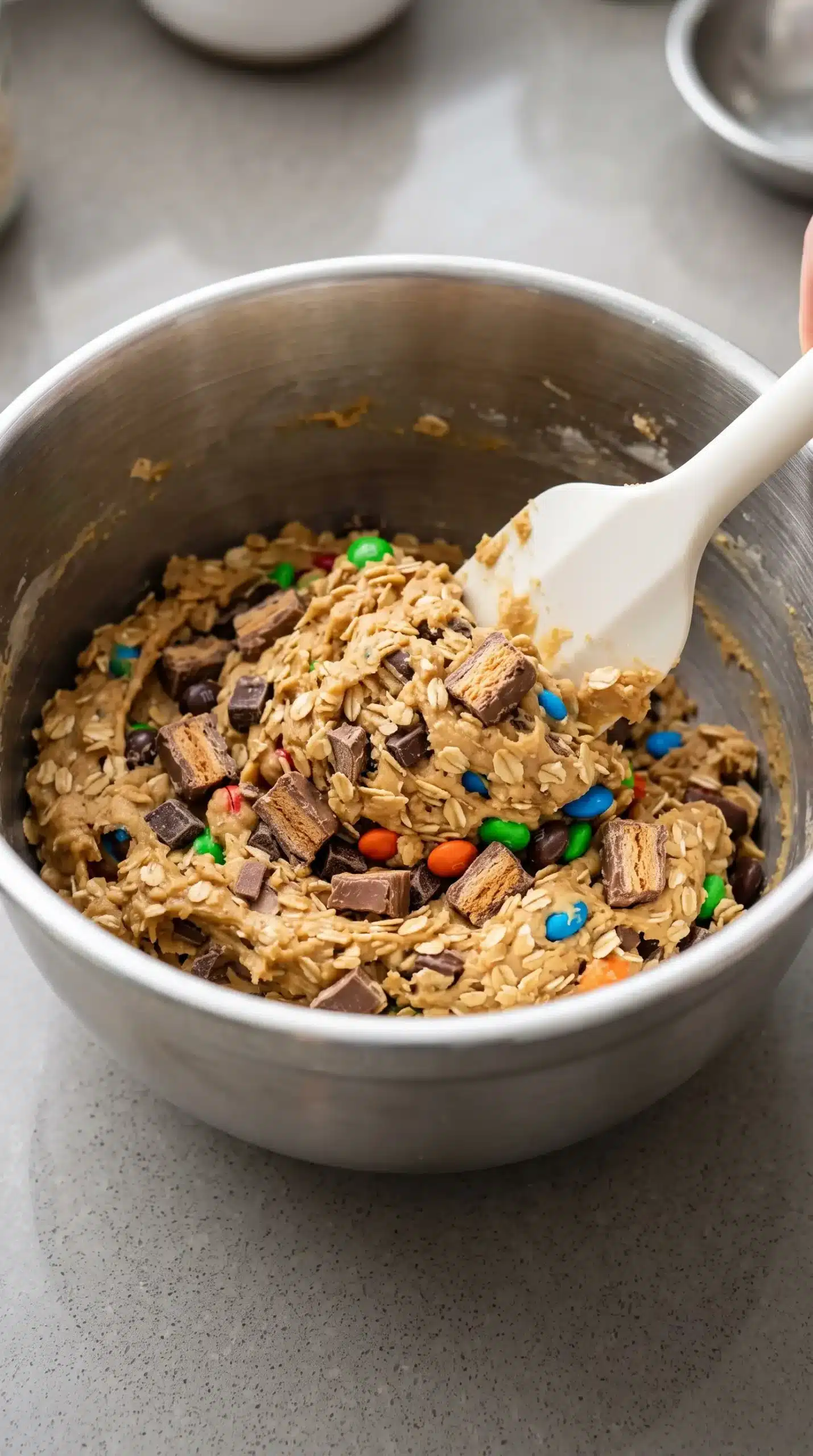
Creaming the butter and sugars establishes the texture of the cookie dough before the remaining ingredients are added. The mixture should become smooth and combined so the sugars are evenly incorporated throughout the fat.
Adding peanut butter, vanilla, and egg after the butter mixture is prepared helps create a cohesive base for the dry ingredients. Once the flour mixture is added, gentle mixing matters because overworking the dough can affect the tenderness of the baked cookies.
Even distribution of oats and candies is especially important for loaded cookies. A scoop from one area of the dough should contain a similar balance of chocolate, candy pieces, and oat texture so every cookie has the same character.
Cookie Dough Details Prevent Uneven Candy Distribution
Uniformly portioned dough helps prevent some cookies from receiving too many candy pieces while others contain mostly plain dough. Spreading the mix-ins throughout the bowl before baking creates a more consistent batch.
Baking Temperature Controls the Crisp Edge
Oven heat determines how the cookies set around the edges while keeping the centers pleasantly soft. A properly heated oven allows the outside to develop color at the right pace while the interior finishes baking.
Giving the oven time to reach the correct temperature helps cookie dough spread and set at the intended pace. Bakers should fully preheat the oven before baking so the cookies develop the right balance of edge structure and a soft center.
Cookie edges provide one of the clearest visual signals during baking. When the edges begin to brown, the cookies have developed enough structure to leave the oven while still retaining moisture inside.
Small timing differences can change the finished texture. Leaving cookies in too long can reduce the soft center, while removing them before the edges have started to set can make them harder to handle during cooling.
| Cookie Stage | Visible Sign | Texture Expectation |
|---|---|---|
| Freshly baked | Edges beginning to brown | Center remains soft and candy pieces are warm |
| Short cooling period | Cookies become easier to move | Structure improves while softness remains |
| Completely cooled | Surface feels set | Butterfinger pieces regain crispness |
Common Butterfinger Monster Cookies Mistakes to Avoid
Several small mistakes can change the balance of peanut butter butterfinger cookies. Paying attention to the dough consistency and the cooling stage prevents the most common disappointments.
- Hot candy judgment: Avoid assuming the Butterfinger pieces are ruined when they seem chewy immediately after baking; cooling restores their expected crispness.
- Uneven additions: Mix the oats and candies throughout the dough so each portion receives a balanced amount of texture.
- Excessive mixing: Stop once the flour is incorporated to help maintain a tender cookie texture.
- Early transfer: Allow cookies to sit briefly on the baking sheet because they need time to firm before moving.
Cooling Time Restores Butterfinger Cookie Crunch
Cooling is not just a waiting period for these cookies. It completes the texture change that begins inside the oven, allowing the candy pieces and cookie structure to settle together.
Oatmeal Butterfinger Cookies Offer a Loaded Dessert Variation
Oatmeal butterfinger cookies highlight the same combination of peanut butter and candy while emphasizing the hearty texture of rolled oats. The oats make the cookie feel substantial and create a pleasant contrast against the chocolate and candy pieces.
Different mix-in choices can adjust the personality of the cookies without changing the basic dough. A baker who prefers more chocolate flavor can focus on the dark chocolate pieces, while someone seeking more candy crunch can emphasize the chopped Butterfinger.
Simple adjustments should keep the balance of dry ingredients and mix-ins in mind. Adding more candy without considering the dough structure can make portions harder to shape and may affect how evenly the cookies bake.
| Mix-In Choice | Texture Contribution | Flavor Direction |
|---|---|---|
| M&M’s | Small candy shell crunch | Classic chocolate sweetness |
| Dark chocolate | Melting chocolate pieces | Deeper cocoa notes |
| Butterfinger | Crisp candy texture after cooling | Peanut butter candy flavor |
Storage Keeps Monster Cookies Ready for Serving
Stored cookies maintain their texture best when protected from excess air and moisture. A sealed container helps preserve the contrast between the soft cookie and the crisp candy pieces.
Serving Ideas Highlight Peanut Butter Candy Flavor
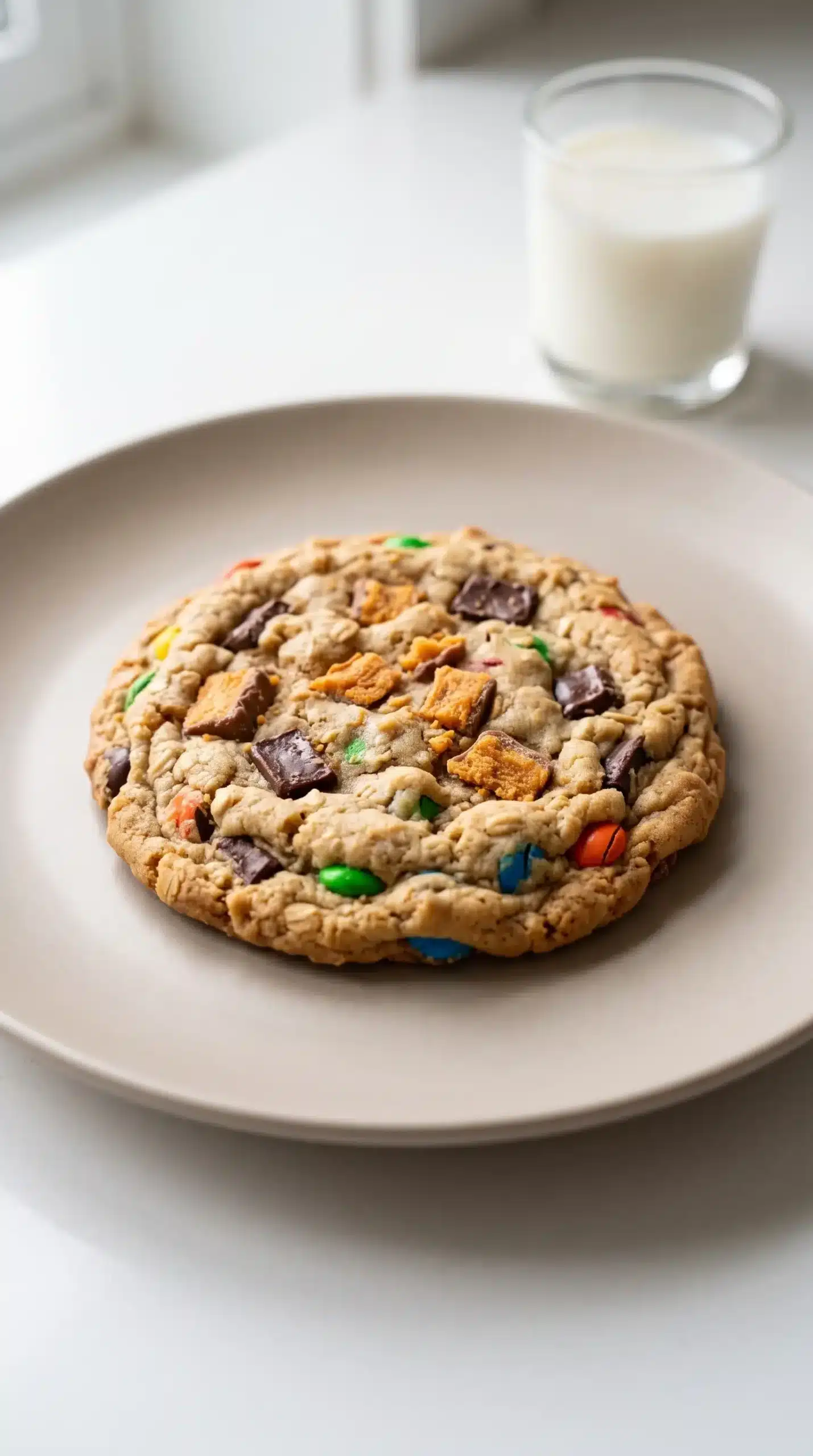
Warm cookies can be served after they have cooled enough for the Butterfinger pieces to settle, creating a dessert with both soft and crunchy elements. They pair naturally with simple beverages that complement peanut butter and chocolate flavors.
- Room temperature serving: Enjoy the cookies once the candy pieces have regained their crisp texture.
- Slightly warmed option: Warm briefly when a softer chocolate-forward texture is preferred.
- Dessert pairing: Serve alongside milk, coffee, or another drink that balances the sweetness.
Butterfinger Monster Cookies Deliver Balanced Candy Texture
Butterfinger Monster Cookies succeed because the cookie dough provides enough structure for several bold additions while still allowing each mix-in to stand out. The most important judgment comes after baking, when cooling transforms the unusual warm Butterfinger texture into the crisp candy contrast that defines the finished cookie.
Cookie texture depends on respecting each stage of preparation. Balanced mixing, careful baking, and patience during cooling create a batch where peanut butter richness, oats, chocolate, and candy pieces work together instead of competing.
Butterfinger Monster Cookies Questions About Texture and Baking
Why are Butterfinger pieces chewy right after baking?
Heat temporarily softens the candy pieces inside the cookies. Once the cookies cool completely, the Butterfinger pieces firm up and return closer to their original crisp texture.
Can chunky peanut butter be used for these cookies?
Chunky peanut butter works well when extra peanut pieces are desired. The dough will still hold together while adding another small texture variation.
How do oatmeal Butterfinger cookies stay soft?
The butter, sugars, peanut butter, and oats contribute to a cookie that holds moisture after baking. Avoiding excessive baking time helps maintain a softer center.
What causes candy pieces to collect unevenly in cookie dough?
Uneven mixing can leave some portions with more candies than others. Folding the oats and mix-ins through the dough until they are spread throughout helps create consistent cookies.
When should these cookies be moved from the baking sheet?
Cookies should remain on the baking sheet briefly after baking so they can firm up. Moving them too soon may cause them to break before the structure has developed.
Butterfinger Monster Cookies with Peanut Butter and Oats
Butterfinger Monster Cookies are chewy peanut butter cookies loaded with oats, chocolate, and candy pieces for a fun mix of soft and crisp textures. They are a sweet dessert choice for gatherings or whenever a classic loaded cookie is wanted.
Ingredients
Method
Preparation
- Preheat the oven to 350°F (177°C).
- Cream the butter, white sugar, and brown sugar together until smooth. Add the peanut butter, vanilla, and egg, then mix until well combined.
- Combine the flour, baking soda, and salt separately, then stir the mixture into the wet ingredients just until moistened. Fold in the oats and candies until evenly distributed.
- Place rounded spoonfuls of dough onto lightly greased cookie sheets.
Baking
- Bake the cookies for 8-10 minutes in the preheated oven, until the edges begin to brown.
- Leave the cookies on the baking sheets for about 5 minutes, then transfer them to wire racks to cool completely.
Notes
The Butterfinger pieces may have a chewy, unusual texture immediately after baking. They become crisp again as the cookies cool.