From breakfast to dinner, from healthy meals to sweet desserts – Next Yum Recipes brings you quick, simple and tasty ideas for every occasion and every time.


 This Recipe
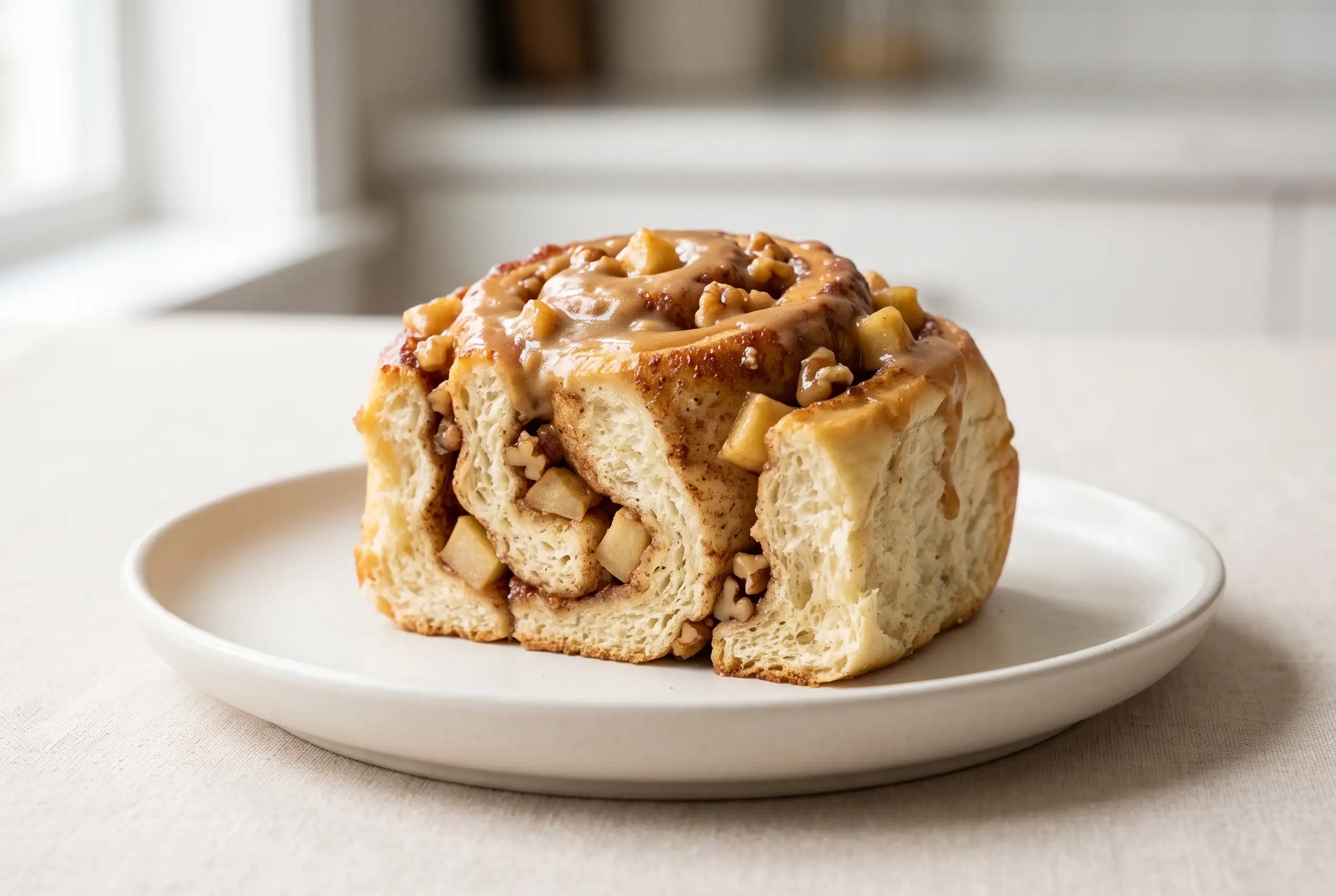
Caramel Rolls Bring Apple and Walnut Flavor Into a Soft Spiral
Caramel rolls begin with a tender yeast dough that carries a warm apple filling, buttery sauce, and optional walnuts through every spiral. The combination creates a bakery-style pastry where the fruit mixture becomes part of the structure instead of sitting only on the surface.
Unlike simple sweet rolls, caramel rolls with apples and walnuts rely on several texture decisions working together. The dough needs enough elasticity to hold the filling, while the cooked apples need enough tenderness to blend with the cinnamon and brown sugar coating without becoming watery.
Yeast Dough Creates the Elastic Base for Caramel Rolls
Building the dough starts with a balance between flour, liquid, fat, and yeast activity. The mixture should come together into a workable dough that feels flexible when kneaded by hand. Flour adjustments matter because the dough needs support without becoming stiff.
During mixing, the early flour portion helps the wet ingredients combine before the remaining flour is added gradually. This approach makes it easier to judge texture as the dough develops, since flour absorption can vary depending on the environment and ingredient conditions.
After kneading, the dough benefits from resting in a warm place because the yeast needs time to create expansion. A properly risen dough will feel lighter and show visible growth, giving the finished caramel rolls a softer interior once baked.
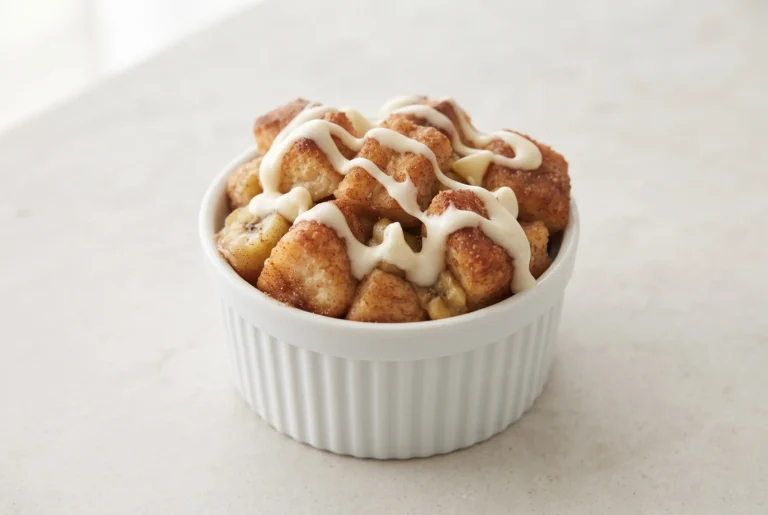
A second rise is not only about expansion; it helps sweet breakfast doughs develop a lighter crumb, while banana monkey bread with cinnamon sugar uses yeast dough structure to create a tender baked texture.
Apples Gain Deeper Flavor Through Gentle Skillet Cooking
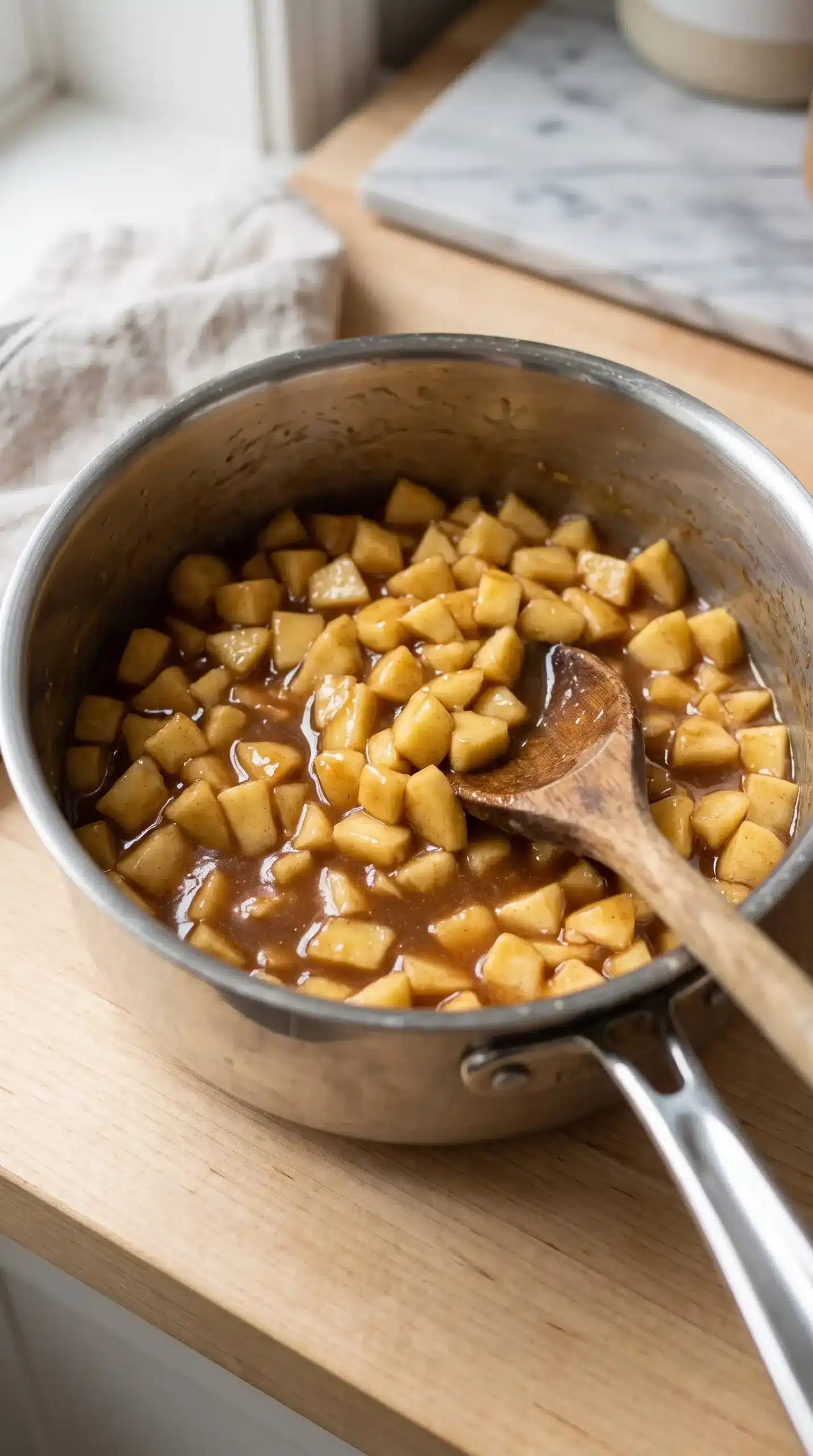
Cooking the diced apples with butter, brown sugar, cinnamon, and vanilla creates the caramel-like filling that defines these rolls. Gentle heat allows the apples to soften while the sauce thickens enough to stay connected to the dough during baking.
Walnuts and Cinnamon Shape the Apple Caramel Rolls Filling
Walnuts introduce a contrasting texture that works especially well against the soft dough and tender fruit. Chopped pieces remain noticeable inside the spirals, adding a nutty bite that balances the sweetness of the brown sugar mixture.
Cinnamon ties the filling together by adding warmth without overpowering the apples. When combined with vanilla and the buttery sauce, it creates the familiar flavor profile expected from an apple walnut cinnamon rolls variation while keeping the fruit as the main focus.
Adding walnuts after the apple mixture has thickened helps preserve their texture. The nuts can absorb some of the surrounding flavor while avoiding unnecessary softening from extended cooking in the saucepan.
Dough Consistency Controls the Rise and Texture
Successful caramel rolls depend on recognizing dough texture before shaping begins. A dough that feels workable and elastic will be easier to roll into a rectangle and wrap around the filling without tearing.
Small adjustments during mixing can make a noticeable difference. If the dough feels too loose, a small amount of additional flour can strengthen it. When the dough feels overly firm, a little milk can help restore softness.
Careful handling also matters after the first rise. Pressing the dough down and folding it back into a compact shape redistributes the structure before the second resting period, helping the rolls develop a more even texture.
Choosing Apples for Caramel Rolls Improves the Filling
Apple selection influences how the filling behaves because the fruit must soften while still contributing recognizable pieces inside the spiral. Firm apples that hold their shape during gentle cooking are useful choices for keeping the filling balanced and distinct, and apple varieties can differ in their suitability for cooking.
A Balanced Filling Keeps Every Caramel Roll Defined
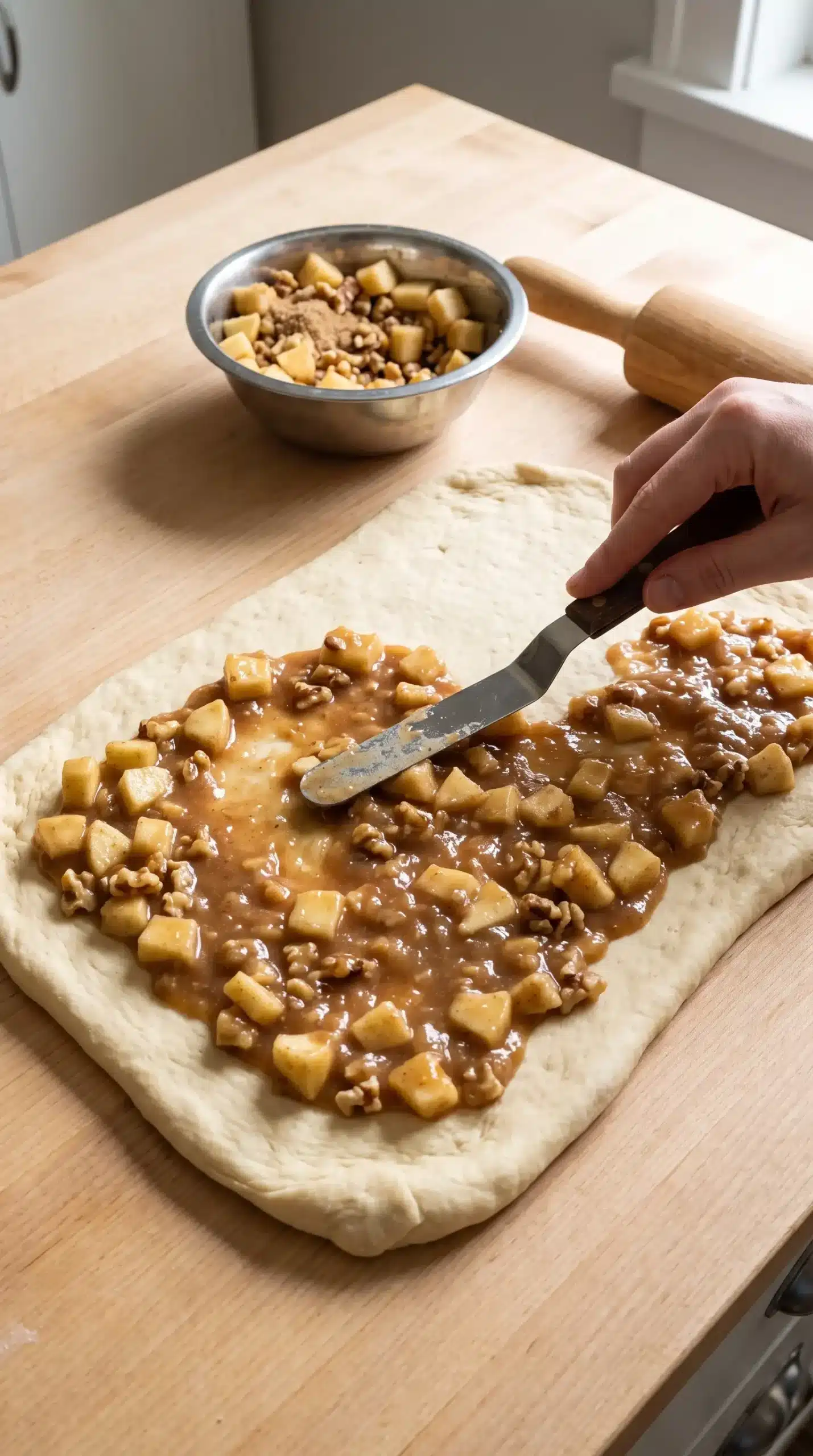
Spreading the apple mixture evenly across the dough helps each spiral receive similar layers of fruit, sauce, and seasoning. A filling that is concentrated in one area can make some rolls heavier while leaving others with less flavor.
Portioning the sauce during assembly, topping, and serving also changes the finished experience. Keeping some mixture aside allows the baked rolls to receive additional moisture and caramel flavor after they leave the oven.
Caramel Rolls with Apples and Walnuts Avoid Common Mistakes
Several small errors can affect the texture and appearance of caramel rolls. Paying attention to dough feel, filling thickness, and rising conditions helps prevent problems before baking begins.
- Overly soft dough: Too much liquid or too little flour can make shaping difficult. Adjust gradually until the dough holds together while remaining flexible.
- Runny apple filling: Apples that release excess moisture can make the spirals soggy. Continue cooking until the mixture has thickened slightly before spreading it over the dough.
- Crowded rolls: Placing spirals without enough space can limit their rise. Leave room in the pan so the dough can expand before baking.
Another common issue happens when the rolls are sliced with a dull knife. A clean cut helps preserve the spiral shape and keeps the apple filling distributed through each piece.
Rushing the rising stages can also change the result. The dough needs time to expand naturally, because baking before sufficient growth can create a denser texture.
Preparing Caramel Rolls Ahead Preserves Their Fresh Texture
Making caramel apple rolls in advance works well when the shaped rolls are chilled before baking. Allowing them to return to room temperature and rise again before entering the oven helps restore the airy dough texture.
Baking Pan Choices Change How Apple Walnut Cinnamon Rolls Finish
A buttered ovenproof skillet creates a presentation where the sauce can surround the rolls and remain easy to spoon over individual portions. The same dough can also be arranged in a baking dish when a different serving style is preferred.
The pan affects how the rolls sit together during baking. Spaces between the spirals allow expansion, while the surrounding sauce continues to flavor the edges and tops as the dough cooks.
| Pan choice | Result during baking | Useful consideration |
|---|---|---|
| Ovenproof skillet | Sauce stays close to the rolls | Works well for serving warm portions directly |
| 9×13 baking dish | Rolls bake together in a rectangular arrangement | Helpful when using a familiar casserole-style pan |
| More open spacing | Dough has room to expand | Supports a softer, less compressed texture |
Serving Caramel Rolls Highlights the Warm Apple Sauce
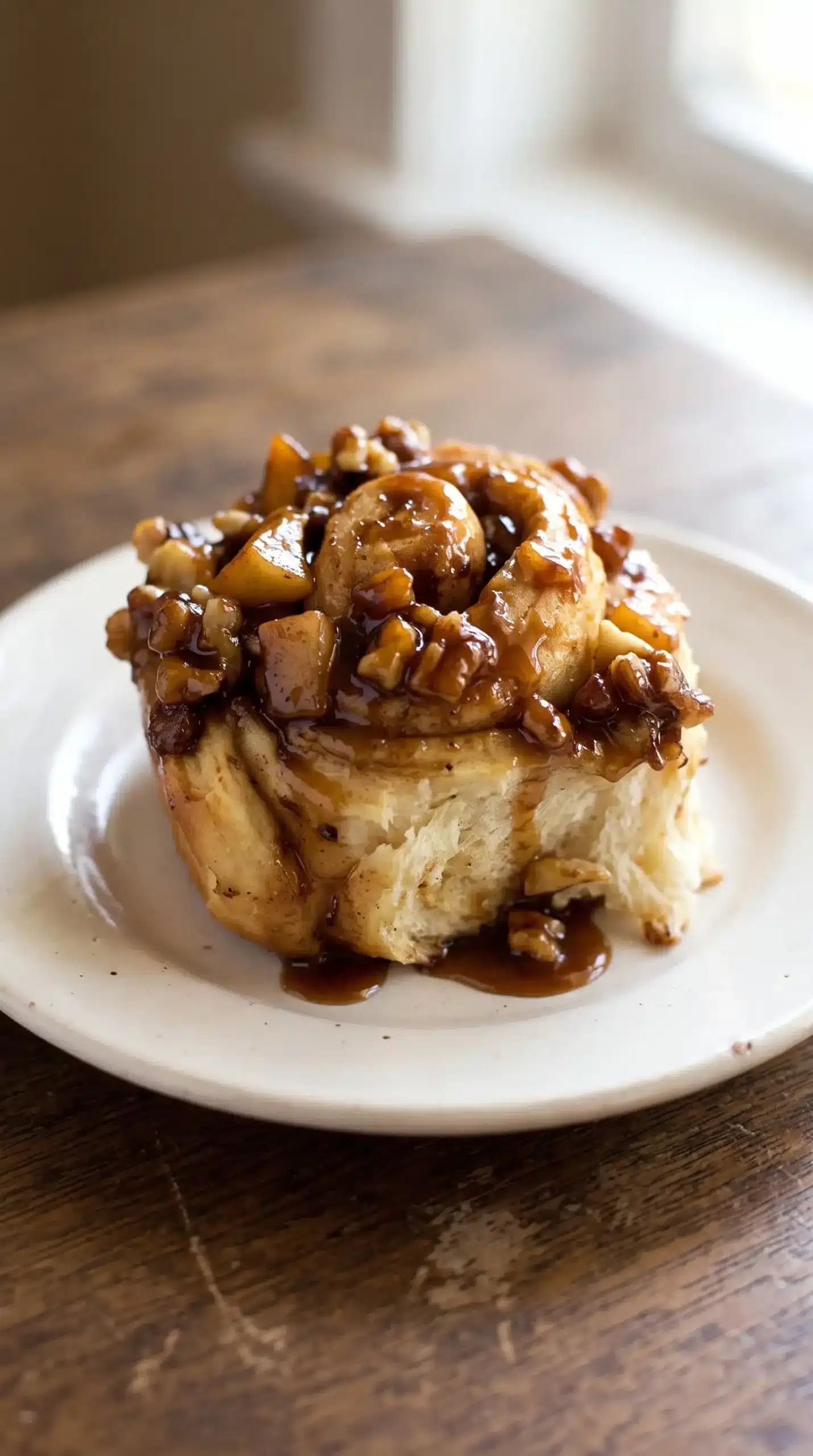
Freshly baked caramel rolls are especially enjoyable while the reserved apple sauce is still warm and glossy. Spoonfuls of the extra mixture bring the fruit and brown sugar flavors back to the surface after baking.
Small Adjustments Help Caramel Rolls Match Your Kitchen
Kitchen conditions can influence how dough behaves, so visual cues remain important throughout preparation. Flour may absorb differently from one batch to another, making texture a better guide than a fixed amount alone.
Optional walnuts can be included for extra crunch or left out when a smoother apple filling is preferred. The core structure of the rolls remains focused on the yeast dough and cooked apple mixture.
Different serving occasions may also call for small presentation changes. Individual portions, shared pan serving, or reheated pieces can all highlight the same combination of cinnamon, fruit, and caramel flavors.
Caramel Apple Rolls Recipe Details Depend on Timing Cues
Timing decisions are closely connected to the appearance of the dough and filling. Rising stages are complete when the dough has expanded noticeably, while the apple mixture is ready when it has softened and thickened enough to coat the fruit.
These visual signals make the caramel apple rolls recipe easier to adapt because kitchens, flour brands, and apple varieties can behave differently. Watching texture and consistency creates a more reliable result than relying only on the clock.
Caramel Rolls Reach Their Best Texture Through Balanced Preparation
Caramel rolls succeed when the dough remains soft enough to enjoy while still supporting a generous apple filling. The cooked fruit, cinnamon, walnuts, and layered sauce each have a clear role in creating a pastry with contrasting textures.
Warm apple filling, properly developed dough, and careful handling of the rising stages create the conditions for spirals that hold together while offering a tender bite. Each choice from mixing to serving affects how the finished rolls come together.
Apple Filling and Rise Questions About Caramel Rolls
Can caramel rolls be prepared before baking?
Yes, shaped caramel rolls can be covered and refrigerated before baking. They need time to warm and rise again before going into the oven so the yeast dough can regain its lighter structure.
Why does the apple filling need to be cooked first?
Cooking the apples softens the fruit and thickens the butter, sugar, cinnamon, and vanilla mixture. This creates a filling that blends with the dough instead of releasing too much moisture during baking.
How can walnuts be kept crunchy in caramel rolls?
Adding chopped walnuts after the apple mixture has finished simmering helps protect their texture. They still absorb flavor from the filling while maintaining a noticeable nutty contrast.
What causes caramel rolls to become dense?
Dense rolls can result when the dough does not develop enough elasticity or when rising time is shortened. Giving the yeast dough enough time to expand helps create a softer interior.
Can different apples be used for caramel rolls?
Different apple varieties can work as long as they soften during cooking while maintaining enough structure to remain visible in the filling. The most important factor is how the fruit behaves when heated.
Caramel Rolls with Apples, Walnuts, and Brown Sugar
Caramel Rolls with Apples, Walnuts, and Brown Sugar are soft, tender spirals filled with warm apple flavor, cinnamon, and a buttery caramel-style sauce. They are a comforting choice for breakfast, dessert, or gatherings when a homemade sweet roll is desired.
Ingredients
Method
Preparation
- Combine 2 cups of flour with sugar, yeast, and salt in a large bowl. Add lukewarm milk, egg, and butter, then mix with a bread mixing attachment until the wet ingredients are incorporated and the mixture begins to form a dough.
- Scrape the bowl and gradually add the remaining flour in 1/2 cup portions, mixing after each addition until the dough comes together. Knead by hand until the dough is workable and elastic.
- Transfer the dough to a large buttered or greased bowl, cover with plastic wrap, and allow it to rest in a warm place for 1 hour. Once doubled in size, press the dough down, fold the corners into the center to form a compact ball, cover again with the corner side down, and rest for another 30 minutes.
Filling
- While the dough rises, cook the apples, butter, brown sugar, cinnamon, and vanilla together in a saucepan over low heat.
- Simmer the mixture for about 10-15 minutes until the apples are tender and the mixture has thickened slightly. Stir in the chopped walnuts and set the filling aside.
Assembly
- Roll the dough into a 9×15 rectangle. Spread 1/3 of the apple mixture evenly over the dough.
- Starting from the wide end, roll the dough around the filling. Slice the rolled dough into 12-15 spiral rolls with a large knife and place them in a large buttered ovenproof skillet, leaving space between rolls for expansion.
Baking
- Preheat the oven to 350°F (177°C). Cover the rolls and let them rise again for 30 minutes.
- Pour 1/3 of the apple mixture over the risen rolls. Bake for 15-25 minutes, or until lightly browned and baked through.
- Pour the remaining 1/3 of the apple mixture over the hot rolls before serving.
Notes
To prepare these ahead, complete the recipe through cutting the rolls and placing them in the pan. Cover and refrigerate them, then allow extra time for the rolls to return to room temperature and rise again before baking; this took at least 2 hours after refrigeration. Adjust dough consistency with a tablespoon of flour to thicken or a tablespoon of milk to soften if needed. A 9×13 baking dish can also be used.