From breakfast to dinner, from healthy meals to sweet desserts – Next Yum Recipes brings you quick, simple and tasty ideas for every occasion and every time.


 This Recipe
Jerk Salmon Bowl Brings Caribbean Heat to Balanced Bowls
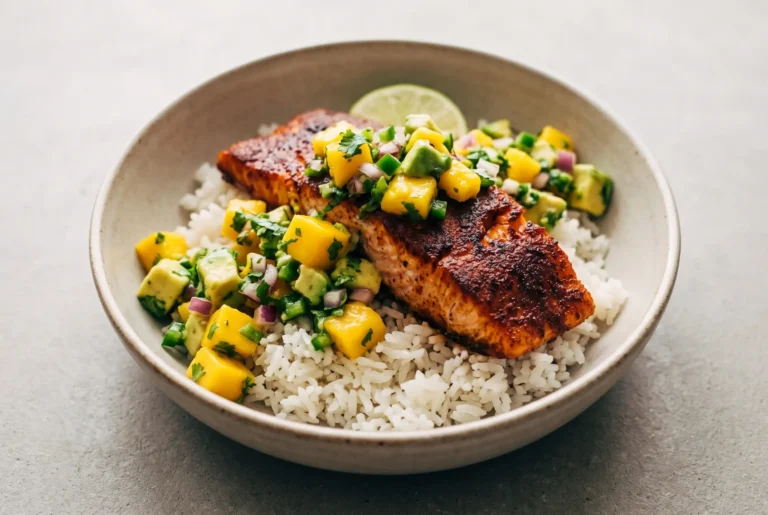
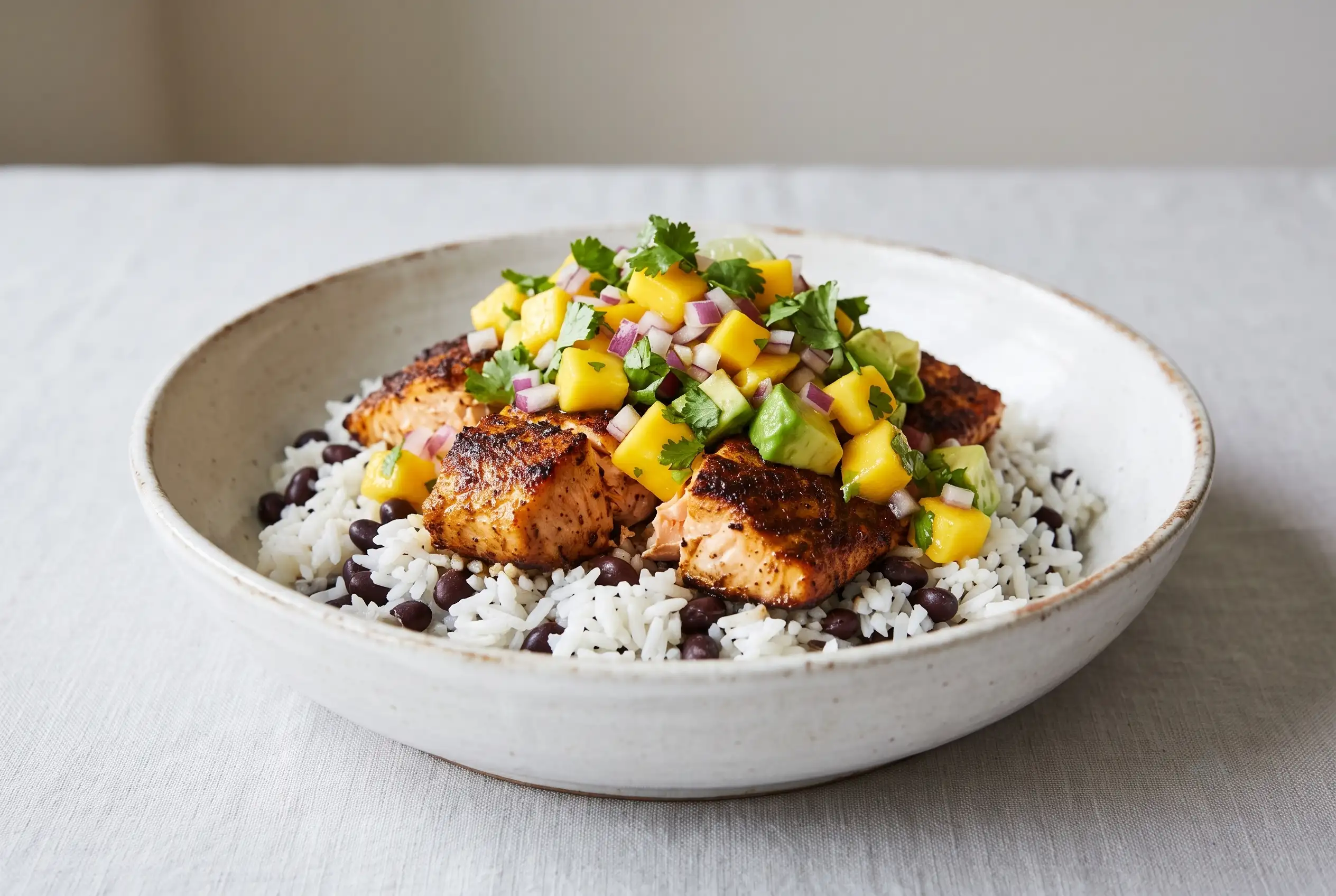
Jerk salmon bowl recipes bring together seasoned fish, comforting rice, hearty beans, and bright fruit in a meal where every layer has a purpose. The Caribbean-inspired flavors come from a warm spice coating that forms a savory crust on the salmon, while the mango salsa adds a fresh contrast that keeps the bowl lively. Each bite combines richness, heat, sweetness, and texture without relying on complicated preparation.
Jerk Spice Blend Creates a Distinct Salmon Crust
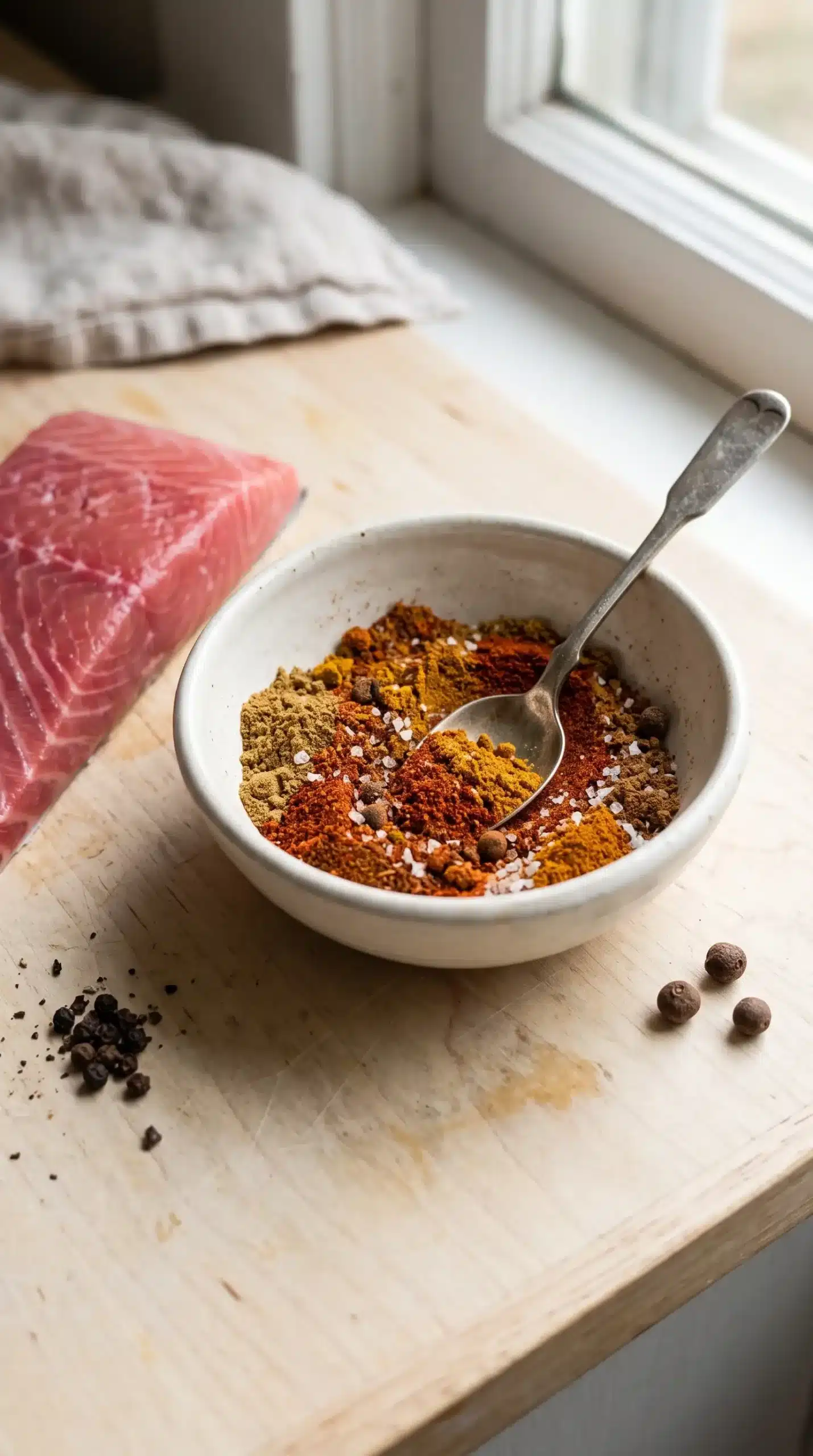
Caribbean jerk seasoning is known for its layered character, and the blend used here builds that profile from familiar pantry spices. Cumin and curry create earthy depth, chili powder and cayenne bring gentle heat, allspice gives the mixture its recognizable warmth, and cinnamon adds a subtle aromatic note. The combination works because no single spice dominates the salmon.
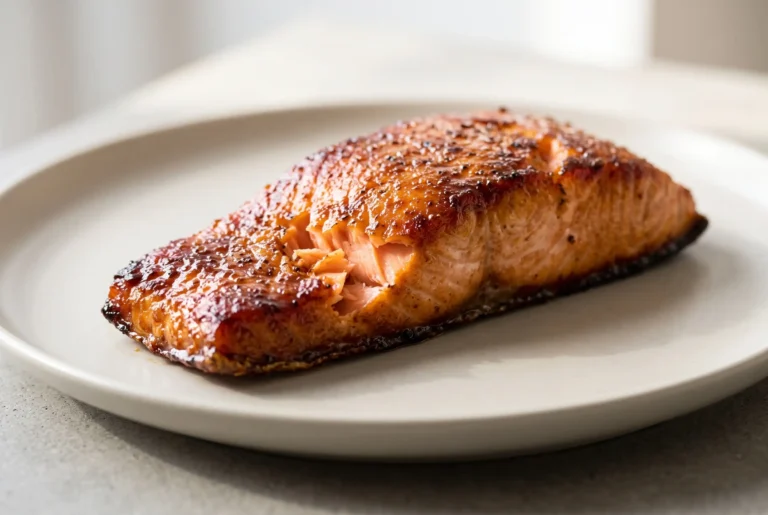
Salmon responds especially well to a dry spice coating because the surface can develop a browned exterior during skillet cooking. As the fish contacts the hot pan, the spices toast against the outside while the natural richness of the salmon supports the bold seasoning.
Wild caught salmon provides a firm texture that holds up well when broken into pieces for a bowl. Keeping the seasoning focused on the fish allows the rice, beans, and salsa to remain distinct instead of becoming covered by one overpowering flavor.
Mango Salsa Shapes the Fresh Finish of a Caribbean Jerk Salmon Bowl
Fresh mango salsa changes the personality of a Caribbean jerk salmon bowl by adding juicy sweetness, crisp onion, herbal brightness from cilantro, and acidity from lime juice. The salsa is simple, but its freshness balances the deeper flavors created by the seasoned salmon.
Rice and Beans Build the Foundation for a Jerk Salmon Rice Bowl
White rice and black beans create the dependable base that turns seasoned salmon into a complete bowl. The rice absorbs juices from the fish and salsa, while the beans contribute a hearty texture that makes the meal feel substantial.
Combining the rice and beans before assembling the bowls helps distribute their flavors evenly. A small amount of added water can loosen the mixture if it needs a softer texture, allowing the grains and beans to sit comfortably beneath the salmon and toppings.
A jerk salmon rice bowl benefits from keeping the base mild. The seasoned fish and mango salsa already provide strong flavors, so the rice and beans act as a steady backdrop that connects each component.
| Component | Texture Contribution | Flavor Role |
|---|---|---|
| Seasoned salmon | Flaky pieces with a browned exterior | Spiced, savory centerpiece |
| Rice and black beans | Soft grains with creamy bean texture | Neutral foundation for bold toppings |
| Mango salsa | Juicy fruit with crisp onion pieces | Fresh, bright contrast |
Salmon Skin Handling Changes the Texture Inside the Bowl
Removing the salmon skin after it has helped protect the fish during cooking makes it easier to create evenly sized pieces for serving. The approach also allows the cook to check that the salmon is fully cooked before it reaches the bowl, while keeping the finished texture easy to combine with the rice and beans.
Choosing Spices and Produce for Better Bowl Balance
The most important ingredient decisions in a jerk salmon bowl come from choosing elements that support one another. The spice mixture needs enough warmth to stand beside the salmon, but the bowl also depends on fresh ingredients that soften those stronger flavors.
Mangoes should be ripe enough to provide natural sweetness while still holding their shape after dicing. Ripe mangoes should be firm while slightly yielding to pressure, which helps select fruit that keeps a better texture in salsa. Firm pieces create a more noticeable contrast with the tender salmon and soft rice. Red onion adds sharpness, and cilantro gives the salsa a fresh herbal note that ties the fruit and fish together.
Sea salt is used throughout the bowl to sharpen individual components. Light seasoning of the salsa and rice mixture helps each layer maintain its own identity, making the finished bowl taste balanced instead of flat.
Cooking Control Keeps Salmon Tender and Fully Set
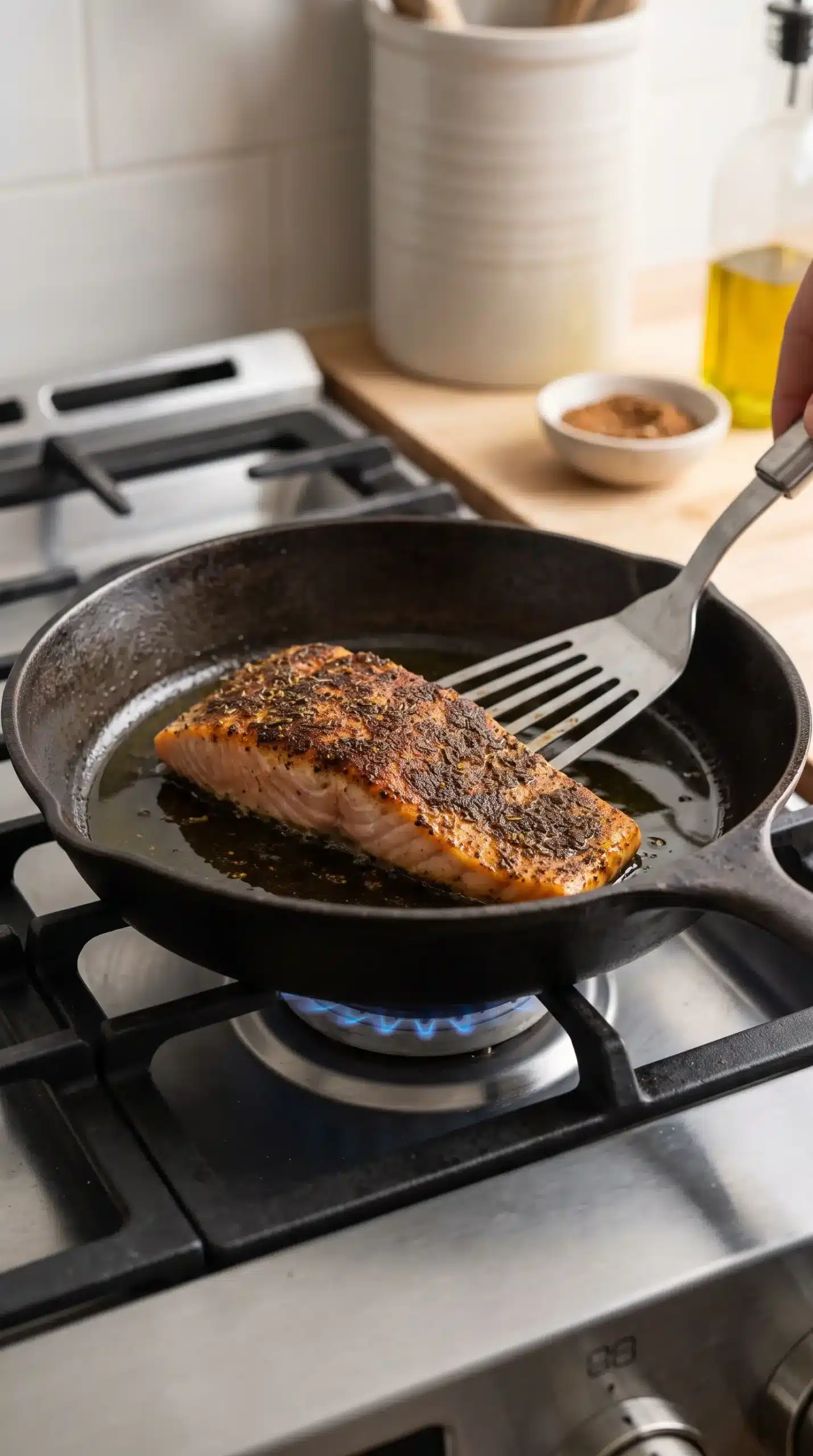
Skillet temperature and timing have a major effect on the texture of the salmon. Starting with a hot pan helps the seasoned surface brown, creating the crust that gives the fish a stronger flavor and more appealing texture.
Breaking the salmon into smaller pieces near the end of cooking requires attention because exposed pieces can lose moisture quickly. The fish should no longer appear translucent before leaving the heat, but extended cooking can make the pieces dry and firm.
Several visual cues help guide the process: the outside should show a browned spice coating, the pieces should separate easily, and the interior should look cooked through. These observations matter more than simply relying on a fixed appearance because salmon pieces can vary in thickness. Cutting or serving the fish in smaller portions requires careful attention to moisture, and salmon cubes benefit from the same focus on timing and texture control.
Jerk Salmon Bowl Mistakes That Ruin the Fish or Salsa
Small preparation choices can change the quality of a jerk salmon bowl. Avoiding a few common problems helps preserve the contrast between the warm fish, mild base, and fresh topping.
- Overcooked salmon: Leaving the fish on heat too long after breaking it apart can remove the moisture that makes the bowl satisfying.
- Weak seasoning coverage: Applying the spice mixture unevenly can leave some bites flavorful and others plain.
- Soggy salsa texture: Overmixing diced mango and onion can break down the fresh pieces that give the topping its character.
Correcting these issues starts with watching texture changes during cooking. The salmon should be removed once cooked through, and the salsa should be stirred gently enough to keep the diced ingredients recognizable.
Layering Choices Make a Salmon Bowl with Mango Salsa Work
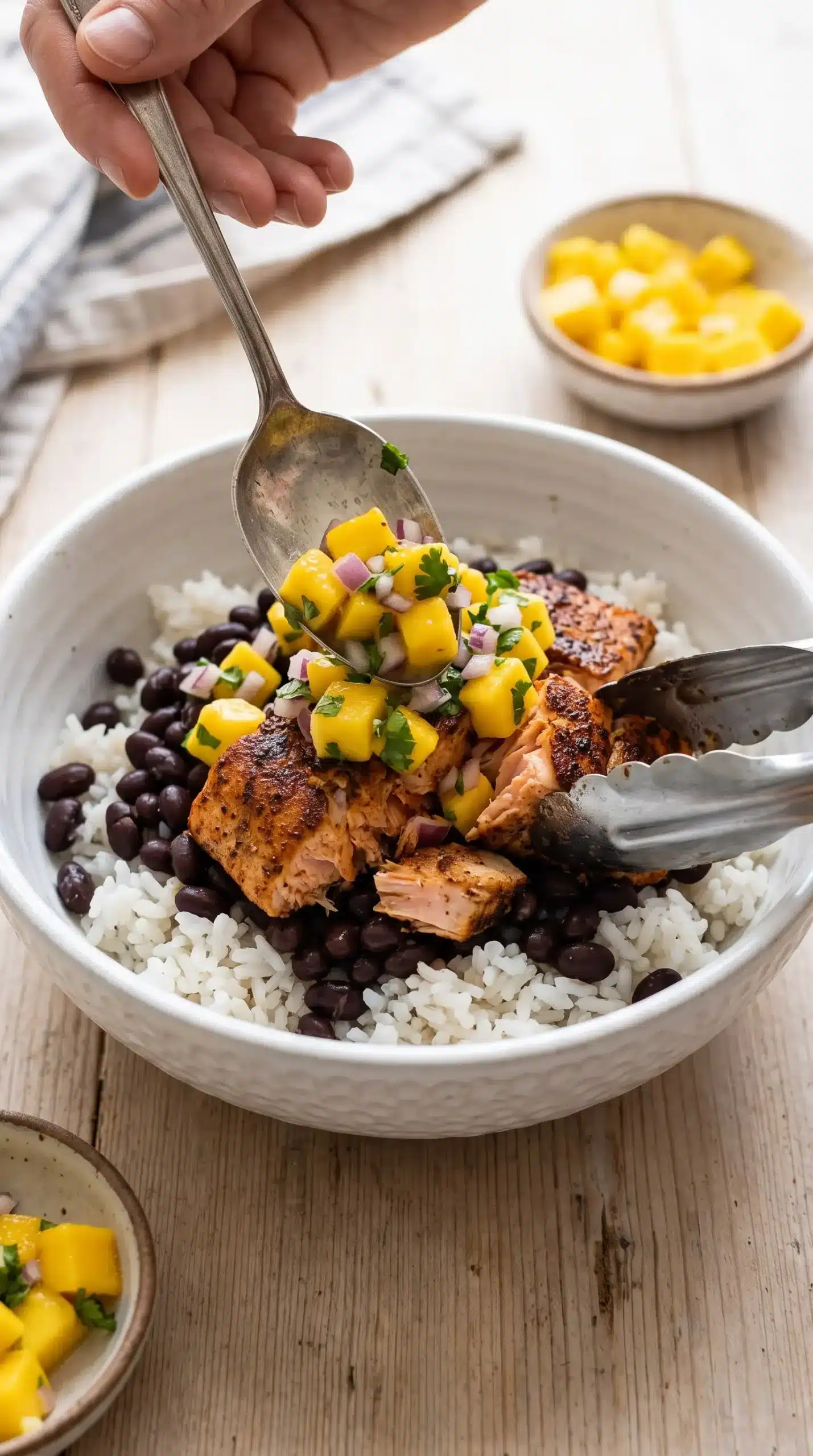
Assembly affects how the flavors come together in every serving. Placing the rice and beans underneath, the salmon in the center, and the salsa on top keeps the warm and cool elements distinct while allowing their flavors to meet naturally.
Serving Adjustments Keep Every Bowl Balanced
A finished salmon bowl with mango salsa can be adjusted at the table by changing the ratio of each layer. More salsa emphasizes freshness, while additional rice and beans create a milder bite with more focus on the seasoned fish.
An optional avocado addition brings another creamy texture that fits naturally with the tropical flavors already present. The avocado does not replace any part of the bowl but adds another soft element alongside the beans and salmon.
Serving the components together works especially well because each part contributes a different experience. Warm salmon provides spice and richness, the base offers comfort, and the fruit topping keeps the overall dish bright.
Storing Components Preserves the Bowl’s Texture
Keeping the cooked salmon, rice and beans, and mango salsa separate helps preserve their individual textures when saving leftovers. The fresh salsa is best handled gently because the diced fruit and vegetables can soften as they sit.
Caribbean Jerk Salmon Bowl Variations Stay Close to the Original
Simple changes can personalize a Caribbean jerk salmon bowl while keeping its main character intact. A cook can adjust the amount of cayenne for different heat preferences, include the optional avocado for extra creaminess, or change the serving proportions of rice, beans, salmon, and salsa to match the desired balance.
Jerk Salmon Bowl Finishes with a Balance of Heat and Freshness
The strongest part of a jerk salmon bowl is the way its contrasting elements work together. The seasoned salmon provides the bold center, while rice and beans create stability and mango salsa adds the freshness that keeps the flavors clear.
Careful attention to salmon texture and salsa preparation determines the quality of the finished dish. When the fish stays tender and the toppings remain vibrant, the bowl delivers the intended combination of Caribbean-inspired spice and bright produce.
Jerk Salmon Bowl Questions About Cooking and Storage
Can I prepare the mango salsa ahead of serving?
Yes, the mango salsa can be prepared before assembly, but gentle mixing helps maintain the texture of the diced mango, onion, and cilantro. Keeping it chilled until serving helps preserve its fresh character.
How do I know when the salmon is cooked through?
The salmon should lose its translucent appearance and separate easily into pieces. The inside should look cooked through before the fish is removed from heat because smaller pieces continue cooking briefly after leaving the skillet.
Can I use another type of rice for this bowl?
White rice is used as the base here, but another rice variety can work if it provides a similar neutral foundation for the seasoned salmon, beans, and salsa.
Why does the jerk seasoning need cinnamon and allspice?
Cinnamon and allspice add the warm aromatic notes associated with the spice blend. Their role is to round out the chili and savory flavors so the seasoning tastes layered instead of one-dimensional.
How should I store leftover salmon bowl components?
Store the cooked salmon, rice and beans, and mango salsa separately so each part keeps its intended texture. Combining everything before storage can cause the fresh topping and warm components to soften each other.
Jerk Salmon Bowl with Mango Salsa and Jerk Spice Blend
This jerk salmon bowl combines tender, spiced salmon with a fresh mango salsa and hearty rice and beans. It is a flavorful, balanced meal with bold seasoning and bright textures that is great for an easy weeknight dinner.
Ingredients
Method
Preparation
- Mix the cumin, curry, chili powder, allspice, cayenne pepper, and cinnamon together. Coat the salmon fillets with the spice mixture on the meat side and, if desired, the skin side, then season with sea salt.
Cooking
- Warm the oil in a skillet over medium-high heat. Place the salmon in the pan skin side down and cook for 3-5 minutes. Add more oil if needed to keep the fish from sticking.
- Turn the salmon over and cook the meat side for another 3-5 minutes until the spice coating develops a browned crust.
- Remove the skin from the mostly cooked salmon, keeping the meat in the skillet. Break the fish into small pieces and continue cooking until the pieces are fully cooked through and no longer translucent. Remove from heat once done.
Assembly
- Combine the diced mangoes, red onion, cilantro, lime juice, and avocado in a bowl. Stir gently until mixed and season with sea salt.
- Mix the cooked white rice and black beans together. Season with several pinches of salt, adding a tablespoon of water if needed.
- Divide the rice and bean mixture among bowls, then layer with the cooked salmon and mango salsa.
Notes
Removing the skin after cooking works well because it helps ensure the fish cooks through evenly and creates a better texture for the bowl.