From breakfast to dinner, from healthy meals to sweet desserts – Next Yum Recipes brings you quick, simple and tasty ideas for every occasion and every time.


 This Recipe
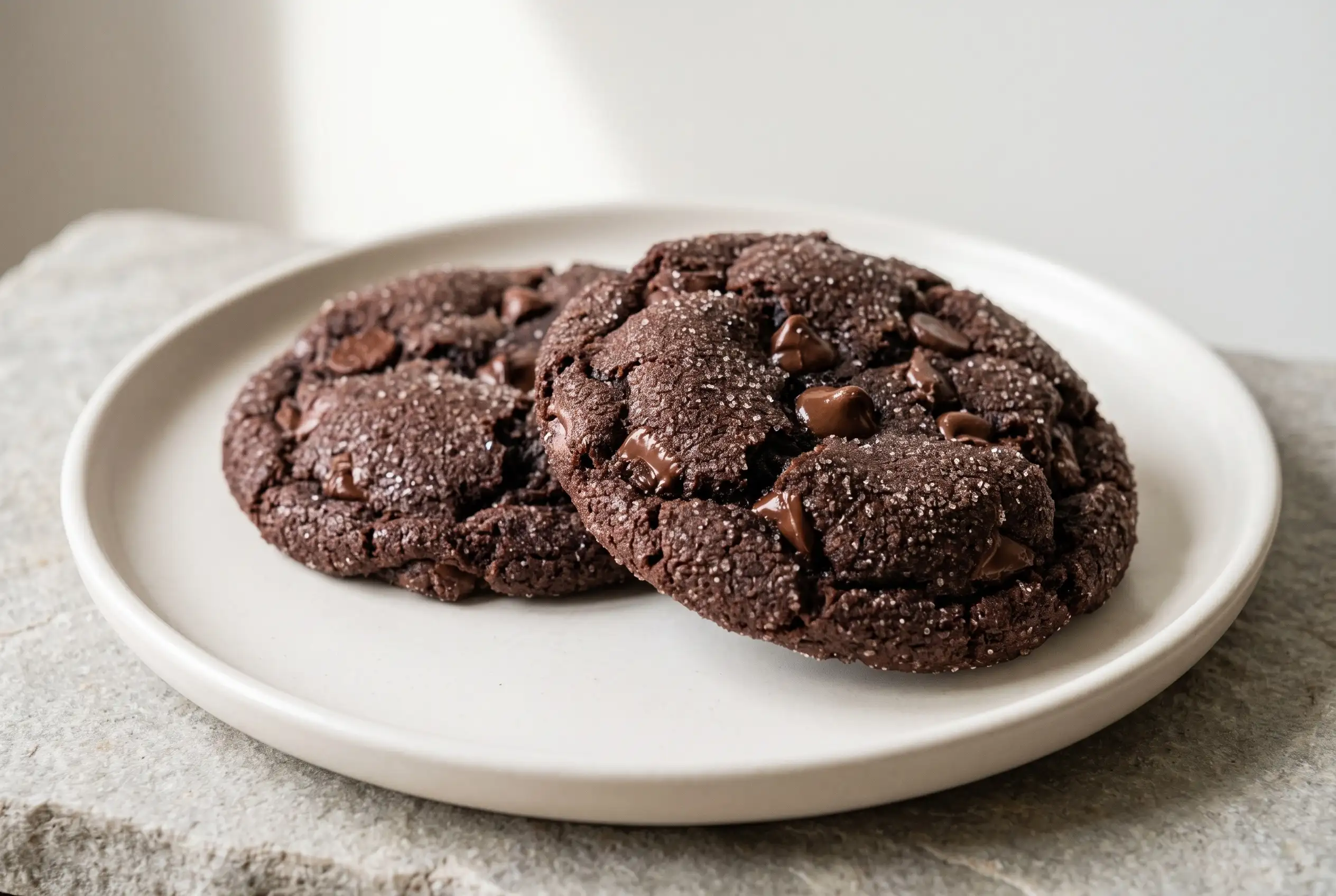
Two Huge Double Chocolate Cookies deliver the rich cocoa flavor of a full-size bakery cookie while keeping the batch intentionally small. Each cookie is built around a soft, deeply chocolatey center, a lightly sugared exterior, and enough chocolate chips or chunks to create pockets of extra richness. The small yield also makes the proportions especially useful when you want double chocolate cookies for two without having a large batch left over.
What makes these double chocolate cookies unusually large
Two oversized dough portions give these double chocolate cookies their defining scale. The dough may seem loose or slightly heavy when it is shaped, but that texture is expected from the soft butter, egg yolk, and relatively small amount of flour and cocoa. Keeping the portions large also means the centers have enough thickness to stay soft while the outside sets during baking.
Chocolate flavor comes from two different sources. Cocoa powder creates the base of the dough, while chocolate chips or chunks remain distinct inside it. That combination keeps the cookies from tasting like ordinary sugar cookies with a little cocoa added.
Granulated sugar on the outside adds another layer of texture. The coating creates a lightly crisp, sweet surface around the softer chocolate interior, making the contrast more noticeable when the cookies are still slightly warm.
Soft butter sets the dough texture
The butter needs to be extremely soft, with a slightly melted quality but without becoming completely liquid. That narrow texture matters because the butter has to combine smoothly with the brown sugar and the other ingredients while still helping the dough hold its shape when divided into two portions. If the butter is very firm, mixing becomes more difficult; if it is fully melted, the dough can become noticeably looser.
Cocoa powder determines the chocolate character
Dark cocoa powder gives the cookies a deeper-looking chocolate color and makes the chocolate pieces stand out more visually. Regular cocoa powder produces a lighter appearance while keeping the cocoa flavor central. Either choice works, so the decision is mainly about the style of chocolate flavor and appearance you prefer.
| Cocoa choice | Cookie appearance | Chocolate-piece contrast |
|---|---|---|
| Dark cocoa powder | Deeper, darker brown | Chocolate chips look lighter against the dough |
| Regular cocoa powder | Lighter brown | Chocolate pieces blend more closely with the dough |
Why the dry ingredients need gentle measuring
The flour and cocoa are the main dry ingredients, so small measuring differences can noticeably affect a dough this compact. A kitchen scale gives the most consistent result, particularly because the supplied amounts are specified by weight as well as by volume. Without a scale, spoon the flour into the measuring spoon and level it gently instead of compressing it into the spoon.
Cocoa should be measured with the same care. Packing extra cocoa into the spoon changes the balance of dry ingredients and can make the dough more difficult to combine. The useful target is the stated quantity, not a tightly packed scoop.
Chocolate pieces belong inside the soft dough
Chocolate chips or chopped chocolate provide concentrated pockets of chocolate throughout the cookies. Three to four tablespoons gives you some flexibility depending on how generously you want those pockets distributed. Chunks can create larger interruptions of melted chocolate, while chips spread the chocolate more evenly through the two portions, as in these browned butter chocolate chip cookies.
Shaping two portions without overworking them
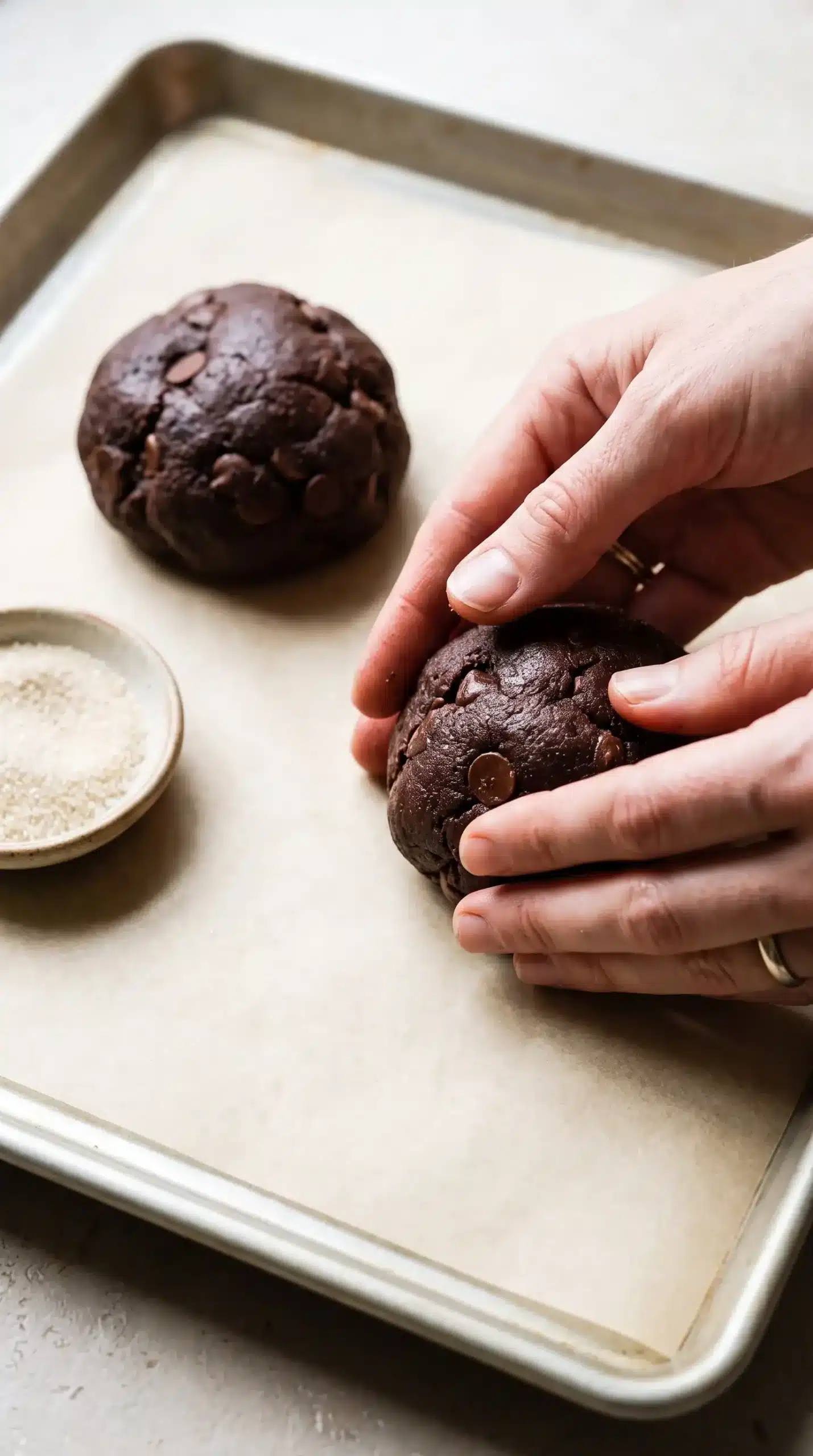
Once the dough comes together, divide it into two large balls without spending extra time kneading or compacting the mixture. The dough can feel loose, and that is not a signal that more flour is needed. Adding extra flour simply to make the portions feel firmer would change the intended balance of the cookies.
- Keep the portions large: Two substantial balls preserve the thick, oversized character of the cookies.
- Handle the dough briefly: Shape it enough to make cohesive balls without repeatedly working it.
- Coat the surface: Roll each portion in granulated sugar before it reaches the baking sheet.
The ten-minute bake depends on carryover setting
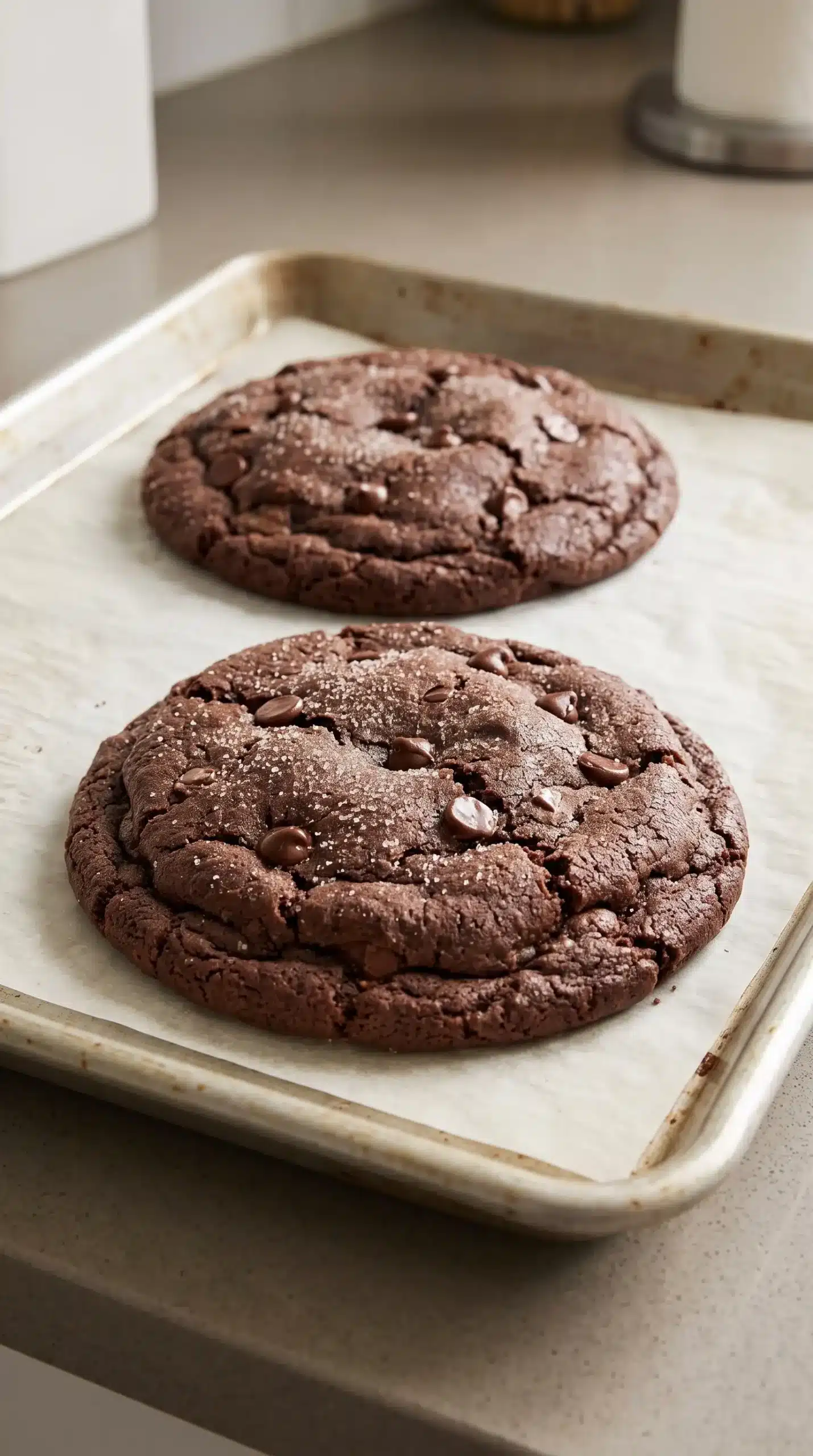
The oven should already be fully heated before the dough goes in. A short bake is enough for the large portions, but the cookies should not be judged solely by how firm they look while still inside the oven. Cookies can continue setting on the baking sheet after they are removed.
That resting period is especially important here because the cookies are deliberately large. Removing them from the hot pan immediately would interrupt the setting process. Letting them remain on the baking sheet gives the centers time to firm while preserving their soft texture.
Watch these double chocolate cookie mistakes
Several tempting adjustments can work against the intended texture. The most important is resisting the urge to correct the dough by adding flour when it feels soft or slightly loose. The supplied dough is supposed to have that character before baking.
Another problem comes from taking the cookies off the baking sheet as soon as they leave the oven. They need time on the hot pan to set. Moving them too early can leave the centers less stable than intended.
Over-softening the butter can also make handling more difficult. Aim for butter that is very soft and slightly melted, not a completely liquid pool. A brief microwave warming is enough to reach that texture without taking the butter too far.
- Extra flour: Avoid adding it simply because the dough feels loose; follow the measured balance.
- Immediate removal: Leave the baked cookies on the pan so their structure can finish setting.
- Fully melted butter: Stop heating while some structure remains in the softened butter.
Granulated sugar changes the outside texture
Rolling the dough balls in granulated sugar creates a distinct outer layer before baking. The coating is especially useful when the goal is a contrast between a lightly crisp exterior and a soft chocolate center. It also adds sweetness at the surface without requiring more sugar to be incorporated into the dough itself.
White chocolate offers a different finish
White chocolate chips are a natural variation because their creamy sweetness contrasts strongly with the cocoa-rich dough. They can be used in place of the regular chocolate chips when you want the chocolate pieces to taste sweeter and stand out differently from the dark cocoa base.
When to skip the sugar coating
The white chocolate variation works particularly well without the granulated sugar coating. Skipping the coating keeps the exterior from adding another layer of sweetness and lets the white chocolate provide more of the contrast. With regular chocolate chips or chunks, the sugar coating remains a useful way to emphasize the difference between the outside and the center.
Portion size shapes the eating experience
Two huge chocolate cookies are substantial portions, so the size is part of the appeal rather than an incidental result of the dough. Keeping the portions divided into two preserves the thick center and gives each serving a clear chocolate-cookie identity.
Because the cookies are large, their appearance can be slightly rustic after baking. The dough does not need to be pressed into perfectly flat discs before it enters the oven. The rounded portions allow the center to remain substantial while the exterior develops its baked texture.
Chocolate contrast is the key to the finished bite
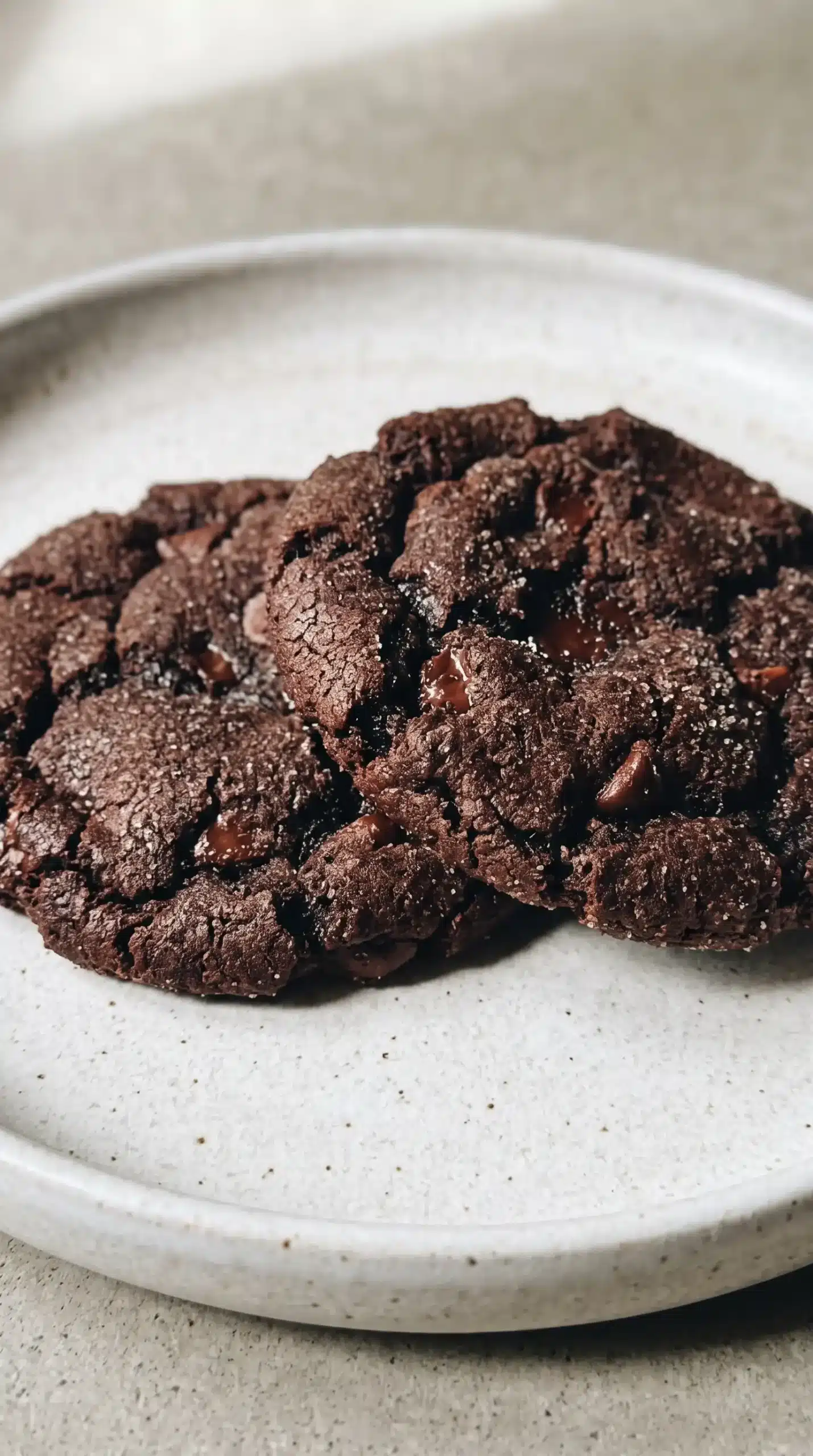
A successful batch brings together three textures: the lightly sugared surface, the set outer cookie, and the softer interior containing chocolate pieces. Each part comes from a different choice in the process, so changing one can affect the balance of the finished cookie.
Dark cocoa emphasizes the visual depth of the dough, while regular cocoa creates a lighter chocolate appearance. Chocolate chips or chunks then interrupt that cocoa base with concentrated pieces of chocolate. The result is more layered than a cookie relying on cocoa alone.
Most importantly, the large portions should be allowed to finish setting on the baking sheet. That short pause is what lets the outside stabilize while the center retains the soft character expected from an oversized double chocolate cookie.
Two large cookies work best when their centers stay soft
Soft butter, carefully measured dry ingredients, restrained handling, and the post-bake rest all point toward the same result: substantial cookies with a soft chocolate center and a more settled exterior. The dough may look less firm than expected before baking, but that observation alone does not call for extra flour.
For double chocolate cookies, the most useful judgment comes at the boundary between the oven and the cooling pan. A short bake followed by undisturbed setting preserves the contrast that makes these two cookies feel genuinely oversized without turning the centers dry.
Questions about texture, cocoa, and baking
Why is the cookie dough so soft before baking?
The dough is designed around very soft butter, an egg yolk, and a compact amount of dry ingredients, so it can feel loose or slightly heavy when shaped. Keep the measured flour and cocoa balance intact instead of automatically adding more flour simply to make the dough feel firmer.
Can regular cocoa powder replace dark cocoa powder?
Yes. Regular cocoa powder works in the same quantity and produces a lighter-looking cookie. Dark cocoa powder makes the finished cookies visibly deeper in color, so the main difference described here is appearance and the resulting style of chocolate character.
Can I use white chocolate chips in these cookies?
Yes. White chocolate chips are specifically suited to the cocoa dough and create a sweeter contrast. When using them, skipping the granulated sugar coating keeps the outside from becoming unnecessarily sweet.
Why do the cookies rest on the baking sheet after baking?
The large portions need time to set after leaving the oven. The hot baking sheet continues supporting the structure while the cookies firm, allowing the centers to remain soft without leaving the entire cookie too delicate to handle.
Should I add flour if the shaped dough balls feel loose?
No extra flour is needed merely because the dough feels loose. That texture is expected from the specified butter and dry-ingredient balance. Adding flour changes the proportions and can move the finished cookies away from their intended soft, chocolate-rich texture.
Can chocolate chunks be used instead of chocolate chips?
Yes. Chocolate chunks work in the same role as chips and give larger pockets of chocolate throughout the cookies. The choice between chips and chunks is mainly a matter of how evenly or dramatically you want those chocolate pieces distributed.
Double Chocolate Cookies for Two with Chocolate Chips
These double chocolate cookies for two are oversized, soft-centered treats with a rich cocoa flavor, chocolate chips or chunks, and a lightly sugared exterior. They are perfect when you want a small-batch chocolate dessert without making a large batch.
Ingredients
Method
Preparation
- Preheat the oven to 350°F (177°C). Soften the butter in the microwave for about 10 seconds, stopping when it is very soft and slightly melted but not fully liquid.
- Mix the brown sugar into the softened butter. Add the egg yolk and vanilla and stir until combined.
- Add the flour, cocoa powder, baking soda, and salt. Stir until the ingredients form a dough, then mix in the chocolate chips or chunks.
- Divide the dough into two large balls, keeping the portions substantial. Roll each ball in granulated sugar.
- Place the two dough balls on a baking sheet. The dough may feel slightly loose or heavy at this stage.
Baking
- Bake the two dough portions for 10 minutes.
- Remove the baking sheet from the oven and leave the cookies on the pan for another 10 minutes so they can finish setting.
Notes
For the flour and cocoa, the combined dry-ingredient weight is about 52 grams: 37 grams flour and 15 grams cocoa powder. Without a scale, measure the flour by scooping it into the tablespoon and gently leveling it with a knife. Dark or regular cocoa powder can be used; dark cocoa produces darker cookies and makes the chocolate pieces look lighter by comparison. White chocolate chips also work, and when using them, skip the granulated sugar coating.