From breakfast to dinner, from healthy meals to sweet desserts – Next Yum Recipes brings you quick, simple and tasty ideas for every occasion and every time.


 This Recipe
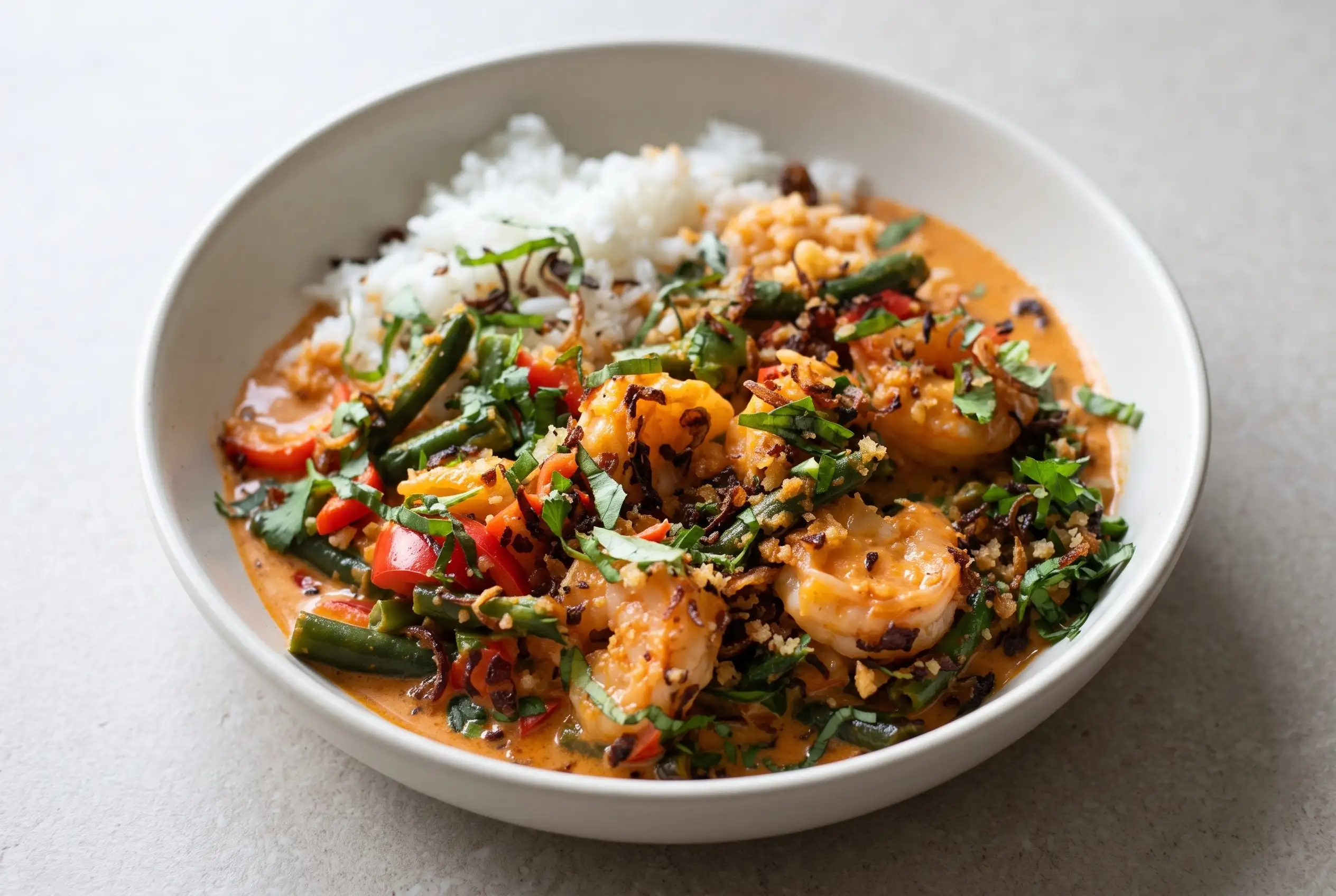
Thai shrimp curry combines red curry paste, coconut milk, crisp vegetables, plump shrimp, and a savory-sweet finish, but the detail that makes the bowl especially memorable is the crunchy shallot topping. Golden shallots, panko, and fresh herbs bring a dry, crisp contrast to the creamy curry underneath, keeping every spoonful from feeling overly rich.
What separates this coconut shrimp curry from a heavier, longer-simmered version is its quick skillet structure. The sauce develops around aromatic curry paste, garlic, and ginger while the vegetables retain some shape, then the shrimp cook directly in the gently bubbling coconut mixture. A handful of shallot crispies scattered over rice gives the finished dish both texture and an extra layer of savory flavor.
Golden Shallot Crispies Need Gradual Browning
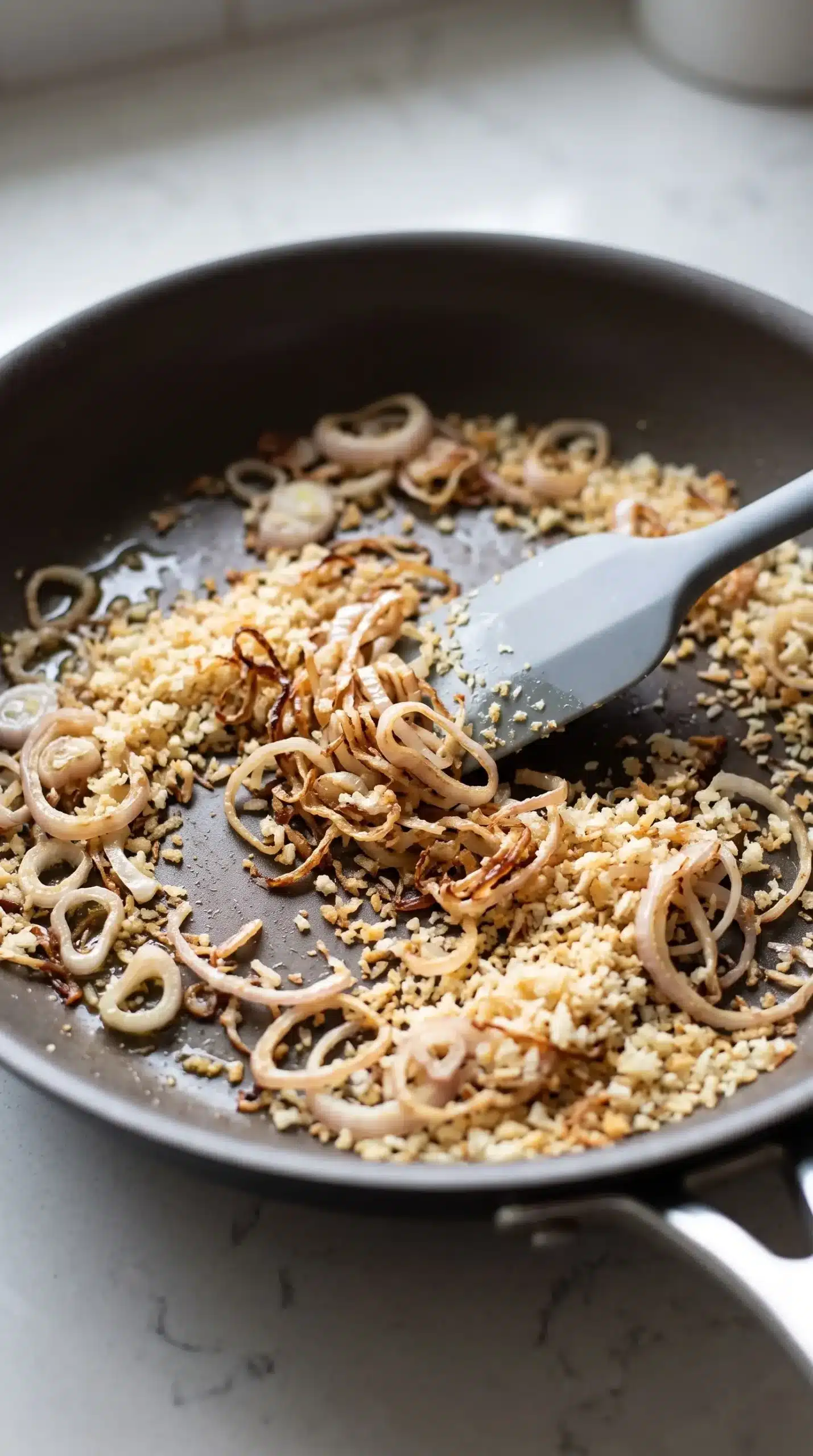
Thinly sliced shallots change quickly once their natural moisture begins to cook away. Medium heat gives them enough time to soften and turn golden without scorching their delicate edges. A wide skillet helps because more pieces can make direct contact with the hot surface instead of steaming in a crowded pile.
Once golden color appears, panko joins the shallots and absorbs some of the seasoned oil while toasting alongside them. The breadcrumbs extend the crisp texture without overwhelming the shallot flavor. Stirring during this stage matters because panko can develop dark patches quickly when left against one hot part of the pan.
Fresh cilantro or torn Thai basil belongs in the mixture after it leaves the heat. Residual warmth is enough to release the herbs’ aroma while preserving their fresher character. Keeping the topping separate from the thai shrimp curry until serving is equally important because prolonged contact with coconut sauce softens the breadcrumbs and eliminates the contrast that makes the crispies useful.
Red Curry Paste Benefits From Direct Skillet Heat
Red curry paste develops a fuller aroma when it briefly cooks in oil with garlic and ginger before coconut milk enters the pan. That short contact with heat disperses the paste through the fat and removes some of its raw, concentrated edge. The aromatics should smell fragrant and integrated without allowing the garlic to become deeply browned, which could introduce bitterness into the red curry shrimp sauce.
Coconut Milk Controls the Curry’s Body
Canned coconut milk gives thai shrimp curry enough richness to carry the curry paste while still remaining fluid enough to poach the shrimp. Keeping coconut milk and red curry paste at a gentle simmer helps the sauce concentrate without reducing so quickly that the vegetables or shrimp lose the liquid they need for even cooking.
High heat works against that texture. Vigorous boiling can reduce the coconut mixture too aggressively before the vegetables soften, leaving less liquid available for cooking the shrimp. A steady, modest bubble offers better control and makes it easier to judge consistency before seafood enters the pan.
Should the sauce look thinner than expected at first, allowing it to simmer briefly is more useful than adding an unrelated thickener. Coconut milk naturally becomes more concentrated as moisture evaporates, and the finished curry should remain spoonable enough to settle around rice instead of becoming stiff or pasty.
Vegetable Choice Changes When the Shrimp Should Enter
Sweet red pepper and green beans suit thai shrimp curry because they can soften in the coconut sauce while maintaining enough structure to stand beside the tender shrimp. Cutting them into moderately small pieces also helps their cooking pace match the short simmer of the curry base.
Different vegetables need different timing, so the shrimp should not automatically be added at the same moment in every variation. The most useful cue is whether the vegetables are already close to the texture desired for serving, since the seafood needs only a brief finish in the sauce.
| Vegetable option | Best point to add | Texture cue before serving |
|---|---|---|
| Red pepper | With the curry paste and aromatics | Softened but still holding its shape |
| Green beans | With the curry paste and aromatics | Tender with a slight bite |
| Fresh spinach | Near the end | Just wilted |
| Frozen mixed vegetables | During the coconut-milk simmer | Heated through without becoming mushy |
Shrimp Should Poach Gently in the Curry Sauce
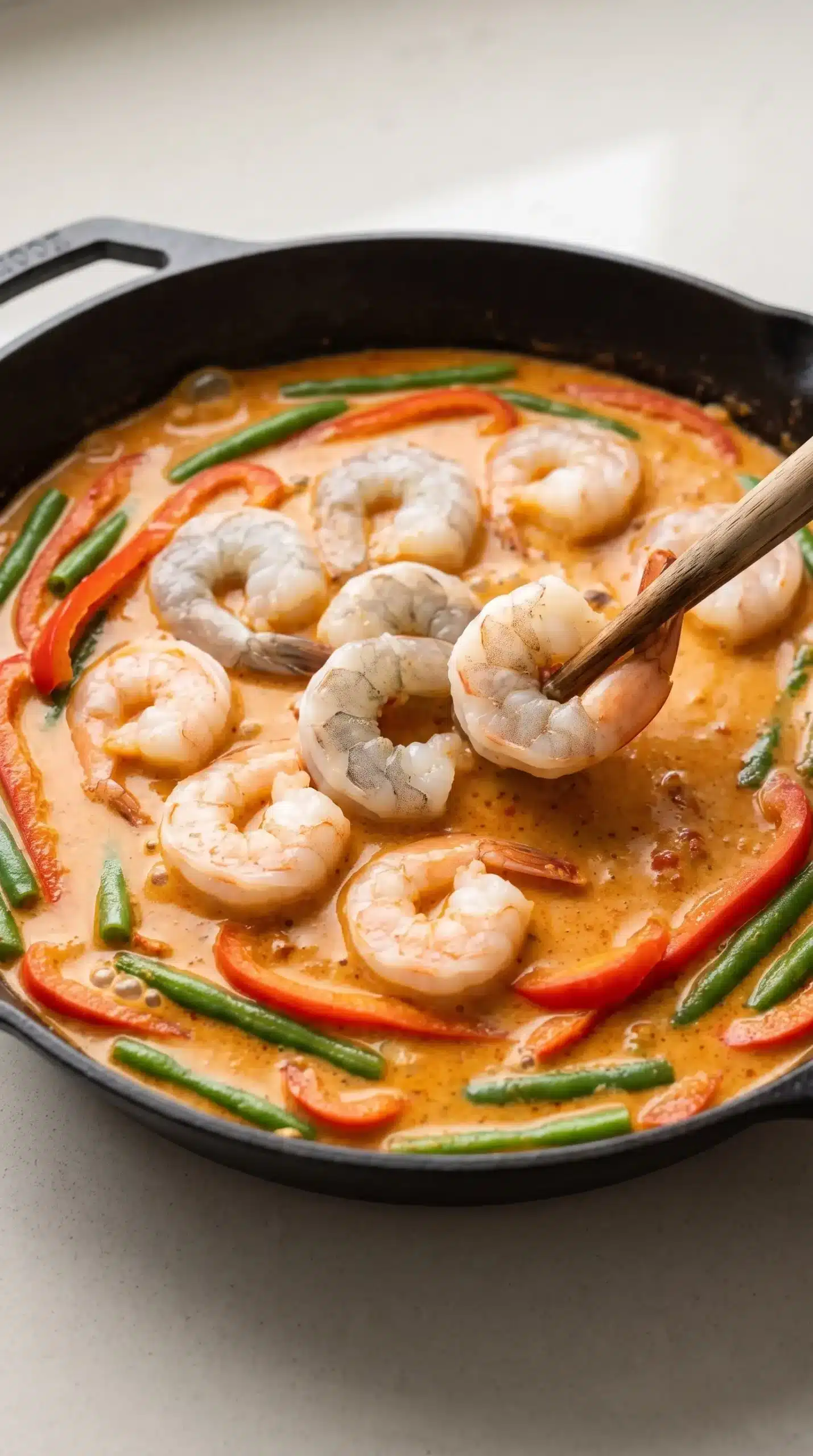
Placing thawed shrimp directly over the gently bubbling curry lets the seafood cook through moist heat instead of being seared separately. That approach keeps the skillet streamlined and allows the shrimp to pick up flavor from the coconut and red curry base while they cook.
After one side begins turning opaque, flipping the shrimp exposes the remaining side to the hot sauce. Jumbo shrimp are especially easy to monitor because the change from translucent to opaque is visible across a larger surface. Curling also becomes more pronounced as the flesh firms.
Carryover heat continues working after the pan leaves the burner, so waiting for noticeably tight, firm shrimp before stopping can push them past their best texture. For thai shrimp curry, visual doneness is more useful than trying to build extra browning on the seafood, because the sauce itself provides the dominant flavor and moisture.
Common Thai Shrimp Curry Mistakes Are Easy to Spot
Most problems in thai shrimp curry come from heat management or timing, and they usually show themselves before the dish reaches the table. Watching color, sauce movement, and shrimp opacity gives clearer guidance than relying on a rigid sequence alone.
- Dark shallot edges: Lower the heat before the remaining slices burn, since thin rings can move from golden to bitter quickly.
- Pale panko: Continue stirring briefly so the crumbs toast with the shallots instead of remaining soft and oily.
- Rapid coconut boiling: Reduce the heat so the sauce thickens gradually and stays fluid enough to poach the shrimp.
- Rubbery shrimp: Stop cooking once the shrimp are opaque and curled instead of extending the simmer for extra color.
- Soggy crispies: Keep the topping out of the curry until each bowl is ready to serve.
Fish Sauce and Brown Sugar Sharpen the Red Curry Base
Fish sauce and brown sugar work best near the end because the curry has already concentrated by that point. Seasoning after some simmering makes it easier to judge what the sauce actually needs, especially because curry paste brands can vary noticeably in saltiness and intensity.
A small adjustment in either direction can change the balance of red curry shrimp. More fish sauce deepens the savory, salty side, while additional sweetness softens sharp chile and aromatic notes. Neither should dominate the coconut milk, vegetables, or shrimp.
For cooks who want stronger heat, chili crisp can be added after tasting instead of forcing more curry paste into the base. That approach keeps control over salt and spice more precise, since many curry pastes contribute both. The best balance is one where coconut richness, red curry warmth, seafood, and the sweet-savory seasoning remain individually recognizable.
Fresh Herbs Keep the Shallot Topping Lively
Cilantro and Thai basil can both work in the crisp topping, either alone or together, but they should remain fresh-tasting instead of frying in the hot oil. Mixing them into the warm shallot-panko combination off the heat preserves more aroma and gives the crunchy topping a brighter finish against the creamy thai shrimp curry.
Rice Gives the Coconut Sauce Somewhere to Land
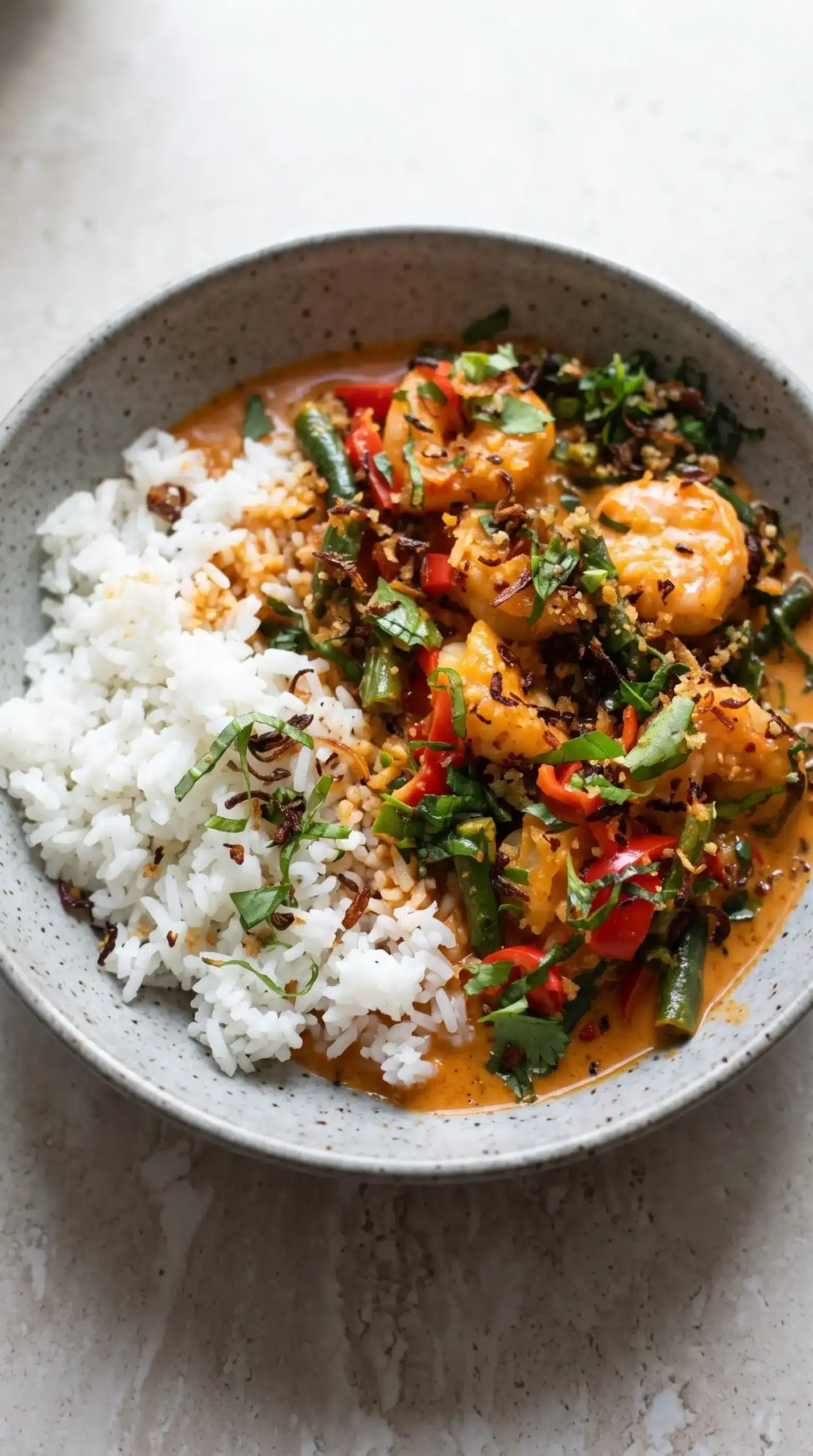
Steamed rice is especially useful with thai shrimp curry because the coconut sauce can settle into the grains while the vegetables and shrimp remain distinct on top. Spoon the curry generously enough that some sauce reaches the rice instead of placing only the solids over a dry mound.
Just before eating, a small amount of shallot crispies should go over each portion instead of being stirred through the serving pan. That placement preserves crunch and distributes the topping where its texture is most noticeable. Extra herbs can stay visible on top, reinforcing the fresh edge already built into the crisp mixture.
Leftover Curry and Crispies Need Separate Storage
Cooked shrimp and coconut curry should be refrigerated promptly in a covered container once cooled enough for safe storage. The crisp topping belongs in a different container because trapped moisture from the sauce will soften both the shallots and panko.
Gentle reheating protects the shrimp better than a vigorous boil. Warm the curry only until heated through, using moderate heat and stirring carefully so the seafood does not spend unnecessary time in very hot liquid. Repeated boiling can make previously cooked shrimp increasingly firm.
Stored crispies may lose some crunch even when kept apart, but they remain more useful than topping that has soaked in curry overnight. Add them only after the reheated coconut shrimp curry reaches the bowl, preserving as much dry texture as possible.
Lime or Lemongrass Can Add a Brighter Edge
Lime or lemongrass can complement the existing ginger, herbs, and curry paste when a brighter profile is wanted. Lime is most effective as a finishing accent, while lemongrass can perfume the sauce during cooking. Either addition should stay restrained enough that the central coconut-red-curry character remains clear.
Balanced Heat and Crunch Define Thai Shrimp Curry
Golden shallots, gently simmering coconut sauce, and shrimp that have just turned opaque are the three most useful visual signals in the dish. Managing those stages carefully produces a thai shrimp curry that feels rich without becoming heavy and crisp without scattering unrelated textures through the bowl.
Once the seasoning is adjusted to taste, the contrast does most of the remaining work: tender vegetables and shrimp sit in creamy red curry while the herb-flecked shallot topping stays dry until serving. Keeping those textures separate until the plate is assembled preserves the character that makes the dish distinctive.
Thai Shrimp Curry Questions About Spice and Substitutions
Can frozen shrimp go straight into the curry?
Thawing first gives better control because frozen shrimp release extra water as they heat, which can thin the coconut sauce and make doneness harder to judge. Patting thawed shrimp lightly dry before adding them also limits unnecessary dilution.
For safe thawing, thaw frozen seafood in the refrigerator overnight, or use a sealed bag in cold water when a quicker method is needed. Microwave defrosting is another option when the shrimp will be cooked immediately afterward.
Which size shrimp works best for coconut shrimp curry?
Jumbo shrimp are particularly convenient because they are easy to turn individually and their opacity is easy to monitor, but other sizes can work. Smaller shrimp simply require closer attention because they cook through more quickly.
Can the curry be made without fish sauce?
Fish sauce may be omitted if needed, though the sauce will lose some of its characteristic savory depth. Taste after the coconut milk and curry paste have simmered, then adjust the remaining seasoning carefully so the sauce still feels balanced.
How can the curry be made less spicy?
Using a milder red curry paste or slightly reducing the amount of paste is the simplest approach. Additional coconut milk can also soften perceived heat, but adding too much changes the sauce concentration, so adjust gradually while tasting.
What can replace panko in the shallot crispies?
Another dry, coarse breadcrumb can provide a similar toasted texture, although the result may be denser or finer depending on the crumb. Whatever substitute is used should be added only after the shallots have begun to turn golden so it can toast without absorbing excess moisture.
Thai Shrimp Curry with Crispy Shallots and Coconut Milk
Thai shrimp curry is a creamy, savory-sweet coconut curry with tender shrimp, vegetables, and a crisp shallot-panko topping. Its contrast of rich sauce and fresh crunchy texture makes it an easy, flavorful meal for weeknights.
Ingredients
Method
Crispy Shallot Topping
- Warm the oil in a large, wide skillet over medium heat. Add the sliced shallots and sauté for 5-10 minutes, stirring as needed, until golden.
- Add the panko to the skillet and toss it with the shallots. Continue cooking for a couple of minutes, until the shallot and breadcrumb mixture is golden.
- Transfer the mixture to a small bowl. Stir in the cilantro and/or Thai basil along with a pinch of salt.
Curry
- Wipe the skillet clean and return it to medium heat. Add the oil, red curry paste, garlic, ginger, and vegetables, then cook for a few minutes.
- Pour in the coconut milk and simmer for about 5 minutes, until the sauce has thickened slightly and the vegetables are beginning to become tender.
Shrimp
- Arrange the thawed shrimp over the gently bubbling curry so they cook in the sauce. Cook for 2-3 minutes, then turn each shrimp and continue cooking until fully opaque and curled.
Seasoning and Serving
- Stir the fish sauce and brown sugar into the curry. Taste and adjust the seasoning as needed.
- Spoon the curry over rice and finish each portion with a small sprinkle of the crispy shallot mixture.
Notes
For the vegetables, sweet red peppers sliced into rings and green beans cut in half or thirds are the usual choice, with about a heaping cup of each. Fresh spinach can also be used and needs only about 1 minute of cooking, so add it near the end. Frozen mixed vegetables are another option and generally need about 4-5 minutes of cooking. For added flavor, a little lemongrass or lime can brighten the sauce.