From breakfast to dinner, from healthy meals to sweet desserts – Next Yum Recipes brings you quick, simple and tasty ideas for every occasion and every time.


 This Recipe
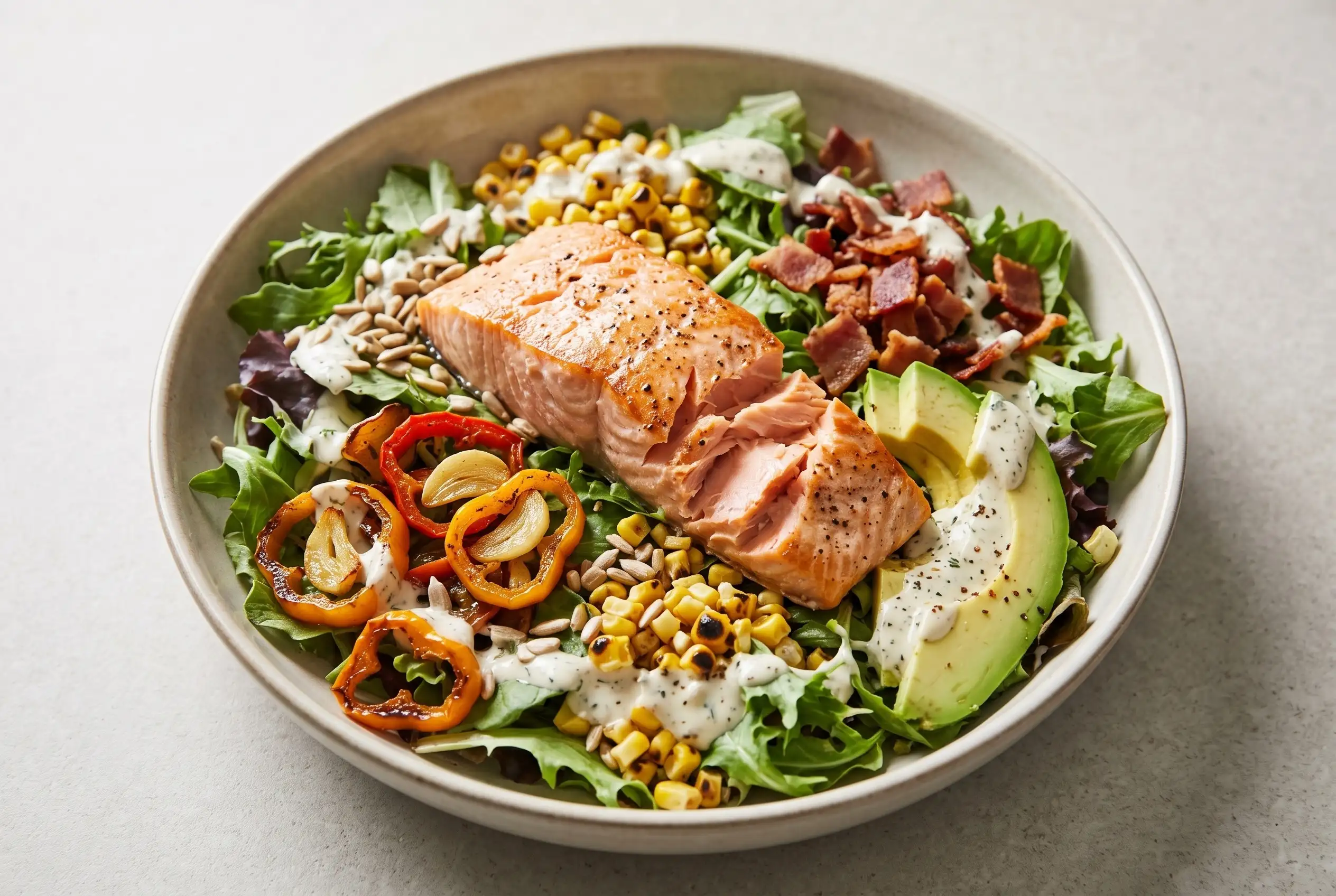
oliver s salad brings together tender salmon, smoky sweet peppers, creamy avocado, crisp bacon, fire-roasted corn, sunflower seeds, and a cool smoked ranch dressing. The combination works because the rich elements are balanced by tangy vinegar, fresh greens, and browned vegetables. The dressing can be made ahead while the peppers cook, making the components easier to manage when assembling the salad.
Smoked ranch gives oliver s salad its creamy balance
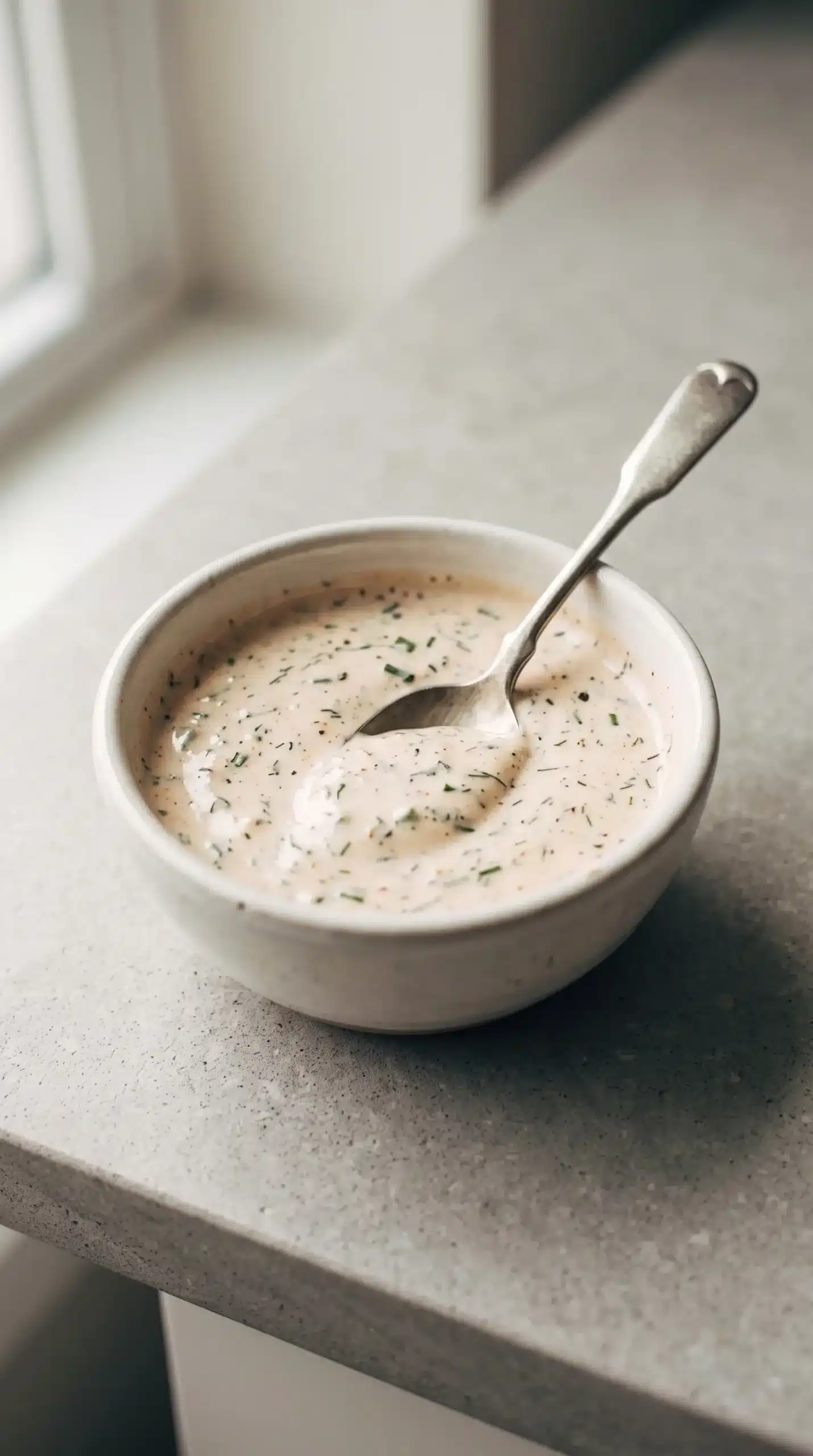
The dressing is more than a coating for the greens. Mayonnaise supplies body, while full-fat Greek yogurt or sour cream gives the mixture a tangy, creamy base. Milk or buttermilk loosens it enough to drizzle, and vinegar or lemon juice sharpens the flavor.
Freeze-dried dill and chives keep the ranch profile pronounced without adding extra moisture. Garlic powder and onion powder fill out the savory base, while smoked paprika brings the flavor that connects the dressing to the browned peppers, bacon, and roasted corn.
Adjusting the dressing after shaking matters because the acidity can vary between vinegar and lemon juice. A small additional splash can make the sauce taste brighter, while a little more smoked paprika can strengthen its connection to the warm salad components.
Slow-browned peppers build the warmest layer
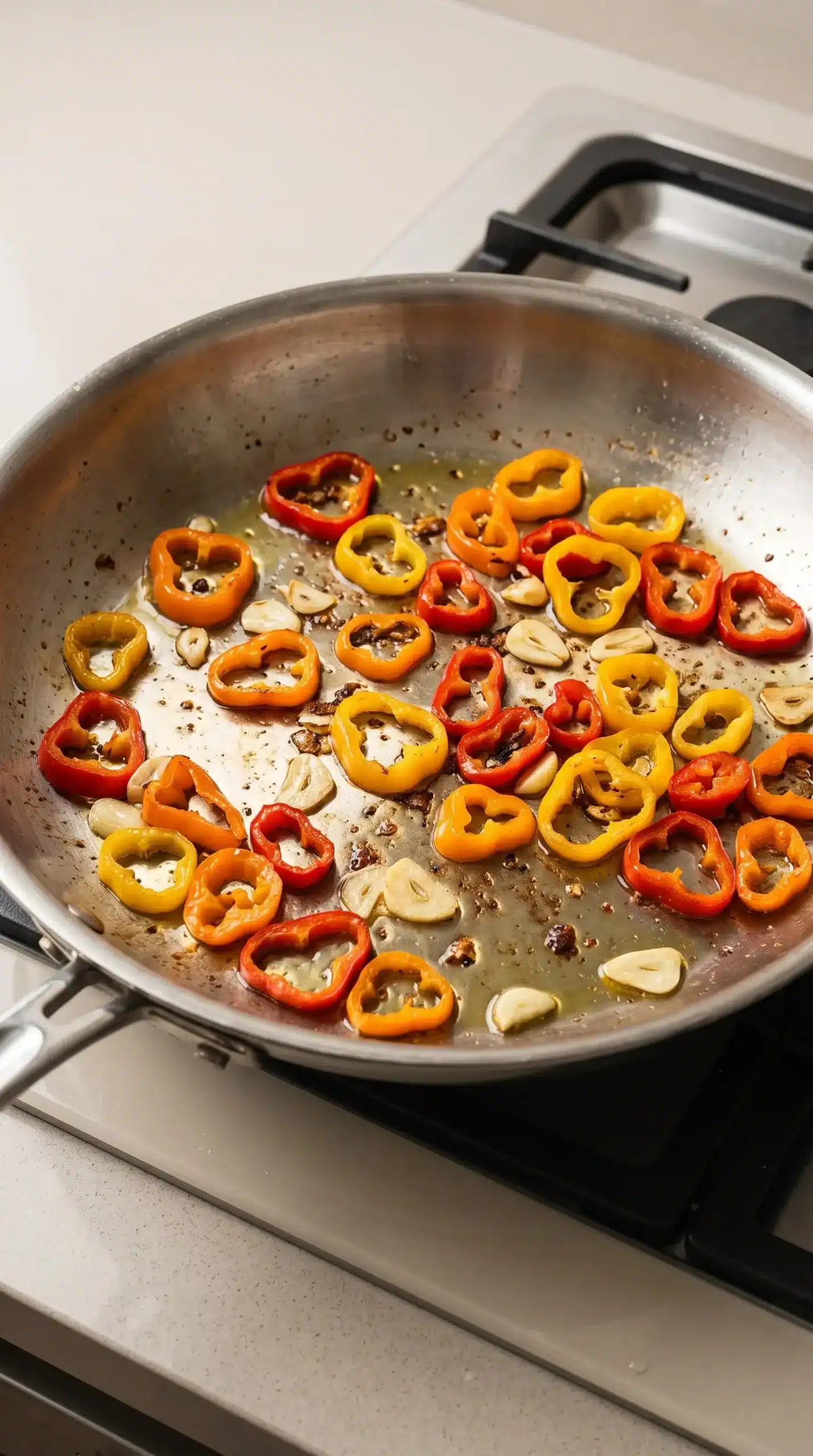
Sweet peppers need enough time in the skillet to become genuinely soft and browned. Medium heat gives their moisture time to cook away while their surfaces develop color. Stirring only occasionally helps them stay in contact with the pan long enough to brown instead of simply steaming.
Garlic enters later because its thinner slices can brown much faster than the peppers. Adding it during the latter part of the pepper cooking time lets it become soft and golden without sitting over direct heat for the entire skillet session.
Red wine vinegar has a second job beyond adding acidity. Added near the end, it loosens browned bits from the skillet and gives the peppers a sharper finish. If the pan looks dry or the garlic is darkening too quickly, reduce the heat before adding the vinegar.
Salmon keeps the salad substantial without overwhelming it
Baked salmon fits naturally with the creamy dressing and avocado, but its richness makes seasoning and doneness important. Pat the fish dry before adding salt and pepper so the surface is ready for the oven instead of carrying excess moisture.
Individual pieces can vary in thickness, so the stated baking window is a starting point rather than a universal endpoint. Check the thickest part and remove the salmon when it reaches the doneness you prefer, keeping in mind that carryover cooking can continue briefly after it leaves the oven.
For an objective food-safety endpoint, cook the salmon until the thickest part reaches a 145°F internal temperature.
Bacon and corn create contrasting bites
Cooked crumbled bacon brings crisp, salty pieces to the softer salmon, avocado, and peppers, while fire-roasted corn contributes sweetness and a lightly charred flavor. Scattering both across the assembled greens keeps their textures noticeable without turning the salad into a heavy topping layer.
Fresh greens need enough room for every topping
Spring mix works well because its tender leaves provide a neutral base for ingredients with much stronger flavors. Avoid crushing the greens under the heavier toppings before serving; a broad bowl gives the salmon, avocado, peppers, bacon, and corn enough space to distribute across the leaves.
Avocado should be handled gently once cut. Its creamy texture is one of the main contrasts in oliver s salad, so large, intact pieces are more useful than small pieces that disappear into the dressing.
Sunflower seeds add a dry, crisp element that keeps the salad from becoming uniformly soft. They are best distributed near the end so they retain their texture and remain easy to notice alongside the warm peppers and bacon.
Assembly works best when warm and cool components meet
Keep the cooked peppers and salmon separate from the greens until serving. That approach protects the spring mix from unnecessary heat and moisture while allowing the warm ingredients to remain distinct.
Drizzle the smoked ranch across the assembled ingredients instead of flooding the bowl. Extra dressing can be added according to preference, which is especially useful because the bacon, salmon, and seasoned peppers already contribute plenty of savory flavor.
Cooking control matters most at three points
Pan temperature determines whether the peppers brown or soften without color. Medium heat gives them the time needed to become very tender, and occasional stirring lets the exposed surfaces spend enough time against the skillet.
Oven timing depends on the thickness of the salmon and the desired doneness. The supplied 8-to-10-minute range applies to the specified 400-degree oven, but visual and physical cues from the thickest portion remain more useful than assuming every piece will finish identically.
Garlic deserves particular attention because its thin slices can move quickly from golden to burnt. Once the garlic becomes soft and lightly colored, keep the skillet under control and use the vinegar during the last portion of cooking to loosen the browned residue.
Greek yogurt and buttermilk change the dressing’s texture
Full-fat Greek yogurt creates a thicker, tangier ranch, while sour cream offers a similarly rich base with a slightly different dairy character. Buttermilk makes the dressing lighter and more pourable than regular milk, so the liquid choice can determine how easily the smoked ranch coats the salad.
Common oliver s salad mistakes start in the skillet
Rushing the peppers is one of the easiest ways to lose an important part of the salad. If they are removed while still firm and pale, they will not have the soft texture or browned flavor intended for the finished bowl. Keep them over medium heat and allow the pan time to do its work.
Burning the garlic is another avoidable problem. Dark, bitter garlic can dominate the creamy dressing and mild greens. Adding it later and watching the slices closely prevents that flavor from taking over.
Overcooking the salmon can also change the balance. Dry fish competes poorly with the creamy avocado and ranch, so check the thickest section during the short baking window. If the piece is especially thin, begin checking earlier instead of relying automatically on the longer end of the range.
Leftover components are easier to manage separately
Store cooked salmon, peppers, bacon, greens, avocado, and dressing separately when possible. The greens stay in better condition when they are not exposed to dressing, while the warm components can be chilled without making the entire salad soggy.
Avocado is the least convenient component to hold for long because its texture changes after cutting. For planned leftovers, portion the avocado separately and add it when serving. Keep the smoked ranch in its own container so each portion can be dressed shortly before eating.
Small serving changes keep the core flavor intact
Chicken can replace salmon when preferred, while the same smoked ranch, browned peppers, corn, bacon, avocado, and greens can remain in place. The result keeps the structure of the salad while changing the main protein and its cooking characteristics.
Acid keeps the richer ingredients in check
Several components in oliver s salad are naturally rich: mayonnaise, full-fat dairy, avocado, bacon, olive oil, and salmon. The recipe counters that richness through vinegar or lemon juice in the dressing and red wine vinegar in the peppers.
That acidity should be noticeable without becoming harsh. Taste the dressing after it has been mixed, then adjust gradually. The same principle applies to the peppers: their vinegar goes in near the end, when the vegetables are already browned and soft, so the sharpness remains distinct.
Salt deserves restraint because the bacon and seasoned dressing already contribute savory intensity. Season the salmon and peppers deliberately, then taste the completed salad before adding more salt. Black pepper can provide additional bite without increasing the overall saltiness.
One-bowl portions depend on how the toppings are distributed
- Warm elements: Keep the salmon and browned peppers visible across the greens so each portion receives a substantial cooked component.
- Creamy elements: Use avocado and smoked ranch in measured amounts so they coat and soften the salad without covering the leaves.
- Crisp elements: Scatter bacon and sunflower seeds near the end to preserve their contrasting textures.
- Sweet elements: Spread fire-roasted corn throughout the bowl instead of leaving it concentrated in one area.
Texture changes are easier to control than flavor changes
| Component | Desired texture | Best handling point |
|---|---|---|
| Sweet peppers | Very soft with browned edges | Cook slowly over medium heat and stir occasionally |
| Salmon | Tender and cooked to preferred doneness | Check the thickest part during baking |
| Bacon | Crisp and crumbly | Cool on a paper-towel-lined plate before crumbling |
| Avocado | Creamy with intact pieces | Add gently during assembly |
| Sunflower seeds | Dry and crisp | Scatter over the salad shortly before serving |
Salmon oliver s salad stays balanced when the dressing remains adjustable
A salad with salmon, bacon, avocado, and creamy ranch can become heavy if every component is dressed equally. Keeping the smoked ranch adjustable lets the eater control how much dressing reaches the greens and toppings.
For a sharper finish, the vinegar or lemon juice in the ranch can be increased gradually. A thicker dressing can be loosened with a little more milk or buttermilk, while additional smoked paprika can reinforce the smoky notes without requiring more bacon or roasted ingredients.
Why sweet pepper salmon salad benefits from separate components
Serving the ingredients in distinct layers preserves the contrast that makes the bowl work: warm browned peppers against cool greens, tender salmon beside crisp bacon, creamy avocado beside sunflower seeds, and sweet corn against tangy ranch. Mixing everything too early can flatten those differences.
Cooked salmon and browned peppers define the finished oliver s salad
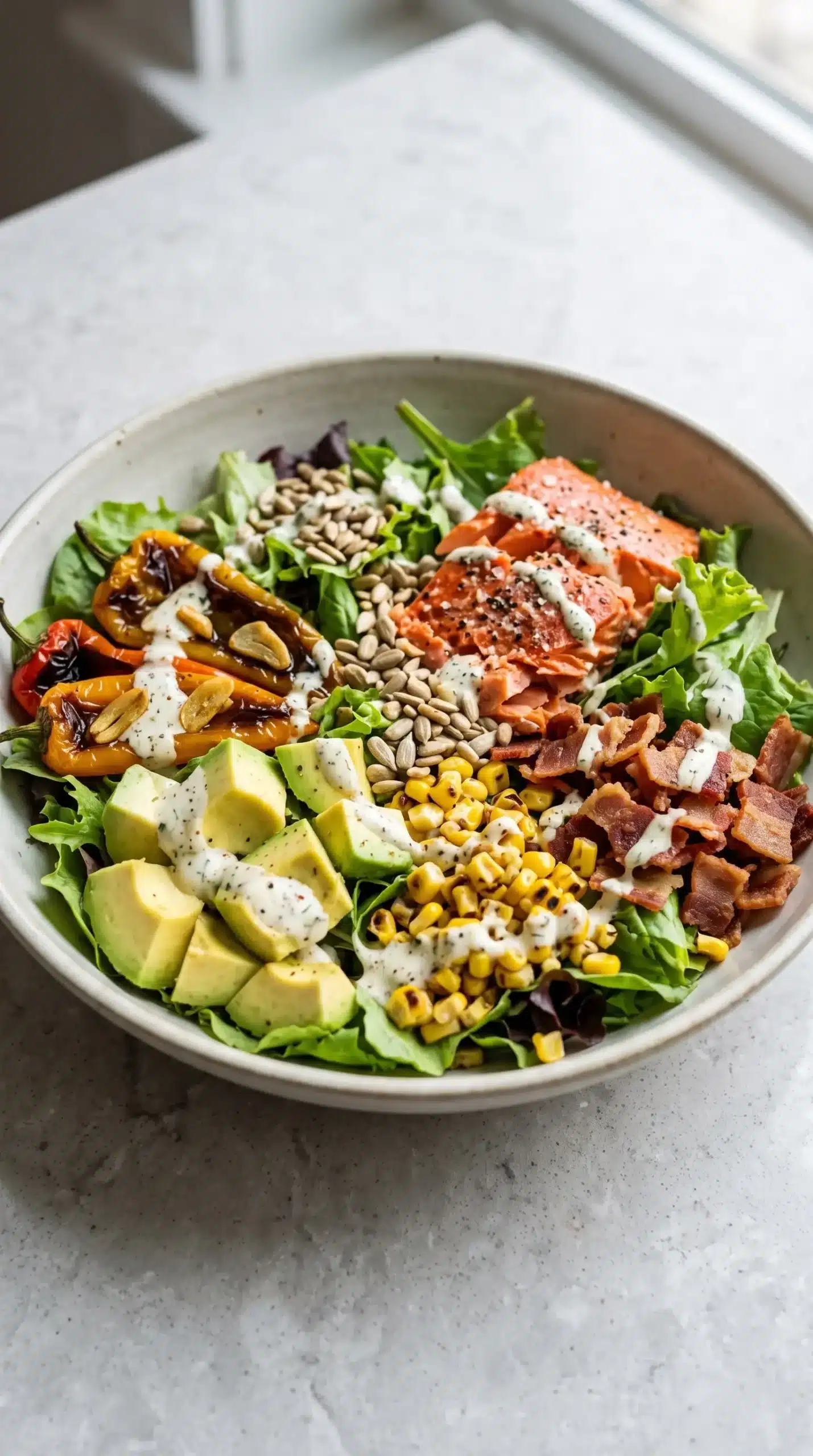
Browned peppers should be deeply soft, the garlic lightly golden, and the salmon cooked according to the thickness of the piece and preferred doneness. Those observations matter more than forcing every component into the same texture or temperature.
Once the greens are topped, the smoked ranch should remain adjustable. Keeping its acidity, salt, and thickness balanced allows the creamy dressing to connect the salmon, peppers, bacon, corn, and avocado without hiding their individual textures.
Questions about oliver s salad ingredients and storage
Can chicken replace the salmon in oliver s salad?
Yes. Chicken can be used in place of the salmon while keeping the smoked ranch, browned sweet peppers, bacon, corn, avocado, sunflower seeds, and spring mix. Cook the chicken according to the size and cut being used, since its oven timing will differ from the salmon timing supplied for the original version.
Can the smoked ranch be made ahead?
The dressing can be mixed before assembling the salad and kept separate from the greens and other components. Taste it again before serving because the consistency and perceived acidity can change slightly after sitting, and adjust with a small amount of milk, buttermilk, vinegar, lemon juice, or seasoning as needed.
How can I keep the salad from becoming soggy?
Keep the dressing separate until serving and store cooked components apart from the spring mix. Adding avocado shortly before eating also helps preserve the intended contrast between tender greens, creamy avocado, crisp bacon, and crunchy sunflower seeds.
What can I use instead of buttermilk?
Regular milk works in the dressing, as specified, while full-fat Greek yogurt or sour cream provides the creamy base. If the finished mixture is thicker than desired, loosen it gradually with milk until it reaches a consistency that can be drizzled across the salad.
How much smoked paprika should go into the ranch?
Start with the smaller amount in the supplied range and taste after the dressing is fully mixed. Add more gradually if you want a stronger smoky character, especially when serving the salad with the bacon and fire-roasted corn.
Oliver’S Salad with Salmon and Smoked Ranch Dressing
Oliver’s salad combines tender salmon, creamy avocado, crisp bacon, fire-roasted corn, browned peppers, and a smoky ranch dressing over fresh greens. Its mix of creamy, crisp, and savory textures makes it an appealing hearty salad for a flavorful meal.
Ingredients
Method
Smoked Ranch Dressing
- Place all dressing ingredients in a jar, seal it, and shake until the mixture is smooth. Taste and adjust the seasoning as needed.
Browned Peppers
- Warm the olive oil in a skillet over medium heat. Add the sliced peppers and cook until very soft and browned, stirring only occasionally, for 20-30 minutes.
- During the final 10-15 minutes of pepper cooking, add the sliced garlic and continue cooking until it becomes soft and lightly golden, taking care not to burn it.
- During the final 5 minutes, add the red wine vinegar and stir it through the peppers, loosening any browned bits from the skillet.
Bacon
- Bake the bacon at 400°F (204°C) for 20 minutes. Transfer it to a paper-towel-lined plate to drain and cool, then crumble it.
Salmon
- Pat the salmon dry and season it with salt and pepper.
- Bake the seasoned salmon for 8-10 minutes, adjusting within the stated range according to the size of the piece and desired doneness.
Assembly
- Arrange the spring mix on plates or in bowls and top with the salmon, browned peppers and garlic, avocado, crumbled bacon, fire-roasted corn, and sunflower seeds. Drizzle with the smoked ranch dressing.
Notes
Nutrition information for this recipe includes 4 servings of the salmon, spinach, and other selected ingredients.