From breakfast to dinner, from healthy meals to sweet desserts – Next Yum Recipes brings you quick, simple and tasty ideas for every occasion and every time.


 This Recipe
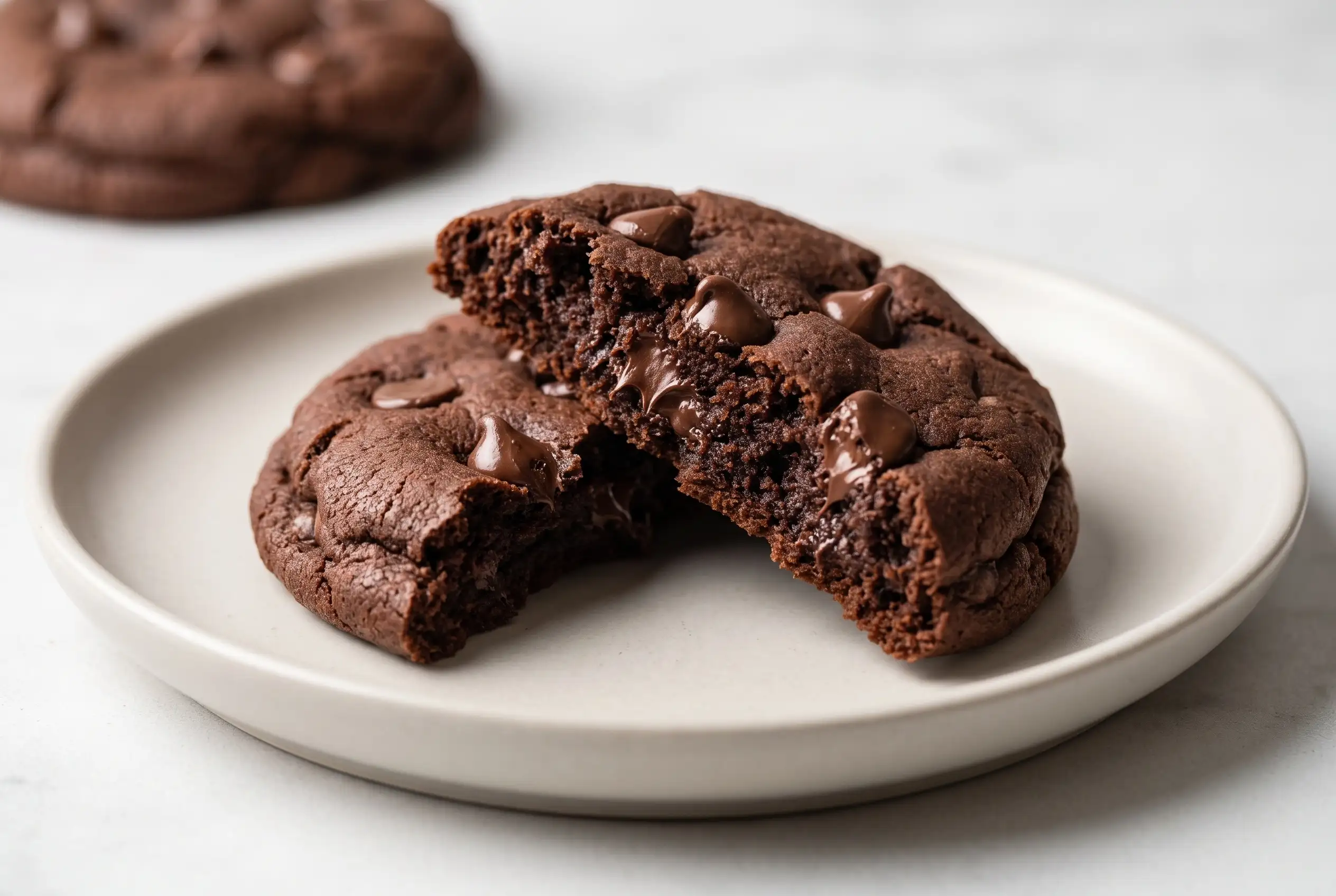
Thick and fudgy double chocolate cookies are built for the kind of chocolate craving that calls for a soft center, a substantial bite, and plenty of melted chocolate throughout. The unusual part is the butter technique: half is melted and cooled until solid again while the other half comes to room temperature, creating a dough with enough structure to hold its height while staying rich and fudgy.
Strong coffee quietly deepens the cocoa flavor without turning the cookies into coffee cookies, while chocolate chips create pockets of sweetness inside the cocoa-rich dough. The short bake is equally important. Double chocolate cookies should look puffy and slightly underdone when they leave the oven because they continue setting as they cool.
Why these double chocolate cookies stay thick and fudgy
Height comes from the balance between solidified melted butter, softened butter, flour, cocoa powder, and a restrained bake. Melted butter alone would make a softer, more fluid dough, but cooling part of it back to a solid state changes how that fat behaves when creamed with the remaining room-temperature butter and sugar.
Chocolate flavor also depends on restraint. The cocoa powder supplies the dark base, chocolate chips add concentrated pockets of sweetness, and a small amount of strong coffee reinforces the cocoa character. Together, those elements create thick double chocolate cookies with a dense, soft interior instead of a thin cookie that spreads widely.
The cooled-butter technique controls the cookie dough
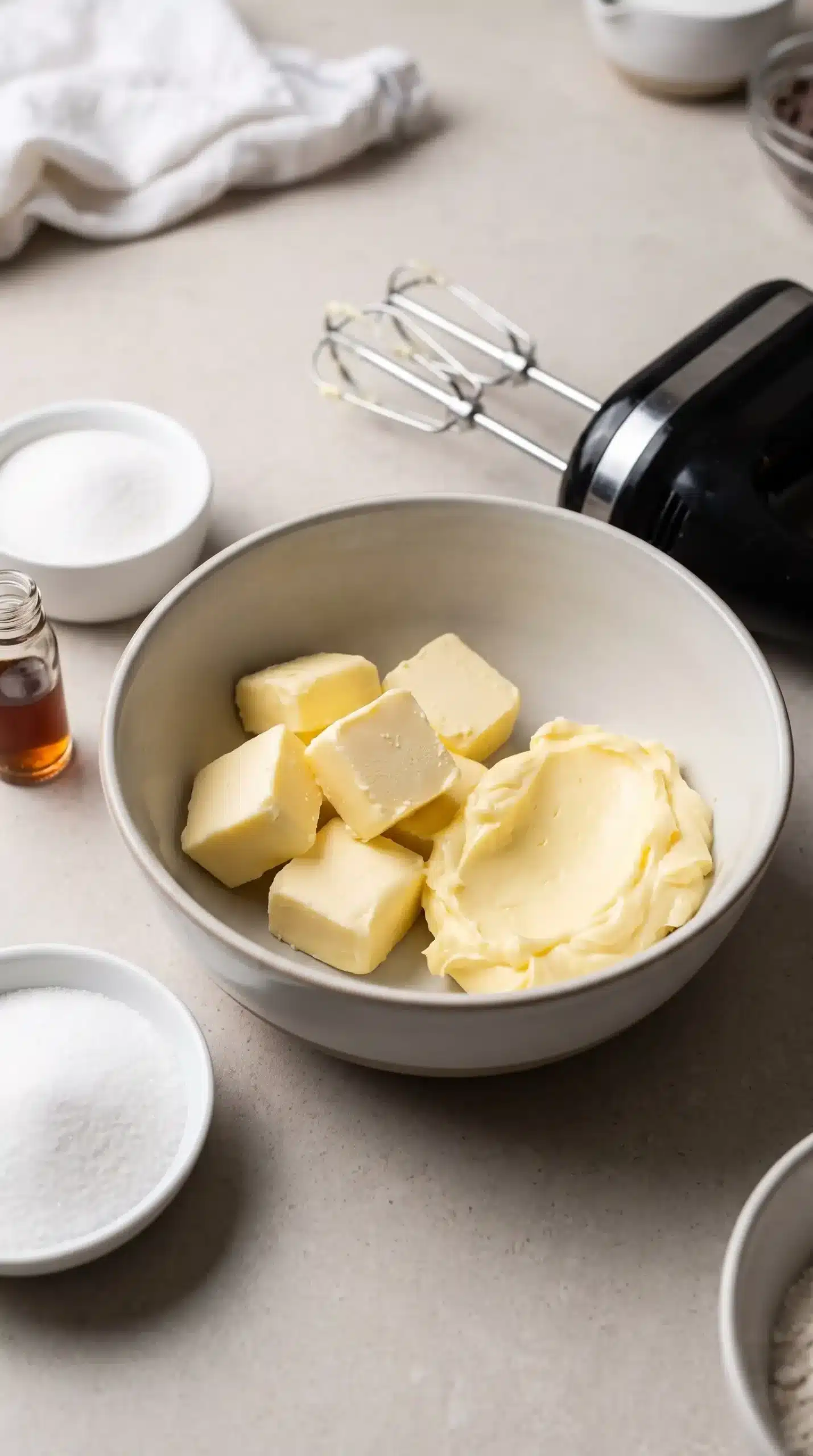
Cooling the melted butter until solid again is the step most closely tied to the intended texture. After melting, the butter needs enough time to become firm before it is beaten with the room-temperature portion. If the melted portion remains liquid, the dough can behave differently and may require more flour to become manageable.
Butter temperature also affects what happens once the dough reaches the oven: warmer butter melts and spreads sooner, giving the dough more opportunity to flatten before its structure sets. Returning the melted portion to a firm state therefore helps preserve the intended thickness of these cookies.
| Butter condition | What to look for | Why it matters here |
|---|---|---|
| Melted and cooling | Fully liquid but no longer hot | It needs to return to a solid state before mixing. |
| Chilled and solid | Firm, but workable | It can be creamed with the room-temperature butter. |
| Room temperature | Soft enough to mix | It helps the two butter portions blend evenly. |
Firm butter straight from a very cold freezer may become difficult to cream. Briefly softening it until workable is enough; it should not become liquid again. That small distinction preserves the intended dough structure without undoing the cooling step.
Cocoa, coffee, and chocolate chips build the flavor in layers
Cocoa powder supplies the concentrated chocolate foundation, but the finished flavor becomes fuller when strong coffee is incorporated gradually into the dough. Coffee intensifies cocoa in dense chocolate bakes such as espresso brownies because its roasted notes deepen the chocolate character without requiring a strongly coffee-flavored finish. Keeping the amount controlled lets these cookies remain unmistakably chocolate-forward.
- Cocoa powder creates the deep chocolate base and contributes dry structure to the dough.
- Strong coffee intensifies the cocoa character without requiring a coffee-flavored finish.
- Chocolate chips provide distinct chocolate pockets and extra sweetness throughout each cookie.
- Vanilla rounds the flavor so the cocoa and chocolate taste more complete.
Salt matters here as well. With cocoa, sugar, butter, and chocolate chips all contributing richness, the salt keeps the flavor from becoming flat or overwhelmingly sweet. No single component needs to be increased to make the cookies taste more chocolatey; maintaining the balance is more useful.
Mix the dough until its texture gives you the right signal
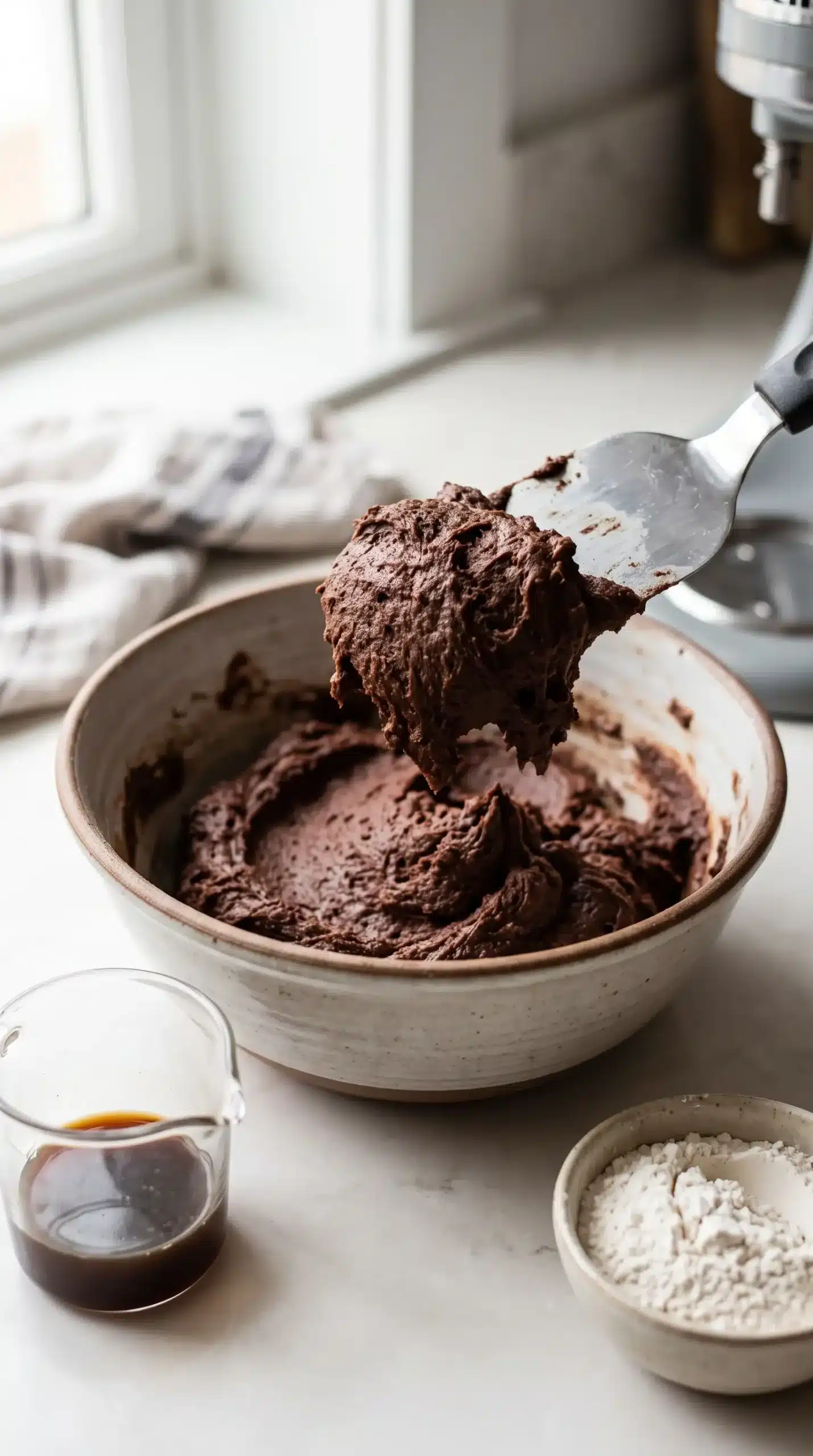
Texture is a better guide than a rigid visual expectation once the flour mixture and coffee have been incorporated. The dough should be thick and sticky, but it should also be manageable enough to touch without immediately coating your hands in loose dough.
Watch the consistency as the coffee goes in. Adding it gradually gives you an opportunity to stop and assess the dough before it becomes too loose. If the mixture remains excessively sticky, additional flour can be worked in gradually until the dough becomes workable. Avoid adding large amounts at once because the intended result depends on keeping the dough rich and soft.
Chocolate chips belong in only after the dough itself has reached the correct consistency. Folding them in at that point distributes the chips without asking them to compensate for a dough that is already too wet or too firm.
Eight minutes is enough to protect the soft center
Short baking is deliberate for these fudgy chocolate chip cookies. At the stated oven temperature, the cookies can still look puffy and underdone when they are ready to leave the oven. That appearance is not a sign that more baking is automatically needed.
- Shape evenly. Keep the dough balls similar in size so they reach the desired texture at roughly the same time.
- Use parchment. A lined baking sheet makes it easier to move the soft cookies cleanly after baking.
- Judge the appearance. Expect a puffy, soft-looking cookie immediately after baking.
- Move them promptly. Transfer the cookies to a cooling rack so they can finish setting without remaining on the hot baking sheet.
Cooling completes the transformation. The centers firm as their heat dissipates, leaving the thick, soft texture that would be lost if the cookies were kept in the oven until they looked completely set.
Even portions make thick cookies bake more consistently
Portioning is especially useful with a dough this thick because small differences in size become noticeable during a short bake. A larger dough ball can retain more softness in its center, while a smaller one can reach a firmer texture sooner.
Rolling the dough into even balls also gives the cookies a consistent relationship between their edges and centers. That matters when the visual cue for doneness is intentionally softer than the appearance of a fully baked cookie.
Common mistakes that flatten double chocolate cookies
Several problems can be traced directly to the unusual butter preparation and short baking time. Knowing what to watch for makes correction easier before the whole batch is affected.
- Skipping the butter cooling: Replacing the cooled-solid butter with freshly melted butter changes the dough’s behavior and can affect how much flour it needs.
- Adding too much flour: Correct an overly sticky dough gradually. Excess flour can make the finished cookies firmer and less fudgy.
- Overbaking the centers: A puffy, underdone appearance immediately after baking is expected. Keeping them in the oven until they look completely finished can work against the desired soft texture.
- Using uneven dough balls: Inconsistent portions can leave some cookies softer and others more set after the same short bake.
- Letting chilled butter stay rock solid: Extremely firm butter can be difficult to cream evenly. It should be workable without becoming liquid.
Strong coffee needs a gradual addition to the chocolate dough
The coffee is incorporated while the flour mixture is being combined with the butter mixture, and its liquid content affects the dough’s final consistency. Pouring it in gradually gives you control over that change instead of committing the entire amount before you can evaluate the texture.
That gradual approach is particularly helpful because the dough should land in a narrow practical range: sticky and rich, yet firm enough to shape. Once it reaches that point, continuing to add liquid simply because the measured amount remains available is unnecessary if the dough has already reached the intended consistency.
Chocolate chips should remain distinct inside the soft crumb
Chocolate chips are more than an extra chocolate note here. They create textural variation inside a cocoa-based cookie that is otherwise naturally dense and soft. Stir them through the finished dough so they remain distributed from edge to center.
For the cleanest texture, avoid overworking the dough once the chips have been added. The objective is an even distribution without prolonged mixing that could make portioning more difficult. Each dough ball should contain a useful scattering of chips instead of a concentrated pile in only part of the batch.
Cooling changes the cookies from puffy to fudgy
Fresh from the oven, the cookies are supposed to look noticeably softer than their finished form. Their centers have not completely set, which is why removing them at that stage preserves the tender interior.
As the cookies cool on a rack, their structure settles and the surface becomes easier to handle. The contrast between the firmer exterior and soft chocolate center is part of what makes these thick fudgy chocolate cookies distinctive.
Patience during those first moments matters more than trying to judge the final texture while the cookies are still hot. A cookie that seems too soft immediately after baking can become exactly the right consistency once cooled.
Small adjustments can rescue the dough before baking
Sticky dough does not automatically mean something has gone wrong. The supplied flour quantity allows for additional flour when the mixture is still too sticky to handle, so the useful response is to make small additions and reassess after each one.
| Dough condition | Observable sign | Useful response |
|---|---|---|
| Too sticky | Hard to touch or shape without a large amount clinging to your hands | Add flour gradually until workable. |
| Workable and thick | Can be handled and rolled into balls without excessive mess | Stop adjusting and fold in the chocolate chips. |
| Very cold butter | Firm enough to resist creaming smoothly | Soften briefly until workable without melting it. |
These adjustments are best made before portioning. Once the dough has been rolled into balls, changing its consistency becomes much less practical and can disturb the even distribution of chocolate chips.
Serving double chocolate cookies at the right texture
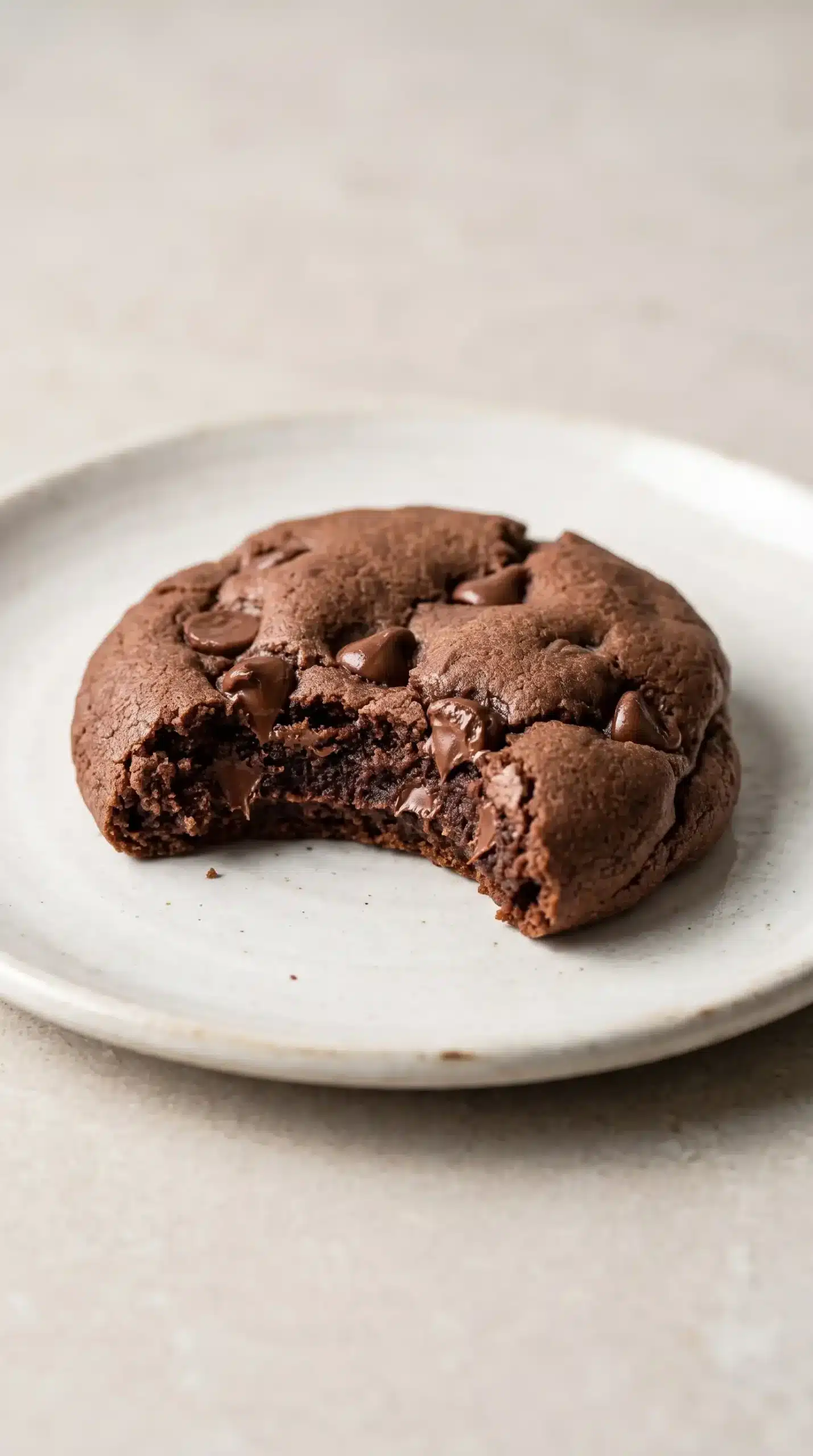
These cookies are at their most distinctive after they have cooled enough for the centers to set while remaining soft. Their substantial shape makes them satisfying on their own, while the combination of cocoa and chocolate chips gives enough richness that additional toppings are unnecessary.
For a softer bite, allow the cookies to cool naturally instead of trying to accelerate the process. If you prefer a more settled texture, give them additional cooling time before serving. Either way, the visual cue immediately after baking should not be used to judge the finished crumb.
Why the short bake works for a dense chocolate center
Longer baking would continue driving the cookie toward a firmer, more fully set texture. Here, the dough is intentionally removed while still puffy and soft, allowing residual heat to finish the setting process during cooling.
Cocoa powder and flour already give the dough substantial dry structure, while butter, eggs, and chocolate chips keep the interior rich. The short bake preserves the balance between those components instead of pushing the cookies toward a dry or crisp finish.
Thick double chocolate cookies depend on timing and texture
Firm cooled butter, a workable dough, even portions, and a short bake all point toward the same result: cookies that hold their thickness while retaining a soft center. The most consequential choice is resisting the temptation to treat the puffy, underdone appearance as a problem that needs extra oven time.
Once cooled, the cookies should have the dense chocolate character suggested by the cocoa and coffee, with chocolate chips providing richer pockets throughout. Careful butter handling at the beginning and restraint at the end are what allow double chocolate cookies to reach that fudgy middle ground.
Questions about fudgy centers and cookie texture
Can I use the butter immediately after melting it?
The specified technique depends on cooling half of the melted butter until it becomes solid again before mixing. Using it while fully liquid changes the dough’s consistency and can alter the amount of flour needed to make the mixture workable.
Why do my cookies look underbaked after the short bake?
The cookies are expected to be puffy and soft when they leave the oven. Their centers continue setting as they cool, so judging doneness by whether the cookies already look completely firm can lead to overbaking.
What should I do if the dough is too sticky to roll?
Add a little more all-purpose flour and reassess the dough before adding more. The desired consistency is thick and sticky but manageable enough to touch and roll without creating a large mess.
Can I leave out the coffee?
Coffee contributes to the depth of the chocolate flavor and also adds liquid to the dough, so removing it changes both flavor and consistency. If you alter it, expect the dough to behave differently and adjust carefully instead of assuming the original texture will remain unchanged.
Why did my cookies become firmer than expected?
Overbaking is one likely cause because these cookies are intentionally removed while still puffy and soft. Extra flour can also shift the texture toward firmness, so both the dough consistency and the short bake deserve attention when aiming for a fudgy center.
Double Chocolate Cookies with Cocoa and Chocolate Chips
These double chocolate cookies are thick, soft, and fudgy, with deep cocoa flavor and plenty of chocolate chips throughout. They are an easy choice for a rich homemade dessert when a substantial chocolate cookie is in order.
Ingredients
Method
Preparation
- Melt 1/2 cup of the butter in the microwave for 30-45 seconds, or until fully liquid. Place it in the refrigerator or freezer until solid again, about 30 minutes. Keep the remaining 1/2 cup butter at room temperature. If the chilled butter becomes completely firm, briefly microwave it for 10 seconds so it is workable without melting.
- Preheat the oven to 350°F (177°C). Using an electric mixer, beat the melted-and-cooled butter, room-temperature butter, sugar, and vanilla until creamy and fluffy. Add the eggs and mix just until combined.
- In another bowl, whisk together the flour, cocoa powder, baking soda, and salt. Add this dry mixture to the butter mixture while gradually incorporating the coffee. The dough should remain thick and sticky but manageable by hand. If it is excessively sticky, add more flour. Mix in the chocolate chips.
- Shape the dough into even balls, yielding about 20 cookies from the batch, and arrange them on a parchment-lined baking sheet.
Baking
- Bake the cookies for 8 minutes. They should still appear puffy and underdone when removed from the oven.
- Transfer the cookies to a cooling rack immediately and allow them to cool so the centers can finish setting into a soft, thick, fudgy texture.
Notes
Melting and cooling half of the butter before making the dough is strongly recommended because this step affects the amount of flour needed and the final thickness and fudgy texture of the cookies. Skipping the butter-cooling process can change how the cookies turn out.