From breakfast to dinner, from healthy meals to sweet desserts – Next Yum Recipes brings you quick, simple and tasty ideas for every occasion and every time.


 This Recipe
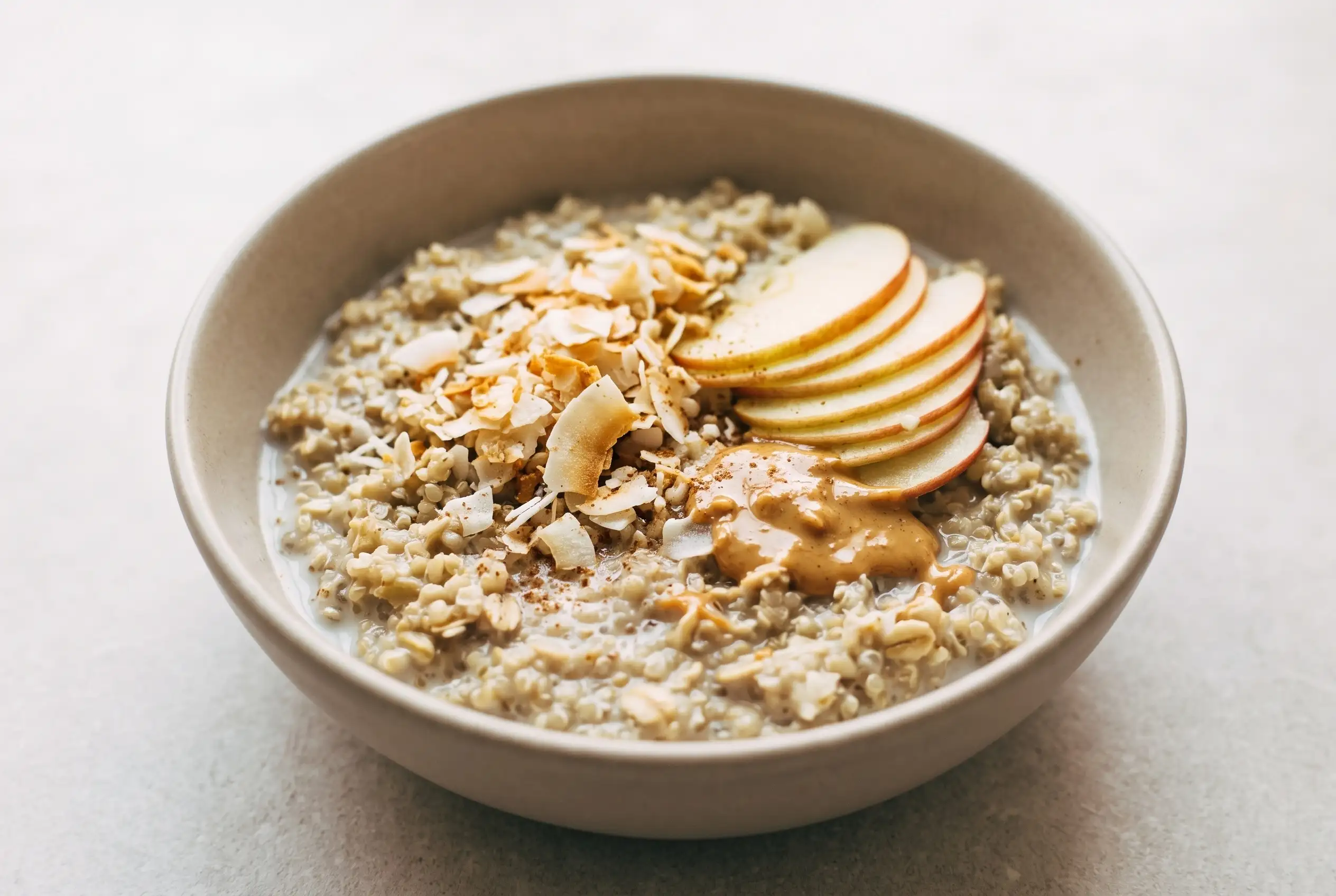
Coconut breakfast porridge brings together creamy coconut milk, tender quinoa, soft rolled oats, and lightly toasted coconut in a bowl that can shift easily from fruity and fresh to rich and nutty. The quinoa gives the oats a pleasantly substantial texture, while coconut flakes provide a crisp contrast that becomes especially noticeable against the soft porridge.
Why coconut milk changes the breakfast bowl
Creamy coconut milk gives the quinoa and oats a fuller texture as they cook, so the finished coconut breakfast porridge feels more substantial than a bowl built from oats and water alone. Regular coconut milk creates a richer result, while light coconut milk is lower in fat and produces a gentler result without changing the basic cooking approach.
Because coconut milk is already flavorful, the supporting ingredients can stay simple. Cinnamon works naturally with its mild sweetness, and a small amount of salt keeps the finished bowl from tasting flat. The fruit, nut butter, or honey added at the end can then steer the flavor in different directions without requiring a completely different base.
One useful detail is the distinction between the liquid used to cook the quinoa and the liquid added with the oats. The coconut milk establishes the creamy foundation, while the juice or water controls how loose the porridge becomes once the oats are incorporated.
Quinoa gives the oats a more substantial texture
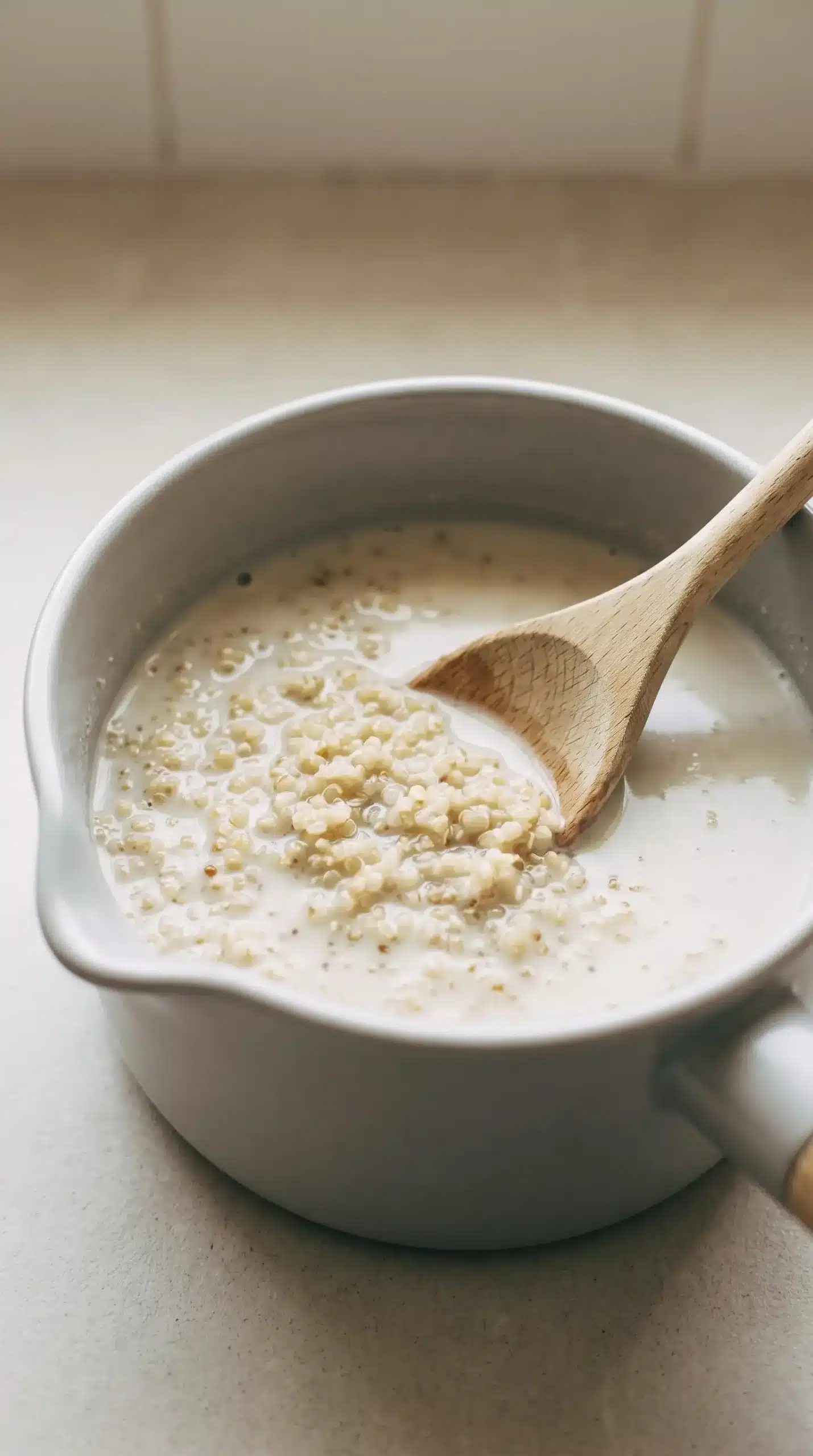
Quinoa changes the character of the bowl by bringing small, tender grains alongside the softer oats. The result is closer to a quinoa oatmeal porridge than a conventional bowl of oatmeal, with enough variation in texture to make each spoonful more interesting.
The liquid choice controls sweetness and thickness
Juice brings a fruitier character to coconut quinoa oatmeal, while water keeps the flavor more neutral and leaves the toppings in charge. When using juice, choose one whose flavor works with coconut, cinnamon, and the fruit you plan to serve alongside the bowl.
| Liquid choice | Effect on the porridge | Best use |
|---|---|---|
| About 1/2 cup juice | Thicker and more concentrated | When you want a spoonable bowl with stronger topping contrast |
| Up to 1 cup juice | Softer and looser | When you prefer a more relaxed porridge texture |
| Water | More neutral in flavor | When coconut, cinnamon, and toppings should dominate |
Toasted coconut supplies the essential contrast
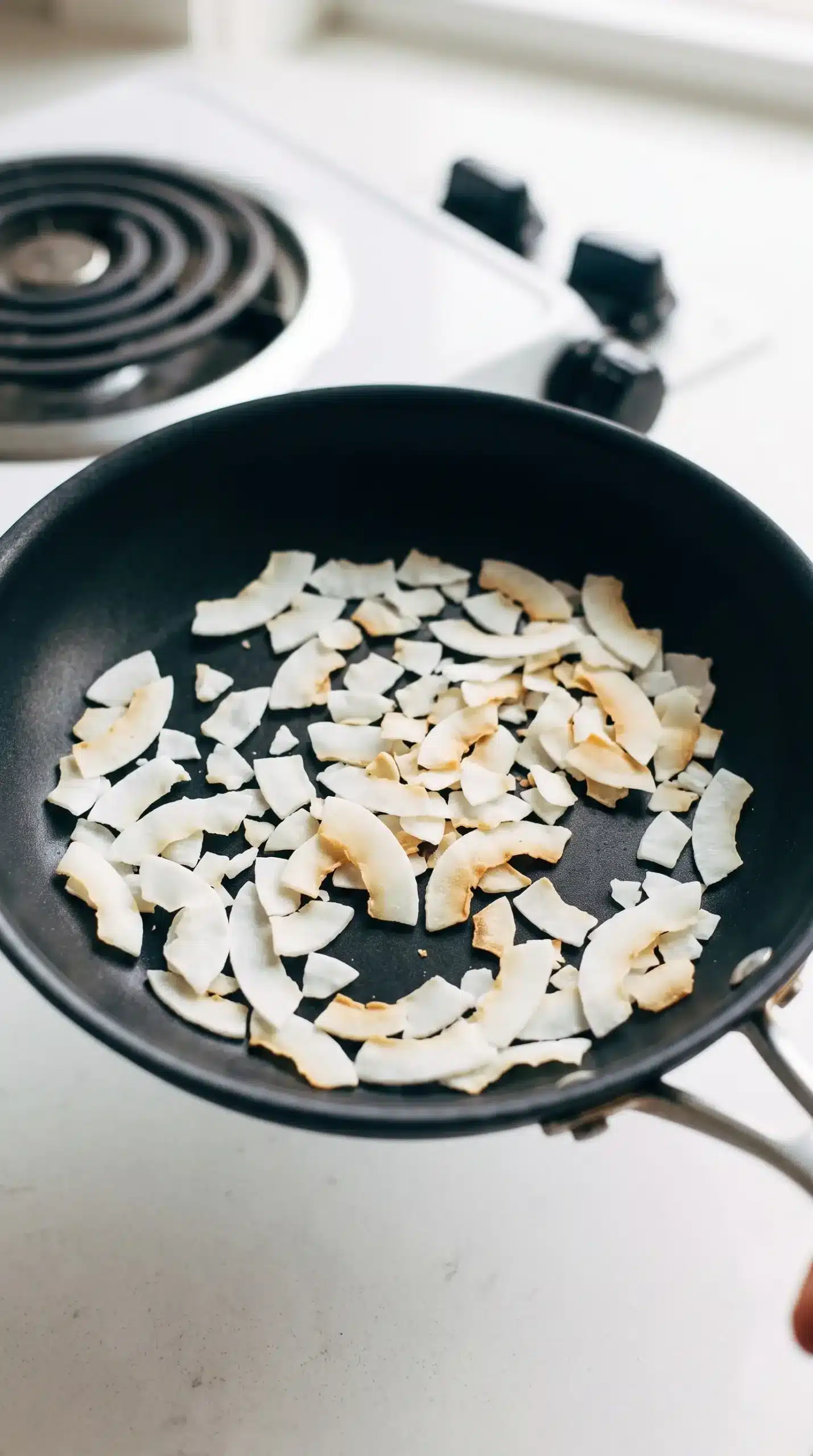
Unsweetened coconut flakes become much more useful when lightly toasted. The dry flakes develop a deeper, nuttier flavor and a crisp texture that contrasts with the creamy grains underneath.
Watch the flakes closely as they toast in a nonstick skillet. Their small size means the difference between lightly toasted and overly browned can develop quickly, so shaking the pan helps distribute the heat and encourages more even color.
A stovetop skillet is particularly convenient here because the flakes can be watched continuously and moved as soon as they reach a light toasted color. An oven can also handle the job, but the skillet makes a small quantity easy to manage without preparing another large cooking surface.
Cinnamon works best as a finishing flavor
Cinnamon does not need to dominate the bowl. A light hand lets the coconut, quinoa, oats, and fruit remain distinct, while a more generous amount gives the porridge a warmer, dessert-like direction.
Cook the grains until their textures agree
Quinoa needs enough time to become tender before the oats enter the saucepan. Giving the grain its own cooking stage prevents the oats from sitting in the pot longer than necessary, which helps preserve their soft but recognizable texture.
Once the oats are added, the cooking window becomes much shorter. Stir occasionally and watch the consistency instead of relying only on the clock. Rolled oats absorb liquid quickly, so the mixture can move from loose to thick in a short period.
Moisture continues to matter after the pan comes off the heat. If the porridge looks exactly as thick as you want while it is still hot, it can become noticeably more spoonable as the grains continue absorbing liquid. Keeping a little extra juice available makes that adjustment simple.
Small texture choices make toppings work harder
Apple slices, peanut butter, and honey each change the eating experience in a different way. Crisp apple adds freshness and bite, peanut butter contributes richness, and honey introduces extra sweetness. Toasted coconut ties those choices back to the base.
- For freshness: pair apple slices with cinnamon and toasted coconut.
- For richness: add peanut butter and keep the coconut flakes generously scattered over the top.
- For sweetness: use honey sparingly so the coconut and cinnamon remain noticeable.
A flexible grain blend can extend the idea
The basic combination does not have to stop at quinoa and oats. Other grains or seeds can work, but they should be treated according to their own cooking requirements. A grain that needs substantially more liquid or time cannot simply be exchanged in equal proportions without adjusting the process.
Freekeh, for example, can be incorporated into a breakfast grain blend, but its cooking needs differ from rolled oats. The important decision is to establish which component requires the longest cooking period and provide enough moisture for that component before adding faster-cooking ingredients.
That approach also keeps experimentation practical. Changing the grain structure is easier when the cook pays attention to absorption and tenderness instead of treating every grain as interchangeable with quinoa.
Keep the coconut flakes from losing their crunch
Toasted flakes are most effective when they stay separate from the moist porridge until serving. Sprinkling them over each bowl at the end preserves the textural contrast that makes the topping useful.
Common coconut breakfast porridge mistakes to avoid
Over-toasting the coconut is one of the easiest ways to lose the delicate contrast. Remove the flakes when they are lightly toasted instead of waiting for a very dark color, because residual heat in the skillet can continue browning them after they are moved.
Another issue comes from adding too much liquid too early. Rolled oats absorb moisture rapidly, and the porridge can become looser than intended. Starting with less of the optional juice and adding more as needed gives you greater control.
Letting the oat stage continue unnecessarily can also change the texture. Once the oats have softened, continuing to cook them simply because the saucepan remains on the burner can produce a heavier, more uniform bowl.
Choose toppings according to the bowl’s balance
A good topping choice depends on what the base already brings. When the porridge is made with juice, naturally sweet toppings can be kept restrained, while water leaves more room for fruit or honey. For an apple-focused breakfast, keep the sweetener modest and let cinnamon carry the warm flavor, as in an apple-and-cinnamon oatmeal bowl.
| Topping | Texture contribution | Flavor direction |
|---|---|---|
| Apple slices | Crisp and fresh | Fruity and lightly sweet |
| Peanut butter | Creamy and dense | Nutty and rich |
| Honey | Smooth | More pronounced sweetness |
| Toasted coconut | Lightly crisp | Toasty and coconut-forward |
Adjust the porridge after it starts absorbing
Thickness is easiest to control incrementally. If the mixture becomes firmer than you prefer, loosen it with additional juice or water and stir until the grains relax. If it seems too loose, give the oats a little more time to absorb moisture before adding more liquid.
Serve the coconut grains while the contrast is fresh
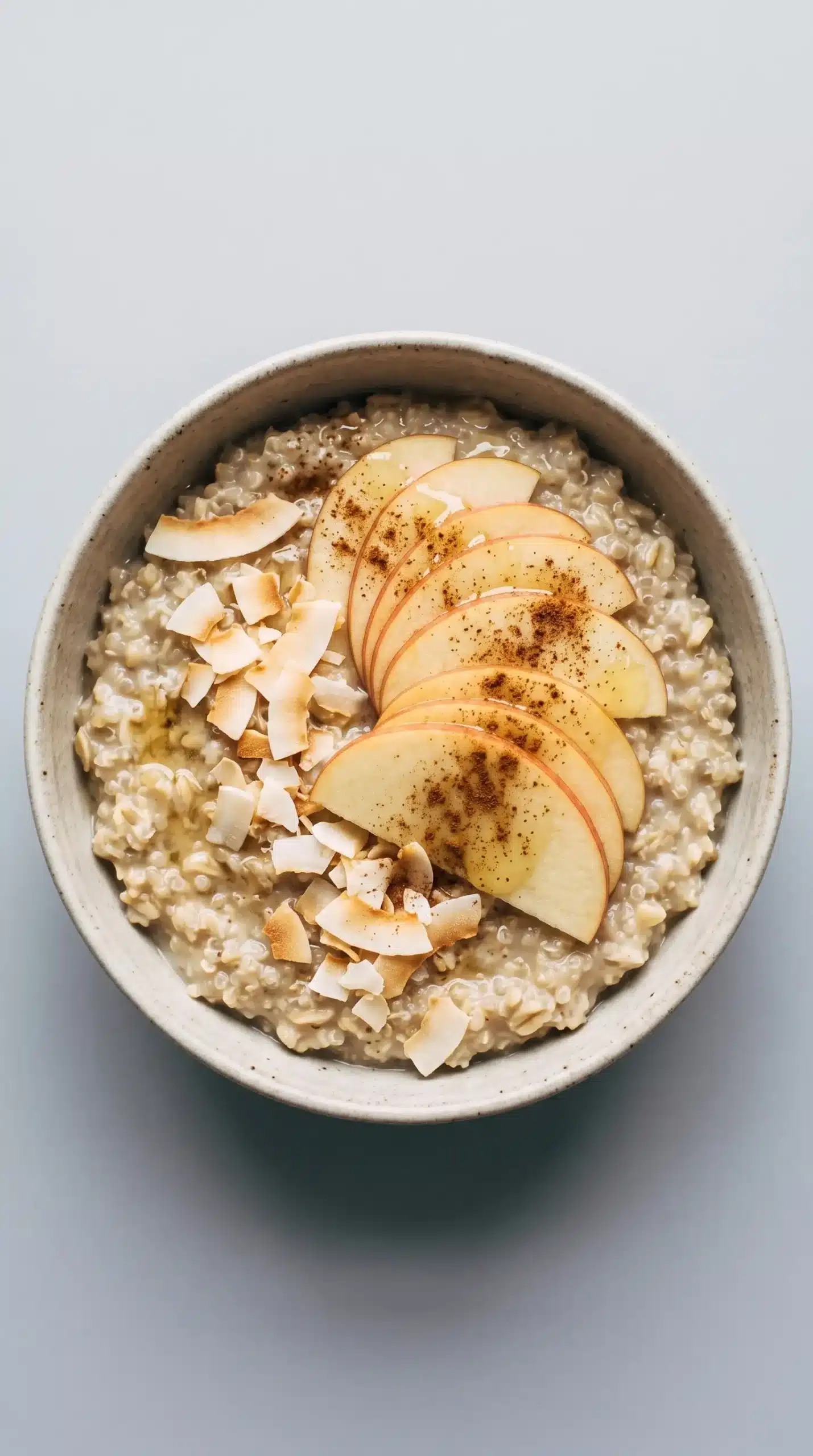
Warm porridge makes the coconut topping particularly noticeable because the toasted flakes stay crisp against the soft grains. Adding toppings individually also lets each bowl have its own balance without changing the underlying mixture.
Let moisture guide the best bowl of coconut breakfast porridge
Moisture is the central judgment in coconut breakfast porridge: quinoa needs enough liquid to become tender, oats need enough to soften, and the finished bowl still needs enough structure to support its toppings. Starting conservatively with the additional juice gives you room to loosen the mixture later without trying to recover an overly thin porridge.
Toasted coconut then supplies the contrasting texture that the creamy base lacks. Once the flakes are lightly browned and added at serving time, the bowl has a clear progression from tender grains to crisp coconut, with cinnamon and your chosen topping filling in the flavor around them.
Coconut breakfast porridge questions about thickness and toppings
Can coconut breakfast porridge be made with only water instead of juice?
Yes. Water keeps the base more neutral, allowing coconut milk, cinnamon, apple, peanut butter, or honey to define the flavor more strongly. The texture can still be adjusted with additional liquid as the oats absorb moisture.
How can I make the porridge thicker?
Start with about 1/2 cup of the juice or water used alongside the oats, then add more gradually if needed. This gives the grains time to absorb moisture without committing the entire mixture to a looser consistency.
Why did my toasted coconut become too dark?
Coconut flakes brown quickly in a hot skillet, and they can continue cooking from residual pan heat. Use a medium-high setting, shake the pan frequently, and remove the flakes as soon as they become lightly toasted.
Can I use a different grain with the quinoa?
Other grains or seeds can be used, but their liquid and cooking requirements need to be considered individually. A slower-cooking grain may need to begin earlier, while a faster-cooking ingredient may need to join later so the textures finish together.
What can I use instead of apple slices for topping?
Peanut butter or honey can be used when you want a richer or sweeter finish, and toasted coconut works with either choice. The topping can also be kept simple so the coconut, cinnamon, quinoa, and oats remain the main flavors.
Coconut Breakfast Porridge with Toasted Coconut and Oats
Coconut breakfast porridge combines creamy coconut milk, tender quinoa, soft oats, and crisp toasted coconut for a comforting, textured breakfast. It is an easy choice when a warm, hearty bowl with flexible toppings is wanted.
Ingredients
Method
Cooking
- Bring the coconut milk to a boil in a small saucepan. Stir in the quinoa and salt, then cook for about 15 minutes, or until the quinoa is cooked.
- Add the juice or water, rolled oats, cinnamon, and salt. Continue cooking for a few minutes, just until the oats have softened.
Topping
- Place the coconut flakes in a small nonstick skillet over medium-high heat. Shake the pan regularly and toast the flakes until lightly browned. An oven can also be used for toasting, but the stovetop method is faster.
Serving
- Divide the porridge among bowls and top with the toasted coconut and apple slices, peanut butter, or honey as desired.
Notes
For a thicker porridge, use about 1/2 cup of the juice or water. For a softer porridge, use the full cup. Starting with 1/2 cup and adding more as needed works well as the mixture absorbs moisture. Other seeds or grains can also be used. For example, the porridge can be made with 1 cup quinoa and 1/2 freekeh, using your best judgment about the liquid and cooking time required by each grain.