From breakfast to dinner, from healthy meals to sweet desserts – Next Yum Recipes brings you quick, simple and tasty ideas for every occasion and every time.


 This Recipe
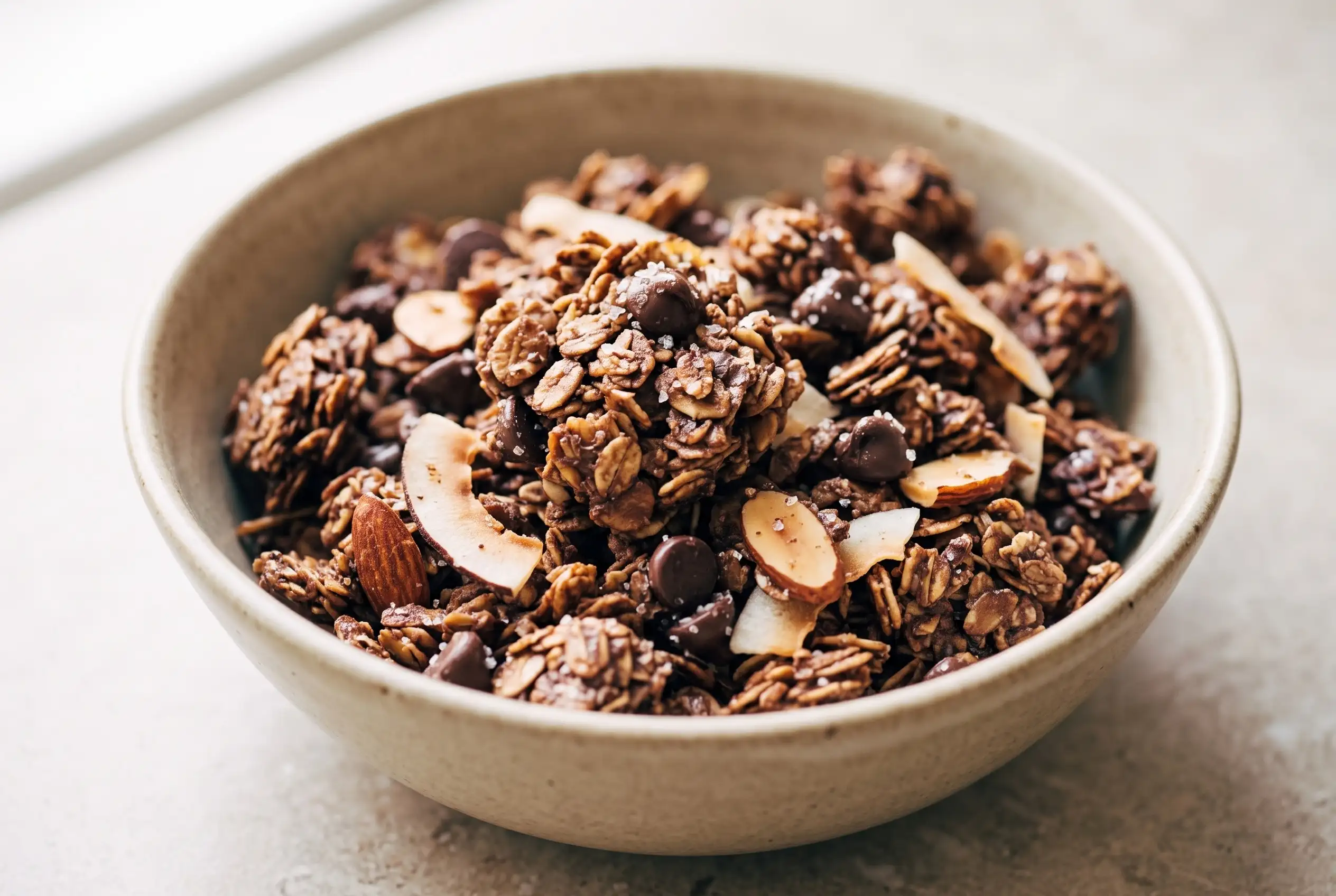
Chocolate granola brings together crisp rolled oats, toasted almonds, coconut, cocoa, and pockets of chocolate in a deeply satisfying baked mixture. The low oven temperature gives the oats time to dry and crisp without rushing the cocoa, while maple syrup and coconut oil help bind everything into clusters. A finishing layer of turbinado sugar and coarse sea salt adds the contrast that makes each bite especially appealing.
What makes chocolate granola cluster so well
Clustered chocolate granola depends as much on handling as it does on the ingredient balance. The mixture should be spread evenly across the pans so the oat mixture bakes consistently, but once it enters the oven, unnecessary stirring works against the large pieces you want to preserve.
Leaving the baked granola undisturbed after it comes out is particularly important. The mixture is still soft at that point, and the chocolate chips become very soft during their short return to the oven. As everything cools, the chocolate works its way into the surrounding oats and helps create firm, irregular clusters.
Gentle scooping also matters once the granola has cooled enough to store. A spoon or spatula can break delicate pieces if it is dragged aggressively through the pan, so lift sections instead of repeatedly scraping and turning them.
Cocoa and coconut create the right chocolate base
Unsweetened cocoa powder gives the granola its chocolate character without making the dry mixture overly sweet. Because cocoa is mixed directly with the oats, almonds, coconut, salt, and sugar before the wet ingredients are added, it coats the dry ingredients evenly and distributes its flavor throughout the batch.
Turbinado sugar and sea salt sharpen every bite
Turbinado sugar has a useful role beyond sweetness here. Some of it goes into the oat mixture, while the remainder is scattered over the warm chocolate chips near the end of baking. Those larger sugar crystals provide a delicate crunch that contrasts with the softer chocolate before it fully sets.
Coarse sea salt works alongside that crunch. A small amount on the surface keeps the chocolate flavor from becoming flat and gives the finished clusters a more pronounced sweet-salty character. Since both finishing ingredients remain visible on the outside, their texture matters as much as their flavor.
- Inside the mixture: the sugar helps lightly sweeten the oats and cocoa.
- On the chocolate: the finishing sugar adds a crisp surface texture.
- Across the clusters: coarse sea salt supplies small bursts of contrast.
Almonds and coconut keep the texture interesting
Sliced raw almonds bring a crisp, nutty element that stands apart from the oats. Their thin shape also makes them well suited to a clustered mixture because they can nestle among the oats without creating large, hard pieces that dominate a bite.
Unsweetened coconut flakes add another layer of texture and a mild toasted flavor as they bake. Keeping the coconut unsweetened is useful because the maple syrup, sugar, and chocolate already supply plenty of sweetness. The flakes can also become part of the clusters as the surrounding chocolate softens and later firms.
Keep the chocolate granola mixture evenly coated
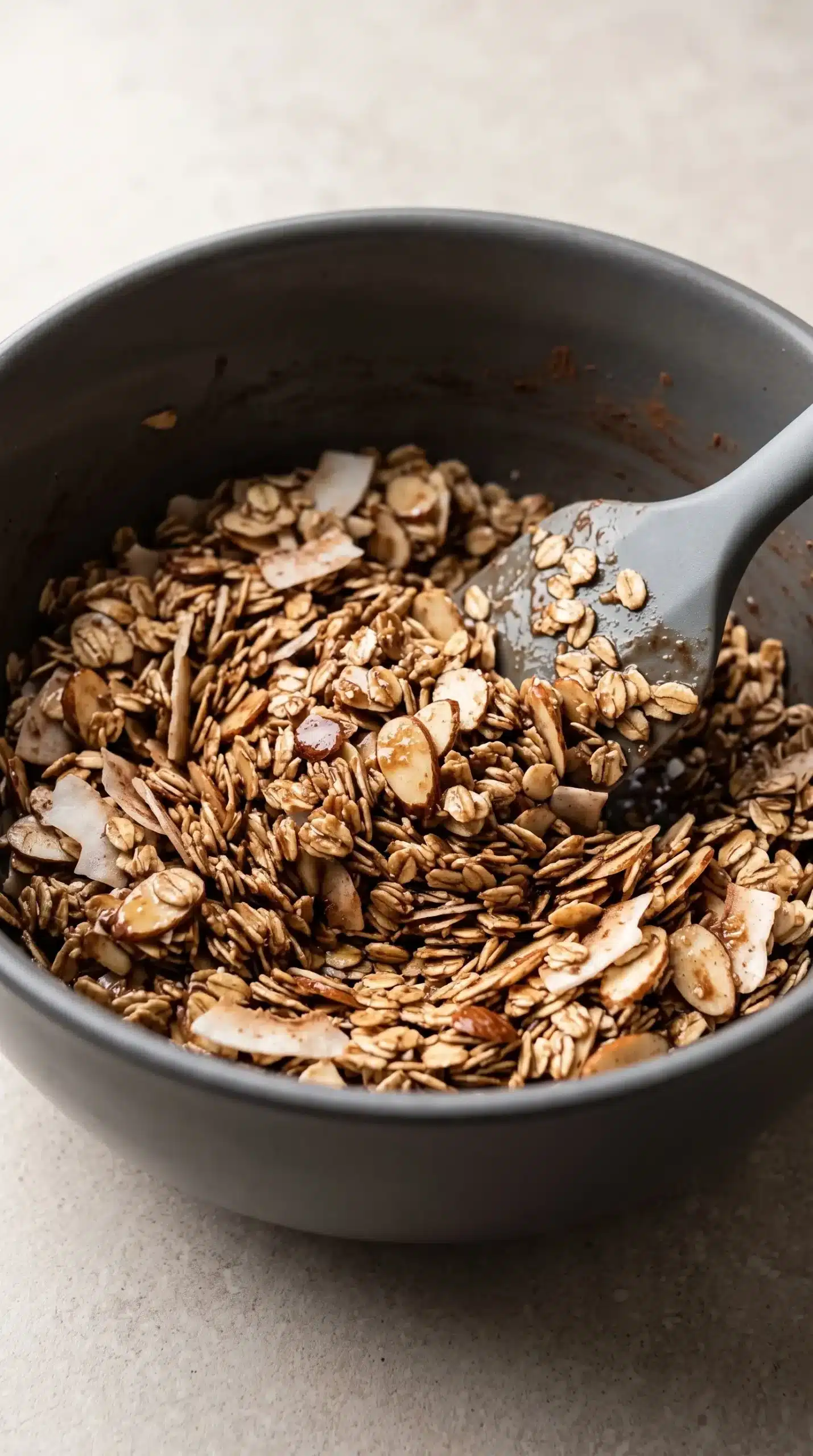
The liquid mixture combines melted coconut oil, maple syrup, and optional vanilla before it is added to the dry ingredients. Whisking those liquids together first makes it easier to distribute the coating across the oats, almonds, coconut, and cocoa without leaving isolated dry patches.
Once the liquids are poured over the dry mixture, stir until the cocoa-coated ingredients are moistened throughout. An even coating is especially useful with baked chocolate granola because dry pockets can remain loose while well-coated areas form stronger clusters.
Spread the mixture into an even layer across the two pans. A uniform layer helps the granola dry at a steady pace, while excessive thickness can make it harder to judge whether the center has crisped before the edges become too dark.
A low oven protects the cocoa and coconut
The oven is intentionally set to 250°F, giving the granola a long, gentle bake. This approach allows moisture to leave gradually while the oats, almonds, coconut, and cocoa develop a deeper toasted character.
Chocolate granola benefits from patience at this stage because the mixture is not meant to be hurried into a dark, brittle finish. The relatively gentle heat also gives you time to observe the pans and make small adjustments if needed.
| Stage | What to look for | What to do |
|---|---|---|
| Before baking | Dry ingredients look evenly coated | Spread into an even layer |
| Mid-bake | Granola is drying without excessive browning | Check the pan and gently shake or stir only if needed |
| Before adding chocolate | Granola has baked for the main 50-minute period | Scatter chocolate chips over the surface |
| After the short chocolate bake | Chocolate chips are very soft | Add finishing sugar and coarse sea salt |
| During cooling | Chocolate and clusters are gradually firming | Leave undisturbed for stronger clusters |
Chocolate chips need a short second bake
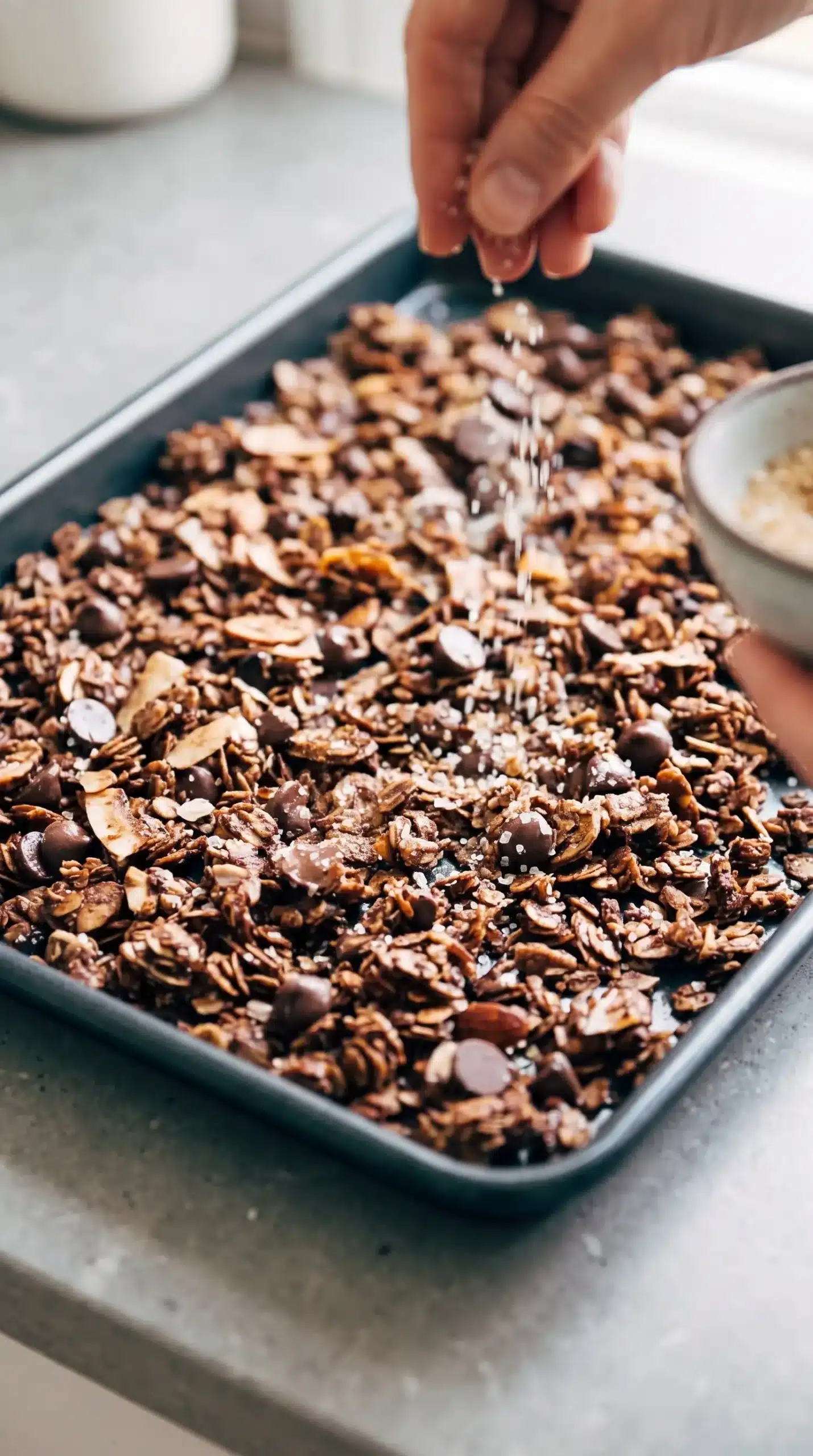
Adding the chocolate chips near the end protects their texture and gives you control over how they become part of the clusters. They go onto the baked granola after its main oven time, then return to the oven briefly until they are very soft.
At that point, the chips are warm enough for the remaining turbinado sugar and coarse sea salt to adhere to their surfaces. This creates the distinctive finishing texture without requiring the chocolate to be fully melted into the granola.
Cooling determines the shape of the clusters
The cooling period is one of the most consequential parts of chocolate chip granola because the chocolate is still soft when the pans leave the oven. Moving the mixture around immediately can separate the oats before the chocolate has a chance to bind them together.
Letting the granola stand for one to two hours gives the warm chocolate time to settle into the surrounding clusters. As it cools, it hardens in place, creating pieces where chocolate and oat mixture become closely connected.
There is another texture choice available. Leaving the granola alone for several hours or overnight allows the chocolate chips to cool completely while retaining more of their individual shape. That approach produces a more distinct chip-in-granola appearance, while earlier gentle scooping encourages chocolate to become part of the cluster itself.
Three texture choices worth deciding before baking
| Choice | Result | Best handling approach |
|---|---|---|
| Undisturbed baking | Larger, more connected clusters | Move the granola as little as possible |
| Gentle scooping while chocolate is soft | Chocolate settles into individual clusters | Lift portions carefully after cooling |
| Longer cooling before storage | More recognizable chocolate chip pieces | Allow the chocolate to harden before moving the granola |
Chocolate granola mistakes that break up the clusters
Frequent stirring is the biggest handling problem supported by the method. Keeping big granola clusters intact depends on limiting how often the baked oat mixture is turned before it has fully set. Check the pan during baking, but disturb it only when necessary.
Over-browning is another signal to watch. The mixture should have time to dry and crisp at the low oven temperature, so darkening too quickly calls for attention to the pan rather than simply continuing to stir. Keeping the layer even also helps prevent uneven baking.
Moving the granola immediately after the chocolate chips soften can cause the clusters to fall apart. The warm chocolate needs time to settle and firm. If larger clusters are the priority, let the pan rest and handle the granola gently once it has cooled.
Maple syrup and coconut oil bind without weighing down the oats
The combination of melted coconut oil and maple syrup provides the wet coating needed to connect the dry ingredients. The oil helps distribute richness across the oats, while maple syrup contributes sweetness and moisture to the mixture before baking.
Because the coconut oil is measured after melting, it should be fully liquid when combined with the maple syrup. Vanilla is optional, so leaving it out does not change the basic structure of the granola. If used, it simply becomes part of the wet mixture before that mixture is incorporated.
How to handle chocolate granola after baking
Once the granola has reached the texture you want, transfer it gently into jars or another airtight container. Large clusters are easier to preserve when they are lifted instead of crushed or repeatedly stirred during storage.
The cooling choice also affects how the finished chocolate looks. Earlier handling while the chips remain soft encourages them to merge into clusters, whereas waiting until the chocolate has fully hardened preserves more recognizable chip shapes.
Store the cooled granola in an airtight container to limit reabsorption of moisture from humid air and help protect its crisp texture. Avoid sealing it while it is still warm, since trapped heat can soften the texture you worked to develop in the oven.
Ways to serve the finished clusters
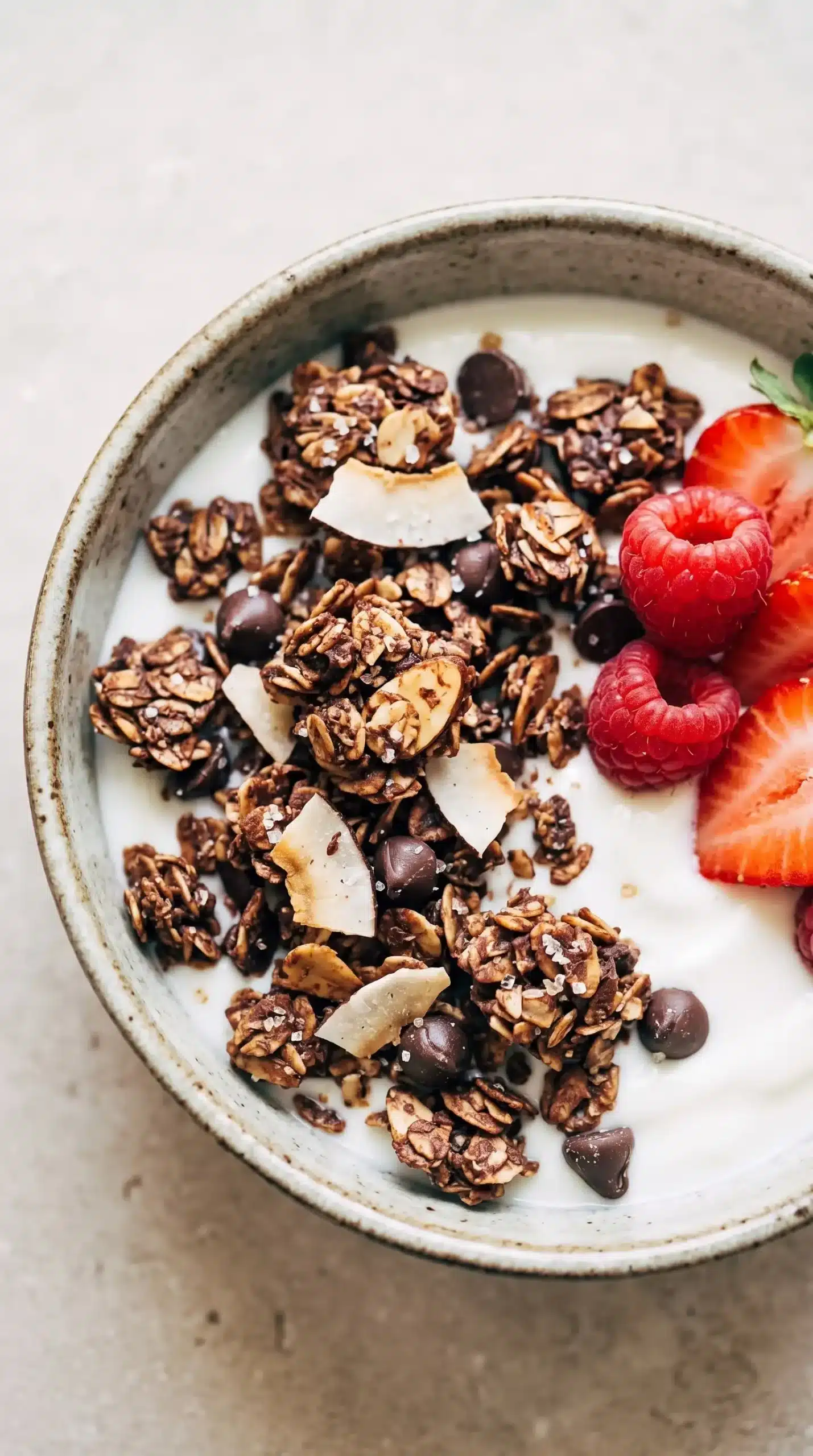
Chocolate granola works naturally as a breakfast topping, snack, or crunchy addition to a bowl of yogurt. Its combination of oats, almonds, coconut, cocoa, chocolate, and sea salt gives it enough flavor to stand on its own while also pairing easily with creamy or fruity foods.
- With yogurt: spoon the cooled clusters over plain or lightly sweetened yogurt.
- With fruit: add fresh fruit for a contrast between juicy softness and crisp chocolate clusters.
- By the handful: use the larger pieces as a simple snack when you want the crunch of baked oats and nuts.
Small adjustments that preserve the character of the granola
The most useful changes are those that respect the existing balance of the mixture. Vanilla can be omitted because it is optional, while the finishing combination of turbinado sugar and coarse sea salt is worth preserving if the intended sweet-salty crunch is important to you.
Chocolate chip granola can also look different depending on when you move it after baking. Choose earlier gentle scooping when you want chocolate incorporated into clusters, or allow more cooling time when distinct chocolate chip pieces are part of the desired appearance.
Why chocolate granola rewards a hands-off finish
Warm chocolate, crisp oats, almonds, and coconut create their finished structure during cooling, so the pan should be treated gently after baking. The strongest clusters come from allowing the softened chocolate to settle among the baked ingredients before anything is moved.
That same principle explains why the short chocolate bake and finishing sugar matter. The chips become soft enough to connect with the surrounding granola, while the coarse sugar and sea salt remain on the surface. Once cooled, each cluster has a combination of crisp oat texture, nutty almonds, chocolate, and a lightly crunchy finish.
Let the chocolate set before breaking the granola apart
Warm clusters are fragile, but patience gives the chocolate time to harden around the oats, almonds, and coconut. Leaving the pan undisturbed produces the structure that makes chocolate granola especially satisfying: crisp pieces that hold together while still breaking naturally into bite-sized clusters.
The most important judgment comes after the oven, not during it. If the granola is not over-browning, resist the urge to keep moving it; once the chocolate has softened, allow cooling time to do the work of binding the clusters.
Chocolate Granola Questions About Clusters, Chocolate, and Storage
Why did my chocolate granola turn out loose instead of clustered?
Excessive stirring or moving the granola while the chocolate was still soft can break apart the developing clusters. Leaving the baked mixture undisturbed during cooling gives the chocolate time to settle among the oats and harden in place.
Can I leave out the vanilla?
Yes. Vanilla is optional in the supplied formula, so omitting it does not require another ingredient to replace it. The cocoa, chocolate chips, maple syrup, coconut, almonds, and finishing seasonings still provide the main flavor structure.
Why are the chocolate chips soft when the granola comes out of the oven?
The chips are intentionally added near the end of baking and returned to the oven briefly so they become very soft. That softness allows the finishing sugar and coarse sea salt to adhere and gives the chocolate an opportunity to settle into nearby clusters as the granola cools.
How can I keep the chocolate chips looking like separate pieces?
Allow the granola to cool for several hours or overnight before scooping it into a container. Waiting until the chocolate is fully cooled and hardened helps preserve the individual chip shapes instead of encouraging them to merge into the clusters.
Can I use regular sugar and fine salt for the finish?
The supplied method specifically relies on crunchy turbinado sugar and coarse sea salt for the finishing texture. Those larger crystals create the intended contrast on the softened chocolate, so changing their texture will change the character of the finished granola.
Chocolate Granola with Toasted Almonds and Coconut
Chocolate granola combines crisp rolled oats, toasted almonds, coconut, cocoa, and soft chocolate chips into rich, crunchy clusters with a sweet-salty finish. It is a satisfying choice for breakfast or a simple snack when a homemade granola with plenty of texture is appealing.
Ingredients
Method
Preparation
- Preheat the oven to 250°F (121°C).
- Combine the rolled oats, almonds, coconut flakes, cocoa powder, salt, and 1/3 cup of the turbinado sugar in a large bowl.
- Whisk the melted coconut oil, maple syrup, and vanilla together in a separate container.
- Pour the liquid mixture over the dry ingredients and stir until evenly coated.
- Divide the granola mixture between two large jelly roll pans and spread it into even layers.
Baking
- Bake for 50 minutes total. About halfway through, check the granola and gently shake or stir the pan only if needed to prevent excessive browning.
- After the 50-minute baking period, scatter the chocolate chips over the granola.
- Return the pans to the oven for 5-10 minutes, until the chocolate chips are very soft.
- Sprinkle the remaining turbinado sugar and coarse sea salt over the softened chocolate chips so the finishing crystals adhere to their surfaces.
Cooling
- Let the granola stand undisturbed for 1-2 hours.
- Gently scoop the granola into jars or an airtight container, handling the clusters carefully to preserve their shape.
- For more distinct chocolate chip pieces, the granola can instead remain undisturbed for several hours or overnight until the chocolate has fully cooled and hardened.
Notes
The coarse sea salt and turbinado sugar are important to the overall taste and texture, so the crunchy sugar and coarse salt are best kept as specified. Gentle handling helps preserve the clusters. After removing the granola from the oven, avoid stirring it, and if it is not browning excessively during baking, leave it undisturbed rather than moving it unnecessarily.