From breakfast to dinner, from healthy meals to sweet desserts – Next Yum Recipes brings you quick, simple and tasty ideas for every occasion and every time.


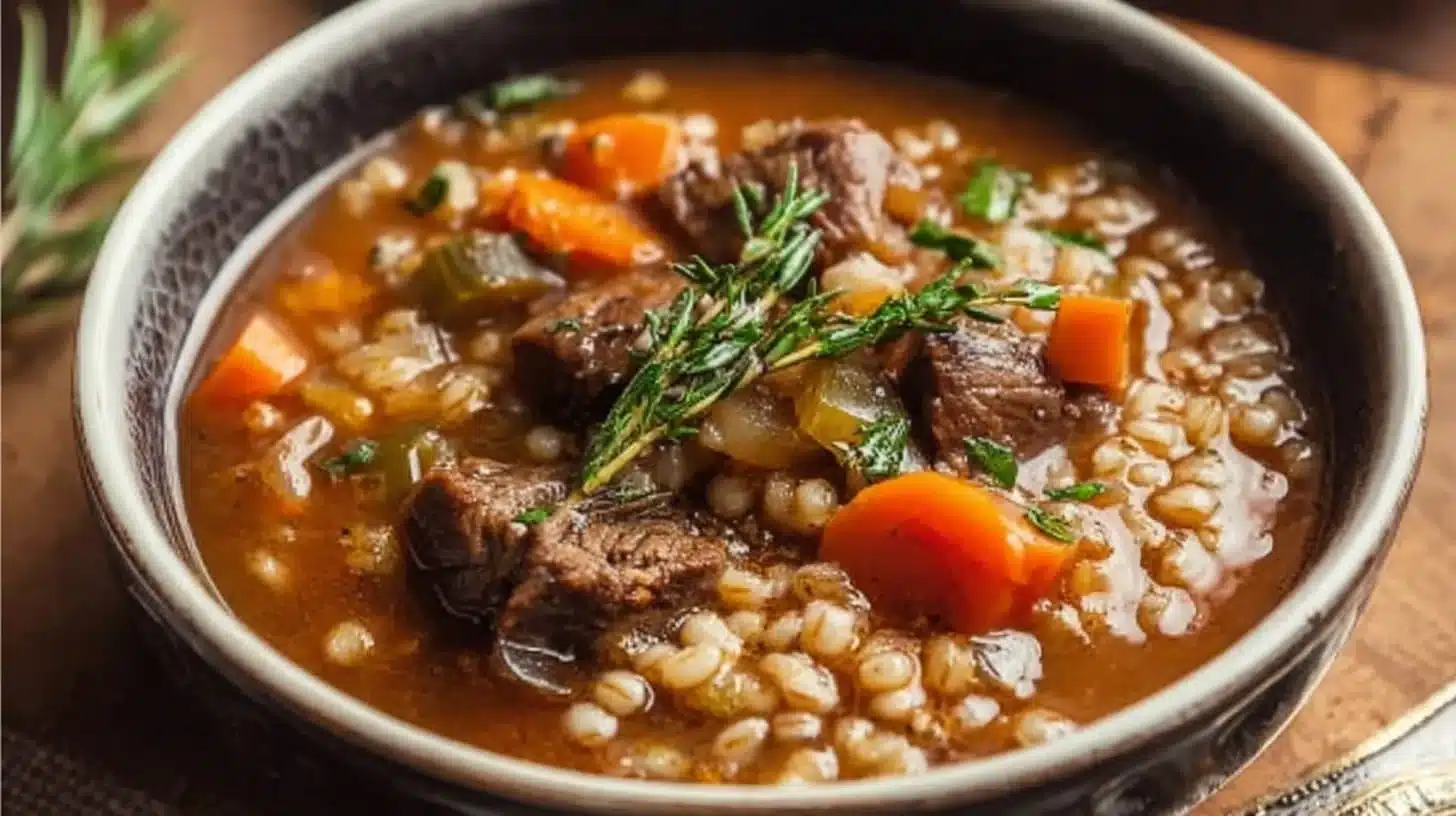
Why does beef barley soup sometimes taste “fine,” but never quite like the deep, cozy version you remember?
Beef Barley Soup gets its comfort from two things you can control: browning and time. You build a savory base by searing the beef and softening the vegetables, then you let barley absorb the broth while the beef turns tender. It’s simple food, but small choices change the result.
Why You’ll Love This Beef Barley Soup
You get a meal that feels steady and filling without being heavy. The broth is savory, the beef is tender, and pearl barley gives you that chewy, satisfying bite that keeps the soup interesting.
It’s also a smart make-ahead option. The flavor often improves after a night in the fridge because the barley and broth settle into each other. That makes it perfect for lunches or a second easy dinner.
If you’re looking for other beef ideas that use different cuts and textures, you can browse our beef liver recipes for more options beyond stew meat.
How to Make This Beef Barley Soup
You start by browning the beef until you see real color, not just “cooked.” That browned layer on the pot is flavor. When you add onions, carrots, and celery, you’re not only softening them. You’re also loosening those browned bits into the soup base.
Barley goes in early so it has time to soften and drink in the broth. It also releases a little starch, which gives the soup body. Keep the simmer gentle. A hard boil can make beef tough and can push barley toward mushy.
Tomatoes add a mild tang and help round out the broth. Herbs like thyme and bay leaf make the soup taste finished, even though the ingredient list stays simple. Toward the end, you season carefully so you don’t oversalt after the broth reduces.
Ingredient Insights for Beef Barley Soup
Beef stew meat: Stew meat can be a mix of cuts, so browning helps even out flavor. If the pieces are very different sizes, smaller ones can dry out, so keeping your cubes similar helps. Chuck-style meat tends to turn tender and rich when simmered gently.
Pearl barley: Pearl barley cooks faster than hulled barley and gives the soup its signature chew. It absorbs broth as it sits, so your soup will thicken over time. Rinsing it quickly removes dust and can make the finished broth taste cleaner.
Beef broth: Broth is the backbone, so use one you like the taste of. Low-sodium broth gives you more control, especially since beef and tomatoes can concentrate flavor as the soup simmers.
Onion: Onion builds sweetness and depth. When it turns translucent and smells mellow, it’s doing its job. That stage helps the soup taste rounded instead of sharp.
Carrots: Carrots add sweetness and balance the savory beef. They also keep the soup from tasting too dark or salty. When they’re tender but not falling apart, the bowl feels more layered.
Celery: Celery adds a light savory note that keeps the broth from feeling heavy. It’s subtle, but without it the soup can taste flatter.
Garlic: Garlic adds warmth and depth. It should smell fragrant in the pot, not browned. If it darkens quickly, your heat is too high for this stage.
Canned diced tomatoes: Tomatoes bring gentle acidity and extra body. They also help the broth taste brighter, which matters in a long-simmered soup. If your tomatoes are very acidic, a longer simmer usually softens that edge.
Bay leaves: Bay leaves add background flavor that makes the soup taste more “complete.” You don’t want to bite into one, so make a habit of removing them before serving.
Thyme: Thyme pairs naturally with beef and barley. It adds an herbal note that stays quiet but noticeable, especially after the soup rests for a bit.
Olive oil: Oil helps you brown beef and soften vegetables without sticking. A light amount is enough. Too much can make the broth feel greasy rather than clean.
Salt and pepper: Salt should wait until late because broth reduces and beef releases seasoning as it cooks. Pepper is best adjusted at the end so it stays warm and fresh-tasting rather than muted.
Texture & Flavor Experience
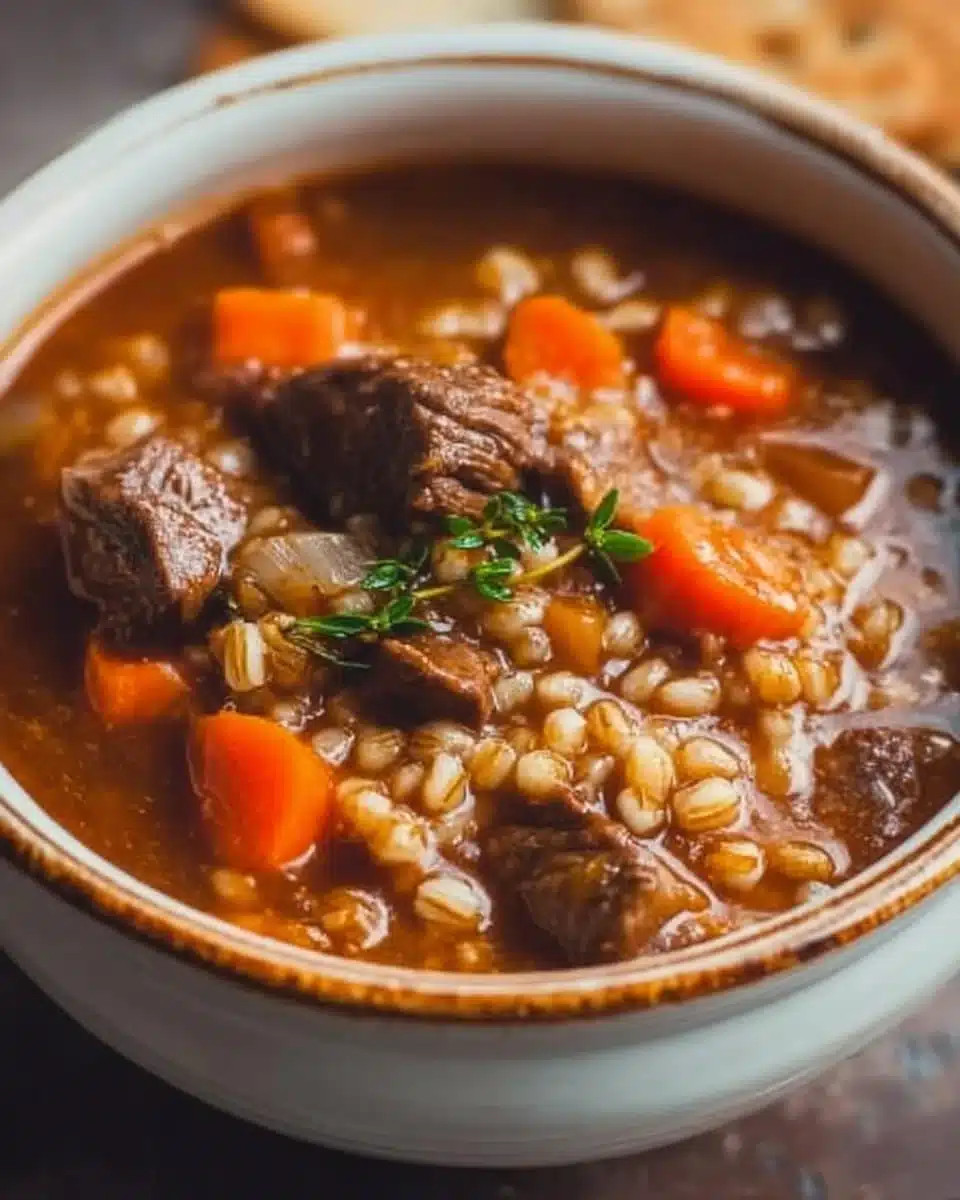
When it’s done right, the beef is tender enough to break with a spoon, but it still holds its shape. The barley is chewy, not hard and not mushy. The broth tastes savory and deep, with a slight tomato lift that keeps it from feeling dull.
You’ll notice the smell change as it simmers. Early on, it’s mostly onion and browned meat. Later, it turns richer and more unified, with thyme and bay quietly in the background.
How to Serve Beef Barley Soup
Serve it hot in deep bowls so it stays warm longer. Bread is the natural partner here because it soaks up broth and adds crunch against the soft beef and vegetables.
If you want something lighter on the side, a simple green salad with lemon vinaigrette helps cut the richness. A drizzle of olive oil or a spoon of plain yogurt can add a silky finish, especially if your broth is very lean.
Tips to Make Beef Barley Soup
- Pat the beef dry before browning so you get real sear and deeper flavor.
- Brown in batches if needed. Crowding traps steam and prevents caramelization.
- Scrape up the browned bits after adding vegetables. That’s free flavor.
- Rinse pearl barley briefly so the broth tastes cleaner.
- Keep the simmer gentle so the beef turns tender without tightening up.
- Taste and adjust salt near the end after the soup has reduced.
- Let the soup rest off heat for a few minutes before serving so the flavors settle.
- Remove bay leaves before serving to avoid bitter bites.
Common Mistakes to Avoid
- Skipping the browning step. Without browning, the broth can taste flat even with good ingredients.
- Boiling hard instead of simmering. This can toughen beef and push barley toward mush.
- Salting heavily at the start. Reduction and broth concentration can make it too salty later.
- Cooking barley far past tender. Check texture toward the end so it stays pleasantly chewy.
- Forgetting that barley thickens the soup after storage. Plan on adding broth when reheating.
Storing Tips
Cool the soup, then refrigerate it in airtight containers. Over time, barley absorbs more broth, so leftovers will look thicker the next day. That’s normal and often makes the soup feel even heartier.
When reheating, add a splash of broth or water and warm gently so the beef stays tender. For longer storage, freeze in meal-sized portions. Thaw overnight in the fridge, then reheat slowly on the stove until hot.
FAQs
How do you keep barley from getting mushy?
Keep the simmer gentle and start checking the barley near the end of cooking. Once it’s tender with a chew, stop cooking and let the soup rest off heat.
Can you make Beef Barley Soup in a slow cooker?
Yes. Browning the beef first adds flavor, then you can let it cook low and slow until tender. Barley can soften more in a slow cooker, so add it later if you want a firmer chew.
Why does the soup get so thick after chilling?
Barley continues absorbing liquid as it sits. When you reheat, add broth or water to bring it back to your preferred consistency.
Conclusion
Beef Barley Soup is a reliable, make-ahead dinner that tastes better the longer it rests, as long as you brown the beef well and simmer gently. You’ll end up with tender meat, chewy barley, and a broth that feels deep and comforting. For another well-tested version to compare, see the Spend With Pennies beef barley soup recipe.
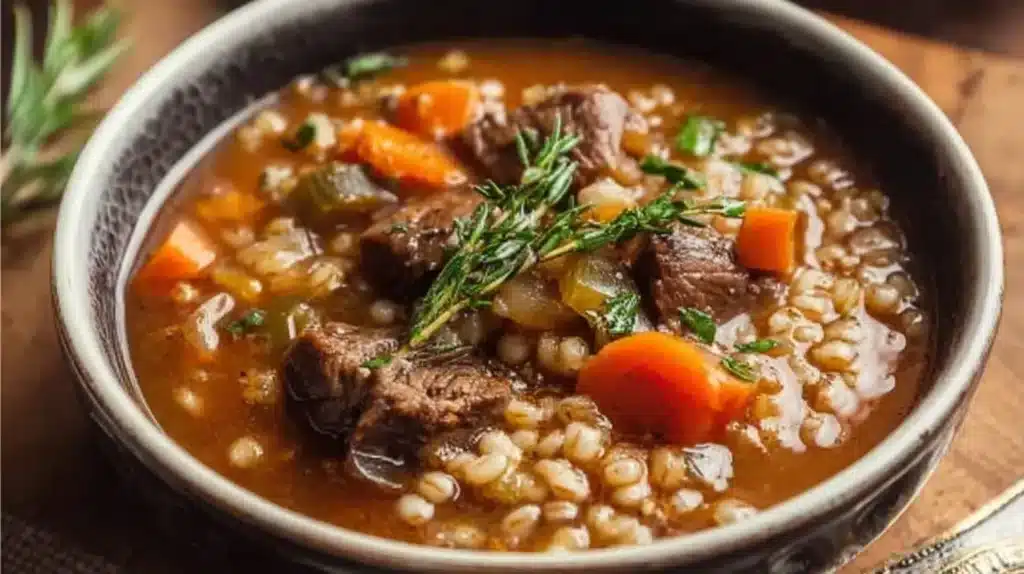
Beef Barley Soup
A simple, filling meal that balances tender beef and chewy pearl barley in a savory broth.
Ingredients
Method
Preparation and Browning
- Pat the beef dry, then brown in olive oil in a large pot; remove and set aside.
- In the same pot, sauté the diced onion, chopped carrots, and sliced celery until they begin to soften.
- Add minced garlic and sauté for another minute until fragrant.
Cooking
- Return the beef to the pot and add the beef broth, pearl barley, and canned diced tomatoes.
- Add bay leaves and thyme; bring to a simmer and cook on low–medium heat until the beef is tender and the barley is cooked through.
- Season with salt and pepper to taste.
Serving
- Serve hot in deep bowls with crusty bread or warm rolls.
- Garnish with chopped parsley for color.
Notes
Let the soup rest for 10 minutes off heat to let flavors meld. Adjust salt near the end after reduction.