From breakfast to dinner, from healthy meals to sweet desserts – Next Yum Recipes brings you quick, simple and tasty ideas for every occasion and every time.


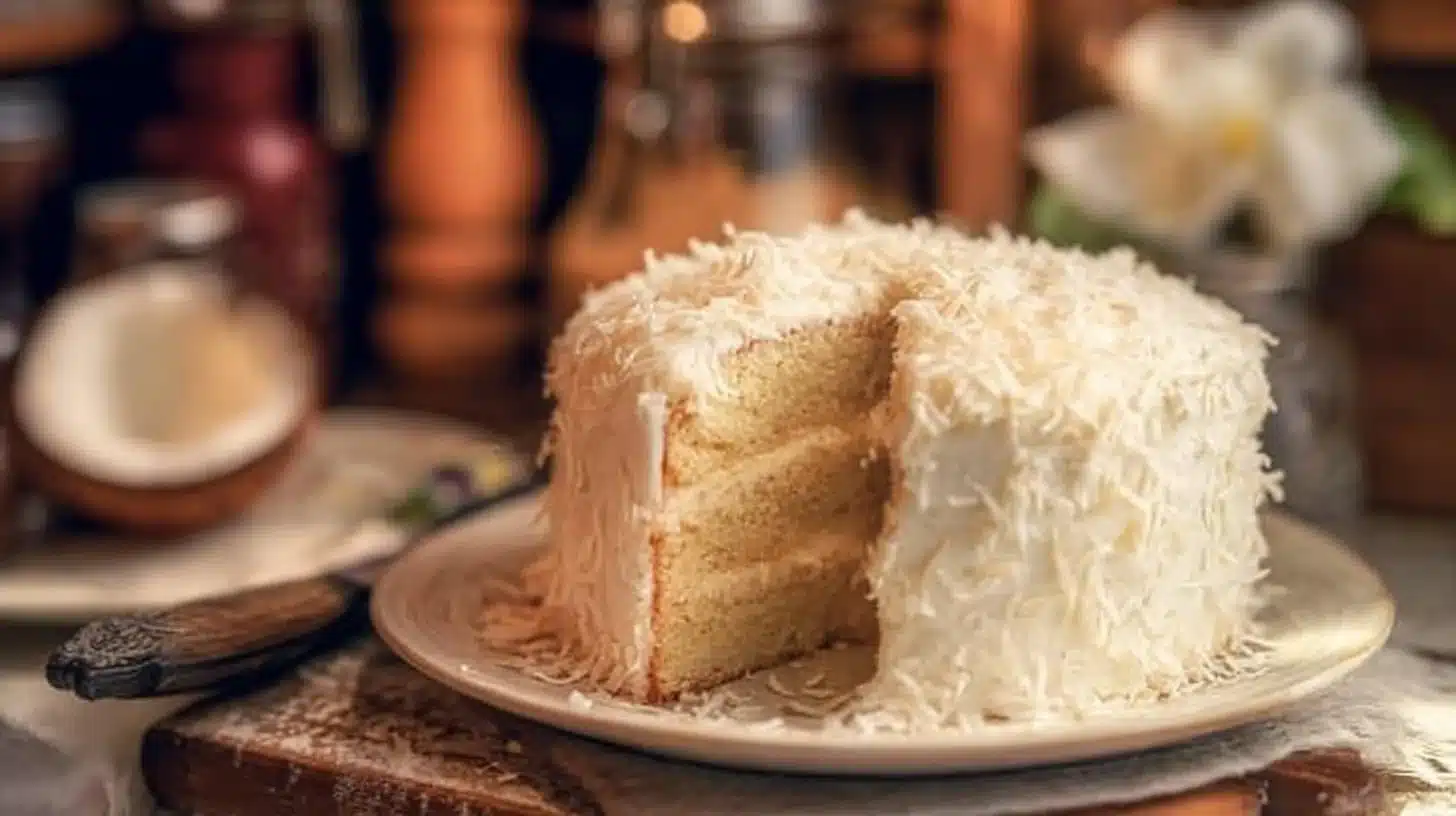
Do you think coconut cake always turns out dry or overly sweet, no matter how careful you are?
This Coconut Cake is built to prove the opposite. You’re making a moist, two-layer cake with a tender crumb and a tangy cream cheese frosting that keeps the sweetness in check. Coconut milk and unsweetened shredded coconut give you real coconut flavor, not just a faint hint.
Why Make This Recipe
You get a cake that feels special without needing special gear. Two bowls, standard pans, and a straightforward mix are all you need, which makes this a realistic weekend bake or an easy celebration dessert.
The method also helps you avoid the most common coconut cake problem: a tight, bready crumb. When you mix wet into dry just until it comes together, the batter stays light, and the finished cake slices clean instead of crumbling.
And the frosting isn’t an afterthought. Cream cheese adds a gentle tang that balances the coconut, so each bite tastes rounded rather than sugary.
How to Make This Coconut Cake
You’re essentially protecting the texture from the start. Keeping the wet and dry mixes separate at first prevents overworking the flour, which is one of the easiest ways to end up with a dense cake. Once you combine them, you’re looking for a batter that’s smooth but not aggressively beaten.
While it bakes, you want steady heat and minimal oven peeking. A coconut cake can look pale even when it’s done, so don’t rely on color alone. Instead, watch for the top to spring back lightly when you touch it, and for the edges to pull away just a bit from the pan.
After cooling, you build structure with frosting that’s thick but spreadable. If it feels loose, a short chill usually tightens it up, which makes layering calmer and cleaner.
Ingredient Insights for Coconut Cake
All-purpose flour: Flour gives the cake its structure, but it can also make the crumb tough if it’s mixed too hard. A gentle mix keeps your layers tender, which matters even more in a two-layer cake where you want neat slices.
Granulated sugar: Sugar sweetens, of course, but it also helps the cake stay moist. If you cut it too much, the crumb can bake up drier and slightly coarse, especially with coconut in the batter.
Unsweetened shredded coconut: This adds texture and a toasty coconut note without making the cake cloying. Unsweetened coconut also gives you more control, since the frosting already brings sweetness.
Baking powder: Baking powder supports lift and helps the layers rise evenly. If your cake domes a lot, it’s often a sign the oven runs hot rather than a problem with the leavener.
Baking soda: In small amounts, baking soda helps tenderness and browning, especially with dairy-like ingredients in the mix. Too much can leave a slightly soapy aftertaste, so keeping it measured matters.
Salt: Salt sharpens coconut flavor and keeps the sweetness from feeling flat. It’s subtle, but you notice it when it’s missing, especially with cream cheese frosting.
Coconut milk: Coconut milk is doing real work here. It adds fat and moisture, which keeps the cake soft for days, and it carries coconut flavor through the crumb rather than leaving it only on the surface.
Vegetable oil: Oil tends to keep cakes moist longer than butter-based batters. You’ll notice the crumb stays plush even after refrigeration, which is helpful when you’re dealing with cream cheese frosting.
Eggs: Eggs bind and give lift. Room-temperature eggs usually blend more smoothly, which can make your batter look silkier and help the cake bake more evenly.
Vanilla extract: Vanilla rounds out the coconut so it tastes fuller. It’s not there to make the cake “vanilla,” but to soften any sharp edges and make the coconut feel warmer.
Cream cheese: Cream cheese brings tang and body, giving you frosting that tastes balanced and holds its shape. If it’s too warm, the frosting can slide, so a cool kitchen helps.
Butter: Butter adds richness and a smoother mouthfeel to the frosting. It also helps the frosting set a bit firmer once chilled, which matters when you’re stacking layers.
Powdered sugar: Powdered sugar thickens frosting quickly, but it can push sweetness too far if you dump it in fast. Adding it gradually lets you stop at the texture you want without over-sweetening.
Coconut cream: Coconut cream deepens coconut flavor in the frosting and adds a plush texture. A little goes a long way, and it helps the frosting feel cohesive with the cake rather than separate.
Texture & Flavor Experience
When your Coconut Cake is on point, the crumb feels soft and springy, not crumbly or dry. You’ll notice a gentle coconut aroma as you slice, and the layers hold together without compressing under the knife.
The frosting should taste tangy first, then sweet, with coconut in the background. If the cake is slightly chilled, the flavors feel cleaner and the frosting holds a tidy edge, which is great for serving.
How to Serve Coconut Cake
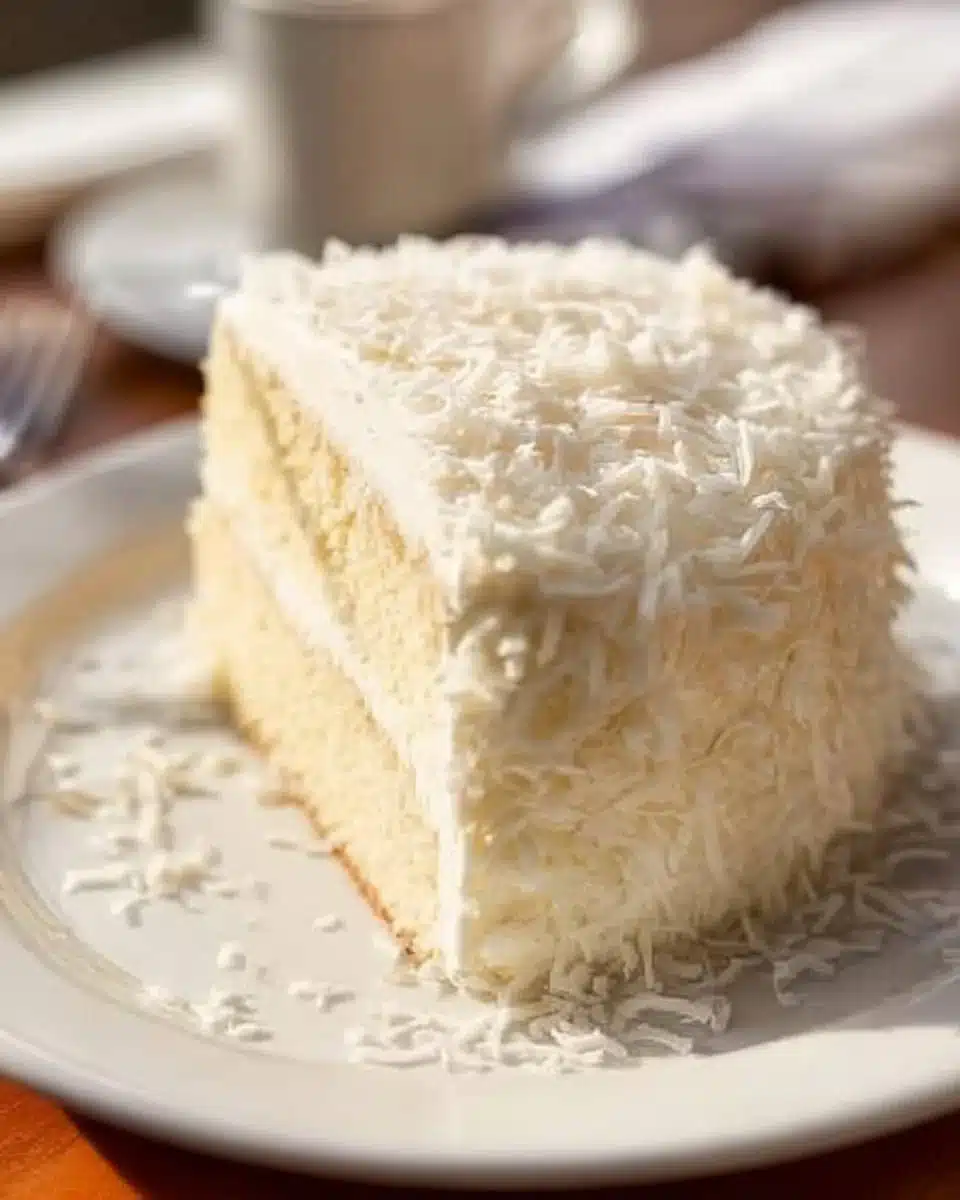
For the cleanest slices, use a serrated knife and wipe the blade between cuts. If your kitchen is warm, serving the cake slightly chilled helps the cream cheese frosting stay sharp and neat.
Coconut pairs well with coffee and black tea because they cut through richness. For a brighter plate, add fresh fruit like pineapple or mango on the side. If you want the full method and measurements in one place, you can reference your Full coconut cake recipe page for the recipe card.
For a simple finish, press a little shredded coconut onto the top or sides. Toasted coconut adds crunch and a deeper aroma, though even a small amount makes a noticeable difference.
Tips to Make Coconut Cake
- Bring your eggs to room temperature so the batter blends smoothly and rises more evenly.
- Stop mixing as soon as the flour disappears. If you keep going, the batter tightens and the cake bakes up denser.
- Rotate your pans once during baking if your oven has hot spots, but keep the door opening quick.
- If your layers dome, let them cool fully before leveling. A warm cake tears more easily and makes frosting messy.
- Chill the frosting briefly if it looks glossy and loose. Ten minutes in the fridge often makes it spread like a dream.
- Toast a small handful of coconut for garnish so you get contrast in aroma and texture without changing the whole cake.
Common Mistakes to Avoid
- Overmixing after combining wet and dry: mix just until the batter looks uniform so your crumb stays tender.
- Judging doneness by color alone: coconut cakes can stay pale, so rely on a light spring-back and a clean tester instead.
- Frosting warm cake layers: heat melts the frosting and makes layers slide, so cool completely before assembling.
- Using low-fat coconut milk: you’ll lose moisture and coconut depth, and the cake can taste a bit flatter.
- Skipping a quick chill before slicing: a short rest in the fridge helps the frosting set and gives you cleaner cuts.
Storing Tips
Because you’re using cream cheese frosting, you’ll usually want to keep the cake covered and refrigerated, especially if your kitchen runs warm. The cake stays pleasant for several days, though the crumb firms slightly when cold.
For the best texture, let a slice sit at cool room temperature for a few minutes before eating. If you freeze slices, wrap them well so they don’t pick up freezer odors, then thaw in the fridge overnight to keep the frosting stable.
FAQs
How do you keep coconut cake from drying out?
You get the best results when you avoid overbaking and measure flour carefully. Covering the cake well after frosting also helps, since the frosting acts like a moisture barrier.
Why does cream cheese frosting sometimes turn runny?
It usually happens when the cream cheese or butter is too warm, or when the frosting is overmixed. A short chill can firm it up, and spreading it on fully cooled layers keeps it from sliding.
Can you make the layers ahead of time?
Yes. You can bake the layers, cool them fully, wrap them tightly, and refrigerate them. Cold layers are actually easier to frost because they’re sturdier.
Conclusion
This Coconut Cake gives you the moist crumb and true coconut flavor people hope for, plus frosting that tastes balanced instead of overly sweet. Once you focus on gentle mixing and proper cooling, the whole process feels much more predictable. If you like comparing techniques, you can also look at Sally’s Baking coconut cake recipe for another well-tested approach.

Coconut Cake
A moist two-layer cake with a tender crumb and tangy cream cheese frosting, enhanced by coconut milk and shredded coconut.
Ingredients
Method
Preparation
- Preheat the oven to 350°F (175°C). Grease and flour two 9-inch round cake pans.
- In a large bowl, whisk together the flour, sugar, shredded coconut, baking powder, baking soda, and salt.
- In another bowl, combine the coconut milk, vegetable oil, eggs, and vanilla extract. Mix well.
- Pour the wet ingredients into the dry ingredients and mix until just combined.
- Divide the batter evenly between the prepared cake pans.
Baking
- Bake for 25-30 minutes or until a toothpick inserted in the center comes out clean.
- Allow the cakes to cool in the pans for 10 minutes, then turn them out onto wire racks to cool completely.
Frosting
- Beat the cream cheese and butter together until smooth. Gradually add the powdered sugar and coconut cream, mixing until creamy and spreadable.
- Once the cakes are cool, spread frosting between the layers and over the top and sides of the cake.
- Garnish with additional shredded coconut if desired.
Serving
- Slice the cake with a serrated knife and serve slightly chilled or at cool room temperature.
Notes
Use full-fat coconut milk for richer flavor. Gradually add powdered sugar to frosting to control sweetness.


