From breakfast to dinner, from healthy meals to sweet desserts – Next Yum Recipes brings you quick, simple and tasty ideas for every occasion and every time.


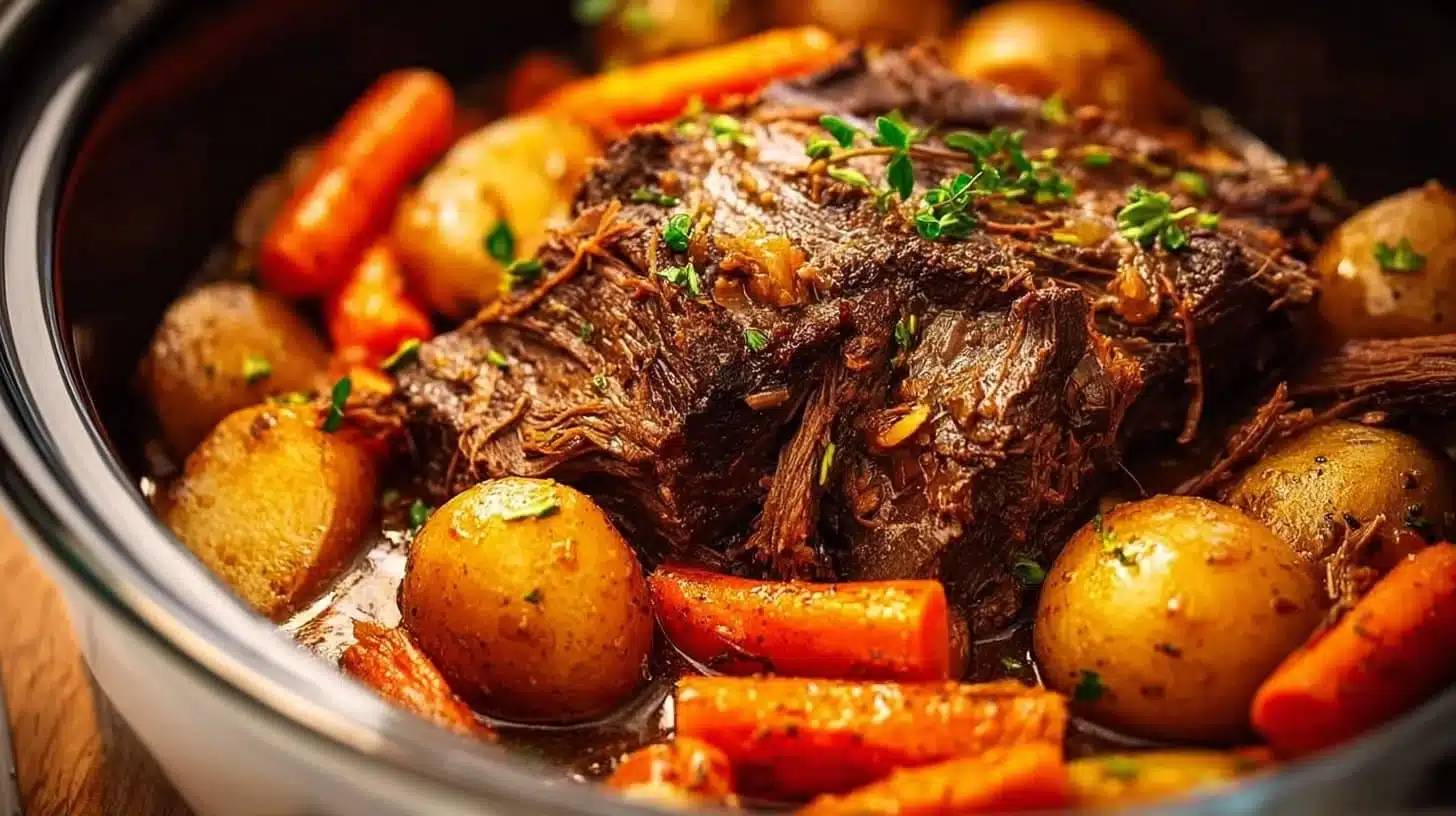
Do you really need a complicated braise to get pot roast that shreds cleanly and still tastes rich?
With Crock Pot Roast, you can get that slow-cooked depth without babysitting the stove. You’ll build flavor up front, then let gentle heat do what it does best: turn a tough cut into tender beef and a savory sauce that tastes like you worked harder than you did.
Why Make This Recipe
You’re working with a method that forgives small timing differences. If dinner runs late, the roast usually gets softer, not ruined, as long as you keep enough liquid in the pot.
You also get a full meal in one cooker. The vegetables absorb the cooking juices, and the herbs perfume the whole pot, so you don’t have to chase flavor with extra sides.
It’s a smart option for planning ahead, too. The leftovers slice or shred easily, which makes quick sandwiches, rice bowls, or a second dinner later in the week feel simple.
How to Make This Crock Pot Roast
You’ll get the best result by starting with a strong sear. When the roast hits a hot pan, you should hear a steady sizzle, and the surface should turn deep brown, not gray. That browning creates fond, which is where a lot of your final “roast” flavor comes from.
Next, you build a quick flavor base in the same pan. Tomato paste needs a short cook so it tastes rounded instead of raw. When it darkens slightly and smells sweet, you’re ready to loosen the pan with broth and pull up those browned bits.
In the slow cooker, the goal is steady, moist heat. The roast becomes tender when connective tissue breaks down into gelatin, and that gives the sauce a fuller mouthfeel. If you finish with gravy, you’re just tightening the texture, not changing the flavor.
Ingredient Insights for Crock Pot Roast
Chuck roast: This cut has the marbling and connective tissue that turns silky after hours of low heat. If it still feels tight when you test it, it usually needs more time, not more liquid.
Olive oil: A thin layer helps the roast brown evenly. If your pan looks dry while searing, add a small splash rather than turning down the heat.
Onion: Onion sweetens as it cooks and helps round out the savory notes. When it turns translucent and smells mellow, it’s doing its job.
Garlic: Garlic adds aroma more than bulk flavor here. Keep it from browning too hard, or it can taste bitter in a long-cooked sauce.
Tomato paste: This is your quiet depth builder. Browning it briefly takes away the sharp edge and adds a subtle roasted note that makes the broth taste more complete.
Worcestershire sauce: A small amount boosts savory flavor and adds a gentle tang. It’s especially helpful if your broth tastes flat once everything has simmered together.
Beef stock: Stock is the backbone of your sauce. If you use a salty stock, wait to add extra salt until the end, because the flavors concentrate as the roast cooks.
Carrots: Carrots add sweetness and structure. Cut them into larger chunks so they stay tender but don’t dissolve into the liquid.
Baby gold potatoes: These hold shape better than very starchy potatoes. They drink in the sauce, but still stay intact when you lift them out with a spoon.
Fresh thyme and rosemary: Fresh herbs give a cleaner aroma than dried in a long cook. Nestle them into the vegetables so they infuse the pot without taking over.
Cornstarch: This is for texture control, not “fixing” the roast. If your sauce already coats a spoon lightly, you may not need it at all.
Texture & Flavor Experience
When it’s done right, the roast pulls apart with a fork but still looks moist, not stringy and dry. The sauce smells beefy and herby, with a faint sweetness from the onions and carrots. You’ll notice the broth feels slightly glossy from the gelatin released during cooking.
The vegetables should be fork-tender, not falling into mush. Potatoes hold their edges, and carrots feel soft but still have a little body. That balance is what makes the bowl satisfying, not sloppy.
How to Serve Crock Pot Roast
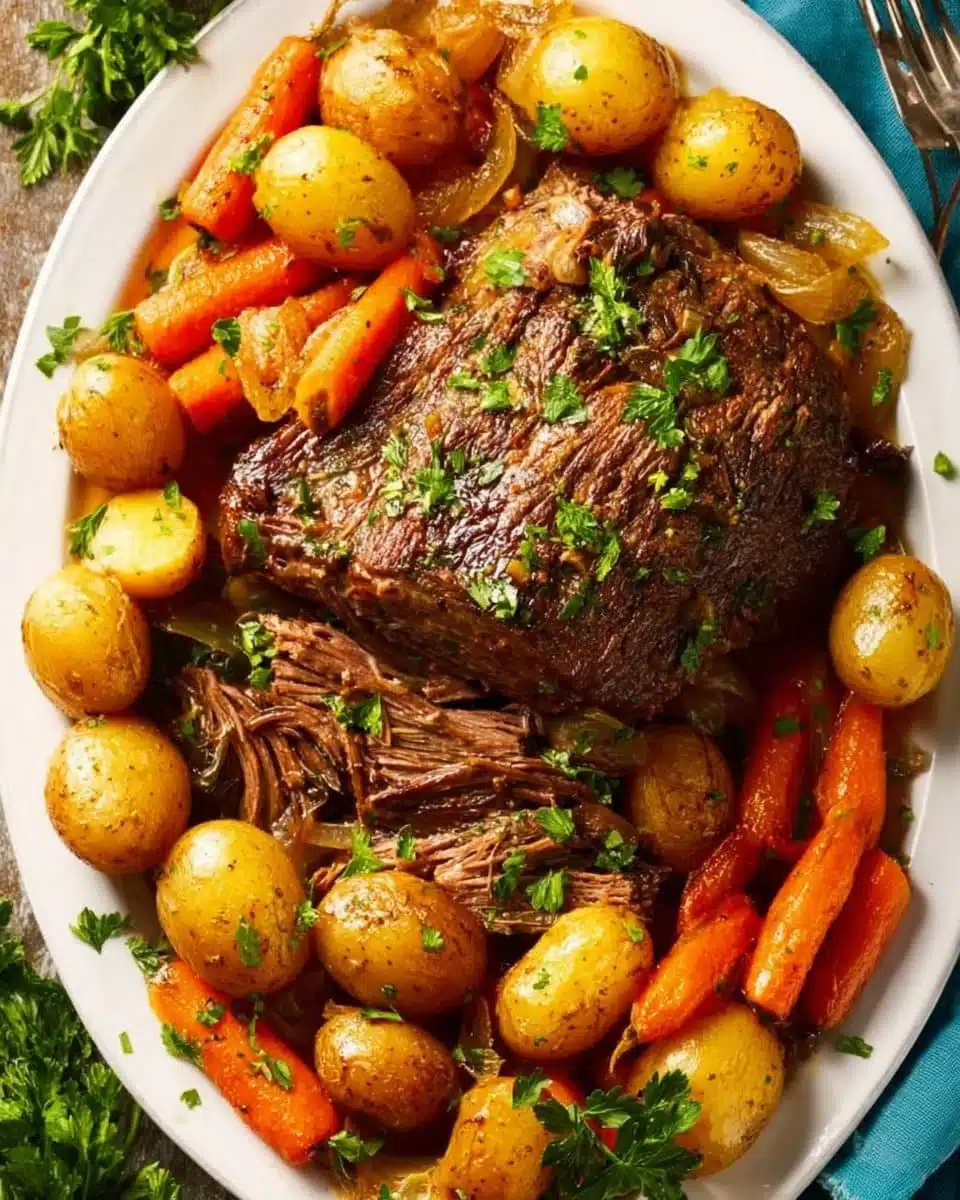
You can serve it sliced if the roast holds together, or shredded if it’s fully tender. Spoon vegetables onto the plate first, then add beef, then finish with a ladle of sauce so everything stays glossy and warm.
If you want a simple weeknight pairing, serve it with bread to mop up gravy and something green on the side. For another cozy slow-cooker dinner to rotate into your week, try crockpot chicken tortilla soup on a night when you want a different flavor profile but the same hands-off comfort.
Tips to Make Crock Pot Roast
- Pat the roast dry before searing so you get browning instead of steaming.
- Let the pan get properly hot; you want a steady sizzle the moment the meat touches the surface.
- Brown the tomato paste briefly until it darkens a shade and smells slightly sweet.
- Deglaze with a splash of stock and scrape the pan well to pull flavor into the sauce.
- Keep potatoes larger or halved so they hold their shape through a long cook.
- Place herbs among the vegetables so they perfume the pot without sticking to the roast.
- If the roast isn’t shredding, give it more time; forcing it early usually means it’s under-tender.
- If you thicken gravy, add slurry slowly and stop when it lightly coats a spoon.
Common Mistakes to Avoid
- Skipping the sear. You’ll lose depth in both the roast flavor and the sauce.
- Turning the heat too high while building the base. Burnt garlic or paste can taste bitter later.
- Cutting vegetables too small. They’ll over-soften long before the roast reaches peak tenderness.
- Salting aggressively at the start. Stock, Worcestershire, and reduction can push it too far.
- Thickening gravy before tasting. Adjust seasoning first, then decide if you need thickness.
Storing Tips
Store the roast with some of the cooking liquid so it stays moist. The sauce will thicken in the fridge as the gelatin sets, which is normal and actually helps protect the meat from drying out.
Reheat gently, ideally with a splash of stock to loosen the sauce. If you microwave, use medium power and stir the sauce halfway through. Potatoes can get a bit softer after reheating, so expect a more stew-like texture on day two.
FAQs
Why is my roast tough even after hours in the slow cooker?
It’s usually undercooked, not overcooked. Toughness means the connective tissue hasn’t fully broken down yet, so keep cooking until it pulls apart easily.
Can you add the vegetables later so they stay firmer?
Yes, especially if you like potatoes with more structure. Add them partway through, but keep in mind you’ll lose a little of the “all-in-one” convenience.
How do you keep the sauce from tasting flat?
Taste near the end and adjust in small steps. Sometimes a touch more Worcestershire or a little salt is enough, but you may also just need the sauce reduced slightly for concentration.
Conclusion
Crock Pot Roast is one of those meals that rewards a few smart early steps, then runs on autopilot. Once you dial in browning and gentle heat, you get tender beef, flavorful vegetables, and a sauce that feels restaurant-cozy without the work.
If you want another trusted approach to compare technique and seasoning balance, take a look at Cooking Classy’s Perfect Slow Cooker Pot Roast for extra notes and variations.
Crock Pot Roast
A hearty, tender, and flavorful pot roast made in a slow cooker, perfect for family dinners or meal prep with minimal hands-on time.
Ingredients
Method
Preparation
- Heat olive oil in a large sauté pan over medium-high heat.
- Pat the roast dry and season liberally on all sides with Kosher salt and freshly cracked black pepper.
- Add the roast to the large sauté pan and sear on all sides (including the edges) for about 4-5 minutes per side. Place in the slow cooker.
- Without wiping out the pan, reduce heat to medium, add onion along with a couple pinches of salt and pepper, and cook, stirring occasionally for about 4 minutes.
Cooking
- Add garlic, tomato paste, brown sugar, Italian seasoning, garlic powder, onion powder, chili powder, and a couple pinches of salt and pepper. Cook for another minute.
- Add Worcestershire sauce and a couple splashes of beef stock to deglaze the bottom and scrape the yummy bits off.
- Add the onion and garlic mixture, carrots, and potatoes to the large crock pot. Pour in remaining beef stock. Season with a few liberal pinches of salt and pepper.
- Nestle fresh thyme, fresh rosemary, and bay leaves into the veggies.
- Put the lid on and cook on high for 5-6 hours or on low for 8-10 hours or until the roast shreds easily.
Making Gravy
- To make gravy, if desired, strain the cooking liquid into a saucepan over medium heat.
- Dissolve 3 tablespoons of cornstarch in 3 tablespoons of cold water. Stir the cornstarch slurry into the stock.
- Bring gravy to a simmer and cook, stirring frequently until it thickens to your liking. Season to taste with salt and pepper.
Serving
- Garnish roast with fresh chopped parsley and serve with gravy.
Notes
Serve the roast sliced or shredded over the carrots and baby gold potatoes. Pair with crusty bread and a green salad. Store leftovers in airtight containers; they last 3–4 days in the fridge or up to 3 months in the freezer.