From breakfast to dinner, from healthy meals to sweet desserts – Next Yum Recipes brings you quick, simple and tasty ideas for every occasion and every time.


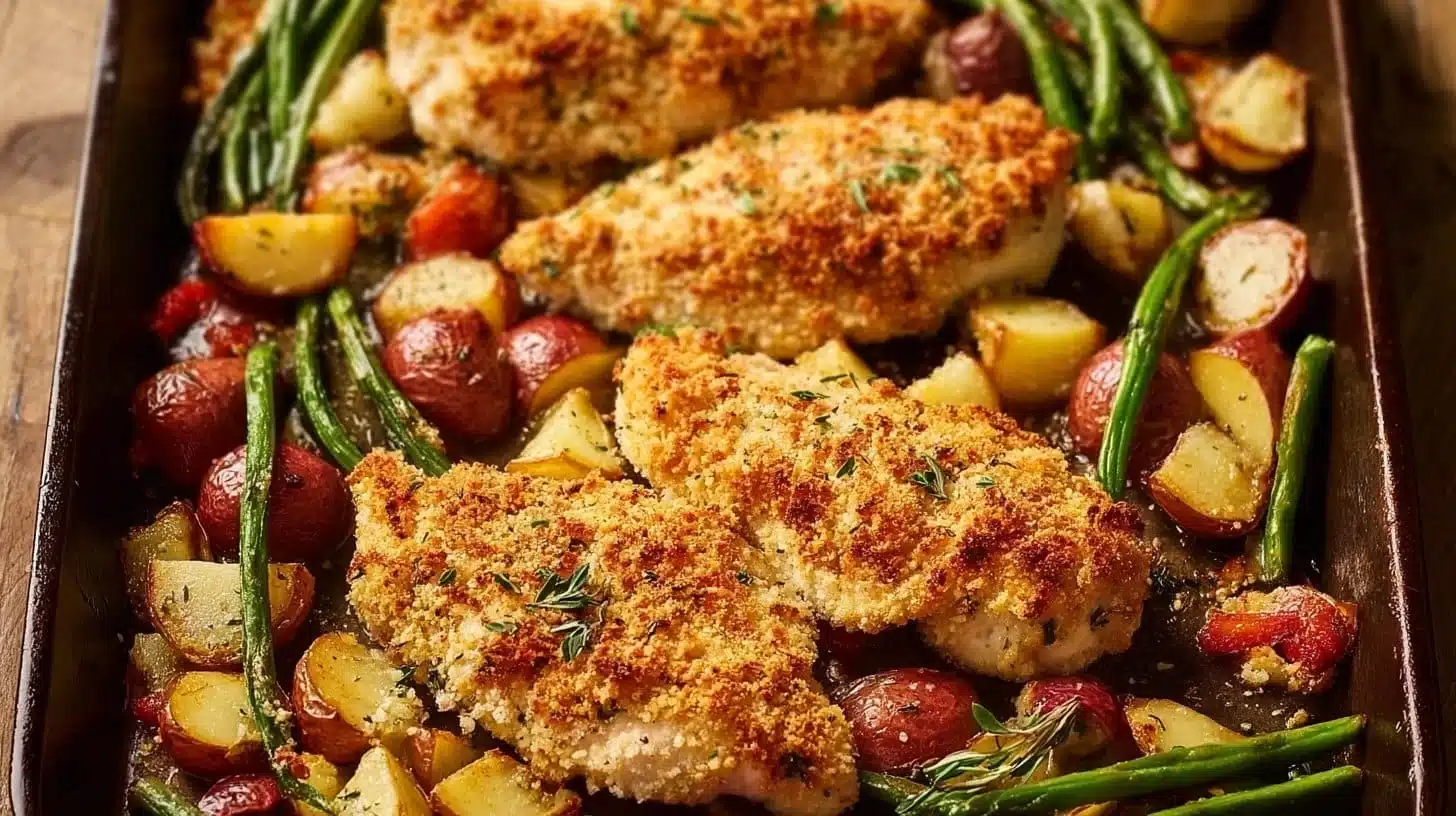
Ever notice how “sheet pan chicken” can be easy, but the chicken turns out soft while the potatoes still need time?
Parmesan Crusted Chicken Sheet Pan works because you’re managing heat and timing, not just tossing everything together. You give the potatoes a head start for browning, then add chicken and green beans later so the crust stays crisp and the vegetables stay tender instead of wrinkled.
Why Make This Recipe
You make this when you want a full dinner with one tray and a predictable finish. The chicken gets a cheesy crust, the potatoes roast into browned edges, and the green beans add a lighter, snappy bite on the same pan.
It’s also a practical family meal. The ingredients are familiar, and you can adjust seasoning without changing the method. When you’re short on time, that reliability matters.
If you want another weeknight chicken dinner with a different vibe, this creamy chicken tortilla soup recipe is a good option for busy evenings when you’d rather simmer than roast.
How to Make This Parmesan Crusted Chicken Sheet Pan
You start by roasting the potatoes first so they can dry out on the surface and brown. That first roast is where you build the texture. If you add chicken too early, the pan fills with moisture and your potatoes end up steaming.
While the potatoes cook, you coat the chicken with parmesan and breadcrumbs. You want the coating to look like a thin, even layer, not clumps. When the pan goes back into the oven, the coating toasts and turns lightly golden, which is your cue that it’s crisping.
Green beans go in toward the end so they roast quickly and stay bright. If they’re on the pan too long, they can shrivel and lose that fresh snap. A short broil at the end can add color, but you keep a close eye so the cheese doesn’t burn.
Ingredient Insights for Parmesan Crusted Chicken Sheet Pan
Chicken breast: Chicken breast cooks quickly and stays juicy when it’s not too thin. If pieces vary a lot in thickness, you may notice one dries out before another is done, so even sizing makes this recipe feel effortless.
Parmesan: Parmesan brings salty, savory flavor and helps the coating brown. Freshly grated parmesan tends to melt and crisp more evenly, while shelf-stable grated can toast faster and sometimes tastes sharper.
Breadcrumbs: Breadcrumbs give structure to the crust. A coarser crumb adds crunch, while a fine crumb gives a tighter coating. Either works, but coarser crumbs usually look more golden.
Garlic: Garlic adds aroma, but it can burn at high heat if it’s exposed on the pan. When it’s mixed into the coating and oil, it flavors the dish without turning bitter.
Olive oil: Oil helps browning and prevents sticking. It also helps the parmesan mixture cling to the chicken and encourages crisp edges on potatoes.
Red potatoes: Red potatoes roast well because their waxy texture holds shape. Cutting them evenly is the difference between browned bites and a mix of soft and underdone pieces.
Green beans: Green beans add freshness and keep the plate from feeling too heavy. When they roast properly, they blister slightly and stay tender-crisp, not limp.
Salt: Salt pulls flavor forward, but parmesan adds salt too. If you season lightly at the start and adjust after cooking, you avoid the common “too salty” sheet pan problem.
Black pepper: Pepper gives warmth and keeps the dish from tasting flat. A slightly cracked pepper finish can make the chicken crust taste sharper and more savory.
Texture & Flavor Experience
When Parmesan Crusted Chicken Sheet Pan is done right, the chicken has a lightly crisp top that you can hear when you cut into it, while the inside stays juicy. The potatoes should have browned edges and creamy centers, not a steamed texture.
The green beans should look bright with a few blistered spots. Flavor-wise, you get cheesy, garlicky chicken, then earthy potato richness, then a clean vegetable finish that keeps the meal balanced.
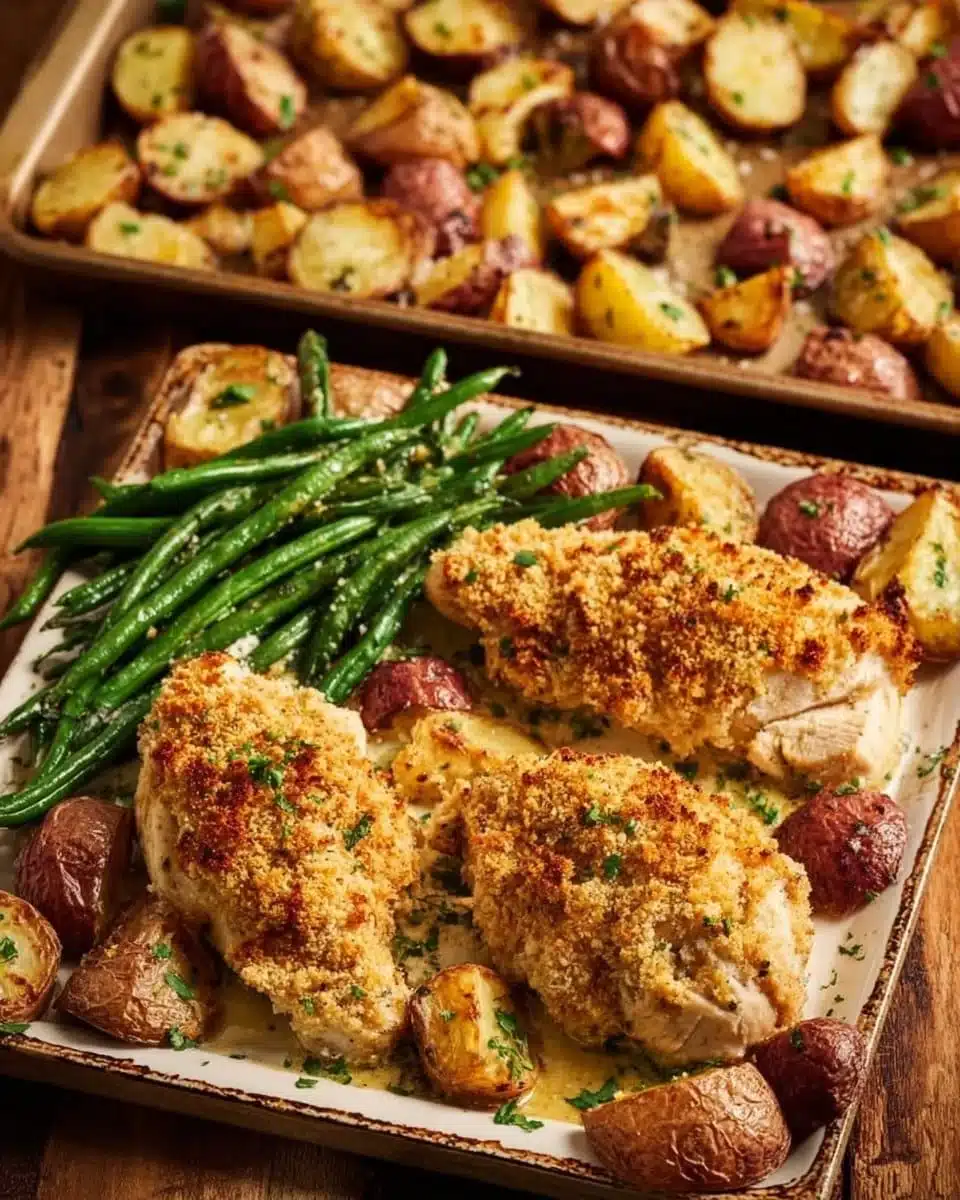
How to Serve Parmesan Crusted Chicken Sheet Pan
Serve it straight from the pan for an easy, casual dinner. Let the chicken rest a few minutes before slicing so the juices stay in the meat instead of running onto the tray.
A lemon wedge on the plate is a small move that helps a lot. A quick squeeze brightens the parmesan and garlic flavors and makes the green beans taste fresher. If you want a side, a simple salad is enough, since the pan already covers protein, starch, and vegetables.
Tips to Make Parmesan Crusted Chicken Sheet Pan
- Pat the chicken dry before coating so the parmesan mixture sticks instead of sliding.
- Cut potatoes to similar size so they brown at the same rate.
- Give potatoes a head start so they roast, not steam, once chicken is added.
- Leave space between ingredients on the pan so hot air can circulate and crisp edges form.
- Add green beans later so they stay tender-crisp instead of shriveling.
- Use a thermometer for chicken doneness so you don’t overcook while waiting on potatoes.
- Broil only briefly at the end if you want extra color, and watch closely so the cheese doesn’t scorch.
Common Mistakes to Avoid
- Overcrowding the sheet pan. Crowding traps steam and ruins browning on potatoes and chicken crust.
- Putting everything in at once. Potatoes need more time than chicken and green beans.
- Using uneven chicken thickness. Thin pieces can dry out before thicker ones are done.
- Over-salting early. Parmesan adds salt, so it’s safer to taste and adjust after roasting.
Storing Tips
Store leftovers in an airtight container in the refrigerator. The chicken crust will soften a bit as it sits, which is normal, but you can bring back some crispness with the right reheat.
Reheat in the oven so hot air dries the surface again. If you microwave, the chicken will warm quickly, but the crust tends to stay soft. For the best balance, warm in the oven until heated through, then serve right away.
FAQs
How do you keep the parmesan crust from falling off?
Dry the chicken first and press the coating on firmly. Giving the coated chicken a few minutes to sit before it hits the oven can also help it adhere.
Can you swap the vegetables?
Yes. Asparagus and broccoli roast well at this temperature, but they may need slightly different timing. Add quick-cooking vegetables later, like you do with green beans.
What’s the easiest way to make sure chicken isn’t dry?
Use a thermometer and pull the chicken once it reaches doneness, then let it rest. If you wait for potatoes to finish, the chicken can overcook.
Conclusion
Parmesan Crusted Chicken Sheet Pan is a simple one-tray dinner that gives you crisp chicken, browned potatoes, and tender green beans when you stage the timing correctly. Once you’ve made it once, it becomes the kind of weeknight meal you can repeat without thinking too hard.
For the original inspiration and another take on the method, see the Parmesan Crusted Chicken Sheet Pan Dinner recipe on Lemons & Zest.
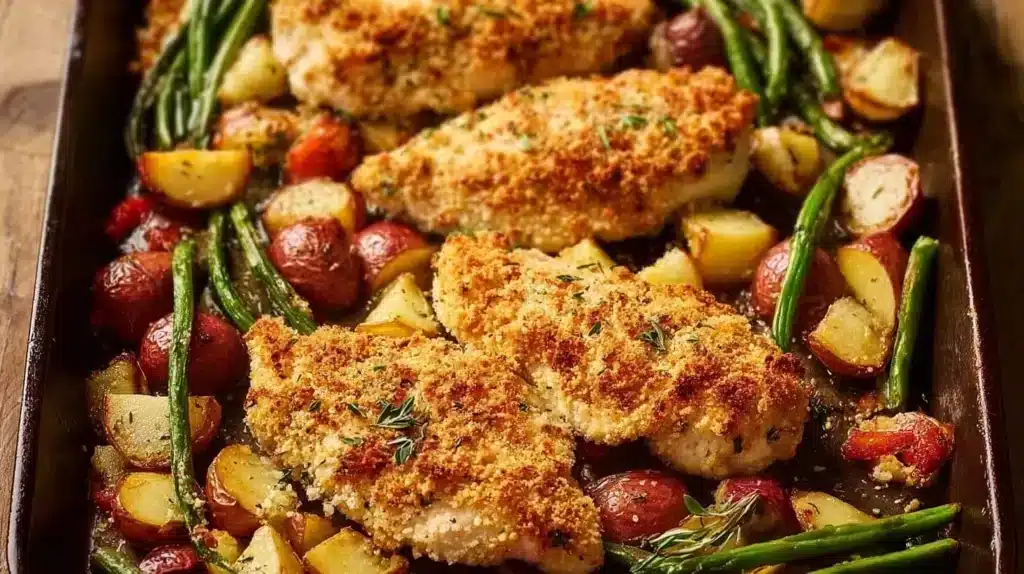
Parmesan Crusted Chicken Sheet Pan
An efficient weeknight dinner featuring crisp, cheesy chicken with browned potatoes and tender green beans, all cooked on one pan for minimal cleanup.
Ingredients
Method
Preparation
- Preheat oven to 425°F.
- Line a sheet pan with parchment for easier cleaning or spray with cooking oil.
- In a medium bowl, toss all ingredients for potatoes together and stir well to evenly coat.
- Spread the potatoes on 1/3 of the pan and place in oven for about 10-15 minutes. If you like your potatoes nice and browned, go with the extra five minutes.
Cooking
- While potatoes are cooking, toss all ingredients for chicken in the same bowl and coat all the chicken well.
- Remove the pan with the potatoes and add the chicken.
- Place in oven while you toss everything together for the green beans and add them to the pan.
- Bake for about 25 minutes or until chicken reaches an internal temperature of 165°F. For extra crispy potatoes, turn the oven to broil on high for 4-5 more minutes if desired.
Serving
- Remove from oven and allow to cool several minutes before serving. Serve straight from the pan.
- Let the chicken rest for a few minutes before slicing to keep juices sealed.
- Plate with the roasted red potatoes and green beans alongside a lemon wedge for brightness.
Notes
Refrigerate leftovers in an airtight container within two hours of cooking. Stored properly, the dish will keep 3–4 days in the refrigerator. Reheat in a 350°F oven for best texture, about 10–15 minutes, until warmed through. Can freeze portions for up to 2 months.


