From breakfast to dinner, from healthy meals to sweet desserts – Next Yum Recipes brings you quick, simple and tasty ideas for every occasion and every time.


Have you ever noticed how a tiny pasta can make a bowl of soup feel like a full meal?
Pastina soup is one of those simple dishes that quietly does a lot. You get a soothing broth, tender little pasta, and just enough vegetables to make it feel balanced. It’s the kind of comfort food you can pull together on a weeknight, but it still tastes like you meant it.
Why Make This Recipe
Pastina soup works because it builds flavor in layers without asking much from you. When you soften your vegetables first, the kitchen starts to smell sweet and savory, and that aroma carries into the broth. It’s a small step that makes the final bowl taste rounded, not watery.
You’ll also like how flexible it is. You can keep it light when you want something gentle, or make it more filling by leaning on richer broth and a generous finish of cheese. If you’re new to soup-making, this is a forgiving place to start.
And if you’re curious how different cooks approach it, you can compare notes with this Italian-style pastina soup guide while you decide what sounds best for your table.
How to Make This Pastina Soup
You’re aiming for three things: a flavorful base, a broth that tastes seasoned rather than flat, and pastina that stays pleasantly tender. Start by cooking your aromatics until they look glossy and relaxed, not browned. That gentle sauté pulls sweetness from onion and carrot and softens any sharp bite from garlic.
Once the broth goes in, bring it up to a lively simmer before the pasta hits the pot. Pastina cooks fast, and it can go from perfect to overly soft in a short window. In practice, you’ll know it’s close when the pasta looks slightly puffed and the soup thickens just a touch from its starch.
Add greens at the end so they stay bright and don’t turn dull or limp. If your soup looks thicker than you expected, that’s normal. Pastina keeps absorbing liquid as it sits, so you may want an extra splash of broth when you reheat.
Ingredient Insights for Pastina Soup
Pastina: This tiny pasta acts like a natural thickener. It releases starch quickly, so your soup feels cozy rather than thin. If you like a more brothy bowl, you’ll want to stop cooking it just as it turns tender and serve right away.
Broth: This is where most of your flavor lives. A richer broth gives you a round, savory backbone, while a lighter one tastes cleaner and more delicate. If your broth is low-sodium, you’ll need to season more carefully as it simmers so it doesn’t taste bland.
Onion: Onion brings sweetness and depth, especially when you cook it until translucent. You’ll notice the smell shift from sharp to mellow. That’s your cue that the base is ready for broth.
Carrot: Carrot adds gentle sweetness and a soft bite. Diced small, it cooks quickly and blends into the spoonfuls. Cut it too big, and it can stay firm while the pasta gets too soft.
Celery: Celery gives a subtle savory edge that keeps the soup from tasting one-note. When it’s cooked properly, it smells almost peppery and fresh, even though it’s fully tender.
Garlic: Garlic should stay fragrant, not toasted. If it starts smelling nutty or looks golden fast, your heat is a little high. Keeping it gentle helps the soup taste warm and aromatic instead of bitter.
Spinach: Spinach is best stirred in at the end so it stays green and soft. If you use frozen spinach, squeeze out excess water first so you don’t dilute the broth. You’ll still get the same comforting feel, just with less watery drift.
Parmesan: Parmesan adds saltiness and a savory finish that makes the soup taste more complete. A little goes a long way. If you add it while the soup is boiling hard, it can clump, so it’s better as a gentle stir-in or topping.
Texture & Flavor Experience
When your pastina soup is right, the broth tastes savory and slightly sweet from the vegetables, not sharp or raw. The pastina should be tender but still distinct, not mushy. You’ll see the surface look a bit silkier as the starch does its job.
The best bowls have little signs of care. The vegetables are soft enough to cut with a spoon, the greens look bright, and the aroma feels comforting without being heavy. If it tastes flat, it usually needs a pinch more salt or a little more simmer time to let the flavors settle.

How to Serve Pastina Soup
You can serve pastina soup as a light lunch, an easy dinner, or a starter before something roasted. If you want it to feel more like a full meal, pair it with crusty bread so you can scoop up the last bits of pasta from the bowl.
For balance, think about texture. A crisp salad on the side works well because the soup is soft and warm. If you’re adding Parmesan, try topping at the table so you can control saltiness and keep the cheese from disappearing into the broth.
Tips to Make Pastina Soup
- If your soup thickens too much, loosen it with warm broth instead of water so you don’t wash out the flavor.
- Cut your vegetables small and even so they turn tender at the same pace as the pastina.
- Keep the simmer gentle once the pasta is in. A hard boil can break down tiny pasta and make the texture gluey.
- Add spinach after you turn down the heat. It wilts quickly and stays greener when it’s not aggressively boiled.
- If you want extra savory depth, stir in a small pinch of grated Parmesan right before serving, then top with more.
- Taste the broth before you serve. Small soups need confident seasoning, and a final pinch of salt can bring everything into focus.
Common Mistakes to Avoid
- Cooking the pastina too long: pull it when it’s just tender, since it keeps softening as it sits.
- Skipping the sauté: those first minutes of softening vegetables prevent the broth from tasting thin.
- Overheating the garlic: if it browns, it can taste bitter, so lower the heat and keep it fragrant.
- Adding greens too early: spinach turns dull and can taste overcooked, so stir it in at the end.
- Over-salting early: broth reduces slightly as it simmers, so season gradually and taste near the finish.
Storing Tips
Pastina soup keeps well in the fridge, but the pasta will keep soaking up liquid. You’ll often find it much thicker the next day. Store it in an airtight container and plan to add a splash of broth when you reheat.
Reheat gently so the pasta doesn’t break down. If you’re freezing, texture can be a little softer after thawing, so it helps to freeze in portions and warm slowly. For more storage notes and variations, you can also check this pastina soup storage and leftover guide.
FAQs
What makes pastina soup feel so comforting?
You’re getting a double comfort effect: warm broth plus tiny pasta that releases starch. That starch gives the soup a soft, almost silky feel that reads as cozy even with simple ingredients.
How do you keep pastina from turning mushy?
Keep the simmer steady, not boiling hard, and serve soon after it turns tender. If you’re making it ahead, it helps to keep extra broth ready because the pasta keeps absorbing liquid.
Can you swap the greens without changing the feel of the soup?
Yes. Spinach is mild and quick, but you can use kale or Swiss chard if you like more chew. Just chop them smaller and give them a little more time to soften.
Conclusion
Pastina soup is proof that small details matter. When you build a gentle vegetable base, simmer a well-seasoned broth, and cook the pasta just until tender, you get a bowl that tastes soothing and intentional. Make it once, pay attention to the cues, and you’ll start trusting your instincts with every pot.
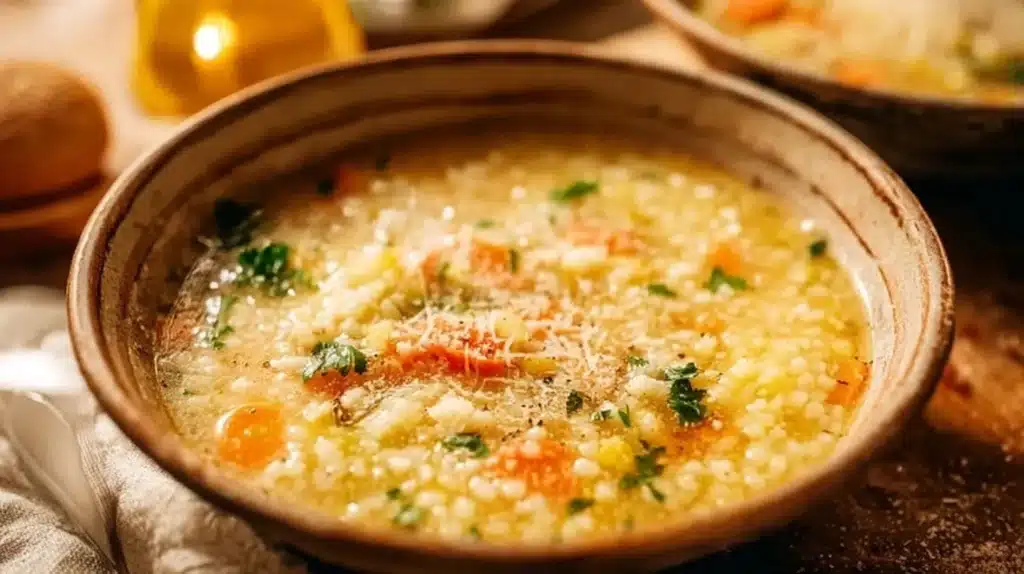
Pastina Soup
A delightful and comforting pastina soup perfect for chilly days, easy to prepare in about 30 minutes.
Ingredients
Method
Preparation
- In a large pot, heat a little oil over medium heat.
- Add the chopped onion, carrot, celery, and garlic, and sauté until softened.
Cooking
- Pour in the broth and bring to a boil.
- Add the pastina pasta and cook according to package instructions until al dente.
- Stir in the spinach and cook until wilted.
- Season with salt and pepper to taste.
Serving
- Serve hot, topped with grated Parmesan cheese.
Notes
For extra depth, use homemade broth if possible. Consider adding a squeeze of lemon juice just before serving for a fresh flavor. Store leftovers in an airtight container; they will last up to 3 days in the refrigerator or up to 2 months in the freezer.