From breakfast to dinner, from healthy meals to sweet desserts – Next Yum Recipes brings you quick, simple and tasty ideas for every occasion and every time.


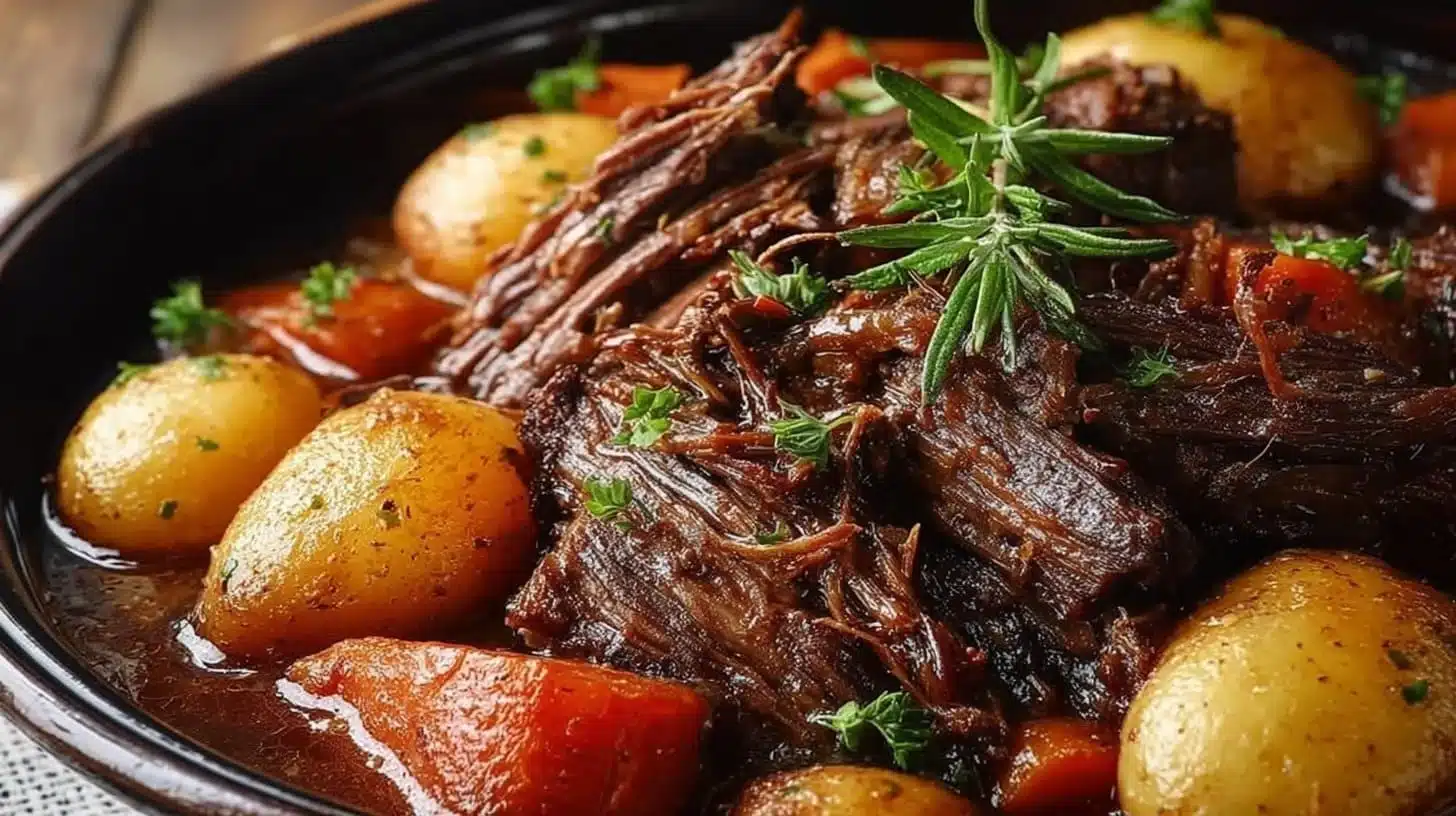
Why does pot roast from a slow cooker often taste better than versions that require far more effort?
Pot Roast Slow Cooker recipes succeed because time quietly does the hard work for you. Gentle heat, steady moisture, and patient cooking transform a tough cut of beef into something tender and deeply savory. You get rich flavor without constant monitoring.
Why Make This Recipe
This dish fits naturally into real schedules. You prepare everything, set the cooker, and move on with your day. The long cooking window is forgiving, which helps when timing is not exact.
Chuck roast performs especially well here. Its marbling slowly melts, creating both tenderness and a fuller mouthfeel. Instead of drying out, the meat becomes soft enough to pull apart with a fork.
You also gain efficiency. Vegetables cook alongside the roast, absorbing juices and seasoning while forming a complete meal in one pot.
How to Make Pot Roast Slow Cooker
The core technique relies on two phases. First, a quick sear builds flavor through browning. When the meat hits a hot pan, you’ll notice an immediate shift in aroma as caramelized notes develop. That step sets the foundation.
Slow cooking then takes over. Moist heat gradually breaks down connective tissue, turning firmness into tenderness. Rather than aggressively boiling, the gentle simmer preserves structure while softening texture.
Ingredient Insights for Pot Roast Slow Cooker
Chuck Roast: This cut contains enough fat and collagen to benefit from extended cooking. As the roast simmers, collagen converts into gelatin, which explains the silky texture you notice in a well-made pot roast.
Potatoes: Potatoes act as both a vegetable and a thickening agent. As they cook, small amounts of starch naturally release into the liquid, subtly adding body.
Carrots: Carrots introduce mild sweetness that balances the savory broth. Their texture softens gradually without collapsing when cut into larger pieces.
Onion: Onion builds the aromatic base. During long cooking, its sharpness fades, leaving behind a rounded, slightly sweet depth.
Beef Broth: Broth serves as the braising environment. It carries seasoning, distributes heat evenly, and concentrates in flavor as moisture circulates.
Worcestershire Sauce: This ingredient quietly amplifies savory complexity. Even a small amount adds noticeable depth without dominating the dish.
Garlic: Garlic softens significantly during slow cooking. Instead of pungency, you get gentle warmth and background richness.
Texture & Flavor Experience
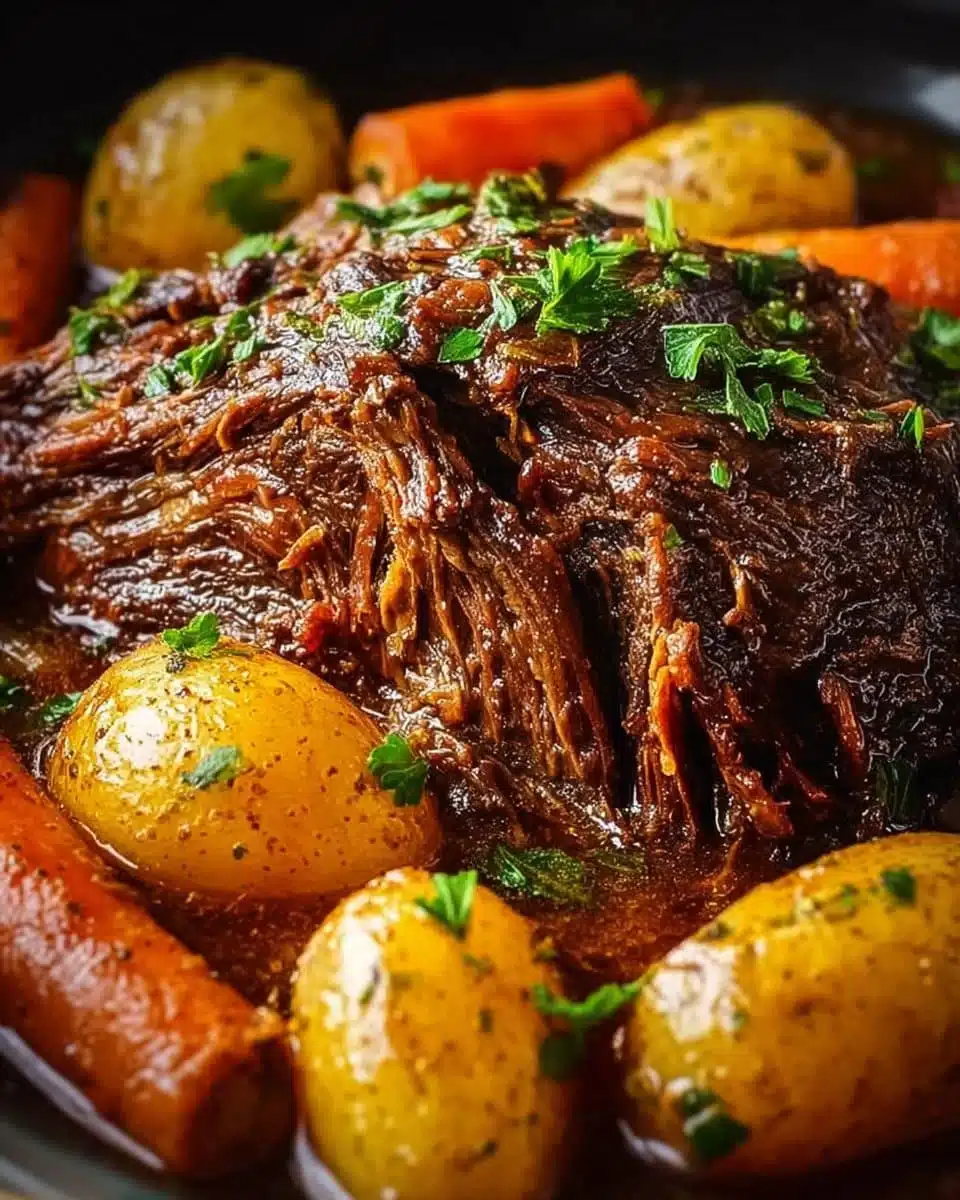
When your pot roast is done properly, the meat should separate easily with minimal pressure. The fibers appear moist rather than stringy. The broth develops a fuller, rounded aroma that signals long, gentle cooking.
The vegetables should feel tender yet intact. Potatoes hold shape, carrots soften evenly, and onions melt into the liquid, contributing flavor rather than standing apart.
How to Serve Pot Roast Slow Cooker
You’ll get the most tender slices when you cut against the grain. Spoon a bit of the cooking liquid over the meat to maintain moisture and reinforce flavor.
A simple green salad or lightly steamed vegetables provide welcome contrast. The richness of pot roast often benefits from something fresh or mildly acidic.
If you want additional depth, you can experiment with seasoning variations. For example, a subtle smoky profile pairs surprisingly well with this dish. This chipotle seasoning guide offers an easy way to introduce that note without complicating the method.
Tips to Make Pot Roast Slow Cooker
- Pat the roast dry before searing to improve browning.
- Use a properly heated pan; the meat should sizzle immediately.
- Cut vegetables into larger pieces to prevent over-softening.
- Layer vegetables beneath the roast to manage moisture distribution.
- Avoid lifting the lid frequently, which disrupts heat stability.
- Allow the roast to rest briefly before slicing.
- Taste the cooking liquid near the end and adjust seasoning gradually.
- Skim excess fat if you prefer a lighter sauce.
Common Mistakes to Avoid
- Skipping the sear, which reduces overall flavor depth.
- Using very lean cuts that lack sufficient connective tissue.
- Cutting vegetables too small, leading to mushy texture.
- Adding excessive liquid that dilutes flavor.
- Cooking on high heat for too long, which can toughen meat fibers.
Storing Tips
Pot roast stores particularly well because the braising liquid protects the meat. After refrigeration, you may notice the sauce thickens slightly. This is normal and often desirable.
Gentle reheating works best. Slow warming helps preserve moisture and prevents the meat from tightening.
FAQs
Why does chuck roast work better than leaner cuts?
Chuck roast contains collagen and fat that respond well to slow cooking, producing a tender and flavorful result.
Can you prepare this meal ahead of time?
Yes. Many cooks find the flavor improves slightly after resting, making leftovers especially satisfying.
Why do vegetables sometimes turn too soft?
This usually happens when pieces are cut too small or cooking time runs longer than needed.
How can you deepen the sauce flavor?
Reducing the liquid briefly after cooking or adding concentrated seasonings can enhance richness.
Conclusion
Pot Roast Slow Cooker meals remain popular for good reason. You gain reliability, deep flavor, and minimal hands-on effort. If you want to compare techniques or explore small variations, this Crockpot pot roast recipe offers useful perspective and additional kitchen insights.
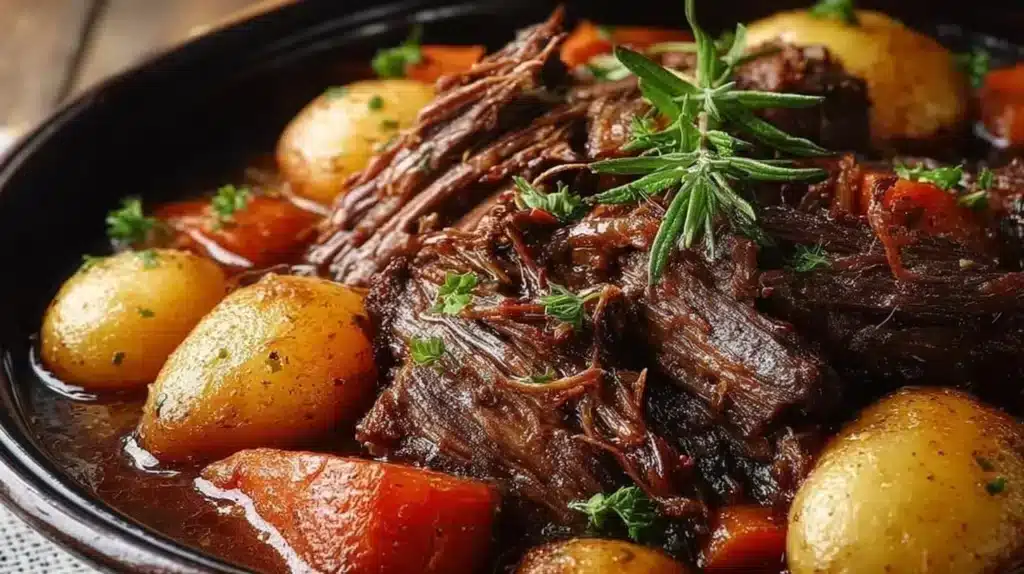
Pot Roast Slow Cooker
A straightforward and forgiving recipe that delivers tender, fall-apart beef and soft vegetables with minimal hands-on time, perfect for family dinners or meal prep.
Ingredients
Method
Preparation
- Season roast with salt and pepper on all sides.
- In a hot skillet, sear roast for 2–3 minutes per side.
- Place onion, carrots, and potatoes into the slow cooker.
- Add garlic, thyme, bay leaf, and Worcestershire sauce.
- Place seared roast on top of vegetables.
- Pour in beef broth around the sides.
- Cover and cook on low for 8 hours or high for 4–5 hours.
- Remove bay leaf before serving. Let rest 10 minutes before slicing.
Notes
Serve with a green salad or steamed greens. Use a thermometer to ensure the roast reaches 190–200°F for pull-apart tenderness. Skim fat from the liquid for a smoother gravy.