From breakfast to dinner, from healthy meals to sweet desserts – Next Yum Recipes brings you quick, simple and tasty ideas for every occasion and every time.


 This Recipe
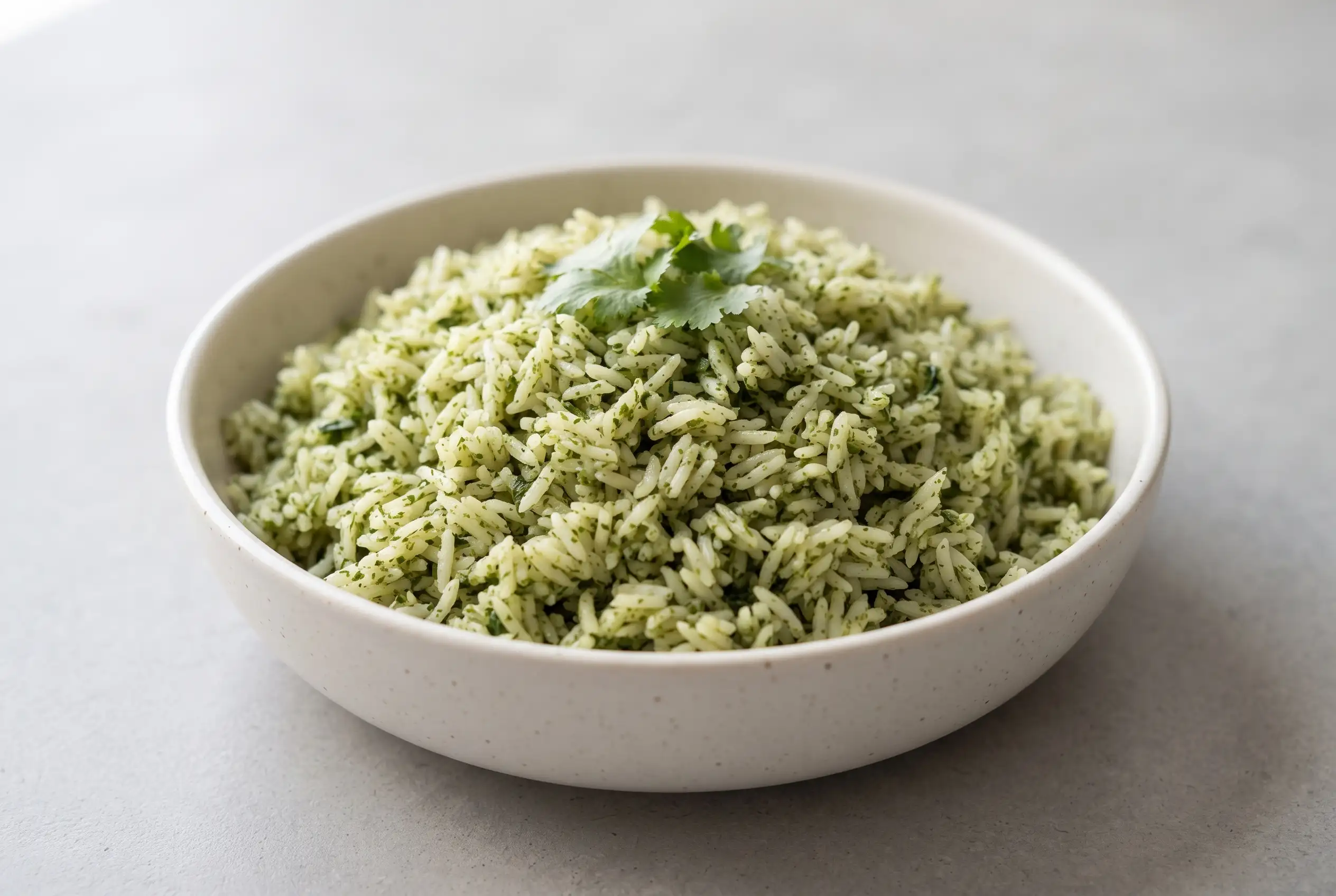
Green rice brings together long-grain rice, cilantro, spinach, and aromatic vegetables to create a vibrant side dish with a fresh herbal flavor and a naturally colorful finish. This cilantro green rice recipe uses a blended mixture of greens and aromatics that coats toasted grains before they gently absorb their cooking liquid.
The appeal comes from the way the rice carries the flavor of the herb mixture while still keeping the familiar texture of a classic rice side. The greens are finely processed, allowing their color and flavor to spread through the grains without turning the dish into a heavy puree.
Cilantro and Spinach Define the Character of Green Rice
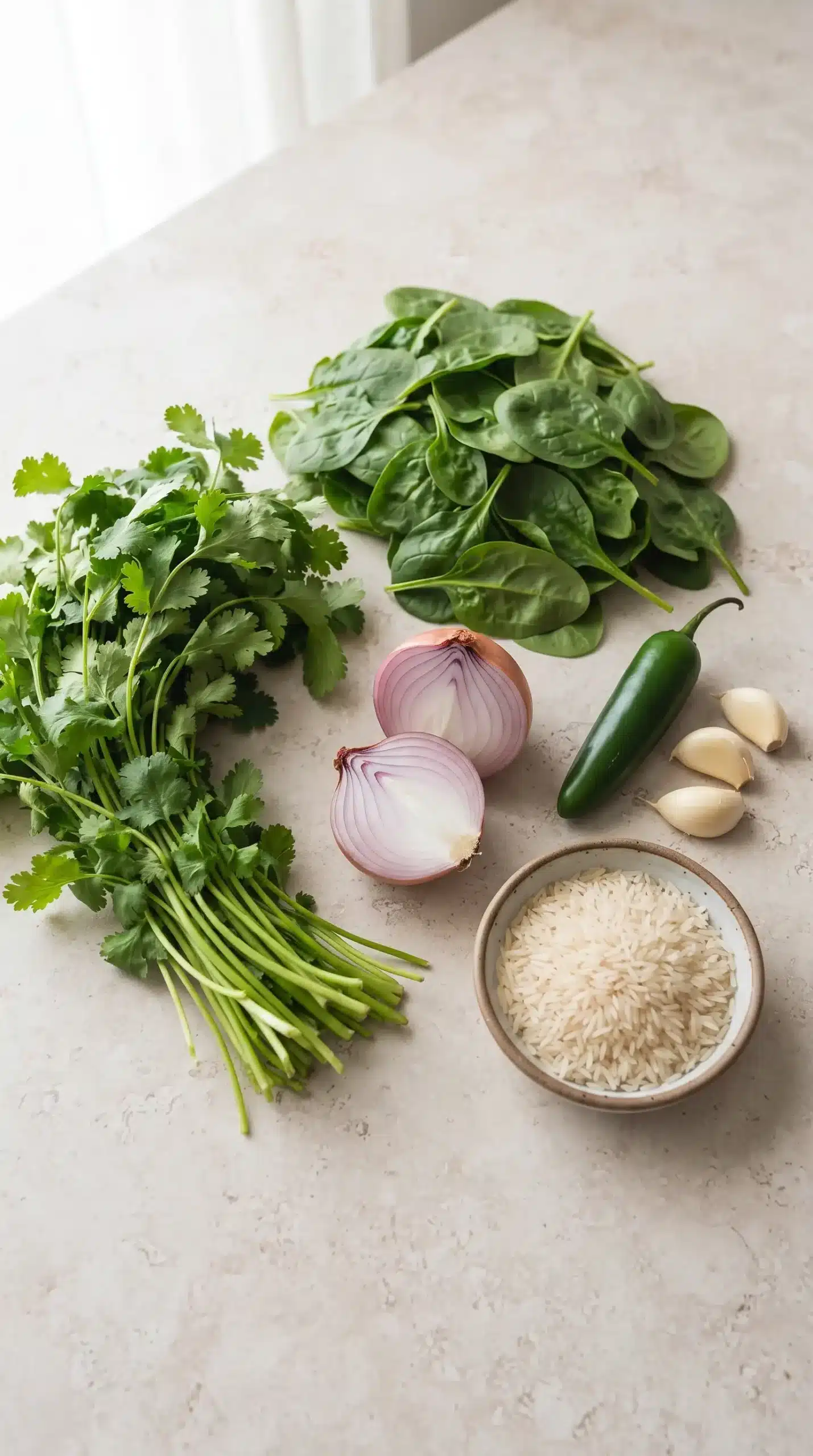
The combination of cilantro and spinach gives green rice its signature appearance and balance. Cilantro brings a bright herbal note, while spinach provides additional green color and a softer vegetal flavor that blends smoothly into the cooked grains.
Aromatics such as shallot, serrano pepper, and garlic help shape the background flavor. Because the vegetables are blended together before cooking, each spoonful receives a consistent distribution of the seasoning instead of isolated pieces of herbs or peppers.
The serrano pepper can be adjusted based on the level of heat you prefer. Removing the ribs and seeds creates a milder result, while swapping in jalapeño provides another option for keeping the pepper flavor gentle.
Rinsing Rice Sets Up a Cleaner Toasting Stage
Rinsing the rice removes excess surface starch and prepares the grains for the skillet. Drying the rinsed rice before it reaches the oil also helps prevent splattering during the initial toasting step.
Herb Blending Shapes the Green Rice Base
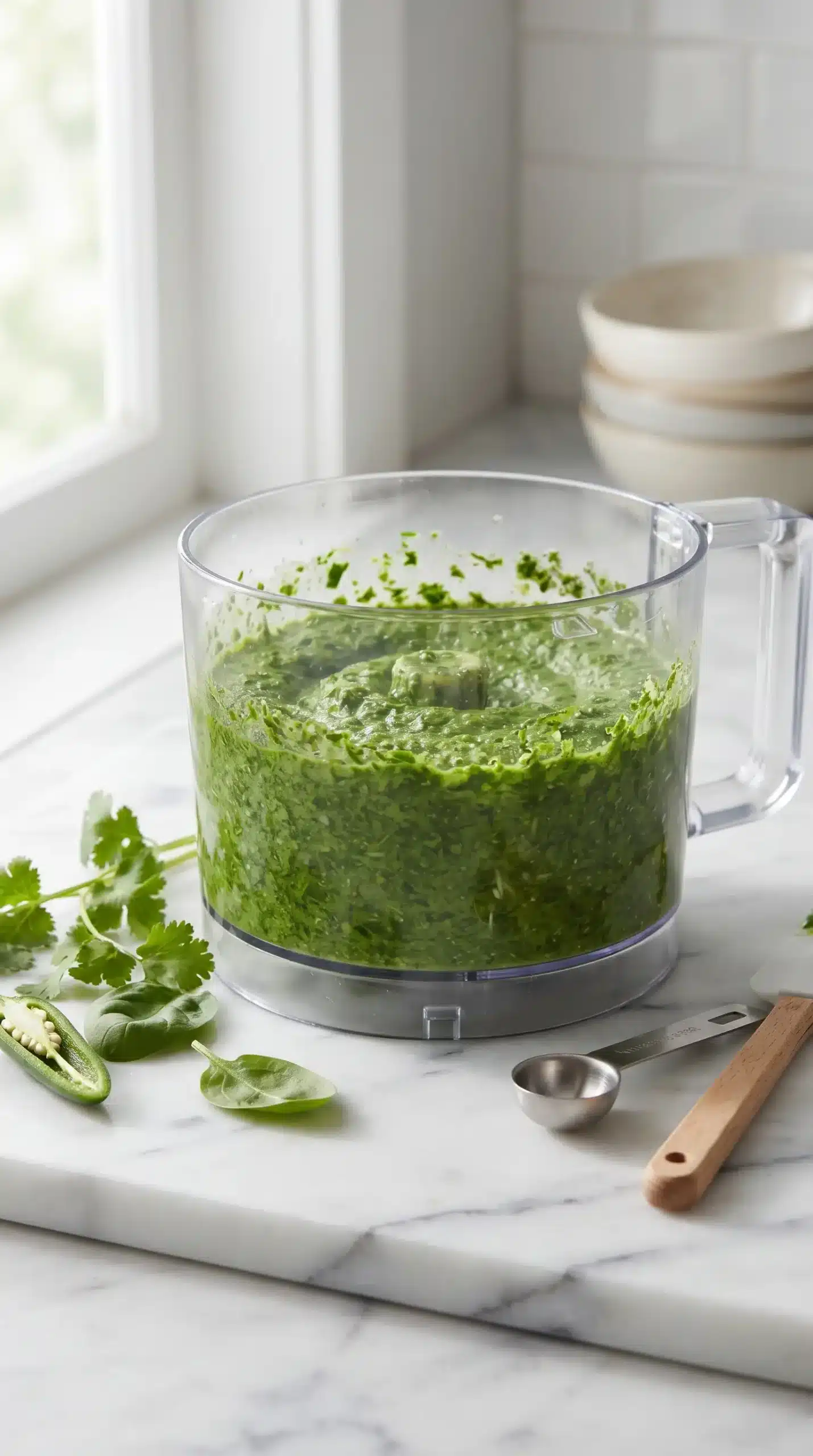
The blended herb mixture is one of the defining features of a spinach green rice recipe. Processing the cilantro, spinach, shallot, serrano, and garlic until finely chopped creates a concentrated mixture that can coat the rice evenly.
Fresh greens contain moisture, so their texture changes when they meet the toasted rice and cooking liquid. A fine blend helps the vegetables integrate into the grains instead of leaving large pieces that separate from the finished dish.
This approach also makes herb green rice easy to pair with many meals because the flavor is distributed throughout the entire batch. The rice becomes a flavorful foundation for proteins, beans, roasted vegetables, or taco-style plates.
Toasting Controls the Rice Texture Before Simmering
Toasting the rinsed grains in olive oil develops a deeper flavor before liquid is added, and toasting rice grains is a technique used to build flavor before simmering. The rice should become lightly toasted while the grains remain separate enough to absorb the herb mixture and broth.
Adding the blended greens after the rice has started to toast allows the mixture to become fragrant in the skillet. The short sauté period helps the flavors combine before simmering begins.
Cooking control matters because rice texture depends on the relationship between toasted grains, liquid, heat, and resting time. Keeping the pan covered over low heat gives the grains the steady environment they need to absorb the surrounding flavors.
| Cooking choice | Result | When to use it |
|---|---|---|
| Lower liquid amount | Fluffier individual grains | When serving as a lighter side dish |
| Higher liquid amount | Softer, slightly stickier texture | When you prefer a more cohesive rice dish |
| Fork fluffing after cooking | More even distribution of greens | Before serving the finished rice |
Broth Choices Change the Finished Green Rice
The cooking liquid influences how the flavors of the herbs and toasted grains come together. Chicken broth adds a savory foundation, while vegetable broth keeps the dish suitable for vegetarian meals.
Water also works when you want the fresh flavors of cilantro, spinach, and aromatics to stand out clearly. The amount of salt can be adjusted depending on whether the liquid already contains seasoning.
- Broth pairing: Use chicken or vegetable broth when you want a deeper savory background.
- Water option: Choose water when the herb flavors should remain the main focus.
- Texture adjustment: Add additional liquid during cooking if the grains need more time to soften.
Common Green Rice Mistakes Start Before the Simmer
Several issues with green rice can be traced back to preparation choices before the rice finishes cooking. Avoiding these problems helps protect the color, texture, and balanced flavor of the dish.
One common mistake is adding wet rice directly into hot oil. Excess moisture can cause splattering and interfere with the toasting stage. Shaking the rinsed grains well or blotting them dry creates a safer and more controlled start.
Another issue is skipping the sauté time after the herb mixture is added. The blended greens need a chance to become fragrant in the skillet so their flavors can combine with the toasted grains.
Overlooking the texture of the cooked rice can also lead to disappointment. If the grains are still firm, they may need additional liquid and more cooking time instead of being served immediately.
Serving Pairings Highlight the Fresh Herbal Flavor
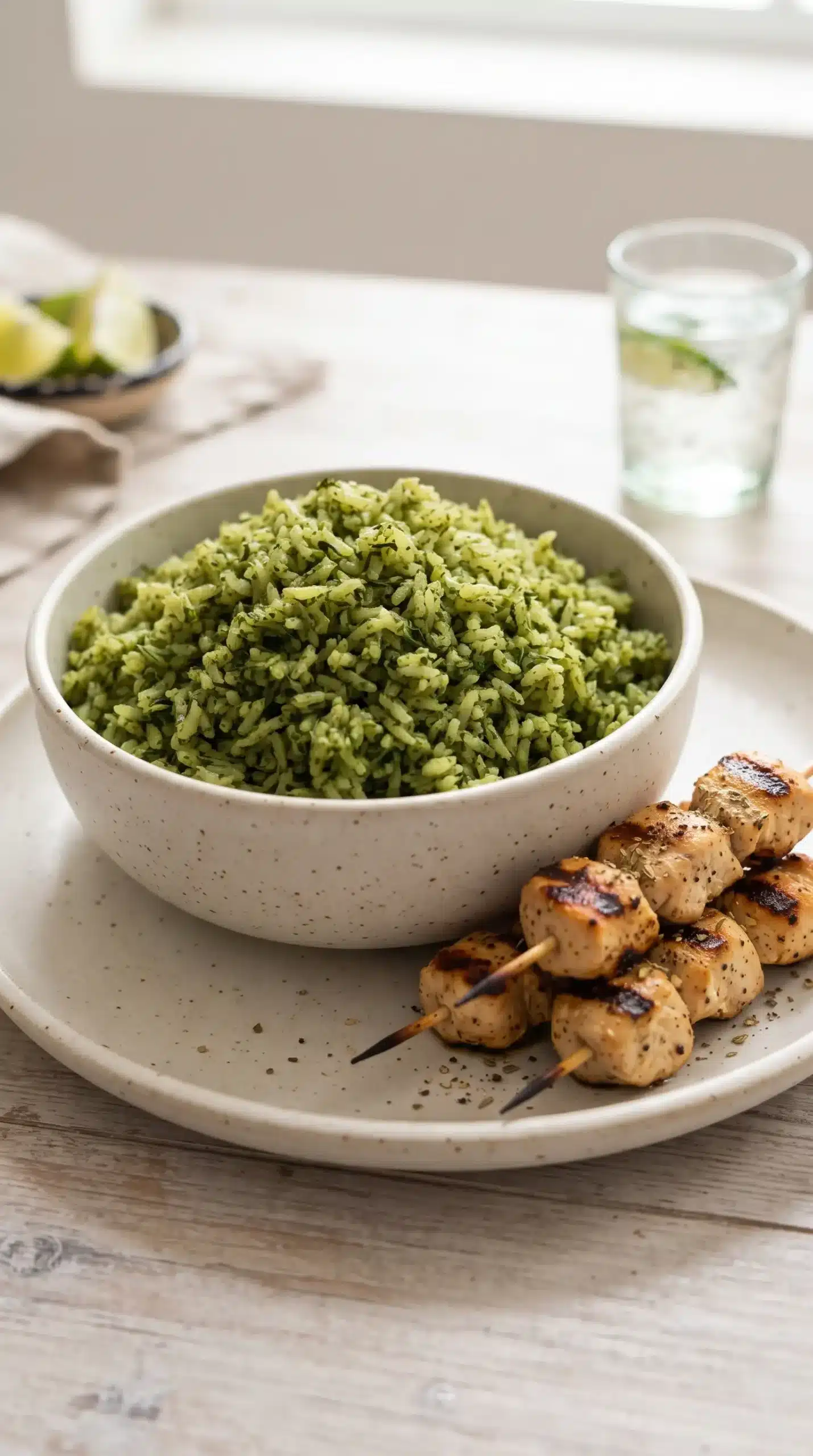
The bright flavor of green rice makes it a flexible companion for meals with bold seasonings. Its color and freshness create contrast beside grilled, roasted, or saucy dishes.
Popular pairings include chicken skewers, air fryer chicken, salmon, tacos, beans, and creamy corn. A serving of cilantro lime chicken bowls brings the herb-forward rice together with a complete meal built around fresh toppings and savory ingredients.
- Protein plates: Pair the rice with chicken or salmon for a simple dinner combination.
- Taco meals: Serve it alongside tacos, beans, and toppings for a colorful spread.
- Vegetarian bowls: Combine it with beans and vegetables for a filling meal.
Green Rice Variations Keep the Same Fresh Foundation
The basic structure of green rice allows for small adjustments while keeping the central character intact. The herb mixture can remain the focus while different peppers, liquids, or serving combinations change the final presentation.
A jalapeño can replace serrano when a slightly different pepper flavor is preferred. The amount of greens can also be adjusted within the recipe’s flexible range to emphasize either cilantro brightness or spinach color.
Serving styles can change the way the dish feels at the table. A bowl topped with beans creates a hearty meal, while a smaller portion beside grilled food keeps the rice in a supporting role.
Skillet Heat Guides the Rice Through Each Stage
The skillet plays an important role because the rice experiences several different cooking environments before it becomes tender. Medium-high heat helps create the initial toast, while lower heat during simmering protects the grains as they absorb liquid.
Watching the rice instead of relying only on a timer helps you respond to differences in pans, heat levels, and liquid absorption. The grains should become tender and separate easily when fluffed with a fork.
Fresh Herbs Need Careful Handling in Green Rice
Fresh cilantro and spinach contribute the color and flavor that make green rice distinctive, but they also require thoughtful preparation. Finely chopping the greens before cooking helps them distribute throughout the dish.
Keeping the blended mixture ready before the rice enters the skillet also creates a smoother cooking process. The toasted grains can move directly into the next flavor-building stage without interruptions.
Green Rice Fits Weeknight Plates and Gathered Meals
The simplicity of the ingredients makes this rice useful for both casual dinners and larger spreads. The same flavorful base can complement individual servings or sit among several dishes at the table.
Storage Keeps Green Rice Ready for Later Meals
Cooked green rice can be stored in a covered container and reheated gently when you want to use leftovers. Adding a small splash of water during reheating can help loosen the grains if they have firmed in the refrigerator.
Keeping the rice properly covered helps preserve its texture and prevents it from absorbing unwanted refrigerator flavors. Separating it into smaller portions can also make reheating easier.
Green Rice Texture Questions
Why does green rice sometimes need more liquid while cooking?
Rice can require additional liquid when the grains are still firm after the initial simmering period. Adding a little more water and continuing to cook allows the grains to finish absorbing moisture without changing the herb mixture.
Can I make green rice less spicy?
Yes. Keeping the ribs and seeds removed from the serrano or using jalapeño instead can reduce the heat level while maintaining the pepper flavor. You can also adjust the amount of pepper used in the blended mixture.
How can I keep the rice from becoming too soft?
Using the lower liquid amount and checking the grains as they finish cooking helps maintain a fluffier texture. Allowing the rice to cook uncovered or adding extra liquid too early can change the final consistency.
What foods pair best with cilantro green rice?
Cilantro green rice works well with chicken skewers, air fryer chicken, salmon, tacos, beans, and creamy corn because its fresh herbal flavor balances savory and rich foods.
Green Rice Reaches Its Best Texture Through Balanced Liquid Control
Green rice depends on a careful balance between toasted grains, blended greens, and cooking liquid. The herb mixture creates the signature flavor, while the amount of liquid determines whether the finished rice feels fluffy or more cohesive.
When the rice is toasted properly and allowed to absorb the green herb base slowly, the result is a flavorful side dish where the fresh ingredients remain recognizable and the grains stay enjoyable to eat.
Green Rice Storage Questions and Texture Concerns
Can green rice be frozen for another meal?
Green rice can be frozen in an airtight container and reheated when needed. Thawing it gradually and adding a small amount of moisture during reheating can help restore a softer texture.
Why does my rice have uneven green coloring?
Uneven color usually happens when the herb mixture is not finely blended or not mixed thoroughly with the toasted grains before the liquid is added. A smoother herb blend helps create a more consistent appearance.
Should I fluff green rice immediately after cooking?
Fluffing the rice with a fork after cooking helps separate the grains and spread the greens throughout the dish. Gentle movement keeps the texture lighter than pressing or stirring aggressively.
Can leftover green rice be served cold?
Leftover green rice is usually best enjoyed reheated, but it can also be used in chilled grain bowls when paired with fresh toppings and other ingredients that complement its herbal flavor.
Green Rice Recipe with Cilantro and Spinach Side Dish
Green rice is a fresh, flavorful side dish with fluffy long-grain grains coated in a vibrant cilantro and spinach herb mixture. It is an easy choice for adding a colorful, aromatic element to everyday meals or gatherings.
Ingredients
Method
Preparation
- Rinse the rice thoroughly in a mesh colander. Shake off excess water or dry the grains with paper towels to reduce splattering when added to the skillet.
- Place the cilantro, spinach, shallot, serrano pepper, and garlic in a food processor and pulse until finely chopped.
Cooking
- Warm the olive oil in a skillet over medium-high heat. Add the rinsed rice and cook for 3-5 minutes, stirring, until the grains are lightly toasted.
- Add the blended herb mixture and salt to the skillet. Continue cooking for 3-5 minutes until the mixture becomes fragrant.
- Pour in the broth or water and bring the mixture to a simmer. Cover the skillet and cook over low heat for about 15 minutes.
- Check the rice by fluffing it with a fork. Add more water and continue cooking if the grains need more time. Once tender, remove from heat and fluff with a fork to spread the greens throughout.
Serving
- Serve the green rice as a side dish with your preferred meal pairings.
Notes
The rice shown in the photos was made with 2 cups of liquid, creating a drier and fluffier texture. For a stickier texture, use 2 1/2 cups of liquid. If you are unsure which texture you prefer, begin with 2 cups of liquid and add more water after cooking if needed.