From breakfast to dinner, from healthy meals to sweet desserts – Next Yum Recipes brings you quick, simple and tasty ideas for every occasion and every time.


 This Recipe
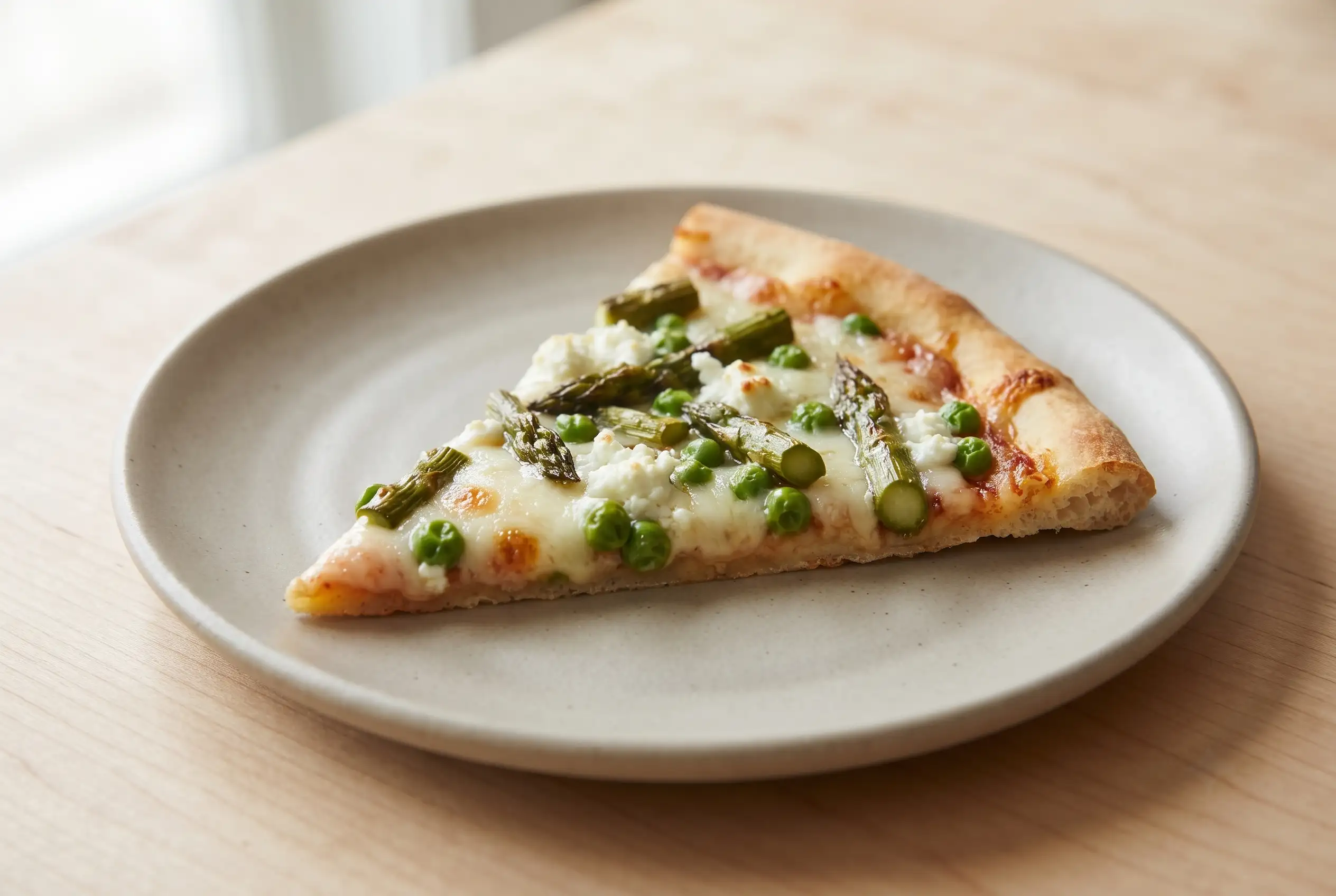
Asparagus pea pizza brings spring vegetables, creamy cheese, and a crisp baked base together in a combination that feels lighter than many traditional pizza styles. The pairing of sautéed asparagus and peas with provolone and crumbled goat cheese creates layers of flavor where fresh vegetables meet rich, tangy dairy.
Built around a favorite pizza crust, this asparagus and goat cheese pizza uses simple preparation choices to make each slice balanced. The vegetables remain the focus, while the cheeses provide enough richness to connect the toppings with the crust.
Asparagus Pea Pizza Creates Fresh Vegetable Contrast
Asparagus pea pizza works because the topping arrangement gives each bite a different texture. Tender vegetables, melted cheese, and a baked crust create a combination that depends on balance instead of a heavy layer of toppings.
Vegetable toppings can easily become lost on pizza when they are covered by stronger flavors. Here, the mild sweetness of peas and the distinctive character of asparagus stay noticeable because the cheese choices support the vegetables without overwhelming them.
Fresh preparation also influences how the pizza feels when served. Sautéing the vegetables before they reach the oven helps develop their flavor and allows them to blend naturally with the melted provolone and goat cheese.
Asparagus and Pea Sauté Sets the Pizza Flavor Direction
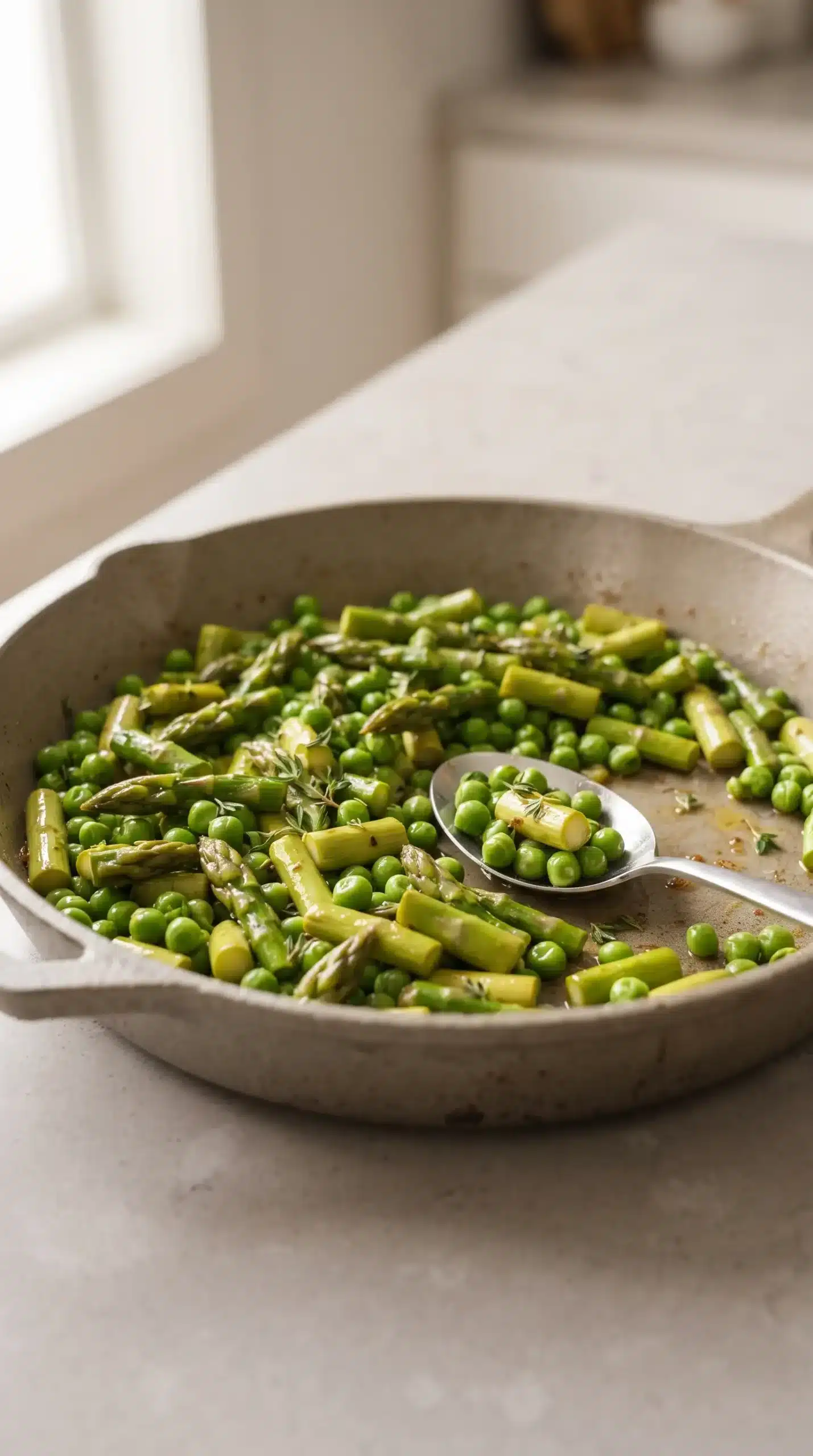
The vegetable topping deserves careful attention because it establishes the personality of the entire pizza. Cooking asparagus and pea sauté before assembly gives the vegetables a prepared texture that fits the short baking period needed for the crust and cheese.
Asparagus pieces bring a recognizable vegetable flavor and a pleasant bite, while peas add a softer texture and gentle sweetness. Their combination creates a topping mixture that feels complete even when the pizza uses a simple cheese foundation.
Small preparation choices can improve the finished result. Cutting vegetables into manageable pieces helps distribute them across the crust, preventing one section from carrying all of the topping while another feels empty.
- Vegetable balance: Spread asparagus and peas evenly so every slice receives both elements.
- Moisture awareness: Keep the sautéed topping controlled so excess liquid does not soften the crust.
- Flavor pairing: Use the vegetables alongside creamy and tangy cheeses for contrast.
Goat Cheese and Provolone Shape the Pizza Texture
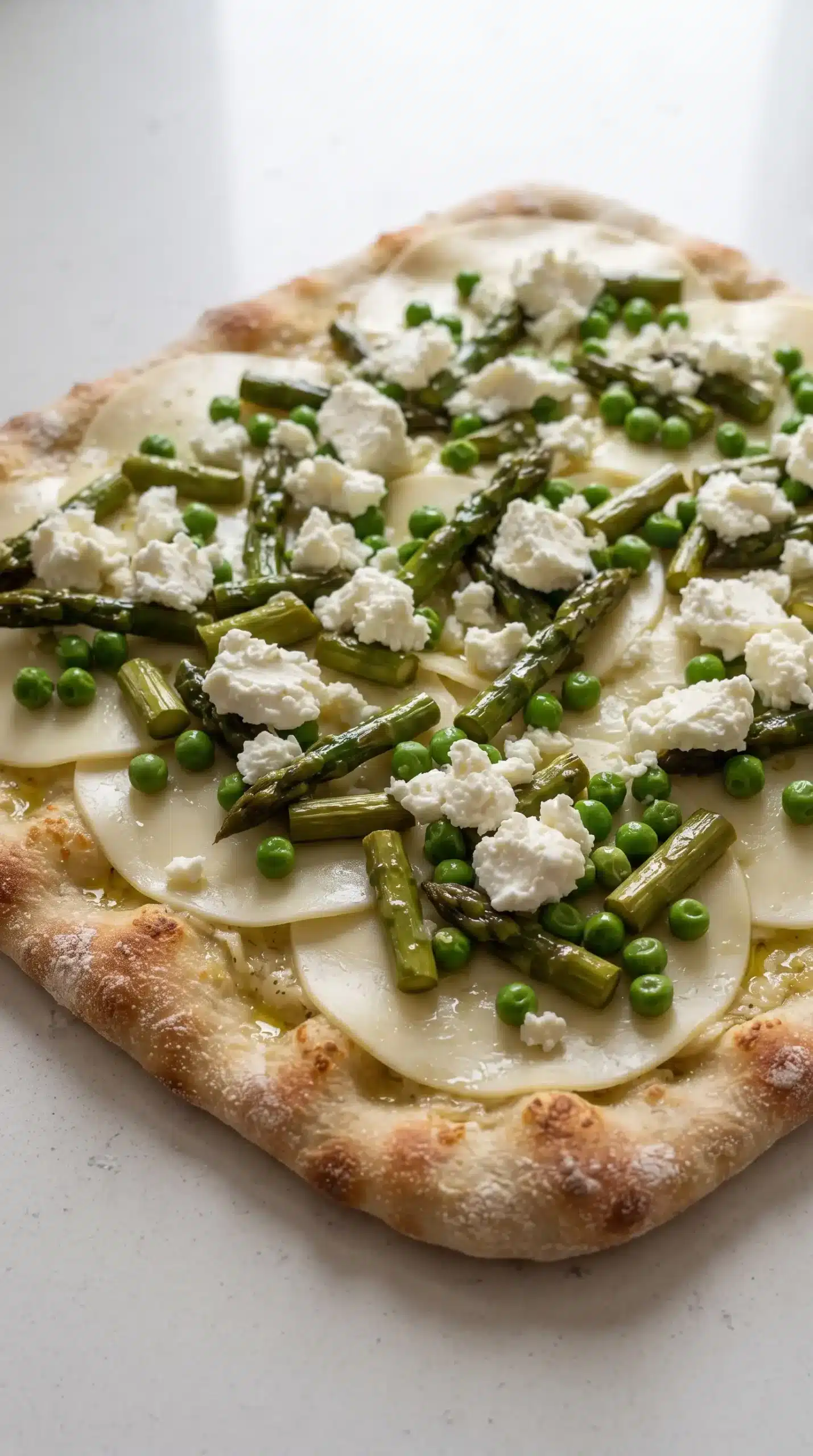
Provolone creates the melted cheese layer that connects the toppings to the crust, while goat cheese adds creamy pockets with a tangy finish. The contrast between these cheeses gives the pizza a more interesting texture than a single cheese topping.
Pizza Crust Decisions Control the Finished Slice
The crust choice affects how well the vegetable toppings and cheeses come together. A crust with enough structure can support the asparagus, peas, and cheese while still allowing the toppings to remain the highlight.
Rolling or shaping the dough evenly helps create consistent baking across the surface. Areas with uneven thickness may cook differently, which can change how the toppings and crust interact after baking.
Allowing homemade dough enough time to rise, when needed, supports a lighter texture. The crust becomes an important part of the pizza experience instead of only acting as a base underneath the toppings.
Asparagus Pea Pizza Mistakes That Lead to a Soggy Crust
Several problems can affect asparagus pea pizza, especially when vegetables and cheese release moisture during baking. Managing vegetable moisture before the pizza enters the oven helps protect the texture of each slice.
| Potential issue | What happens | Helpful adjustment |
|---|---|---|
| Too much vegetable moisture | The crust can soften under the toppings | Use a controlled sauté and avoid excess liquid |
| Heavy cheese coverage | Vegetable flavors become less noticeable | Balance provolone with scattered goat cheese |
| Uneven topping placement | Some slices lack variety | Distribute asparagus and peas across the surface |
Overloading the crust is a common mistake with vegetable pizza. The toppings need enough room to bake properly, allowing the cheese to melt and the vegetables to remain distinct.
Sauce Choices Change the Asparagus Pea Pizza Character
Pizza sauce provides a familiar base, but the topping combination also works with a lighter approach using oil in place of sauce. The choice changes the way the vegetables and cheeses stand out without changing the central flavor direction.
Baking Heat Helps Asparagus Pea Pizza Hold Its Structure
Oven temperature and timing influence the relationship between crust, toppings, and melted cheese. A properly baked surface allows the cheese to soften while the crust develops the texture needed to carry the vegetables.
Careful observation matters during baking because toppings can change quickly once the cheese begins melting. The crust should support the toppings without becoming overwhelmed by the moisture from vegetables and dairy.
Cooling briefly after baking can also make slicing easier. Allowing the melted cheese and toppings to settle helps each piece maintain its shape when served.
Leftover Asparagus and Goat Cheese Pizza Keeps Its Appeal
Leftover asparagus and goat cheese pizza can remain enjoyable because the vegetable and cheese combination continues to provide contrast after baking. Reheating can restore some of the crust texture while keeping the toppings flavorful.
Simple Variations Fit the Pea and Goat Cheese Pizza Format
The basic combination provides room for small adjustments while preserving the main character of the pizza. Changes work best when they support the balance between vegetables, cheese, and crust.
Additional herbs can complement the fresh vegetable profile, while different crust styles can change the overall experience. A thinner crust highlights the toppings, while a thicker crust creates a more substantial slice.
Creative changes should keep the asparagus and peas recognizable. The distinctive appeal of this pea and goat cheese pizza comes from the interaction between seasonal vegetables and contrasting cheeses.
Possible approaches include:
- Cheese adjustments: Change the cheese balance while keeping a creamy and melted element.
- Crust options: Choose a preferred pizza dough style based on the desired texture.
- Serving changes: Cut smaller pieces for sharing or larger slices for a meal.
Serving Moments Highlight Vegetable Pizza with Asparagus and Peas
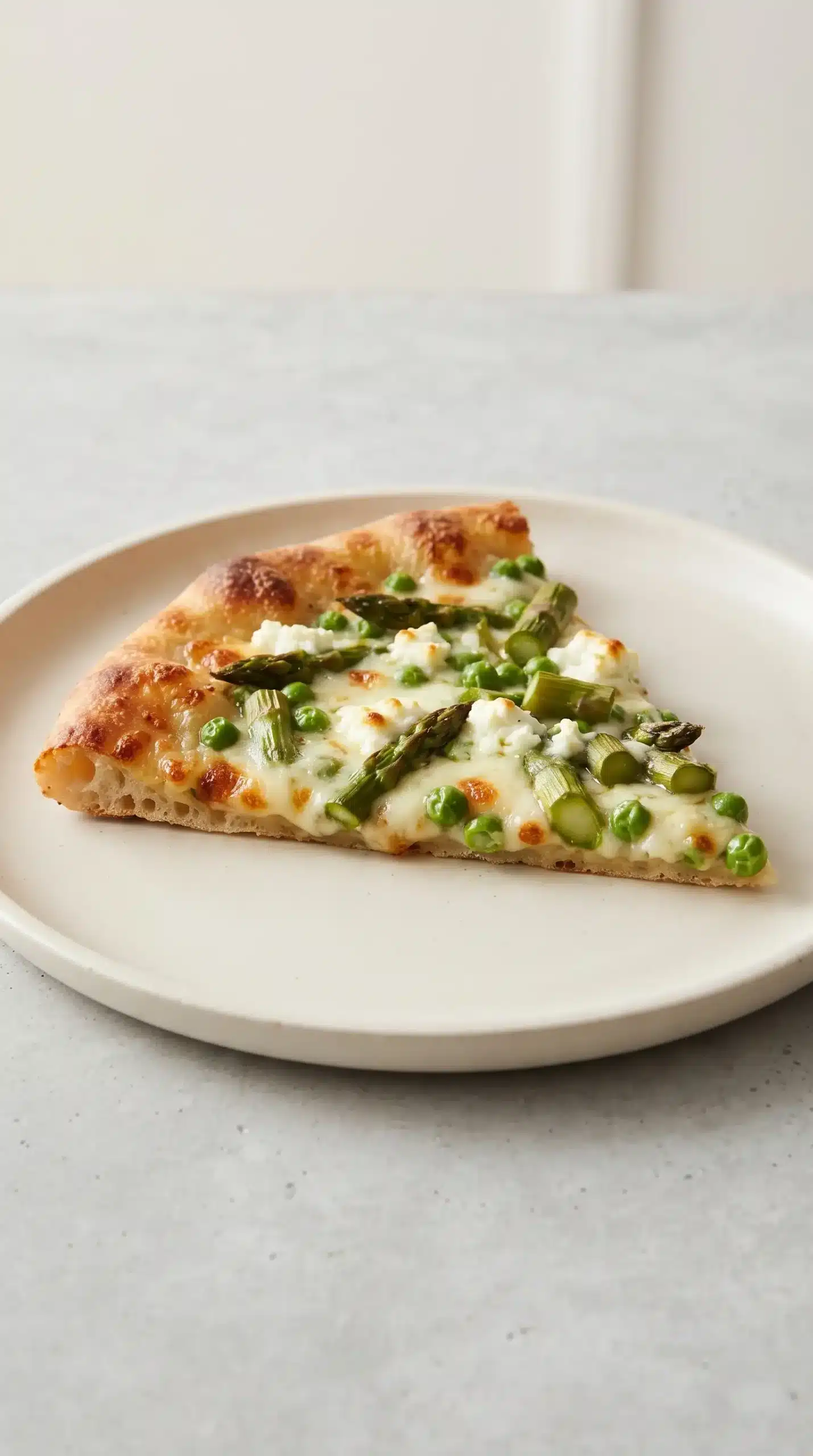
This vegetable pizza with asparagus and peas fits occasions where a colorful topping and approachable flavors are useful. The combination works as a centerpiece or as part of a meal with other dishes.
Asparagus and Pea Layers Keep Goat Cheese Pizza Balanced
Asparagus and peas create the defining balance of this pizza by bringing fresh vegetable flavor to a crust topped with creamy and melted cheeses. Careful handling of moisture and topping distribution determines whether each slice feels cohesive.
The baked crust, sautéed vegetables, provolone, and goat cheese work together when each part keeps its own role. A thoughtful approach to the toppings creates a pizza where simple ingredients deliver a distinct combination of textures and flavors.
Asparagus Pea Pizza Troubleshooting Questions About Soggy Crust
Why does asparagus pea pizza sometimes develop a soggy crust?
A soggy crust usually comes from excess moisture reaching the dough during baking. Keeping the vegetable sauté controlled and avoiding an overloaded topping layer helps the crust maintain its structure.
Can I make asparagus and goat cheese pizza without pizza sauce?
Yes, the pizza can use oil instead of sauce. Removing the sauce creates a lighter base that allows the asparagus, peas, and cheeses to become more prominent.
How should goat cheese be added to the pizza?
Goat cheese works well when crumbled across the surface so its tangy flavor appears throughout the pizza. Scattered pieces also create small creamy areas alongside the melted provolone.
What crust works best for pea and goat cheese pizza?
The best crust depends on personal texture preference, but a crust with enough strength to hold vegetable toppings will support the cheese and toppings effectively.
Can leftover asparagus pea pizza be reheated successfully?
Leftover slices can be reheated to bring back some crispness from the crust while warming the toppings. Gentle reheating helps preserve the vegetable and cheese combination.
Asparagus Pea Pizza with Goat Cheese and Provolone
Asparagus pea pizza combines a crisp crust with fresh vegetable toppings, creamy goat cheese, and melted provolone for a balanced, flavorful pizza that is perfect when you want a lighter homemade meal.
Ingredients
Method
Preparation
- Prepare the pizza crust with enough time for rising if the dough requires it.
- Cook the asparagus and pea sauté according to the preparation method.
Assembly
- Shape the pizza dough, then add pizza sauce and/or olive oil as the base.
- Arrange the sautéed vegetables, provolone slices, and crumbled goat cheese over the crust.
Baking
- Bake the assembled pizza for 20 minutes at 400°F (204°C).
Serving
- Serve the pizza after baking, and keep any leftovers for later.
Notes
For the best texture, keep the sautéed vegetable topping controlled so excess moisture does not soften the crust.