From breakfast to dinner, from healthy meals to sweet desserts – Next Yum Recipes brings you quick, simple and tasty ideas for every occasion and every time.


 This Recipe
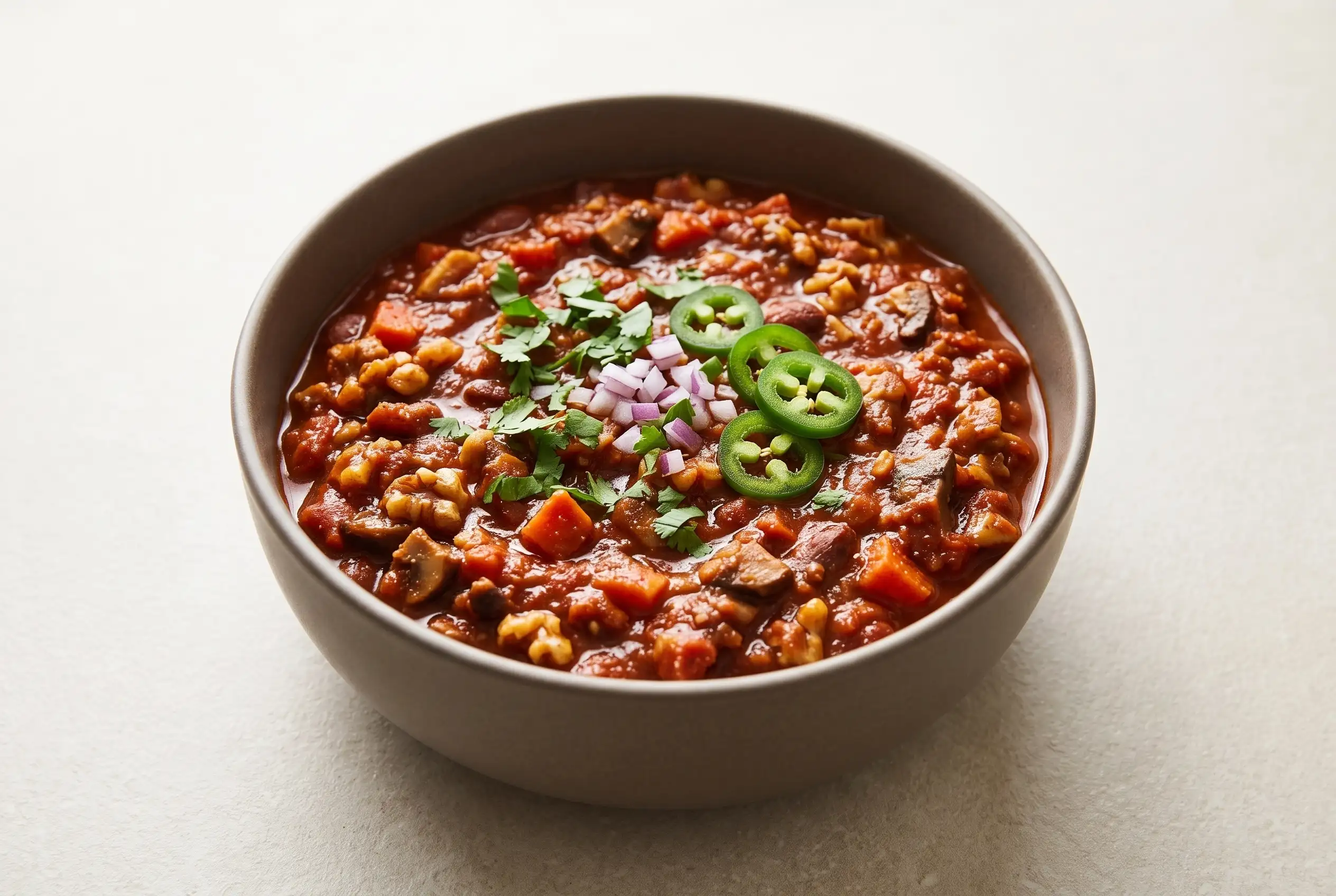
Vegetarian chili can be deeply savory and satisfying without relying on a traditional ground-meat base. Walnuts, mushrooms, and carrots are pulsed into a coarse mixture that cooks into a hearty texture, while tomato paste, green chiles, cumin, smoked paprika, and soy sauce build the kind of layered flavor that makes every spoonful feel substantial. The result is an easy vegetarian chili with enough texture to stand on its own, whether you add beans or leave them out.
What makes the combination especially useful is the way the vegetables and walnuts are handled. Instead of cooking each ingredient separately, they are transformed together into a chunky, paste-like mixture before entering the pot. That gives the finished chili a cohesive texture while leaving enough small pieces to keep it from becoming smooth or mushy.
Walnuts and mushrooms create the chili’s hearty texture
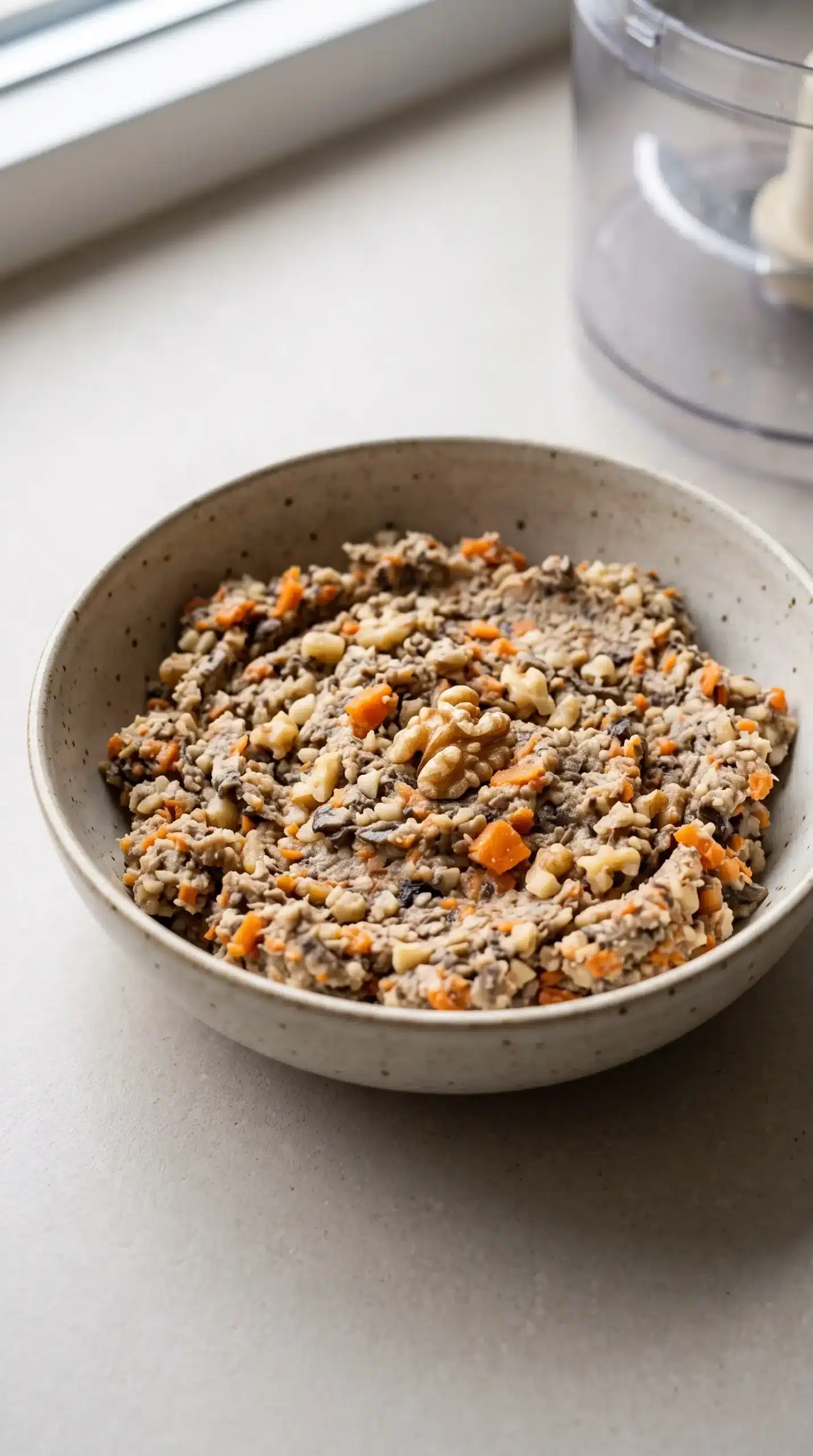
Walnuts bring richness and a firm, crumbly quality, while mushrooms supply moisture and an earthy savory character. Carrots add natural sweetness and help round out the vegetable mixture. Pulsing these ingredients together gives the chili its distinctive “meat” texture without requiring a meat substitute.
Texture depends heavily on how far the food processor is taken. The mixture should look coarse and uneven, with small pieces still visible. If it becomes completely smooth, the finished chili can lose the bite that makes the vegetable base convincing.
A few short pulses at a time make it easier to stop at the right point. Scraping down the bowl when needed also helps prevent some ingredients from being pulverized while others remain in large chunks.
Tomato paste and soy sauce deepen the savory base
Tomato paste has an important job beyond adding tomato flavor. Once it meets the softened onion and garlic, it concentrates the savory character of the pot and gives the later tomato addition a richer foundation. Soy sauce contributes saltiness and umami, helping the vegetables and walnuts taste more integrated.
Green chiles bring a different kind of intensity. Their flavor sits alongside the chili powder and smoked paprika instead of simply making the dish hotter. Fresh minced jalapeño can be used in their place when you want a brighter pepper character.
Because several ingredients contribute seasoning at different stages, salt is best adjusted after the vegetable mixture has cooked with the aromatics and spices. Soy sauce already contributes salt, so tasting before adding more prevents the seasoning from getting ahead of the tomatoes and other components.
Coarse chopping matters more than uniform pieces
The food processor should produce a chunky paste, not a purée. That distinction determines whether the cooked vegetable base has texture that resembles a hearty chili filling or becomes soft and indistinct.
- Short pulses: Stop frequently so the walnuts, mushrooms, and carrots retain small pieces.
- Uneven texture: A mixture with slightly different particle sizes cooks into a more natural, substantial texture.
- Visible vegetables: If large pieces remain, pulse briefly again instead of running the processor continuously.
Carrots deserve particular attention because they are firmer than the mushrooms. If they remain in large chunks while everything else is finely broken down, the mixture will cook unevenly. A coarse but reasonably consistent texture gives the pan a better balance.
Soft onions and garlic set up the deeper flavors
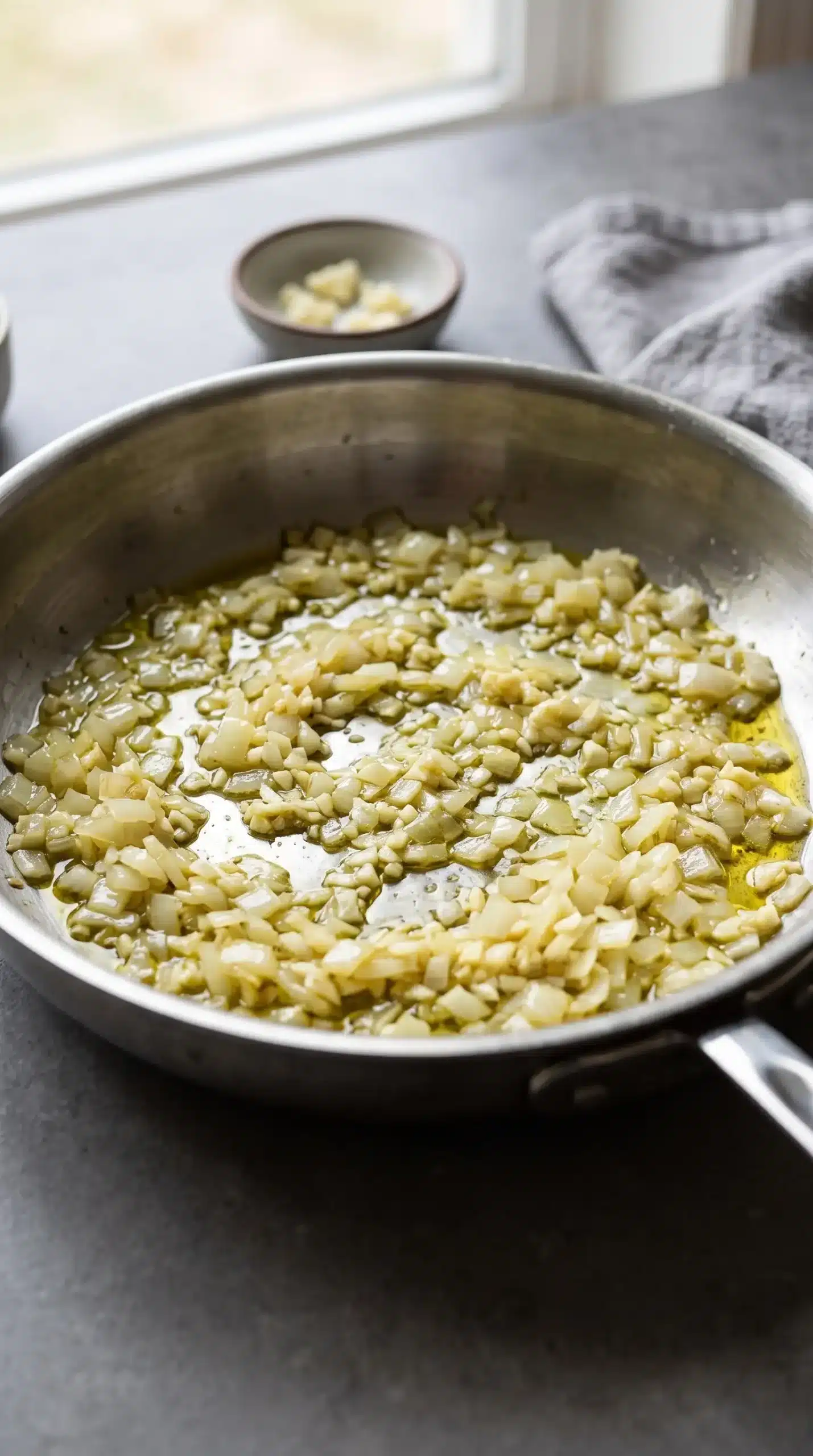
Onions and garlic should become very soft before the chile, tomato paste, spices, and soy sauce go into the pan. That extended sauté creates a mellow aromatic foundation and gives the seasonings a more integrated place to develop.
Medium heat provides enough control to soften the aromatics without rushing them. Stir periodically and pay attention to their texture; the useful cue here is tenderness, not aggressive browning.
Once the seasonings are added, the mixture should be stirred thoroughly so the tomato paste and spices coat the aromatics. The pan should smell noticeably more intense before the vegetable-walnut mixture joins it.
Ten minutes of cooking gives the vegetable base a chance to settle
After the processed mixture is added, give it time to cook before the tomatoes and water go in. This stage allows the carrots and mushrooms to soften and lets the walnuts become incorporated into the seasoned base.
The mixture should begin to resemble chili filling as it cooks. Stirring occasionally keeps the bottom from catching while allowing the moisture from the mushrooms and vegetables to work into the mixture.
Seasoning at this point is useful because the vegetable mixture has changed from its raw state. A small amount of salt can sharpen the flavors, with additional adjustment possible after the tomatoes and beans are incorporated.
Tomatoes control the body of vegetarian chili
The tomatoes provide most of the liquid needed for the long simmer, but the added water gives you flexibility over the starting consistency. A rich tomato-based body helps the finished chili hold together on a spoon while remaining loose enough to ladle comfortably.
Crushed tomatoes produce a more integrated tomato base, while diced tomatoes leave more distinct pieces throughout the chili. Either works with the chunky walnut, mushroom, and carrot mixture.
| Tomato choice | Texture in the pot | Best use |
|---|---|---|
| Crushed tomatoes | Smoother, more cohesive | When you want the vegetable mixture to dominate the texture |
| Diced tomatoes | More visible tomato pieces | When you prefer a chunkier spoonful |
| Mixed use | Balanced between the two | When you want both body and noticeable tomato pieces |
During the simmer, excess liquid gradually cooks down while the vegetables soften. If the pot looks loose early on, give it time before making a correction. If it becomes thicker than you prefer, a small addition of water can bring the consistency back into balance.
Beans are an optional choice, not a structural requirement
Black beans are a natural pairing with the smoky, tomato-rich base, but they are not essential to the character of the chili. Kidney beans, white beans, and pinto beans can also fit comfortably into the same pot.
Leaving beans out changes the texture without leaving the dish feeling empty because the walnuts, mushrooms, and carrots already provide the central bulk. That makes the bean-optional vegetarian chili particularly useful when beans are not wanted.
| Bean choice | Texture contribution | Flavor fit |
|---|---|---|
| Black beans | Firm and creamy | Works especially well with smoky spices |
| Kidney beans | Firm and substantial | Pairs naturally with tomato-based chili |
| White beans | Soft and creamy | Creates a gentler contrast with the spices |
| Pinto beans | Creamy with a tender bite | Blends easily into the hearty vegetable base |
| No beans | More vegetable-forward | Lets the walnut and mushroom mixture remain central |
Whichever option you choose, the beans should be incorporated with the tomatoes so they have time to warm through and absorb some of the surrounding seasoning during the simmer.
Smoky spices need enough simmering time to blend
Chili powder, cumin, and smoked paprika each have distinct personalities, but their combined effect becomes more cohesive as the pot simmers. The long cooking period also allows the tomatoes to soften the sharper edges of the spices.
Chili powder can vary considerably in intensity, so the supplied range gives you room to adjust the character of the pot. Cumin provides earthy depth, while smoked paprika adds a subtle smoky note that works particularly well with mushrooms and walnuts.
Keep the simmer controlled instead of letting the pot boil aggressively. A steady simmer gives the vegetables time to soften and the liquid time to reduce without making the mixture unnecessarily harsh or dry.
Common vegetarian chili mistakes start with texture control
The biggest problems with this particular combination usually come from processing the vegetable mixture too far, rushing the aromatics, or judging the liquid before the simmer has done its work. Each issue has a visible cue that makes correction straightforward.
- Over-processing: A completely smooth vegetable mixture can produce a softer, less textured chili. Pulse briefly and stop while small pieces remain.
- Under-softening: If the onion and garlic still seem firm when the spices are added, the aromatic base has not developed enough. Continue cooking until noticeably tender.
- Adding too much water: A loose pot early in the simmer does not necessarily need immediate correction. Let reduction work first, then adjust only if needed.
- Over-salting early: Soy sauce contributes seasoning before the tomatoes and beans arrive. Taste after the mixture cooks and make smaller adjustments from there.
Another useful check comes near the end of simmering. The carrots should no longer feel raw or noticeably hard, and the liquid should have thickened enough to hold the ingredients together. Those cues matter more than chasing an exact visual consistency at the beginning.
Toppings can shift the chili from creamy to bright
Vegetarian chili supports contrasting toppings because its base is rich, smoky, and tomato-forward. Sour cream, cheddar, or queso fresco add creamy and salty elements that soften the spices. Those choices work especially well when you want a more traditional chili presentation.
For a vegan bowl, cilantro, avocado, pickled onion, pickled jalapeño, and radishes introduce fresh, acidic, or crisp elements. Tortilla chips add crunch without changing the underlying flavor of the pot.
Vegetarian chili holds its character through reheating
The thick vegetable base makes this chili well suited to reheating because the flavors have time to mingle as it rests. When reheating a portion, use gentle heat and stir occasionally so the thicker mixture warms evenly.
The thick vegetable base makes this chili well suited to reheating because the flavors have time to mingle as it rests. For food safety, refrigerate cooked chili promptly and use it within 3 to 4 days. When reheating a portion, use gentle heat and stir occasionally so the thicker mixture warms evenly.
If the chili has become noticeably thicker after chilling, loosen it with a small amount of water while reheating. Add only enough to restore a spoonable consistency, since the tomatoes and vegetable mixture already provide substantial body.
Vegetarian chili works as a flexible one-pot meal
A pot built around walnuts, mushrooms, carrots, tomatoes, and spices can accommodate different preferences without changing its basic character. Beans can be included for additional texture, or omitted so the vegetable-walnut mixture remains the focus.
The same flexibility applies at the table. Dairy toppings create a richer finish, while avocado, herbs, pickled vegetables, and radishes bring brightness and crunch. That makes the bowl easy to adapt without altering the seasoned base.
For anyone looking specifically for vegetarian chili with walnuts, the walnut-mushroom-carrot combination is the feature that gives the dish its distinctive texture. It does more than replace meat visually; it creates a substantial base that works whether the pot contains beans or not.
Let the simmer decide when the chili is ready
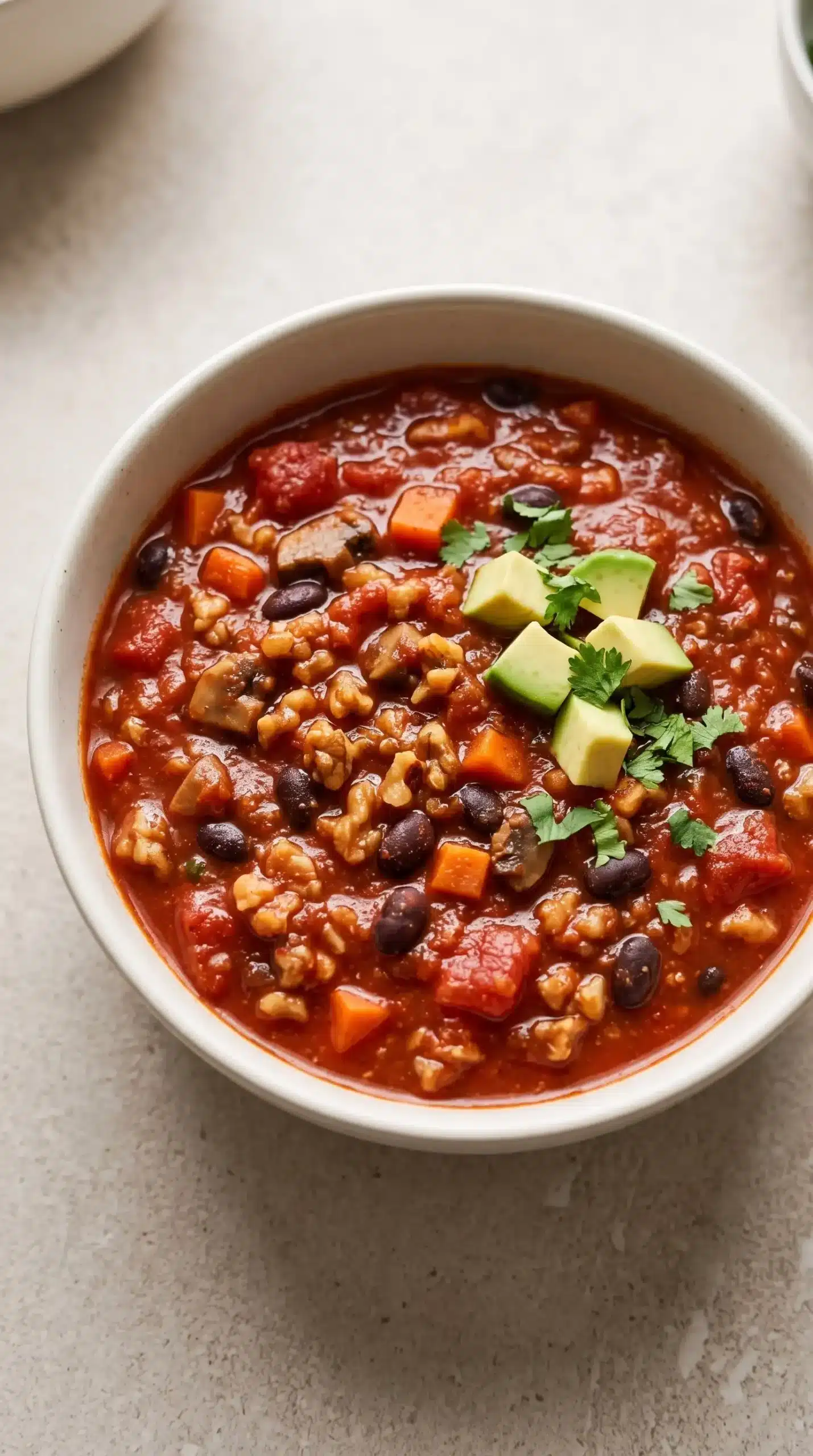
Vegetables softened to tenderness and a thickened tomato base are the most useful signs that the pot has reached the right point. The walnut and mushroom mixture should feel integrated, the carrots should be tender, and the liquid should cling naturally to the ingredients without turning the chili into a paste.
That balance comes from allowing the mixture to cook gradually and adjusting only after the ingredients have had time to change. Once the texture is right, toppings can provide the fresh, creamy, crisp, or tangy contrast that suits the way you want to serve the bowl.
Vegetarian Chili Questions About Beans Texture and Serving
Can vegetarian chili be made without beans?
Yes. The walnuts, mushrooms, and carrots provide the substantial vegetable base, so beans are optional. Leaving them out gives the chili a more vegetable-forward texture while keeping the tomato, chile, and spice foundation intact.
Why use walnuts in vegetarian chili?
Walnuts contribute richness and a firm, crumbly texture after being pulsed with the mushrooms and carrots. Their texture helps create a hearty base that does not depend on beans or a packaged meat substitute.
How finely should the vegetables be processed?
A chunky paste is the useful stopping point. Small pieces should remain visible, but there should not be large carrot or mushroom chunks that would cook separately from the rest of the mixture. Short pulses make this easier to control.
What can replace black beans?
Kidney beans, white beans, and pinto beans are all suitable alternatives. Each changes the texture slightly, so choose based on whether you prefer a firmer bean, a softer creamy bite, or a middle ground.
How can the chili be made vegan?
The chili base is built from vegetables, walnuts, spices, tomatoes, and soy sauce, so the serving choices are where a dairy-free version can be established. Use toppings such as cilantro, avocado, pickled onion, pickled jalapeño, radishes, or tortilla chips instead of sour cream or cheese.
What should I do if the chili becomes too thick?
Stir in a small amount of water while reheating or during the simmer until the consistency becomes spoonable again. Add gradually because the tomato and vegetable mixture thickens as it cooks, and a large addition can dilute the concentrated flavors.
Vegetarian Chili with Walnuts, Mushrooms and Carrots
This hearty vegetarian chili combines a chunky walnut, mushroom, and carrot texture with a rich tomato base and smoky spices. It is an easy, satisfying choice for a comforting meal with or without beans.
Ingredients
Method
Preparation
- Place the walnuts, mushrooms, and carrots in a food processor and pulse until they form a coarse, chunky paste. Set the mixture aside.
Cooking
- Warm the olive oil over medium heat. Add the diced onion and minced garlic and cook for 5-10 minutes, stirring periodically, until very soft.
- Stir in the green chiles, tomato paste, chili powder, cumin, smoked paprika, and soy sauce until the seasonings and tomato paste are evenly incorporated.
- Add the walnut, mushroom, and carrot mixture. Cook for about 10 minutes, stirring occasionally, until the vegetables soften and the mixture develops a chili-like texture. Season with salt.
- Add the tomatoes, optional beans, and water. Bring the mixture to a controlled simmer and cook for about 45 minutes, allowing the vegetables to soften and the chili to thicken.
Serving
- Serve the vegetarian chili with your preferred toppings.
Notes
Beans: Beans are optional for this vegetarian chili. Black beans are recommended in the source, but kidney beans, white beans, or pinto beans can also be used, while the chili can be made without beans altogether. Toppings: For vegetarian chili, use sour cream, cheddar, or queso fresco. For vegan chili, use cilantro, avocado, pickled onion or jalapeño, radishes, or tortilla chips.