From breakfast to dinner, from healthy meals to sweet desserts – Next Yum Recipes brings you quick, simple and tasty ideas for every occasion and every time.


 This Recipe
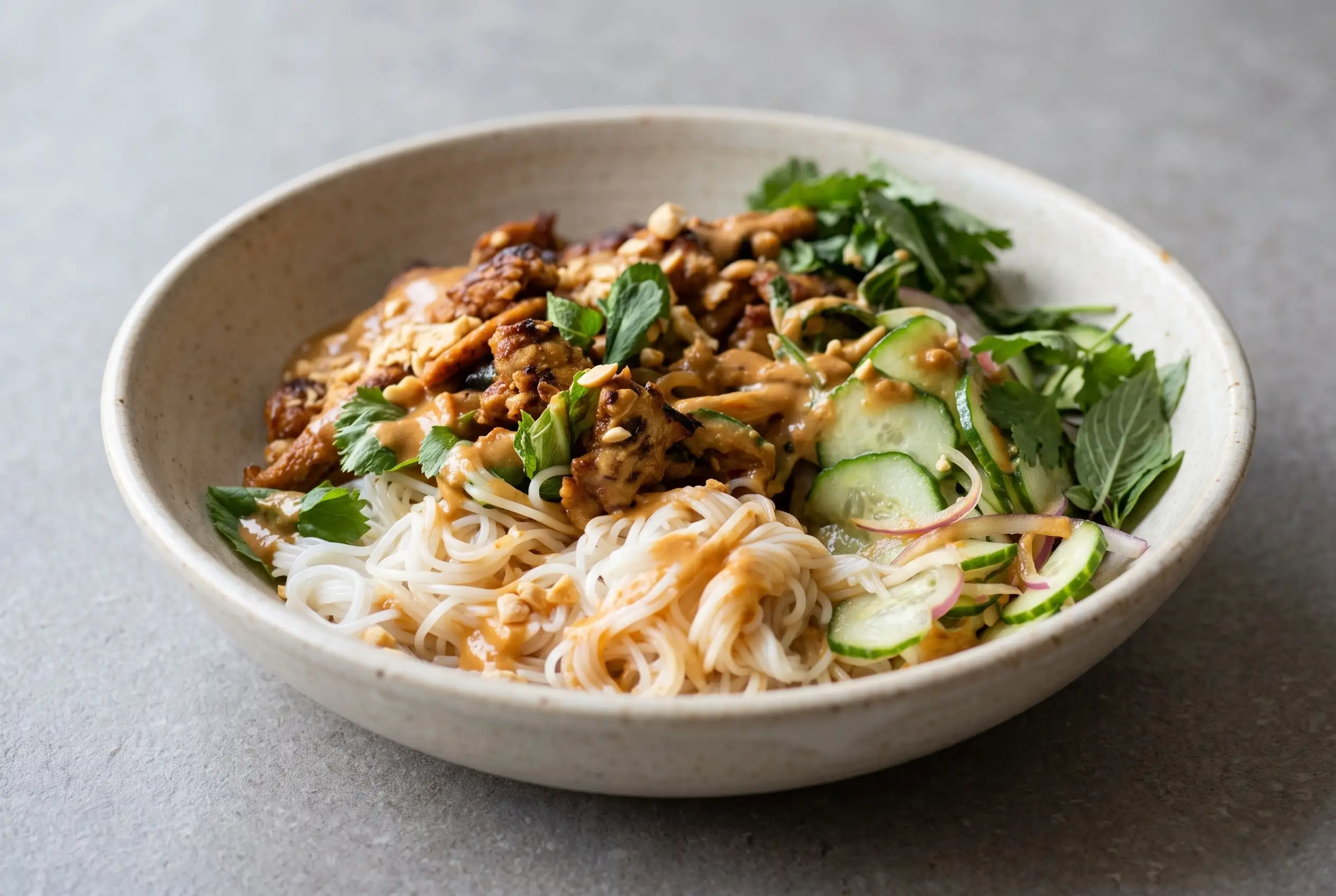
Thai peanut chicken bowls combine caramelized satay-marinated chicken, cool cucumber salad, tender rice vermicelli, fresh herbs, crushed peanuts, and a pourable peanut dressing in one layered meal. The contrast matters as much as the peanut flavor itself: hot savory chicken sits against crisp vegetables, soft noodles carry the sauce, and herbs keep the bowl from tasting overly rich. Because several elements meet only at serving time, the strongest bowls depend on controlling moisture, browning, and sauce consistency before everything comes together.
Instead of treating the bowl as a pile of separate toppings, it helps to think about how each forkful will behave. Noodles need enough dressing to stay flavorful without becoming saturated, the cucumber mixture should remain bright and crisp, and the chicken benefits from deep surface color. Those decisions turn simple peanut chicken noodle bowls into a balanced meal where the sauce connects every component without hiding its texture.
Satay Sauce Has Two Different Jobs in the Bowl
The prepared peanut satay sauce does more than season the chicken. One portion works as a marinade, where direct contact with thin slices allows the sauce and grated garlic to coat a large amount of surface area. Another portion becomes the finishing dressing, so keeping those two uses separate preserves a clean sauce for serving.
Commercial satay sauces vary in thickness, sweetness, saltiness, and peanut concentration. A dense sauce may cling heavily to chicken while an especially fluid one coats it more lightly. Paying attention to its consistency before cooking helps determine how much thinning the reserved portion will need later.
Garlic belongs particularly well in the marinade because grating distributes it finely across the chicken. Large pieces could scorch during pan cooking, while a fine texture integrates more evenly into the coating. Since the chicken is sliced thinly, there is little need for complicated additional seasoning.
For thai peanut chicken bowls, preserving some sauce for the finished bowl is especially important. Cooking all of it with the chicken would leave the noodles and vegetables without the loose, fresh dressing that ties them together at the table.
Thin Chicken Slices Need Space and Steady Pan Heat
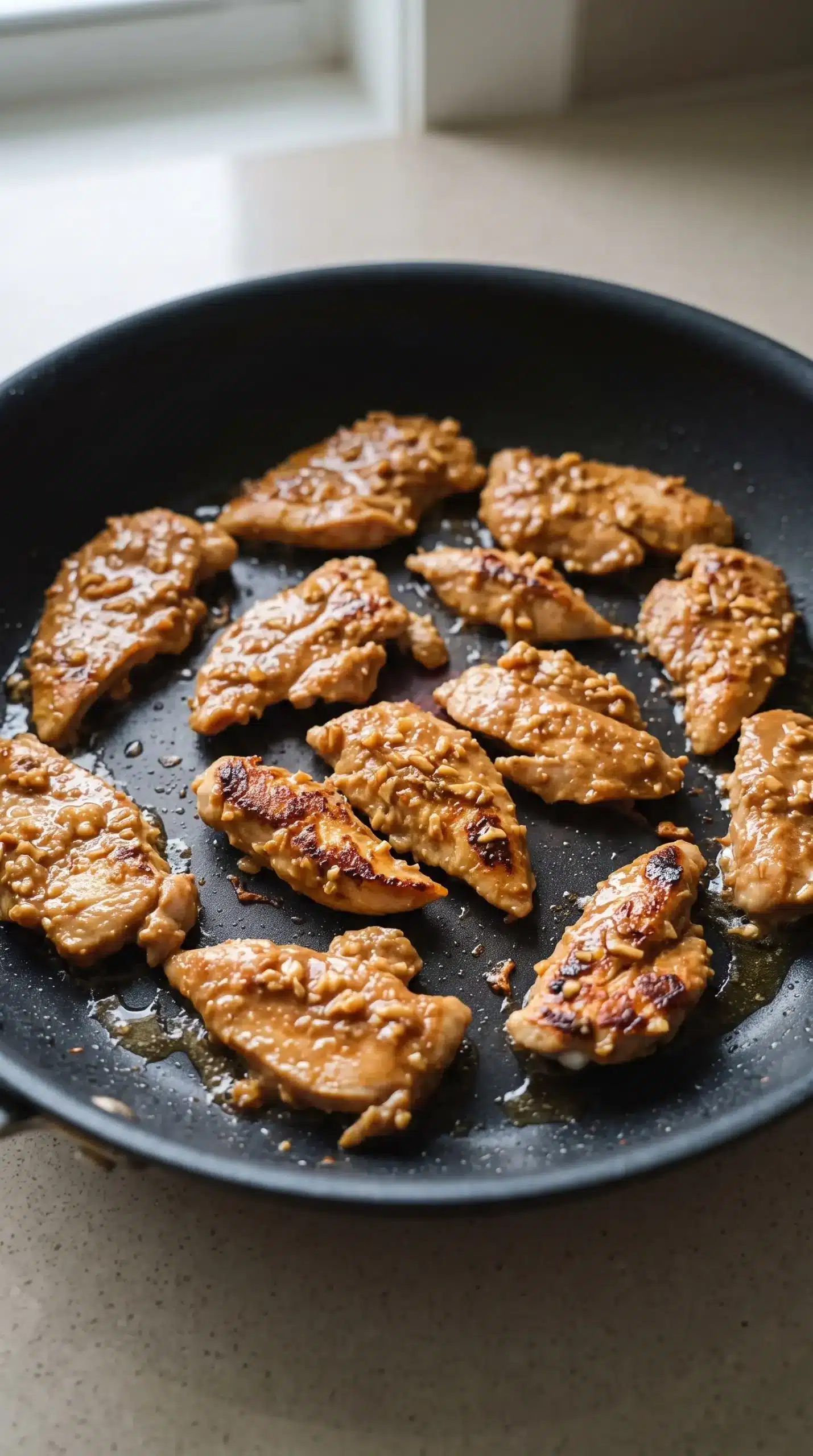
Surface contact determines whether the marinated chicken develops browned edges or simply releases moisture and steams. A nonstick pan over medium heat gives the sweet peanut coating a chance to color without exposing it to unnecessarily aggressive heat. Once the chicken goes into the pan, leaving it undisturbed briefly encourages caramelization.
Crowding lowers pan temperature and releases moisture, which interferes with the conditions needed for browning. Leaving space between the thin chicken slices helps that moisture escape instead of accumulating around the meat.
Crowding works against that browning because several pieces release moisture into the same small area. If the pan looks packed or liquid begins collecting around the meat, cooking in batches is the more reliable choice. Thin slices cook quickly enough that a little extra pan space can make a noticeable difference in texture.
After one side has developed color, turning the pieces exposes fresh surface to the pan. Any optional pinch of sugar used near the end should be treated carefully because both the satay sauce and added sugar can darken rapidly. Fully cooked chicken with golden, lightly sticky edges is a better cue than chasing an extremely dark crust.
Cucumber Salad Supplies the Crisp Counterpoint
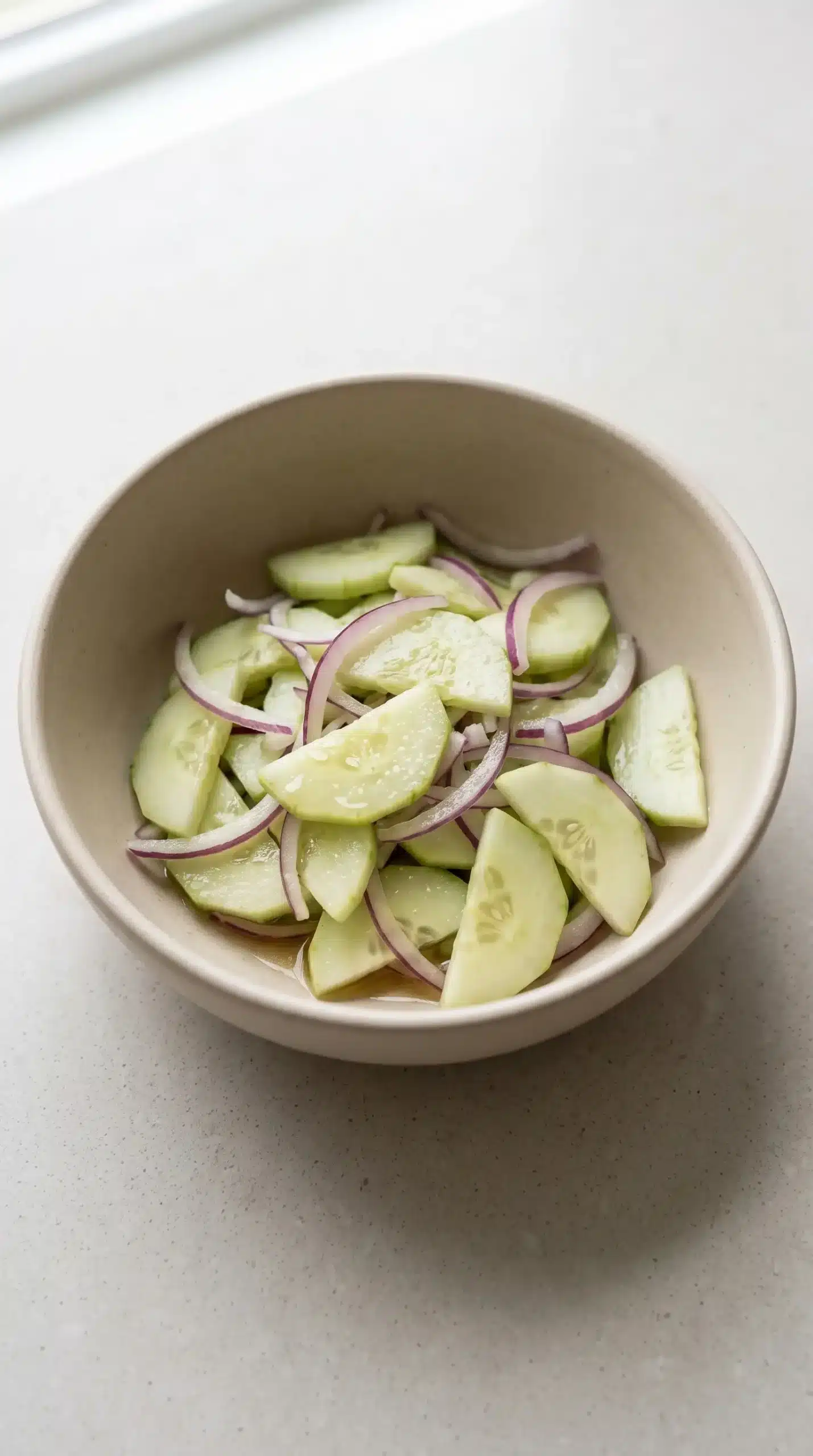
Thin cucumber and red onion give thai peanut chicken bowls their sharpest textural contrast. Tossing them with avocado oil, vinegar, salt, and a small amount of sugar creates a lightly seasoned salad that cuts through the richer peanut sauce without needing a heavy dressing of its own.
Rice Vermicelli Should Stay Loose Enough for Dressing
Rice vermicelli forms a neutral base that readily absorbs the flavors around it. Its delicate strands are particularly useful in chicken bowls with peanut sauce because the noodles carry dressing between pieces of chicken, cucumber, herbs, and peanuts instead of competing with them.
Once prepared according to the package directions, the noodles should be drained thoroughly. Excess water left clinging to them can dilute the peanut dressing, while noodles allowed to sit in a dense wet mass may become difficult to divide among bowls.
A gentle separation before serving keeps the strands manageable. If they begin sticking together, loosening them carefully is preferable to aggressively stirring or breaking them into short pieces.
| Element | Useful Texture | Sign It Needs Attention |
|---|---|---|
| Rice vermicelli | Soft, separated strands | Wet clumps that dilute sauce |
| Chicken | Juicy slices with browned edges | Pale pieces sitting in released liquid |
| Cucumber salad | Crisp slices with light seasoning | Excess liquid pooling before assembly |
| Peanut dressing | Pourable enough to drizzle | Thick sauce sitting in heavy dollops |
Caramelization Gives Peanut Chicken Its Savory Edge
Sweetness in satay sauce makes browning especially visible, but color should develop gradually. In thai peanut chicken bowls, a golden surface adds roasted flavor and a slightly sticky exterior that stands apart from the soft noodles and fresh cucumber.
A Pourable Peanut Dressing Connects Every Layer
Reserved satay sauce is usually too concentrated to distribute evenly straight from the jar. Loosening it with a small amount of water creates a milder dressing, while soy sauce can add extra savory seasoning and chili oil can bring both fluidity and heat. The best choice depends on how the original sauce tastes before anything is added.
Start with a modest splash because a dressing can always be thinned further. Once it becomes too watery, restoring its original body is less convenient. Stirring directly in the sauce container also makes it easy to see how readily the mixture flows from a spoon.
Good dressing consistency matters in peanut chicken noodle bowls because thick peanut sauce tends to stay where it lands. A smoother drizzle reaches the noodles beneath the toppings and seasons the cucumber and herbs in smaller amounts, giving the entire bowl more even flavor.
Fresh Herbs and Peanuts Belong at the Finish
Mint, cilantro, basil, and crushed peanuts work best when added after the warm elements are arranged. The herbs retain their fresh character, while the peanuts keep their crunch instead of softening under hot chicken or sitting too long in dressing.
- Mint: brings a cool, bright note that pairs especially well with cucumber.
- Cilantro: gives the bowl a fresh, savory herbal edge.
- Basil: adds a fuller aromatic quality alongside the peanut sauce.
- Crushed peanuts: provide concentrated crunch across otherwise tender components.
Layering Keeps the Bowl From Turning Heavy
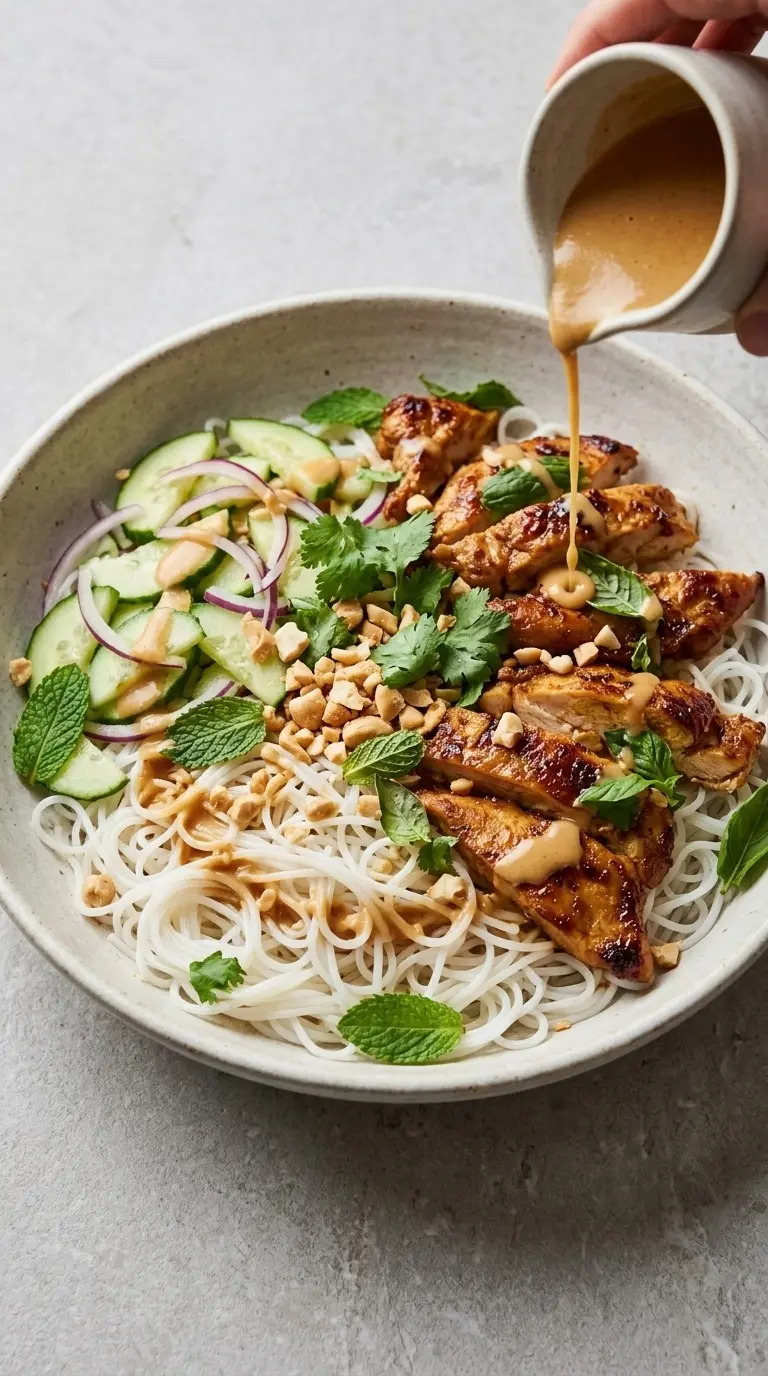
Assembly affects how thai peanut chicken bowls eat from the first bite to the last. Starting with vermicelli creates a base for the dressing, while distributing chicken and cucumber across the surface prevents either one from dominating a single side of the bowl.
Scattering herbs and peanuts last keeps those lighter textures visible and easy to pick up with the noodles. Drizzling the thinned sauce across several areas, instead of pouring it into one central spot, also reduces the chance of overly sauced bites beside completely plain noodles.
Common Thai Peanut Chicken Bowl Mistakes to Avoid
Several problems come directly from moisture and heat management. Most are easy to prevent once the warning signs are visible during cooking and assembly.
- Overcrowding the pan: released moisture collects around the chicken and prevents strong browning.
- Moving chicken too soon: frequent stirring interrupts the surface contact needed for caramelized edges.
- Using all the sauce as marinade: no clean portion remains for thinning into a finishing dressing.
- Leaving noodles very wet: residual water weakens the flavor and consistency of the peanut sauce.
- Dressing everything early: cucumber, herbs, and peanuts lose some of the crisp contrast that makes the bowl appealing.
Another easy error is trying to force darker color with excessive heat. Peanut sauce contains ingredients that can darken rapidly, so high heat may scorch the coating before the chicken cooks evenly. Medium heat offers more control over both browning and doneness.
Correction usually depends on identifying which element is causing the imbalance. Pale chicken benefits from more direct pan contact, an overly thick dressing needs careful thinning, and a watery bowl is better addressed by draining the noodles or cucumber mixture than by adding extra peanut sauce.
Chicken Breast and Thighs Produce Different Textures
Both boneless skinless breasts and thighs suit thai peanut chicken bowls, but they bring slightly different eating qualities. Breast meat stays relatively lean and clean-tasting when sliced thinly and cooked just through, while thighs tend to remain more forgiving and succulent during pan browning. Keeping the pieces similar in thickness matters more than choosing one cut over the other.
Balanced Bowls Depend on Contrast, Not Extra Toppings
The existing combination already covers several useful textures: tender noodles, browned chicken, crisp cucumber, fresh herbs, and crunchy peanuts. Adding large numbers of unrelated toppings can blur those distinctions and make the peanut dressing work harder to connect everything.
For thai chicken rice noodle bowls built from these ingredients, adjusting proportions is often more effective than introducing additional components. Someone wanting a fresher bowl can emphasize cucumber and herbs, while a richer serving can carry a little more dressing and crushed peanut without changing the basic structure. When replacing noodles with a grain-based base, chicken bowls with lentil rice benefit from keeping the herbs, sauce, and chicken distributed across the surface so each serving retains distinct textures.
Store the Components Separately When Possible
Leftovers hold their texture better when the main components remain separate. Cooked chicken and noodles can be refrigerated in their own containers, while cucumber salad, herbs, peanuts, and peanut dressing are best kept apart from the warm elements until serving.
Cold noodles may firm and stick together during storage. Gentle separation before assembling another bowl helps restore a more pleasant texture, and a small amount of dressing can make the strands easier to combine without flooding them.
Fresh herbs and crushed peanuts deserve particular protection from moisture. Keeping both dry until the bowl is assembled preserves the herbal lift and crunch that contrast with the softened noodles and refrigerated chicken.
Browning and Freshness Make Thai Peanut Chicken Bowls Work
Golden chicken is the anchor of thai peanut chicken bowls because its caramelized surface gives the peanut sauce something savory to build around. When that chicken is paired with well-drained noodles and crisp cucumber, the richer elements stay defined instead of blending into one uniformly soft bowl.
Fresh herbs, crushed peanuts, and a properly thinned dressing complete that balance. The result depends less on adding more ingredients than on keeping each prepared element at the texture and concentration that suits its role.
Peanut Sauce Thickness and Chicken Doneness Questions Answered
How can I tell when the chicken is cooked through?
Thin slices should appear opaque throughout with no raw center, and the safest confirmation is checking that the thickest pieces have reached a safe internal temperature with a food thermometer. Because the pieces are thin, checking promptly helps avoid unnecessary overcooking.
What if my peanut dressing becomes too thin?
Stir in a little more of the reserved satay sauce if any remains, adding it gradually until the dressing coats a spoon lightly again. Avoid compensating with large amounts at once, which can make the dressing overly concentrated or salty.
Can the cucumber mixture be prepared ahead?
It can be mixed ahead, but cucumber and salt naturally release moisture as they sit. Before assembling the bowls, use the vegetables without pouring excess liquid over the noodles so the peanut dressing keeps its intended concentration.
Do I need all three fresh herbs?
No. Mint, cilantro, and basil can be used individually or in combination according to what is available. Using more than one creates a broader herbal flavor, but even a single fresh herb still provides useful contrast with the rich satay sauce.
What can I use if the prepared satay sauce is unavailable?
A comparable peanut sauce suitable for both marinating and thinning into a dressing can take its place. Choose one with enough body to cling to the chicken, reserve a clean portion before cooking, and adjust the finishing portion gradually so it drizzles easily over the assembled bowls.
Thai Peanut Chicken Bowls with Cucumber and Fresh Herbs
Thai peanut chicken bowls combine tender rice vermicelli, caramelized chicken, crisp cucumber, fresh herbs, crunchy peanuts, and a smooth peanut dressing. They make an easy, flavorful meal when a satisfying mix of textures is wanted.
Ingredients
Method
Preparation
- Place the sliced chicken in a bowl and coat it with half of the Thai peanut satay sauce and the grated garlic. Allow it to marinate for about 30 minutes to 1 hour.
- Combine the sliced cucumber and red onion with the avocado oil, vinegar, salt, and sugar, tossing until evenly coated.
Cooking
- Warm a small amount of oil in a nonstick pan over medium heat. Add the marinated chicken and leave the slices undisturbed for a few minutes so the surface can caramelize.
- Turn the chicken and cook the second side in the same manner until the pieces are cooked through and golden brown. For additional caramelization, add a pinch of sugar near the end of cooking.
Assembly
- Prepare the vermicelli noodles according to the package directions, then serve the noodles as the base of each bowl.
- Top the noodles with the cooked chicken, cucumber salad, fresh herbs, and crushed peanuts.
- Thin the remaining Thai peanut satay sauce in its jar with a little water, soy sauce, or chili oil until it reaches a dressing consistency. Drizzle the dressing over the assembled bowls.
Notes
If you don’t have access to a store that sells the peanut satay sauce, use this peanut sauce instead. Use about 1/3 cup to marinate the chicken in step 1, then another 1/3 cup to thin into the dressing in step 5.