From breakfast to dinner, from healthy meals to sweet desserts – Next Yum Recipes brings you quick, simple and tasty ideas for every occasion and every time.


 This Recipe
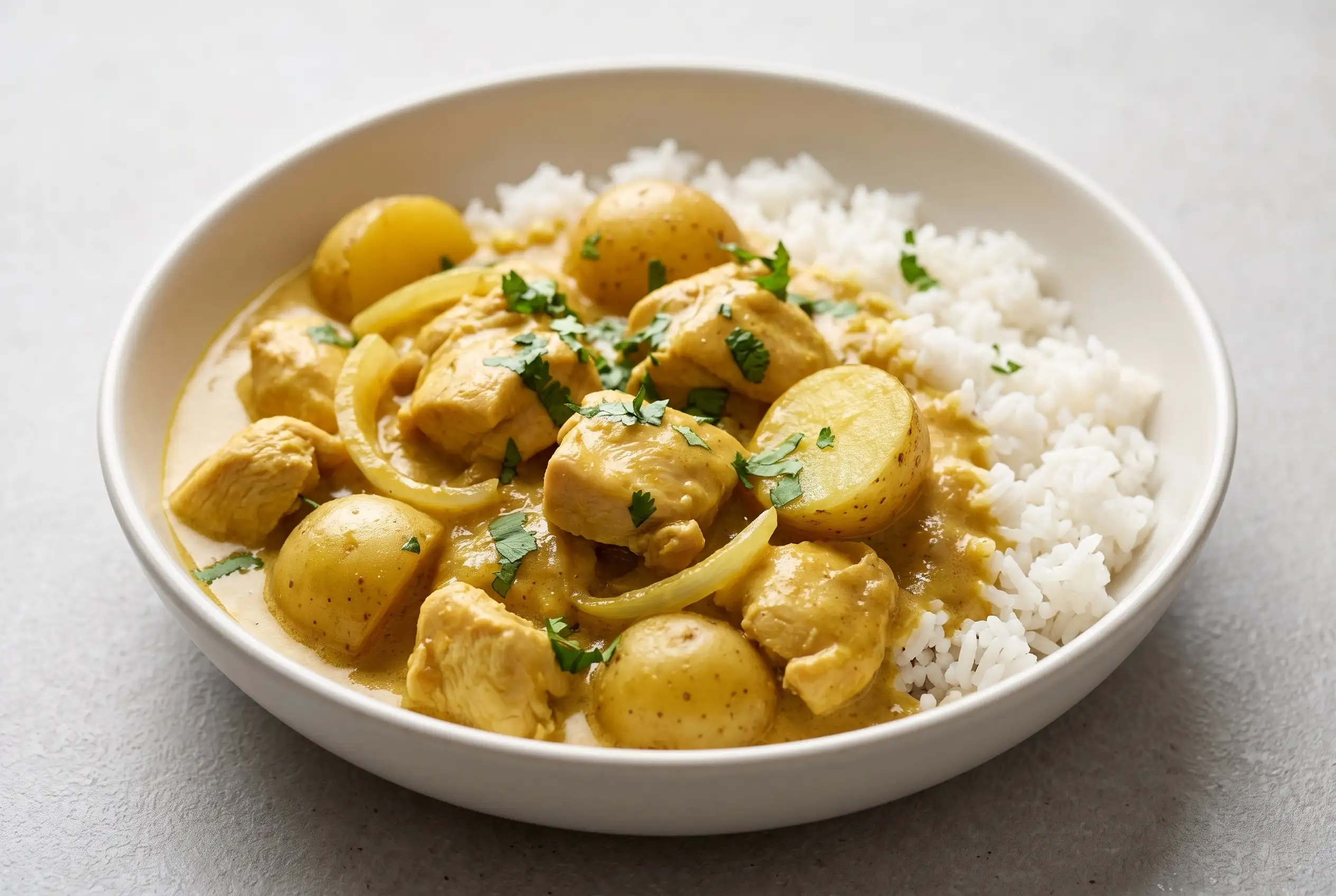
Thai yellow chicken curry combines tender chicken breast, golden potatoes, yellow curry paste, and coconut into a rich sauce that stays warmly spiced without becoming heavy. The most important decisions happen in the pot: the curry paste needs brief contact with the chicken and onion, the potatoes must cook evenly, and the coconut sauce should simmer gently enough to remain smooth while concentrating around the other ingredients.
Because the ingredient list is focused, small adjustments have a noticeable effect. A stronger curry paste may need a lighter hand, coconut cream creates a fuller sauce than coconut milk, and the optional fish sauce and brown sugar can sharpen the finished balance when the curry tastes flat or overly savory. Served over jasmine rice, thai yellow chicken curry becomes a complete bowl with enough sauce to coat both the chicken and the rice.
Yellow Curry Paste Sets the Strength of the Sauce
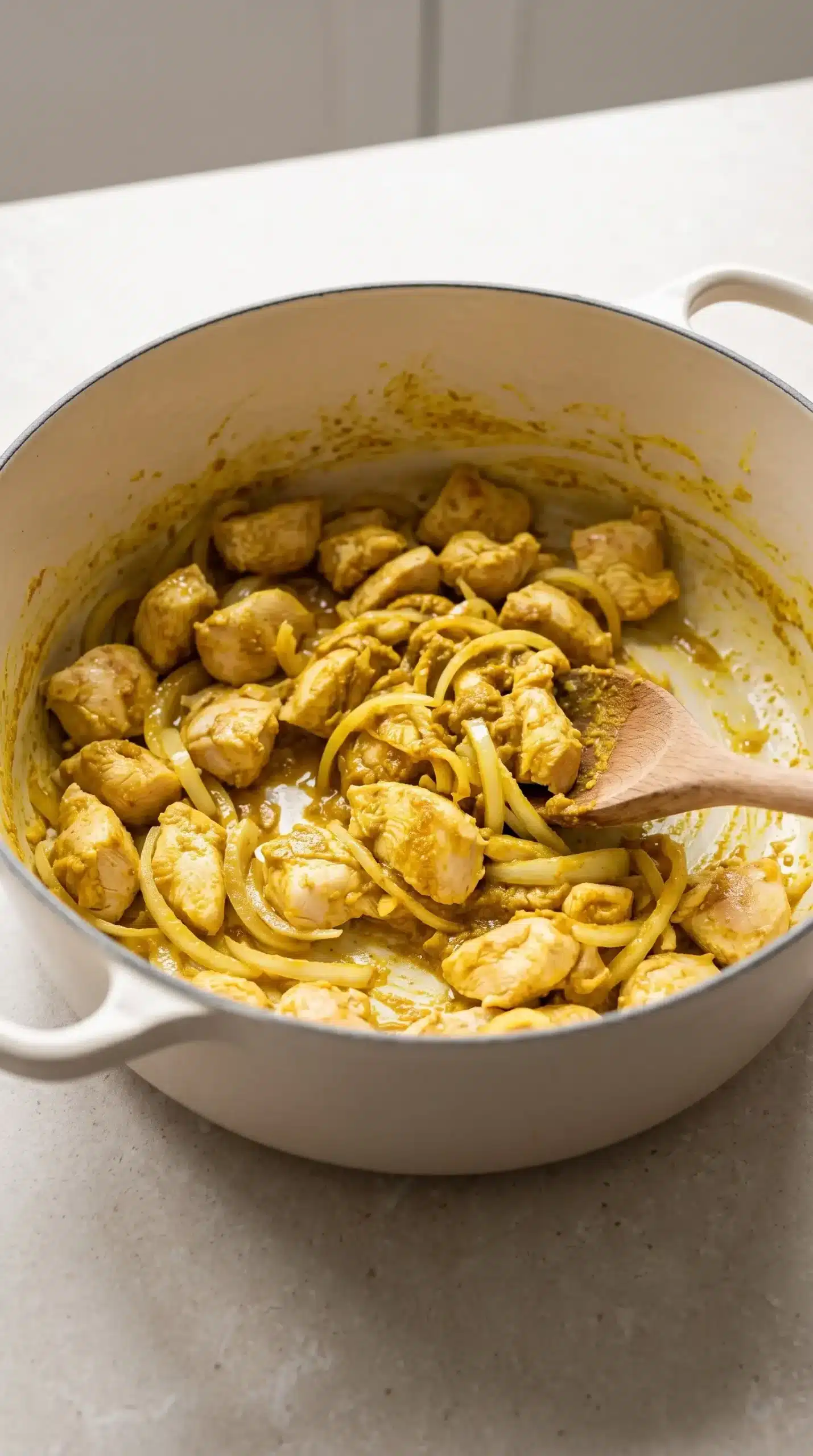
Store-bought yellow curry pastes vary considerably in salt, chile intensity, aromatics, and concentration. A dense, strongly seasoned paste can dominate the pot if used at the same quantity as a milder homemade version, so tasting the sauce before adding more seasoning is especially useful. When using a concentrated commercial paste, beginning with less and adjusting later gives better control over both heat and salt.
Brief contact with warm oil, softened onion, and chicken helps the paste disperse before coconut enters the pot. That short cooking period also prevents compact clumps of paste from remaining in the finished sauce. For thai yellow chicken curry, even distribution matters because every piece of potato and chicken should pick up the same aromatic coating.
Color alone is not a reliable measure of strength. Turmeric can make a paste vividly yellow without indicating how salty or spicy it will taste, so seasoning decisions should come from tasting once the coconut and liquid have been incorporated.
Coconut Cream Makes a Fuller Chicken Curry Sauce
Coconut cream produces a thicker, richer base, while coconut milk gives chicken curry with coconut milk a lighter and more fluid consistency. When using coconut milk and curry paste together, added water or broth should be measured cautiously because the thinner coconut base already provides more fluidity around the chicken and potatoes. A thick coconut cream base usually needs more loosening, while coconut milk may need only enough extra liquid to keep the potatoes partially surrounded as they simmer.
Even Potato Pieces Cook More Reliably
Baby Yukon gold potatoes are especially useful in yellow chicken curry with potatoes because their creamy texture holds together well during simmering. Halving similarly sized potatoes or cutting larger ones into comparable bite-size pieces helps them soften at the same rate, reducing the chance that some pieces remain firm while others begin breaking apart into the sauce.
Gentle Simmering Protects the Chicken and Coconut
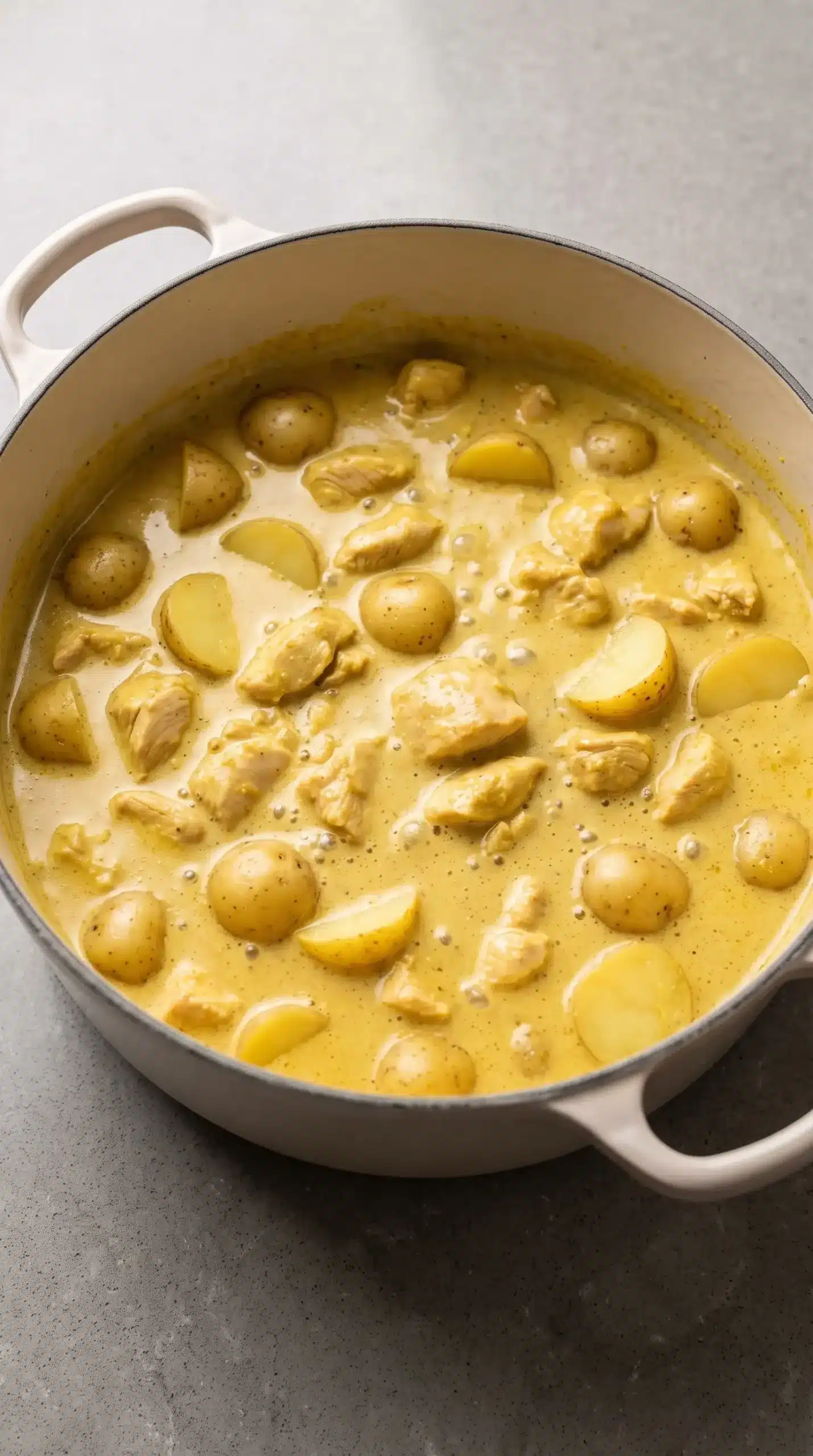
Once the coconut and cooking liquid are added, a controlled simmer is more useful than an aggressive boil. Strong bubbling can tighten lean chicken breast and reduce the sauce before the potatoes have softened, while moderate heat gives both components time to finish together.
Chicken pieces should remain bite-size and reasonably uniform so they cook through without requiring prolonged simmering. Since the meat begins cooking before the coconut is added, it does not need intense heat later in the process. Maintaining steady bubbling is enough to finish the chicken while the potatoes become tender.
Potato tenderness is the clearest signal for when the main simmer is complete. A knife or fork should enter the center without meeting a hard core. At that point, thai yellow chicken curry can be adjusted for thickness and seasoning instead of remaining over the heat simply to follow a fixed visual expectation.
Sauce Thickness Can Be Adjusted at the Pot
The curry can be served with a flowing sauce that sinks into jasmine rice or with a thicker coating that clings closely to the chicken and potatoes. Liquid should therefore be added gradually, especially when coconut milk is used instead of coconut cream.
| What You See | Likely Cause | Useful Adjustment |
|---|---|---|
| Sauce looks dense before potatoes are tender | Not enough cooking liquid | Add a small amount of water or broth and continue simmering gently |
| Sauce remains very loose after potatoes are cooked | Extra liquid or thinner coconut milk | Let it bubble briefly uncovered, or use the optional cornstarch slurry for light thickening |
| Sauce coats a spoon but still pours easily | Balanced reduction | Move on to seasoning adjustments |
If a slightly thicker finish is wanted without extended reduction, the supplied cornstarch option is useful. Stirring a small slurry into a bubbling pot thickens the liquid quickly, so it should be added only after the potatoes are tender and the basic consistency has already been assessed.
Fish Sauce and Brown Sugar Fine-Tune the Balance
Fish sauce and brown sugar are optional, but they solve different finishing problems. Fish sauce deepens savory seasoning, while brown sugar softens sharp saltiness or spice and rounds the coconut base. Adding both automatically can obscure the balance already present in the curry paste.
Tasting before either addition is especially important with commercial paste because many brands are already well seasoned. If the curry seems muted, a small amount of fish sauce can intensify its savory edge. When the sauce tastes harsh or overly salty, a modest amount of sugar may make the flavors feel more integrated.
Seasoning should be judged with some potato and sauce on the spoon, not sauce alone. Potatoes absorb seasoning and coconut softens strong flavors, so thai yellow chicken curry may taste different once all of its main components are sampled together.
Jasmine Rice Gives the Sauce Somewhere to Go
Jasmine rice is an especially practical pairing because its separate grains absorb the coconut curry without competing with the sauce. Keeping the rice fluffy also gives thai yellow curry with potatoes useful textural contrast, since the curry itself contains soft potatoes, tender chicken, and a smooth coconut base.
Mistakes That Can Throw Off Thai Yellow Chicken Curry
Most problems with thai yellow chicken curry come from heat, concentration, or timing, not from complicated technique. Watching the texture of the potatoes and sauce is more dependable than pushing the pot harder to finish sooner.
- Boiling too hard: vigorous heat can toughen chicken breast and reduce the coconut sauce before the potatoes are ready.
- Using too much paste: a concentrated commercial curry paste can make the sauce excessively salty or intense before other seasonings are added.
- Adding all the liquid at once: too much water or broth can leave a thin sauce once the potatoes are fully cooked.
- Seasoning before tasting: fish sauce and sugar work best as corrections after the curry paste and coconut have established the base flavor.
A curry that becomes too thick before the potatoes soften is easy to recover with a splash of water or broth. A curry that becomes too thin requires more restraint, since prolonged boiling can overcook the chicken; gentle uncovered reduction or the optional slurry is a better fit once the potatoes are done.
Small Variations Should Preserve the Curry’s Structure
Using coconut milk instead of coconut cream is the most direct variation because it changes richness without changing the central flavor profile. Expect the sauce to begin thinner and adjust added liquid conservatively. The result will still function as a yellow chicken curry with potatoes, just with a lighter body.
Broth may replace water when loosening the sauce, provided its salt level is considered before fish sauce is added. Since curry paste can already contain substantial seasoning, a strongly salted broth can make the finished pot difficult to balance.
Chicken pieces can also be cut slightly smaller for a more spoonable curry, but they should remain large enough to stay distinct among the potatoes. Whatever size is chosen, uniformity matters more than exact dimensions because similar pieces finish at a similar rate.
Leftover Curry Needs Gentle Reheating
Refrigerated thai yellow chicken curry will usually thicken as the coconut sauce cools and the potatoes continue absorbing moisture. During reheating, a small splash of water or broth can restore a looser consistency without forcing the curry to boil for an extended period.
Low to moderate heat is best for warming leftovers evenly. Stir occasionally so the coconut sauce heats smoothly around the potatoes and chicken, adding only enough extra liquid to return the curry to the consistency wanted for serving.
Cilantro Works Best as a Fresh Finish
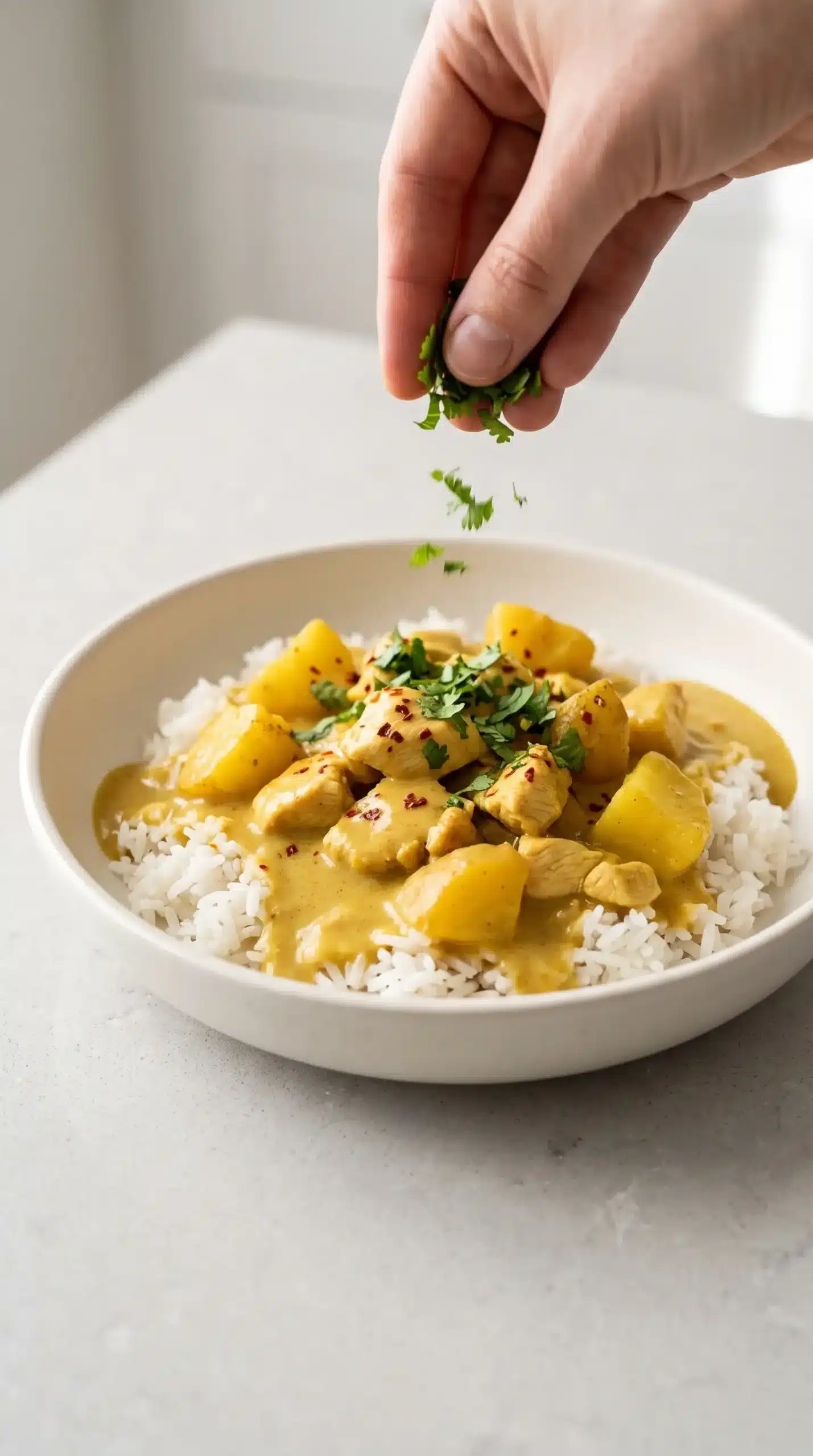
Chopped cilantro is most useful after the curry leaves the heat, where its fresh flavor and color remain distinct against the warm coconut sauce. Scattering it over individual bowls also lets the herb stay visible instead of disappearing into the simmered curry.
Balanced Heat and Sauce Texture Define the Best Result
Tender potatoes should determine when the pot moves from cooking to finishing. Once they are soft, the chicken is cooked through, and the coconut sauce has enough body to coat a spoon, continued simmering offers little benefit and can begin working against the lean chicken.
Careful control at that point ties the entire thai yellow chicken curry together. Adjusting only what the pot actually needs extra liquid, a little thickening, fish sauce, sugar, or salt keeps the curry paste, coconut, potatoes, and chicken in balance instead of allowing one element to dominate.
Thai Yellow Chicken Curry Questions About Spice, Potatoes, and Sauce
Can yellow curry paste be spicy?
Yes. Yellow curry is often perceived as milder than some red or green curry preparations, but the actual heat depends heavily on the paste being used. Commercial brands differ, so checking the label and starting conservatively is sensible when the spice level is unfamiliar.
Can chicken thighs replace chicken breasts?
Boneless chicken thighs can generally be used in a coconut curry, though they contain more fat and may remain juicier during simmering. Cut them into evenly sized pieces and cook them until they reach an internal temperature of 165°F (74°C), keeping potato tenderness as the separate cue for finishing the sauce.
Why are my potatoes still firm when the chicken is done?
Potato pieces that are too large or uneven may need longer than the chicken. Keep the curry at a gentle simmer and add a little liquid if the sauce is becoming too concentrated, allowing the potatoes to finish without exposing the chicken to unnecessarily harsh heat.
Can I make the curry less salty after adding curry paste?
A modest amount of unsalted coconut milk, water, or plain cooked rice can help dilute the perception of excess salt. Avoid adding fish sauce, and use brown sugar only if a small amount improves balance, since sweetness can soften salty edges but does not actually remove salt.
Why did my coconut curry sauce get too thick?
Evaporation, coconut cream, and starch released from the potatoes can all make the sauce tighten as it cooks. Stir in water or broth a little at a time over gentle heat until the sauce returns to a pourable consistency that coats the chicken and potatoes without becoming pasty.
Thai Yellow Chicken Curry with Potatoes and Coconut
Thai yellow chicken curry combines tender chicken and golden potatoes in a creamy coconut curry sauce with warm, savory flavor. It is an easy, comforting choice for a satisfying weeknight meal served over jasmine rice.
Ingredients
Method
Cooking
- Warm the avocado oil in a large pot over medium-low heat. Add the sliced onion and cook for a few minutes, stirring occasionally, until fragrant and softened.
- Add the chicken and yellow curry paste to the pot. Cook for 3-5 minutes, stirring to coat the chicken with the curry paste.
- Add the potatoes and stir them through the curry mixture until coated.
- Pour in the coconut cream or coconut milk and 1/2 cup water or broth. Season with salt. Bring the mixture to a gentle simmer and cook for 20-30 minutes, or until the potatoes are fully tender. Add more water or broth as needed to reach the desired sauce consistency.
Rice
- While the chicken and potatoes are simmering, cook the jasmine rice according to the package directions.
Finishing and Serving
- Stir in the fish sauce and brown sugar, if using, and adjust the seasoning to taste.
- Serve the curry over the cooked jasmine rice and finish with the chopped cilantro.
Notes
For store-bought yellow curry paste, the original recipe notes that a concentrated paste may require only 2-3 tablespoons instead of 1/4 cup of homemade paste. Coconut cream is a richer, thicker alternative to coconut milk, and either can be used. For a thicker sauce after simmering, add 1 tablespoon cornstarch dissolved in 1 tablespoon cold water to the bubbling pot. The nutrition label does not include the rice. The original recipe also references a separate guide for thinly slicing an onion.