From breakfast to dinner, from healthy meals to sweet desserts – Next Yum Recipes brings you quick, simple and tasty ideas for every occasion and every time.


 This Recipe
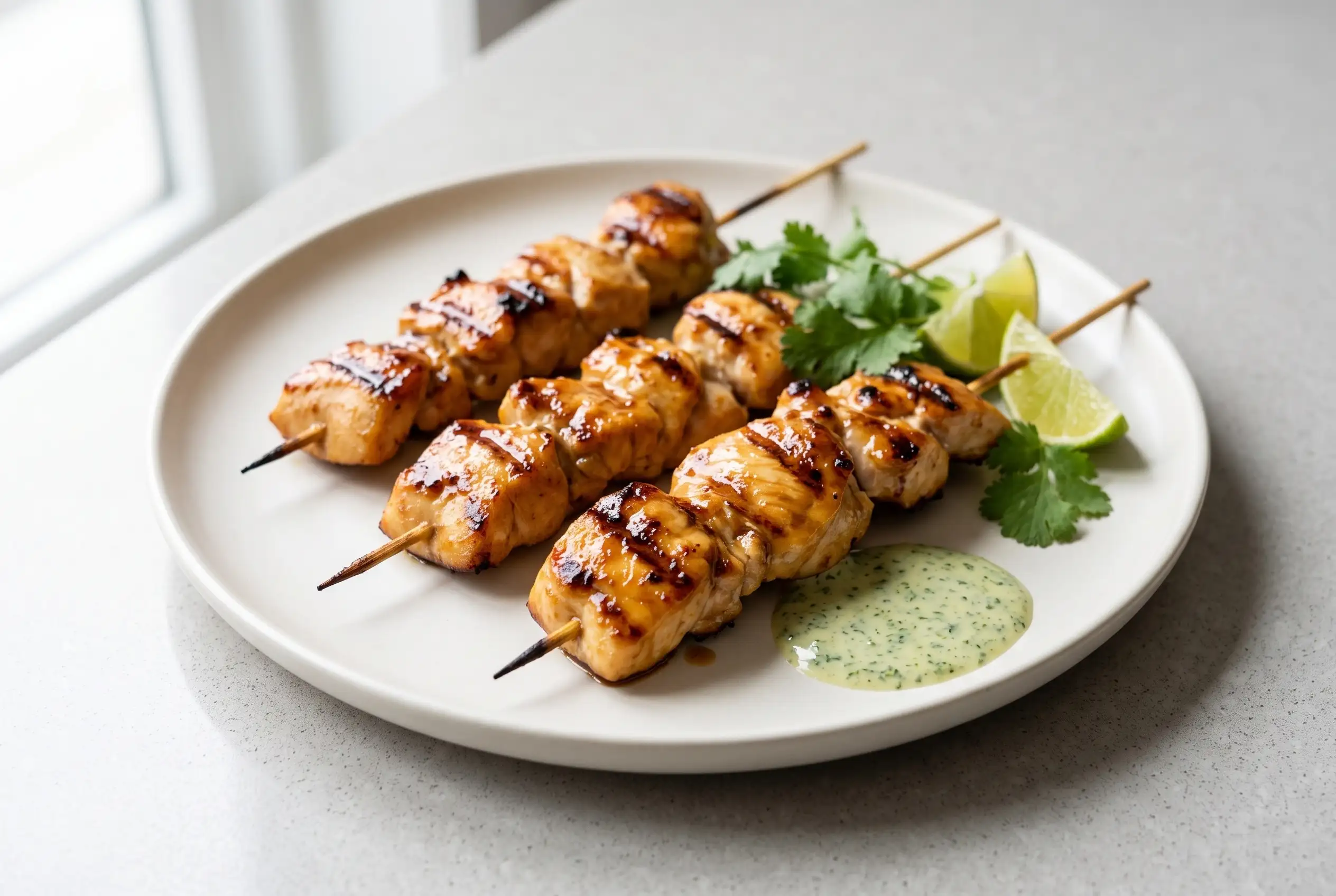
Grilled chicken can be surprisingly difficult to get right when the ingredient list is short, because every decision becomes easy to taste. In this honey-soy version, chicken breast is cut into chunks, marinated with soy sauce, honey, water, and smashed garlic, then cooked on skewers until browned and glossy. The combination is uncomplicated, but controlling sweetness, surface moisture, spacing, and grill heat determines whether the chicken develops savory caramelized edges or scorches before the center is ready.
Among versions of honey soy grilled chicken, the strongest results come from treating the marinade and grill as two separate flavor-building stages. A refrigerated soak seasons the chicken, while reserved sauce brushed onto the meat during grilling builds a fresh glaze. Cilantro, lime, green sauce, rice, naan, or a crisp salad can then supply contrast without competing with the sweet-salty coating.
Three-Ingredient Grilled Chicken Depends on Technique
A short ingredient list does not leave much room for correction once the chicken reaches the grill. Soy sauce supplies concentrated seasoning, honey encourages browning, and the chicken itself must stay juicy enough to balance both. Water in the marinade matters too, even though it is not part of the three-ingredient idea implied by the title. It dilutes the intensely salty and sweet components so they can coat the meat more evenly.
Because boneless chicken breast is lean, the cooking window is narrower than it would be with a fattier cut. Cutting the meat into chunks makes grilling quicker and creates more exterior surface for the marinade and glaze, but those smaller pieces also respond rapidly to excessive heat. Consistent sizing and attentive grilling therefore matter as much as the marinade itself.
Honey and Soy Sauce Need the Right Balance
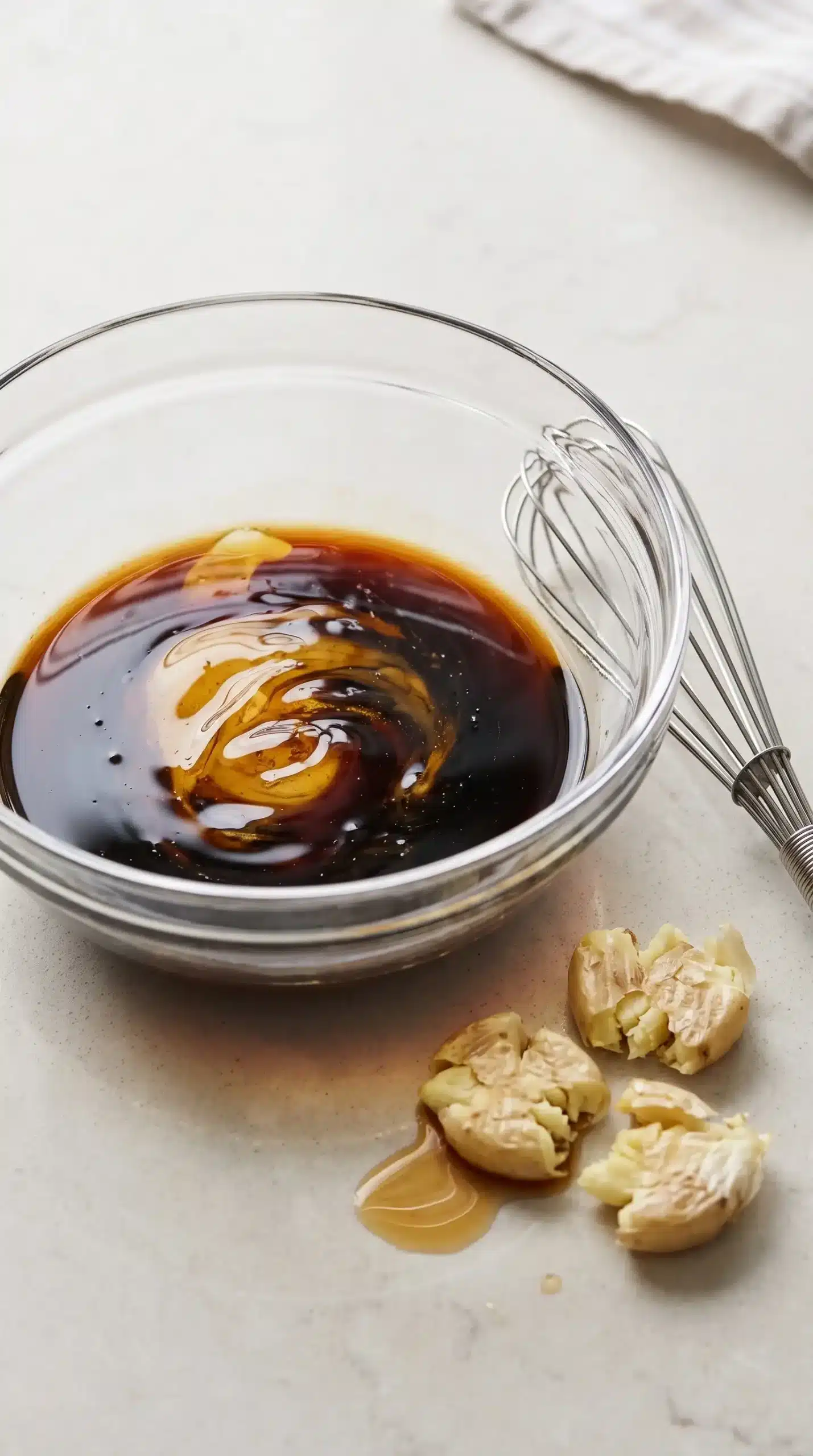
Soy sauce and honey work especially well here because each controls the other. Straight soy sauce could make the exterior excessively salty after a long soak, while undiluted honey would form a very sweet coating that darkens aggressively over direct heat. Combining both with water produces a looser marinade that surrounds the chicken without behaving like a thick finishing glaze from the beginning.
Smashed garlic belongs in that liquid for a different reason from finely minced garlic. Larger pieces can perfume the marinade while remaining easier to leave behind when the chicken is drained. Tiny garlic fragments clinging to the meat would be more exposed to the grill and could darken faster than the chicken itself.
For soy sauce honey chicken, that separation between seasoning liquid and surface glaze is especially useful. The marinade handles penetration and overall seasoning, while clean reserved sauce can be brushed onto the chicken later for shine, sweetness, and additional browning.
Even Chicken Chunks Build Better Skewers
Uniform pieces are one of the simplest ways to improve grilled chicken skewers. If some chunks are twice as large as others, the smallest pieces can dry out while the larger ones are still cooking through. Exact geometric cubes are unnecessary, but the pieces should be close enough in thickness that they respond to the grill at roughly the same rate.
Chicken breast naturally contains tapered sections, so perfect uniformity may require a little judgment while cutting. Thin ends can be cut slightly longer, while thick central portions can be divided into smaller chunks. Once threaded, each piece should sit securely on the skewer without being compressed tightly against its neighbors.
Marinade Contact Should Stay Cold and Complete
A covered bowl or sealed bag keeps the chicken surrounded by marinade while it rests under refrigeration. Turning or repositioning the container can help if some pieces are not fully in contact with the liquid. Before grilling, draining away the used marinade prevents excess liquid from dripping onto the heat and allows the surface of the chicken to begin browning instead of steaming.
Reserved Sauce Creates a Cleaner Glaze
Setting aside part of the freshly mixed sauce before raw chicken enters the marinade solves an important food-safety and flavor problem at the same time. The USDA advises cooks to reserve a portion before raw poultry touches it, allowing that clean sauce to be brushed onto the skewers as they cook without carrying raw chicken juices back to the finished surface.
Brushing in light coats works better than flooding the skewers. A thin film of honey-soy sauce can tighten and brown against the hot chicken, while an excessive coating is more likely to drip through the grates or burn where it collects. Several modest applications create more controlled glazing than one heavy layer.
Medium-High Heat Requires Active Grill Control
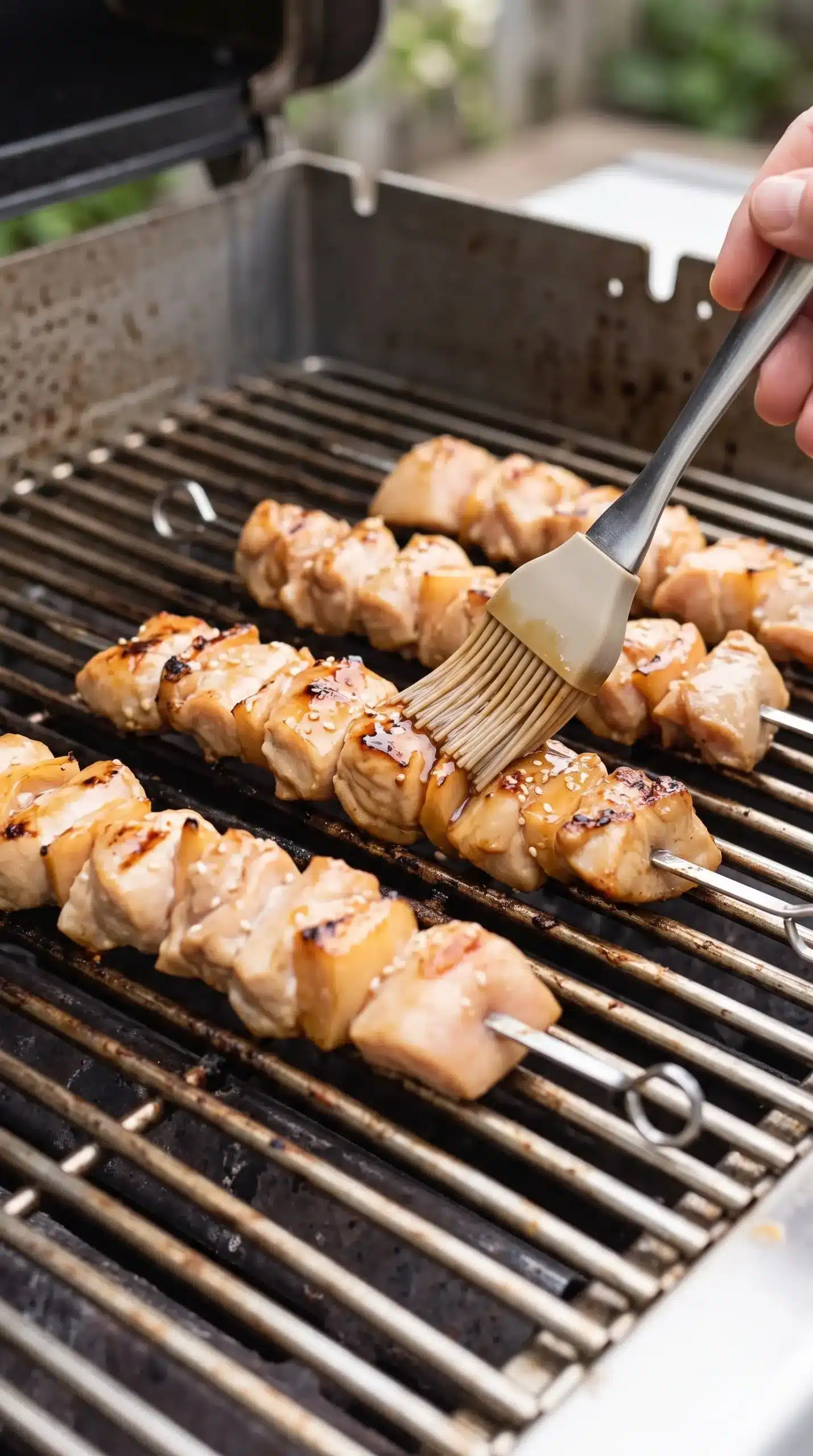
Medium-high heat gives chicken chunks enough energy to brown while keeping the cooking process manageable. A properly preheated grill also helps the meat release more cleanly from the grates. Oiling the grates before the skewers go down is particularly useful because honey becomes sticky as its sugars concentrate.
Once cooking begins, the grill lid can help surround the chicken with heat, but visual checks remain important. Honey makes color develop faster than it would on plainly seasoned chicken, so darkening alone cannot prove that the center is cooked. Turn the skewers as needed to expose different sides while preventing any one sugary surface from sitting over intense heat for too long.
For dependable doneness, an instant-read thermometer is more useful than judging color alone. Check a thick piece near the center of a skewer and confirm that the chicken has reached a safe internal temperature before serving.
Brown the Honey Glaze Without Scorching It
Honey begins to darken readily on a hot grill, which is part of what gives the chicken its appealing lacquered appearance. There is a useful difference, however, between deep caramelized patches and a blackened sugar crust. If the glaze is coloring too rapidly while the chicken still needs more cooking, move the skewers to a slightly cooler part of the grill or reduce the intensity.
| What You See | What It Suggests | Useful Response |
|---|---|---|
| Pale, wet surface | Too much liquid or insufficient searing | Let excess marinade drain and give the surface uninterrupted grill contact |
| Golden edges with glossy patches | Glaze is browning normally | Continue turning and brushing lightly |
| Very dark spots forming quickly | Honey is scorching before the center is ready | Shift the skewers away from the hottest area |
| Even browning on several sides | Heat exposure is well distributed | Check the thickest piece for doneness |
Carryover cooking is less dramatic with small chicken chunks than with a large roast, so it is worth checking temperature while the skewers are still on the grill. Visual browning can guide heat management, but temperature should guide the safety decision.
Skewer Spacing Helps the Chicken Brown
Packing chicken pieces tightly together creates sheltered contact points where heat and airflow cannot reach the surface efficiently. Leaving a little breathing room between chunks allows more edges to brown and makes it easier to brush sauce over multiple sides. Wood skewers should be soaked before grilling so the exposed portions are less likely to char aggressively.
Common Mistakes With Honey Soy Grilled Chicken
Most problems with this grilled chicken come from the interaction between sugary sauce and direct heat, not from complicated preparation. Paying attention to a few specific warning signs keeps the glaze glossy and the breast meat tender.
- Using every drop of marinade: sauce that has held raw chicken should not be used as a finishing baste unless it has been properly cooked. Reserve clean sauce before marinating.
- Leaving the chicken dripping wet: excess marinade can delay browning and create flare-ups. Drain the pieces before threading or grilling.
- Overcrowding the skewers: tightly compressed chunks cook less evenly at their touching edges. Leave small gaps for heat circulation.
- Chasing dark color: honey can brown before the chicken is done. Use color to manage heat and temperature to confirm doneness.
- Ignoring hot spots: a grill rarely heats every area identically. Move or rotate skewers when one side colors noticeably faster.
If the outside becomes darker than intended, reducing direct exposure is usually more effective than repeatedly flipping the same skewer over the hottest area. Moving the chicken gives the center a chance to finish without adding unnecessary char to the glaze.
At the opposite extreme, pale chicken often indicates too much surface moisture, insufficient preheating, or frequent movement before the meat has had a chance to sear. Correct the condition causing the weak browning instead of compensating with a thick coat of extra honey.
Bright Sides Balance the Sweet-Savory Chicken
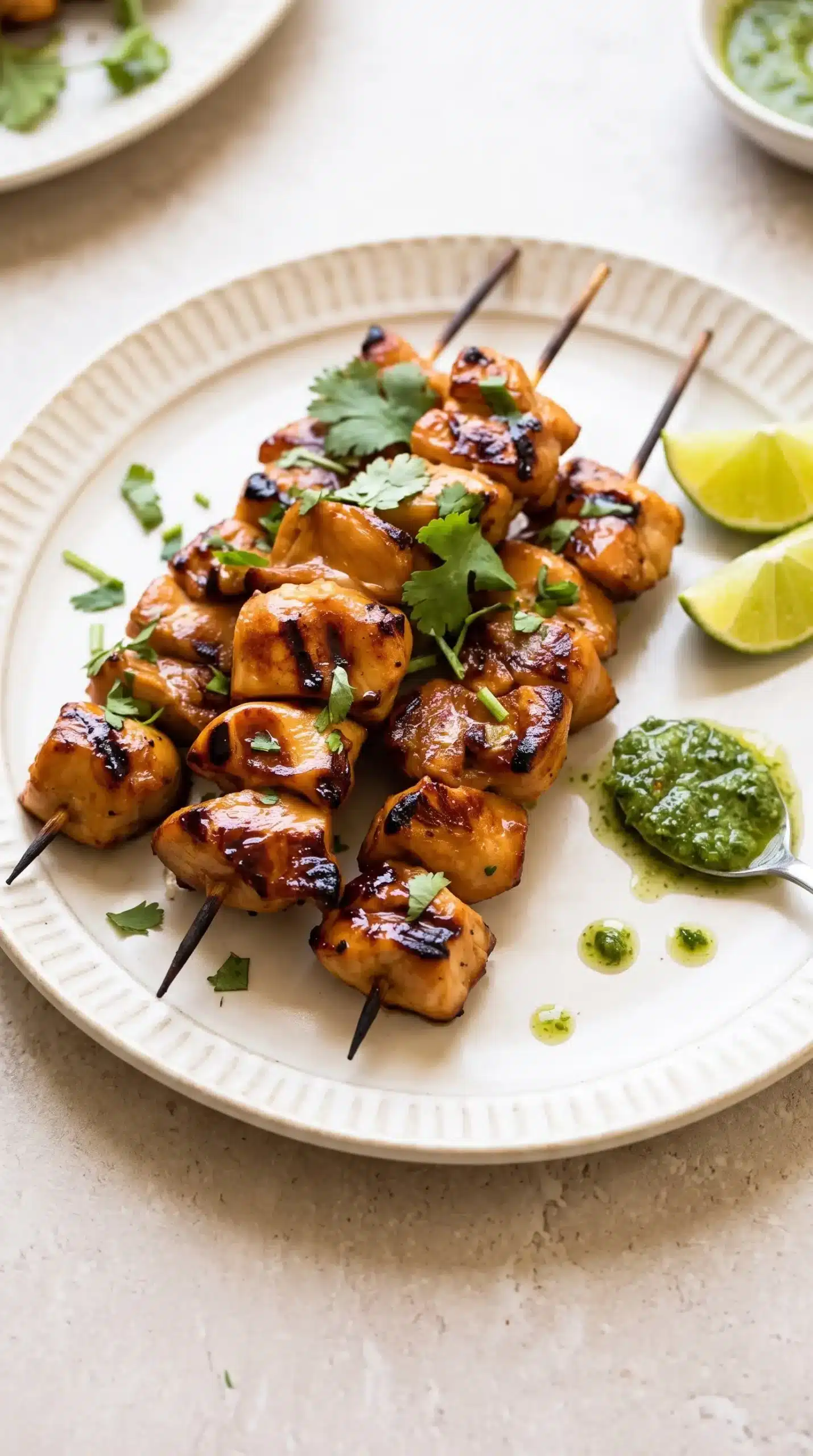
The soy-honey glaze has enough intensity that simple accompaniments work particularly well. Lime adds acidity, cilantro contributes freshness, and a green sauce can bring herbal character alongside the caramelized chicken. Mild starches such as rice or naan absorb extra juices and sauce without making the plate feel excessively sweet or salty.
- For freshness: finish with lime wedges, cilantro, or a crisp salad.
- For a fuller meal: pair the skewers with rice or warm naan.
- For dipping: serve Magic Green Sauce or another bright, savory sauce alongside.
Serving the chicken directly on its skewers gives each person control over sauces and garnishes, while sliding the pieces off works better for rice bowls, salads, or shared platters. For a bowl-style meal, rice, cilantro, lime, and salsa verde can turn the grilled pieces into cilantro lime chicken bowls while keeping the browned exterior visible instead of burying it beneath a heavy dressing.
Leftover Grilled Chicken Benefits From Gentle Reheating
Cooked chicken should be cooled and refrigerated promptly in a covered container. Keeping the skewers or chicken pieces with a small amount of their cooked juices can help prevent the surface from drying while stored, though any raw marinade left from preparation should be discarded.
During reheating, aggressive high heat can tighten lean chicken breast and make the honey glaze taste overly concentrated. Warm leftovers only until heated through, using gentler heat when possible. Chopped pieces also work well cold in a salad when properly stored and handled.
Balanced Heat Makes the Best Grilled Chicken
Chicken coated in honey and soy needs enough heat to develop browned edges, yet the same sugar that creates those edges can scorch if the skewers are left over an intense spot for too long. Consistent chunk size, a clean reserved baste, modest glazing, and active heat management allow the seasoning and caramelization to build together without overwhelming the lean chicken breast.
Grilled Chicken Questions About Marinade, Skewers, and Doneness
Can the chicken stay in the marinade overnight?
An overnight refrigerated marinade is suitable for the supplied mixture because water moderates the concentration of the soy sauce and honey. Keep the chicken covered and cold the entire time, then drain it before grilling.
Can metal skewers replace soaked wooden skewers?
Metal skewers work well and do not require soaking. Remember that the handles and exposed metal can become extremely hot on the grill, so use appropriate heat protection when turning or removing them.
Can the chicken be grilled without skewers?
Yes. The chunks can be cooked in a grill basket or another grill-safe setup that prevents small pieces from falling through the grates. Keep enough space between pieces for browning and use the same temperature-based check for doneness.
What internal temperature confirms chicken doneness?
Chicken is safely cooked when the thickest piece reaches 165°F, or 74°C, measured with a food thermometer. Insert the probe into the center of a substantial piece without touching the skewer.
Can chicken thighs be used instead of chicken breasts?
Boneless, skinless chicken thighs are a practical alternative and generally stay juicier under direct heat because they contain more fat. Cut them into similarly sized pieces so they cook evenly, and still verify doneness with a thermometer instead of relying only on browning.
3 Ingredient Grilled Chicken with Honey Soy Marinade
3 Ingredient Grilled Chicken with Honey Soy Marinade is tender and juicy with savory-sweet flavor and lightly caramelized edges. It is an easy choice for a flavorful grilled meal with fresh, bright accompaniments.
Ingredients
Method
Preparation
- Cut the chicken breasts into chunks and place them in a large ziplock plastic bag or bowl.
- Whisk the soy sauce, honey, water, and smashed garlic together in a bowl. Reserve about 3/4 cup of the sauce for brushing the chicken during grilling.
- Pour the remaining sauce over the chicken. Seal the bag or cover the bowl and refrigerate for at least 4 hours or up to overnight.
Grilling
- Preheat the grill over medium-high heat for 5-10 minutes, then oil the grates.
- Drain the marinade from the chicken and thread the pieces onto skewers.
- Place the skewers on the hot grill, cover, and cook for 3-4 minutes.
- Brush the chicken with the reserved sauce, then turn the skewers. Continue cooking, turning and brushing as needed, until the chicken is browned to your liking and fully cooked.
Serving
- Serve the grilled chicken with cilantro, lime, and Magic Green Sauce or another dipping sauce.
Notes
If using wood skewers, soak them in water before grilling.