From breakfast to dinner, from healthy meals to sweet desserts – Next Yum Recipes brings you quick, simple and tasty ideas for every occasion and every time.


 This Recipe
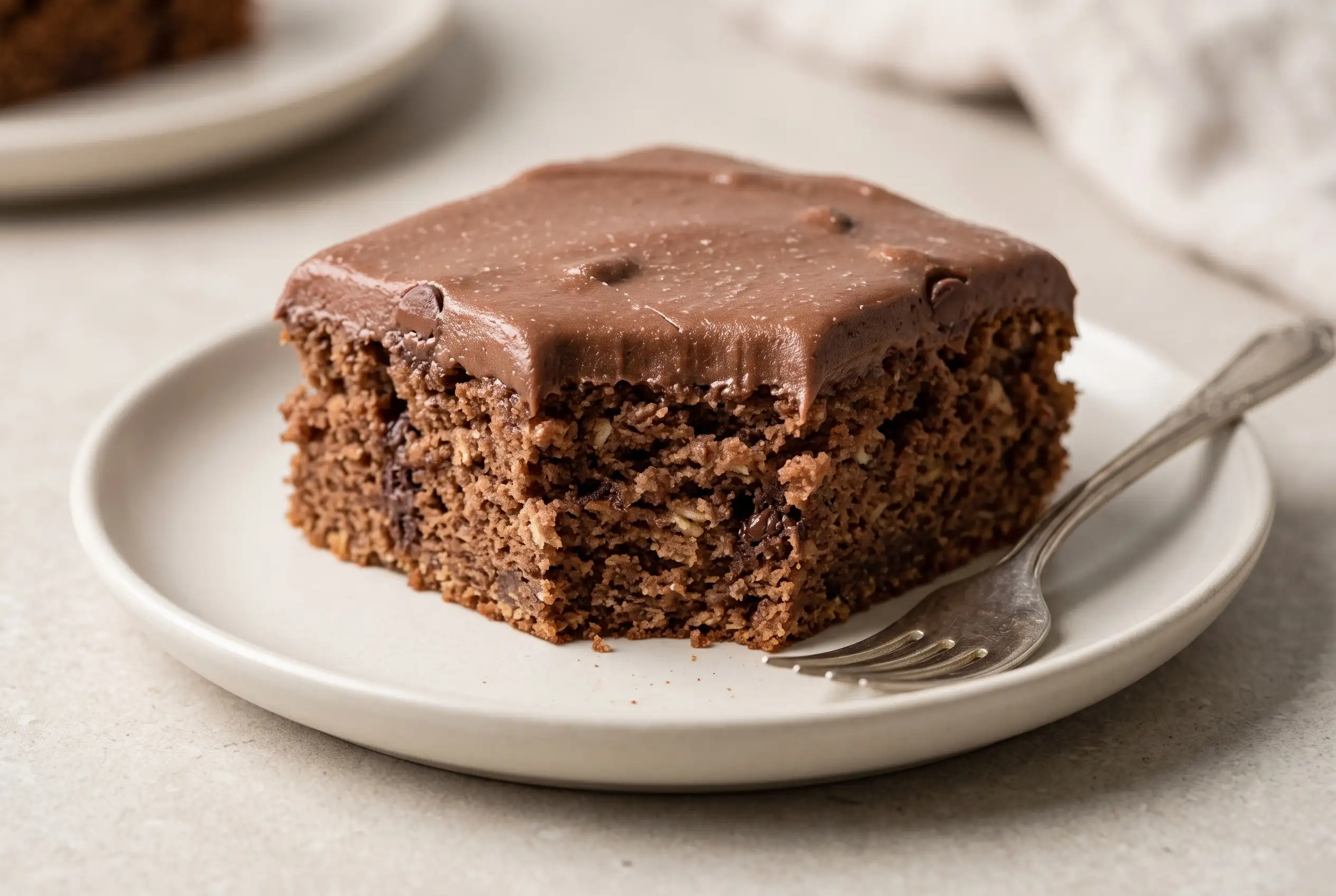
Chocolate oatmeal cake brings together the deep flavor of cocoa, plenty of chocolate chips, and tender oats in a cake that is both substantial and soft. This chocolate oatmeal cake is especially appealing when you want a dessert with a rich chocolate finish without making a complicated batter. The oats are softened before they join the mixture, which helps them blend into the cake while leaving enough texture to make each slice distinctive.
Why chocolate oatmeal cake stays exceptionally moist
Boiling water does more than soften the oats. It creates a hydrated oat mixture that becomes part of the cake’s moisture structure when combined with the thick batter. Quick cooking oats are particularly useful here because they soften readily and become less noticeable after baking.
Brown sugar also contributes to the cake’s soft texture, while melted butter brings richness without requiring a long creaming process for the fat itself. The combination produces a batter that starts out unusually thick but loosens considerably when the soaked oats and water are incorporated.
Chocolate chips scattered through the batter create another layer of tenderness as they melt during baking. Because some chips are mixed into the cake and the remainder sits across the surface, the finished chocolate oatmeal cake has chocolate distributed throughout instead of relying only on cocoa for its flavor.
Quick oats give the cake its intended texture
Quick cooking oats are the easiest choice for a soft, cohesive crumb because they absorb the boiling water quickly and become tender before entering the batter. Rolled oats can be substituted, but they need more soaking time and remain more noticeable after baking.
- Quick oats: soften readily and integrate closely with the cake’s crumb.
- Rolled oats: need at least 10 minutes in the boiling water and create a more pronounced oat texture.
- Regular marshmallows: work in the frosting but take longer to melt than mini marshmallows.
The choice of oats therefore changes more than preparation time. Rolled oats make the baked chocolate oatmeal cake feel more rustic and textured, while quick oats keep the chocolate and frosting at the center of the eating experience.
The chocolate chips do more than decorate
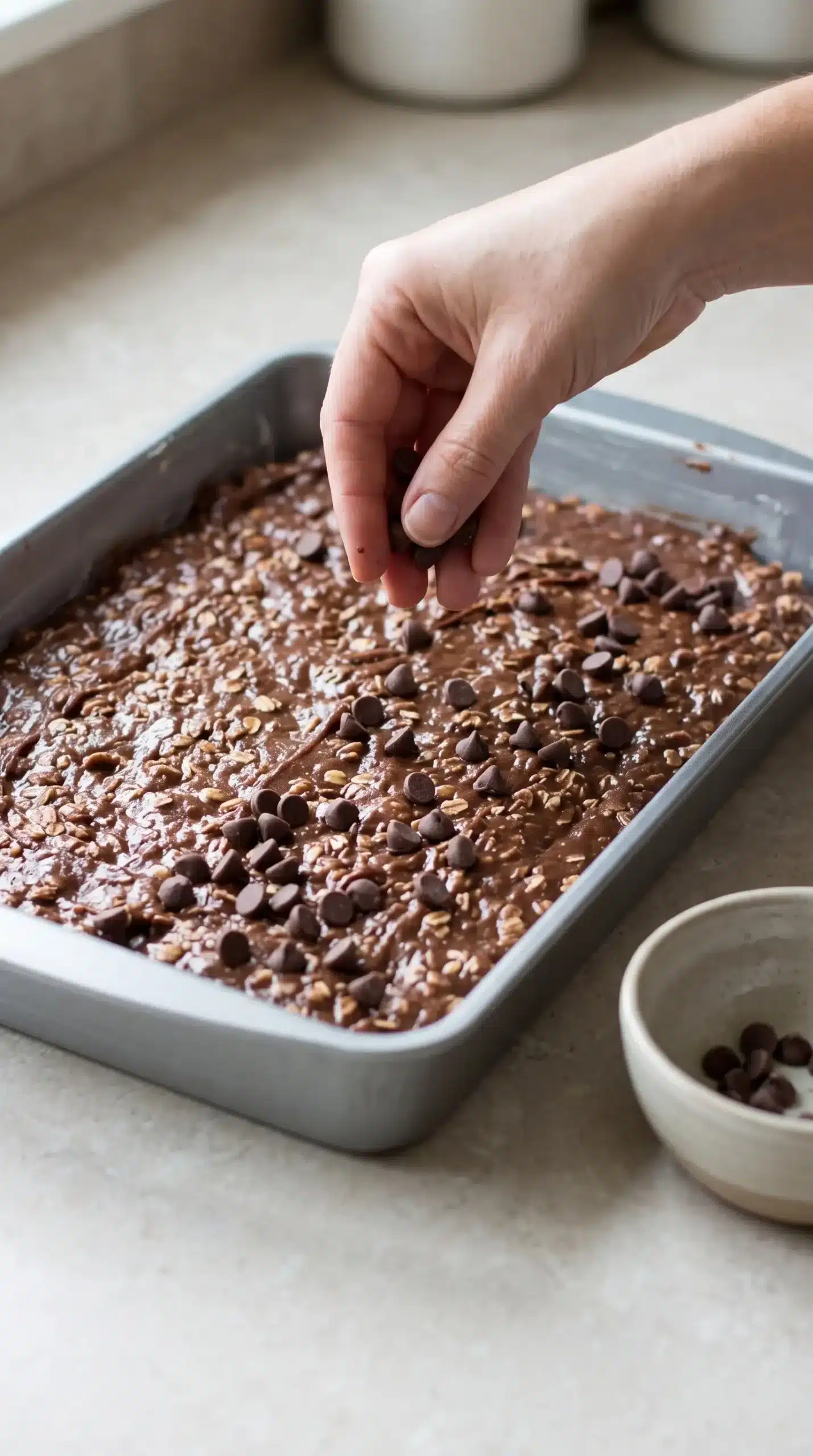
Dividing the chocolate chips between the batter and the surface gives the cake two different forms of chocolate richness. The chips stirred into the batter become pockets of melted chocolate, while the chips scattered over the top create a more concentrated chocolate layer near the crust.
Using a good-quality chocolate chip can make that distinction especially noticeable. The supplied method calls for Ghirardelli chips, but other chocolate chips can also be used successfully. Semi-sweet chips are a natural fit when you want the cocoa, sugars, and frosting to remain balanced.
| Chocolate component | Where it goes | What it contributes |
|---|---|---|
| Unsweetened cocoa powder | Dry cake mixture | Deepens the base chocolate flavor |
| Chocolate chips | Inside the batter | Creates melted chocolate pockets |
| Chocolate chips | Across the cake surface | Adds a concentrated chocolate layer |
| Chocolate chips | Warm frosting | Builds the smooth chocolate finish |
One batter detail determines the crumb
The flour, baking soda, salt, and cocoa should be incorporated only until the dry ingredients disappear. At that stage, the batter is expected to be very thick. That is not a warning sign; the softened oats and their soaking water are added afterward and change its consistency.
Cocoa type matters when baking soda is part of the leavening system. Natural cocoa is acidic and can react with baking soda, while Dutch-process cocoa has been alkalized and is less acidic, so the two are not always interchangeable in recipes that depend on that reaction.
Once the oat mixture goes in, mixing needs to continue until it is evenly distributed. Uneven incorporation can leave denser pockets in the finished cake, particularly where dry flour remains trapped inside the thick batter.
Gentle attention at this point matters because the mixture has already undergone several texture changes. The objective is an even batter with the oats dispersed throughout, followed by the chocolate chips being folded in without unnecessarily working the mixture.
Boiling water needs a few minutes with the oats
Pouring the boiling water over the oats starts the softening process before the oats ever reach the oven. Letting the mixture stand for a few minutes gives quick oats time to absorb moisture and become tender enough to incorporate smoothly.
Rolled oats require a longer soak, at least 10 minutes according to the supplied notes. They will still remain more noticeable after baking, so choosing them is a texture decision as much as a substitution.
Pan choice affects the chocolate topping
A greased or buttered rectangular 9×13-inch cake pan provides the broad surface needed for the chocolate chips sprinkled over the top. The large, shallow format also allows the cake to bake as one even slab that can be cooled and covered with the warm frosting.
Preparing the pan thoroughly helps the finished cake release cleanly after cooling. Since the frosting is poured directly over the cooled cake, a stable cake layer makes the finishing stage much easier to handle.
Watch the cake closely near the end of baking
Chocolate oatmeal cake should not be pushed beyond the point of doneness just because the center began with a thick, moist batter. The useful visual cue supplied by the method is a surface that springs back lightly when touched.
- Check the surface: look for a lightly springy top instead of a visibly wet center.
- Use the aroma as a supporting cue: a strong baked-chocolate smell signals that the cake is well into its baking time.
- Stop promptly: excessive baking can take away from the soft texture that the hydrated oats help create.
The stated baking window is only a guide because ovens and pans can behave differently. What matters most is the combination of a lightly springing surface and a cake that is baked through without being left in the oven longer than necessary.
Chocolate oatmeal cake mistakes worth avoiding
A few errors can change the texture or make the frosting difficult to spread. The most important ones are tied directly to the unusual oat mixture and the hot frosting.
- Skipping the oat soak: adding dry oats directly to the batter prevents them from softening as intended.
- Under-soaking rolled oats: rolled oats need more time in the boiling water and will otherwise remain especially firm.
- Overbaking the cake: leaving it in the oven after the surface has become lightly springy can work against its tender texture.
- Cooling the frosting too long: the chocolate-and-marshmallow frosting begins to crystallize as it cools, making immediate pouring important.
- Frosting a hot cake: the cake needs to cool completely before the warm frosting is poured over it.
These problems are avoidable when the texture changes are treated as cues. The oats should become soft before mixing, the cake should be removed once properly baked, and the frosting should move from saucepan to cake without an unnecessary pause.
The frosting needs to reach the cake while hot
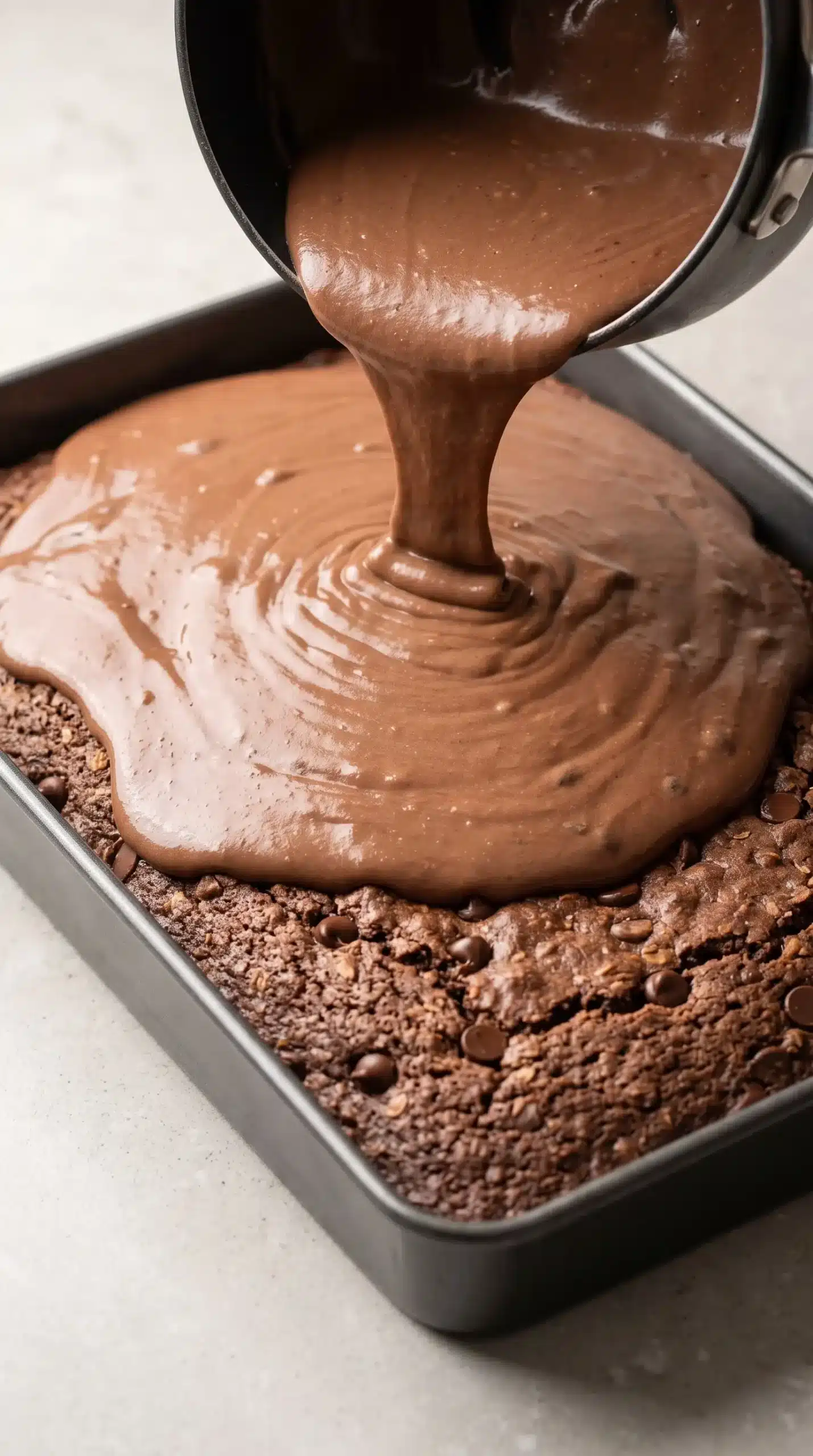
The finishing mixture behaves differently from an ordinary spreadable frosting. Butter, sugar, and milk are heated together before chocolate chips and marshmallows are stirred in. Once those additions have melted into a smooth mixture, the frosting needs to be poured immediately.
Its timing is important because the frosting crystallizes almost immediately as it cools. Waiting for it to become easier to spread can have the opposite effect, leaving a mixture that is less fluid and harder to distribute across the cake.
Pouring the frosting over a completely cooled cake creates the contrast needed for a clean finish: the cake is stable underneath while the frosting remains hot enough to flow across the surface. A short five-minute rest afterward allows the topping to settle before serving.
Marshmallows change the frosting’s finish
Mini marshmallows melt more readily in the hot chocolate mixture, which makes them convenient for a smooth frosting. Regular marshmallows can also be used, but they require more time to melt completely.
Whisking or stirring patiently over low heat after the chocolate chips and marshmallows are added helps bring the mixture together. The frosting should be smooth before it leaves the saucepan, since there is little opportunity to correct its texture once it begins cooling on the cake.
Chocolate oatmeal cake can be adapted without losing its character
Several substitutions are supported directly by the supplied ingredients and notes. Rolled oats are the most substantial change because they alter the finished texture, while changing the brand of chocolate chips is less consequential to the structure.
Regular marshmallows can replace mini marshmallows in the frosting when needed. They simply require more melting time. Chocolate chips can also come from another brand, so the specified brand should be viewed as an option for the desired chocolate flavor rather than a structural requirement.
Serving the cake while the frosting settles
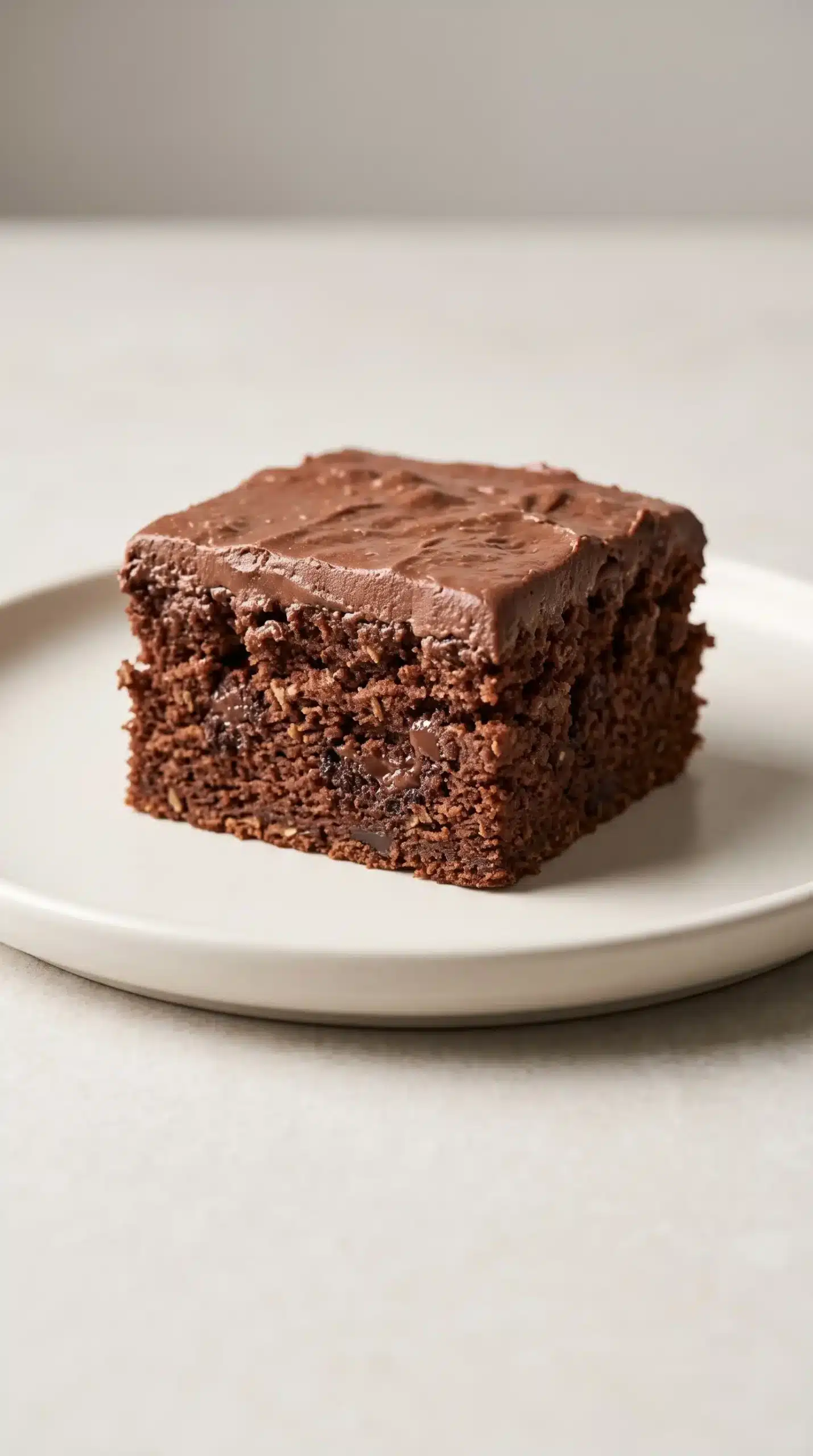
The warm frosting creates an especially distinctive finish because it begins changing texture almost as soon as it reaches the cooler cake. Allowing the frosted cake to sit briefly gives the topping time to settle while keeping the chocolate surface soft enough to enjoy.
Cutting the cake after that short rest reveals the contrast between the tender oat-filled crumb, melted chocolate pieces, and freshly set frosting. The broad rectangular format also makes it practical to divide into individual portions for a gathering or casual dessert table.
What makes this chocolate oatmeal cake different
A fine-crumb chocolate cake gets much of its identity from an even, uniform interior, while softened oats give chocolate oatmeal cake a more substantial texture. Chocolate chips further interrupt the crumb with pockets of melted chocolate, making each slice noticeably different from a cake built primarily around cocoa and a smooth crumb.
The frosting adds another point of distinction. It is not simply a thin glaze poured over the cake; chocolate chips and marshmallows are incorporated into a hot butter-and-sugar mixture that sets as it cools. That combination makes the chocolate oatmeal cake feel more substantial without requiring a complicated finishing technique.
For a chocolate oatmeal cake with chocolate chips, the most useful balance comes from keeping the oats tender and allowing the chocolate to appear in several forms. The cocoa establishes the background flavor, while chips in the cake and frosting provide the richer accents.
Soft oats and timely frosting define the finished cake
The softened oats determine how comfortably the cake crumb holds together, while careful baking preserves the tenderness created by that moisture. Removing the cake once the surface springs back lightly keeps the texture from becoming unnecessarily firm.
Hot frosting completes the process. Once the chocolate, marshmallows, butter, sugar, and milk become smooth, the mixture needs to reach the cooled cake promptly so it can spread before crystallizing. Those two controls properly softened oats and properly timed frosting shape the texture and finish more than any decorative extra.
Chocolate oatmeal cake questions and answers about texture and frosting
Can rolled oats be used instead of quick cooking oats?
Yes. Soak rolled oats in the boiling water for at least 10 minutes before adding them to the batter. They will remain more noticeable after baking, so the finished cake will have a more pronounced oat texture than one made with quick cooking oats.
Why is the batter so thick before the oats and water are added?
The mixture of flour, cocoa, sugars, butter, and eggs naturally forms a very thick batter at that stage. The softened oats and their boiling water are incorporated afterward, substantially loosening the mixture before it goes into the pan.
What should I do if the chocolate frosting starts to thicken?
Move quickly once the chocolate chips and marshmallows have melted because the frosting begins to crystallize as it cools. Pour it over the completely cooled cake while it is still piping hot and fluid.
Can regular marshmallows be used in the frosting?
Regular marshmallows can replace mini marshmallows. They take longer to melt, so allow additional time while stirring the warm frosting until the mixture becomes smooth.
How can I tell when the baked chocolate oatmeal cake is done?
Use the supplied visual cue: the surface should spring back lightly when touched. Avoid relying solely on the maximum baking time, because the cake is best removed once it is properly baked without being pushed further.
Why does the frosting need a completely cooled cake?
A cooled cake provides a stable surface for the hot frosting to settle over. The frosting itself needs to remain hot and fluid, so cooling the cake first lets the two components have the right contrasting temperatures at the moment of assembly.
Chocolate Oatmeal Cake with Cocoa and Chocolate Chips
Chocolate oatmeal cake combines a tender, oat-filled crumb with rich cocoa, chocolate chips, and a smooth chocolate-marshmallow frosting. It is an easy, comforting dessert with plenty of chocolate appeal for gatherings or casual treats.
Ingredients
Method
Preparation
- Preheat the oven to 350°F (175°C). Using an electric mixer, beat the melted butter and both sugars until creamy. Add the lightly beaten eggs and mix until well combined.
- Add the flour, baking soda, salt, and cocoa powder. Mix only until the dry ingredients are incorporated; the batter will be very thick.
- Combine the quick cooking oats with the boiling water and let the mixture stand for a few minutes until the oats soften. Add the oat mixture to the batter and mix until evenly combined.
- Stir 6 ounces of the chocolate chips into the batter.
Baking
- Grease or butter a rectangular 9×13-inch cake pan and transfer the batter into it, spreading it evenly.
- Scatter the remaining 6 ounces of chocolate chips over the surface of the batter.
- Bake for 30-40 minutes, checking for a surface that springs back lightly when touched. Avoid overbaking. Remove the cake from the oven and let it cool completely.
Frosting
- Place the butter, sugar, and milk in a large saucepan over medium-low heat. Bring the mixture to a boil and maintain the boil for 30 seconds.
- Lower the heat and add the chocolate chips and mini marshmallows. Stir or whisk until the frosting becomes smooth.
- Immediately pour the hot frosting over the completely cooled cake, spreading it across the surface as needed.
Serving
- Let the frosted cake cool for 5 minutes, then serve.
Notes
Rolled oats can replace the quick cooking oats, but soak them in the boiling water for at least 10 minutes. The finished cake will have a more noticeable oat texture. Any chocolate chips can be used. Regular-size marshmallows can replace mini marshmallows, but they require more time to melt.