From breakfast to dinner, from healthy meals to sweet desserts – Next Yum Recipes brings you quick, simple and tasty ideas for every occasion and every time.


 This Recipe
Banana Cake Creates a Tender Whole Wheat Dessert Base
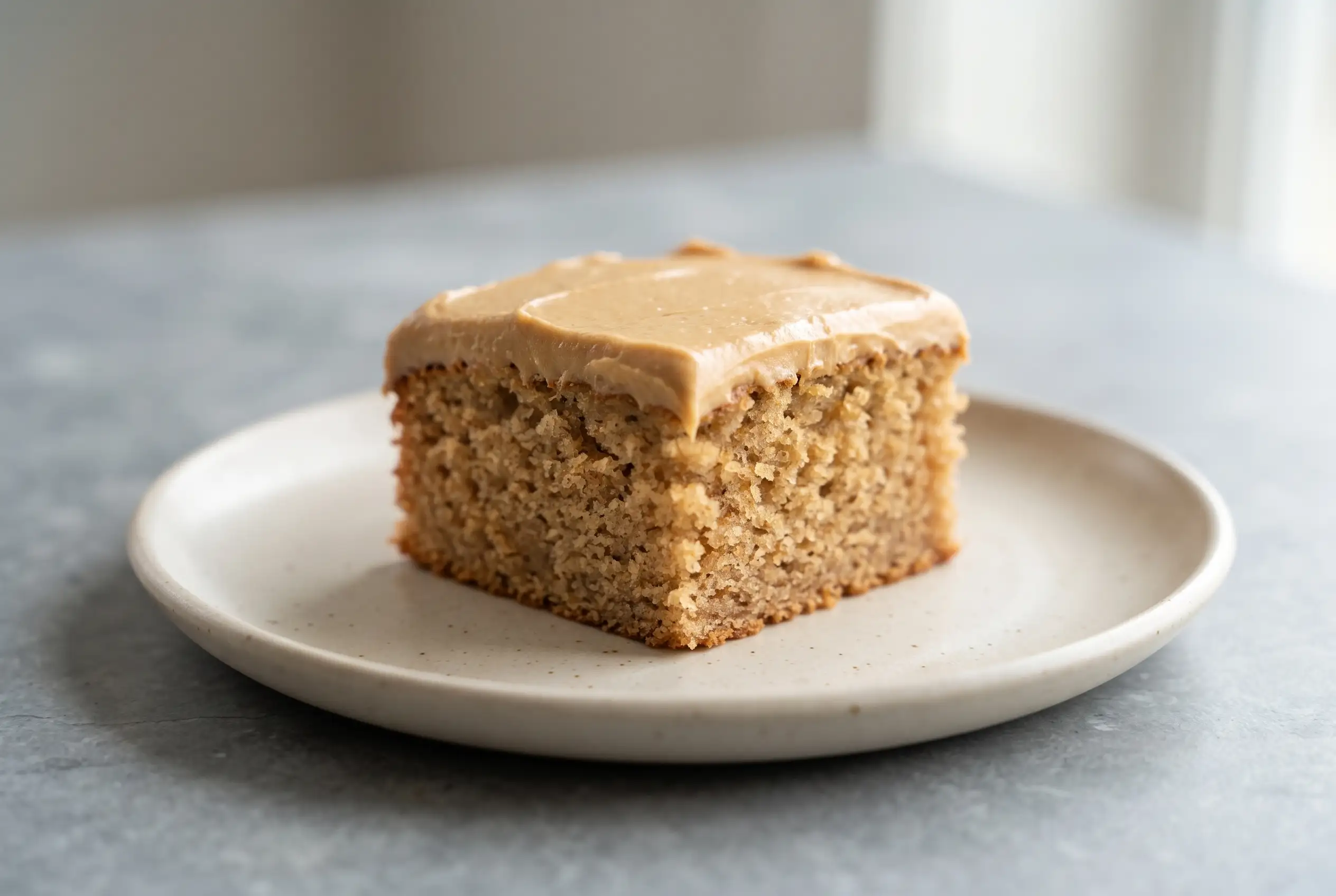
Banana cake brings together ripe banana flavor, a soft crumb, and a creamy peanut butter topping in a simple square dessert. The combination works because the naturally sweet banana puree supports the lightly nutty frosting while whole wheat pastry flour gives the baked layer a hearty character without making the texture heavy.
Across many home kitchens, banana desserts succeed when moisture and structure stay balanced. The mashed fruit in this cake contributes softness, while the dry ingredients need careful handling so the finished slice remains easy to cut and serve.
Whole wheat banana cake offers a different texture experience from cakes made only with refined flour. The pastry flour used here is designed for a tender result, allowing the banana and maple syrup to remain noticeable without creating a dense bite.
Natural sweetness comes through from several sources working together. The banana puree, maple syrup, and small amount of sugar create a dessert that tastes rounded, while the peanut butter frosting adds a richer contrast on top.
Whole Wheat Flour and Banana Puree Shape the Cake
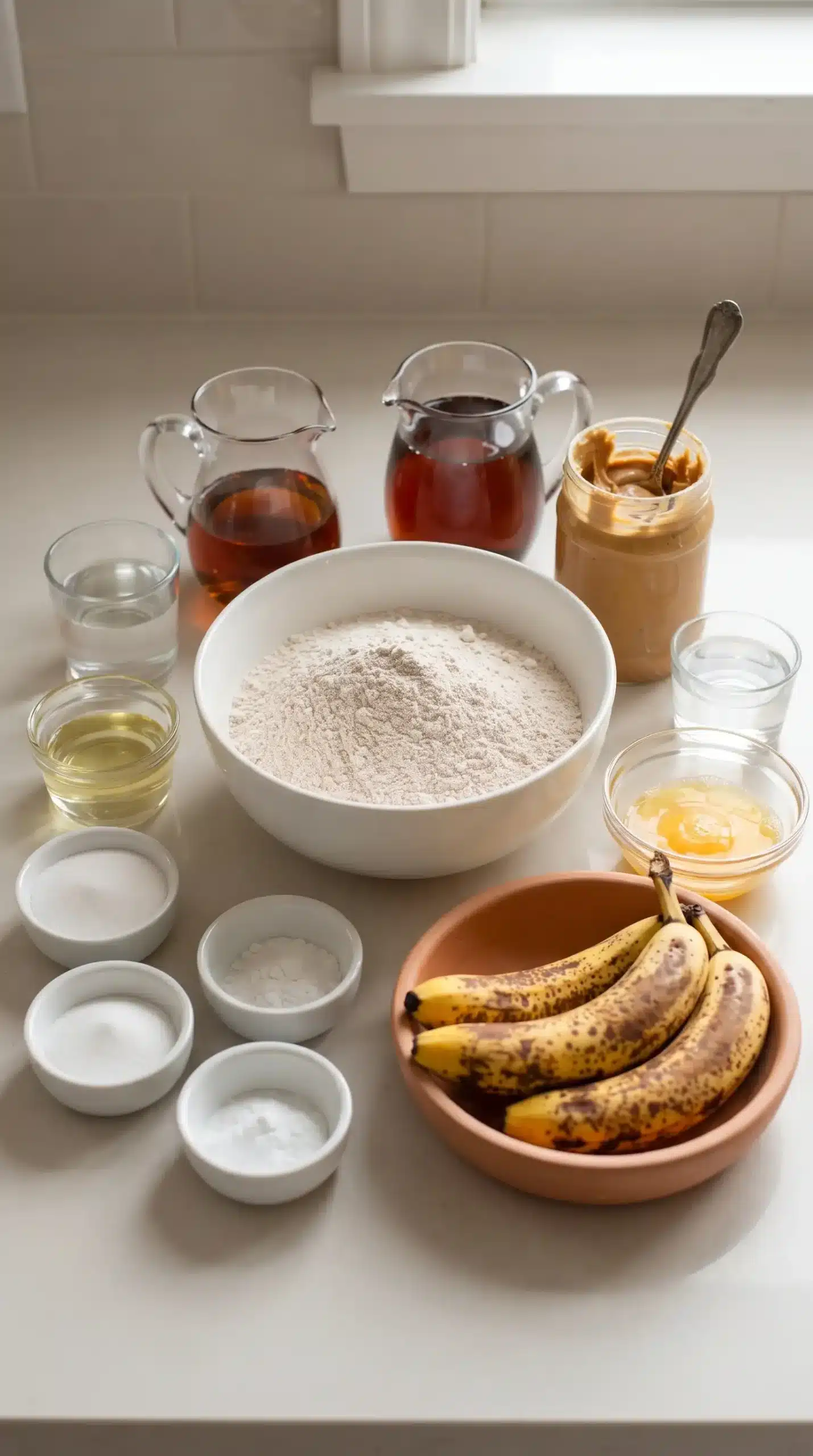
Ingredient choices have the biggest effect on the structure of this banana cake. Whole wheat pastry flour creates the foundation, and the banana puree helps maintain the soft interior that makes this style of dessert appealing.
Peanut Butter Frosting Balances the Banana Cake Finish
Natural peanut butter gives the frosting its main flavor and a smooth consistency when whisked with sugar and water. Using a fresh ingredient base such as homemade peanut butter spread can help control the texture and richness of the topping. Adjusting the amount of water changes how easily the topping spreads across the cooled cake.
Because ripe banana and peanut butter naturally complement each other, the frosting does not need additional flavors to feel complete. The simple mixture keeps attention on the contrast between the fruity cake layer and the creamy topping.
A finished banana peanut butter cake benefits from allowing the baked layer to cool before frosting. Warm cake can soften the topping too quickly, making it harder to create an even layer.
| Frosting adjustment | Resulting texture | Useful choice |
|---|---|---|
| Less added water | Thicker spread | Creates a more concentrated topping |
| More added water | Softer consistency | Makes spreading easier |
| Extra peanut butter | Richer flavor | Emphasizes the peanut butter finish |
A Simple Baking Dish Choice Protects the Texture
A greased 9×9 baking dish provides the shape needed for even slices and a practical surface for spreading the frosting. The pan choice also keeps the cake layer manageable for serving.
Maple Syrup and Oil Guide the Moist Crumb
Maple syrup helps create sweetness while oil contributes to a moist texture in the baked cake. These ingredients work alongside the banana puree to keep the crumb tender after cooling.
- Banana puree: Provides fruit flavor and moisture throughout the cake.
- Maple syrup: Adds sweetness with a distinct caramel-like note.
- Oil: Helps maintain a soft texture in the finished slices.
Baking Control Keeps Banana Cake Consistent
Careful mixing has a direct impact on the final texture. Combining wet and dry ingredients until incorporated helps preserve the light structure created by the baking powder and baking soda.
Flour-based cakes rely on a tender crumb, so it is important to avoid overmixing cake batter because excessive gluten development can affect the final texture.
Freshly prepared batter should be transferred into the greased baking dish after the ingredients come together. Keeping the batter handling gentle helps avoid developing a tougher texture.
Visual cues matter during baking. The cake should appear set, and a knife inserted into the center should come out mostly clean before the dessert is removed from the oven.
Successful baking depends on judging readiness through the cake itself instead of relying only on appearance. A properly baked layer will support the peanut butter frosting without collapsing under its weight.
Banana Cake Mistakes That Affect Peanut Butter Frosting
Common mistakes with banana cake often involve texture problems that begin before frosting is added. Understanding the causes makes it easier to protect the soft crumb and smooth topping.
Overmixed batter can lead to a less tender cake because the flour has been worked too much. Gentle combining after the wet ingredients meet the dry ingredients helps maintain the intended texture.
Underbaked centers create another challenge because a soft middle may not support the frosting evenly. Checking the center with a knife helps identify whether the cake has finished baking.
Uneven frosting can happen when the topping meets a warm surface. Cooling the cake first allows the peanut butter mixture to stay thicker and spread more smoothly.
- Watch mixing: Stir only enough to combine the flour mixture and wet mixture.
- Check the center: Use the baked texture as the guide for readiness.
- Cool before topping: Let the surface become suitable for frosting.
Vegan Adjustments Keep the Banana Peanut Butter Cake Accessible
Vegan bakers can replace the beaten egg with flax prepared as directed in the recipe ingredients. This substitution keeps the batter approach similar while avoiding the use of egg.
Serving Choices Highlight the Fresh Frosted Texture
Serving slices soon after frosting keeps the contrast between the soft cake and creamy peanut butter topping at its best. The dessert is especially suited to simple portions cut from the square pan.
Peanut Butter Frosting Texture Depends on Whisking
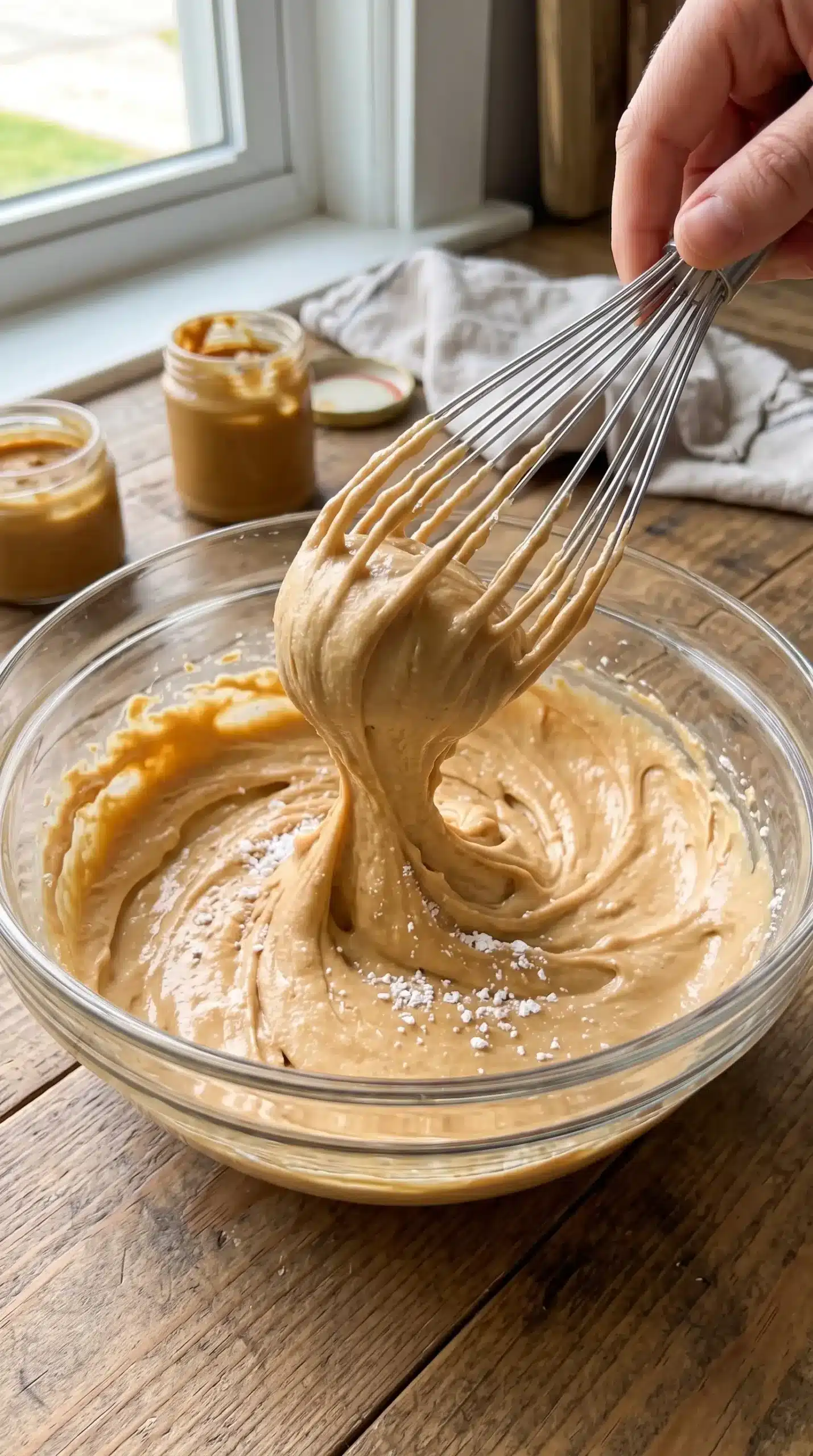
Peanut butter frosting becomes smoother when the peanut butter, sugar, and water are whisked until the mixture reaches a fluffy consistency. Small adjustments help create the texture needed for easy spreading.
Storage Decisions Matter for a Same-Day Banana Cake
Storage choices influence how the frosted cake tastes and feels after preparation. The cake is best enjoyed on the day it is baked because the fresh texture of the crumb and frosting is most noticeable then.
When planning portions, consider frosting only after the cake has cooled completely. This keeps the topping from becoming overly soft during handling.
Cool cake should be protected from unnecessary exposure after serving. Keeping remaining portions covered helps preserve the texture for later enjoyment.
| Situation | Helpful approach | Reason |
|---|---|---|
| Freshly baked cake | Cool before frosting | Supports a smoother topping |
| Frosted portions | Serve promptly | Keeps the best texture contrast |
| Extra servings | Cover carefully | Helps protect the crumb |
Flavor Variations That Fit the Banana Cake Structure
Flavor variations work best when they respect the balance between banana and peanut butter. The cake already has a clear identity, so additions should support the existing flavors instead of covering them.
Banana Cake Finishes Depend on Balanced Sweetness
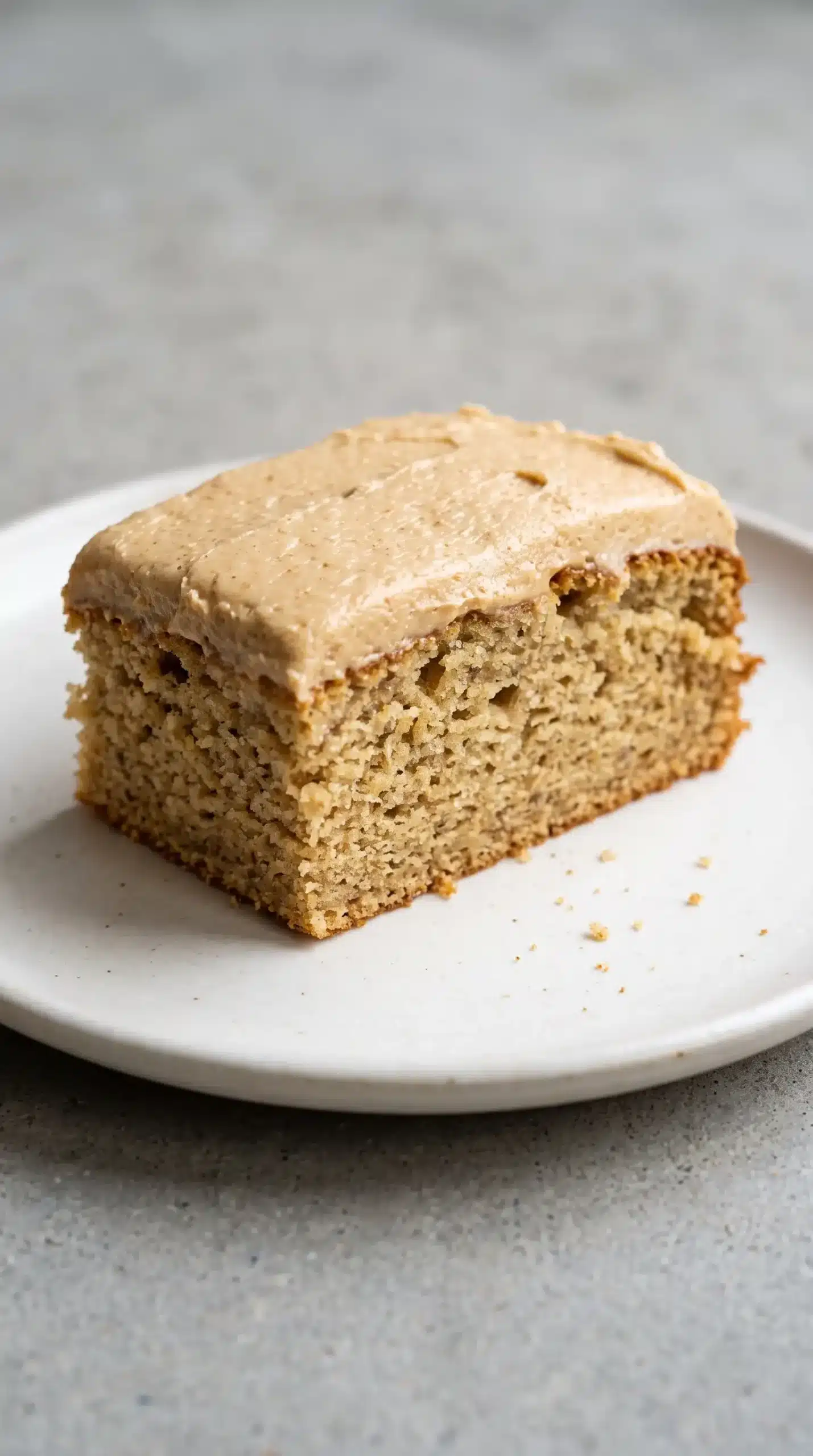
Frosted portions show how the banana cake succeeds through contrast: the fruit-based crumb stays gentle while the peanut butter topping provides a creamy finish. Balanced sweetness allows both parts to remain recognizable.
Banana Cake Questions About Storage and Texture
Can banana cake be made without the peanut butter frosting?
Storage choices become simpler when the frosting is skipped, and the cake can still provide a tender banana flavor. The unfrosted version offers a lighter finish while keeping the same baked base.
How can peanut butter frosting become easier to spread?
Peanut butter frosting spreads more easily when its consistency is adjusted with small amounts of water until it becomes smooth and fluffy. Extra peanut butter can also be used for a thicker, richer topping.
What makes whole wheat banana cake tender?
Whole wheat banana cake stays tender because pastry flour, banana puree, maple syrup, and oil work together to create a moist structure without requiring a complicated preparation.
Why should the cake cool before frosting?
Frosting needs a stable surface, and a cooled cake helps the peanut butter mixture remain smooth instead of becoming too loose during spreading.
Can vegan bakers adapt the egg ingredient?
Vegan bakers can use the flax substitution provided with the ingredients, allowing the cake to be prepared without the beaten egg while keeping the overall approach similar.
Banana Cake With Peanut Butter Frosting Finds Its Balance Through Texture
Frosted banana cake reaches its best result when the tender fruit-filled crumb and smooth peanut butter topping maintain their separate qualities. Careful mixing, proper baking, and cooling before frosting create the conditions needed for that balance.
Balanced sweetness and thoughtful handling make banana cake with peanut butter frosting a dessert where simple ingredients create a satisfying finish without unnecessary complexity.
Banana Cake with Whole Wheat Peanut Butter Frosting
Banana cake with whole wheat peanut butter frosting is a tender, lightly sweet dessert with a soft crumb and creamy topping. It is a simple homemade cake that brings together comforting banana flavor and rich peanut butter appeal.
Ingredients
Method
Preparation
- Preheat the oven to 350°F / 175°C.
- Sift the whole wheat pastry flour, baking powder, baking soda, salt, and flax if using into a large bowl.
- In a separate smaller bowl, mix the sugar, maple syrup, banana puree, oil, water, and beaten egg.
- Pour the wet mixture into the dry ingredients and stir until combined. Transfer the batter to a greased 9×9 baking dish.
Baking
- Bake for 20-24 minutes, or until a knife inserted into the center comes out mostly clean.
Frosting
- Whisk the peanut butter, sugar, and water together until smooth and fluffy.
- Adjust the consistency with additional peanut butter or water as needed, then spread the frosting over the cooled cake before serving.
Notes
This cake is best enjoyed the same day it is baked. It also works well without the frosting for a lighter version. The frosting amount can be increased with more peanut butter and water for a richer topping, as reflected in the nutrition facts.