From breakfast to dinner, from healthy meals to sweet desserts – Next Yum Recipes brings you quick, simple and tasty ideas for every occasion and every time.


 This Recipe
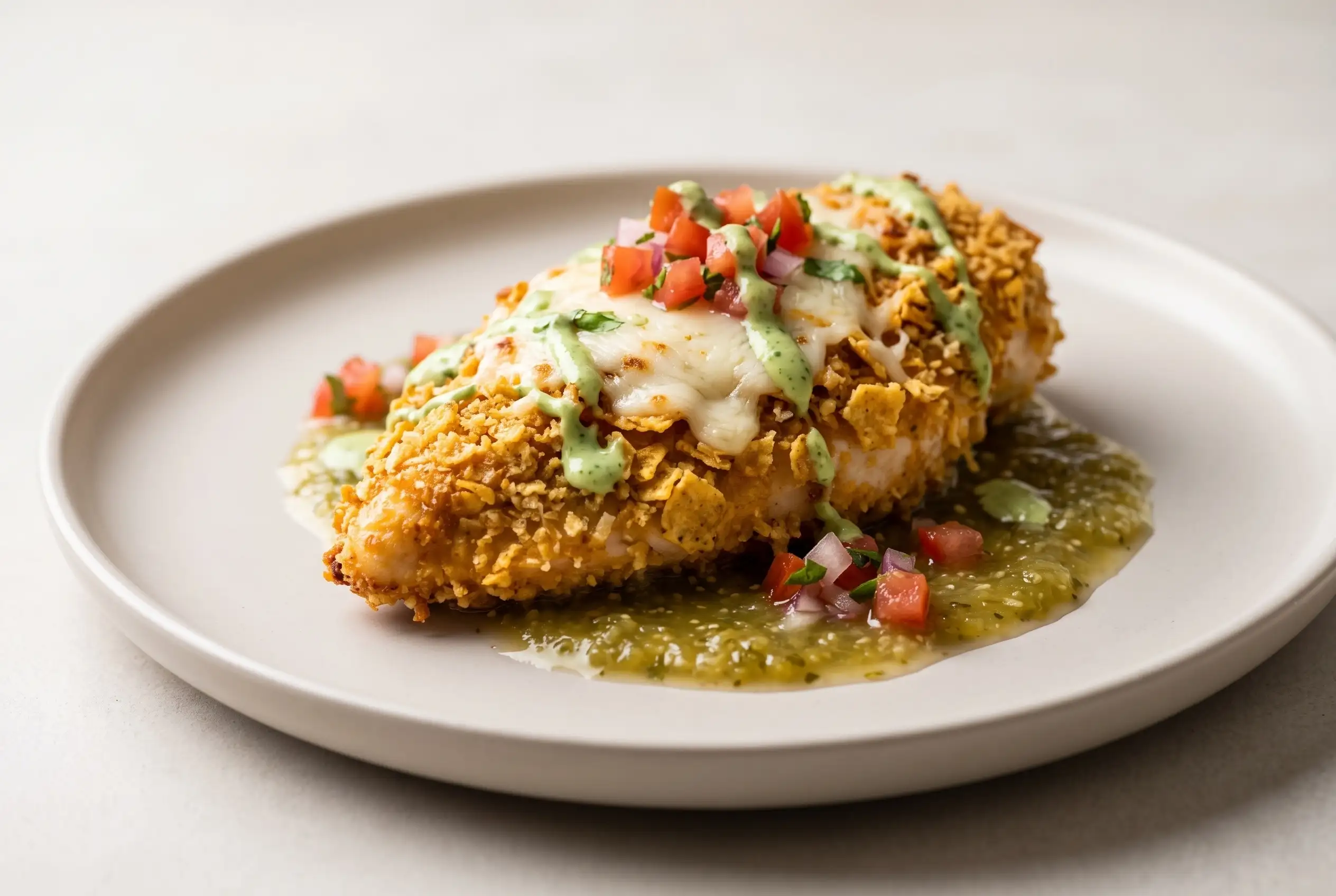
Tortilla chicken turns a simple breaded chicken dinner into something brighter, crunchier, and more layered, especially when crisp tortilla crumbs meet salsa verde, melted white cheese, pico de gallo, and a fresh cilantro sauce. The tortilla crusted chicken gets its texture from a combination of crushed tortilla chips and panko, while the oven finishes the thicker chicken breasts gently after a quick stovetop browning. Served over salsa verde, tortilla chicken with salsa verde has enough contrast to feel special without requiring a complicated technique.
Why tortilla chicken works with salsa verde
Salsa verde does more than act as a sauce underneath the chicken. Its tangy, fresh character cuts through the fried tortilla coating and melted cheese, giving each bite a sharper finish. Because the chicken itself is seasoned simply with salt and pepper, the green salsa has room to remain noticeable.
Texture is another important part of the combination. The crust supplies a crisp exterior, the chicken stays tender inside when it is cooked appropriately, and the pico de gallo contributes fresh pieces of tomato and onion. A spoonful of cilantro sauce adds another layer without turning the plate into a heavy, creamy dish.
Serving the salsa verde on the plate also protects the crust from becoming saturated too early. The underside picks up sauce while the upper surface remains exposed, so the tortilla coating can retain some of its crunch when the chicken reaches the table.
The tortilla coating needs two kinds of crunch
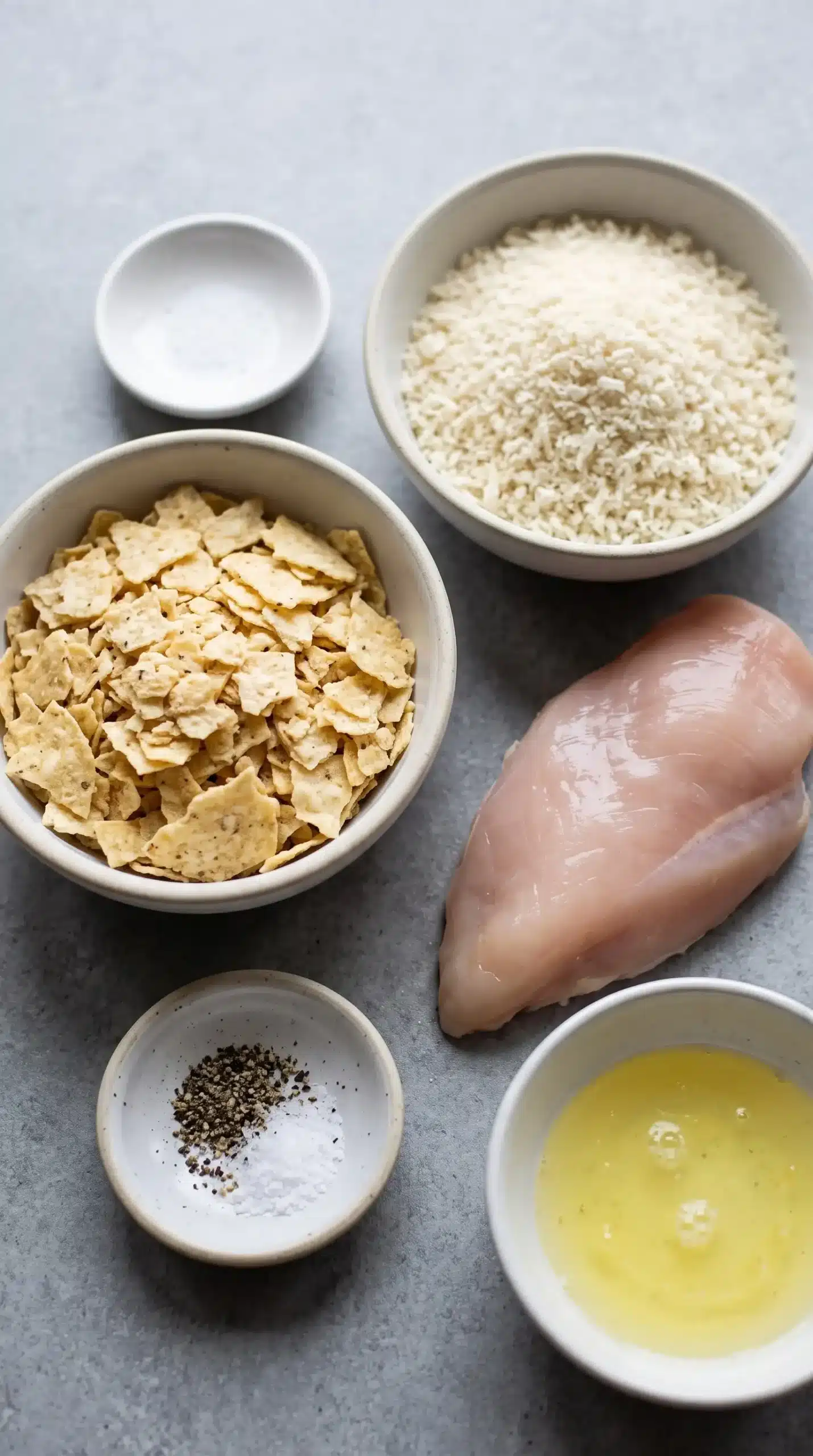
Crushed tortilla chips and panko perform different jobs in the coating. Tortilla chips bring the recognizable corn flavor and a coarse, irregular texture, while panko creates a lighter, more open crumb around the chicken. Combining them produces a crust that feels substantial without relying entirely on crushed chips.
| Coating component | What it contributes | Best handling choice |
|---|---|---|
| Crushed tortilla chips | Corn flavor and crisp, uneven pieces | Crush into small pieces rather than turning them into a fine powder |
| Panko breadcrumbs | Light structure and additional crunch | Mix evenly with the tortilla crumbs before coating |
| Egg white | Helps the coating adhere to the chicken | Beat it thoroughly enough to coat the surface consistently |
A coarse coating also gives the finished chicken more visual character. Tiny tortilla pieces can remain visible after frying, while the panko fills some of the gaps around them. Pressing the mixture onto the chicken after dipping helps create a more continuous crust instead of leaving bare patches.
Chicken thickness controls the oven finish
Chicken breasts do not all cook at the same rate, and thickness matters more here than the exact shape of the crust. The stovetop stage is intended to develop a golden exterior, while the oven brings the center of the chicken to a safe, fully cooked state.
Thicker breasts naturally need more oven time than smaller ones. For that reason, the supplied baking range is deliberately broad. Begin checking the chicken based on its size and temperature instead of assuming every breast will need identical treatment.
Cutting into the thickest part is less useful than using a reliable instant-read thermometer when available. The interior should reach a 165°F internal temperature before the cheese is used as a visual cue for doneness. Melting cheese only tells you that the topping is ready, not that the chicken underneath has finished cooking.
A short stovetop sear protects the crust
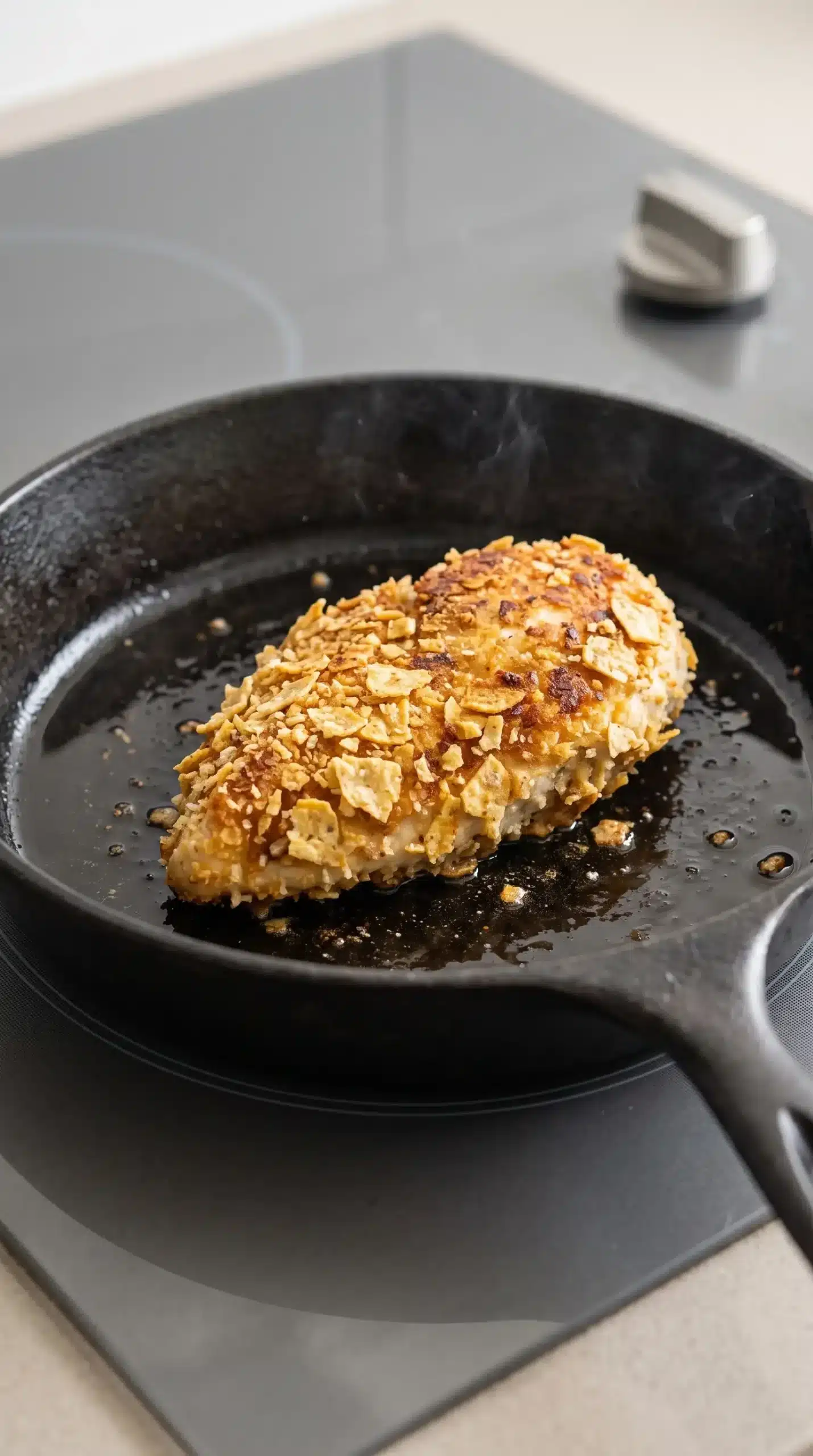
Medium-high heat gives the tortilla coating enough energy to brown quickly before the chicken moves into the oven. The important detail is keeping the pan stage focused on color and crust development instead of trying to cook the entire breast through on the stovetop.
Once the coating is golden, transfer the chicken to the oven promptly. Prolonging the frying stage can darken the tortilla crumbs before the thicker center has had a chance to cook through. The finished crust should look deeply golden and crisp, not scorched or excessively dark.
Small ingredient choices change the finished bite
White cheese keeps the topping mild enough for the salsa verde and pico de gallo to remain prominent. Mexican-style cheese is a natural fit, while provolone can also work when that is what you have available. The amount can be adjusted within the supplied range according to how much cheese you want covering each breast.
Fresh pico de gallo should be added after the chicken comes out of the oven. Tomatoes and onions bring moisture, acidity, and crunch, but putting them underneath the chicken or into the coating would interfere with the crisp exterior.
Cilantro sauce provides a separate fresh element built from cilantro, oil, avocado, and salsa verde. Since those ingredients are blended or combined into a sauce rather than cooked into the chicken, they retain a fresher character and can be spooned over the finished plate according to taste.
Golden crust depends on even coating pressure
Begin with chicken that has been seasoned on both sides so the meat itself is not dependent on the sauces for flavor. The beaten egg white should cover the surface, giving the crumb mixture something to grip.
After dipping, press the panko and tortilla mixture firmly against the chicken. Loose crumbs are more likely to fall away in the pan, leaving thin spots where the surface can brown differently from the surrounding crust.
Keep the coated pieces separated while you prepare the pan. Crowding or handling them excessively can disturb the coating before it has had an opportunity to set against the hot cooking surface.
Three signs the tortilla coating is ready
Visual cues are particularly useful during the short frying stage because the coating changes quickly over medium-high heat.
- Even browning: The exposed coating should turn golden across most of the surface instead of developing isolated dark patches.
- Firm adhesion: The crust should remain attached when the chicken is carefully turned.
- Dry-looking crumbs: The exterior should appear crisp and structured rather than wet with oil.
Those signs indicate that the stovetop portion has done its job. The oven can then concentrate on finishing the chicken instead of relying on extended frying to cook the center.
Salsa verde belongs beneath the chicken
Plating the salsa verde first creates a useful separation between sauce and crust. The chicken rests directly on the green salsa, allowing some of the bottom edge to absorb flavor while most of the tortilla coating remains exposed above it; a plate built around chicken with salsa verde and fresh cilantro benefits from keeping those bright components distinct rather than covering the entire crust.
Another advantage is control at the table. More salsa can be added around a bite when desired, while diners who prefer a crisper crust can take pieces from the upper surface without dragging the entire coating through sauce.
Cheese should melt without hiding the crust
Once the chicken has finished its oven cooking, add the white cheese and return it briefly to the heat. A short finishing period is enough to soften and melt the topping without unnecessarily extending the cooking time of the chicken.
Placement matters as well. Keep the cheese centered over the chicken instead of letting large amounts spill onto the pan. This keeps the melted topping associated with the crisp crust and makes the finished portion easier to transfer to the salsa verde.
Fresh toppings belong at the very end
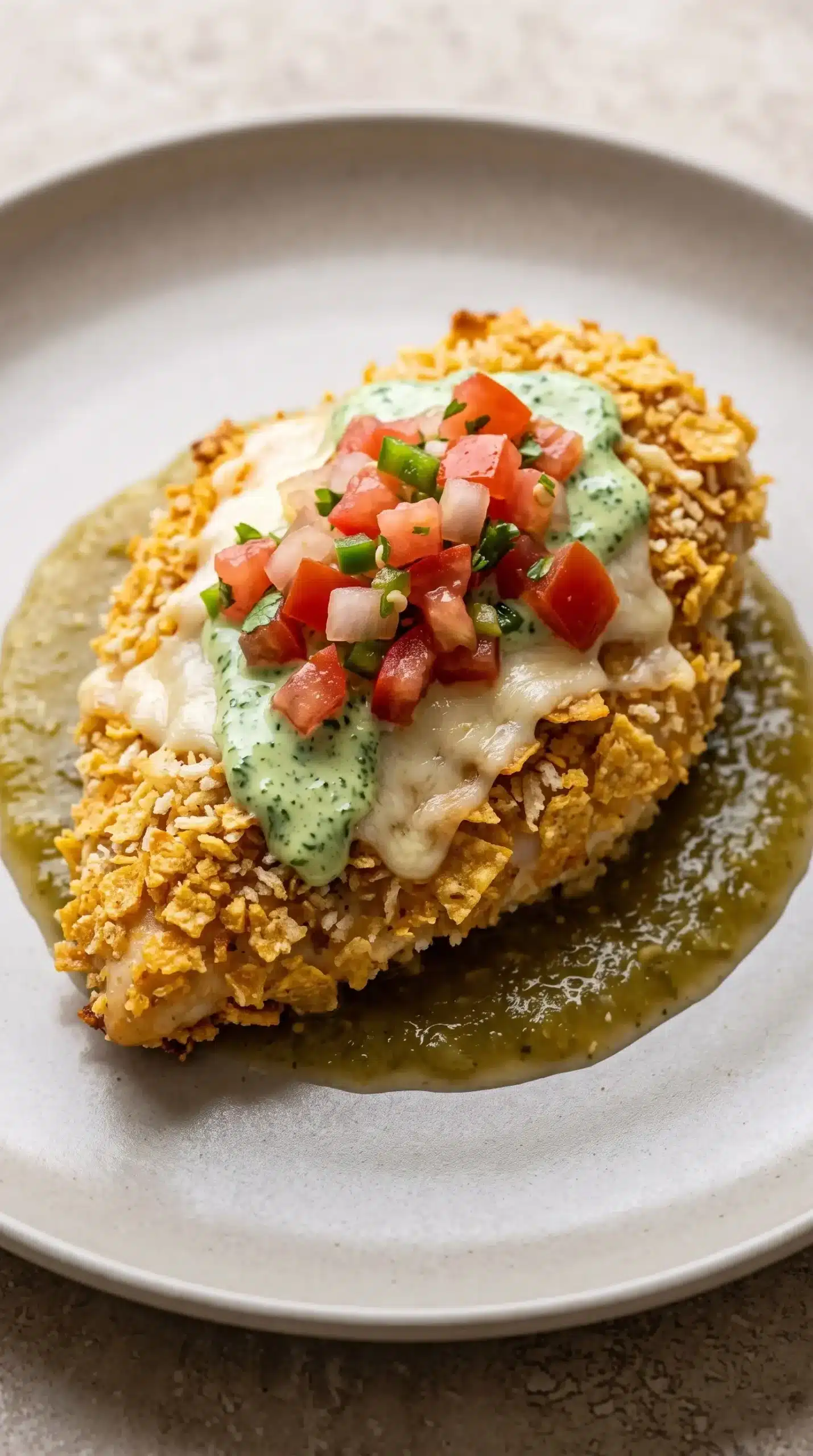
Pico de gallo and cilantro sauce are finishing elements, so they are best added after the cheese has melted and the chicken has been plated. Their freshness provides contrast to the browned coating and warm cheese.
For a cleaner presentation, spoon the salsa verde onto each plate first, place the chicken over it, then distribute the cilantro sauce and pico de gallo over the top. The sauces can remain visible instead of disappearing into the crust during cooking.
Common tortilla chicken mistakes to avoid
Several problems can be traced directly to the way the coating, pan, and oven stages interact.
- Fine crumbs only: Pulverizing the tortilla chips completely can remove the coarse texture that makes the crust distinctive. Keep some small pieces intact.
- Loose coating: Skipping firm pressure after the egg-white dip can leave weak spots that shed crumbs during frying.
- Over-browning: Leaving the chicken in the pan too long can darken the coating before the oven has finished the interior.
- Using cheese as the doneness test: Melted cheese is a topping cue, not a reliable indication that the chicken is fully cooked.
- Saucing too early: Covering the entire chicken with salsa verde before serving can soften more of the crisp tortilla crust than intended.
If a few crumbs fall away during cooking, avoid repeatedly pressing or scraping the chicken once it is in the pan. Excessive handling can remove more of the coating. A careful turn and a steady transfer to the oven are usually enough to preserve the remaining crust.
Simple adjustments keep tortilla chicken flexible
Provolone is a practical substitute when a Mexican-style white cheese is unavailable, as the supplied preparation demonstrates. The key consideration is choosing a cheese that melts readily and remains compatible with the bright salsa verde and fresh toppings.
For a stronger tortilla presence, use a slightly coarser crush on the chips while keeping the panko intact. For a more delicate crust, reduce the size of the tortilla pieces without eliminating them completely. Either adjustment changes texture without altering the core preparation.
Tortilla chicken is best judged by crust and center
The tortilla crust should emerge golden and firmly attached, while the chicken beneath it needs enough oven time to cook through according to its thickness. Those two conditions work together: the quick stovetop browning establishes the exterior, and the oven completes the interior without requiring prolonged frying.
Once the chicken is properly cooked, melted white cheese, salsa verde, cilantro sauce, and pico de gallo finish the dish with contrasting textures and flavors. Keeping the green salsa underneath and the fresh toppings until plating helps preserve the distinction between crisp, creamy, juicy, and fresh elements.
Tortilla chicken with salsa verde questions about crispness and cooking
Can I use tortilla chips that are already seasoned?
Seasoned tortilla chips can change the salt level and flavor of the crust, so reduce or omit additional salt on the chicken if the chips are strongly seasoned. Mildly seasoned chips can work, but plain chips give you more control over the finished flavor.
Should the chicken be flattened before coating?
Flattening is not required by the supplied preparation. Because chicken breasts can vary substantially in thickness, keeping their natural shape is workable as long as the oven time is adjusted to the size and the thickest portion reaches a safe cooking temperature.
Can I make tortilla chicken without salsa verde underneath?
You can serve the chicken without the salsa underneath, but the green salsa is an important part of the intended flavor and plating. If you prefer maximum crust crispness, serving some salsa on the side gives you control over how much sauce touches each bite.
Why did my tortilla crust fall off?
A coating can loosen when the chicken is not evenly covered with egg white or when the crumb mixture is not pressed firmly onto the surface. Handle the coated chicken carefully before and during frying, and avoid excessive turning once it enters the pan.
Can I use regular breadcrumbs instead of panko?
Regular breadcrumbs can provide a coating, but they will produce a different texture from the panko specified here. Panko helps keep the crumb mixture light and crunchy while the crushed tortilla chips provide the characteristic corn-based texture.
How should I serve the cilantro sauce?
Spoon the cilantro sauce over the plated chicken after it has been placed on salsa verde. Using it as a finishing sauce preserves its fresh character and lets you distribute the avocado, cilantro, oil, and salsa verde mixture according to taste.
Tortilla Chicken with Salsa Verde and Pico De Gallo
Tortilla chicken is a crispy, golden-coated chicken dish layered with salsa verde, melted white cheese, pico de gallo, and fresh cilantro sauce. Its crunchy texture and bright flavors make it an appealing choice for an easy dinner.
Ingredients
Method
Preparation
- Season the chicken with salt and pepper.
- Brush or coat the chicken with the beaten egg white.
- Mix the crushed tortilla chips with the panko bread crumbs.
- Press each chicken breast into the crumb mixture, coating the surface thoroughly.
Cooking
- Heat 1-2 tbs. oil in a pan over medium-high heat. Cook the coated chicken for about 2-3 minutes per side.
Baking
- Once the coating is golden brown, transfer the chicken to the oven and bake at 400°F (204°C) for 15-25 minutes, depending on the size and temperature of the chicken breasts.
- Add the white cheese and return the chicken to the oven for a few minutes, until the cheese is melted.
Serving
- Spoon salsa verde onto each plate, place the chicken over the salsa, then top with cilantro sauce and pico de gallo.
Notes
Keep the tortilla chip and panko coating well pressed onto the chicken so it stays attached during cooking.