From breakfast to dinner, from healthy meals to sweet desserts – Next Yum Recipes brings you quick, simple and tasty ideas for every occasion and every time.


 This Recipe
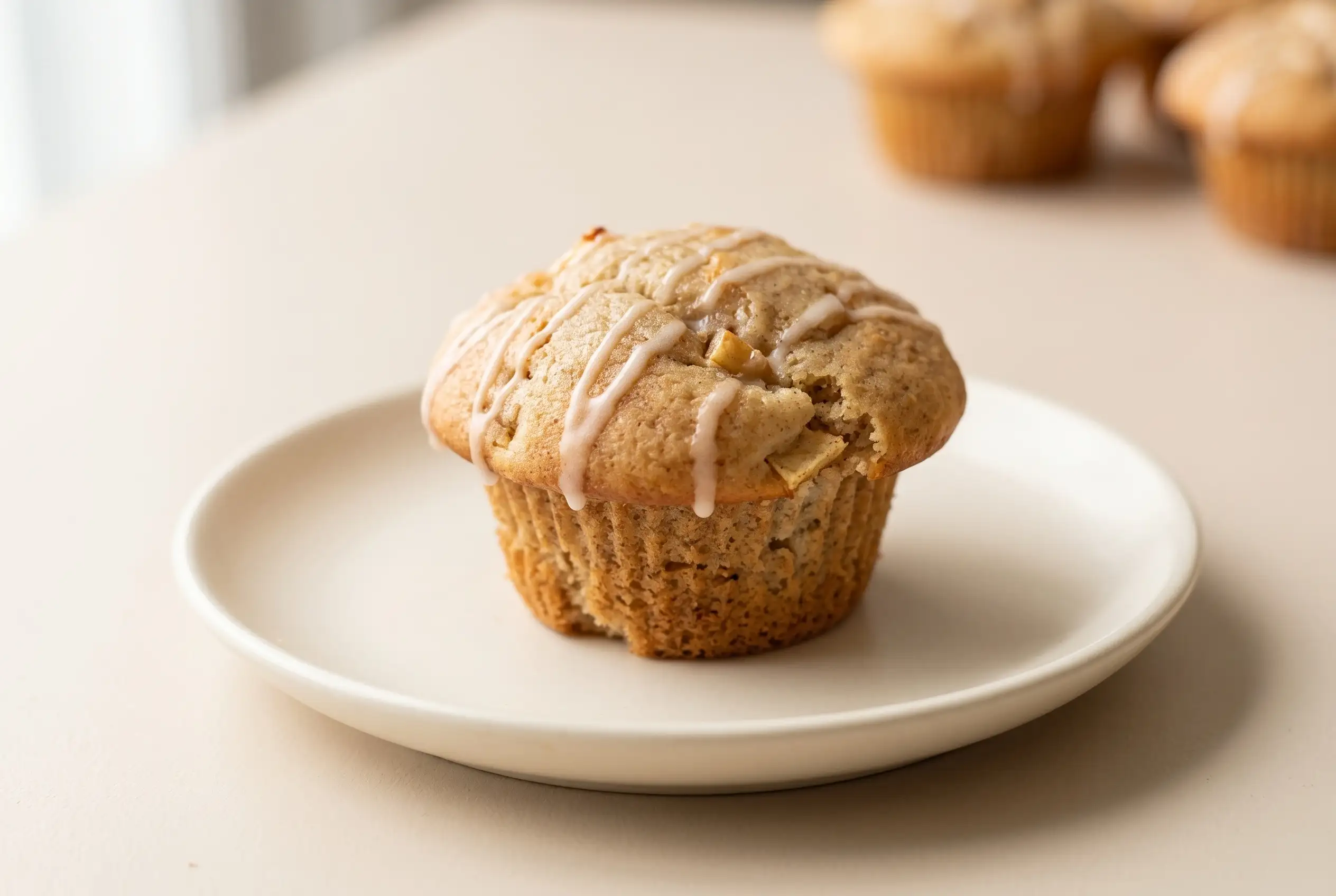
Small batch apple cinnamon muffins bring tender apple pieces, warm cinnamon, and a light vanilla glaze together in a compact bake designed for a few servings. The apples are tossed with a little sugar before they go into the batter, which helps distribute their sweetness through the muffins while keeping the preparation simple.
Why these apple cinnamon muffins stay focused on apple flavor
Fresh apple is the defining feature here, so chopping or grating the fruit finely matters more than adding a long list of spices. Small pieces spread through the modest amount of batter and make each muffin noticeably fruity without creating large wet pockets.
Warm cinnamon gives the crumb its familiar bakery-style character, while a pinch of nutmeg adds a quieter background note. Neither spice needs to dominate because the vanilla glaze supplies a separate sweet aroma after baking.
Small batches also make the proportions especially noticeable. With only a few muffins in the pan, even distribution of apple and spice helps every portion have a similar balance of tender fruit, cinnamon, and vanilla sweetness.
Choosing an apple for a small batch bake
A firm apple that holds its shape when chopped works well because the pieces remain recognizable after baking. A naturally sweet apple can make the muffins taste fruitier, while a tarter variety gives the sugary glaze more contrast.
The flour and dairy balance shapes the crumb
The flour provides the structure needed to hold the grated or finely chopped apple, while baking powder supplies the lift. Because the batter is small, accurate measuring matters: too much flour can make the muffins heavy, a point worth keeping in mind when preparing banana bread muffins with oats and chocolate chips as well.
Milk brings enough moisture for the dry ingredients to come together with the beaten egg. The melted butter contributes richness and helps keep the crumb tender without requiring a large amount of fat.
Room-temperature ingredients are not essential for this preparation, but the beaten egg should be incorporated smoothly with the milk before the wet mixture meets the dry ingredients. That approach reduces the temptation to overmix while trying to eliminate streaks.
For small batch apple muffins, the most useful texture cue is a batter that has just come together after the butter and apple are incorporated. A few small irregularities are preferable to prolonged mixing, which can make a small muffin batch less tender.
How the sugared apple changes the finished muffins
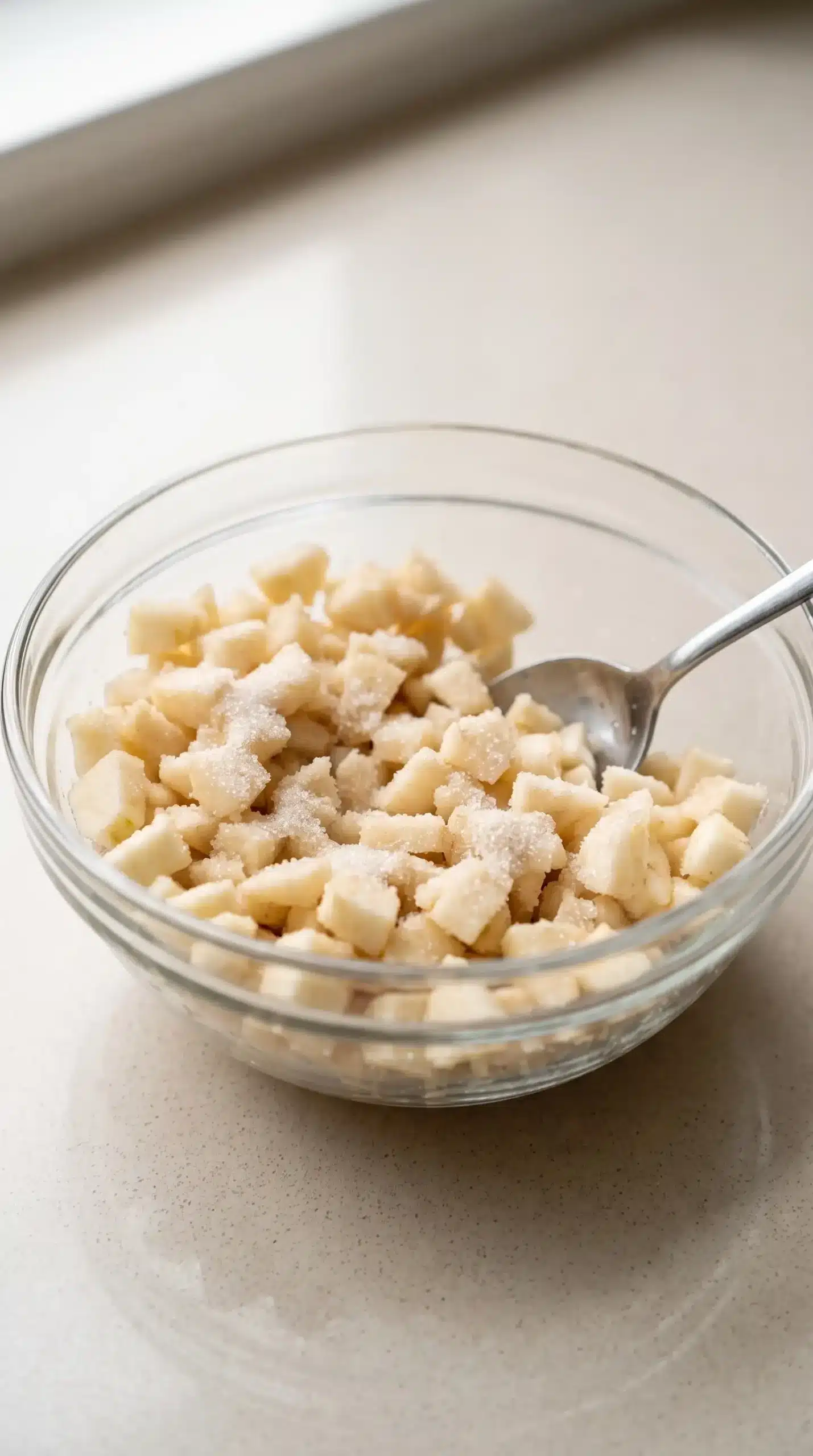
Tossing the chopped or grated apple with the tablespoon of sugar before folding it into the batter gives the fruit a light coating of sweetness. The step also separates the fruit pieces so they are easier to distribute through the batter.
| Apple preparation | Texture in the muffin | Best reason to choose it |
|---|---|---|
| Finely chopped | Small, distinct fruit pieces | Useful when you want visible apple throughout the crumb |
| Grated | More integrated and tender | Useful when you prefer apple flavor spread evenly through the batter |
| Very large pieces | Less even distribution | More likely to create concentrated pockets of fruit |
Mixing apple cinnamon muffins without toughening the crumb
Start by combining the flour, baking powder, salt, cinnamon, and nutmeg so the leavening and spices are dispersed before liquid is added. Separately combining the milk and beaten egg makes it easier to introduce the wet ingredients evenly.
For this small batch, double-acting baking powder reacts twice: once when the batter is moistened and again when it reaches the heat of the oven, which contributes to the muffins’ lift.
Once the wet mixture reaches the dry ingredients, stir only until the flour is incorporated. Melted butter can then be mixed through, followed by the sugared apple. The shorter the mixing period after flour is moistened, the easier it is to preserve a soft muffin texture.
Apple pieces should be folded through gently enough that they remain distributed instead of being crushed into the batter. This is particularly helpful when the fruit has been grated, because fine apple can disappear into the mixture quickly if stirred aggressively.
Portioning the batter for an even bake
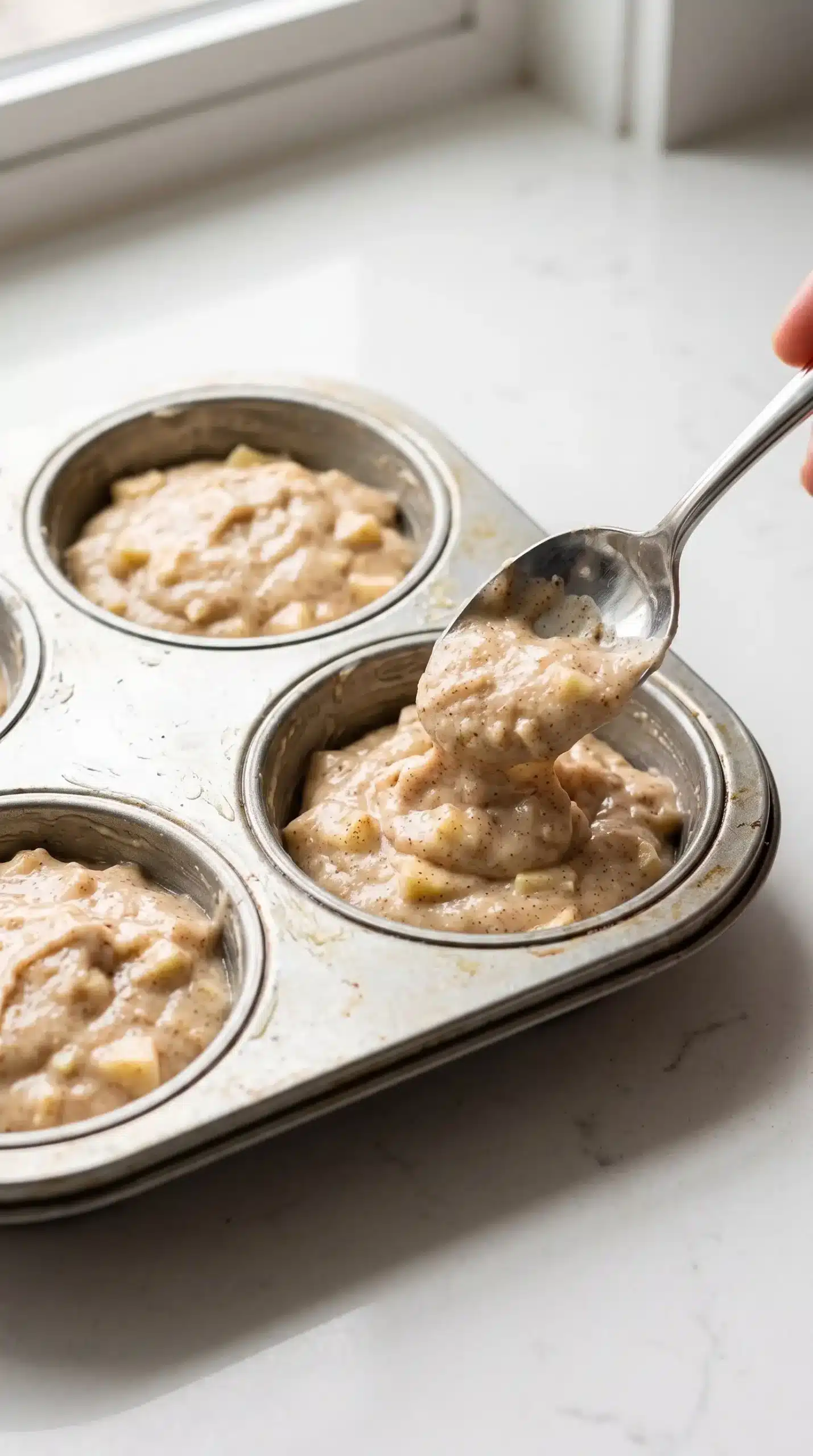
Greasing the muffin tins before portioning prevents the small cakes from sticking and makes them easier to remove while warm. Divide the batter as evenly as practical so the portions reach a similar level of doneness at the same time.
What the oven should tell you before the muffins come out
The muffins bake at 350°F, with the supplied directions indicating about 20 minutes as a starting point. Oven performance varies, so visual and tactile cues are more useful than treating the timing as an absolute endpoint.
Look for tops that have become golden brown and feel set. A gentle press on a baked muffin should produce a top that springs back instead of remaining visibly indented.
Small muffins can move from pale to browned fairly quickly near the end of baking, so checking their appearance as they approach the expected bake time helps prevent unnecessary overbaking.
Once the tops have the expected color and spring, remove the pan and let the muffins settle briefly before glazing. Applying a thin glaze to a muffin that is still extremely hot can make it spread more readily across the surface.
Vanilla glaze consistency controls the finish
The glaze combines powdered sugar, vanilla extract, and milk or cream. Add the liquid gradually, using a teaspoon at a time, because a small amount of powdered sugar can change consistency quickly.
Small adjustments that keep the vanilla glaze useful
A thicker glaze sits more visibly on the muffin tops, while a thinner mixture spreads farther and creates a lighter coating. Adjusting with tiny additions of milk or cream gives you more control than adding the liquid all at once.
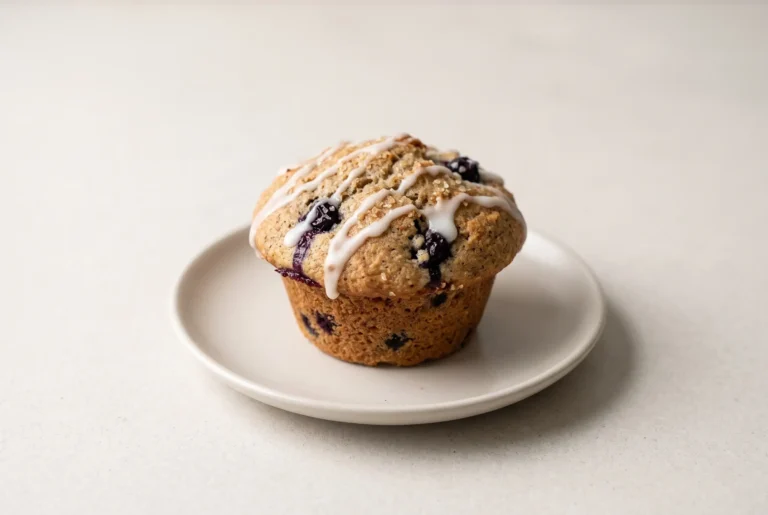
Vanilla glazed apple muffins benefit from keeping the glaze concentrated on the tops rather than saturating the crumb. The apple and cinnamon remain easier to taste when the finishing layer provides sweetness without overwhelming the baked portion.
Three choices that change the eating experience
- Apple texture: Choose finely chopped fruit for distinct tender pieces or grated fruit for a more integrated apple presence.
- Glaze thickness: Keep the mixture thicker for a defined white topping or loosen it gradually for a delicate drizzle.
- Dairy choice: Milk makes a straightforward glaze, while cream can produce a richer consistency when used in the same gradual manner.
Common apple cinnamon muffin mistakes to avoid
Overmixing is one of the easiest ways to work the batter beyond the point where the flour has just been incorporated. Once no obvious dry flour remains, additional stirring is unnecessary.
Uneven apple distribution can leave one muffin packed with fruit while another contains very little. Tossing the prepared apple with sugar and folding it through the batter gently helps spread the pieces more consistently.
Another problem comes from treating the glaze as though it has a fixed liquid requirement. The supplied method specifically calls for adding milk gradually, which allows the glaze to stop at the consistency you actually want.
Small-batch serving ideas for the vanilla finish
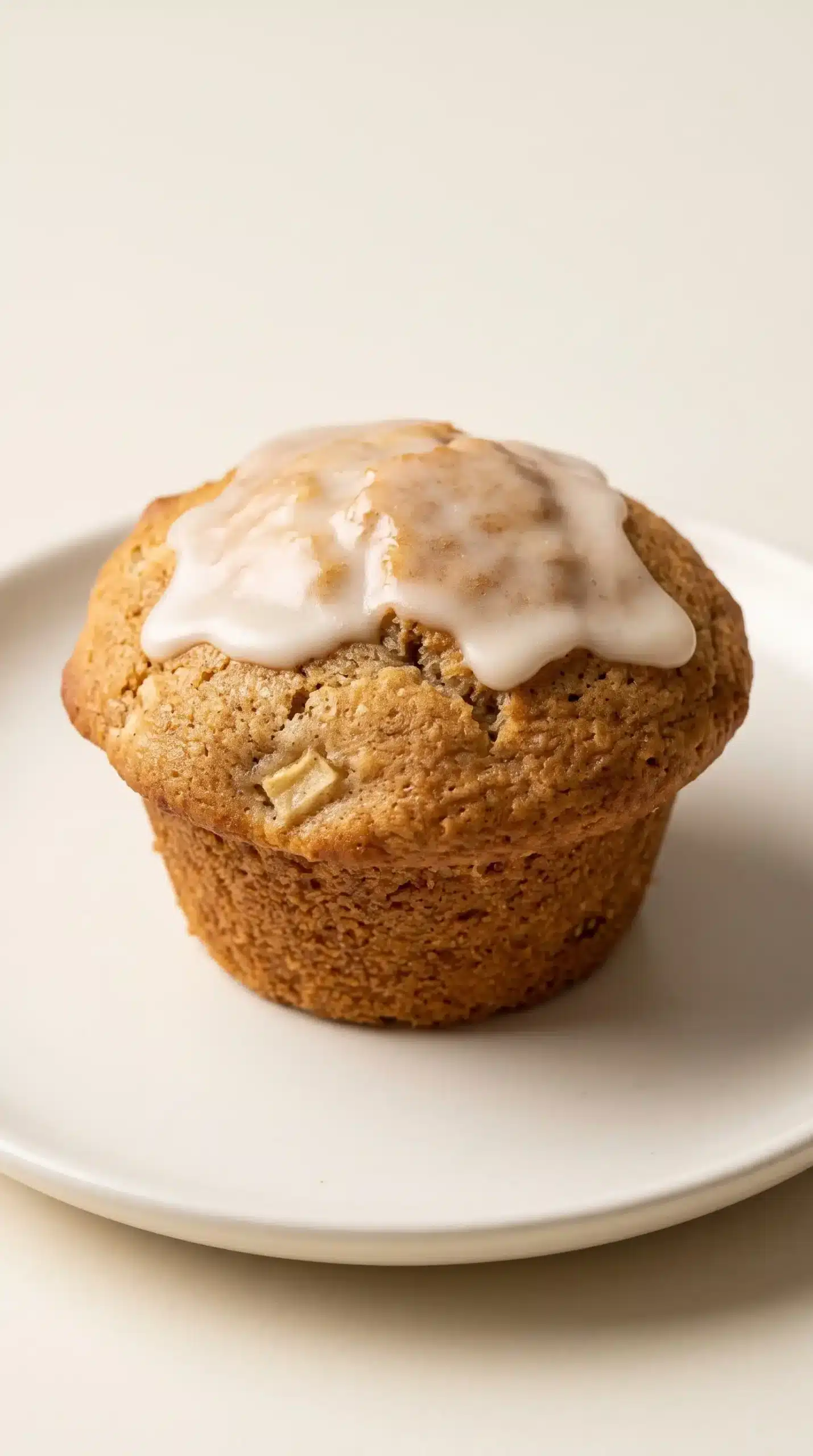
Apple cinnamon muffins with vanilla glaze can be served once the glaze has settled enough to remain on the tops. The combination works especially well when the warm spice of the baked crumb is allowed to contrast with the sweeter vanilla finish.
For a simpler presentation, keep the glaze as a thin layer over each muffin. If you want more visible vanilla character, use a slightly thicker consistency and apply it in a controlled drizzle.
When small batch apple muffins need a texture check
Because the batch is compact, every ingredient has a relatively large effect on the final texture. If the batter looks unusually dry before the apple is added, check that the flour was measured accurately before changing the liquid amount.
A muffin that seems heavy can also result from excessive stirring after the flour becomes wet. The next batch should be mixed only until incorporated, with the apple folded in gently afterward.
Apple cinnamon muffins are ready when the crumb and top agree
Golden tops and a springy surface provide the clearest finishing cues for these apple cinnamon muffins. The crumb should have enough structure to hold the apple while remaining tender, and the vanilla glaze should add its sweetness without hiding the fruit and cinnamon.
That balance depends on restraint at two points: mix the batter only until combined, then build the glaze gradually until it reaches the desired consistency. Those small decisions keep the fruit, spice, and vanilla distinct in every muffin.
Questions about apple cinnamon muffins and vanilla glaze
Can I use grated apple instead of chopped apple?
Yes. Grated apple gives the muffins a more integrated fruit texture, while finely chopped apple leaves small pieces that are easier to notice in the finished crumb. Either preparation follows the supplied ingredient and mixing directions.
How can I tell when the muffins are baked?
Use the stated baking time as a guide, then check the tops for golden-brown color and press one gently. A properly baked top should spring back instead of staying indented.
Why should the milk for the glaze be added slowly?
Powdered sugar can change from thick to loose with a relatively small addition of liquid. Adding milk or cream one teaspoon at a time lets you stop when the glaze reaches the thickness you want.
Can cream be used instead of milk in the glaze?
Yes. The supplied glaze allows either milk or cream, so cream can be used when you want a richer finishing mixture. Add it gradually just as you would milk.
What should I do if the muffin batter becomes very thick?
First check the flour measurement and make sure the milk and beaten egg were incorporated. Avoid adding liquid automatically, because changing the batter balance can affect the finished texture. Mix gently only until the ingredients come together.
How should I prevent the apples from clumping together?
Finely chop or grate the apple, combine it with the tablespoon of sugar, and then fold it gently through the batter. Preparing the fruit this way helps distribute it across the small batch instead of leaving concentrated pockets.
Apple Cinnamon Muffins with Small Batch Vanilla Glaze
These small-batch apple cinnamon muffins have a tender, lightly spiced crumb with fresh apple pieces and a sweet vanilla glaze. They are an easy choice when you want a cozy homemade treat in a compact batch.
Ingredients
Method
Preparation
- Combine the flour, baking powder, salt, cinnamon, and nutmeg in a mixing bowl.
- In a separate bowl, mix the milk with the beaten egg. Add this mixture to the dry ingredients and stir until combined.
- Pour in the melted butter and mix until incorporated.
- Combine the chopped or grated apple with 1 tablespoon sugar, then stir the sugared apple into the batter.
- Grease 3-4 muffin tins and divide the batter among them.
Baking
- Bake at 350°F (175°C) for about 20 minutes, or until the tops are golden brown and spring back when gently pressed.
Vanilla Glaze
- Mix the powdered sugar with the vanilla extract and milk or cream.
- Add the milk or cream gradually, 1 teaspoon at a time, until the glaze reaches the desired consistency.
Notes
For a tender muffin texture, mix the batter only until the flour is incorporated and fold in the prepared apple gently.