From breakfast to dinner, from healthy meals to sweet desserts – Next Yum Recipes brings you quick, simple and tasty ideas for every occasion and every time.


 This Recipe
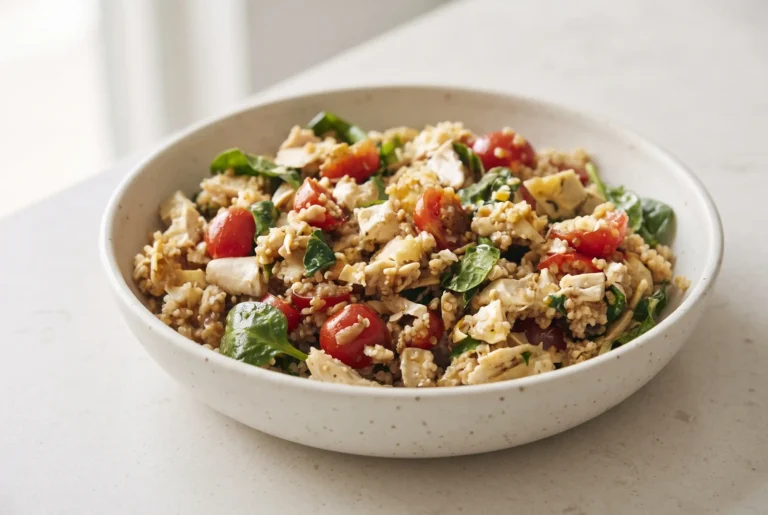
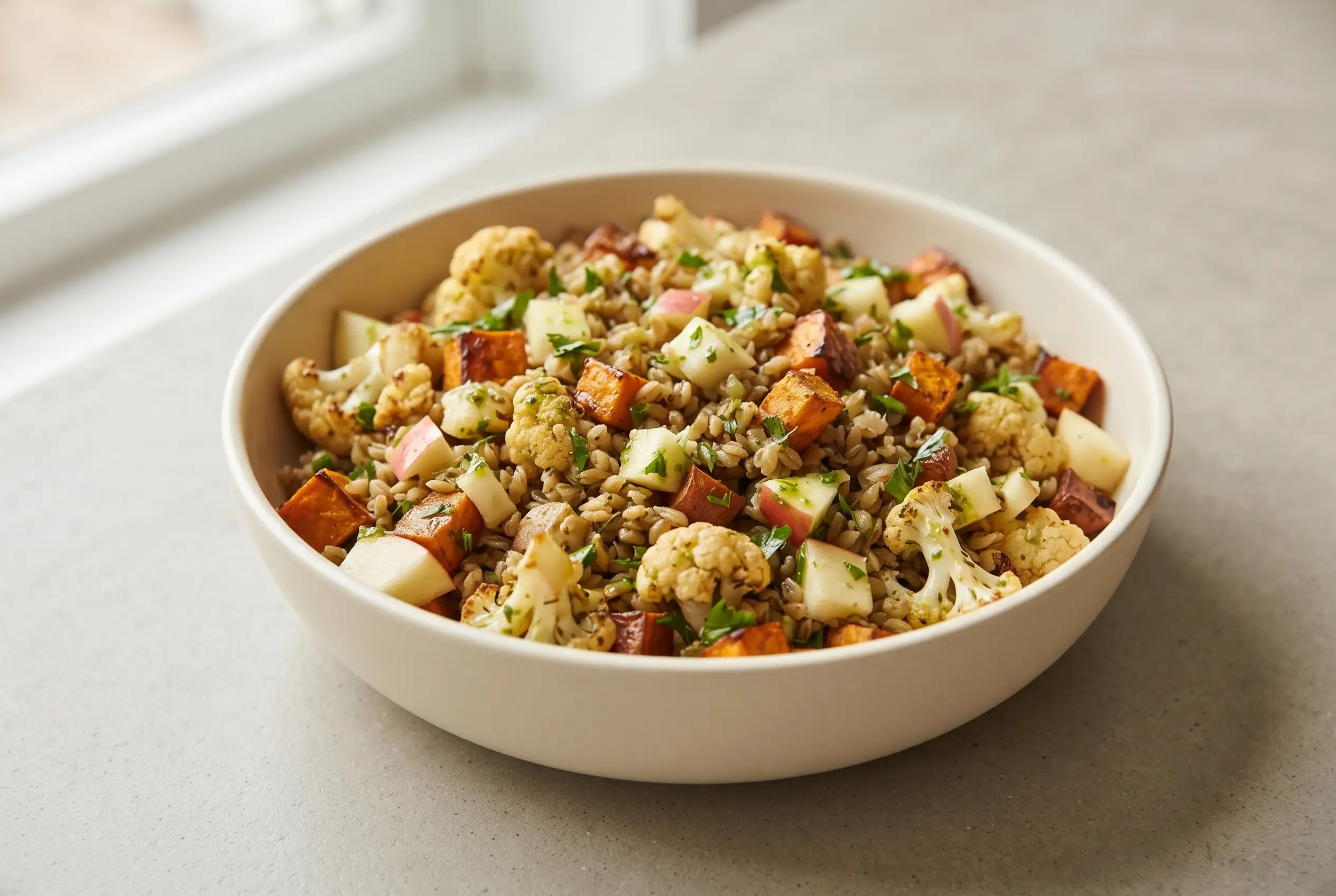
autumn glow salad brings together roasted cauliflower, sweet potatoes, a hearty grain, fresh apple, parsley, and a bright lemon dressing in a bowl built around seasonal contrast. The combination works because warm roasted vegetables meet crisp fruit and a savory grain base, creating a meal that feels satisfying without becoming heavy.
Freekeh or another cooked grain gives the salad structure, while roasted vegetables create deeper flavor through browning. The lemon dressing ties those elements together with acidity, herbs, and a smooth olive oil base that keeps each bite connected.
Autumn Glow Salad Balances Roasted and Fresh Elements
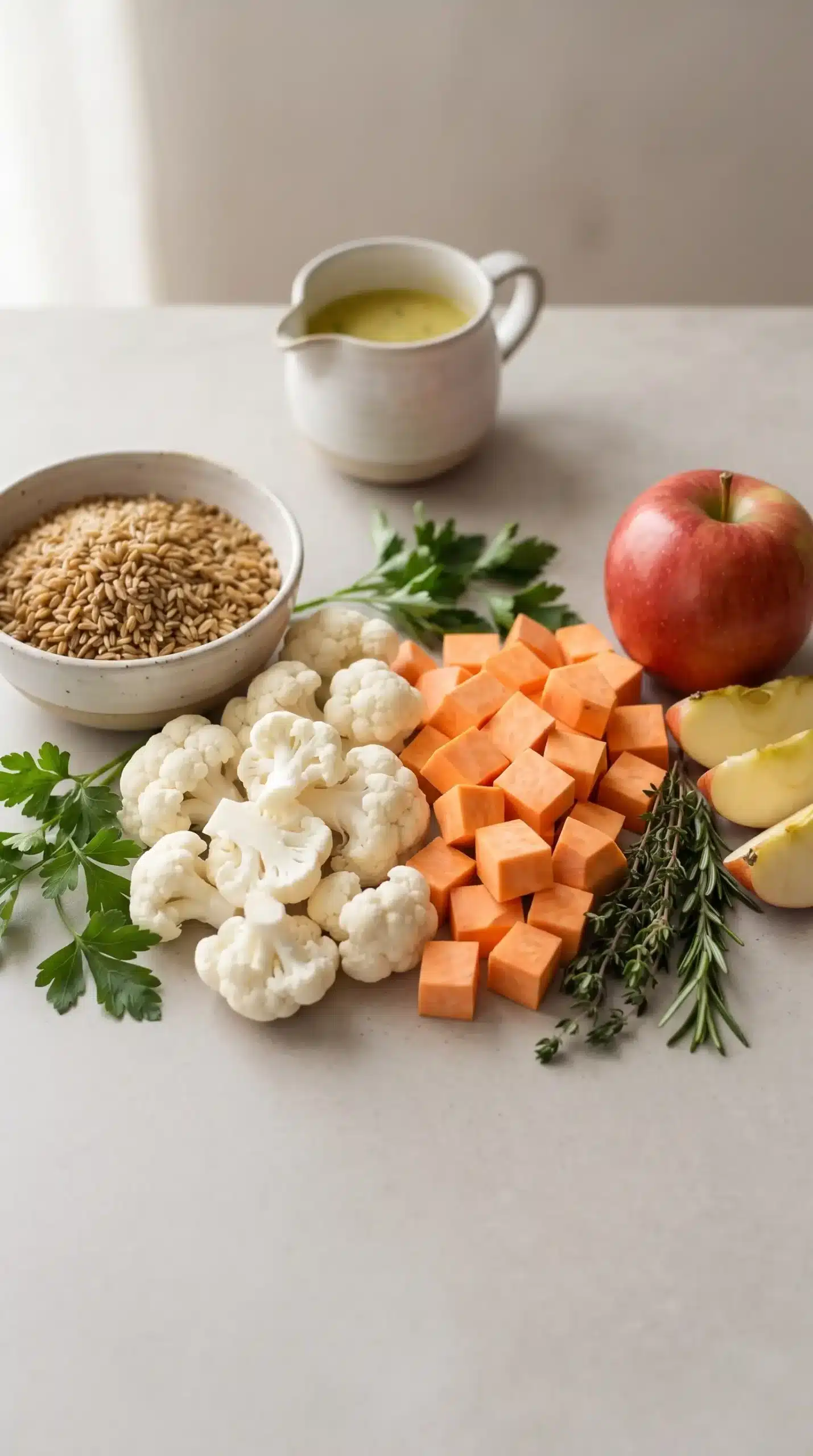
Seasonal vegetables define the personality of the dish through their roasted texture and earthy flavor. Cauliflower florets and sweet potato pieces become tender while developing golden edges, creating a contrast with the fresh apple added near the end of preparation.
Grains provide a foundation that allows the roasted ingredients and dressing to spread throughout the bowl. Freekeh brings a slightly nutty character, while alternatives such as quinoa or bulgur can create different textures without changing the overall structure of the salad.
Fresh parsley keeps the mixture lively after roasting. Its herbal flavor works with the lemon dressing, helping balance the richer notes from olive oil and the naturally sweet vegetables.
Freekeh and Produce Choices Shape the Salad Texture
The grain choice has a noticeable effect on how the salad eats. Freekeh creates a pleasantly chewy base, while quinoa produces a lighter texture and bulgur offers a softer bite. Selecting a grain that holds its shape helps the roasted vegetables remain the focus.
Vegetable preparation also influences the finished bowl. Smaller cauliflower florets and evenly cut sweet potatoes cook at a similar pace, allowing both components to reach tenderness while gaining roasted surfaces.
| Ingredient choice | Texture result | Best use in the salad |
|---|---|---|
| Freekeh | Chewy and hearty | Creates a substantial grain base |
| Quinoa | Light and fluffy | Offers a delicate alternative |
| Bulgur | Soft with gentle bite | Provides a quick-cooking grain option |
Lemon Dressing Controls the Salad’s Brightness
The lemon dressing brings together olive oil, lemon juice, garlic, parsley, optional agave, salt, and pepper into a bright coating that helps connect the roasted and fresh parts of the bowl. Shaking the ingredients in a tightly closed jar creates a simple way to combine the flavors before adding the dressing to the salad.
Roasted Vegetables Need Careful Heat Management
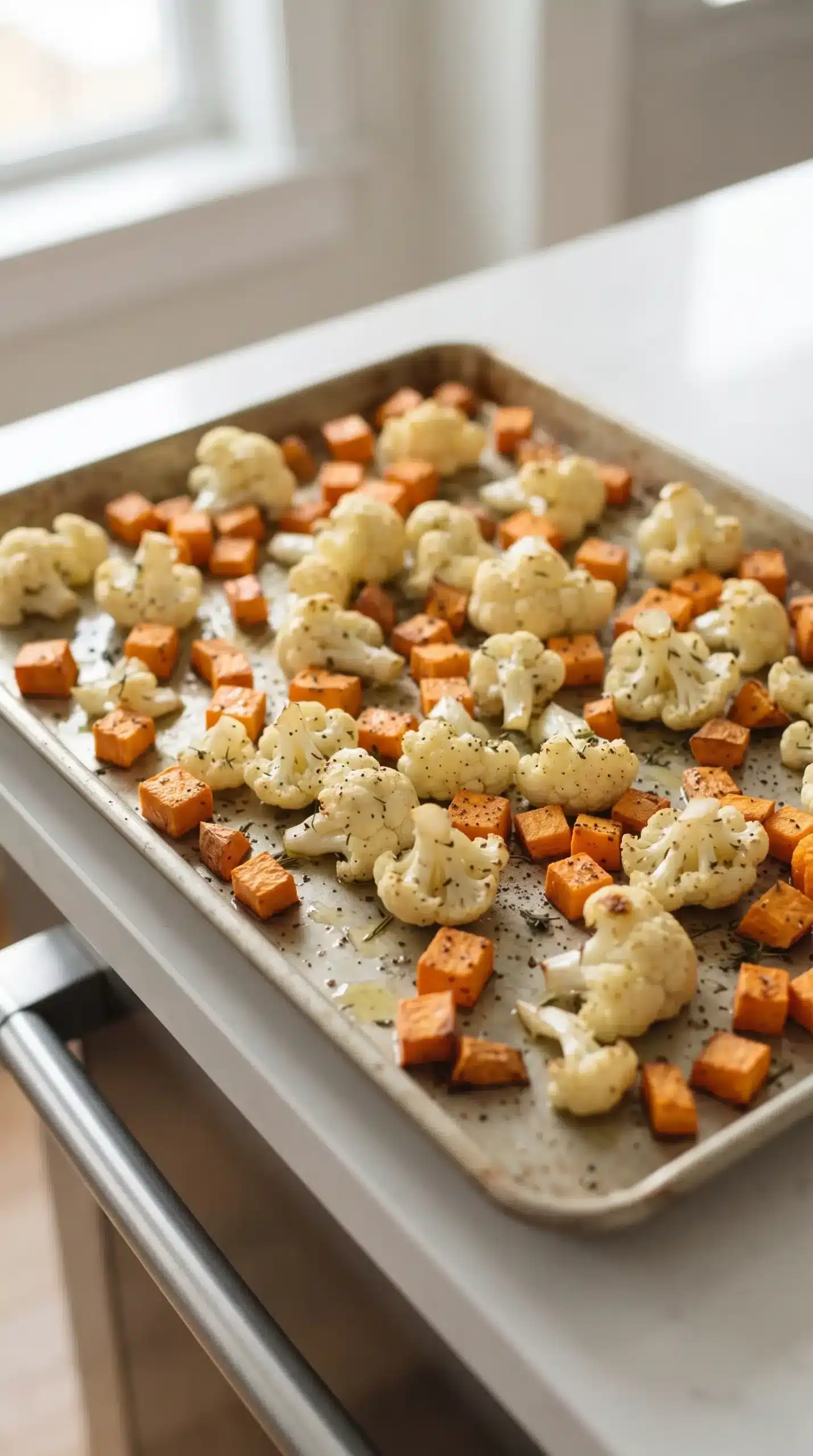
Oven temperature and timing have a major effect on the roasted cauliflower sweet potato salad portion of the dish. A hot oven encourages browning while allowing the vegetables to soften, which creates the contrast that makes roasted components appealing. Careful attention to roasted sweet potato preparation helps preserve tender centers and flavorful edges.
Spacing the vegetables on the baking sheet matters because crowded pieces release moisture and may soften without developing the same golden exterior. Stirring during roasting helps expose different sides of the pieces to the heat.
Cooking control continues after the vegetables leave the oven. Combining warm vegetables with the grain creates a different texture from mixing cooled components, so choosing when to toss everything together depends on the serving style you want.
- Roasted edges: Look for golden surfaces and tender centers before removing the vegetables.
- Balanced cuts: Keep cauliflower and sweet potato pieces similar in size for more even cooking.
- Cooling choice: Allow components to cool when you prefer a lighter, more defined salad texture.
Autumn Glow Salad Mistakes That Affect Texture and Flavor
Several common problems can change the character of an autumn salad with roasted vegetables. Overcooked vegetables may lose their shape, while under-roasted pieces can lack the browned flavor that gives the salad depth.
Adding dressing too early can also influence the texture. When the salad sits heavily coated for too long, the grain and roasted vegetables may absorb more moisture than intended, reducing the contrast between components.
Another issue comes from uneven preparation. Large sweet potato pieces mixed with tiny cauliflower florets can finish cooking at different times, making it harder to achieve a consistent bite throughout the bowl.
Serving Styles Make This Salad Adaptable
The salad can be served while components are still warm or after they cool, creating different experiences from the same combination. A warmer bowl highlights the roasted vegetables, while a cooled version emphasizes the fresh apple and herb flavors.
Storage Practices Keep Components Distinct
Keeping the salad and dressing separate when possible helps preserve the textures of the grain and roasted vegetables. The dressing can be added shortly before serving so the ingredients maintain more of their individual qualities.
Leftover portions benefit from gentle handling during storage. Mixing everything together immediately may cause the grain and vegetables to absorb the lemon dressing unevenly over time.
| Storage choice | Texture impact | When it works best |
|---|---|---|
| Separate dressing | Keeps components more defined | Preparing portions ahead |
| Mixed salad | Allows flavors to blend | Short-term serving after preparation |
| Cool components before combining | Creates a lighter texture | Serving as a chilled salad |
Reheating is not required because the dish can be enjoyed at different temperatures. If warming leftovers, consider adding fresh dressing or herbs afterward to refresh the flavors.
Additions That Complement the Autumn Glow Salad
Extra toppings can introduce additional texture when desired. Chopped nuts such as cashews or pecans provide crunch and pair naturally with the roasted vegetables, apple, and lemon dressing without changing the foundation of the dish.
Grain Options Change the Salad’s Character
A freekeh salad with lemon dressing has a hearty quality because the grain provides a firm texture that works well with roasted vegetables. Choosing another grain changes the experience while keeping the same seasonal combination.
Quinoa can make the salad feel lighter, especially when paired with the fresh apple and parsley. Bulgur creates a softer texture that allows the dressing to blend more evenly through each serving.
The important consideration is selecting a grain that complements the roasted ingredients. A sturdy grain supports the vegetables, while a softer option creates a more blended texture across the bowl.
| Grain option | Texture style | Pairing effect |
|---|---|---|
| Freekeh | Firm and chewy | Highlights hearty roasted flavors |
| Quinoa | Soft and airy | Keeps the salad feeling lighter |
| Bulgur | Tender and fine | Creates a more unified bite |
Seasonal Preparation Decisions Improve Results
Small choices before serving can shape the balance of the bowl. Chopping the apple close to assembly helps preserve its fresh texture, while adjusting lemon juice or seasoning allows the dressing to match the natural sweetness of the vegetables.
Autumn Glow Salad Shows Why Roasting Matters
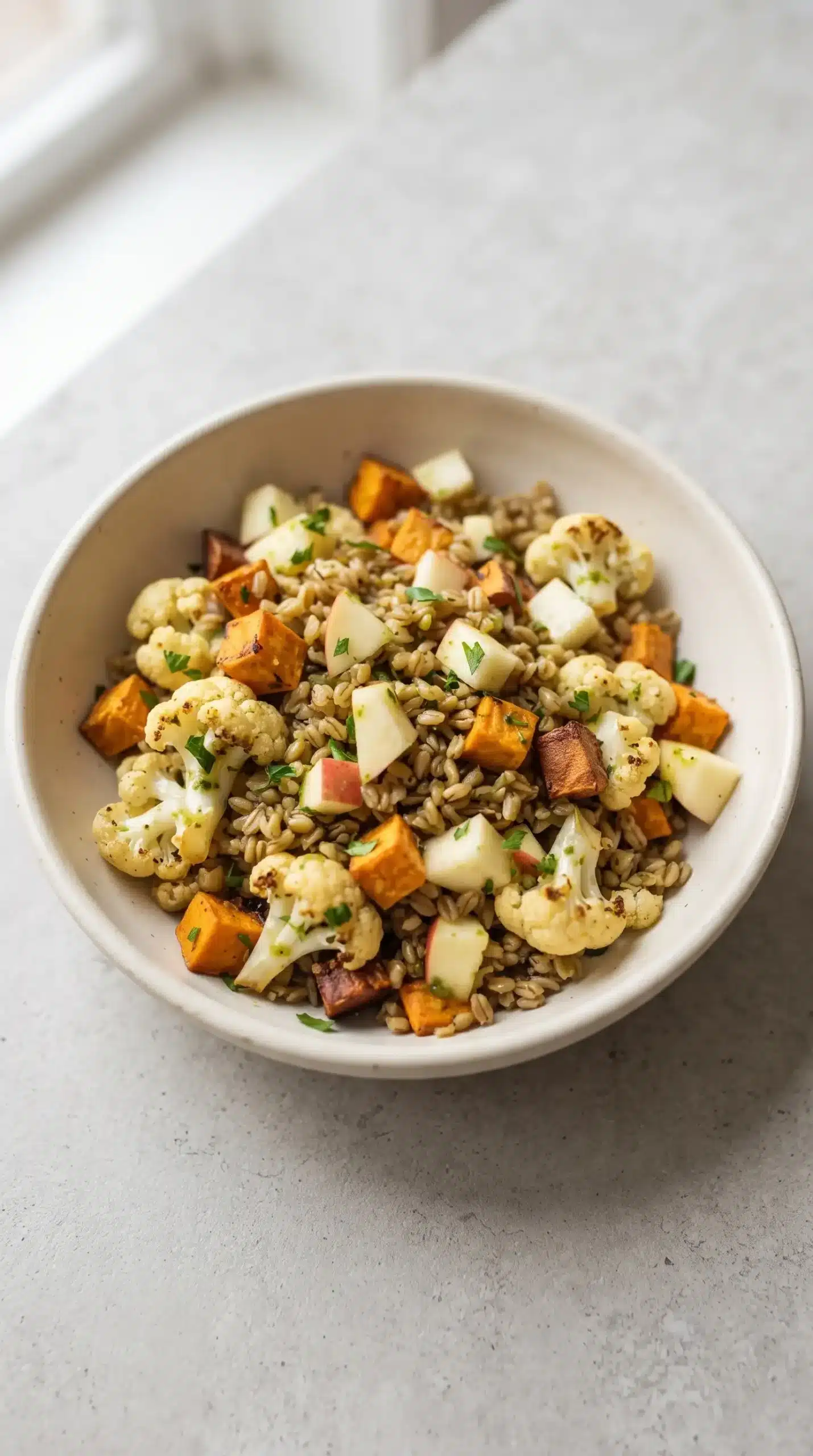
Roasted cauliflower, sweet potatoes, and a well-cooked grain create the foundation that makes autumn glow salad memorable. The strongest results come from protecting the contrast between browned vegetables, fresh produce, and the bright lemon dressing.
Careful roasting and thoughtful timing allow every part of the bowl to keep its role. The finished salad succeeds because warmth, freshness, texture, and acidity remain balanced in every serving.
Autumn Glow Salad Questions About Storage and Preparation
Can Autumn Glow Salad be made ahead of time?
Yes, the components can be prepared ahead and combined closer to serving. Keeping the dressing separate helps maintain the texture of the grain and roasted vegetables.
How can the roasted vegetables keep their texture?
Roasted vegetables keep a better texture when they are cooked until tender with browned surfaces and are not left soaking in dressing for an extended period.
What grain works best for this salad?
Freekeh is a strong choice because its chewy texture pairs well with roasted vegetables, but quinoa and bulgur can also work when a different texture is preferred.
Can the lemon dressing be adjusted?
The dressing can be adjusted by changing the amount of lemon juice, seasoning, or optional agave so the balance matches the sweetness of the roasted vegetables and apple.
What toppings add crunch to Autumn Glow Salad?
Chopped nuts such as cashews or pecans can add a crunchy element that contrasts with the tender roasted vegetables and grain.
Autumn Glow Salad with Lemon Dressing and Freekeh Grain
Autumn Glow Salad is a hearty grain salad with roasted vegetables, fresh apple, and a bright lemon dressing. It offers a satisfying mix of warm, tender textures and fresh flavors, making it a great choice for a seasonal meal.
Ingredients
Method
Preparation
- Rinse the grain and cook it in a rice cooker with the appropriate amount of broth or water according to the package directions. Use the white rice setting and prepare the remaining ingredients while it cooks.
- Chop the cauliflower into small florets and peel and chop the sweet potatoes. Arrange them on a baking sheet, drizzle with oil, season with salt and pepper, and add thyme or other dried spices if using.
Cooking
- Roast the vegetables at 425°F (218°C) for 20 minutes, then stir and continue roasting for another 10-15 minutes until tender with golden surfaces. Remove from the oven and set aside.
Assembly
- While the vegetables roast, combine the dressing ingredients in a jar with a tight lid and shake until combined. Chop the apple and set aside.
- Combine the cooked grain, roasted vegetables, and chopped apple. Toss everything together while warm or after cooling, depending on the preferred texture.
- Store the salad and dressing separately when possible.
Notes
For added crunch, mix in a few handfuls of chopped nuts such as cashews or pecans. Nutrition facts are based on 6 servings.