
From breakfast to dinner, from healthy meals to sweet desserts – Next Yum Recipes brings you quick, simple and tasty ideas for every occasion and every time.


 This Recipe
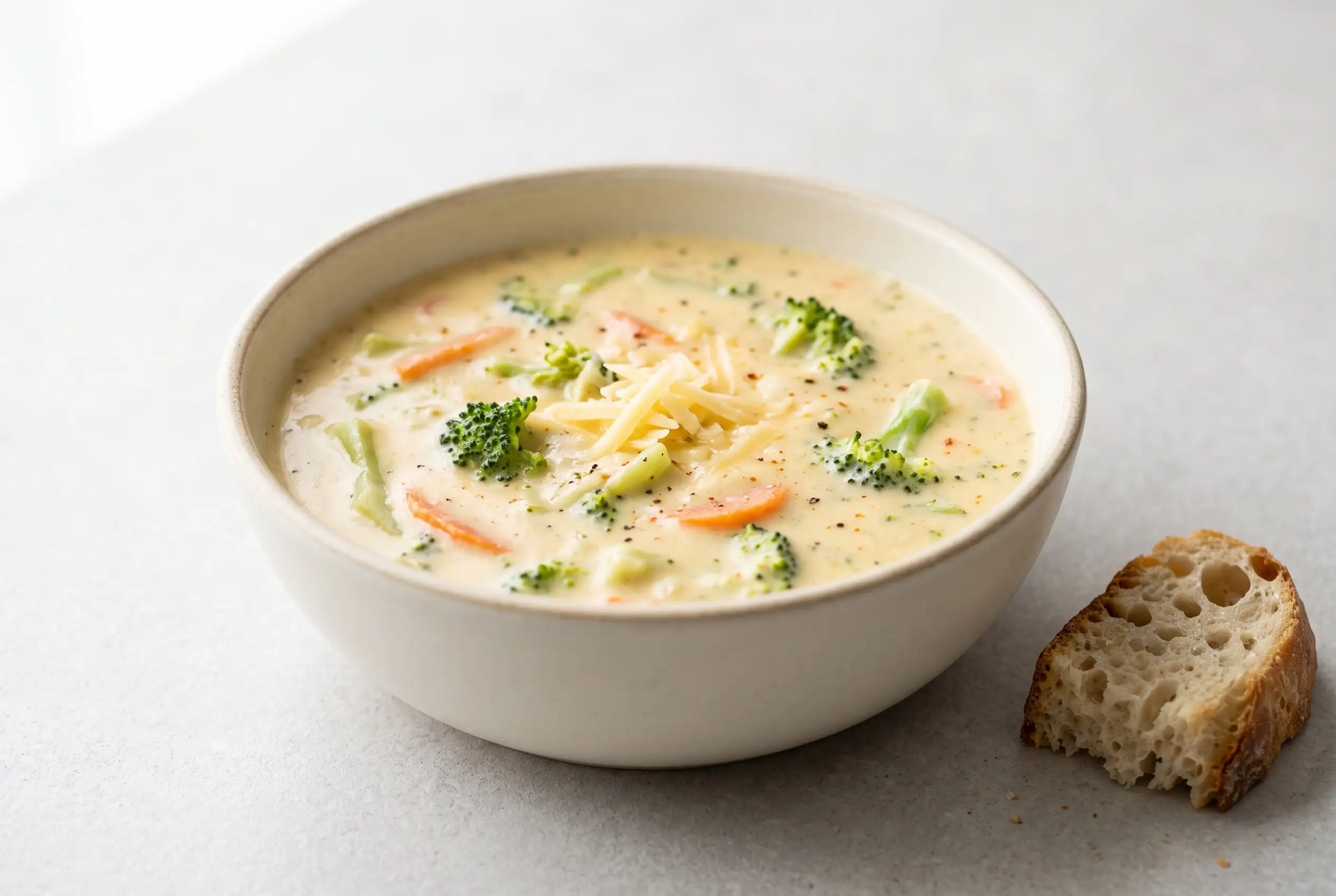
Broccoli cheese soup brings together tender vegetables, a velvety dairy base, and sharp cheddar flavor in a comforting bowl that feels both familiar and satisfying. This broccoli cheese soup uses a simple combination of sautéed aromatics, creamy broth, small broccoli pieces, and extra-sharp cheddar to create a rich homemade meal with plenty of texture.
Broccoli Cheese Soup Builds Comfort From Simple Layers
The appeal of a creamy broccoli cheese soup comes from how each stage of cooking develops the next. Softened onion and garlic create the first layer of flavor, while the flour-thickened dairy mixture creates the smooth body that carries the vegetables and cheese.
Small pieces of broccoli help every spoonful contain a balanced mix of creamy soup and fresh vegetable texture. The carrots add a bright contrast, while paprika and black pepper give the finished bowl a gentle warmth without overwhelming the cheddar.
Unlike a thin vegetable soup, this style of homemade broccoli soup is designed around a thick, spoon-coating consistency. The combination of milk, half and half, broth, and cheese creates a cozy texture that works especially well with crusty bread for dipping.
The Creamy Broccoli Cheese Soup Base Depends on Careful Mixing
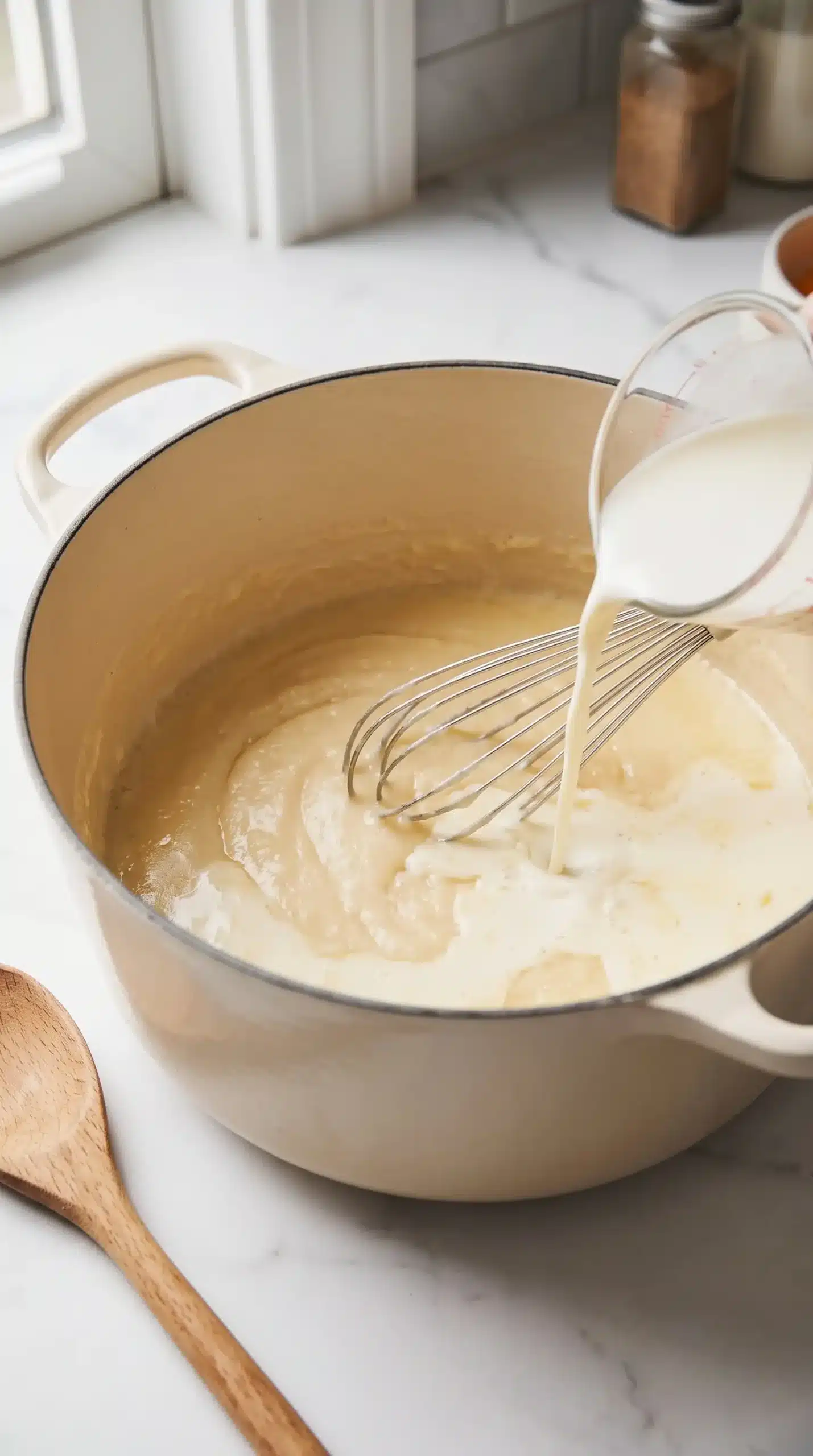
The thickened base is where the soup takes its signature shape. Butter and flour form a simple foundation that allows the milk, half and half, and broth to combine into a smooth mixture.
The butter and flour mixture creates structure through the same principle used in many thickened sauces and soups, where flour and fat form a roux that helps build body as the liquid heats.
Adding the liquids gradually while whisking helps maintain an even texture. The base may look very thick at first, but continued whisking and simmering allow it to loosen into a creamy consistency that can support the broccoli and cheddar.
Allowing the soup base to simmer before adding the vegetables gives the flour time to cook through. This creates a smoother finish and helps the dairy flavors blend together before the cheese enters the pot.
Broccoli Stems and Florets Shape the Soup’s Vegetable Texture
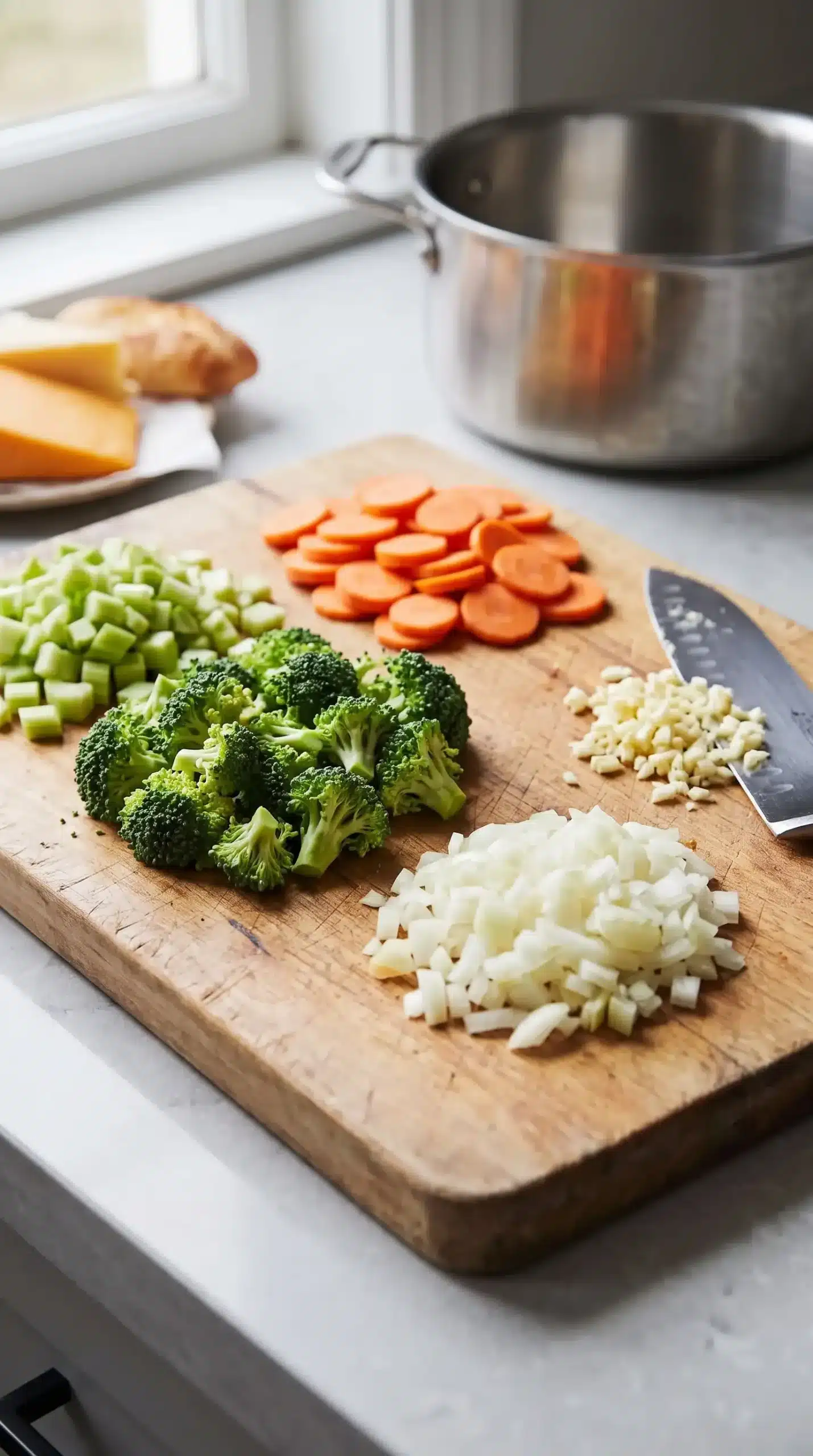
The broccoli pieces play more than one role in broccoli cheese soup. Using chopped stems is optional, but they provide a practical way to add extra broccoli flavor and make use of more of the vegetable.
Very small florets are especially useful because they soften evenly throughout the soup. Their size allows the creamy base to surround each piece while still leaving recognizable broccoli texture in every serving.
Carrots bring another layer of color and tenderness. Since the vegetables simmer directly in the finished soup base, slicing them thinly helps them reach a pleasant texture without requiring separate preparation.
- Small broccoli pieces: create a consistent bite and distribute vegetable flavor throughout the bowl.
- Optional stems: add extra broccoli character when finely chopped.
- Thin carrots: soften naturally while adding contrast to the creamy base.
Extra-Sharp Cheddar Defines the Cheddar Broccoli Soup Flavor
Good quality extra-sharp cheddar gives cheddar broccoli soup its strongest finishing note. Grating the cheese from a block allows it to melt smoothly into the warm soup and creates a more pronounced cheese flavor. Rich cheese-based soups such as beer cheese soup show how cheddar can be balanced with other savory ingredients while maintaining a creamy texture.
Cooking Control Keeps the Soup Smooth and Balanced
Successful broccoli cheese soup depends on paying attention to small changes during cooking. The butter and flour mixture should become thick before liquids are added, and the dairy mixture should be incorporated slowly enough to stay smooth.
Heat management matters most near the cheese stage. Moving the pot away from direct heat and allowing it to cool slightly before stirring in the cheddar helps the cheese blend into the soup without losing the creamy texture that makes the dish special.
The vegetables also provide visual clues during cooking. Bright green broccoli pieces and fork-tender carrots indicate that the vegetables have softened while still maintaining some structure.
| Cooking stage | What to watch | Desired result |
|---|---|---|
| Butter and flour mixture | Thickness and smoothness | A cooked base ready for liquids |
| Dairy and broth mixture | Consistency while simmering | A creamy soup foundation |
| Cheese addition | Temperature after removing from heat | Cheddar melts evenly into the soup |
Texture Problems in Broccoli Cheese Soup Come From a Few Mistakes
Most problems with broccoli cheese soup happen when a small cooking detail changes the texture or flavor. Keeping track of the soup’s appearance during each stage makes it easier to avoid these issues.
- Adding liquids too quickly: can make the base harder to smooth out. Gradual whisking keeps the mixture more even.
- Skipping the simmering stage: can leave the flour base underdeveloped. Allowing the soup base to cook helps create a better texture.
- Stirring cheese into excessive heat: can affect how smoothly the cheddar blends. Cooling the pot slightly before adding cheese supports a creamy finish.
- Cutting vegetables too large: can create uneven bites. Smaller pieces cook more consistently throughout the soup.
Another common issue is overlooking seasoning balance. Salt, pepper, and paprika should complement the cheddar and vegetables, so adjusting carefully keeps the flavors connected instead of letting one element dominate.
A thick soup can also become difficult to serve if too much moisture evaporates during cooking. Gentle simmering and occasional whisking help maintain the intended consistency.
Serving Homemade Broccoli Soup With Simple Additions

Homemade broccoli soup is naturally rich, so simple accompaniments work best. A little extra grated cheddar on top reinforces the cheese flavor, while a piece of crusty bread provides a satisfying way to enjoy the creamy texture.
Broccoli Cheese Soup Stores Well When Handled Carefully
After enjoying a bowl, leftover broccoli cheese soup should be cooled and stored properly to protect its creamy consistency. Keeping leftovers in a sealed container helps maintain the flavor of the cheddar and vegetables.
When reheating, gentle warming is helpful because the soup contains dairy and melted cheese. Stirring occasionally encourages the texture to come back together as it warms.
The soup may thicken after chilling because the flour and cheese continue to influence the texture as the mixture cools. A small amount of gentle stirring during reheating can help restore a smoother serving consistency.
Simple Variations Keep Broccoli Cheese Soup Flexible
The core flavors of broccoli cheese soup can adapt to different preferences while keeping the same creamy character. Chicken broth provides a savory base, while vegetable broth works well for those who prefer a meatless version.
Broccoli Cheese Soup Pairs Naturally With Cozy Sides
A bowl of broccoli cheese soup works especially well alongside breads and simple sides that complement its creamy texture. Crusty bread is a classic choice because it provides contrast without competing with the cheddar flavor.
Broccoli Cheese Soup Rewards Patience During the Cheese Finish
Broccoli cheese soup reaches its best texture when the creamy base, tender vegetables, and melted cheddar are allowed to come together carefully. The most important cooking judgment is protecting the smooth cheese finish by controlling heat and adding the cheddar after the soup has settled slightly.
Small choices, such as finely chopping vegetables and whisking the base patiently, shape the experience of the finished bowl. A balanced combination of broccoli, carrots, spices, and extra-sharp cheddar creates a soup that feels rich without losing the character of its ingredients.
Broccoli Cheese Soup Questions About Texture and Storage
Can broccoli cheese soup be made with vegetable broth?
Yes, vegetable broth works well in broccoli cheese soup and keeps the creamy cheddar and broccoli flavors at the center of the dish. The broth choice changes the background flavor but does not change the overall cooking approach.
Why is my broccoli cheese soup too thick?
The soup can become thicker as it cooks or cools because the flour and cheese continue affecting the texture. Gentle reheating and careful stirring can help loosen the consistency while keeping the creamy character.
How can I keep the cheddar smooth when making the soup?
Adding the grated cheddar after removing the pot from direct heat helps it melt into the warm soup more evenly. Allowing the soup to cool slightly before this step supports a smoother cheese texture.
Can I use broccoli stems in broccoli cheese soup?
Yes, finely chopped broccoli stems are a suitable addition and can add more broccoli flavor. They should be cut into small pieces so they soften along with the other vegetables.
What bread goes well with broccoli cheese soup?
Crusty bread is a natural pairing because it can be dipped into the creamy soup and adds a contrasting texture. A simple loaf works well without distracting from the cheddar and broccoli flavors.
Broccoli Cheese Soup with Creamy Extra-Sharp Cheddar
Broccoli Cheese Soup is a creamy, comforting soup with tender vegetables and rich extra-sharp cheddar flavor. It is a cozy homemade recipe perfect for a satisfying meal when you want a hearty bowl of comfort.
Ingredients
Method
Preparation
- Melt 1 tablespoon butter in a large soup pot or Dutch oven over medium heat. Add the minced onion, garlic, and chopped broccoli stems, then cook until the vegetables are softened and fragrant, about 5 minutes.
Cooking
- Add the remaining 4 tablespoons butter to the pot. Once melted, stir in the flour and cook over medium heat for 2-3 minutes until the mixture thickens.
- Gradually whisk in the milk and half and half, then slowly add the broth while continuing to whisk. Simmer for about 10 minutes, whisking occasionally to keep the soup base smooth.
- Stir the broccoli florets, carrots, salt, pepper, and paprika into the thickened soup base. Simmer for about 10 minutes, until the broccoli is bright green and fork-tender.
Serving
- Remove the pot from the heat and let the soup cool slightly for a few minutes. Stir in most of the grated cheddar until melted, then serve with a little extra cheese if desired.
Notes
Grate the extra-sharp cheddar before adding it so it melts smoothly into the warm soup.