From breakfast to dinner, from healthy meals to sweet desserts – Next Yum Recipes brings you quick, simple and tasty ideas for every occasion and every time.


 This Recipe
Carrot soup can be sweet, mild, and comforting, but the most memorable bowl needs contrast. Here, a silky carrot and coconut base meets warmly spiced ground beef, toasted pine nuts, parsley, lemon zest, yogurt, and shallot. Each spoonful moves between creamy, savory, nutty, bright, and gently hot, so the bowl feels substantial without losing the clean character of the carrots.
Built around curry powder in the puree and garam masala in the topping, the dish keeps its spices layered instead of muddy. The soup stays smooth and mellow, while the skillet mixture carries the deeper roasted flavor. Flatbread turns the bowl into a full meal and gives you a practical way to catch every bit of beef and coconut-rich puree.
A Silky Soup Base Meets a Savory Beef Topping
Two distinct textures make the bowl work. The carrot puree should be loose enough to settle smoothly in the bowl, yet thick enough to support a generous spoonful of beef without swallowing it. That contrast gives the topping a clear presence in every serving.
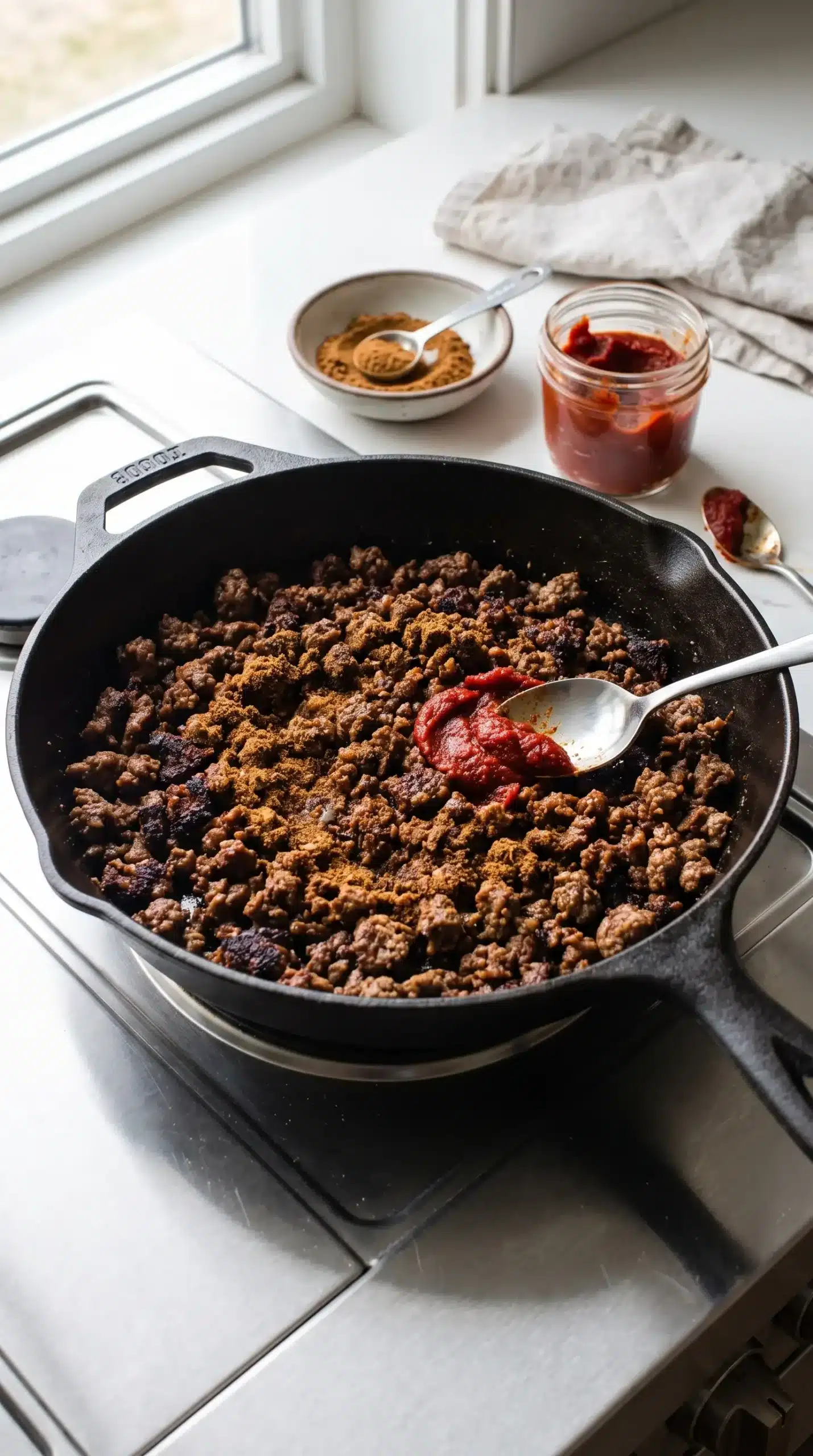
Meanwhile, the ground beef is cooked separately so it can brown instead of simmering in liquid. Tomato paste, beef flavor base, and garam masala cling to the crumbles, creating concentrated savory pockets that offset the natural sweetness of cooked carrots and coconut milk.
Once assembled, carrot soup with ground beef feels closer to a composed main course than a plain blended soup. Keep the puree and topping separate until serving so the beef stays textured and the surface remains clean enough for yogurt, shallot, and herbs.
Curry Powder and Coconut Need Deliberate Balance
Hot Madras curry powder has enough warmth to keep the carrot base from tasting sugary, but it should still sit behind the vegetables. Regular curry powder also works and usually gives a softer, less assertive result. Either choice benefits from a brief sauté with the onions and carrots, which helps the spices smell rounded instead of raw.
Coconut milk softens the curry and contributes body after the carrots become tender. Because it enters before blending, it disperses evenly through the puree and gives the soup a smooth finish without requiring flour or cream.
Beef flavor base appears in both parts of the dish, tying the carrot puree to the skillet topping. Since concentrated bouillon products can vary in saltiness, taste after blending and again after the beef mixture is seasoned. Extra salt should be added only after those two concentrated elements are fully incorporated.
Used together, these choices create a curried carrot soup with coconut milk that tastes savory first, with sweetness and spice following underneath. A smooth coconut base benefits from careful seasoning, as shown in this coconut curry soup built around balanced spice and rich texture. That order matters because the topping already brings another layer of warm spice.
Carrot Size and Early Sautéing Control the Puree
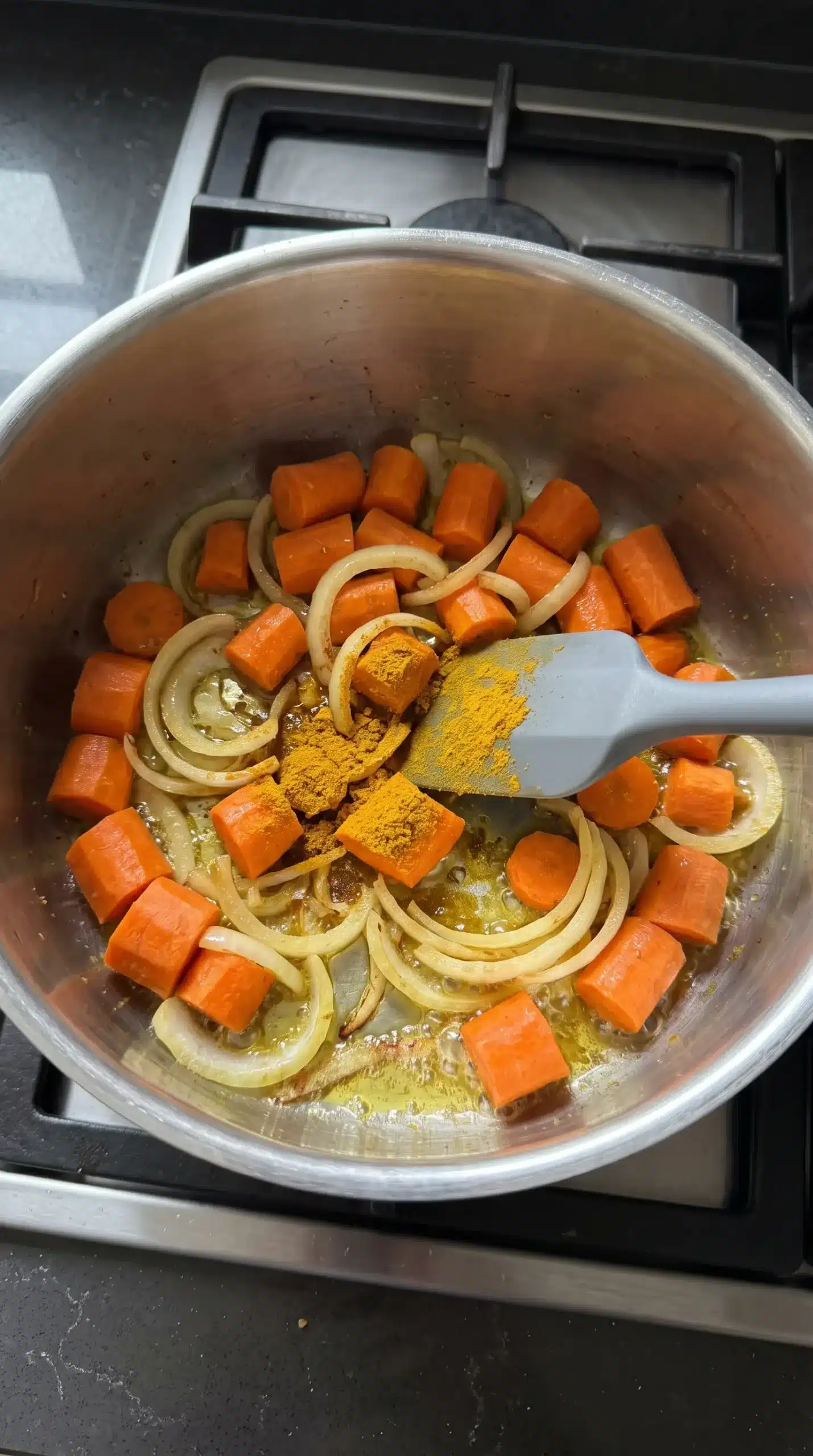
Even carrot chunks cook at a similar rate, which makes blending more predictable. Pieces do not need to be tiny, but noticeably large chunks beside small ones can leave some carrots firm while others soften completely.
During the opening sauté, look for softened onion edges, glossy carrots, and a fragrant curry aroma. Heavy browning is unnecessary; the vegetables only need enough contact with the hot pot to wake up the spices and begin building a savory base.
After the water is added, maintain a steady simmer until a carrot chunk yields easily when pressed. Blending too early creates a grainy puree, while fully tender carrots break down into a cohesive texture with far less effort.
Bouillon Strength Sets the Salt Ceiling
Concentrated beef flavor base seasons both the pot and skillet, so restraint is essential before the components meet. Taste the blended soup plain, taste the finished beef separately, then judge the complete spoonful; yogurt, pine nuts, and flatbread will also change how salty the bowl seems.
Immersion Blending Determines Body and Finish
An immersion blender is most effective when the pot has stopped bubbling aggressively. Submerge the blade fully before switching it on, move slowly through the deepest part of the pot, and avoid lifting the head above the surface where hot soup can splatter.
Several deliberate passes usually produce a smoother result than rapid stirring. Pay attention to the sides and bottom, where carrot pieces can hide, then pause and check the texture on a spoon before continuing.
| What you see | Likely cause | Best adjustment |
|---|---|---|
| Visible carrot flecks | Carrots need more blending or were not fully tender | Blend again; if pieces resist, simmer briefly before continuing |
| Puree sits in a stiff mound | Too much evaporation or an especially dense batch of carrots | Blend in a small splash of water until it settles smoothly |
| Soup looks thin around the edges | Too much liquid was added during adjustment | Simmer gently, stirring, until the body returns |
| Texture feels slightly coarse | Blade did not reach the entire pot | Work around the perimeter and across the bottom in slow passes |
When the puree coats the spoon in an even layer and pours back into the pot in a broad ribbon, stop blending. Continued processing will not fix undercooked carrots and can introduce unnecessary air.
For a thinner serving consistency, add water gradually instead of pouring in a large amount. Small adjustments preserve the coconut flavor and keep the soup strong enough to hold its topping.
Ground Beef Needs Browning Before the Spices
A wide, hot skillet gives the beef enough room to brown. Break it into small crumbles, but leave it undisturbed for short stretches so moisture can evaporate and the meat can develop darker edges.
Tomato paste and garam masala belong after the beef is cooked. Direct contact with the skillet deepens the tomato paste and releases the aroma of the spice blend, while the beef flavor base distributes through the rendered juices.
Watch the pan closely during those last minutes. The mixture should look coated and lightly toasted, not wet or scorched. If the spices begin sticking too quickly, lower the heat and keep the crumbles moving until the seasoning is evenly dispersed.
Pine Nuts, Parsley, and Lemon Finish in the Skillet
Pine nuts need only enough heat to smell toasted and take on light color; parsley should remain fresh-looking, and lemon zest should stay aromatic. Add all three near the end, then remove the skillet once the mixture becomes fragrant so the nuts do not burn and the zest does not lose its brightness.
Toppings Turn Each Bowl into a Complete Meal
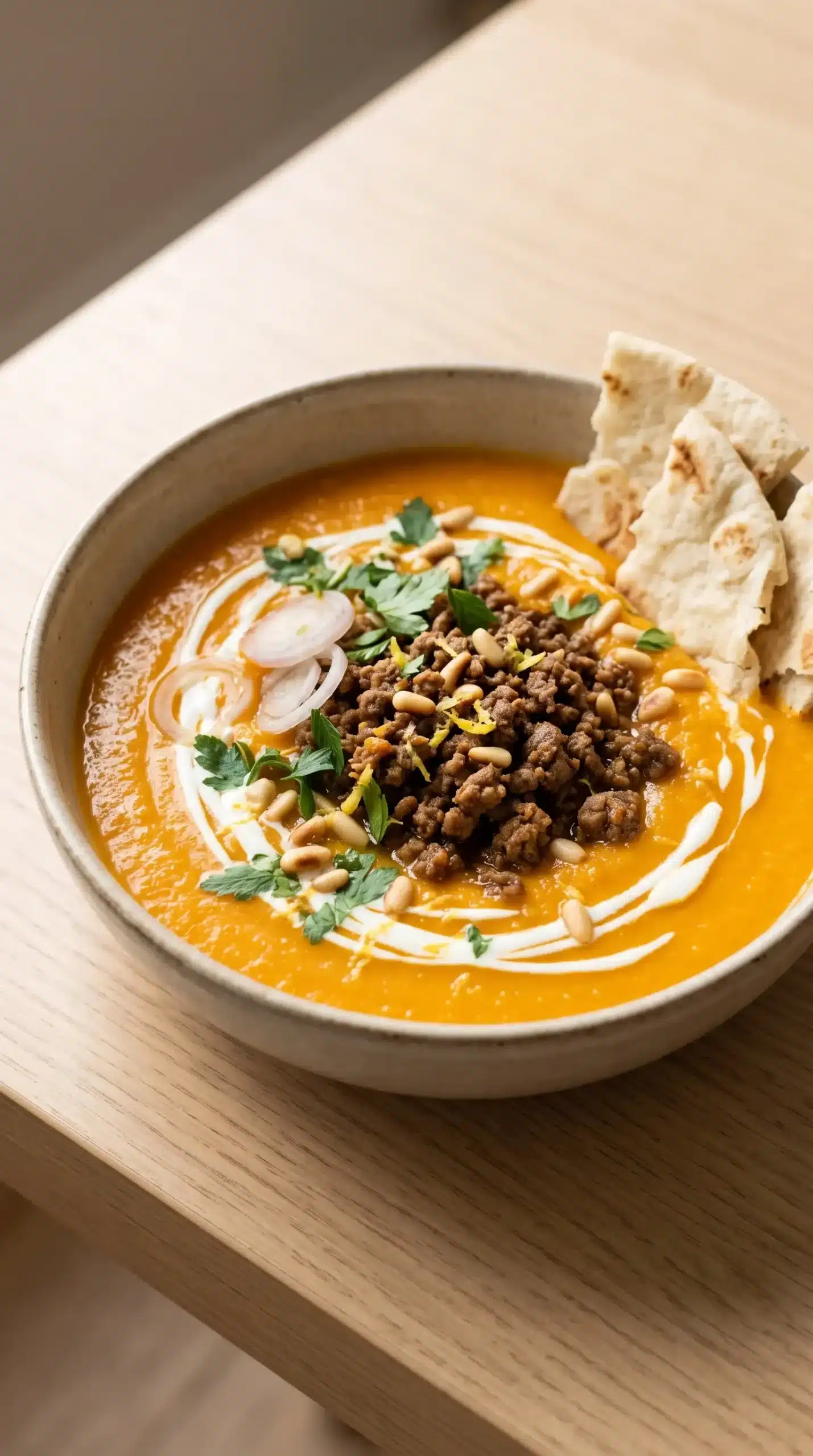
Serve the puree first and place the beef mixture in a defined mound so diners can control how much enters each spoonful. A thinned yogurt drizzle adds tang and visual contrast, while sliced shallot supplies crispness against the soft base.
- For richness: add a wider swirl of plain yogurt and drag it lightly through the surface.
- For sharpness: scatter thin shallot slices over the beef where they stay crisp.
- For dipping: warm flatbread and tear it into pieces that can scoop both puree and topping.
- For brightness: reserve a small pinch of parsley or lemon zest for the top of each bowl.
Because the spiced carrot soup with pine nuts already has several layers, toppings should stay purposeful. A few clear accents are more useful than covering the surface with extras that blur the contrast between soup and beef.
Common Carrot Soup Mistakes to Avoid
Undercooked carrots are the most direct path to a rough texture. Check a thick piece from the center of the pot, not a thin edge piece, and continue simmering whenever it still resists pressure.
Overcrowding the skillet creates another problem: beef steams in its own moisture and stays pale. Use enough surface area for evaporation, and allow brief undisturbed contact before stirring.
Adding pine nuts too early can turn a fragrant garnish bitter. Their high exposure to the hot skillet means they toast faster than the beef mixture develops, so they belong only in the closing stage with parsley and zest.
Heavy-handed seasoning can also flatten the bowl. Since bouillon is used twice, hold back additional salt until you taste the soup and topping together with yogurt or flatbread.
Make-Ahead Storage Works Best in Two Containers
Cool the carrot soup and beef topping separately, refrigerate them in covered containers, and reheat only what you plan to serve. Warm the puree gently with a splash of water if it has thickened, reheat the beef in a skillet or microwave until hot, and add yogurt, shallot, parsley, and flatbread only at the table.
For the safest make-ahead results, refrigerate cooked leftovers within two hours of cooking, then keep the soup and topping chilled until you are ready to reheat and serve.
Useful Substitutions Keep the Same Flavor Structure
Regular curry powder can replace hot Madras curry powder for a milder base, and vegetable-style flatbread or another sturdy dipping bread can stand in for the suggested accompaniment. When changing the bouillon brand or coconut milk, adjust by taste because salt concentration and richness can vary noticeably.
Silky Carrots Need a Deeply Toasted Beef Finish
Smooth carrot puree carries the dish, but the browned, spice-coated beef gives it definition. Let the carrots become fully tender, stop thinning once the soup supports the topping, and keep the skillet hot enough to create savory edges.
That balance leaves every element recognizable: coconut softens the curry, garam masala deepens the beef, pine nuts add toastiness, and lemon zest lifts the finish. Combined at the last moment, the bowl stays creamy without becoming uniform.
Make-Ahead Texture Questions for Carrot Soup
Can I make the soup ahead without losing texture?
Yes. Blend and chill the soup separately from the beef topping, then reheat it over moderate heat while stirring. Add water a spoonful at a time only if refrigeration has made it noticeably thicker.
Can I use a countertop blender instead of an immersion blender?
A countertop blender works, but hot soup should be processed in small batches with room for steam to escape according to the blender manufacturer’s guidance. Return the puree to the pot only after each batch is smooth.
What can I use if I do not have pine nuts?
A small amount of chopped toasted almonds or cashews can provide crunch, though the flavor will differ. Add them at serving time so they remain crisp and do not dominate the beef mixture.
How can I make the bowl less spicy?
Choose regular curry powder, use a modest amount of garam masala, and serve with a generous yogurt swirl. Those changes soften the heat while preserving the savory, aromatic character.
Why did my yogurt sink instead of swirling?
Very thick yogurt drops beneath the surface instead of flowing across it. Stir in a little water until it drizzles from a spoon, then apply it in a thin stream over the warm soup.
Carrot Soup with Spiced Ground Beef, Pine Nuts and Yogurt
Carrot Soup with Spiced Ground Beef is a creamy, comforting soup with a savory spiced topping and layered textures. It is a hearty choice for cozy weeknight meals or when you want a bowl with rich flavor and satisfying contrast.
Ingredients
Method
Soup Preparation
- Heat a soup pot over medium-high heat. Add olive oil, onion, carrots, beef flavor base, and curry powder, then sauté for 3-5 minutes.
- Pour in water and simmer for 15 minutes.
- Add coconut milk and blend the soup with an immersion blender until smooth.
Spiced Beef Topping
- Heat a large skillet with olive oil over medium-high heat. Cook the ground beef until browned and fully cooked, seasoning with a small amount of salt and pepper as needed.
- Add tomato paste, beef flavor base, and garam masala to the beef and sauté for 2-3 minutes.
- Stir in pine nuts, parsley, and lemon zest, then cook until the mixture is toasted and fragrant.
Serving
- Serve the soup topped with a scoop of the spiced ground beef mixture and add desired toppings such as thinly sliced shallot, plain yogurt, and flatbread.
Notes
To make the yogurt easier to drizzle over the soup, thin it with a small amount of water until it flows easily from a spoon.