From breakfast to dinner, from healthy meals to sweet desserts – Next Yum Recipes brings you quick, simple and tasty ideas for every occasion and every time.


 This Recipe
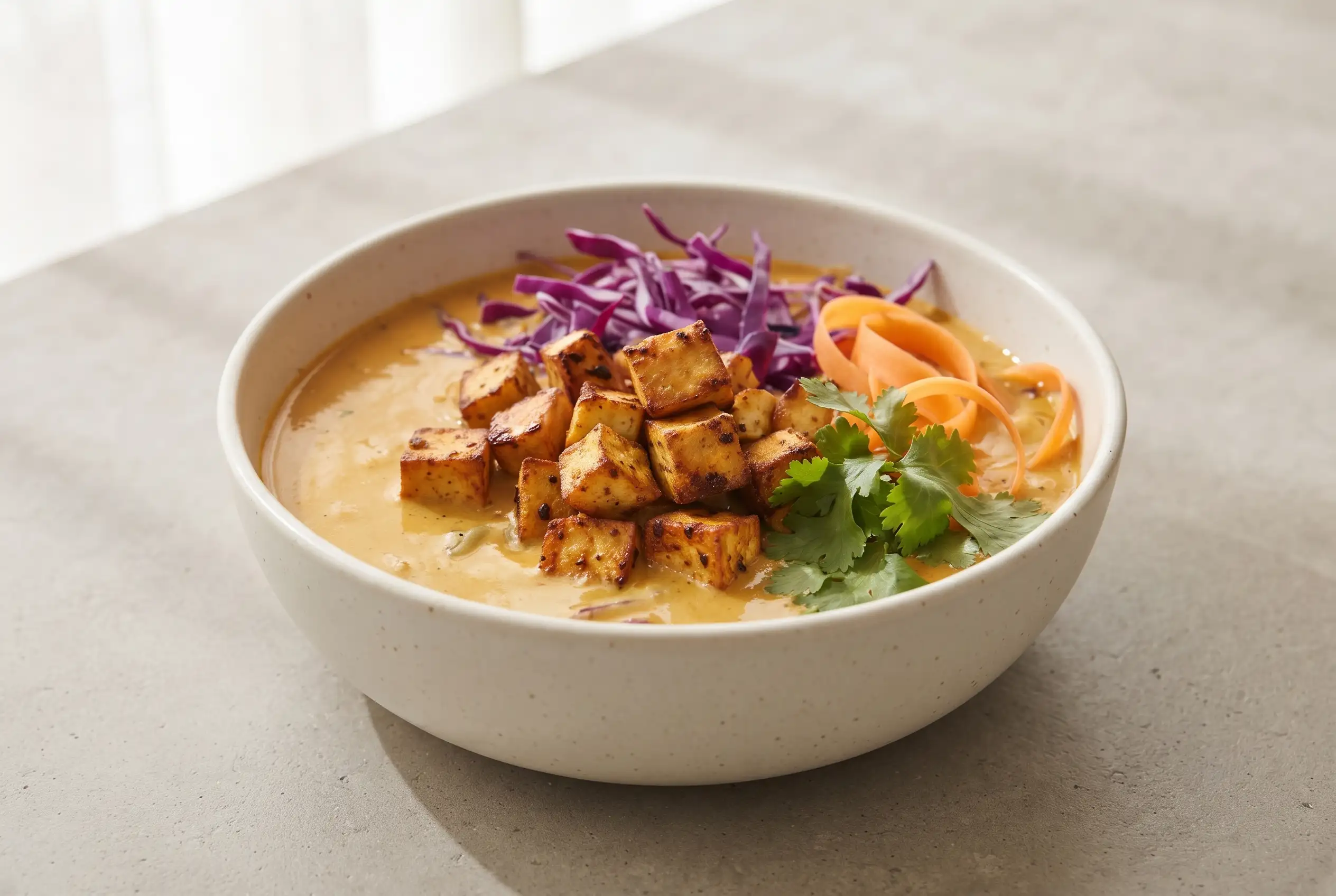
Coconut curry soup brings together silky coconut milk, aromatic curry paste, tender potatoes, and crisp tofu for a comforting bowl that feels both nourishing and flexible. The appeal of this coconut curry soup comes from its ability to welcome whatever vegetables are available while keeping a rich, smooth foundation built around warm spices and creamy texture.
The combination of blended vegetables, golden tofu, and fresh toppings creates a vegetarian coconut curry soup that works as a complete meal. Each part has a clear role: the soup provides a velvety base, the tofu adds a savory bite, and the toppings bring freshness and contrast.
Coconut Curry Soup Finds Balance in Blended Comfort
The structure of coconut curry soup depends on the relationship between the creamy base and the finishing textures. A smooth puree creates the main body of the bowl, while crispy tofu and fresh vegetables prevent every bite from feeling the same. That contrast makes the finished soup feel more substantial than a simple blended vegetable dish.
The flavors develop in layers as the aromatics, curry paste, turmeric, and coconut milk meet during cooking. The result is a soup with warmth, richness, and a gentle sweetness that can be adjusted with toppings or additional broth depending on the desired consistency.
Coconut Milk and Curry Paste Shape the Soup’s Character

Coconut milk is the ingredient that gives the soup its signature creamy quality, allowing the spices to spread evenly through the bowl. Regular or light coconut milk can both work, but the choice changes the richness of the finished texture.
Red curry paste provides concentrated flavor, so small adjustments make a noticeable difference. Adding more paste creates a stronger curry profile, while a lighter amount allows the coconut flavor and toppings to stand out more clearly.
Turmeric contributes color and earthy depth, while ginger, garlic, and onion create the aromatic foundation. Keeping the garlic fragrant without letting it brown helps preserve the clean flavor needed for a smooth blended soup.
Potatoes Create the Creamy Coconut Curry Soup Base
The potatoes are important because they help build the thick, spoon-coating texture that defines creamy coconut curry soup. Once softened and blended, they create body without requiring additional thickeners.
Baby potatoes work especially well because they cook evenly and blend into the coconut mixture. Sweet potatoes, carrots, or eggplant can shift the texture and sweetness of the base while keeping the soup flexible. A creamy carrot soup with coconut milk and curry shows how vegetables can create a naturally smooth bowl without relying on heavy thickeners.
| Base choice | Texture effect | Flavor direction |
|---|---|---|
| Baby Yukon potatoes | Smooth and creamy | Mild, balanced foundation |
| Sweet potatoes | Soft and naturally thick | Sweeter, warmer character |
| Carrots | Light and silky | Gentle vegetable sweetness |
| Eggplant | Very soft after blending | Deeper savory notes |
Tofu Brings Texture to Vegetarian Coconut Curry Soup

Extra-firm tofu changes the experience of the bowl by adding a crisp, savory element against the smooth soup. Pressing out excess moisture helps the tofu develop a better surface for browning when it reaches the pan.
The tofu becomes especially flavorful when a small amount of the finished soup is added during frying. The hot mixture coats the pieces and encourages a deeper golden exterior that carries the curry flavors into each bite.
For a tofu coconut curry soup presentation, keep the tofu pieces distinct instead of blending them into the base. The contrast between creamy soup and caramelized tofu is one of the dish’s defining features.
Fresh Toppings Transform Each Bowl of Coconut Curry Soup
Fresh toppings allow every serving of coconut curry soup to take a slightly different direction. Crisp vegetables, herbs, and colorful additions create brightness that balances the creamy base and rich spices.
Blending Control Keeps Coconut Curry Soup Silky
The most important texture decision happens after the potatoes become tender and the soup is ready to puree. A thorough blend creates the smooth consistency expected from a creamy coconut curry soup, while careful adjustment with broth or water prevents the mixture from becoming too dense.
Cooling the soup slightly before blending makes handling easier and helps avoid rushing the process. A smooth puree should have enough body to feel rich while still moving easily from spoon to bowl.
Kitchen tools can affect the result, but the main goal remains the same: combine the cooked ingredients until the texture is even. If the soup seems too thick after blending, gradually loosen it with additional liquid until it reaches the preferred consistency.
Crispy Tofu Adds Contrast to the Coconut Curry Soup Finish
The tofu finish works best when the pieces develop a light golden crust before they meet the soup. Cooking over moderate heat allows the exterior to color without overwhelming the delicate texture inside.
Coconut Curry Soup Mistakes That Flatten Flavor or Texture
Several small choices can change the final result of coconut curry soup. Avoiding these common issues helps protect the balance between the creamy base, spices, and toppings.
- Burning aromatics: Garlic that browns too quickly can introduce bitterness, so keep the heat controlled while building the flavor base.
- Skipping tofu preparation: Wet tofu struggles to brown, making the finished topping less crisp and flavorful.
- Over-thickening the puree: A soup that becomes too dense can lose its smooth, pourable quality; add liquid gradually to correct it.
- Ignoring toppings: Fresh vegetables and herbs provide contrast that keeps the rich coconut base from feeling heavy.
Curry Paste Choices Change the Soup’s Direction
Red curry paste gives the soup its traditional warm, savory profile, but green curry paste can also create a different version while keeping the same creamy structure.
Vegetable Add-Ins Expand the Coconut Curry Soup Approach
The flexible nature of coconut curry soup makes it useful for using vegetables already available in the kitchen. The smooth base provides a reliable backdrop for many fresh additions without requiring the entire dish to be redesigned.
Good choices include vegetables that can provide color, crunch, or extra freshness after cooking. Some options are best stirred in as toppings, while others can become part of the cooked base depending on the texture you want.
- Leafy additions: Baby kale and spinach add color and a fresh finish.
- Crisp vegetables: Bell peppers, snap peas, and bean sprouts bring contrast.
- Shredded options: Carrots, cabbage, and zucchini create lighter toppings.
- Herb finishes: Cilantro, basil, and green onions brighten the bowl.
The strongest combinations keep a balance between creamy, crisp, savory, and fresh elements. A crowded bowl can hide the curry flavors, so choose additions that support the main texture instead of competing with it.
Storage and Reheating Keep Coconut Curry Soup Ready
The blended soup base stores well because its flavors continue to come together after cooking. Keeping the tofu separate helps preserve its browned exterior instead of allowing it to soften in the liquid.
When reheating leftovers, warm the soup gently so the coconut milk maintains its smooth texture. A small splash of broth or water can help restore the consistency if the chilled soup becomes thicker.
Fresh toppings are best added close to serving time. Herbs, crunchy vegetables, and crisp tofu maintain their strongest texture when they are not stored directly in the soup.
Serving Ideas Highlight Tofu Coconut Curry Soup Layers
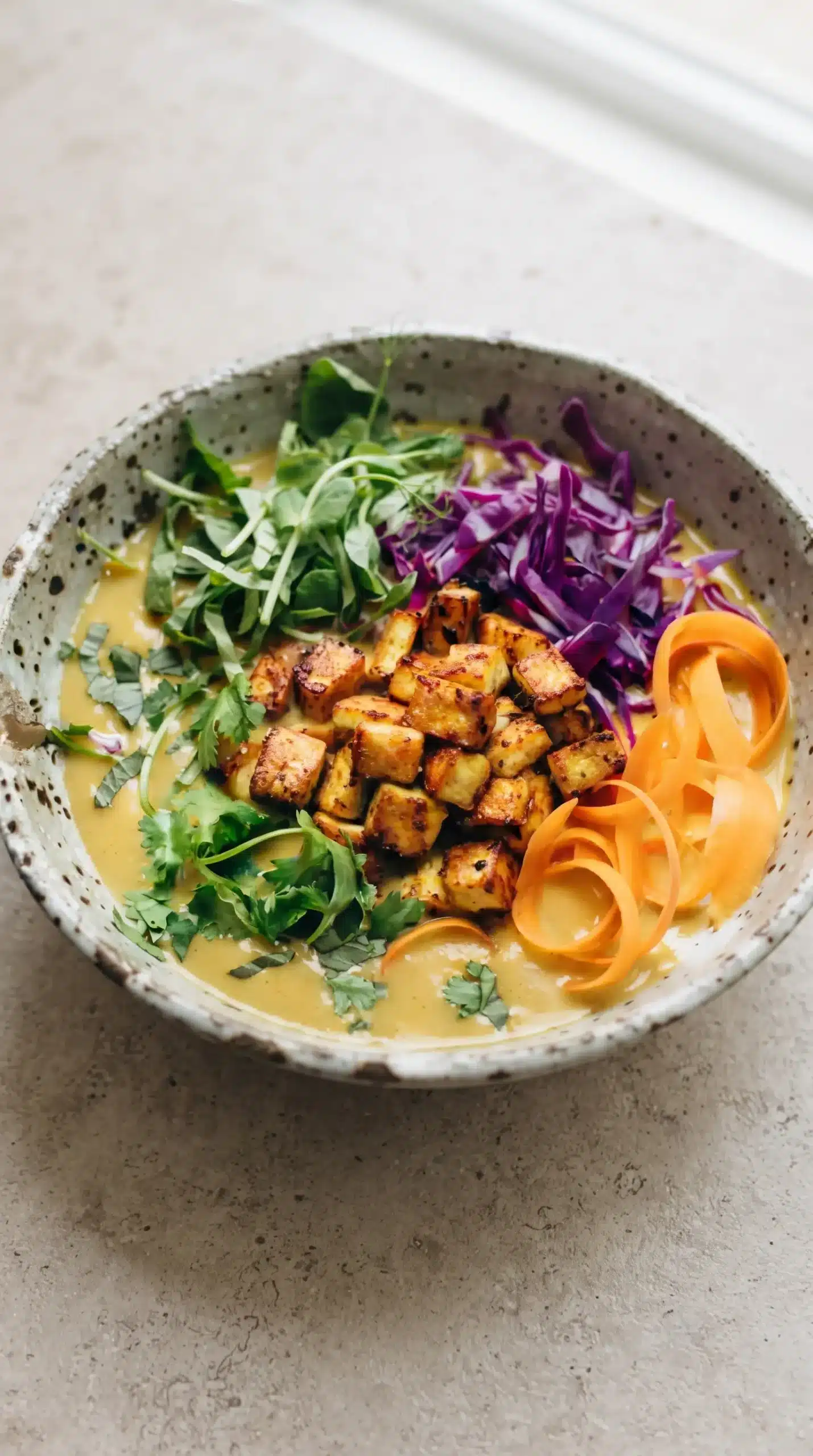
Tofu coconut curry soup is at its best when each bowl shows the difference between the silky base and the colorful toppings. Adding the crispy tofu and vegetables at the end keeps the presentation lively and the textures clear.
Coconut Curry Soup Gains Its Best Texture Through Careful Control
Coconut curry soup succeeds when the blended base stays creamy while the tofu and toppings provide contrast. The most important decisions happen around texture: softening the potatoes fully, blending until smooth, and protecting the crisp tofu finish.
The finished bowl reflects a balance between flexibility and precision. Available vegetables can change with the season, but the combination of coconut, curry, smooth vegetables, and golden tofu remains the foundation that gives the soup its character.
Coconut Curry Soup Questions About Spice and Storage
Can coconut curry soup be made less spicy?
Yes. Reduce the amount of curry paste and add more coconut milk or broth to soften the intensity. Extra fresh toppings can also provide a cooling contrast when serving.
Why does my coconut curry soup become too thick?
The potatoes and blended vegetables naturally create a dense texture. Stir in additional broth or water gradually until the soup reaches a smoother consistency that works for serving.
Can I use green curry paste instead of red curry paste?
Green curry paste works as a substitute and creates a different flavor profile while keeping the creamy coconut foundation intact. Adjust the amount based on the strength of the paste you use.
How can I keep tofu crispy when serving leftovers?
Store the tofu separately from the soup and reheat it briefly in a pan or other dry heat method before adding it back to the bowl. This helps maintain its browned exterior.
What vegetables work best as toppings for coconut curry soup?
Cabbage, carrots, bell peppers, mushrooms, snap peas, spinach, herbs, and shredded zucchini all work well because they add freshness, color, or texture without overwhelming the creamy soup.
Coconut Curry Soup with Tofu and Fresh Veggie Toppings
Coconut curry soup is a creamy, comforting bowl with a silky blended base, crispy tofu, and fresh toppings for a flavorful meal that is perfect when you want a flexible and satisfying homemade soup.
Ingredients
Method
Preparation
- Press the tofu to remove excess moisture while preparing the soup ingredients.
Cooking
- Warm the oil in a large pot over medium heat. Add the onion, garlic, and ginger, then cook for a few minutes until fragrant while keeping the garlic from browning.
- Add the red curry paste, turmeric, salt, and sugar. Stir and cook for a few more minutes to develop the flavors.
- Add the potatoes, coconut milk, and vegetable broth. Simmer until the potatoes are completely tender.
Blending
- Let the soup cool slightly, then carefully blend until smooth and silky. Add additional water or broth as needed to reach a rich but pourable consistency.
Topping
- Remove the tofu from the press and cut it into small pieces.
- Heat a little more oil in the same pot and cook the tofu pieces until lightly golden.
- Add a small amount of the blended soup to the tofu and continue cooking until the tofu develops a deep golden, caramelized exterior. Remove from heat.
Serving
- Top each bowl of soup with fresh vegetable toppings and crispy caramelized tofu before serving.
Notes
Toppings can include green onions, cilantro, basil, red or green cabbage, asparagus, baby kale, carrots, zucchini shreds, bell peppers, mushrooms, spinach, broccoli, snap peas, or bean sprouts. Regular or light coconut milk both work, and the nutrition information is based on light coconut milk. Regular coconut milk creates a richer result. Potatoes can be replaced with sweet potatoes, carrots, or eggplant. Green curry paste can also be used instead of red curry paste.