From breakfast to dinner, from healthy meals to sweet desserts – Next Yum Recipes brings you quick, simple and tasty ideas for every occasion and every time.


 This Recipe
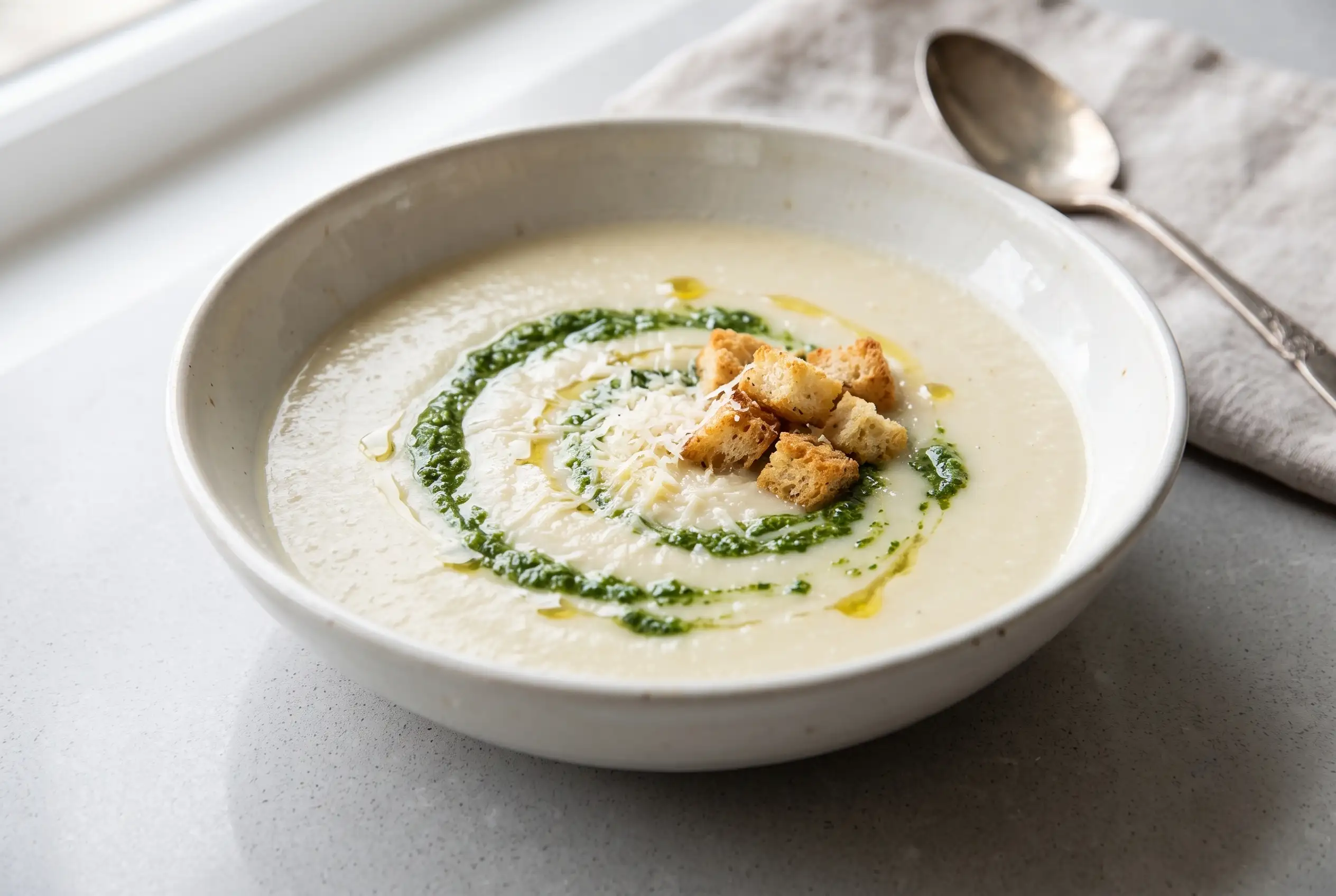
Cauliflower soup brings together a smooth vegetable base, gentle sweetness from slowly cooked onion, and a bright kale pesto topping that changes the character of every spoonful. This 5 ingredient cauliflower soup approach keeps the main bowl focused on texture and balance while using the pesto, optional toppings, and careful cooking choices to add contrast.
Cauliflower Soup Builds Comfort Through Simple Texture
A creamy cauliflower soup recipe succeeds because the vegetable itself can create a naturally soft foundation when it is cooked until tender and blended carefully. The mild flavor of cauliflower allows the butter, broth, and finishing cream to remain noticeable without creating a heavy result.
Balanced bowls depend on texture decisions made during preparation. A completely smooth blend creates a silky style, while stopping earlier leaves small pieces of cauliflower that provide more body. Both approaches work, but the blending choice changes how the toppings interact with the soup.
Slow-Cooked Onion and Cauliflower Create the Soup Foundation
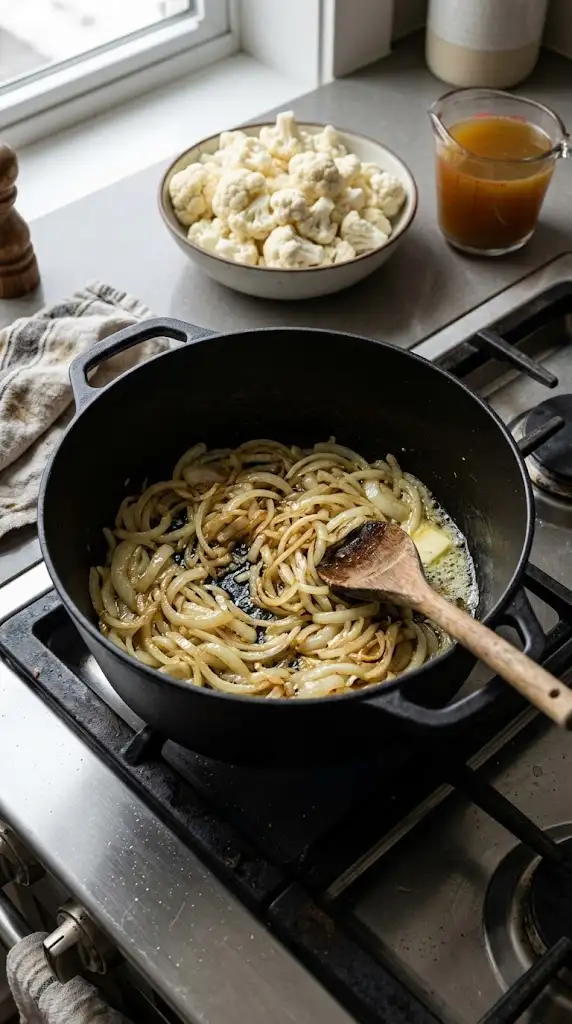
Gentle heat gives the sliced onion time to soften and develop deeper flavor before the cauliflower enters the pot. Cooking the onion slowly helps create a savory base that supports the mild vegetable notes instead of leaving a sharp raw onion taste behind.
Cauliflower florets need enough time in the broth to become tender enough for blending. Checking the texture before pureeing matters because undercooked pieces can leave a grainy soup, while properly softened cauliflower blends into a smoother consistency.
The broth also affects the finished bowl because it carries the flavors from the cooked vegetables throughout the soup. Chicken broth creates a savory profile, while vegetable broth keeps the dish suitable for vegetarian meals without changing the overall technique.
| Choice | Effect on cauliflower soup | When it works best |
|---|---|---|
| Chicken broth | Adds a deeper savory background | When a richer flavor profile is preferred |
| Vegetable broth | Keeps the vegetable focus clear | When serving a vegetarian version |
| Smooth blend | Creates a silky texture | When the soup should feel creamy and refined |
Cauliflower Soup Ingredient Choices Shape the Creamy Finish
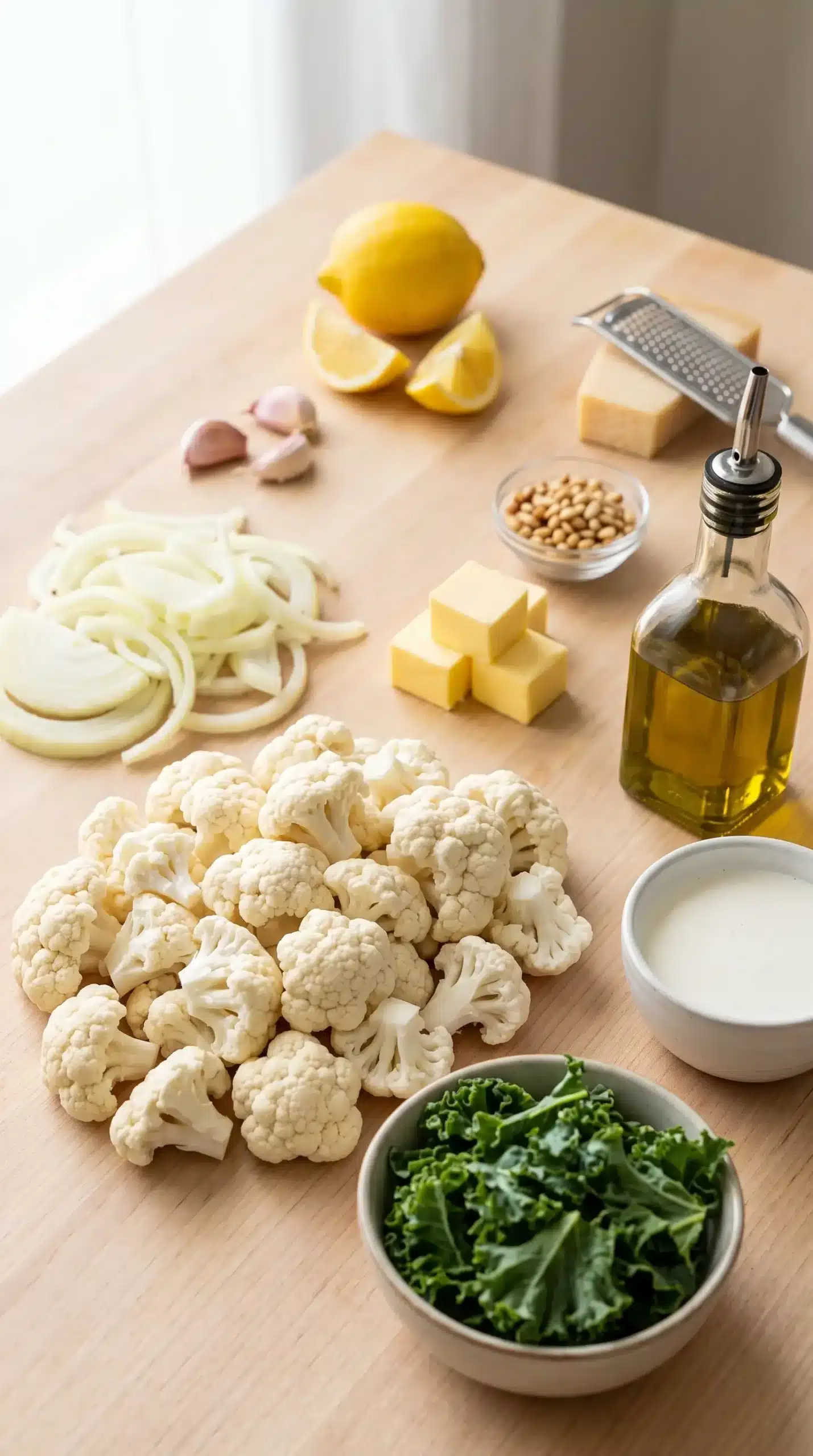
The most important ingredient decisions for cauliflower soup with kale pesto involve choosing elements that influence texture, richness, and freshness. The cauliflower provides the body, while butter, half and half, and pesto create layers around that central vegetable flavor.
Butter works with the onion during the early cooking stage, helping create a flavorful base before the broth and cauliflower are added. Half and half is stirred in after blending, which allows the creamy element to remain noticeable without affecting the cooking of the vegetables.
Kale pesto depends on balance. Fresh kale leaves, olive oil, pine nuts or almonds, garlic, lemon juice, salt, and optional parmesan combine into a textured topping that brings brightness to each serving. A small amount of kale pesto can change the experience of the entire bowl because it introduces fresh herbal flavor against the smooth soup.
- Cauliflower texture: Choose firm florets and cook until easily softened for blending.
- Pesto consistency: Pulse the mixture into a lightly textured paste instead of making it completely liquid.
- Finishing richness: Add creamy elements after pureeing so the soup keeps its smooth character.
Kale Pesto Brings Fresh Contrast to Creamy Cauliflower Soup
Kale pesto gives this cauliflower soup with kale pesto its defining contrast. The topping does not need to dominate the bowl; its purpose is to add a fresh, savory layer that cuts through the creamy vegetable base.
Food processor pulses create a pesto texture where the kale, nuts, garlic, and other ingredients remain connected while still offering small variations in each bite. The texture should feel like a spoonable paste that can sit on top of the soup.
Lemon juice helps keep the pesto lively, especially when paired with the richness of butter and cream in the soup. Parmesan can add extra savory depth, while truffle oil offers an optional finishing note for a more luxurious serving style.
Blending Control Determines the Soup Texture
Blending is the main technique decision that shapes the eating experience. An immersion blender allows the soup to be processed directly in the pot, while a countertop blender can create an especially smooth consistency when handled carefully.
Cooked cauliflower should be blended only after it reaches a tender stage because texture cannot be fully corrected once firm pieces remain. Small adjustments during blending, such as choosing when to stop, help create the thickness that fits personal preference.
Adding the cream after the puree keeps the finishing step simple and prevents the dairy from being exposed to unnecessary cooking time. Stirring until combined maintains the smooth appearance of the soup while keeping the flavors integrated.
Common Cauliflower Soup Mistakes That Affect Flavor and Texture
Several small errors can change the result of a cauliflower soup with kale pesto. These issues usually come from timing, texture control, or adding finishing elements at the wrong stage.
- Rushing the onion: Quickly cooked onion may not develop the softer flavor needed for the soup base. Keep the heat gentle so the slices become golden and fragrant.
- Blending too early: Cauliflower that has not softened enough can create a rough texture. Wait until the florets are tender before pureeing.
- Over-processing pesto: A completely smooth blend can remove the texture that makes the kale topping distinctive. Use short pulses to keep the pesto character.
- Ignoring finishing balance: The creamy soup benefits from the fresh contrast of pesto, lemon, or optional toppings.
Careful attention to these details keeps the soup from becoming flat or one-dimensional. The same ingredients can produce very different results depending on how each stage is handled.
Croutons Add a Crisp Finish Without Overpowering Soup
Skillet croutons provide a simple way to add texture to the creamy bowl. Cubed bread is tossed in olive oil over medium heat until golden, creating a topping that combines crisp edges with a slightly tender center.
Serving Choices Highlight 5 Ingredient Cauliflower Soup
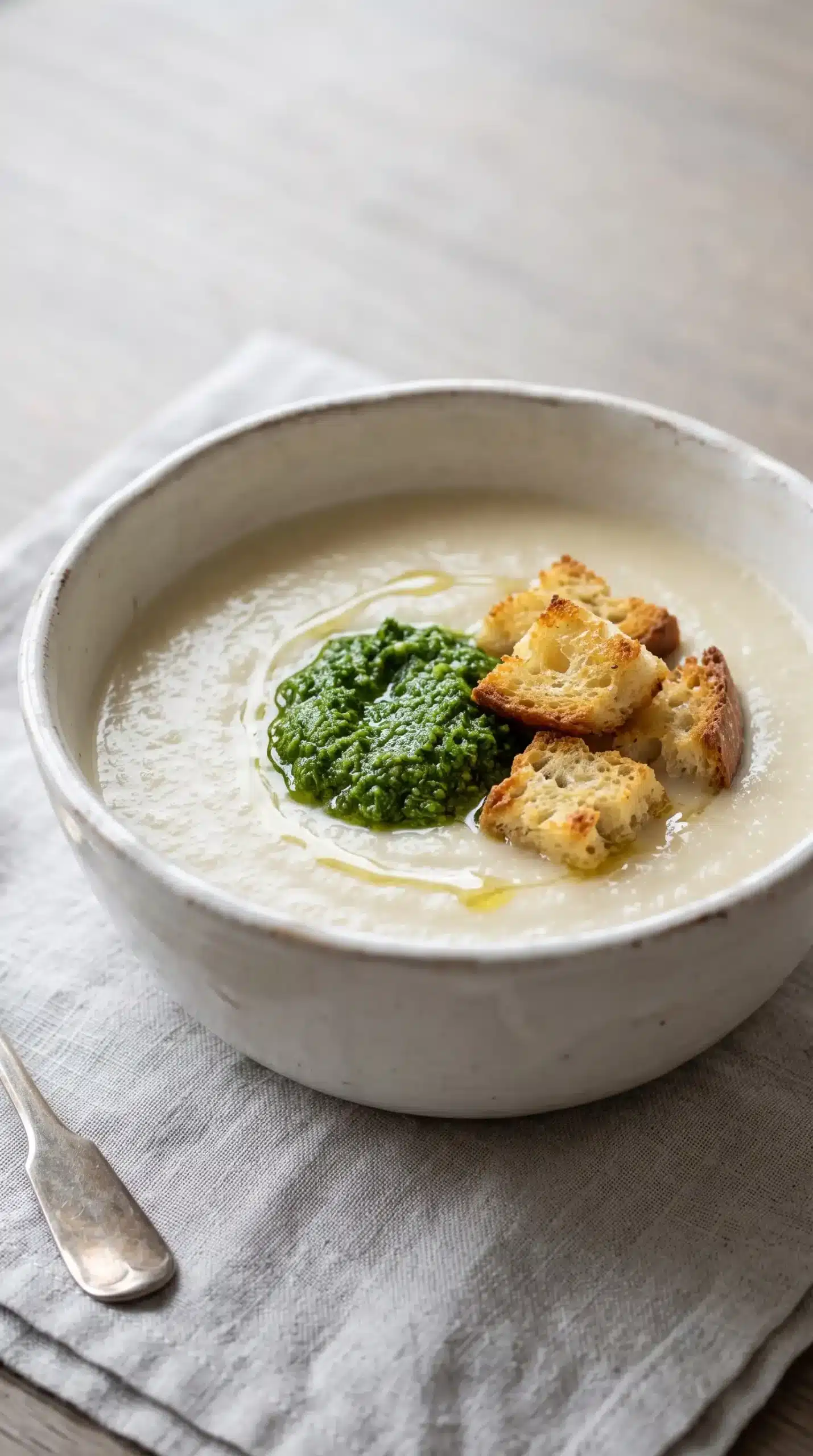
The bowl is most effective when creamy and crunchy elements appear together. A spoonful of kale pesto, a few croutons, and an optional drizzle of truffle oil create visual contrast and different textures in the same serving.
Simple presentation also keeps the cauliflower flavor recognizable. The toppings should support the soup instead of covering the mild vegetable base that makes the dish approachable.
Storage and Reheating Keep the Soup Ready for Later
Prepared cauliflower soup can be stored with attention to texture because blended vegetables may thicken as they sit. Gentle reheating helps maintain the creamy consistency without disturbing the finished flavor.
Keeping the kale pesto separate from the soup is useful because the fresh topping retains its brighter character when added close to serving. The same approach works well for croutons, which are best added after reheating so they remain crisp.
When warming leftovers, stir the soup as it heats so the texture stays even throughout the bowl. Small adjustments after reheating can help restore the smooth consistency expected from a creamy vegetable soup.
| Component | Best storage approach | Serving consideration |
|---|---|---|
| Soup base | Store separately in an airtight container | Warm gently before serving |
| Kale pesto | Keep separate from the soup | Add after reheating for fresh flavor |
| Croutons | Store away from moisture | Add at the last moment for crunch |
Variations Adjust Cauliflower Soup with Kale Pesto
Small changes can adapt the soup while keeping its core structure intact. Pine nuts can be replaced with almonds in the pesto, creating a slightly different nut flavor while maintaining the same preparation style.
The optional toppings also allow different serving personalities. Parmesan adds extra savory character, while truffle oil creates a more pronounced finishing aroma for occasions when a richer presentation fits the meal.
Cauliflower Soup Gains Depth From Careful Cooking Decisions
Cauliflower soup becomes memorable when the soft vegetable base, creamy finish, and fresh kale pesto remain in balance. The most important choices happen before serving: developing the onion flavor, cooking the cauliflower until tender, and controlling the texture during blending.
The smooth soup and textured toppings work together because each element has a clear role. A carefully prepared bowl keeps the mild cauliflower center while adding enough contrast to make every spoonful feel complete.
Cauliflower Soup Questions About Texture and Preparation
Can cauliflower soup be made smoother?
Yes. A longer blending time can create a silkier texture, especially when the cauliflower has been cooked until very tender. An immersion blender or countertop blender can both work, depending on the equipment available.
What can replace pine nuts in kale pesto?
Almonds are a suitable alternative when making the pesto because they provide a similar nutty element and are already included as an option for the topping. The texture may vary slightly depending on how finely they are blended.
Why does my cauliflower soup taste too mild?
A mild result can come from underdeveloped onion flavor or insufficient seasoning balance. Allowing the onion to soften fully and adjusting salt or lemon in the pesto can help the flavors become more noticeable.
Can the kale pesto be used for other meals?
Kale pesto can work beyond the soup by adding a fresh, savory topping to other dishes where a textured herb sauce fits. Keeping it separate also makes it easier to use in different ways.
What makes the soup creamy without being heavy?
The blended cauliflower creates much of the smooth body, while half and half contributes a creamy finish. The combination allows the soup to feel rich while keeping the vegetable flavor at the center.
Cauliflower Soup with Kale Pesto 5 Ingredient Recipe
Cauliflower Soup with Kale Pesto is a creamy, comforting soup with a smooth cauliflower base and fresh pesto topping. It is a cozy choice for a simple meal when you want a balanced bowl with rich texture and bright flavor.
Ingredients
Method
Cooking
- Melt the butter in a large Dutch oven or heavy stock pot. Add the sliced onion and cook over low heat for about 15 minutes, stirring occasionally, until the onion is golden brown and fragrant.
- Pour in the broth and add the cauliflower florets. Simmer for about 10 minutes, or until the cauliflower is fork tender.
- Blend the soup with an immersion blender, or transfer it to a regular blender and process until the desired consistency is reached.
- Stir in the half and half until fully combined.
Kale Pesto
- Add the kale pesto ingredients to a food processor and pulse until the mixture becomes a lightly textured paste.
Serving
- Top the soup with kale pesto, a drizzle of truffle oil, and croutons.
Notes
For skillet croutons, cut the bread slices into cubes. Add olive oil to a deep skillet over medium heat and toss the cubes until golden brown, making sure they are lightly coated with oil to help prevent sticking and encourage browning. Transfer the croutons to a paper towel-lined plate to absorb excess oil and sprinkle with salt. The result is a crouton with a texture between baked and lightly fried bread.