From breakfast to dinner, from healthy meals to sweet desserts – Next Yum Recipes brings you quick, simple and tasty ideas for every occasion and every time.


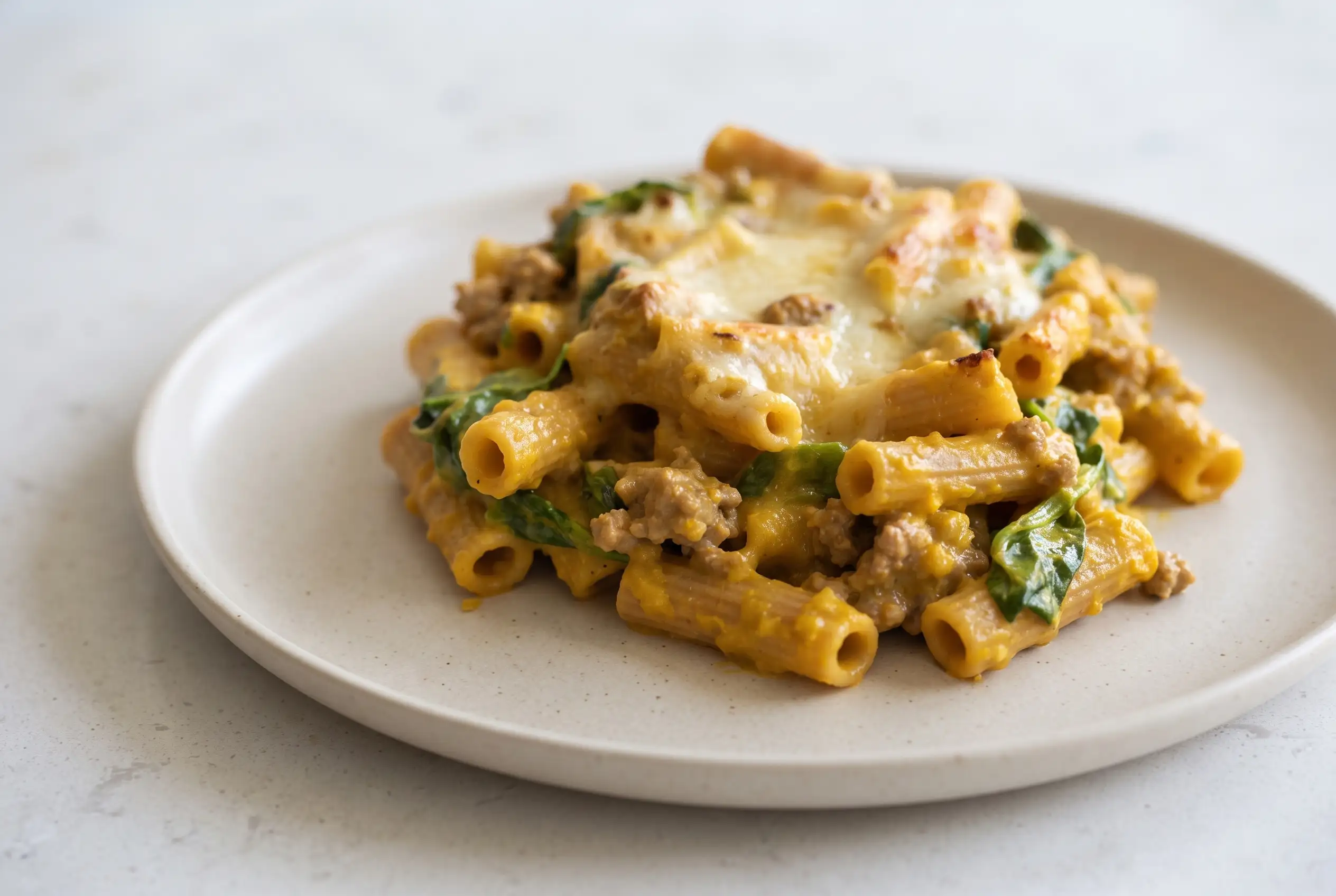 This Recipe
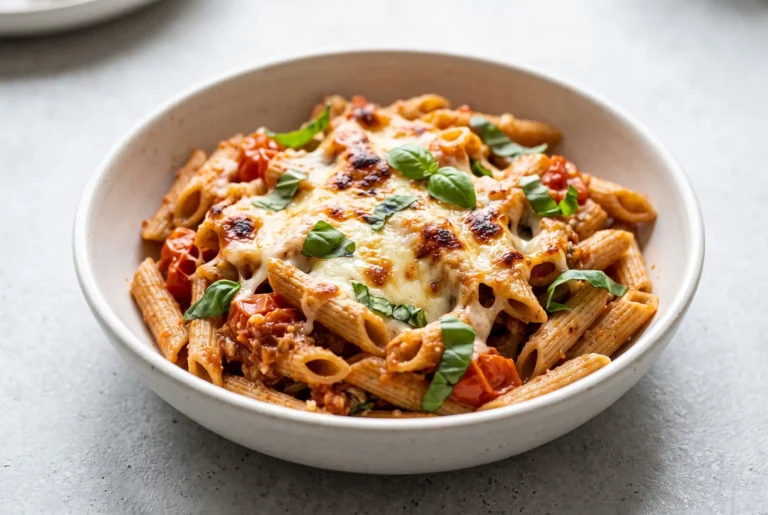
Baked rigatoni with spinach, Provolone, and turkey combines hearty pasta, a smooth squash-based sauce, seasoned turkey, and a browned cheese topping into a comforting dinner built around contrasting textures. The creamy sauce comes from blended kabocha or butternut squash, while whole wheat rigatoni provides a sturdy shape that holds the flavors together through baking.
Baked Rigatoni with Spinach Builds Comfort Through Layers
The structure of baked rigatoni comes from placing several distinct textures in one dish. The pasta carries the sauce inside its ridges, the turkey brings savory browned notes, and the spinach adds a fresh element that keeps the casserole-style meal from feeling too heavy.
Unlike a simple pasta toss, the oven stage changes the way the ingredients interact. Cheese melts through the layers, the top develops a lightly browned surface, and the sauce settles around the noodles so each serving has a combination of creamy, savory, and cheesy bites.
Many baked pasta dishes depend on tomato sauces, but baked rigatoni with spinach takes a different direction by using squash as the foundation. The natural sweetness of the squash works with garlic, onion, oregano, and Provolone to create a sauce with depth and a smooth finish.
Squash Sauce Shapes the Flavor of Baked Rigatoni
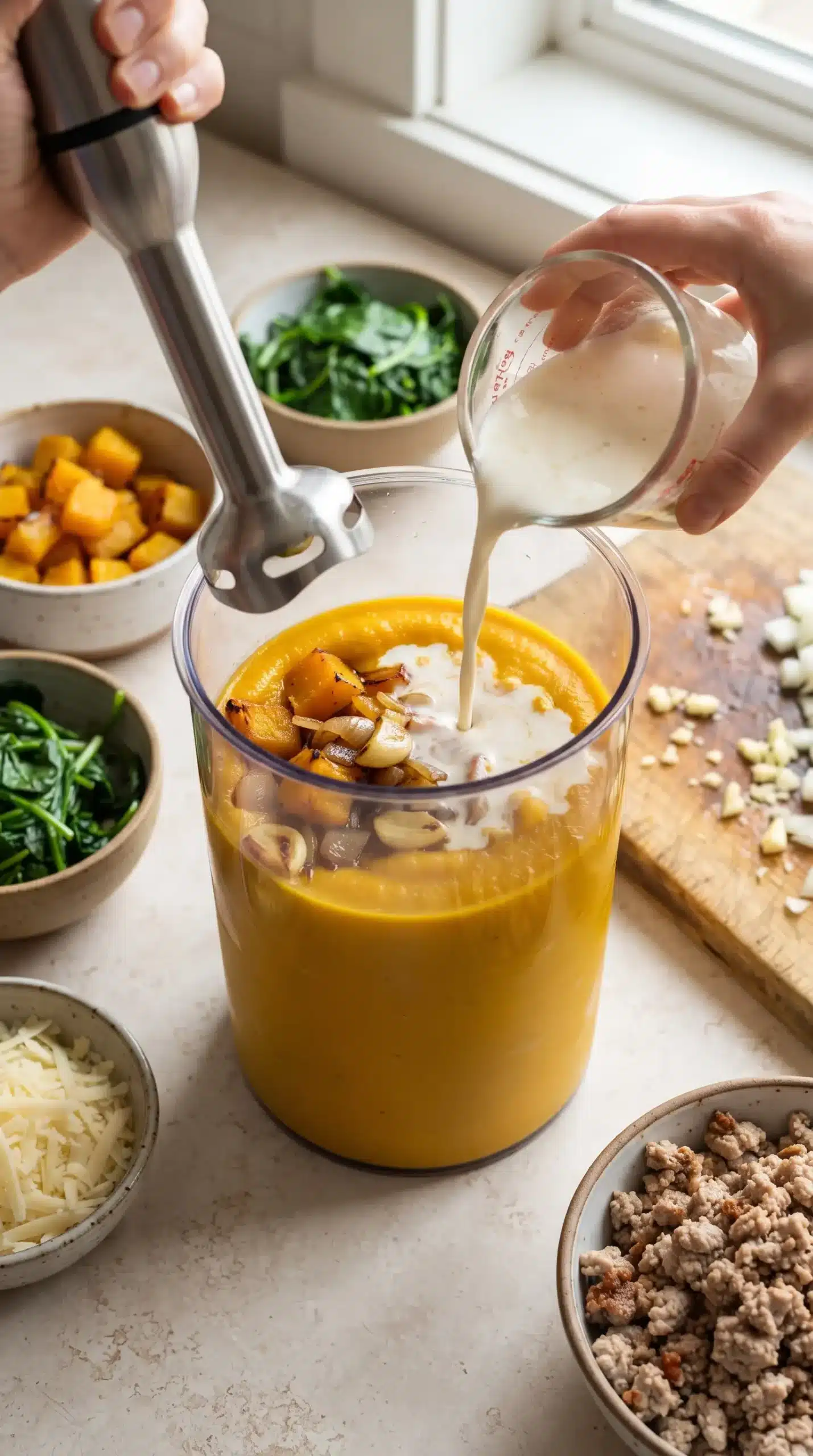
The blended squash sauce is the ingredient choice that most changes this baked rigatoni from a standard pasta bake. Cooking the squash with onion, garlic, and vegetable broth allows those flavors to soften together before blending into a creamy base, giving the dish the smooth texture found in a creamy squash pasta dish.
Kabocha and butternut squash both work well because they become tender enough to puree smoothly. The sauce gains body from the cooked vegetables, while cream or half and half adds richness without requiring a heavier preparation.
Seasoning matters because squash has a naturally mild profile. Salt, pepper, and dried oregano help the sauce support the turkey and cheese, creating a balanced background instead of a sweet-only flavor.
Turkey and Provolone Create a Balanced Pasta Finish
Ground turkey provides the browned savory layer that anchors the creamy sauce. Cooking it until excess moisture is removed helps develop a more concentrated flavor and prevents the pasta mixture from becoming watery before it reaches the oven.
After browning, ground turkey should reach an internal temperature of ground turkey to 165°F before it is considered safe to eat.
Provolone brings a smooth melting quality that suits baked rigatoni with Provolone. Dividing the cheese between the middle layer and the surface allows melted cheese to appear throughout the dish while also creating a lightly browned top.
The combination works because each part has a different role. Turkey contributes richness, spinach contributes freshness, and Provolone connects the pasta and sauce with a familiar baked pasta finish.
Whole Wheat Rigatoni Holds the Dish Together
Whole wheat rigatoni is especially useful in a baked pasta dish because its firm shape can handle sauce, mixing, and oven heat. The ridges capture the squash sauce so the creamy mixture stays attached to the pasta.
Cooking Control Keeps Baked Rigatoni Textured
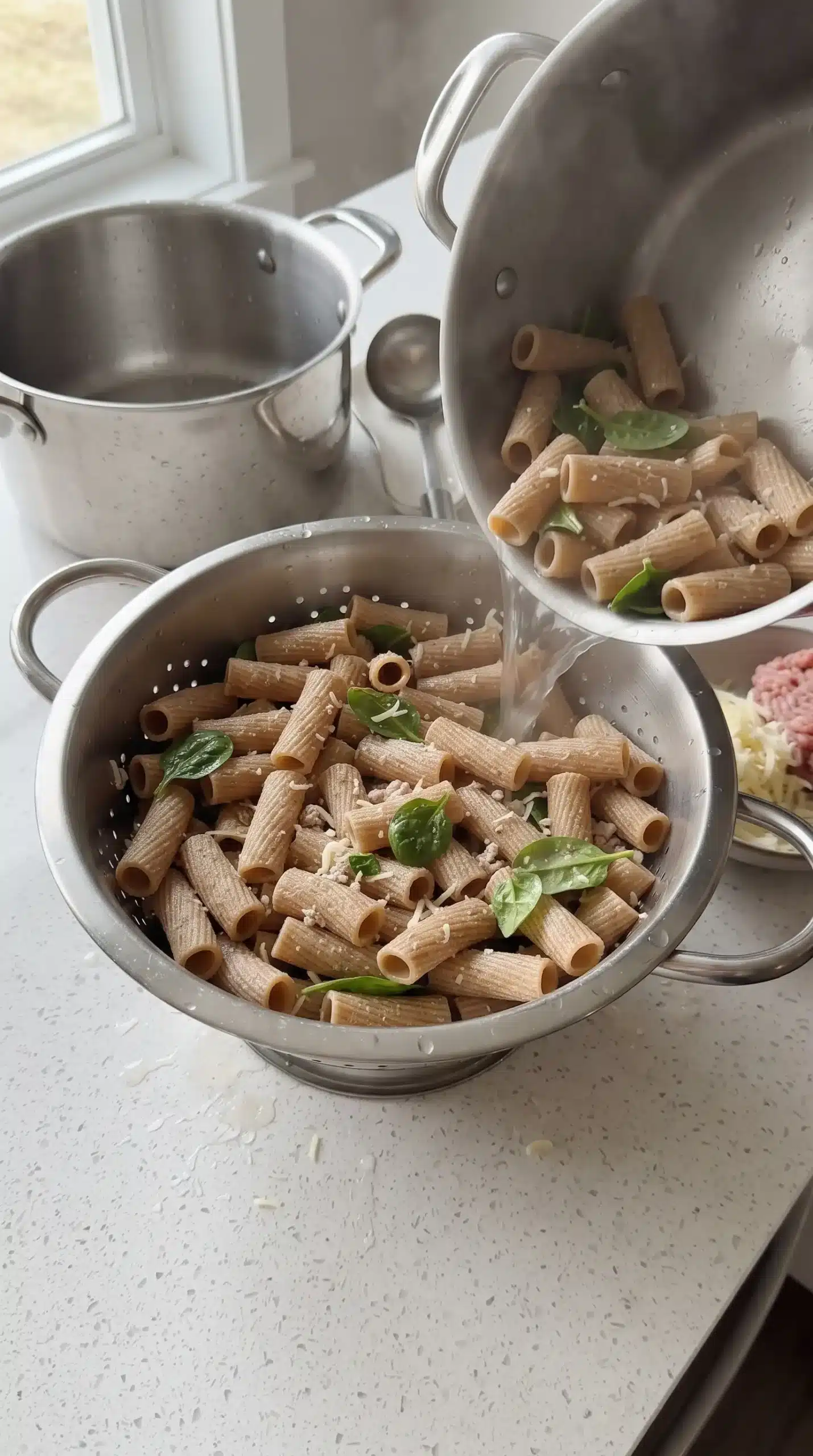
The most important cooking decision for baked rigatoni is controlling the pasta texture before it enters the oven. Slightly undercooking the noodles gives them room to absorb sauce during baking without losing their structure.
Boiling the rigatoni briefly before assembly is only part of the process. The sauce consistency, turkey moisture level, and amount of cheese all influence the finished texture once the dish is heated through.
A few details help maintain the right balance during preparation:
- Pasta texture: Keep the noodles firm enough to finish cooking in the oven.
- Turkey browning: Drain extra liquid so the meat develops deeper flavor and does not dilute the sauce.
- Cheese placement: Add cheese inside the dish and across the top for even melting.
Spinach and Sauce Preparation Improves Every Bite
Fresh spinach blends into the pasta mixture after the sauce, turkey, and noodles come together. Adding it at this stage allows the leaves to soften while maintaining a noticeable green element throughout the bake.
Common Baked Rigatoni Mistakes That Affect Texture
Several problems can change the result of baked rigatoni with spinach if the small preparation details are overlooked. Each issue has a clear cause and an easy adjustment based on the cooking process.
| Potential issue | What causes it | Helpful adjustment |
|---|---|---|
| Soft or mushy pasta | Noodles are fully cooked before baking | Boil rigatoni only until slightly underdone |
| Thin sauce | Extra moisture remains in turkey or vegetables | Drain excess liquid before combining ingredients |
| Uneven cheese coverage | All cheese is placed in one area | Create an interior layer and a top layer |
Another common concern is losing the squash flavor beneath the other ingredients. Proper seasoning and blending the cooked onion and garlic with the squash help keep the sauce noticeable after baking.
Baking Dish Choices Change the Cheese Layer
The shape of the baking dish affects how the cheese surface develops. A wider dish creates more exposed topping, while a deeper dish keeps more sauce surrounded by pasta layers.
Make-Ahead Options Fit Baked Rigatoni with Spinach
Baked rigatoni with spinach can be prepared in stages when dinner planning requires flexibility. The squash sauce, browned turkey, and cooked pasta components can be handled separately before final assembly.
Keeping the components separate until close to baking time helps preserve the pasta texture. The noodles continue absorbing moisture after they are mixed with sauce, so timing the assembly can influence the final consistency.
For a convenient variation, the assembled pasta can be prepared ahead and baked when needed. Allowing the dish to heat evenly helps the cheese melt across the surface and through the center.
Storage and Reheating Preserve the Pasta Texture
Leftover baked rigatoni should be stored in a covered container after cooling. Gentle reheating helps protect the creamy squash sauce and keeps the noodles from drying out.
Flavor Variations for Turkey Baked Rigatoni
Turkey baked rigatoni offers room for small changes while keeping the main structure intact. The squash sauce, pasta shape, and cheese layer provide a dependable base for adjustments that match different preferences.
- Vegetable additions: Extra greens or roasted vegetables can complement the existing spinach without replacing the main flavors.
- Cheese changes: Other melting cheeses can be combined with Provolone for a slightly different finish.
- Seasoning shifts: Additional herbs can change the aroma while keeping the creamy sauce style.
Using a different squash variety is another way to adjust the flavor. Kabocha creates a rich texture, while butternut squash offers a familiar mild sweetness that blends easily with the turkey and cheese.
Whole wheat rigatoni may also be replaced with another sturdy pasta shape if needed. The best choices are shapes that can hold sauce and remain firm during baking.
Serving Ideas for Baked Rigatoni with Provolone
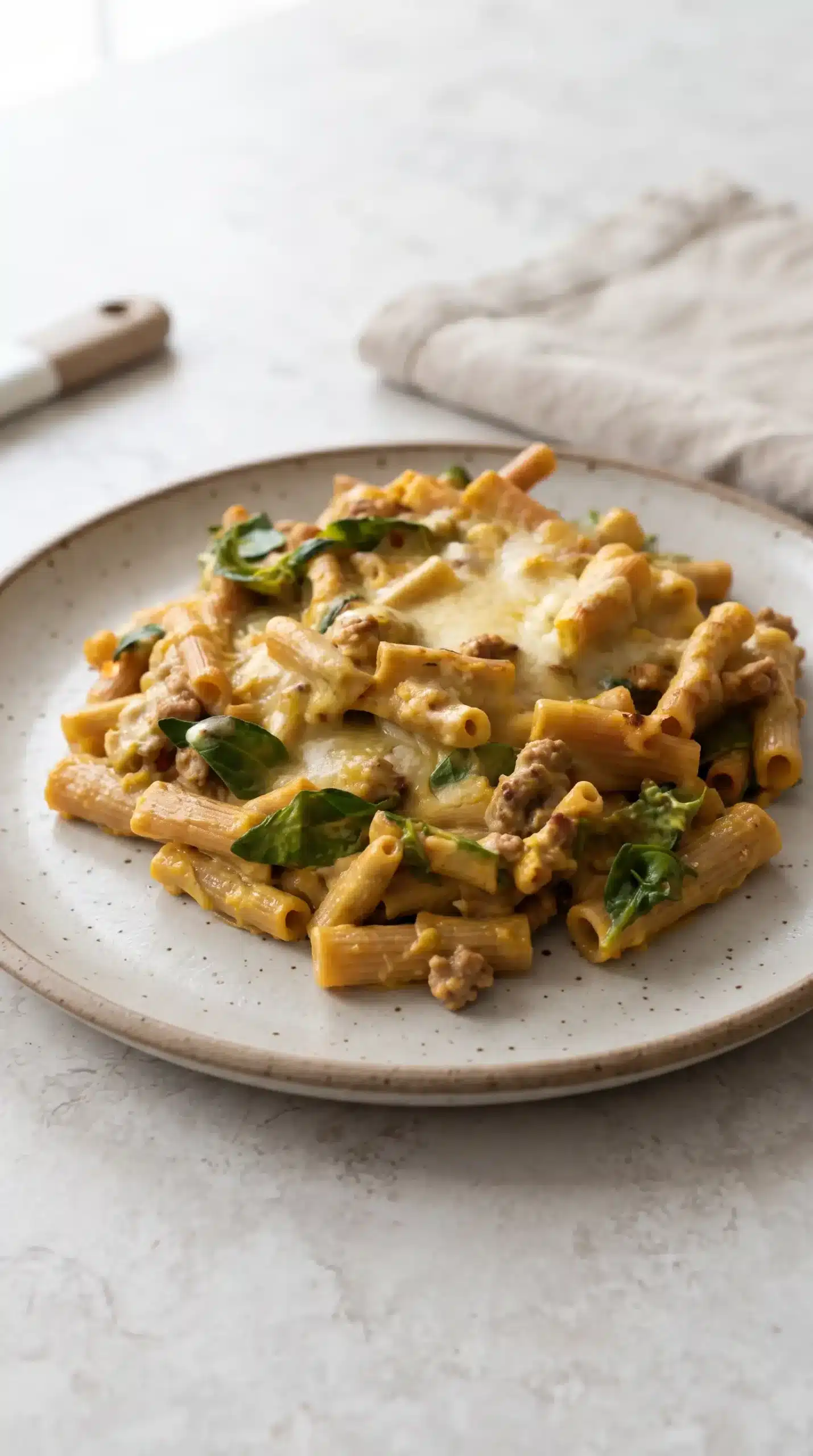
The finished baked rigatoni with Provolone works well as a complete meal because it already combines pasta, vegetables, protein, and a creamy sauce. Simple sides can add contrast without competing with the main dish.
The Squash and Turkey Combination Makes Baked Rigatoni Complete
Squash sauce and browned turkey create the central balance of this baked rigatoni, with the creamy vegetable base softening the savory meat and the cheese adding a familiar baked finish. The pasta succeeds because each layer supports the next one during baking.
Careful attention to noodle firmness, moisture control, and cheese placement determines whether the dish keeps its appealing texture. When those decisions are handled well, the result is a pasta bake with a smooth sauce, satisfying bite, and balanced flavors from the first serving to the last.
Baked Rigatoni Questions About Freezing and Reheating
Can baked rigatoni be frozen for later?
Yes, baked rigatoni can be frozen after cooling and stored in a freezer-safe container. For the best texture, thaw it gradually before reheating so the sauce and pasta warm more evenly.
How can I keep reheated rigatoni from drying out?
Covering the dish while reheating helps retain moisture in the sauce. Adding gentle heat instead of very high heat also helps the cheese and pasta warm without becoming overly firm.
Can I use a different cheese instead of Provolone?
A different cheese can work if it melts well and complements the squash sauce. Choose a cheese with a smooth melting quality so the baked topping still connects the pasta layers.
What makes the turkey in baked rigatoni more flavorful?
Allowing the turkey to brown after excess liquid is removed creates a deeper savory taste. Seasoning during cooking helps the meat blend naturally with the sauce and pasta.
Why does the squash sauce need blending?
Blending creates the smooth texture that coats the rigatoni. It also combines the cooked squash, onion, garlic, and broth into one unified sauce instead of separate vegetable pieces.
Baked Rigatoni with Spinach, Provolone, and Turkey
Baked rigatoni with spinach, Provolone, and turkey is a creamy, hearty pasta bake with a savory squash sauce, tender greens, and a cheesy finish. It is a comforting choice for weeknight dinners or gatherings when you want a satisfying homemade meal.
Ingredients
Method
Preparation
- Mince the onions and garlic, then set them aside together in a bowl.
Cooking
- Bring the vegetable broth to a boil, then add half of the onion and garlic mixture with the prepared squash. Cook for 10 minutes, or until the squash and aromatics are tender when pierced.
- Transfer the cooked squash mixture to a blender with 1/2 cup of the vegetable broth from the pot. Blend until smooth, season with salt, pepper, and dried oregano, then stir in the cream and set the sauce aside.
- Cook the turkey over medium high heat with the remaining onion and garlic mixture. Season with salt, pepper, and oregano, then drain excess liquid so the meat browns well.
Assembly
- Cook the rigatoni in a large pot until slightly underdone, about 6 minutes. Drain the pasta water, then combine the noodles with the sauce, turkey, and spinach.
- Transfer half of the pasta mixture to a large baking dish, add about 1/2 cup of the Provolone cheese as an inner layer, then add the remaining pasta mixture and sprinkle the remaining 1/2 cup of cheese over the top.
Baking
- Bake at 375°F (190°C) for 20 minutes, or until the top begins to brown and the dish is heated through.
Notes
Slightly undercook the rigatoni before baking so the pasta maintains its texture after absorbing the sauce in the oven.