From breakfast to dinner, from healthy meals to sweet desserts – Next Yum Recipes brings you quick, simple and tasty ideas for every occasion and every time.


 This Recipe
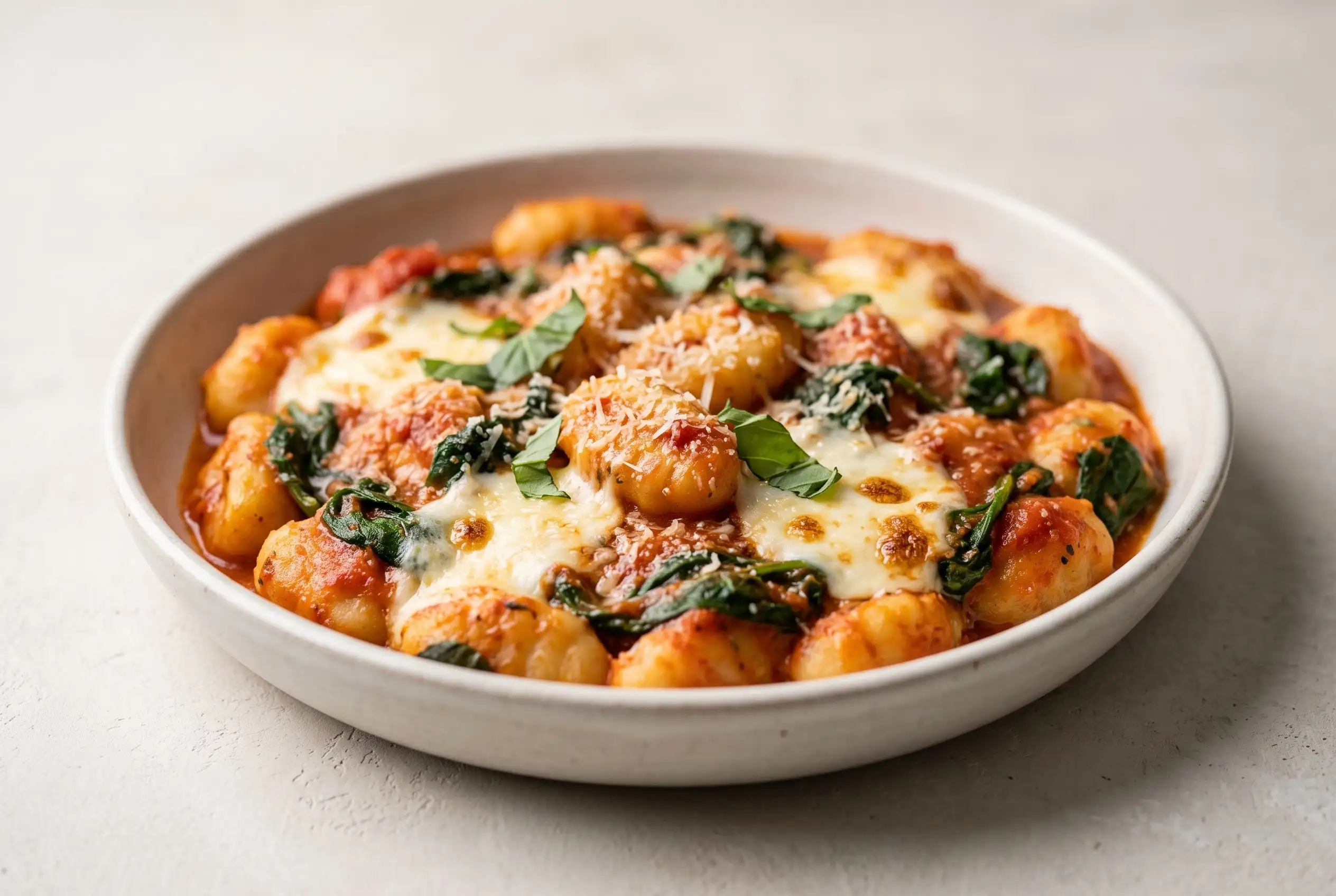
Three Cheese Baked Gnocchi with Spinach combines tender potato gnocchi, tomato passata, mascarpone, fresh mozzarella, Parmesan, basil, and baby spinach in a bubbling oven-baked dish with a creamy red sauce and lightly browned cheese. Its appeal comes from the contrast between soft gnocchi, silky tomato sauce, delicate greens, and molten mozzarella, but the best results depend on keeping the sauce fluid enough for the gnocchi while controlling moisture around the cheese.
Because the gnocchi cooks directly in the sauced skillet or baking dish, there is no separate boiling stage to manage. That streamlined approach makes sauce consistency especially important: the tomato base needs enough liquid to surround the dumplings without becoming soupy after the spinach and fresh mozzarella release additional moisture.
Mascarpone changes the character of the tomato base without turning it into a heavy cream sauce. Alongside mozzarella and Parmesan, it creates three distinct layers of richness, so each cheese can do a different job without overwhelming the tomato, garlic, basil, and spinach underneath.
Why baked gnocchi works without pre-boiling
Shelf-stable potato gnocchi can soften as it sits in the hot tomato mixture and then bakes under mozzarella. Moisture from the passata and added broth or water surrounds the dumplings closely enough to hydrate and heat them, while the oven finishes the center as the sauce thickens. For baked gnocchi prepared this way, pre-boiling would introduce extra water and could leave the finished dish looser than intended.
Direct baking also keeps more starch in contact with the sauce. As the gnocchi heats, that starch helps the surrounding tomato mixture feel cohesive instead of separating into watery liquid and cheese.
A covered casserole is unnecessary here because the gnocchi begins inside warm sauce before entering the oven. Starting with a gently simmered base gives the dumplings a head start and allows the uncovered surface to develop patches of light browning.
Passata gives the sauce the right starting texture
Smooth tomato passata is especially well suited to three cheese baked gnocchi because it coats the small dumplings evenly without introducing large tomato pieces. Its concentrated texture can still tighten considerably in the oven, which is why the added broth or water is structurally important, not merely optional dilution.
Mascarpone should disappear smoothly into the tomato base
Mascarpone works best when stirred into a gently simmering sauce instead of aggressively boiling tomato. Moderate heat allows the soft cheese to disperse into the passata and create an even, creamy consistency with fewer visible streaks.
Once incorporated, the mascarpone softens tomato acidity and gives the sauce enough body to cling to each piece of gnocchi. It should enrich the base without making it stiff; the gnocchi still needs surrounding liquid as it bakes.
Salt should be judged with the other cheeses in mind. Parmesan and mozzarella both contribute seasoning, so the tomato base does not need to taste intensely salty before the casserole reaches the oven.
Fresh mozzarella creates a softer cheese topping
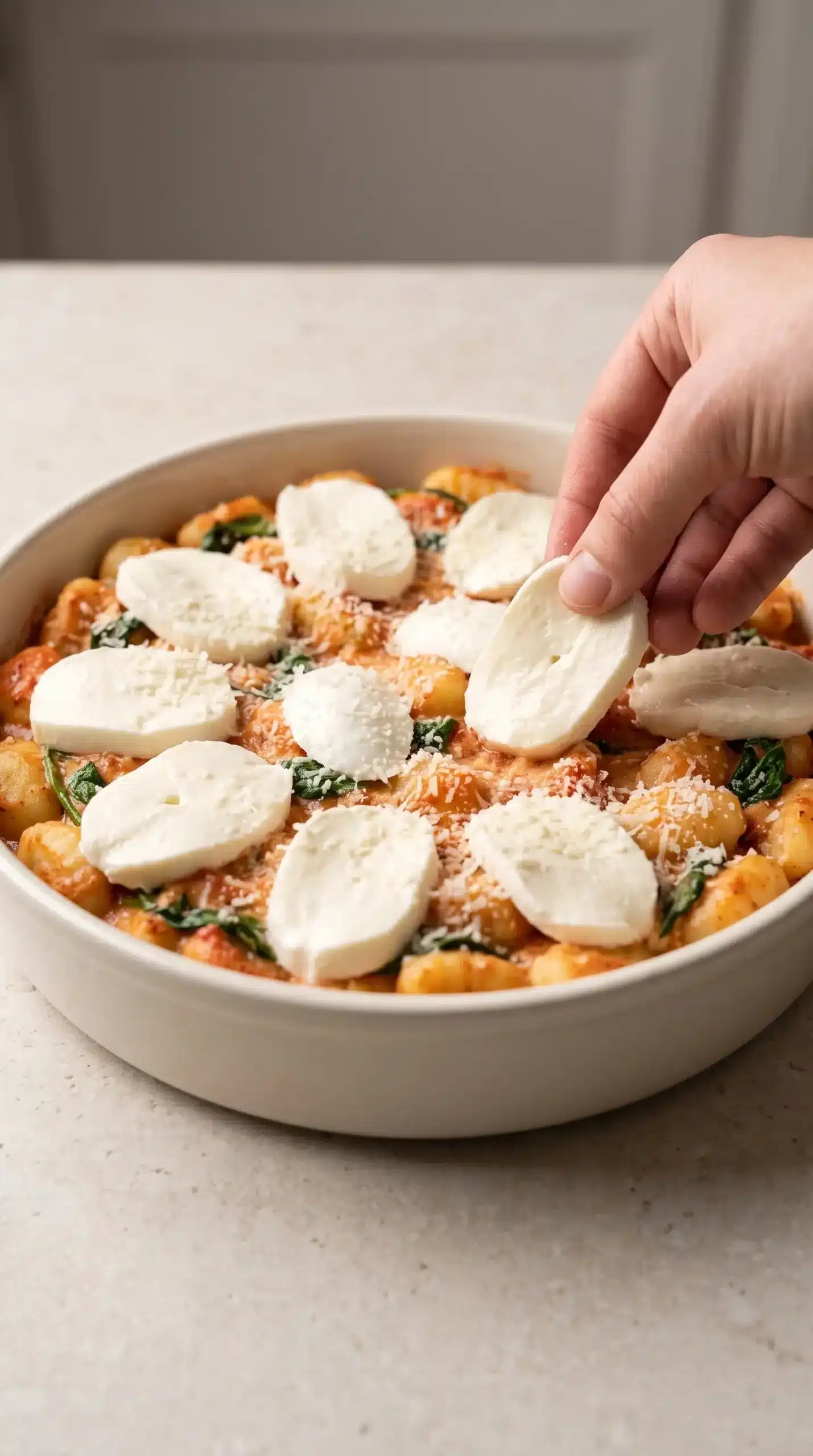
Fresh mozzarella melts into glossy, stretchy pools instead of forming the uniformly firm blanket produced by low-moisture shredded mozzarella. Slices spread across the surface leave some tomato visible between them, giving steam an escape route while still producing the gooey finish expected from baked gnocchi.
Ingredient choices that matter most in three cheese baked gnocchi
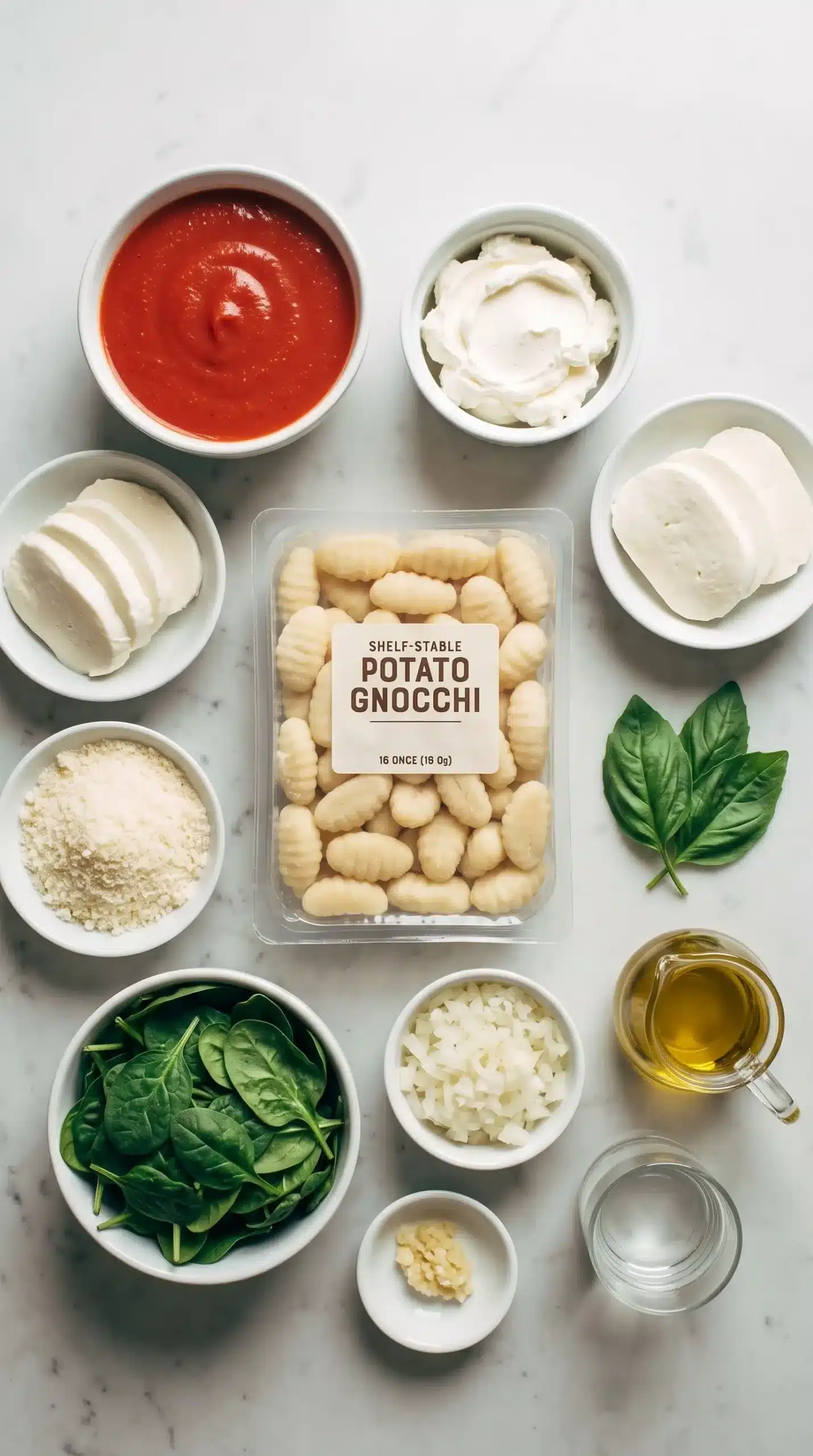
The biggest ingredient decisions concern moisture and melting behavior. Passata supplies a smooth tomato foundation, mascarpone emulsifies into that base, fresh mozzarella contributes both dairy moisture and stretch, and Parmesan adds a drier, more concentrated cheese layer. Their combined effect depends on maintaining enough liquid around the gnocchi before baking.
Baby spinach is particularly practical because the leaves wilt quickly once stirred into the warm sauce. Large mature spinach leaves would need more preparation and could create uneven pockets in the casserole if left bulky.
Basil performs best as a fresh aromatic accent in the sauce and again at serving. Torn leaves distribute naturally without turning the dish into a pesto-like mixture, keeping tomato and cheese as the dominant flavors.
| Component | Useful characteristic | What to watch |
|---|---|---|
| Passata | Smoothly coats gnocchi | Can become too thick as it bakes |
| Mascarpone | Makes the tomato base creamy | Needs gentle heat for smooth blending |
| Fresh mozzarella | Produces soft, stretchy melted pockets | Releases more moisture than low-moisture mozzarella |
| Parmesan | Adds concentrated savory cheese flavor | Can increase saltiness quickly |
Spinach should wilt into the sauce, not sit above it
Baby spinach cooks efficiently when distributed through the warm tomato mixture before the mozzarella goes on top. Keeping the leaves in contact with sauce prevents dry, papery edges and lets them collapse between the gnocchi instead of forming a separate green layer.
Sauce consistency is the main cooking control
Before the casserole enters the oven, the sauce should look loose enough to move easily around the gnocchi when stirred. A thick, paste-like base cannot provide as much moisture during baking and may leave exposed pieces firmer than those sitting deeper in the dish.
Heat during the stovetop stage should stay around a low simmer. Vigorous boiling evaporates the added liquid too early, concentrating the passata before the gnocchi has had a chance to use that moisture.
Visual cues become more useful near the end of baking. The sauce should bubble around the edges, the mozzarella should look fully melted, and the upper surface can develop light golden patches without becoming deeply browned or dry.
- Too thick before baking: the sauce clings heavily and barely moves between the gnocchi.
- Well balanced: the gnocchi stays coated while a small amount of sauce settles naturally around it.
- Too loose: excess liquid pools separately instead of appearing integrated with the creamy tomato base.
Fresh mozzarella needs breathing room on top
Leaving small spaces between mozzarella slices encourages more even evaporation from the tomato base. Completely sealing the surface with overlapping cheese can trap moisture, while widely scattered slices may leave too much of the gnocchi exposed. A loose, mostly covered arrangement supports both melting and sauce reduction.
Mistakes that can derail baked gnocchi with spinach
Reducing the tomato mixture too aggressively before the gnocchi goes in is one of the most consequential errors. The sauce may appear pleasantly thick on the stove yet become overly concentrated after further oven evaporation. Keeping the simmer gentle preserves the moisture needed for tender gnocchi.
Adding a heavy layer of Parmesan is another easy way to upset the balance. Since Parmesan is dry and strongly seasoned, a modest sprinkle is enough to complement the fresh mozzarella without making the surface excessively salty or firm.
- Avoid overcrowding the cheese: overlapping mozzarella can slow evaporation and leave watery pockets underneath.
- Keep spinach submerged: exposed leaves can dry before the rest of the casserole finishes.
- Watch the surface: light golden color is sufficient; extended browning can tighten both cheese and sauce.
Using frozen gnocchi does not require changing the character of the dish, but it can cool the sauce quickly when added. Maintaining an evenly hot sauce before baking helps the casserole return to active bubbling more consistently once it reaches the oven.
The three cheeses create different textures in one sauce
Mascarpone belongs within the tomato base, where it creates a smooth creamy background. Fresh mozzarella stays much more distinct, melting into soft stretches and pockets across the surface. Parmesan sits between those roles, partly melting while retaining a slightly more concentrated presence.
Those different melting behaviors are why gnocchi with mozzarella and parmesan does not need a large quantity of every cheese. The contrast is more important than sheer volume. Enough exposed tomato should remain to keep the finished dish recognizable as tomato-based baked gnocchi instead of a dense cheese casserole.
Basil and garlic keep the rich sauce from tasting flat
Garlic and onion begin in olive oil so their aromas can move through the tomato base before dairy enters the pan. Cooking them until translucent and fragrant avoids the sharpness of raw alliums while stopping short of deep browning, which would push the sauce toward a sweeter, roasted profile.
Fresh basil provides a lighter aromatic note against mascarpone and mozzarella. Keeping the tomato, basil, and cheese balance clear means adding enough basil to brighten the sauce without letting it dominate. Some basil can soften into the sauce, while leaves added at serving retain a fresher fragrance and provide contrast to the hot cheese.
Serving baked gnocchi while the cheese is at its best
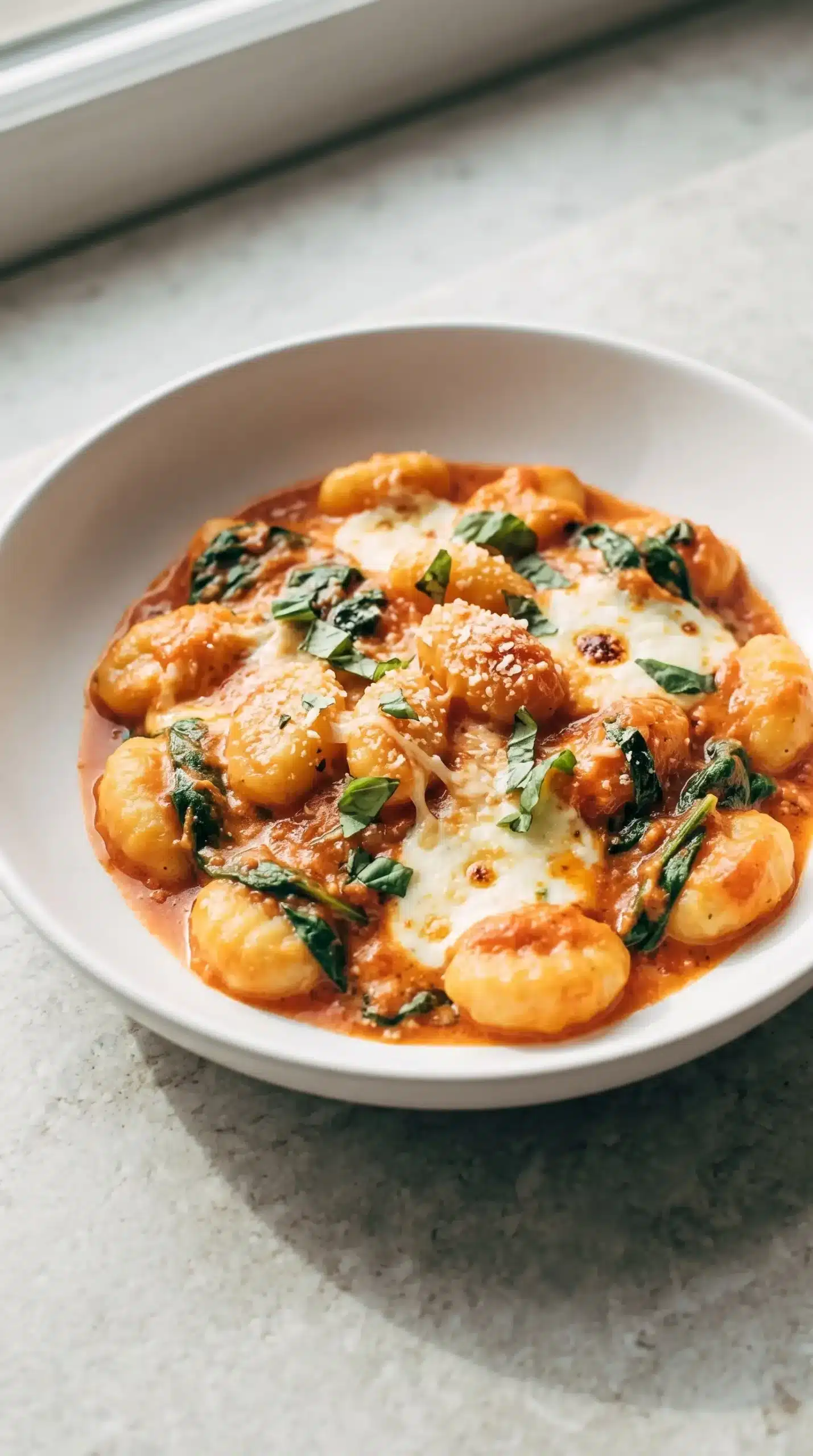
Fresh from the oven, the mozzarella is very fluid and the tomato sauce is still actively bubbling. A short settling period on the table allows the sauce to cling more readily when portions are lifted without requiring a long rest.
Serving from a wide spoon works well because it captures gnocchi, spinach, sauce, and melted mozzarella together. Individual pieces can otherwise slide away from the softer cheese topping when lifted with a narrow utensil.
Extra torn basil is enough to finish baked gnocchi with spinach without covering its surface in additional toppings. The dish already contains several strong textural elements, so a simple garnish preserves the contrast between the red sauce, green spinach, and white mozzarella.
Leftovers benefit from gentler reheating
Refrigeration firms both the gnocchi and the cheeses as their starches and fats cool. Reheating more gently helps the sauce loosen again without driving off excessive moisture. If the refrigerated portion looks unusually tight, a small splash of water or broth around the edges can restore some fluidity as it warms.
Microwave reheating works best in shorter intervals with a loose cover to limit splattering and moisture loss. Oven reheating is useful for a larger portion, though keeping the casserole covered for most of the warming period protects the gnocchi from drying before the center becomes hot.
Repeated reheating is less desirable because each cooling and warming cycle continues to soften the spinach and firm the potato dumplings. Portioning leftovers before reheating preserves the texture of what remains refrigerated.
Simple variations should preserve the sauce-to-gnocchi balance
Broth and water are already interchangeable within the supplied preparation, giving one easy way to adjust the background flavor without changing the structure. Either choice must still provide enough liquid to loosen the passata before the gnocchi enters the sauce.
Frozen gnocchi can stand in for shelf-stable gnocchi, while the spinach, tomato, mascarpone, mozzarella, and Parmesan framework can remain unchanged. Because frozen pieces lower the temperature of the mixture, the most useful adjustment is ensuring the surrounding sauce is hot and evenly distributed before baking.
Any variation involving a drier or wetter cheese deserves more caution because fresh mozzarella contributes a meaningful amount of moisture. Changing that single feature can affect how quickly the sauce concentrates, so visual cues at the end of baking become more important than copying the same appearance at an earlier stage.
Balanced moisture makes the cheeses and gnocchi work together
A fluid tomato-mascarpone base gives the potato gnocchi enough moisture to soften while the uncovered oven concentrates the sauce and melts the mozzarella. Light browning on top should arrive only after the center looks saucy and active, making moisture control more important than pushing for a dark cheese crust.
Warm sauce, evenly wilted spinach, well-spaced mozzarella, and a restrained Parmesan finish keep three cheese baked gnocchi cohesive from the bottom of the dish to the surface. When those conditions stay in balance, the sauce clings without becoming pasty and the cheese remains soft instead of masking the gnocchi underneath.
Questions about sauce thickness and frozen gnocchi
How thick should the sauce be before baking?
It should be creamy but clearly fluid, with enough movement to settle around the gnocchi after stirring. If a spoon dragged through the pan leaves a rigid path that does not quickly soften at the edges, the mixture is likely more reduced than ideal for direct baking.
Can frozen gnocchi go directly into the sauce?
Yes. Frozen gnocchi can be incorporated without boiling first. Add it to thoroughly heated sauce, distribute the pieces evenly, and expect the mixture to temporarily cool when the frozen dumplings enter.
Why is liquid collecting around the fresh mozzarella?
Fresh mozzarella naturally contains considerable moisture, which can release as the slices heat. Small pockets of liquid are not automatically a problem; bubbling around the perimeter and a sauce that becomes cohesive as it settles are more useful indicators of the finished consistency.
Can low-moisture mozzarella replace fresh mozzarella?
It can melt successfully, but the texture will be different. Because low-moisture mozzarella has less moisture than fresh mozzarella, it generally produces a firmer, more uniform cheese layer and contributes less water, so the tomato sauce may concentrate more quickly during baking.
What is the best way to keep reheated gnocchi from drying out?
Protect the portion from prolonged uncovered heat and introduce a small splash of water or broth if the chilled sauce has become very thick. Gentle reheating allows that moisture to loosen the sauce while the cheese warms back into the gnocchi.
Three Cheese Baked Gnocchi with Spinach and Tomato Sauce
Three Cheese Baked Gnocchi with Spinach combines tender potato gnocchi, creamy tomato-mascarpone sauce, and a gooey, lightly browned cheese topping. It is an easy, comforting baked dish with a rich, savory appeal.
Ingredients
Method
Cooking
- Preheat the oven to 400°F (204°C). Warm the olive oil in a skillet over medium-low heat. Add the minced onion and garlic and cook until the onion is translucent and the garlic is fragrant.
- Pour in the tomato passata and broth or water. Bring the mixture to a low simmer, then stir in the torn basil, mascarpone cheese, and salt.
- Add the gnocchi and baby spinach to the sauce. Stir until the gnocchi is evenly coated and the spinach is distributed throughout.
Baking
- Arrange the fresh mozzarella slices over the gnocchi mixture and sprinkle with Parmesan cheese. Bake for 15-20 minutes, until the cheese is melted and the top is lightly golden brown.
Serving
- Serve the baked gnocchi with additional torn basil.
Notes
Keep the tomato sauce fluid before baking so the gnocchi has enough moisture to soften in the oven.