From breakfast to dinner, from healthy meals to sweet desserts – Next Yum Recipes brings you quick, simple and tasty ideas for every occasion and every time.


 This Recipe
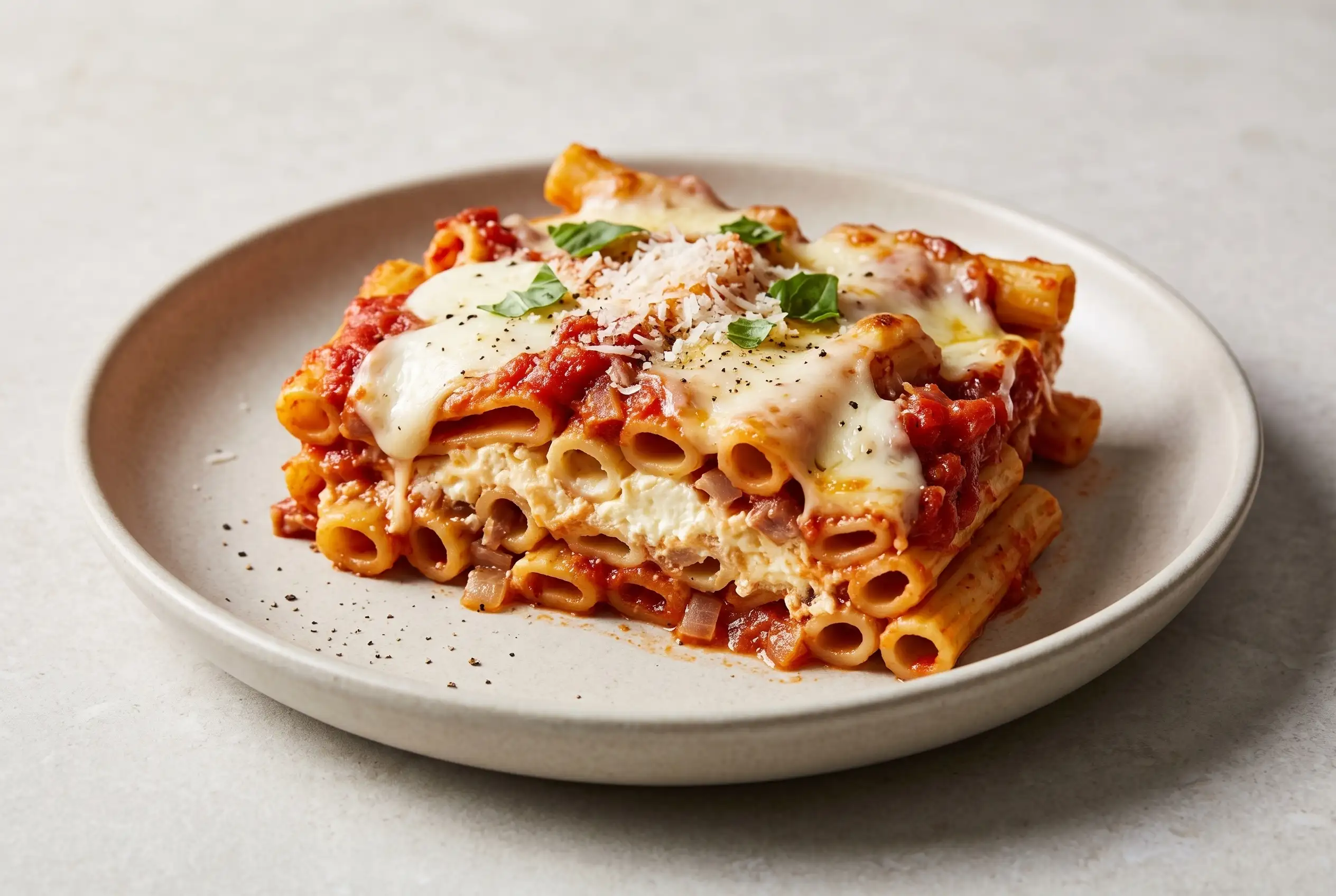
Three cheese baked ziti brings together saucy pasta, creamy mascarpone, fresh mozzarella, and provolone in a layered casserole built for a deeply comforting dinner. The tomato sauce gets a savory base from onion, garlic, tomato paste, and optional pancetta, while crushed red pepper adds a gentle edge. Once baked, the cheese melts through the ziti without losing the distinct character of each layer.
Tomato sauce sets the flavor foundation
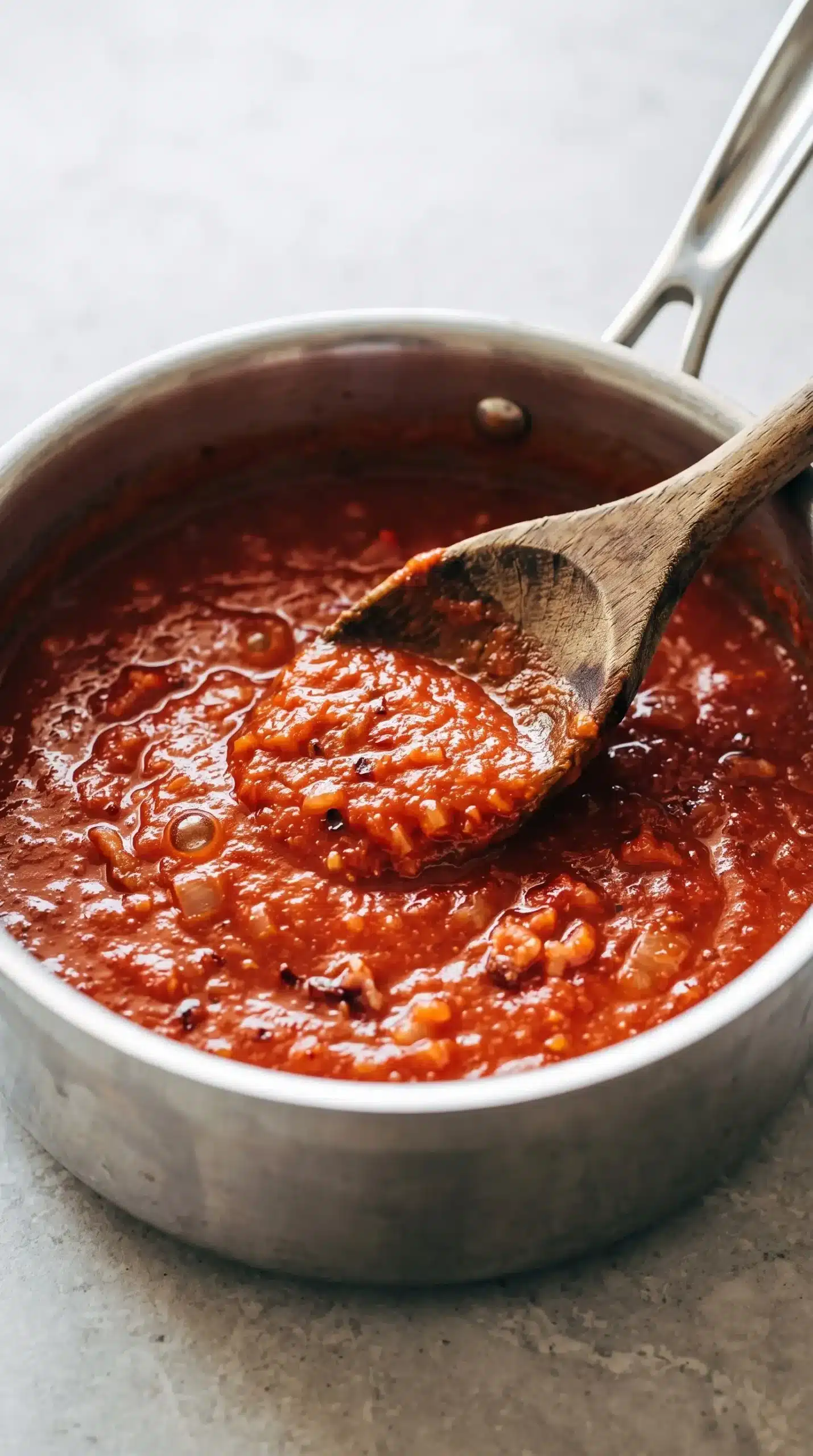
The sauce deserves attention before the pasta ever reaches the baking dish. Sautéing the onion and garlic gently after the optional pancetta has crisped gives the base a rounded savory character. Tomato paste then cooks briefly with the aromatics, concentrating its flavor before the tomato sauce and crushed tomatoes are added.
A 20- to 30-minute simmer gives the tomatoes time to become more cohesive and allows the sauce to thicken enough to cling to the ziti. Keep the heat controlled so the sauce reduces steadily without becoming excessively thick. The finished sauce should still be loose enough to coat the pasta and provide moisture during baking.
Crushed red pepper flakes work best as a background note here. The cheese layers are rich, so a small amount of heat helps keep the finished baked ziti from tasting flat or overly heavy.
Mascarpone creates the creamy middle layer
Mascarpone changes the texture of the casserole in a way that a fully blended cheese sauce would not. Mixed with grated garlic and a pinch of salt, it can be spooned in small portions between layers of saucy pasta. Those pockets become creamy as the casserole heats, creating a contrast with the firmer mozzarella and provolone.
Three cheeses need different jobs
| Cheese | Where it works | What it contributes |
|---|---|---|
| Mascarpone | Between the pasta layers | Soft, creamy pockets with a rich texture |
| Fresh mozzarella | Over the mascarpone and upper layer | Soft, stretchy melted cheese |
| Provolone | Alongside mozzarella in both cheese layers | More pronounced savory flavor and a firm melt |
Fresh mozzarella and provolone are shredded and distributed through the casserole instead of being mixed into the sauce. That placement preserves the layered character of the three cheese ziti bake and gives each bite a changing combination of tomato, pasta, creaminess, and melted cheese.
Ziti benefits from a saucy pre-bake coating
Cooked ziti should be tossed with about two-thirds of the tomato sauce before it enters the baking dish. Coating the pasta at this stage matters because the noodles need sauce throughout their surface area, not only on top. Thorough coating is especially important in tomato-and-cheese casseroles such as baked Caprese rigatoni, where exposed pasta can dry at the edges while the cheese melts. Holding back the remaining sauce gives the layers additional moisture and tomato flavor during assembly.
The reserved sauce also helps keep the upper pasta from drying as the casserole heats. Spoon it over and around the finished layers without flooding the dish; the pasta should remain clearly defined while still looking generously coated.
For a baked ziti with mozzarella and provolone, this balance is especially useful because the cheese layer needs enough moisture to melt smoothly without turning the casserole soupy.
Layering controls every forkful
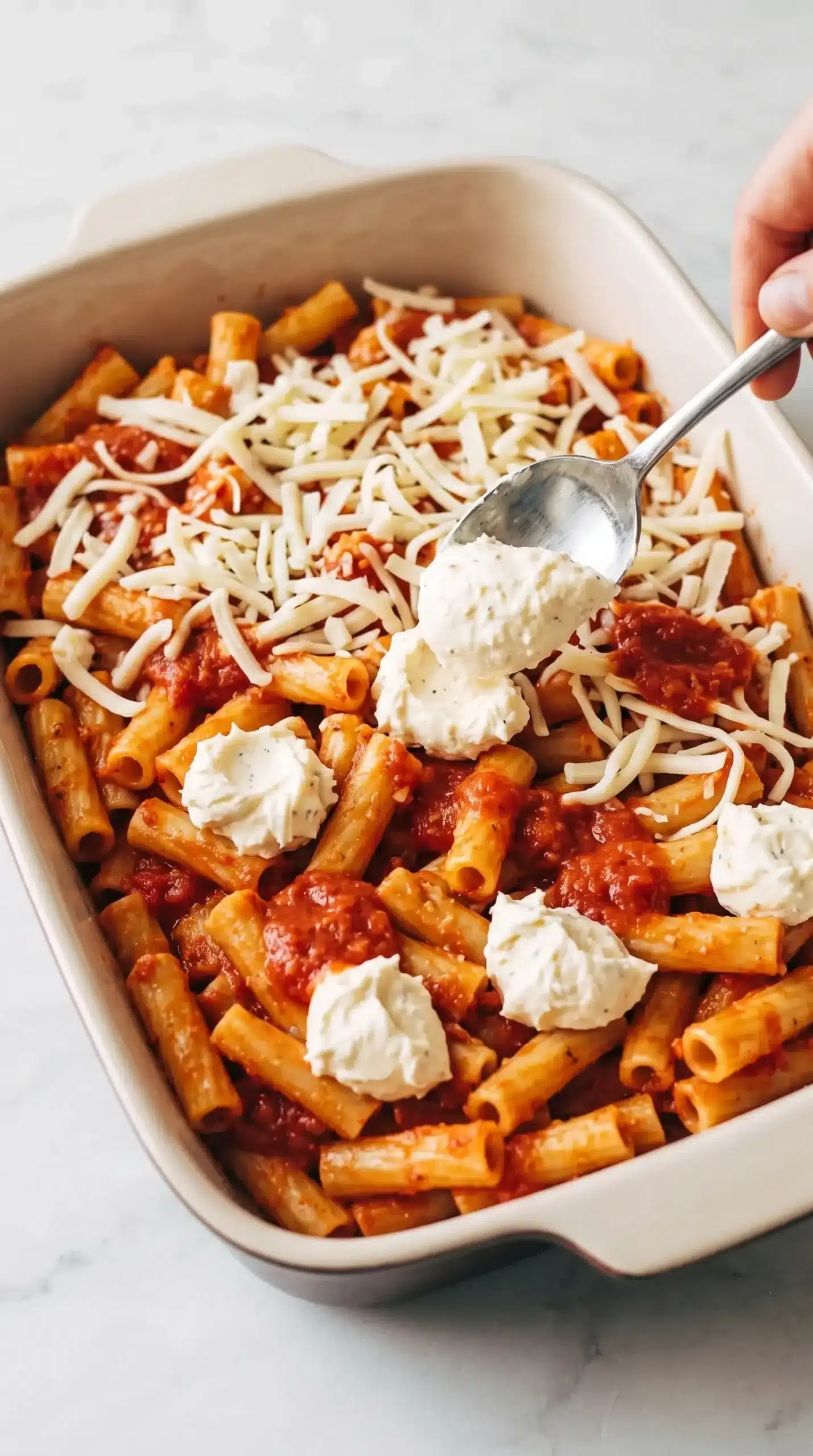
- Bottom layer: Spread half of the saucy ziti into the baking dish.
- Creamy pockets: Spoon the seasoned mascarpone across the pasta in small blobs.
- First cheese layer: Add half of both the mozzarella and provolone.
- Moisture layer: Spoon about a cup of reserved tomato sauce over the cheese.
- Upper pasta: Add the remaining saucy ziti and finish with the remaining cheeses and sauce.
That arrangement prevents the mascarpone from becoming lost inside the entire casserole while giving the mozzarella and provolone repeated contact with both pasta and tomato sauce.
Oven heat finishes the layers without overworking them
A 400-degree oven provides enough heat to bring the assembled casserole fully together in about 20 minutes. The objective at this stage is not to cook the pasta from scratch; it is to warm the interior, melt the cheeses, and allow the layers to settle into one cohesive dish.
Look for melted cheese across the surface and bubbling around the edges. Those visual cues are more useful than extending the baking time simply to achieve deeper browning, especially because fresh mozzarella can lose moisture if left in the oven unnecessarily.
Fresh mozzarella contains more moisture than block mozzarella, an important distinction when it is layered through a baked pasta dish where the sauce and cheeses already contribute substantial moisture.
Once the dish comes out, freshly cracked black pepper, basil, or a little Parmesan can be added at the table. These finishing touches bring freshness and extra savory character without changing the structure of the casserole.
Three cheese baked ziti stays balanced with controlled seasoning
The tomato sauce contains salt, while the pancetta, provolone, mozzarella, and mascarpone all contribute their own degree of savoriness. For that reason, seasoning should be built gradually. Taste the tomato sauce after it has simmered before deciding whether it needs more salt.
Grated garlic in the mascarpone provides a sharper garlic note than the sautéed garlic in the sauce. Keeping those two preparations separate gives the casserole more dimension and prevents the garlic flavor from becoming indistinct.
Fresh mozzarella and provolone melt differently
Fresh mozzarella brings a soft, supple melt, while provolone gives the cheese layer a more assertive savory character. Shredding both allows them to distribute across the pasta instead of forming one dense sheet.
Pancetta is optional without changing the structure
The pancetta adds a salty, savory element to the tomato base, but the sauce has enough onion, garlic, tomato paste, and tomatoes to function without it. If you leave it out, begin with the olive oil as directed and continue with the onion and garlic once the oil is hot.
Because pancetta can contribute salt, omitting it may slightly change how much additional seasoning the sauce needs. Taste near the end of the simmer and adjust accordingly.
Three cheese baked ziti mistakes worth avoiding
- Over-thick sauce: Simmering the tomatoes too aggressively can leave too little moisture for the pasta and cheese layers. Keep the sauce at a controlled simmer and reserve enough for assembly.
- Under-sauced pasta: Tossing the ziti with only a small amount of sauce can leave exposed noodles dry after baking. Coat the cooked pasta thoroughly with the specified portion before layering.
- Scattered mascarpone: Large uneven chunks can make the creamy element concentrate in a few bites. Use small blobs spread across the first pasta layer.
- Overbaking: Leaving the casserole in the oven well beyond the point of bubbling can dry the pasta and cheese. Remove it once the center is hot and the cheese has melted.
These issues are closely connected to moisture distribution. Sauce belongs both in the pasta and between the layers, while the mascarpone works best when dispersed instead of concentrated in one area.
Serving finishes sharpen the rich layers
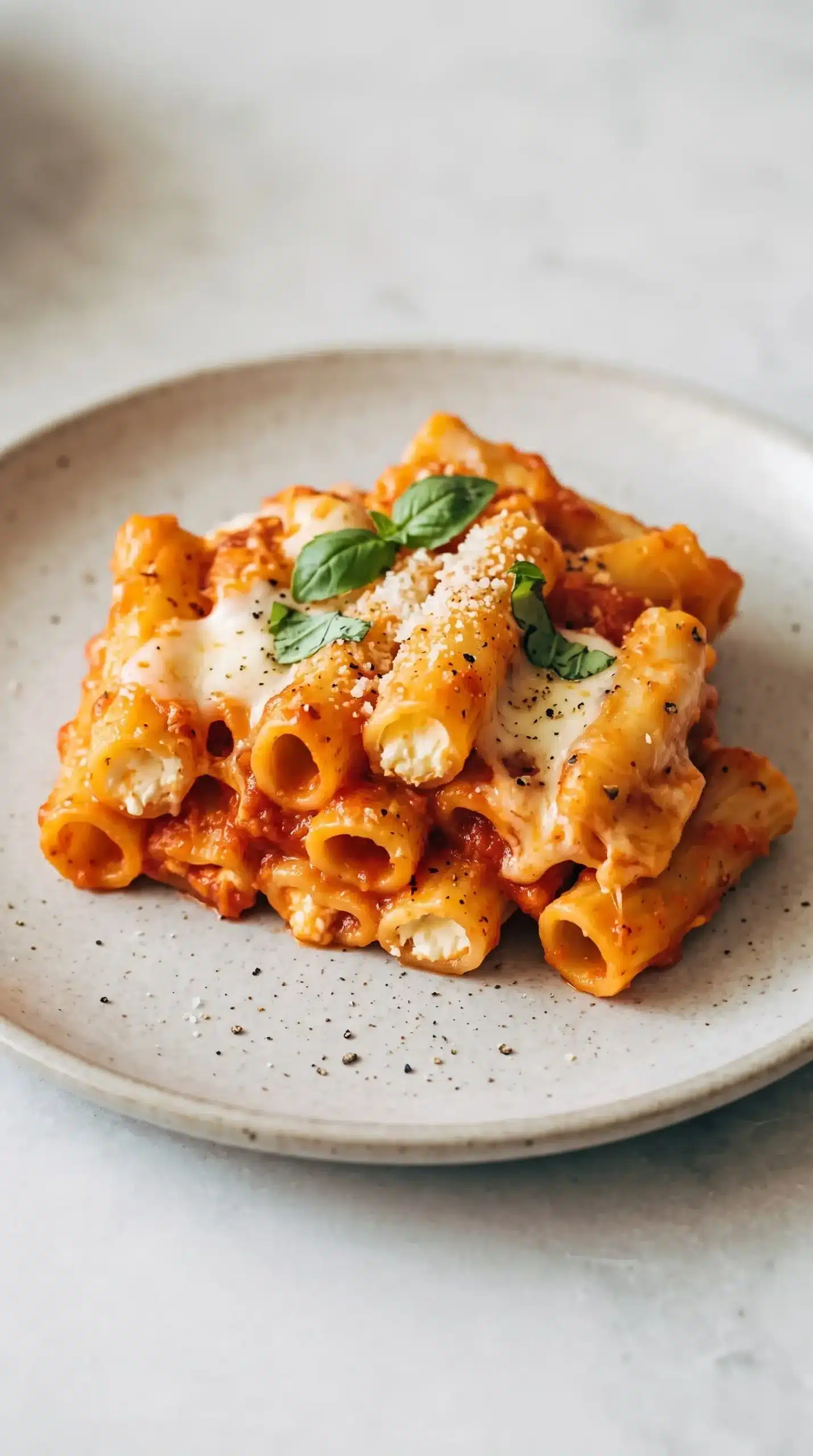
Fresh basil gives the finished casserole a bright herbal contrast to the tomato and cheese. Freshly cracked black pepper adds another small layer of heat, while Parmesan can increase the savory finish.
Leftovers benefit from gentle reheating
Refrigerated portions are best reheated gradually so the pasta warms through while the cheese remains tender. A covered dish or loosely covered portion can help limit moisture loss during reheating.
Three cheese baked ziti works beyond the dinner table
The layered structure makes the casserole useful for meals where a substantial baked pasta can be portioned and served without last-minute assembly. Its combination of tomato sauce, mascarpone, mozzarella, and provolone also means each serving contains contrasting textures instead of one uniform cheese layer.
For a gathering, the finishing additions can stay simple: basil, black pepper, or Parmesan can be offered separately so each person can adjust the final flavor. The optional pancetta also makes it easy to keep the tomato base adaptable without changing the rest of the construction.
Three cheese baked ziti depends on moisture balance
Saucy ziti enters the oven already coated, mascarpone sits in small creamy pockets, and reserved tomato sauce reaches the upper layers. Those choices give the casserole enough moisture to become molten and cohesive while allowing mozzarella and provolone to melt visibly across the top. Keeping the sauce loose enough to coat the pasta and removing the dish once it is hot and bubbly are the key controls that hold the whole bake together.
That balance is what makes baked ziti with mascarpone distinctive: the richness comes from several carefully placed elements instead of one heavy sauce. The result should show defined pasta, tomato-coated layers, creamy mascarpone pockets, and melted cheese working together in every serving.
Questions about mascarpone, sauce, and baking time
Can mascarpone be mixed directly into the tomato sauce?
It can be incorporated into a sauce in other pasta preparations, but the supplied method uses mascarpone separately so it forms creamy pockets between the ziti layers. Keeping it apart also preserves the contrast between the seasoned tomato sauce and the richer cheese.
Why is some tomato sauce reserved for assembly?
The reserved sauce adds moisture between and over the layers, helping the upper pasta stay coated as the casserole heats. It also prevents the cheese from sitting directly over a dry surface of noodles.
Can the pancetta be left out?
Yes. Pancetta is specifically optional, so the tomato sauce can begin with the olive oil followed by the onion and garlic. Since pancetta contributes savory flavor and salt, taste the sauce before making any additional seasoning adjustment.
How do I know when the baked ziti is ready to come out of the oven?
Look for melted cheese and visible bubbling, with the casserole warmed through. At that point, additional oven time is not necessary simply to keep cooking the pasta, and excessive baking can reduce moisture.
Can I use another pasta shape instead of ziti?
A similar short tubular pasta can work because the layered structure depends on sauce-coated pieces that hold their shape in the baking dish. The exact texture and appearance will change with the substitute, so choose a shape that can be thoroughly coated and layered.
Three Cheese Baked Ziti with Mascarpone and Provolone
Three cheese baked ziti is a comforting, hearty pasta casserole with saucy ziti, creamy mascarpone pockets, and layers of melted mozzarella and provolone. Its rich, bubbly texture makes it a satisfying choice for a family dinner or gathering.
Ingredients
Method
Tomato Sauce
- Warm the olive oil in a large pot over medium-high heat. Add the pancetta and cook for about 5 minutes, stirring until slightly crisp.
- Reduce the heat, add the onion and garlic, and cook for 5 minutes.
- Stir in the crushed red pepper flakes and tomato paste, then cook for 2 minutes.
- Add the tomato sauce, crushed tomatoes, and salt. Simmer for 20–30 minutes.
Pasta and Mascarpone
- Cook the ziti according to the package directions. Toss the cooked pasta with about two-thirds of the tomato sauce, reserving the remaining roughly 2 cups of sauce.
- Combine the mascarpone, grated garlic, and a pinch of salt in a small bowl.
Assembly
- Preheat the oven to 400°F (204°C). Transfer half of the sauced ziti to a 9×13-inch baking dish.
- Spoon the mascarpone mixture over the pasta in small portions. Add half of the mozzarella and half of the provolone.
- Spoon about 1 cup of the reserved tomato sauce over the cheese layer.
- Add the remaining sauced ziti, then cover with the remaining mozzarella and provolone. Spoon the remaining sauce over and around the top.
Baking
- Bake for 20 minutes, until the casserole is hot, the cheeses are melted, and the sauce is bubbling.
Serving
- Finish with Parmesan, fresh basil, or freshly cracked black pepper before serving.
Notes
For the best texture, remove the baked ziti once the cheese is melted and the casserole is bubbling.